What Foods Help Your Bones Stay Strong
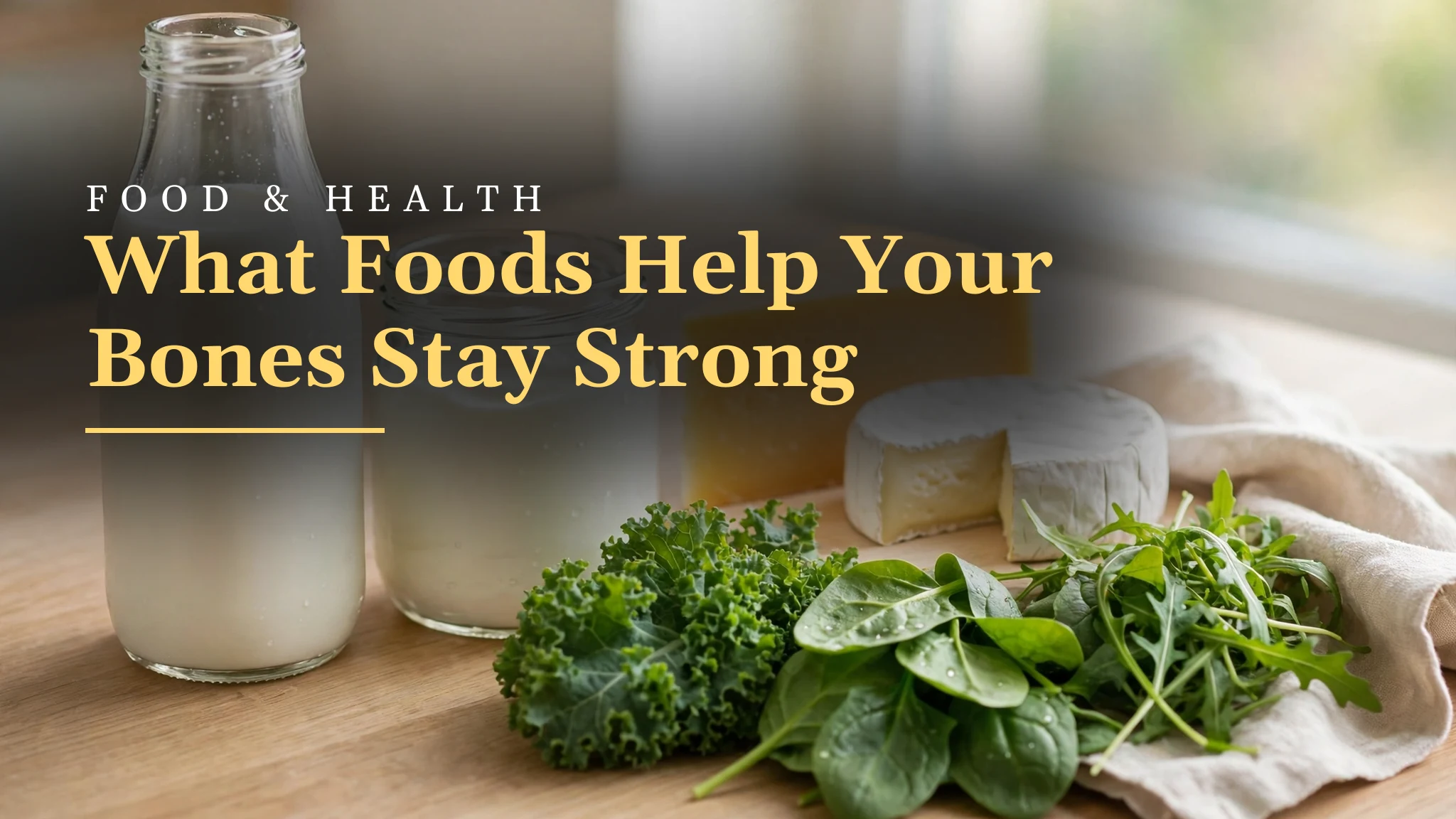
In this post
- Calcium: The Main Building Material for Bones
- Vitamin D: The Helper That Lets Calcium Work
- Protein, Magnesium and the Other Nutrients Bones Need
- Dairy Foods and Foods Beyond Dairy
- Drinks, Salt and Habits That Work Against Bones
- Movement: The Partner Food Cannot Replace
- Bones at Different Ages: Children, Adults and Older People
- What a Bone-Friendly Day of Eating Looks Like
- Reading Labels and Shopping for Bone-Friendly Food
- Falls, Balance and Protecting Bones in Daily Life
- My Take:
Bones are easy to forget. You cannot see them, they do not ache when they are healthy, and they seem solid and unchanging, like the frame of a house. In truth, bones are living tissue. They are being broken down and rebuilt all the time, slowly, quietly, throughout your life. The food you eat gives your body the material for that rebuilding work. If the material is there, bones stay strong. If it is missing for a long time, bones gradually become weaker, and you may not notice until a fall causes a break that should not have happened. That is why bone health is not something to think about only in old age. It is something to build in childhood, protect in adult life, and look after carefully as you grow older.
The most famous nutrient for bones is calcium, and for good reason. Calcium is the main mineral in bone, and it gives bones their hardness. But calcium alone is not the whole story. Your body also needs vitamin D to absorb calcium properly, protein to build the framework that calcium sits in, and smaller amounts of magnesium, vitamin K and other nutrients that help the whole process work. Movement matters too. Bones respond to the pressure of walking, running and lifting, and they grow stronger when they are used. A person who eats well but never moves will not have bones as strong as a person who eats the same food and walks every day. Food, sunlight and movement work as a team.
It helps to think of bones as a savings account. In childhood and the teenage years, you are putting money in. That is when bones grow fastest and store the most calcium. In your twenties and thirties, the account is at its fullest. After that, the body slowly starts to spend more than it saves, and the rate of loss speeds up for women after the menopause and for men in later life. You cannot go back and refill the account in old age in the same way, but you can slow the loss by eating well, getting enough vitamin D, staying active and avoiding the habits that drain bone. The earlier you start, the stronger the account. But it is never too late to look after it.
Calcium: The Main Building Material for Bones
Calcium is the mineral your bones are mostly made of, and your body needs a steady supply of it every day. If your diet does not give you enough calcium, your body will take it from your bones to keep your blood and muscles working, because those jobs cannot wait. Over months and years, that slow borrowing weakens the bones. The simplest way to stop it is to eat calcium-rich foods every day, spread across meals rather than in one large amount at once.
Milk is the best-known source, and a glass of milk gives a large share of what most adults need in a day. Yoghurt is just as good, and it is often easier to digest for people who find milk heavy. Cheese is very rich in calcium, though it is also high in fat and salt, so a small piece is enough. A pot of yoghurt after lunch, a glass of milk with breakfast, and a little cheese in a sandwich is a strong pattern that covers calcium without any effort. For people who do not drink milk, there are other sources. Leafy green vegetables such as kale, cabbage and broccoli give calcium. Beans, chickpeas and lentils give smaller amounts. Almonds and sesame seeds give calcium too. Some soy milk, oat milk and breakfast cereals have calcium added, and the packet will say so on the label. Tinned sardines and other small fish eaten with their soft bones are also a good source, and they give vitamin D at the same time.
Vitamin D: The Helper That Lets Calcium Work
Calcium on its own is not enough. Your body needs vitamin D to absorb calcium from food and use it to build bone. Without enough vitamin D, much of the calcium you eat passes through without being used. The main source of vitamin D is sunlight on the skin. When sunlight touches the skin, the body makes vitamin D itself. That is why people who spend most of their time indoors, or who live in places with long winters, are more likely to be low in vitamin D. A short time outside in daylight, with face and arms uncovered, helps the body make it, though the exact amount needed depends on skin colour, season and where you live, and strong sun also needs care to avoid burning.
Food gives some vitamin D as well, though not as much as sunlight. Oily fish such as salmon, sardines and mackerel are the best food sources. Egg yolks give a smaller amount. Some milk, yoghurt, cereals and spreads have vitamin D added to them, and the label will say so. Mushrooms that have been left in sunlight give a little too. For many people, food alone does not give enough vitamin D, especially in winter, and that is why health guidance in many countries suggests thinking about a supplement in the darker months. That is a decision to discuss with a health professional, because the right amount depends on the person. What matters for this article is the principle: calcium and vitamin D belong together, and a diet that gives one without the other is only doing half the job.
Protein, Magnesium and the Other Nutrients Bones Need
Protein is often talked about for muscle, but it is just as important for bone. Bone is not made of calcium alone. It has a framework of protein, like the steel frame inside a concrete building, and calcium sits in that framework to give it hardness. A person who eats too little protein may have weaker bones, even if they eat enough calcium. The good news is that most people who eat a varied diet get enough protein. Eggs, milk, yoghurt, cheese, meat, chicken, fish, lentils, beans and chickpeas all give it. A little protein at each meal, rather than a large amount once a day, suits the body best.
Magnesium helps the body use calcium and vitamin D properly, and it is found in whole grains, nuts, seeds, leafy green vegetables, beans and bananas. Vitamin K, found in leafy greens such as spinach, cabbage and broccoli, helps the body make the proteins that hold calcium in bone. Potassium, found in fruit, vegetables and potatoes, helps the body keep calcium in balance. None of these needs a special food or a supplement on its own. A diet with plenty of vegetables, whole grains, beans and a little dairy or fish covers them naturally. That is another reason to eat a varied diet rather than to chase one nutrient. Bones need a team of nutrients, and a varied plate gives the whole team at once.
Dairy Foods and Foods Beyond Dairy
Milk, yoghurt and cheese are the easiest way for most people to get enough calcium, because they give a large amount in a small serving, and the body absorbs it well. A glass of milk at breakfast, a pot of yoghurt in the afternoon, and a little cheese at dinner is a simple pattern that works for children, adults and older people alike. Low-fat milk and yoghurt give the same calcium as full-fat versions, so people who want to keep fat down can choose those without losing the benefit. Flavoured yoghurts and milk drinks often have a lot of added sugar, so plain yoghurt with a piece of fruit is a better everyday choice than a sweetened one.
For people who cannot have dairy, the plan needs a little more thought, but it is still possible. Fortified soy milk or oat milk, with calcium added, can take the place of cow’s milk. Tofu made with calcium, leafy greens, beans, almonds and sesame seeds all add up across the day. Sardines eaten with their bones are one of the richest non-dairy sources. The key is variety. No single non-dairy food gives as much calcium as a glass of milk, so a person who avoids dairy needs several smaller sources through the day. Reading labels helps. A soy milk that says calcium has been added is very different from one that has not, and the price is often the same. Anyone who avoids dairy for a long time should think carefully about vitamin D as well, because dairy foods are one of the ways many people get it.
Drinks, Salt and Habits That Work Against Bones
Some everyday habits quietly work against bones, and it is worth knowing about them. Salt is one. A very salty diet makes the body lose more calcium in urine, so the calcium you eat is wasted. Most of the salt people eat does not come from the salt shaker. It comes from processed foods, bread, cheese, sauces and ready meals. Cooking at home, tasting food before adding salt, and eating fewer very salty snacks helps keep calcium where it belongs. You do not need to remove salt completely. You need to keep it moderate.
Sweet fizzy drinks are another problem, and not only because of sugar. People who drink a lot of fizzy drinks often drink less milk, so they get less calcium. Some fizzy drinks also contain phosphoric acid, which in large amounts may affect bone, though the evidence is strongest for people who drink several cans a day over a long time. A glass of fizzy drink at a party is not a problem. A large bottle every day, in place of milk or water, is. Too much caffeine can also increase calcium loss a little, though a cup or two of tea or coffee a day is not a concern for most people. The bigger issue is when coffee replaces meals or milk. Smoking and drinking a lot of alcohol both weaken bones over time, and they make falls and fractures more likely as well. Cutting them down helps bones in the same way it helps the heart and lungs.
Movement: The Partner Food Cannot Replace
Food gives bones their material, but movement tells the body where to put it. Bones respond to pressure. When you walk, run, climb stairs or lift something, the gentle force travels through your bones, and the body responds by making them denser and stronger. That is why people who walk every day usually have stronger bones than people who sit all day, even if they eat the same food. Weight-bearing exercise is the kind that helps most. Walking, running, dancing, climbing stairs and carrying shopping all count. Swimming and cycling are excellent for the heart and for joints, but they put less pressure on bones, so they help bones less than walking does. The best pattern is a mix: walking every day, plus some activity that works the muscles, such as carrying, lifting or simple bodyweight exercises.
This matters at every age. Children who run and jump build stronger bones for life. Adults who walk to work, take the stairs and carry their shopping keep their bones stronger than adults who drive everywhere and sit all day. Older people who walk daily, even slowly, protect their bones and their balance, and better balance means fewer falls. A fall is the moment when weak bones turn into a fracture, so anything that improves balance and strength helps twice over. Food and movement are not alternatives. A person who eats well and moves well is doing far more for their bones than a person who does only one of those things.
Bones at Different Ages: Children, Adults and Older People
Children and teenagers are building bone faster than at any other time of life, so their needs are high. They need calcium, vitamin D, protein and plenty of active play. A glass of milk, a pot of yoghurt, an egg, and time outside running and jumping is a strong daily pattern. Teenagers who skip meals, drink fizzy drinks instead of milk, or spend all day indoors are missing the best years for building bone, and that loss is hard to make up later. Parents cannot force a teenager to eat well, but they can keep good food in the house, serve milk and yoghurt regularly, and encourage sport and outdoor play.
Adults in their twenties and thirties are at their peak, and the job is to protect what has been built. That means keeping calcium and vitamin D in the diet, staying active, and avoiding heavy smoking and drinking. Women after the menopause lose bone faster, because the hormone that helped protect bone falls away. For them, calcium, vitamin D and weight-bearing exercise become even more important, and it is worth talking to a health professional about bone health at that stage. Older people need the same nutrients, plus attention to balance and to the home, because a fall at home is a common cause of fracture. Good food, daily walking, and a home without loose rugs and poor lighting is a practical combination that protects bones in old age.
What a Bone-Friendly Day of Eating Looks Like
A bone-friendly day is not a special diet. It is ordinary food, put together with calcium and vitamin D in mind. Breakfast could be porridge made with milk, or bread with cheese and an egg, plus a piece of fruit. That gives calcium, protein, vitamin D and energy in one meal. Lunch could be a sandwich with cheese or sardines, a salad with leafy greens, and a pot of yoghurt. Dinner could be a small piece of fish or chicken, or a bowl of beans, with rice or potatoes and broccoli or cabbage. A snack could be a glass of milk, a handful of almonds, or a piece of fruit with yoghurt. Nothing in that day is unusual or expensive. It is the same food most families already eat, arranged so that calcium appears at every meal and vitamin D comes from fish, eggs and time outside.
The pattern matters more than any single meal. A person who eats a calcium-rich breakfast and then eats nothing with calcium for the rest of the day is doing less well than a person who spreads calcium across three meals. It also helps to think about the week as a whole, because no one eats perfectly every day. A week with fish twice, leafy greens on most days, milk or yoghurt every day, eggs several times, and a walk every day is a strong week, even if one day is rushed and the meals are simple. On a busy day, a glass of milk, a boiled egg and a piece of fruit is a fine breakfast, and a sandwich with cheese and a salad is a fine lunch. You do not need a new recipe every day. You need the same good foods appearing again and again, in meals that fit your life. If you travel, a small pot of yoghurt, a banana and a bottle of water travel well. If you eat out, a meal with fish or chicken, vegetables and a yoghurt for dessert is a good choice. Bone-friendly eating is not a separate way of eating. It is ordinary eating, done with calcium and vitamin D in mind, and it fits into almost any kitchen, any budget and any routine. A person who eats well all week but never goes outside may still be low in vitamin D. A person who eats well and walks daily is doing the most. It is also worth thinking about the whole week rather than one day. Fish twice a week, leafy greens most days, milk or yoghurt every day, and a walk every day is a pattern that protects bones over years, and it is a pattern that fits a normal life without special shopping or cooking.
Reading Labels and Shopping for Bone-Friendly Food
You do not need to study nutrition to shop well for bones. A few simple habits at the market or supermarket are enough. First, look for milk, yoghurt and cheese as everyday items, not as occasional treats. Plain yoghurt is a better choice than sweetened yoghurt, because the sweetened kind often has a lot of added sugar for the same calcium. Second, when you buy soy milk, oat milk or breakfast cereal, check the label for added calcium and vitamin D. The words to look for are simple: calcium and vitamin D listed among the added vitamins and minerals. A product without them is not a replacement for milk, even if it looks the same on the shelf. Third, buy leafy greens, broccoli and cabbage regularly, and buy seasonal fruit. Seasonal food is usually cheaper and fresher, and a family that buys what is in season will naturally eat a wider range of foods across the year.
Tinned fish is worth a special mention, because it is cheap, keeps for a long time, and is one of the best bone foods there is. Sardines eaten with their soft bones give calcium and vitamin D together, and they also give protein and healthy fats. A tin of sardines on toast is a quick lunch that covers several bone needs at once. Eggs are another cheap and useful food. They give protein and a little vitamin D, and they can be boiled, fried or scrambled in minutes. Beans and lentils are the cheapest foods of all, and while they give less calcium than milk, they give magnesium, protein and fibre that support bone health in other ways. Shopping for bones is not about buying expensive foods. It is about buying ordinary foods regularly, and keeping the kitchen stocked with milk, yoghurt, eggs, beans, greens and a tin or two of fish.
Falls, Balance and Protecting Bones in Daily Life
Strong bones matter most at the moment of a fall. A person with strong bones may fall and get up with a bruise. A person with weak bones may fall from the same height and break a wrist or a hip. That is why preventing falls is part of protecting bones, especially for older people. Balance gets worse with age if it is not used, but it improves with practice. Walking every day helps balance. Standing on one foot while brushing teeth, getting up from a chair without using hands, and walking on uneven ground in a park all help the body learn to stay steady. These are small exercises, and they do not need a gym or special equipment. They need only a few minutes a day, done regularly.
The home matters too. Many falls happen at home, in places people know well. A loose rug, a dark hallway, a bathroom floor wet after a shower, or shoes that slip are common causes. Good lighting, clear walkways, non-slip mats in the bathroom and shoes that fit well are simple changes that prevent a great deal of harm. For an older person, a walking stick or a handrail is not a sign of weakness. It is a tool that keeps them walking, and walking keeps bones strong. The worst thing an older person can do after a fall is to stop moving out of fear, because the lack of movement weakens bones and balance further, and the next fall becomes more likely. The way forward after a fall is slow and steady: good food, daily walking, balance practice, and a safe home. Bones, balance and confidence grow together, and they fade together too, so protecting one means protecting all three.
My Take:
If you ask me what I think about bones, my first thought is that we ignore them for far too long. We think about our weight, our skin, our energy and our sleep, but we rarely think about the frame that holds everything up. Bones do not complain until they break, and by then the problem has been building for years. That is why I think bone health is one of the most honest topics in health. It rewards quiet, steady habits over a long time, and it punishes neglect just as quietly. A glass of milk a day, a walk a day, and a little time outside do not feel like much. Over twenty years, they are the difference between strong bones and fragile ones.
I think milk has had an unfair time in recent years. People hear that milk is not needed, or that other foods can replace it, and they stop drinking it without replacing the calcium it gave them. It is true that you can get calcium without milk. It is also true that most people who stop drinking milk do not actually replace it with anything. They simply get less calcium, day after day, and their bones pay the price slowly. I am not saying everyone must drink milk. I am saying that if you stop drinking milk, you need a real plan to replace it, with fortified alternatives, leafy greens, beans, sardines and other sources, every day, not just once a week. A glass of milk is the easiest way to get calcium, and for most people it is still the best one.
Vitamin D is the part of this story I think people understand least, and it worries me. Many people eat a good diet and still have weak bones, because they spend their whole day indoors and their body cannot use the calcium they eat. Sunlight is free, and a short walk outside in daylight is one of the simplest health habits there is. I do not mean sunbathing for hours or getting burnt. I mean stepping outside, letting daylight touch your skin, and walking for twenty or thirty minutes. That walk gives you vitamin D, it gives your bones the pressure they need to stay strong, and it clears your mind as well. It is three benefits from one habit, and it costs nothing. I think we should protect that habit the way we protect any other important part of the day.
I also think we need to be honest about fizzy drinks, because they have quietly replaced milk in many homes, especially for teenagers. A teenager who drinks a large fizzy drink with lunch and another in the evening is getting sugar and nothing else, and they are missing the calcium they would have had from milk or yoghurt. The damage does not show at sixteen. It shows at sixty, when a small fall breaks a hip. I know teenagers do not think about sixty, and I know parents cannot control everything a teenager drinks. But keeping milk, yoghurt and water in the house, and keeping fizzy drinks as an occasional treat rather than an everyday drink, is a practical step that any family can take. It is not about banning anything. It is about what is normal at home.
There is another thing I feel strongly about, and it is the way bone health is treated as a problem for old people only. It is not. The strongest bones are built before the age of thirty, and the best years for building them are childhood and the teenage years. A child who drinks milk, eats well and plays outside is building a store of bone that will protect them for decades. A teenager who skips meals and sits indoors all day is missing that chance, and no amount of calcium at fifty can fully make up for it. If I could give one piece of advice to parents, it would be this: look after your children’s bones now, while they are still being built. Serve milk and yoghurt, cook with leafy greens and beans, and send them outside to play. Those simple things matter more than any supplement you could buy later.
I want to say something about older people too, because they are the ones who live with the results. An older person who eats well, walks every day and keeps their home safe from falls is doing more for their bones than any single food could do. I have seen older people who are afraid to walk because they might fall, and that fear makes their bones weaker, which makes a fall more likely. It is a cruel circle. The way out of it is slow and steady: a short walk every day, a little strength work, good food with calcium at every meal, and a home with clear paths and good light. No one needs to run a marathon. A daily walk, kept up for months, is enough to make a real difference to bones and to balance.
I think the most important lesson in this whole topic is that bones need a team, not a hero. Calcium is the hero everyone names, but calcium without vitamin D is wasted, calcium without protein has no framework to sit in, and calcium without movement has no reason to stay in the bone. That is why I am suspicious of any product that promises strong bones from one pill or one powder. A pill cannot walk for you, it cannot give you sunlight, and it cannot replace a varied diet. The honest answer is less exciting but far more useful: eat calcium-rich foods every day, get some daylight, eat fish and eggs, walk every day, and keep salt and fizzy drinks moderate. Those five habits, kept together, do more than any single product ever will.
Money is part of this as well, and I do not want to pretend that everyone can afford salmon and almonds. They cannot, and they do not need to. Milk, yoghurt, eggs, lentils, beans, cabbage, broccoli and sardines are among the cheapest bone-friendly foods there are. A glass of milk costs very little. A pot of yoghurt costs very little. A walk costs nothing. Sunlight costs nothing. The expensive version of bone health is a myth. The real version is ordinary food, ordinary daylight and ordinary movement, repeated every day. I think that is good news, because it means bone health is within reach of almost everyone, whatever their income.
I also think we should talk about women after the menopause, because they face the fastest bone loss and they are often the last to be told about it. A woman who has looked after everyone else for years may not have looked after her own bones, and after the menopause her bones can weaken quickly. For her, calcium, vitamin D and walking become even more important, and it is worth talking to a health professional about bone health at that stage, rather than waiting for a fracture to force the conversation. I would rather a woman asked about her bones at fifty and took simple steps than waited until seventy and wished she had. Prevention is quiet and unglamorous, but it is far better than treatment after a break.
So here is my final view, in plain words. Look after your bones the way you would look after a house you plan to live in for a long time. Give them good material every day: milk, yoghurt, cheese, leafy greens, beans, fish and eggs. Give them sunlight, so they can use that material. Give them movement, so they know they are needed. Keep salt and fizzy drinks moderate, and do not let coffee or smoking crowd out real food. Start young, keep going in middle age, and take extra care in old age. Bones do not ask for much. They ask for steady, ordinary care, day after day, year after year. Give them that, and they will carry you well.
I want to add something about the way we talk about ageing, because I think it holds people back. Many people accept weak bones as a normal part of getting old, as if nothing can be done. That is not true. Bones do weaken with age, but the speed of that weakening is not fixed. A person who eats well, walks daily and gets sunlight will lose bone far more slowly than a person who does none of those things. Ageing is not a reason to give up on bones. It is a reason to look after them more carefully. I have seen older people who walk every morning, eat a proper breakfast with milk, and tend a garden in the afternoon, and they are stronger and steadier than people twenty years younger who sit all day. The difference is not luck. It is habit, kept up over years. Whatever your age, the habits you start today will still be helping you in ten years, and that is a hopeful thought, not a frightening one.
There is another group I want to mention, and it is people who work indoors all day. An office worker, a shop worker, a driver or a labourer who works under a roof may spend weeks without much daylight on their skin, and they may eat lunch quickly, standing up, with no milk or vegetables in it. That pattern is common, and it is not good for bones. The fix does not need a new diet plan. It needs a walk at lunchtime, a pot of yoghurt or a glass of milk with lunch, and a proper dinner with vegetables when they get home. A labourer who works in the sun all day may get plenty of vitamin D, but they also sweat a great deal and need water and good food to replace what they lose. A person who works night shifts faces a different problem, with little daylight at all, and they should think carefully about vitamin D and about eating regular meals rather than snacks through the night. Work shapes our days, but it does not have to shape our bones. Small changes inside a working day can protect them.
I also think it is worth saying plainly that supplements have a place, but they are not a replacement for food and movement. A person who is low in vitamin D, or who cannot get enough calcium from food, may benefit from a supplement, and a health professional can advise on that. But a supplement taken by a person who never walks, never goes outside and eats poorly will not build strong bones on its own. It is a helper, not a solution. I am wary of advertisements that show a single pill as the answer to bone health, because they sell a simple story for a problem that needs a whole pattern of habits. If you are thinking about a supplement, ask a health professional first, and keep doing the food, sunlight and walking at the same time. The supplement can add to a good pattern. It cannot replace one.
I also think families should talk about bones the way they talk about teeth. Everyone knows that teeth need brushing every day, and no one waits until a tooth hurts to start caring for it. Bones deserve the same everyday attention. A parent who serves milk at breakfast is doing for bones what brushing does for teeth. A teenager who walks to school is doing for bones what a daily walk does for the heart. It is ordinary care, repeated daily, and it is not dramatic. That is exactly why it works. The habits that protect bones are not special. They are the same habits that protect health in general: eat real food, go outside, move your body, sleep well and avoid smoking and heavy drinking. When you look at it that way, bone health stops being a separate worry and becomes part of a good life, which is how it should be.
Finally, I want to come back to the simplest idea in this whole article, because I think it is the one worth remembering. Your bones are with you for your whole life. They carry you as a child, they hold you up as an adult, and they keep you standing as you grow old. They ask for very little in return: a glass of milk, a walk in daylight, a plate with vegetables and fish, and a home that is safe to move around in. That is not a hard bargain. It is one of the fairest trades in health. Give your bones those small things, day after day, and they will give you strength, balance and freedom in return. Ignore them, and they will quietly weaken, until one ordinary fall changes everything. I would rather look after them now, while it is easy, than wish I had later, when it is hard. That is my view, and it is a simple one: feed your bones, move your body, step into the daylight, and keep going.
Frequently Asked Questions
Is what foods help your bones stay strong something I should think about every day?
Yes, in a simple way. Try to include a calcium-rich food at each meal, such as milk, yoghurt, cheese, leafy greens or beans, and get some daylight and a walk every day. Bone health is built by steady daily habits, not by one special meal.
How long does it take to notice anything from what foods help your bones stay strong?
You will not feel your bones getting stronger day by day, because bone changes slowly over months and years. The benefit shows over time, in bones that stay dense and are less likely to break after a fall. What you may notice sooner is that walking daily improves your balance and energy.
Can what foods help your bones stay strong fit into a busy workday?
Yes. A glass of milk or a pot of yoghurt at breakfast, a sandwich with cheese or sardines at lunch, and a dinner with vegetables and beans or fish covers calcium well. A walk to work, or a walk at lunchtime, adds the movement bones need without taking extra time.
What is the simplest way to start with what foods help your bones stay strong?
Start with one glass of milk or one pot of yoghurt every day, and a twenty-minute walk outside in daylight. Once those two habits are steady, add leafy green vegetables most days and fish once or twice a week. Those four steps cover the main needs.
Does what foods help your bones stay strong work the same way for everyone?
No. Children and teenagers are building bone fast, adults are protecting it, and older people, especially women after the menopause, lose bone faster and need extra care. People who cannot drink milk need other sources of calcium, and people who get little sunlight may need to think about vitamin D. The general pattern is the same, but the details differ by age and situation.
What should I do if what foods help your bones stay strong does not suit me?
If milk upsets your stomach, use fortified soy or oat milk, yoghurt, leafy greens, beans and sardines instead, and check labels for added calcium. If you are worried about weak bones, have had a fracture from a small fall, or have been told you have low bone density, speak to a qualified health professional, who can check you properly and advise on next steps.
Sources
- NHS — Eat Well
- World Health Organization — Nutrition
- Centers for Disease Control and Prevention — Nutrition
- Healthline — Nutrition
- Mayo Clinic — Nutrition and Healthy Eating
This article is general information only. It is not medical advice and it does not diagnose, treat, or cure anything. For personal concerns, speak to a qualified health professional.


