What Foods Keep You Cool in Summer
In this post
On a hot summer day, food feels different. A heavy lunch that was fine in winter suddenly leaves you sleepy, thirsty and uncomfortable. A fried snack that you enjoyed in cool weather now feels too oily. Your body is not being difficult. It is telling you something simple: in heat, it needs water, light food and easy digestion more than it needs extra calories. This article explains, in plain words, which foods and drinks genuinely help you feel cooler in summer, which ones make the heat harder, and how to put together a normal summer day of eating without any special shopping or complicated plan.
The first thing to understand is that no food can change the weather, and no food can cool your body the way a fan or a cold shower can. Food helps in a quieter way. Foods that contain a lot of water replace the fluid you lose in sweat. Light foods are easy to digest, so your stomach does not have to work hard and produce extra heat. Cold or room-temperature foods feel refreshing, while very hot, spicy or oily foods can make you feel warmer and heavier. When people say a food is “cooling”, they usually mean one of these three things: it gives you water, it is easy on the stomach, or it feels fresh and light to eat. Keep that in mind and the rest of this article becomes easy to follow.
Most of the advice here is about ordinary foods you already know: watermelon, cucumber, oranges, yoghurt, rice, lentils, salad and plain water. You do not need imported superfoods or expensive drinks. A summer diet that works is usually a simple diet, built from foods that grow in summer itself. That is not a coincidence. The fruits and vegetables that are in season in hot weather are often the ones with the most water in them. Nature, in a sense, has already done the planning. Your job is simply to eat more of those foods and less of the heavy foods that suit cold weather.
Why Hot Days Change What Your Body Wants
When the temperature rises, your body works hard to stay at its normal temperature. It does this mainly by sweating. Sweat carries heat away from the skin as it dries, and that is how you cool down. But sweating also costs you water and a small amount of salt. If you do not replace that water, you start to feel tired, your head may ache, your mouth feels dry, and your body finds it harder to cool itself. That is why drinking enough is the first rule of summer eating, before any talk of special foods.
Heat also changes your appetite. Many people notice that they feel less hungry in very hot weather, especially at midday. This is normal. Digesting food produces heat inside the body, and when you are already hot, your body naturally wants less of that extra heat. That is why a large, heavy, oily meal at noon in summer often feels wrong. Your body is asking for something smaller and lighter. Listening to that signal is sensible. Eat a good breakfast when the morning is still cool, eat a light lunch, and eat a proper dinner in the evening when the heat has eased.
Your stomach also becomes more sensitive in heat. Food that sits heavy, food that is very spicy, and food that is very oily can cause discomfort more easily on a hot day than on a cool day. This does not mean you must give up all your favourite foods for three months. It means that on the hottest days, it helps to choose the lighter version of a meal: grilled instead of deep-fried, a thin curry instead of a very rich one, rice and salad instead of a heavy bread and fried dish. Small changes like these often make a bigger difference than any single “cooling” food.
Another change in summer is that food spoils faster. Warmth helps bacteria grow, so food left out on a kitchen counter goes off more quickly than it would in winter. This matters for safety as well as comfort. Eat freshly cooked food when you can, keep leftovers in the fridge, and be careful with milk, yoghurt and meat on very hot days. A food that has gone off will not cool you down; it will make you ill. So the summer rule is simple: eat fresh, eat light, and drink plenty.
Water First: The Drink That Does the Real Cooling
If there is one thing to remember from this whole article, it is this: water is the most important cooling drink in summer. Not juice, not a fizzy drink, not a fancy smoothie. Plain water. Your body loses water through sweat all day in hot weather, even when you are sitting still, and plain water replaces it directly, without sugar, without salt and without anything your stomach has to work to digest. Most adults need more water in summer than in winter, and the simplest way to get it is to keep a bottle or jug of water where you can see it and sip from it through the day, rather than waiting until you feel very thirsty.
How do you know if you are drinking enough? Thirst is a useful sign, but it is better not to wait for strong thirst. Your urine is a better guide: if it is pale yellow, you are probably drinking enough; if it is dark yellow and you are passing very little, you probably need more. Feeling tired, getting a headache, or feeling dizzy on a hot day can also be signs that you have not drunk enough, especially if you have been working outside or walking in the sun. In that case, drink water slowly, move into the shade, and rest. If you feel very unwell, faint, confused or sick, that is not a food problem any more, and you should get help from a health professional quickly.
Some people find plain water boring, and that is fine. You can make it more pleasant without turning it into a sweet drink. Add a slice of lemon, a few mint leaves, or a slice of cucumber to a jug of water and leave it in the fridge. The taste becomes fresh and light, and you are more likely to drink it. You can also get water from food itself, which is the subject of the next section. But drinks with a lot of sugar, such as fizzy drinks and very sweet juices, are not a good replacement for water. They may feel refreshing for a minute, but the sugar does not help your body replace fluid, and drinking a lot of them can leave you feeling more thirsty later. A small glass of juice as a treat is fine. A whole day of sweet drinks instead of water is not.
Tea and coffee are often asked about in summer. A cup of tea or coffee does give you some fluid, and for most people one or two cups a day are fine. But very strong tea or coffee, and many cups in a row, can make you pass more urine, which works against the fluid you are trying to replace. On a very hot day, it is sensible to drink more water than tea, and to save tea and coffee for the cooler parts of the day. If you work outside in the sun, water should be your main drink, full stop.
Fruit That Helps You Feel Cool
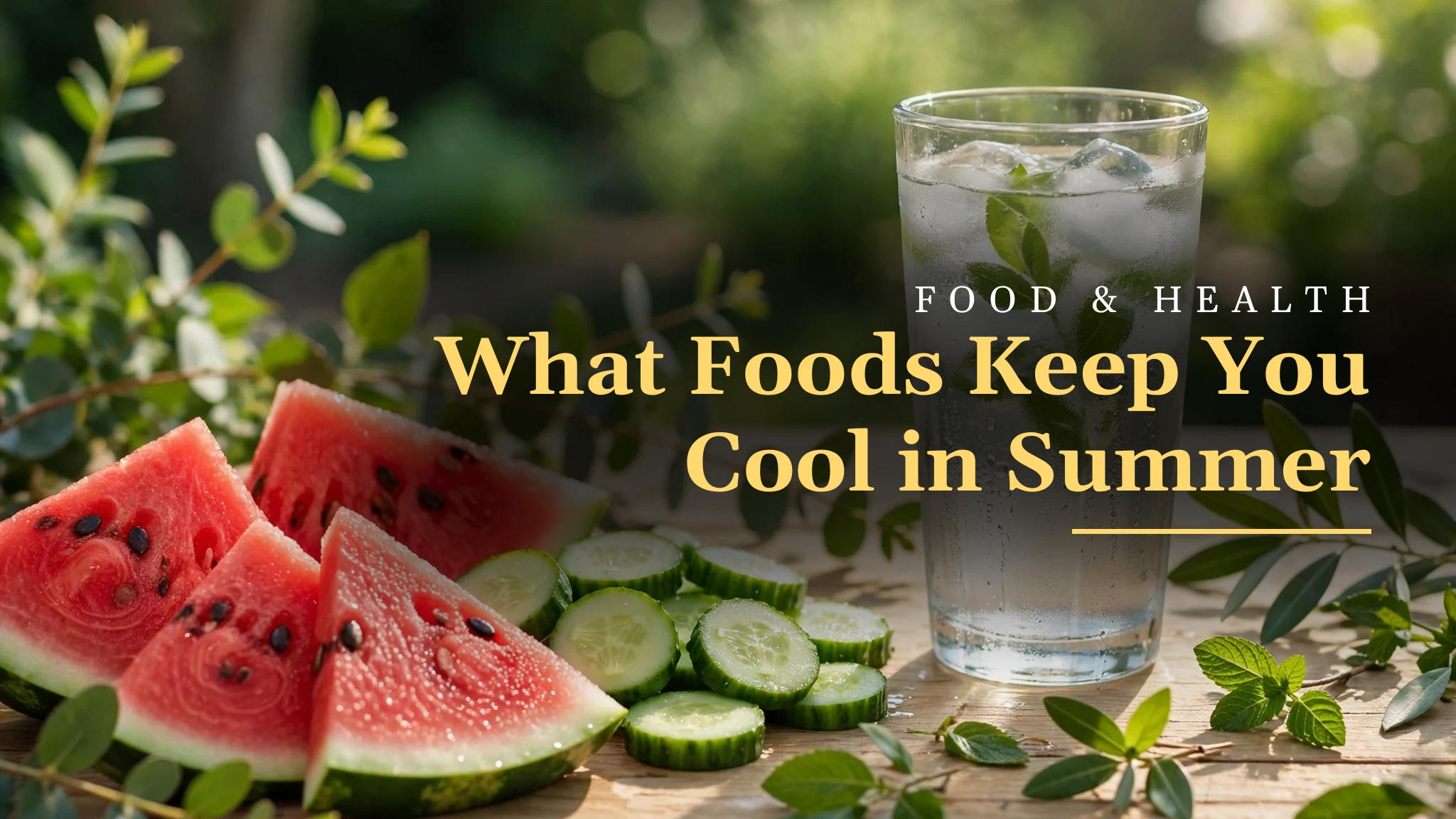
After water, the most useful summer foods are fruits and vegetables with a high water content. Watermelon is the best example, and it is famous for a reason. A slice of watermelon is about nine-tenths water, so eating it is almost like drinking, except that it also gives you natural sweetness, a little fibre, and vitamins. It is light, it is easy to eat, and a cold slice on a hot afternoon feels genuinely refreshing. Other melons, such as cantaloupe, work in a similar way. If you can buy watermelon in summer, it is one of the best choices you can make.
Cucumber is another simple winner. It is mostly water, it is crisp and cool, and it can be eaten raw with a little salt and lemon, added to a salad, or mixed into yoghurt. It adds bulk and freshness to a meal without adding heaviness. Tomatoes are also very watery, and they work well in salads and light cooking. Oranges, grapefruit and other citrus fruits give you water plus vitamin C, and their sharp taste feels refreshing when you are hot and tired. A peeled orange eaten slowly is a good afternoon snack, and it is far better than a biscuit or a packet of crisps.
Berries, grapes, peaches, plums, mangoes and pineapples are all good summer fruits too, each in its own way. Grapes are easy to eat and full of water. Peaches and plums are soft, juicy and light. Mango is sweeter and heavier than watermelon, so a small portion is enough, but a ripe mango is one of the great pleasures of summer and there is no reason to avoid it. Pineapple is sharp and refreshing, though its acidity can bother some stomachs if eaten in large amounts. The practical rule is to eat a mix of fruits across the day, rather than a large amount of one very sweet fruit at once. A bowl of mixed fruit, or fruit eaten between meals, is an easy habit.
There is one more point about fruit in summer that people often forget: it is best eaten fresh and, if you like, cold. Keep fruit in the fridge or in a cool place, wash it before eating, and cut it just before you eat it. Fruit that has been cut and left out in the heat for hours loses its freshness and can go off. A cold orange from the fridge on a hot day tastes far better than a warm one that has been sitting in the sun, and it feels more refreshing too.
Light Meals That Do Not Weigh You Down
A light summer meal is not a small meal, and it is not a boring meal. It is a meal that is easy to digest and does not leave you feeling heavy. The easiest way to build one is to start with a base that is gentle on the stomach, add some protein, and add plenty of salad or vegetables. Rice is a good base in summer: plain rice, rice with lentils, or rice with a light vegetable curry. Bread is fine too, especially thin flatbread, but a very heavy bread meal with a rich curry can feel too much at midday. Lentils and beans give you protein and keep you full, and a thin lentil soup, or daal, is one of the best summer lunches because it gives you fluid, salt and protein in one bowl.
Yoghurt deserves a special mention. Plain yoghurt is cool, light, easy to digest, and it gives you protein and calcium. A bowl of yoghurt with cucumber and a little salt, or yoghurt with fruit, is a perfect light lunch on a hot day. In many countries, a thin yoghurt drink is a traditional summer drink for exactly this reason: it cools, it refreshes, and it is easy on the stomach. If you eat yoghurt, choose plain yoghurt rather than a very sweet flavoured one, and keep it cold in the fridge. Yoghurt that has been left out in the heat should not be eaten.
Salads are the other obvious summer food, but they need to be real salads, not just a few leaves on the side of a heavy meal. A proper summer salad has cucumber, tomato, onion, lettuce or cabbage, lemon juice and a little salt, and it can be a meal in itself when you add chickpeas, boiled eggs, cheese, or grilled chicken or fish. The vegetables give you water and fibre, the protein keeps you full, and the whole plate stays light. Add a small portion of rice or bread if you are still hungry, rather than doubling the oily main dish.
For people who eat meat, grilled or lightly cooked meat suits summer better than deep-fried meat. A piece of grilled chicken or fish with rice and salad is a good summer dinner. Fried meat, very rich curries, and heavy cheese dishes are better saved for cooler days, or eaten in smaller portions. This is not a strict rule, and an occasional fried meal in summer will not harm a healthy person. It is simply that, day after day, lighter cooking leaves you feeling better in heat, and heavier cooking leaves you feeling sluggish.
What to Avoid When It Is Very Hot
Some foods do not suit the hottest days, and it helps to know which ones they are so you can choose around them. The first group is very oily and deep-fried food. Fried snacks, heavy fried bread, and food cooked in a lot of oil take longer to digest, and digesting them produces more heat inside the body. They also tend to make you thirsty. You do not have to give them up completely, but eating them every day at noon in peak summer is a recipe for feeling heavy and tired.
The second group is very spicy food. A little chilli or spice is fine, and in some hot countries spicy food is traditional, partly because it makes you sweat and sweating cools you. But very hot, very spicy food can upset the stomach, make your face flush, and leave you feeling hotter rather than cooler, especially if you are not used to it. On a very hot day, choose mild seasoning, and save the hottest dishes for a cooler evening.
The third group is very salty snacks eaten on their own, such as packets of crisps and salted nuts in large amounts. A little salt is normal, and you do lose some salt in sweat, but eating a lot of salty snacks without drinking enough water can make you feel more thirsty. A small amount is fine, especially with water, but a whole packet of crisps as a meal is a poor choice in summer, because it gives you salt and oil with almost no water and no real nutrition.
The fourth group is alcohol and very sweet drinks, already mentioned above. Alcohol makes you pass more urine, so it works against hydration, and it can be dangerous in heat. Sweet fizzy drinks feel cold for a moment, but they do not replace water well, and drinking them all day adds a lot of sugar. If you are at a summer gathering, a glass of cold water, a lemon drink with little sugar, or a thin yoghurt drink will serve you far better than a sweet fizzy drink or alcohol.
Finally, be careful with food that has been left out in the heat. Cooked rice, meat, milk and yoghurt can go off quickly in summer, and eating food that has gone off can cause stomach illness. Keep food covered, keep it in the fridge, and do not eat food that smells off or has been sitting in the sun for hours. This is a safety point, not a diet point, but it is one of the most important summer food rules of all.
Cooling Drinks Beyond Water
Water is the foundation, but there are other drinks that suit summer well, and many of them are traditional for a reason. The simplest is lemon water: plain water with fresh lemon juice and a tiny pinch of salt, or a very small amount of sugar if you prefer. It tastes fresh, it replaces a little of the salt you lose in sweat, and it encourages you to drink more. Mint water, or water with mint leaves and cucumber, works in the same way. These drinks are easy to make at home, they cost very little, and they are far better than a shop-bought sweet drink.
Coconut water, where it is available, is another good summer drink. It is naturally sweet, it contains water and minerals, and it feels light and refreshing. It is more expensive than plain water in many places, so it is best treated as an occasional drink rather than a daily replacement for water, but on a very hot day it is a good choice. Buttermilk, or a thin yoghurt drink with a pinch of salt and cumin, is also excellent. It is light, it gives you a little protein, and it settles the stomach. A glass of cold milk is fine too, though full-cream milk can feel heavy for some people in heat, so a smaller glass is often enough.
Fresh fruit juice can be pleasant, but it is best in small amounts. A small glass of fresh orange juice or watermelon juice gives you vitamins and water, but it also gives you a lot of natural sugar in a short time, and it has almost no fibre, because the fibre is left behind when the fruit is juiced. Eating the fruit whole is usually better. If you do drink juice, keep the glass small, drink it with a meal rather than on an empty stomach, and do not use it as your main drink through the day. Iced tea without sugar, or with only a little sugar, is another light option, but sweetened iced tea from a shop is often just a sweet drink with a different name.
One practical habit helps more than any recipe: keep a jug of cold water or lemon water in the fridge, and keep a bottle with you when you go out. When a cool drink is ready and within reach, you drink it. When it is not, you forget, and by the time you feel very thirsty you are already short of fluid. The best cooling drink is the one you actually drink, regularly, through the day.
A Simple Summer Day of Eating
It helps to see how all of this fits into a normal day, so here is a simple example, not a strict plan. In the morning, when it is still cool, eat a proper breakfast: bread or porridge with fruit, a boiled egg or some yoghurt, and a glass of water or a cup of tea. Breakfast matters in summer, because it gives you energy before the heat of the day, and because many people eat too little at breakfast and then feel tired by late morning.
At midday, when the heat is strongest, keep lunch light. A bowl of rice with thin lentils, a salad of cucumber and tomato, and a bowl of yoghurt is a good lunch. Or a plate of salad with chickpeas and bread, and a glass of lemon water. Eat slowly, in the shade if you can, and drink water with the meal. Avoid a large fried lunch at this hour, because it will leave you sleepy for the afternoon. If you work outside, eat a little more, because you are using more energy and losing more sweat, but keep the meal light and drink more water with it.
In the afternoon, when you feel hungry again, eat fruit. A slice of watermelon, an orange, a few grapes, or a small bowl of mixed fruit is a far better snack than biscuits or crisps. It gives you water, natural sweetness and vitamins, and it does not sit heavy. A glass of cold water or a thin yoghurt drink goes well with it. If you need something more filling, a small bowl of yoghurt with fruit is a good choice.
In the evening, when the temperature drops, you can eat a more normal dinner: grilled chicken or fish, or a vegetable curry, with rice or bread and salad. This is the meal where you can enjoy richer food, because the heat has eased and your body can handle it better. Finish with fruit rather than a heavy sweet dessert, and drink water through the evening. Before bed, a small glass of water is enough. There is no need to eat a large meal late at night in summer, because it can disturb sleep in the heat.
This is only an example. Your own day may look different, and that is fine. The pattern is what matters: a good breakfast, a light lunch, fruit in the afternoon, a normal dinner, and water all through the day. If you follow that pattern, you will already be eating in a way that suits summer, without buying anything special or following a complicated diet.
My Take:
If you ask me what I think about eating to stay cool in summer, my answer is simple: it is mostly common sense, and the best foods are the ones you already know. I think people make summer eating too complicated. They look for a special food, a special drink, or a special trick that will beat the heat, when the honest answer is water, fruit, yoghurt, light meals and a little care about what you avoid. A slice of cold watermelon, a glass of water, a bowl of yoghurt and a light lunch will do more for you on a hot day than any expensive drink or imported superfood. That is not a boring answer. It is a useful one, because it is an answer you can actually follow.
I think the reason water matters so much is that people underestimate how much they lose in sweat. You do not have to be running or working hard to lose fluid in summer. Just sitting in a hot room, walking to the shop, or standing in the sun is enough. The loss is slow and quiet, so you do not notice it until you feel tired or get a headache. By then you are already short of water. That is why I believe in sipping water through the day, not waiting for strong thirst. Keep a bottle where you can see it. Fill a jug in the morning and finish it by evening. Make water easy, and you will drink it. Make it hard, and you will forget. It really is that simple, and I have seen how much difference this one habit makes.
I also think fruit is the most underrated summer food. People talk about fruit as if it were only a sweet treat, but in summer it is also a source of water. A watermelon is almost all water. A cucumber is almost all water. An orange gives you water and vitamin C. When you eat fruit, you are drinking and eating at the same time, and you are getting fibre and vitamins with it. Compare that with a packet of biscuits, which gives you calories and salt and almost no water. On a hot day, the fruit is the better choice by a long way, not because biscuits are evil, but because fruit fits what your body needs in heat. I would rather see a person eat fruit in the afternoon than reach for a sweet drink, because the fruit does the job better and leaves you feeling fresher.
There is another point I want to make, and it is about heavy food. I like rich food as much as anyone, and I am not saying you should give it up for three months. But I have noticed that a heavy, oily lunch in the middle of a hot day is one of the quickest ways to feel sleepy, uncomfortable and thirsty for the rest of the afternoon. Your body is already working hard to stay cool, and asking it to digest a large fried meal at the same time is asking too much. A light lunch is not a punishment. It is a kindness to your body. Eat the rich food in the evening, when it is cooler, and you will enjoy it more and feel better afterwards. That is my practical view, and I think most people who try it will agree.
I also want to be honest about what food cannot do. No food will make a very hot day feel cool. If the temperature is forty degrees, you will feel hot whatever you eat. Food can help you feel a little fresher, a little lighter, and a little less tired, and that is worth having, but it is not a replacement for shade, rest, a fan, or a cold shower. Anyone who tells you that a certain food will “cool your body” in a dramatic way is exaggerating. The real benefit is smaller and more honest: you replace fluid, you avoid extra heat from digestion, and you eat foods that feel fresh. That is enough, and I would rather give you that honest version than a promise that no food can keep.
Money is part of this too, and I think it is worth saying plainly. The best summer foods are also the cheapest. Watermelon, cucumber, oranges, yoghurt, rice and lentils are not expensive. They are ordinary foods that most families can buy. You do not need a special summer diet that costs a lot of money. In fact, the most expensive summer drinks, the sweet bottled drinks and the fancy juices, are often the worst choices, because they give you sugar instead of water. I think that is an important point for families who are watching their money: eating well in summer does not mean spending more. It often means spending less, because you are buying water, fruit and simple foods instead of fried snacks and sweet drinks.
I think children need special attention in summer, because they lose water faster than adults and they often forget to drink. A child who is playing outside in the heat can become short of fluid without noticing, and by the time they feel thirsty they may already feel tired or get a headache. I would say to any parent: keep water within reach, offer fruit in the afternoon, and do not rely on sweet drinks to keep a child hydrated. A slice of watermelon, an orange, or a glass of water is better than a fizzy drink, and a child who learns to drink water in summer will carry that habit for life. The same applies to older people, who often feel less thirsty even when they need water. For them, a regular glass of water through the day matters more than waiting for thirst.
There is also the question of routine, and I think routine matters more than any single food. A person who drinks water regularly, eats a light lunch, and eats fruit in the afternoon will feel better through the whole summer than a person who eats perfectly for one day and then forgets for a week. Health is not built in a day. It is built by small habits repeated every day, and summer is a good time to start those habits because the benefit is immediate: you feel fresher the same afternoon. I would rather you do a little every day than try to do everything at once and give up after three days.
If a friend asked me for one simple summer eating plan, I would give them this: drink water through the day, eat fruit in the afternoon, keep lunch light, save richer food for the evening, and be careful with food left out in the heat. That is five things, and none of them is difficult. You do not need to remember a list of twenty foods. You need a pattern that fits your life, and this pattern fits almost any life, whether you work outside, work in an office, study, or stay at home. Try it for a week and notice how you feel in the afternoon. I think most people will notice the difference, and that is the best proof of all.
I want to end with a note of caution, because summer heat can be serious. If you feel dizzy, confused, very sick, or you stop sweating on a very hot day, that is not a food problem, and drinking water alone may not be enough. Move to a cool place, rest, and get help. The same applies to a child or an older person who seems unwell in the heat. Food and drink can help you stay comfortable in normal summer heat, but they cannot replace medical help when someone is seriously unwell. Knowing that difference is part of eating sensibly in summer, and it is more important than any list of cooling foods.
I also think about the people who work outside in summer, because their needs are different from the needs of a person who sits in a cool office. A labourer, a farmer, a driver, or anyone who spends hours in the sun loses far more water than a person indoors, and a normal glass of water at lunch is not enough for them. They need water before work, water during work, and water after work, and they need food that is easy to eat in the heat. A packed lunch of rice and lentils, with cucumber and an orange, and a bottle of water, is far better for a working person than a fried snack bought from a stall, because it gives steady energy and fluid without sitting heavy in the stomach. If you work outside, do not wait until you feel dizzy or sick to drink. Drink regularly, rest in the shade when you can, and eat a proper meal when you stop. Your body is doing hard work in the heat, and it deserves proper fuel.
Shopping and storage are another part of summer eating that people do not think about enough. In summer it is better to buy fruit and vegetables more often and in smaller amounts, rather than buying a large amount once a week and watching it go soft in the heat. A watermelon bought today and eaten today tastes far better than one bought five days ago and left in a warm room. Keep fruit in the fridge if you have one, and keep it in the coolest part of the house if you do not. Wash fruit before eating, cut it just before you eat it, and do not leave cut fruit out for hours. These are small habits, but they save money, because less food is wasted, and they keep food safe, because food that has gone off in the heat can make you ill. A little planning at the shop saves both money and trouble at home.
I also want to say something about family meals in summer, because eating together changes how people eat. When a family eats a light lunch together, with salad and yoghurt on the table, everyone eats better, including children. When each person eats alone, grabbing whatever is quickest, the food is usually worse: a packet of crisps here, a sweet drink there, and no real meal at all. A shared meal does not need to be fancy. Rice, lentils, salad, yoghurt and fruit on the table is a complete summer lunch, and it is a meal that a whole family can enjoy. If you are the person who cooks, you have more influence than you think. Put water on the table instead of a sweet drink, put fruit on the table after the meal, and keep the fried food for a cooler evening. Those small choices shape what the whole family eats.
There is one more trap I want to name, and it is the sweet drink trap. On a hot day, a cold fizzy drink feels like the answer. It is cold, it is sweet, and it is sold everywhere. But after the first cold minute, it does not do what water does. It does not replace fluid well, it adds sugar, and it often leaves you thirsty again soon after. The same is true of many shop-bought juices, which are often sweetened and have almost no fibre. I am not saying you can never drink them. A small glass at a party is fine. I am saying that if you drink them all day, every day, through the whole summer, you are spending money on sugar and getting less hydration than you would from water. A jug of lemon water in the fridge costs almost nothing, tastes fresh, and actually helps your body. That is a better daily habit, and I think most people who switch will feel the difference within a few days.
Evening food deserves a thought too, because summer evenings are when people finally feel hungry again. After a light lunch and fruit in the afternoon, an evening meal can be more satisfying: grilled meat or fish, a vegetable curry, rice or bread, and salad. This is the meal to enjoy, and there is no need to keep it light. Eat slowly, eat with family if you can, and finish with fruit rather than a heavy sweet. A large, very sweet dessert late in the evening can disturb sleep in hot weather, and poor sleep makes the next day harder. A simple evening meal, eaten at a reasonable hour, helps you sleep better, and better sleep helps you cope with the next hot day. Food, sleep and heat are all connected, and a good evening meal is part of that circle.
Finally, I want to say that summer eating is not a test, and it is not a diet to pass or fail. Some days you will eat perfectly, with water, fruit and a light lunch. Other days you will eat a fried snack, drink a sweet drink, and feel heavy afterwards. That is normal life, and one imperfect day does not undo a whole summer of good habits. What matters is the pattern over weeks, not the perfection of a single day. If you notice that you feel better on the days you drink water and eat light, trust that feeling. It is your body telling you what works. Keep doing more of what works, and less of what leaves you tired, and you will get through the summer feeling fresher, lighter and more comfortable than you would on a diet of fried food and sweet drinks.
So here is my final view, in plain words. Eat and drink for the heat you are in. Water first, fruit often, yoghurt and salads when you can, light lunches, and richer food in the cooler evening. Avoid a day of fried food, sweet drinks and salty snacks when the sun is at its strongest. Keep food fresh and cold where it needs to be. Do not expect a miracle from any one food, and do not spend money on drinks that promise to cool you. The foods that keep you cool in summer are simple, cheap and already in your kitchen, and that, in my view, is exactly why they work.
Frequently Asked Questions
Is what foods keep you cool in summer something I should think about every day?
Yes, in a simple way. You do not need to plan every meal around it, but on hot days it helps to choose water over sweet drinks, fruit over biscuits in the afternoon, and a light lunch over a heavy fried one. Those three small choices, made every day through summer, make a real difference to how fresh and comfortable you feel.
How long does it take to notice anything from what foods keep you cool in summer?
You can often feel a difference on the same day. Drinking enough water and eating a light lunch instead of a heavy one can leave you feeling fresher by the afternoon. Fruit as an afternoon snack can help the same day too. The benefit is not something that takes weeks to appear; it is the result of giving your body water and light food when it is hot.
Can what foods keep you cool in summer fit into a busy workday?
Yes, it fits a busy day well, because it is mostly about simple swaps. Carry a water bottle, eat fruit instead of a packet snack, choose rice and salad or lentils and yoghurt for lunch, and keep a jug of lemon water in the fridge at home. None of these needs extra time or special cooking, and they work whether you are at work, at home, or out in the heat.
What is the simplest way to start with what foods keep you cool in summer?
Start with water. Keep a bottle where you can see it and sip through the day, and add a slice of watermelon or an orange in the afternoon. That is enough for a first step. Once that feels normal, make lunch lighter on the hottest days and add a bowl of yoghurt or a salad. One small change at a time is easier to keep than changing everything at once.
Does what foods keep you cool in summer work the same way for everyone?
No, it does not feel the same for everyone. People who work outside in the sun lose more water and need more fluid than people who sit indoors. Children and older people need more care with drinking, because they may not feel thirsty in the same way. Stomachs differ too, so a food that suits one person may not suit another. The pattern is the same for most people, but the amount of water and the foods you choose should fit your own day and your own body.
What should I do if what foods keep you cool in summer does not suit me?
If a food leaves you feeling uncomfortable, bloated or unwell, stop eating it and go back to what suited you before. For example, if a lot of raw fruit upsets your stomach, eat smaller portions, or choose cooked vegetables and yoghurt instead. If you feel dizzy, very sick, confused or faint in the heat, that is not a food problem, and you should move to a cool place, rest and get help from a health professional.
Sources
- NHS — Eat Well
- World Health Organization — Nutrition
- Centers for Disease Control and Prevention — Nutrition
- Healthline — Nutrition
- Mayo Clinic — Nutrition and Healthy Eating
This article is general information only. It is not medical advice and it does not diagnose, treat, or cure anything. For personal concerns, speak to a qualified health professional.


