What to Eat Before a Morning Walk
In this post
- Why a Walk on an Empty Stomach Feels Different
- The Banana, the Dates and the Glass of Water
- Oats, Toast and Porridge: Three Small Plates
- Timing: The Twenty-Minute Gap
- What to Skip Before Lacing Up
- Summer Mornings and Winter Mornings
- Building Your Own Pre-Walk Plate Over a Week
- Walking After a Late Dinner the Night Before
- Tea, Coffee and the Pre-Walk Drink
- The Walk Back Home: Breakfast Done Right
- My Take:
Why a Walk on an Empty Stomach Feels Different
A morning walk starts before the first step, in the kitchen, with whatever sat in your stomach overnight. After seven or eight hours without food, the tank reads low. Some walkers love that light, hollow feeling and stride out the door with nothing but a glass of water. Others feel shaky by the second street, their legs suddenly heavy, their thoughts foggy. Both reactions make sense. Overnight, the body has been quietly burning stored fuel to keep breathing, heartbeat, and temperature steady. By sunrise, that store has thinned. A small bite before walking tops it up just enough for the muscles to work without complaint.
Think of a rickshaw driver starting his engine after a cold night. He does not fill the whole tank for a short trip across town; he adds a little petrol so the engine turns over smoothly. Your legs work the same way on a forty-minute walk around the park. A banana, two dates, or a slice of toast gives the muscles quick fuel without weighing the stomach down. A full plate of paratha and fried egg, on the other hand, sits like a stone. The stomach, asked to digest a heavy breakfast and power a walk at the same time, splits its effort and does neither job well. Walkers who eat a heavy breakfast first often feel sluggish, burp their way around the block, and cut the walk short.
The difference shows up most clearly in the second half of the walk. In the first ten minutes, almost anyone feels fine, fuelled by habit and fresh air. Around minute twenty, the body starts asking where its energy is coming from. A walker who ate a date and drank water keeps a steady pace, breathing evenly, arms swinging. A walker who skipped food entirely sometimes feels a sudden dip, a light head, a strange hunger that arrives all at once. That dip is not weakness. It is a simple message: the easy fuel ran out, and the body is switching to deeper stores. A small snack before leaving smooths that switch so the walker barely notices it.
Age and routine change the picture too. A teenager can often walk for an hour on nothing and feel brilliant. A person in their fifties who takes morning medicine, or someone who woke at five for prayers and has not eaten since dinner at nine, has a longer overnight gap to cover. For them, a pre-walk bite is less of a luxury and more of a practical step, like checking the shoelaces before a run. The goal is never a feast. The goal is a bridge: just enough food to carry the body from the bed to the breakfast table after the walk, without a wobble in between.
The Banana, the Dates and the Glass of Water
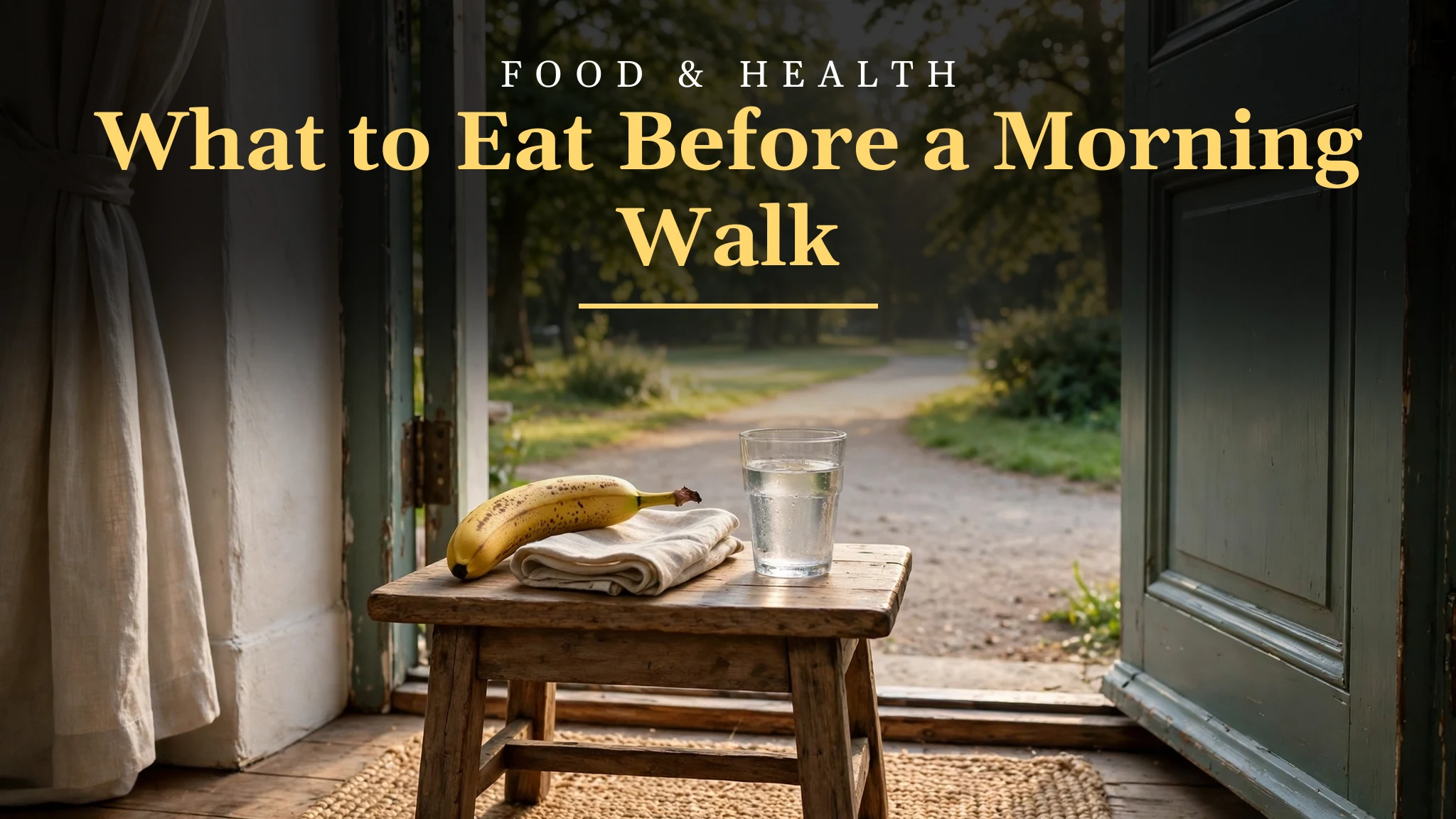
If one food had to win the pre-walk contest, the banana would take it without a fight. It comes in its own wrapper, needs no cooking, no plate, no washing up. A medium banana carries quick energy, a little potassium, and enough softness that the stomach barely notices it. Peel it while the kettle boils, eat it slowly standing at the kitchen counter, and by the time the shoes are tied, it has already started working. Many walkers keep a bunch on the counter all week for exactly this job. A banana that is slightly speckled, with brown dots on the peel, is actually the sweetest and easiest to digest before a walk.
Dates play a similar role, especially in homes where they are already on the shelf for Ramadan or for tea. Two or three dates, chewed slowly with a glass of water, give a fast lift without any cooking. Their natural sweetness wakes the mouth up, and their chewiness forces a slower pace, which is useful: a walker who bolts food in five seconds often feels it bouncing later. Dates also travel well. Tuck two into a pocket for a longer walk, and they sit there quietly until the halfway point, when a small top-up feels welcome. In winter, when the air bites, a date with a few almonds feels warmer and more satisfying than a cold banana.
Water deserves its own mention because walkers forget it more than food. Overnight, the body loses water through breathing alone, and a dry mouth in the morning is a real signal. One full glass of plain water, drunk slowly five or ten minutes before leaving, does more than most people expect. It softens the food, wakes the stomach, and keeps the head clear. Walkers who skip water and then walk fast in summer heat sometimes feel dizzy, not from hunger but from thirst. A small bottle carried along is a good habit in June and July, when the sun climbs quickly and the park paths turn dusty by eight o’clock.
Oats, Toast and Porridge: Three Small Plates
Some walkers want more than fruit. A small bowl of oats, cooked thin with milk or water and finished with a sliced banana, is the classic answer. The trick is the size: a small bowl, not a deep one, and oats cooked soft, almost soupy, so they slide down easily. A spoonful of honey or a few raisins on top adds sweetness without cooking time. Oats release their energy slowly, which suits a walker planning a full hour rather than a quick twenty minutes. The bowl should be finished at least twenty minutes before the door opens, giving the stomach a head start.
Toast offers the fastest option for people who dislike porridge. One slice of brown bread, lightly toasted, with a thin spread of peanut butter or a smear of jam, takes two minutes to make and ten seconds to eat. Peanut butter adds a little staying power, a richness that fruit alone lacks. Jam is lighter and sweeter, better for walkers who feel heavy after anything creamy. A boiled egg on toast is also possible, but the egg should be eaten slowly and the walk should wait a little longer, because eggs sit heavier than jam. The rule stays the same: one slice, not three, and a topping spread thin, not piled high.
Porridge made the night before works for walkers who leave at dawn and hate morning noise. Cooked oats set in the fridge overnight, then eaten cold with a few berries or a drizzle of honey, taste surprisingly good and need no stove at all. A small jar of overnight oats can wait in the fridge for two or three days, and each morning the walker just spoons out a few mouthfuls. This suits people who walk before the household wakes, when clattering pots would wake children or a sleeping spouse. Cold porridge also feels cooling in summer, when a hot bowl would be the last thing anyone wants at six in the morning.
Timing: The Twenty-Minute Gap
Food and walking need a little space between them, and twenty minutes is the sweet spot most walkers settle on. Eat the banana, drink the water, tie the shoes, check the phone, lock the door, and by the time the street appears, the food has begun its journey. A walker who eats and immediately sprints out the gate often feels the food sloshing, especially after toast and tea. That sloshing is the stomach protesting: it was mid-task when the legs started bouncing. Waiting is not laziness. It is giving the body a clean handover from one job to the next.
Longer waits suit heavier food. A walker who eats a full bowl of porridge with milk and nuts might wait thirty minutes and use the time to stretch, fold the blanket, or water the plants. A walker who eats only two dates might leave after ten minutes and feel fine. The pattern is simple: the heavier the bite, the longer the gap. A useful test is the stair test. If climbing the stairs to the roof feels comfortable, the walk will too. If the stairs bring a stitch or a burp, wait another ten minutes. The body gives honest signals when anyone bothers to listen.
Timing also matters for the walkers who pray Fajr and then head straight out. The gap between prayer and sunrise is short, and the temptation is to skip food entirely rather than wait. A date eaten right after prayer, followed by water, solves this neatly: by the time the prayer mat is folded and shoes are on, ten minutes have passed. For walkers who eat breakfast after the walk, this small bite is not breakfast. It is a starter, a placeholder that keeps the body steady until the real breakfast of eggs, bread, and tea waits on the table back home.
What to Skip Before Lacing Up
Not everything in the kitchen belongs before a walk. Fried foods top the avoid list. A paratha dripping with ghee, a plate of leftover fried chicken, or a samosa from last night’s dinner sits in the stomach like a wet towel. Fat slows digestion, and a walk shakes a full, fatty stomach into protest. Spicy food causes similar trouble. Green chillies at dawn might sound brave, but they often return as heartburn halfway around the park, especially when the walker bends to tie a shoe or climbs a slope.
Sugary drinks and fresh juice are a subtler trap. A glass of orange juice feels light and healthy, but it delivers a fast rush of sweetness with almost no staying power. The walker feels bright for ten minutes, then flat. Whole fruit beats juice every time because the fibre slows the sweetness down. Fizzy drinks are worse: the bubbles expand in a moving stomach and turn into burps. Even sweet milky tea, beloved as it is, can feel heavy before a walk if the cup is large and the sugar is heaped. A small cup is fine; a giant mug with three spoons of sugar is a breakfast in itself, and it wants a rest, not a walk.
Heavy dairy also deserves caution. A tall glass of cold lassi, thick with cream, is a meal, not a drink. Walkers who love lassi should save it for after the walk, when the body actually wants richness and coolness. The same goes for a big bowl of yoghurt with nuts and honey. Lovely food, wrong moment. Before a walk, the stomach wants small, soft, simple things. After a walk, it can handle the good stuff. Remembering that order — light before, generous after — saves many walkers from a queasy lap of the park.
Summer Mornings and Winter Mornings
Seasons change the pre-walk plate more than most walkers realise. In summer, the walk starts early to beat the heat, and the body wants cool, watery foods. A banana, a few slices of cucumber, a glass of water, and perhaps a small piece of watermelon eaten ten minutes before leaving suits a June morning. Heavy porridge feels wrong when the air is already warm and the shirt sticks to the back. Walkers in July should also carry water, because sweat starts within minutes and the morning sun is stronger than it looks at six o’clock.
Winter flips the menu. A cold banana straight from the fridge can feel unpleasant at dawn in January, when the breath fogs and the hands are stiff. Warm porridge, a slice of toast with peanut butter, or a date with a few walnuts feels kinder. A small cup of warm milk or green tea before the walk warms the hands and the stomach together. Winter walkers also tend to walk a little later, after the sun has risen, which gives more time for a slightly bigger bite and a proper wait. The cold air makes the body burn fuel faster, so a slightly larger snack is not a mistake; it is a response to the season.
Monsoon mornings bring their own wrinkle: humidity. The air feels thick, the shirt dampens quickly, and the stomach often feels less hungry. Walkers in August might eat even less than usual, perhaps just a date and water, and feel perfectly fine. Listening to the season is part of the skill. A walker who eats the same heavy breakfast before a walk in every month of the year will feel great in December and miserable in July. The plate should change when the weather changes, just like the shoes and the shirt.
Building Your Own Pre-Walk Plate Over a Week
The best pre-walk food is the one the walker actually eats, happily, without a fuss. A good way to find it is a one-week test. On Monday, try the banana and water. On Tuesday, try two dates and a handful of almonds. On Wednesday, try a small bowl of oats. On Thursday, try toast with peanut butter. On Friday, try nothing but water, and notice how the walk feels. On Saturday, try the overnight oats jar. On Sunday, pick the winner and repeat it. By the end of the week, the walker knows their own body: which food gives steady legs, which one causes a stitch, which one leaves them hungry at the halfway mark.
Keep notes, even simple ones. A line in the phone — “Tuesday: dates, good pace, no stitch” — is worth more than any article. Bodies differ. A walker with a sensitive stomach may love toast and hate bananas. Another may find oats perfect and dates too sweet. There is no universal plate, only a personal one. The week-long test also reveals patterns: perhaps the walker feels best on days when the food is eaten slowly, sitting down, rather than grabbed on the way out. The pace of eating matters as much as the food itself.
Over time, the pre-walk bite becomes a ritual, as automatic as the shoes by the door. The banana bunch on the counter, the dates in the jar, the oats tin on the shelf: these become part of the walking kit, as important as comfortable shoes and a cap. And the real prize is not the food. It is the walk itself, done well, at a steady pace, with clear thoughts and easy breathing, finished with an appetite for a proper breakfast. A small bite before the walk is the quiet helper that makes all of that possible, day after day, season after season.
Walking After a Late Dinner the Night Before
A heavy dinner changes the morning walk more than most walkers expect. A person who ate a rich meal at midnight — a wedding dinner, a late-night barbecue, a second helping of biryani at a family gathering — wakes with a stomach that is still working. The food from last night has not fully cleared, and the body feels sluggish before the shoes are even on. On such mornings, the pre-walk bite should be smaller than usual, or skipped entirely in favour of water alone. The stomach already has fuel from last night; adding more on top is like pouring water into a glass that is already full.
The walk itself can help clear that heavy feeling. Gentle movement stirs the digestion, and many walkers report that a slow first lap, taken at an easy pace, settles a heavy stomach better than lying in bed. The key is the pace: slow, unhurried, with deep breaths. A fast, sweaty walk on a full stomach from last night will only make the discomfort worse, turning a mild heaviness into nausea. The wise walker reads the morning: if the stomach feels full, walk slowly and eat later. If it feels empty, eat a little and walk normally. The body gives a clear report each morning, and the walker who listens rarely goes wrong.
Late dinners also affect thirst. Salty food eaten late at night leaves the mouth dry in the morning, and the walker wakes up craving water. Two glasses of water before leaving, instead of one, suits these mornings. A squeeze of lemon in the water can help too, cutting through the stale taste in the mouth and waking the senses. The lemon water is not a medicine. It is a small pleasure, a fresh start, and on a morning after a heavy dinner, small pleasures matter. The walker who handles the morning after a feast with water, patience, and a slow pace will feel human again by the second lap, and ready for a light breakfast when the walk ends.
Tea, Coffee and the Pre-Walk Drink
Every walker has an opinion about tea before a walk, and most of them are strongly held. A small cup of milky tea, drunk slowly while the shoes are tied, is a morning ritual for millions. The warmth wakes the body, the sweetness gives a little energy, and the habit itself is comforting. A small cup is fine. The problem is the large mug, taken with three spoons of sugar and a plate of biscuits, which is not a drink but a meal in disguise. That meal wants a rest, not a walk, and the walker who drinks it and leaves immediately often feels it sloshing for the first kilometre.
Coffee is a different story. A small black coffee before a walk can sharpen the mind and wake the legs, and many walkers swear by it. Coffee also makes some people need the bathroom urgently, which is an awkward problem halfway around the park. A walker trying coffee before a walk for the first time should test it on a short walk near home, not on a long route far from any facilities. Green tea sits in the middle: lighter than milky tea, gentler than coffee, warm and pleasant, with just enough flavour to make the morning feel civilised. A cup of green tea with a date is a combination many walkers settle on for years.
The safest rule is simple: keep the pre-walk drink small, warm, and light. A small cup of anything is a companion to the walk. A large jug of anything is a burden. And water, plain and unglamorous, remains the best pre-walk drink of all, because it does its job without asking for attention. The walker who drinks a glass of water, eats a banana, and steps out the door has done everything the body needs. The tea can wait until breakfast, when it can be enjoyed properly, sitting down, with the walk already done and the day already won.
The Walk Back Home: Breakfast Done Right
The best part of a morning walk is often the breakfast that follows it. The body, warmed up and awake, is ready for real food, and the appetite is honest. This is the meal where the generous foods belong: eggs, bread, a proper cup of tea, a bowl of yoghurt, a plate of fruit. A walker who ate lightly before the walk can eat heartily now, without guilt, because the food will be used well. The stomach, which was asked for almost nothing before the walk, is now ready for everything. This order — light before, generous after — is the whole secret of eating around a morning walk, and it works every day of the year.
A good post-walk breakfast does not need to be complicated. Two eggs, two slices of bread, a cup of tea, and a piece of fruit cover most needs. A bowl of porridge with nuts and honey is a fine alternative, and a plate of chickpeas with bread suits walkers who prefer a savoury start. The key is protein and substance, the things that were deliberately avoided before the walk. The body after exercise wants to rebuild, and protein is its building material. A breakfast of only tea and biscuits, after a walk, leaves the walker hungry again by ten o’clock. A breakfast with eggs or lentils or yoghurt keeps them steady until lunch.
Timing the post-walk breakfast is easy: eat within half an hour of getting home, while the body is still warm and the appetite is fresh. Waiting two hours dulls the appetite and often leads to overeating at lunch instead. A walker who showers, changes, and sits down to breakfast within thirty minutes has completed the morning properly: a small bite, a good walk, a generous breakfast, and a day that starts with energy instead of a struggle. Over weeks and months, this rhythm becomes automatic, and the walker stops thinking about it entirely. The food, the walk, and the breakfast simply belong together, like the shoes by the door and the cap on the hook, ready for tomorrow morning.
My Take:
If you ask me what to eat before a morning walk, my answer is simple: eat something small, eat something light, and eat it about twenty minutes before you leave. A banana, two or three dates, a slice of toast, or a small bowl of oats, with a glass of water, is enough. That is the whole answer, and I think it is a good one, because it fits real life. A morning walk is not a race and it is not a workout in a gym. It is a gentle start to the day, and the food before it should be gentle too. A heavy breakfast before a walk is like carrying a bag of flour on a short errand: it does not help you, it only slows you down. A small bite, on the other hand, gives your legs just enough fuel to keep a steady pace, and then the real breakfast can wait until you are home, warm, and properly hungry.
I think the reason so many people get this wrong is that they treat the pre-walk bite as a breakfast, and it is not. Breakfast is the meal you eat after the walk, sitting down, with eggs or bread or porridge and a proper cup of tea. The bite before the walk is only a bridge between the bed and the breakfast table. It exists for one job: to carry you through forty minutes of walking without a wobble. When people understand that difference, the whole question becomes easier. You do not need to cook a meal at dawn. You do not need to eat a plate of food before you have even woken up properly. You need a banana and a glass of water, or a couple of dates, and then you can go. I like advice that is this simple, because simple advice is advice that people actually follow, day after day, year after year.
The banana is my first choice, and I will say why plainly. It needs no cooking, no plate, and no washing up. You can peel it while the kettle boils and eat it standing at the kitchen counter. It is sweet enough to feel like food, soft enough not to sit heavily, and it gives you quick energy that lasts long enough for a walk. Dates are a close second, especially in homes where they are already on the shelf. Two dates with a glass of water is a fine start, and dates travel well in a pocket for a longer walk. Toast with a thin spread of peanut butter suits people who want something more solid, and a small bowl of oats suits people who are planning a full hour. All of these are good. The mistake is not choosing the wrong one of these. The mistake is choosing something heavy, fried, or sugary, and then wondering why the walk felt miserable.
I also think water deserves more attention than it gets, because I believe thirst causes more morning trouble than hunger. A person wakes up after seven or eight hours without a drink, and their body has lost water all night through breathing alone. They step out into the summer heat, they walk fast, they start sweating, and by the second street their head feels light. They blame hunger, but the problem is often thirst. One full glass of water, drunk slowly five or ten minutes before leaving, is a small habit with a large effect. In summer, carry a small bottle too. Water is free, it is always available, and it is the one thing no walker should skip. If I could give a walker only one piece of advice, it would be this: drink water before you go, and eat something small with it.
Timing is the part people forget most, and I think it is worth saying clearly. Eat, then wait about twenty minutes, then walk. That gap is not laziness. It is the time your stomach needs to start its work before your legs start theirs. A walker who eats a banana and sprints out the gate will feel it bouncing. A walker who eats, ties their shoes, checks the door, and then leaves will feel nothing at all. The heavier the food, the longer the wait: a small bowl of porridge wants thirty minutes, two dates want ten. This is not a strict rule, it is a simple pattern, and your own body will tell you when you have it right. If the stairs to the roof feel comfortable, the walk will too. If the stairs bring a stitch, wait a little longer. Listen to that signal. It is honest, and it is free.
I want to be honest about walking on an empty stomach too, because some people love it and it works well for them. A short, gentle walk of twenty minutes on nothing but water is fine for many healthy people, especially younger ones. The problem comes with longer walks, hotter days, and older bodies. A person in their fifties who has not eaten since dinner at nine o’clock has a long gap to cover, and a morning walk on top of that gap can bring a sudden dip: a light head, heavy legs, a strange hunger that arrives all at once. That dip is not weakness. It is a simple message that the easy fuel ran out. A small bite before leaving smooths that message away. My view is that a small bite is the safer choice for most people, and it costs nothing, so there is no good reason to skip it. If you love walking on an empty stomach and it has always worked for you, keep doing it. But if you have ever felt shaky halfway around the park, try the banana first and see how different the second half feels.
Seasons change the plate, and I think a good walker changes with them. In summer, the body wants cool, watery food: a banana, a glass of water, perhaps a slice of watermelon, and a bottle to carry. Heavy porridge in July is a mistake, and walkers who eat it will feel it. In winter, the opposite is true: a cold banana from the fridge feels unpleasant at dawn, and a warm bowl of porridge or a slice of toast with peanut butter feels kinder. The cold air makes the body burn fuel faster, so a slightly larger snack is not a mistake in January. It is a response to the season. A walker who eats the same breakfast before a walk in every month of the year will feel great in December and miserable in July, and that is not a mystery. It is a sign that the plate should change when the weather changes, just like the shoes and the shirt.
I also think the week-long test is the best way to find your own plate, and I recommend it to anyone who is unsure. Try the banana on Monday, the dates on Tuesday, the oats on Wednesday, the toast on Thursday, nothing but water on Friday, and the overnight oats on Saturday. Keep one short line in your phone each day: what you ate, and how the walk felt. By Sunday you will know your own body better than any article can tell you. Perhaps you will find that toast gives you a stitch and bananas never do. Perhaps you will find that oats suit a long walk and dates suit a short one. That knowledge is yours, and it will last longer than any list of rules. Bodies differ, and a personal test respects that difference in a way that a general article cannot. I would rather a reader spent one week testing than one year following someone else’s plate.
The last thing I want to say is about the breakfast after the walk, because I think it is the best part of the morning and it deserves to be done well. The body comes home warm, awake, and honestly hungry, and that is the moment for real food: eggs, bread, a proper cup of tea, a bowl of yoghurt, a plate of fruit. A walker who ate lightly before the walk can eat heartily now, without guilt, because the food will be used well. Eat within half an hour of getting home, while the body is still warm and the appetite is fresh. That order, light before and generous after, is the whole secret of eating around a morning walk, and it works every day of the year. A small bite, a good walk, a generous breakfast, and a day that starts with energy instead of a struggle: in my view, that is a morning worth keeping.
I also want to say something about the walk itself, because the food is only the helper and the walk is the main event. A morning walk gives you fresh air, gentle movement, clear thoughts, and a quiet start before the noise of the day begins. People who walk every morning often say the same thing: the walk is the best part of their day, not because of the exercise, but because of the peace. The food before the walk should serve that peace, not disturb it. A heavy, uncomfortable stomach turns a peaceful walk into a chore. A light, settled stomach lets you notice the morning: the cool air, the birds, the empty streets, the feeling of being awake while the town is still quiet. That is what a morning walk is really for, and the food is only there to make it possible. When the food is small and light, it disappears from your thoughts, and that is exactly what a good helper should do.
There is also a question I hear from older walkers and from people who take medicine in the morning, and it deserves a plain answer. If you take medicine first thing in the morning, the question of whether to eat before or after it is a personal one, and it is not something a general article can decide for you. Some medicines are taken on an empty stomach, and some are taken with food. A morning walker in that situation should ask their doctor or pharmacist how the medicine fits with a small bite before a walk, because getting that order right matters more than any general rule about bananas. The same is true for anyone who often feels dizzy, very weak, or unwell during a walk. Those are not food problems to solve by trial and error. They are reasons to speak to a qualified health professional. General information can help a healthy person choose a snack. It cannot replace personal advice for a person with a health condition, and I would rather say that plainly than let anyone guess.
I think children and older people deserve a special mention here, because the morning walk looks different for them. A child who walks to school in the morning does not need a heavy breakfast before leaving the house, but a small bite, a banana or a few dates, can stop them arriving at school hungry and tired. An older person who walks slowly around the park needs the same small bite, perhaps even more, because their overnight gap is often longer and their appetite is smaller. For both groups, the rule is the same as for everyone else: small, light, and early, with water, and the real breakfast after the walk. The difference is only that the stakes are a little higher, because a shaky child or a dizzy older person is a bigger worry than a shaky adult. A small bite is a cheap, easy way to make the morning safer for them, and that is a good reason to keep the habit.
Finally, I want to say something about money, because a morning walk is one of the cheapest healthy habits in the world, and the food before it should stay cheap too. A banana costs very little. A few dates cost very little. A glass of water costs nothing. A slice of toast with a thin spread costs almost nothing. Compare that with the expensive breakfast bars, protein shakes, and special powders that are sold to walkers today. Most of them do the same job as a banana, only at ten times the price, and many of them are full of sugar. I think a walker who spends money on a special powder to eat before a walk is paying for a story, not for food. The banana is the honest version: cheap, simple, and good enough. A morning walk does not need expensive fuel. It needs a small, light bite, a glass of water, and a pair of comfortable shoes, and that is a morning that anyone can afford.
So here is my final view, in plain words. Before a morning walk, eat something small and light, drink a glass of water, and wait about twenty minutes. A banana or a few dates will do for most people. Skip the fried food, the heavy dairy, and the sugary drinks. Change the plate with the season, test your own body for a week, and save the real breakfast for when you come home. Do not overthink it. The walk is the main event, and the food is only its quiet helper. If the helper is small, light, and on time, the walk will take care of itself.
Frequently Asked Questions
Is what to eat before a morning walk something I should think about every day?
Yes, but only for a minute, not as a big decision. A small bite before a morning walk is a daily habit, like putting on your shoes, and once you find the food that suits you, it becomes automatic. A banana and a glass of water, or a few dates, is enough for most people. The daily question is a simple one: did I eat something light, did I drink water, and did I wait about twenty minutes? If the answer is yes, you are ready. You do not need a new plan every morning.
How long does it take to notice anything from what to eat before a morning walk?
You can notice the difference on the very first morning. A walker who used to feel shaky or heavy-legged halfway around the park will often feel steadier on the first day they eat a banana and drink water before leaving. The bigger picture takes about a week: try a different food each day, keep a short note about how the walk felt, and by the end of the week you will know which food suits your body best. That week of testing is worth more than months of guessing.
Can what to eat before a morning walk fit into a busy workday?
Yes, very easily, because the whole thing takes about two minutes. A banana needs no cooking, two dates need no preparation, and a slice of toast takes two minutes. The twenty-minute wait is not extra work either: eat the banana, tie your shoes, check your phone, lock the door, and the time has passed. For people who pray Fajr and head straight out, a date eaten right after prayer, followed by water, fits neatly into the gap before leaving. The pre-walk bite is one of the smallest habits in the day, and it survives even the busiest morning.
What is the simplest way to start with what to eat before a morning walk?
The simplest start is a banana and a glass of water, about twenty minutes before you leave. Eat the banana slowly, drink the water slowly, tie your shoes, and go. Do that for a few days and notice how the second half of your walk feels. If you like it, keep it. If you want to try something else, try two or three dates the next day, or a slice of toast with peanut butter the day after. Change one thing at a time so you know what made the difference. The goal is not a perfect plate. It is a small bite that you can repeat every morning without thinking.
Does what to eat before a morning walk work the same way for everyone?
No, it does not work the same way for everyone. Age, body size, the length of the walk, the weather, and how long it has been since dinner all change what suits a person. A teenager can often walk for an hour on nothing and feel fine, while an older person who has not eaten since nine o’clock the night before may feel shaky without a small bite. Some people love bananas before a walk and others find them too sweet. Some love oats and others find them heavy. That is why a one-week test, trying a different food each day, is the best way to find your own plate.
What should I do if what to eat before a morning walk does not suit me?
If a food does not suit you, stop eating it before your walk and try a different one. If bananas give you a stitch, try toast. If oats feel heavy, try dates and water. If everything you eat before a walk makes you feel unwell, try walking on water alone for a short, gentle walk and eat your breakfast when you come home. And if you often feel dizzy, very weak, or unwell during a morning walk, do not keep testing foods on your own: speak to a qualified health professional, because this article is general information only and cannot replace personal advice.
Sources
- NHS — Eat Well
- World Health Organization — Nutrition
- Centers for Disease Control and Prevention — Nutrition
- Healthline — Nutrition
- Mayo Clinic — Nutrition and Healthy Eating
This article is general information only. It is not medical advice and it does not diagnose, treat, or cure anything. For personal concerns, speak to a qualified health professional.


