Why Do I Feel Lonely in a Crowd
In this post
- Loneliness Is Not About How Many People Are Around You
- Why Crowds Can Make the Feeling Stronger
- The Difference Between Being Alone and Feeling Lonely
- What Happens in Your Mind When You Feel Left Out
- Small Ways to Feel More Connected in a Crowd
- When the Feeling Follows You Home
- Building Real Connection Slowly, One Person at a Time
- How to Reach Out When You Feel Like Hiding
- My Take:
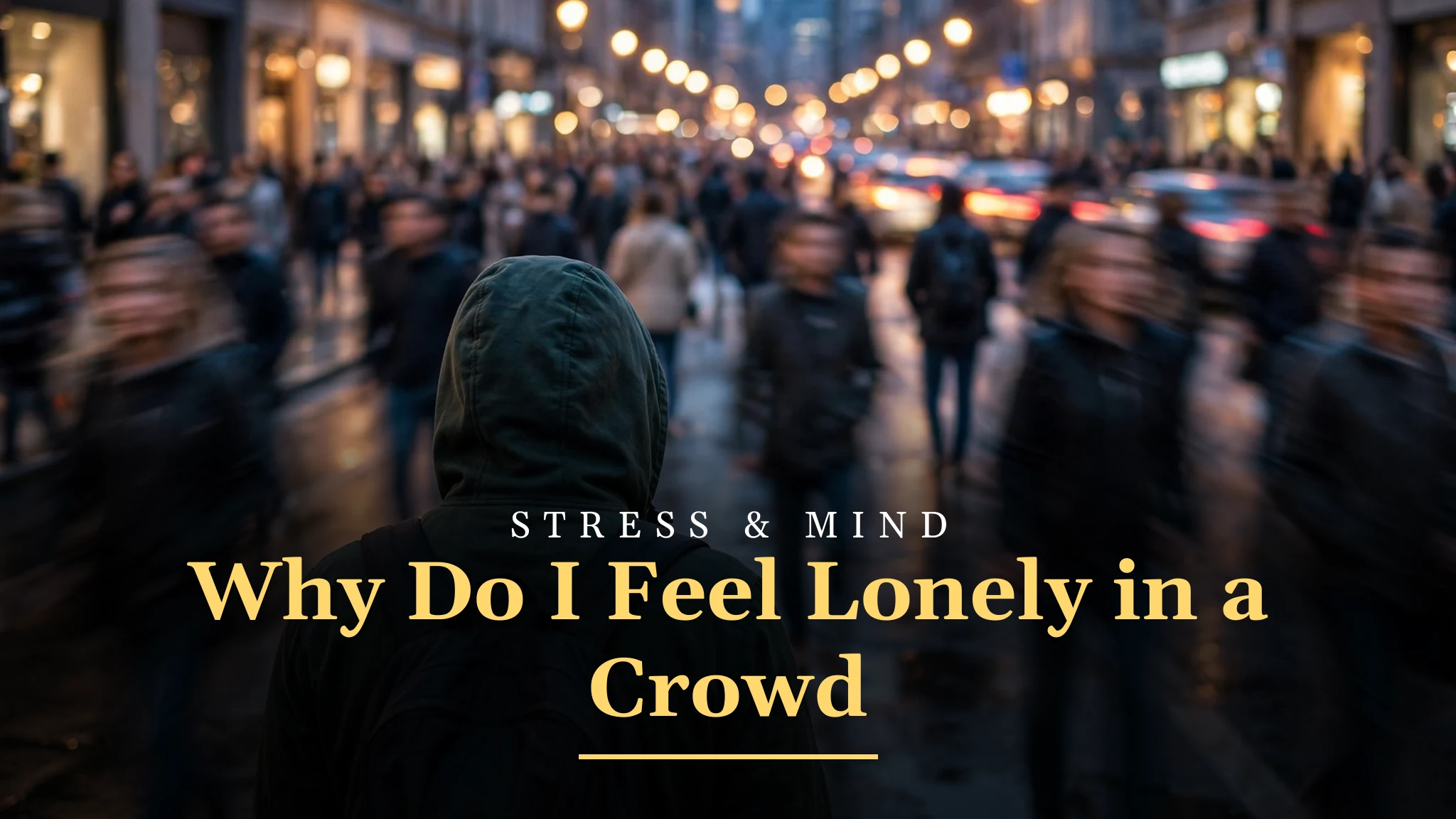
You can be standing in a busy market, sitting in a full classroom, or eating dinner with your whole family, and still feel completely alone. The noise is all around you, people are talking and laughing, and yet the feeling inside is one of distance, as if there is a glass wall between you and everyone else. If this has happened to you, you are not strange, and you are certainly not the only one. Feeling lonely in a crowd is one of the most common and most confusing human experiences, because it seems to make no sense. How can you be lonely when you are surrounded by people?
The answer is that loneliness is not about the number of people near you. It is about whether you feel seen, understood, and connected to them. You can feel deeply connected to one person in a quiet room, and completely alone in a hall full of hundreds. This article explains, in plain words, why crowds can make loneliness stronger instead of weaker, what happens in your mind when you feel left out, and which small, honest steps can help you feel more connected. There is no quick fix here, and no advice to simply “go out more,” because that is often the very thing that makes the feeling worse. What helps is understanding the feeling first, and then building connection slowly, in ways that are real.
Loneliness Is Not About How Many People Are Around You
Most people think of loneliness as being alone, but the two are not the same. Being alone means there is nobody near you. Loneliness means you feel disconnected, even when people are near. A person can live alone and feel content, because they have a few close relationships and they feel at ease with themselves. Another person can live in a full house, work in a busy office, and still feel lonely every day, because nobody in that busy life really knows how they feel. The difference is not the crowd. It is the connection.
Connection means feeling that someone understands you, even a little. It means being able to say what you really think, without hiding it, and knowing that the other person will listen. It means sharing a joke, a worry, or a small moment of the day, and feeling that it mattered to someone. In a crowd, most conversations are light and fast. People talk about the weather, about work, about plans, but they rarely talk about how they really feel. That is normal in a crowd. A crowd is not built for deep conversation. But if all of your conversations stay light, day after day, you can start to feel invisible, even while you are talking to people all day long.
This is why telling a lonely person to “just meet more people” often fails. Meeting more people adds more light conversations, but it does not add connection. What a lonely person usually needs is not more faces, but one or two real conversations, with people who listen and who share something honest in return. That is a smaller goal, and a kinder one. You do not need to be popular. You do not need a large group of friends. You need a few moments when you feel truly seen, and those moments can change how a whole day feels.
Why Crowds Can Make the Feeling Stronger
A crowd can make loneliness worse for several simple reasons. The first is comparison. When you are alone at home, you are not watching other people enjoy themselves. In a crowd, you are. You see groups laughing together, friends greeting each other warmly, couples holding hands, and your mind quietly says, “Everyone else belongs here, except me.” That thought is rarely true. Many of the people laughing in that crowd may also feel lonely, or tired, or unsure of themselves. But in the moment, it feels true, and the comparison makes your own loneliness feel sharper.
The second reason is noise and speed. A crowd is fast, loud, and full of movement. To join in, you need to speak up, catch someone’s attention, and keep up with a conversation that jumps from topic to topic. If you are quiet, shy, tired, or simply in a low mood, that can feel exhausting. You may try to join a conversation, find no opening, and then stand quietly at the edge, feeling more left out than if you had stayed home. The crowd did not reject you. It simply moved too fast for you to step into it. But the feeling of standing at the edge, watching everyone else talk, can stay with you long after you leave.
The third reason is that crowds remind you of what you want. When you are alone, you can forget, for a while, that you wish for closer friends or a deeper conversation. In a crowd, that wish is right in front of you, in every laughing group and every warm greeting. The wish itself is not a bad thing. It is a normal human need. But when the wish is strong and the connection is missing, the gap between them hurts. Understanding this can help, because it changes how you judge the feeling. You are not lonely in a crowd because something is wrong with you. You are lonely because you have a real need for connection, and the crowd, for all its noise, is not meeting it.
The Difference Between Being Alone and Feeling Lonely
It helps to learn the difference between being alone and feeling lonely, because the two need different responses. Being alone is a situation. You are in a room by yourself, or walking by yourself, or eating by yourself. It can be peaceful, boring, or restful, depending on the day. Many people enjoy being alone. They use the time to read, to think, to rest, or to do something they like. Being alone, on its own, is not a problem.
Feeling lonely is different. It is a feeling, not a situation. It is the sense that you are not connected to the people around you, that nobody really knows you, or that you do not belong. You can feel it in a crowd, in a family, or in a marriage. You can also feel it when you are alone, but the crowd version is often the most painful, because it comes with the thought, “I am surrounded by people, and still nobody sees me.” That thought can make a person feel as if the loneliness is their own fault, as if they have failed at something everyone else finds easy. That is not true, but it is a very common thought, and it is worth naming it so that it loses some of its power.
There is also a quieter kind of loneliness that many people do not recognise. It is not the sharp pain of being left out. It is a dull, everyday feeling of being slightly apart from life, of going through the motions without feeling part of anything. You go to work, you talk to people, you come home, and at the end of the day you feel as if nothing quite touched you. This kind of loneliness is easy to miss, because it does not shout. But it matters, because over weeks and months it can wear down your mood, your energy, and your sleep. If you recognise it, you have already taken the first step, because you have named something real, and real things can be worked with.
What Happens in Your Mind When You Feel Left Out
When you feel left out in a crowd, your mind does not stay neutral. It starts to look for explanations, and the explanations it finds are often unkind to you. “They don’t like me.” “I am boring.” “I don’t fit in.” “Something is wrong with me.” These thoughts arrive quickly, and they feel like facts, but they are usually guesses. You cannot know what other people are thinking just by looking at them. The group that is laughing may be laughing at a joke that has nothing to do with you. The friend who did not greet you may simply not have seen you. But when you feel lonely, your mind fills in the gaps with the worst explanation, and that explanation makes you want to pull away, which makes the loneliness worse.
This pulling away is a natural reaction. When we feel hurt, we protect ourselves by stepping back. We stop trying to join conversations, we answer in short sentences, we look at our phones, we leave early. In the short term, stepping back feels safer. In the longer term, it creates a circle: you feel left out, so you pull away, so people talk to you less, so you feel more left out. Breaking that circle does not require a grand gesture. It requires one small step in the other direction, such as asking someone a simple question, or staying a few minutes longer, or saying yes to one small invitation. A small step does not fix everything, but it interrupts the circle, and that interruption matters.
Your body is part of this too. Feeling left out can make your chest feel tight, your stomach feel uneasy, and your energy drop. You may feel tired after being in a crowd, even though you did not do anything physical. That tiredness is real. Social situations take energy, especially when you are watching yourself the whole time, worrying about what to say and how you look. If you feel drained after a gathering, it does not mean you are weak. It means your mind and body have been working hard. Resting afterwards, in a quiet place, is not a failure. It is a sensible way to recover, so that you have energy for the next time you try to connect.
Small Ways to Feel More Connected in a Crowd
Feeling more connected in a crowd does not mean becoming the loudest person in the room. It usually means finding one small, real moment of contact. Instead of trying to join a large group, look for one person who is also standing at the edge, or one person you already know a little. A simple question can open a conversation: “How has your day been?” “Have you been here before?” “What did you think of that talk?” You do not need a clever opening line. A plain, friendly question is enough, because most people are glad to be asked, and many of them are also looking for someone to talk to.
Listening is just as important as talking. When someone speaks, listen to what they actually say, rather than planning your next sentence. Ask one follow-up question about something they mentioned. People remember how it felt to be listened to far more than they remember what was said. If you listen well, even for a few minutes, the other person will often feel a small sense of connection too, and that shared feeling is the beginning of a real relationship. You do not need to impress anyone. You only need to be present, and to show a little genuine interest in the person in front of you.
It also helps to choose your crowds wisely. Not every crowd is a good place to build connection. A very large, loud gathering, where everyone already knows each other, is a hard place to start. A smaller group, built around something you care about, is often much easier. A class, a hobby group, a volunteer activity, a sports team, a book club, or a regular gathering at a place of worship, these are all places where people meet again and again, and where conversations can grow slowly over time. Connection rarely happens in one meeting. It happens when you see the same faces again, when you remember a name, when you ask about something from last time. That slow, repeated contact is how strangers become acquaintances, and how acquaintances become friends.
When the Feeling Follows You Home
Sometimes the loneliness does not stay in the crowd. It follows you home, and it sits with you in the evening, even when you are with family. You may be eating dinner with people you love, and still feel as if you are on your own. This is a painful experience, and it is more common than people admit. It can happen when family conversations stay on the surface, when everyone is busy, or when you feel that you cannot say what is really on your mind at home. It can also happen after a move, a loss, or a big change in life, when the people around you are familiar, but the life you knew has changed.
If the feeling follows you home, it helps to ask, gently, what is missing. Is it that you want someone to ask how you really feel? Is it that you miss a friend who has moved away? Is it that you want to talk about something that feels hard to say? Naming what is missing, even to yourself, can make the feeling clearer. You might write it down in a few lines, or say it quietly to yourself. You do not need to solve it at once. You only need to know what you are looking for, because then you can take a small step towards it, instead of carrying a vague, heavy feeling that has no name.
It also helps to keep one small daily habit that connects you to yourself. A short walk, a few pages of a book, a phone call with one person you trust, or a few minutes writing down how the day felt, these are all small ways of saying to yourself, “I matter, and my day mattered.” When you feel lonely, it is easy to forget that your own company has value. A small habit that you do for yourself, every day, can remind you of that. It does not replace other people, and it should not have to. But it can make the evenings feel less empty, and it can give you the steadiness you need to reach out to others from a place of calm, rather than from a place of desperation.
Building Real Connection Slowly, One Person at a Time
Real connection is built slowly, and that slowness is not a failure. It is how trust works. You do not become close friends with someone in one conversation. You become close by showing up again, by remembering small details, by being honest in small ways, and by letting the other person do the same. The first step might be learning someone’s name and using it next time. The second step might be asking about their family, their work, or something they enjoy. The third step might be sharing something small about yourself, something honest but not too heavy. Each step is small, and each step gives the other person a chance to respond in kind.
It is also important to be honest about what you can give. If you are tired, or shy, or busy, you cannot be available to everyone, all the time. That is fine. One real friendship, built slowly, is worth far more than ten shallow acquaintances. Choose one or two people who feel kind and safe, and invest your energy there. Show up for them, remember what matters to them, and let them show up for you. Over time, that one relationship can become a steady anchor, and from that anchor, other connections often grow more easily, because you no longer feel completely alone in the world.
There will be setbacks. Some people will not respond warmly. Some conversations will feel awkward. Some invitations will not be returned. That is a normal part of reaching out, and it does not mean you have failed. It means you are learning, by trial, who is open to connection and who is not. The people who are worth your time will show it, not with grand gestures, but with small, steady signs: they remember your name, they ask how you are, they make time to talk. Hold on to those people. Let the others go without blame. Building connection is not about being liked by everyone. It is about finding the few people with whom you can be yourself, and keeping those relationships alive with small, regular care.
How to Reach Out When You Feel Like Hiding
The hardest moment in loneliness is often the moment when you need to reach out, because that is exactly the moment when reaching out feels hardest. Your mind tells you that nobody wants to hear from you, that you will be a burden, or that you will be ignored. Those thoughts feel true, but they are the loneliness talking, not the facts. Most people are glad to hear from a friend, even a friend they have not spoken to in a while. A short message, such as “I was thinking of you, how are you?” costs very little, and it often brings a warm reply. The person on the other end may have been feeling lonely too, and your message may be the one they were hoping for.
It helps to make reaching out as small and easy as possible. You do not need to write a long message, or plan a big meeting, or explain everything you feel. You only need one small opening. A message, a short call, or a simple invitation for tea, these are all enough. If the first person does not reply, try another person, or try again another day. A slow reply does not always mean rejection. People are busy, tired, and distracted, and a message can easily be missed. Do not read a slow reply as proof that nobody cares. Give people a second chance, and give yourself a second chance too, by trying again with someone else.
There is also a quieter kind of reaching out, which is simply being present where people are. Sitting in a park, going to a regular class, helping at a community event, or joining a group that meets every week, these are all ways of being around people without the pressure of a deep conversation. Over time, familiar faces become comfortable faces, and comfortable faces become people you can talk to. You do not need to force a friendship. You only need to show up, again and again, in the same place, and let connection grow at its own pace. That slow growth is real, and it lasts longer than a friendship that is forced in a single evening.
My Take:
If you ask me what I think about feeling lonely in a crowd, my answer is this: it is one of the most human feelings there is, and it does not mean there is anything wrong with you. I think many people carry this feeling in silence, because they are ashamed of it. They think, “How can I be lonely when I am surrounded by people? What is wrong with me?” I want to say plainly that nothing is wrong with you. You are lonely because you are human, and human beings need to feel seen and understood, not just to be near other people. A crowd gives you noise and movement, but it does not always give you understanding. That gap is real, and the pain it causes is real too.
I think the first mistake people make is to believe that the answer is simply more people. Go to more parties, join more groups, talk to more strangers. I understand why that advice is given, and sometimes it helps a little, but often it makes the feeling worse, because it adds more shallow contact without adding depth. In my view, the answer is not more people, but more real moments. One honest conversation, one person who listens properly, one moment when you feel truly seen, these are worth more than a hundred polite greetings. I would rather have one friend who knows how I really feel than a room full of people who only know my name. That is not a small ambition. It is the right ambition.
I also think we should talk honestly about comparison, because comparison is what makes a crowd feel so painful. When you are alone, you are not measuring yourself against anyone. In a crowd, you are measuring yourself against every laughing group, every warm greeting, every person who seems to belong. I believe that comparison is almost always unfair, because you are comparing your inside with their outside. You know your own doubts, your tiredness, your worries. You do not know theirs. The laughing group may include someone who cried that morning. The confident person at the front may be just as unsure as you are. I do not say this to dismiss your feeling. I say it because knowing that other people also struggle can soften the thought that you are the only one who does not belong. You are not the only one. You are simply the one who is honest enough to notice the feeling.
There is something else I want to say, and it is about being quiet. Many people who feel lonely in a crowd are quiet people, and the world often treats quietness as a problem to be fixed. I do not agree. Quiet people notice things. They listen well. They think before they speak. Those are strengths, not weaknesses. The problem is not that you are quiet. The problem is that a loud crowd does not always make room for quiet people. My advice is not to become loud. It is to find the places and the people where quietness is welcome. A small group, a one-to-one conversation, a shared activity where talking is not the main point, these are places where a quiet person can shine. You do not need to change who you are to belong. You need to find the places where who you are is enough.
I also believe in the power of one small step. Not a big change, not a new social life, just one small step. Ask one person a question. Stay five minutes longer. Say yes to one invitation. Remember one name. These steps are so small that they can feel pointless, but I have come to trust them deeply. Connection is built from small steps, repeated over time. It is not built in a single evening. If you take one small step, and then another, and then another, you are building something real, even if you cannot see it yet. And if a step does not work, that is not a failure. It is information. It tells you that this person, or this group, or this moment, was not the right one, and you can try a different one next time.
I want to say something about the people who are already in your life, too. Sometimes the loneliness in a crowd comes from the fact that the people around you do not really know you, even though they have known you for years. That can happen in families, in long friendships, in marriages. The conversations stay on the surface, and nobody asks the deeper questions. I think it is worth taking a small risk here, and sharing something honest with one person you trust. Not everything, not all at once, just one true thing. “I have been feeling a bit low lately.” “I miss how things used to be.” “I would like us to talk more.” A sentence like that can open a door that has been closed for a long time. The other person may have been waiting for you to say it. Many people are. They feel the same distance, but they do not know how to name it either. One honest sentence can be the beginning of a closer relationship, even with someone you have known for years.
I also think it is important to be kind to yourself on the days when the loneliness is strong. There will be days when you go to a gathering, try your best, and still come home feeling alone. On those days, do not punish yourself. Do not say, “I failed again.” Say, “I tried, and today was hard, and that is enough.” Then do something gentle for yourself. Rest, eat something warm, talk to one person who is kind to you, or simply sit quietly and let the feeling pass. Loneliness, like other feelings, comes and goes. It feels permanent when it is strong, but it is not permanent. A quiet evening, a good night of sleep, and a kind word from one person can change how the next day feels. I believe that, because I have seen it happen, again and again, in small, ordinary ways.
My final view is simple. You are not lonely because you are broken. You are lonely because you need connection, and connection is a real human need, as real as food and sleep. The crowd cannot always give it to you, but one person can, and one person is enough to start with. Look for the small, real moments. Listen well. Share one honest thing. Show up again. Be patient with yourself, and be patient with other people, because most of them are also looking for someone who will truly see them. In my view, that is what belonging really means: not being in the biggest crowd, but being truly known by one or two people, and knowing them in return. That is a quiet goal, and a deeply human one, and it is worth building, one small step at a time.
I also think we should be honest about phones and social media, because they can make this feeling both better and worse. A phone can connect you to a friend far away, and that is a real gift. But scrolling through pictures of other people laughing, travelling, and celebrating can make your own quiet evening feel empty by comparison. I believe the pictures are not the whole truth. People post their happiest moments, not their lonely ones. The person whose pictures look perfect may have felt lonely in a crowd that very same day. If scrolling makes you feel worse, it is not a weakness to put the phone down. It is a sensible choice. Use the phone to talk to one real person, and then put it away, and let the evening belong to you.
There is another thought I want to share, and it is about being the person who reaches out first. Many people wait for someone else to notice them, to invite them, to ask how they are. Waiting is understandable, but it can leave you waiting for a long time, because the other person may be waiting too. I think there is a quiet courage in being the one who speaks first. Sending the message, asking the question, inviting someone for tea, these are small acts of courage, and they often change everything. The person you invite may have been hoping someone would ask. The person you message may have been feeling just as alone as you. When you reach out first, you are not only helping yourself. You are helping the other person too, and that shared help is often the beginning of a real friendship.
I also want to say something about patience, because building connection takes time, and time can feel slow when you are lonely. You may try to talk to someone, and the conversation may feel awkward. You may join a group, and still feel like an outsider for the first few weeks. That is normal. Belonging is not something that happens in a day. It grows slowly, through repeated meetings, small kindnesses, and shared moments. I would rather you be patient with a slow friendship than give up after one awkward evening. The awkward evenings are part of the process. They do not mean you have failed. They mean you are learning, and learning takes time. Give yourself that time, and give other people that time too, because they are also learning how to be close to you.
Finally, I want to end with something hopeful, because loneliness, for all its pain, is also a sign of something good in you. It is a sign that you want real connection, that you care about being known, and that you are not satisfied with shallow contact. That is not a weakness. It is a strength. Many people settle for surface-level friendships and never ask for more. You are asking for more, and that asking is the first step towards finding it. Keep asking, keep reaching out, keep showing up, and keep being honest about what you need. The crowd may not always give you what you need, but somewhere in that crowd, or just beyond it, there are people who are looking for the same thing you are looking for. In my view, finding them is not a matter of luck. It is a matter of small, steady steps, taken with patience and kindness, until one day you realise that you are no longer standing at the edge, watching. You are part of the conversation, and someone is truly glad that you are there.
I also want to speak to the young people who feel this way, because I know how heavy it can feel at school or college, when everyone else seems to have a group and you do not. If you are young and you feel lonely in a crowd, please know that you are not the only one, and that the groups you see are not as solid as they look. Friendships at that age change quickly, and many of the people who look confident are also unsure of themselves. My advice to a young person is the same as to anyone else, but even more important: be kind to yourself, look for one person who is kind, and do not measure your worth by how many people sit with you at lunch. One true friend is enough, and one true friend is often found in the quietest corner of the room, not in the loudest group. If the feeling is very strong, or if it lasts for a long time, talk to a parent, a teacher, or another trusted adult. Telling someone is not a weakness. It is a brave and sensible step, and the adults in your life want to help, even if they do not always know how to start the conversation themselves. You do not have to carry this feeling alone, and you should not have to.
If I could leave you with one image, it would be this: a crowd is like a large, noisy room, and loneliness is the feeling of standing near the door, unsure whether anyone will notice you. You do not need to win over the whole room. You only need to find one person, walk over, and say hello. That one hello, offered kindly and without expectation, is often enough to change the whole evening. And if that person does not answer warmly, try another. Somewhere in every crowd there is someone who is also standing near the door, hoping that someone will notice them. When you find that person, you will both feel less alone, and that is how belonging begins.
Frequently Asked Questions
Is why do i feel lonely in a crowd a normal part of everyday life?
Yes, it is very common. Many people feel lonely in crowded places, even when they have family, friends, and a busy social life. Loneliness is about feeling disconnected, not about being physically alone, so it can happen anywhere, including in a full room. Feeling this way does not mean something is wrong with you.
How long does why do i feel lonely in a crowd usually last in a normal day?
It often comes and goes with the situation. The sharp feeling may last for the time you are in the crowd, and it usually eases once you leave, rest, or talk to someone you trust. If the feeling stays strong for many days or weeks, and it starts to affect your sleep, mood, or daily life, it is worth talking to a trusted person or a health professional.
Can why do i feel lonely in a crowd affect sleep and rest?
Yes, it can. Feeling left out and disconnected can leave you feeling drained, restless, or low, and that can make it harder to relax and sleep well. A quiet evening, a short walk, and a calm routine before bed can help. If poor sleep and low mood continue for a long time, talking to someone you trust or a health professional is a sensible step.
What is the simplest way to handle why do i feel lonely in a crowd?
The simplest way is to look for one real connection instead of trying to join the whole crowd. Talk to one person, ask a simple question, and listen properly to the answer. Smaller groups, built around a shared interest, are often easier than large, loud gatherings. One honest conversation is worth more than many polite greetings.
Does why do i feel lonely in a crowd feel the same for everyone?
No, it does not feel the same for everyone. Some people feel sad, others feel anxious, tired, or numb. Some people feel it only in large crowds, while others feel it in family gatherings or at work. The feeling is personal, and there is no single right way to experience it.
When should I talk to someone about why do i feel lonely in a crowd?
Talk to someone if the feeling lasts for weeks, if it makes everyday life feel heavy, if it affects your sleep or appetite, or if you often feel hopeless or overwhelmed. A trusted family member, a friend, or a health professional can listen without judgement. Asking for support is a sensible and brave step, not a weakness.
Sources
- NHS — Mental Health
- World Health Organization — Mental Health
- Centers for Disease Control and Prevention — Mental Health
- Healthline — Mental Health
- Mayo Clinic — Stress
This article is general information only. It is not medical advice and it does not diagnose, treat, or cure anything. For personal concerns, speak to a qualified health professional.


