Winky D: The Life Story Behind Zimbabwe's Dancehall Star
In this post
- Kambuzuma: Growing Up in the High-Density Streets
- From DJ to Dancehall Voice
- Disappear and the Gafa Breakthrough
- Ibotso, Controversy, and the Voice That Would Not Be Silenced
- The Gafa Life and the King of Zimdancehall
- The Gafa Fans and the Shows That Fill Stadiums
- The Sound of the Townships at Night
- The Voice That Speaks for the Streets
- My Take:
In Harare, there is a sound that fills the townships at night, a fast, heavy beat with a voice riding over it in Shona, and the name that goes with that sound is Winky D. He is the king of Zimdancehall, the Zimbabwean version of Jamaican dancehall, and for more than twenty years, he has been the voice of the ghetto, singing about life in the townships in a language that the people there understand. His fans call him the Gafa, the Big Man, and they mean it. In his world, he is the biggest.
He was born Wallace Chirimuko on 1 February 1983 in Harare, and he grew up in Kambuzuma, a high-density township of the capital. Kambuzuma is a place of crowded houses, busy streets, and young people with big dreams and few opportunities. A boy growing up there learns to be tough, to be quick, and to make his own way. Winky D learned those lessons, and he turned them into music. He started as a young DJ and singer, and he built a career that took him from the streets of Kambuzuma to the biggest stages in Zimbabwe.
This is the story of that career: a township boy who became a dancehall king, whose songs about the ghetto became anthems, and whose voice is still the loudest in Zimbabwean music. It is a story about a place, a sound, and a man who never forgot where he came from.
Kambuzuma: Growing Up in the High-Density Streets
Wallace Chirimuko was born on 1 February 1983 in Harare, Zimbabwe, and he grew up in Kambuzuma, one of the city’s high-density townships. Kambuzuma is a working-class area, home to thousands of families who live in small houses and who work in the city. It is a place of noise and life: markets, minibuses, churches, and music that plays from morning until night. A child in Kambuzuma grows up close to his neighbours, and he grows up hearing the sounds of the township in every part of his day.
His family life was ordinary, and his childhood was the childhood of a township boy. He went to school in Harare, he played in the streets with his friends, and he listened to the music that was popular in the townships: Jamaican dancehall, Zimbabwean sungura, and the new sounds that were arriving from abroad. Dancehall, with its fast beats and its direct lyrics, spoke to him in a way that other music did not. It was music for young people, music that talked about real life, and music that did not pretend to be polite. Winky D heard it, and he knew it was his music.
As a boy, he began to DJ and to sing, performing at local events and at parties in Kambuzuma. He was not a child star. He was a young man from the township who loved music and who wanted to be part of it. He learned how to work a crowd, how to choose a song, and how to make people dance. Those skills, learned in small rooms in Kambuzuma, would later make him a star on big stages. A DJ who can hold a small room can hold a stadium, if he has the talent, and Winky D had it.
Kambuzuma also taught him about the life he would later sing about. He saw the difficulties of township life: unemployment, poverty, and the struggle to make a living. He also saw the strength of the people who lived there: their humour, their resilience, and their ability to celebrate even when life was hard. His songs would later carry both sides of that life: the pain and the joy, the struggle and the celebration. He sang about Kambuzuma because he knew it, and because the people there knew that he was singing about them.
By the time he was a teenager, he was already known in Kambuzuma as a young talent, and he was ready to take the next step. He had a voice, he had a style, and he had a name that was beginning to be heard beyond his own streets. The boy from Kambuzuma was about to become Winky D, and the journey was just beginning.
From DJ to Dancehall Voice
Winky D began his career as a DJ and as a young singer in Harare, performing at events and recording songs that found an audience in the townships. In the early 2000s, Zimbabwean dancehall, known as Zimdancehall, was a new and growing style, and Winky D was one of its pioneers. The style took the fast beats and the direct lyrics of Jamaican dancehall and gave them a Zimbabwean voice, singing in Shona and in English about life in Harare. It was music for young people, and it was music that spoke to their lives in a way that older styles did not.
His early songs began to circulate in Harare, and his name spread through the townships. He was not an overnight success. He built his name song by song, show by show, and dance by dance. Each new record added to his reputation, and each performance added to his following. Young people in Kambuzuma and in other townships saw him as one of their own, a man from their streets who had made it, and they supported him fiercely. That local loyalty was the foundation of his career, and it never left him.
He also learned the craft of dancehall in those years: how to ride a beat, how to write a chorus that a crowd can sing, and how to perform with energy and confidence. Dancehall is a demanding style, because it asks the singer to be both a vocalist and a performer, to move, to shout, and to hold the crowd’s attention for a whole set. Winky D learned that craft in small venues, and he learned it well. By the time he reached the big stages, he was already a master of it.
The early 2000s were also a difficult time in Zimbabwe, with economic problems, unemployment, and political tension. Young people in the townships were frustrated, and they needed music that spoke to their frustration. Winky D’s songs did that. He sang about the ghetto, about the struggle to survive, and about the hope of a better life, and his listeners recognised their own lives in his words. He was not singing about a distant world. He was singing about the world outside their doors, and that recognition made his music powerful.
By the mid-2000s, he was a known name in Zimbabwean music, and he was ready for a song that would make him a star across the country. That song was coming, and when it arrived, it would carry his name far beyond Kambuzuma.
Disappear and the Gafa Breakthrough
In 2016, Winky D released Disappear, and the song became one of the biggest hits of his career. The track was a dancehall anthem, with a strong beat, a memorable chorus, and lyrics that spoke about the life of the ghetto in a way that was both funny and serious. It was played in clubs, on the radio, and in the streets, and its chorus was sung by crowds across Zimbabwe. Disappear showed that Winky D was not only a township star. He was a national star, and his music was known to everyone in the country.
The song’s success changed his life. He was no longer a dancehall singer trying to be heard. He was the king of Zimdancehall, and his name was on everyone’s lips. He performed at big events, his videos were watched by millions, and his shows drew large crowds. He had become the face of a whole style of music, and his fans called him the Gafa, the Big Man, a name that reflected his standing in Zimbabwean music. The title was not given to him by a record company. It was given to him by his fans, and that is why it mattered.
He followed Disappear with more hits, and his catalogue grew. Songs such as Mugarden became favourites with his audience, and each new record added to his reputation. His live shows became famous for their energy and their length, with Winky D performing for hours, dancing, singing, and leading the crowd through his songs. A Winky D show is not a quiet concert. It is a loud, joyful, and intense event, and it is one that his fans remember for a long time. That live reputation is as important as his records, because in dancehall, a singer is judged by his show as much as by his songs.
The Disappear years also showed his skill as a songwriter. He could write a song that was both a party anthem and a social commentary, and he could do it in a way that made people dance while they thought. That combination is the hardest thing in dancehall, and Winky D achieved it again and again. His songs were not only about fun. They were about life, and they were about the people who lived that life in the townships of Harare.
By the late 2010s, he was the biggest name in Zimdancehall, and his influence was felt across Zimbabwean music. Young artists looked to him as an example, and they tried to copy his style, his energy, and his connection to the ghetto. He had become a standard, and the standard was high. The boy from Kambuzuma had become the king, and the kingdom was the whole of Zimbabwe.
Ibotso, Controversy, and the Voice That Would Not Be Silenced
In 2021, Winky D released Ibotso, an album whose title means boots in Shona, and the record became one of the most talked-about albums in Zimbabwean music. Its songs spoke about the lives of ordinary people, about the difficulties they faced, and about the need for change, and they did so in a direct and honest way. The album was a success, and it showed that Winky D was still at the top of his game, still able to make music that mattered, and still able to speak for the people of the ghetto.
The album also brought controversy. Some of its songs were seen as critical of the government, and they were reported to have been kept off state radio and television. Winky D did not back down, and his fans did not back down either. They played the songs online, they shared them, and they sang them at concerts. The controversy only made the album more popular, because it showed that Winky D was willing to say what others would not say. A singer who is kept off the radio but who is still heard by millions is a singer whose voice cannot be silenced, and Winky D’s voice could not be silenced.
The Ibotso period also showed the power of his fan base. His fans, who call themselves Gafa fans, are among the most loyal in Zimbabwean music, and they support him fiercely. They attend his shows in large numbers, they buy his music, and they defend him in public. That loyalty is not based only on his songs. It is based on the feeling that he speaks for them, and that he has never forgotten where he came from. A singer who is loved in that way is loved for more than his music. He is loved for his loyalty, and Winky D’s loyalty to Kambuzuma and to the ghetto is the reason his fans stay with him.
He also faced the ordinary difficulties of a long career in music: competition from younger artists, changes in taste, and the pressure to keep making hits. He handled those difficulties by working harder, by recording constantly, and by performing with the same energy that had marked his early shows. He did not rest on his past success. He kept building, and he kept his audience with him. That is the mark of a great artist, and it is one that Winky D has shown throughout his career.
Through all of this, he remained a man of the township, and his music remained the music of the ghetto. He did not move to a wealthy suburb and forget Kambuzuma. He stayed close to his roots, and his songs continued to speak about the life he knew. That rootedness is part of his identity, and it is one reason his music has stayed honest. He sings about what he knows, and what he knows is the life of Harare’s townships.
The Gafa Life and the King of Zimdancehall
Winky D’s career is often described as the Gafa Life, a phrase that captures his standing as the Big Man of Zimbabwean dancehall. The Gafa Life is not only about fame. It is about a way of living, a way of speaking, and a way of carrying yourself with confidence in a world that tries to keep you down. Winky D’s fans use the phrase to describe his music, his style, and his attitude, and it has become a part of Zimbabwean popular culture. A young person in Harare who says Gafa Life is saying something about pride, about resilience, and about the belief that a person from the ghetto can be a king.
His albums, including the Gafa Life series, have become landmarks in Zimdancehall, and his concerts are among the biggest in Zimbabwe. He performs at the Harare International Conference Centre, at festivals, and at events across the country, and his shows draw crowds of thousands. He is not only a singer. He is a phenomenon, and his name is known to every young person in Zimbabwe. That is a rare achievement for a dancehall artist, and it is one that Winky D earned through decades of work.
He has also become a mentor to younger artists, and his influence can be heard in the work of the new generation of Zimdancehall singers. They copy his style, they learn from his songs, and they try to match his energy. That influence is a sign of his importance, and it is one that will last as long as Zimdancehall lasts. He did not only make hit songs. He made a style, and he made it the sound of a generation.
His personal life has remained largely private, and he has kept his family out of the spotlight. That privacy is a choice, and it is one that his fans respect. He is known for his music, not for his private life, and that focus has helped him sustain his career. A star who keeps his private life private is a star who lets his work speak for him, and Winky D’s work speaks loudly.
Today, he remains the king of Zimdancehall, and his place in Zimbabwean music is secure. He is the voice of Kambuzuma, the voice of the ghetto, and the voice of a generation that grew up with his songs. His music is still played, his shows are still packed, and his name is still the biggest in his world. The boy from Kambuzuma has become the Gafa, and the Gafa is still standing.
The Gafa Fans and the Shows That Fill Stadiums
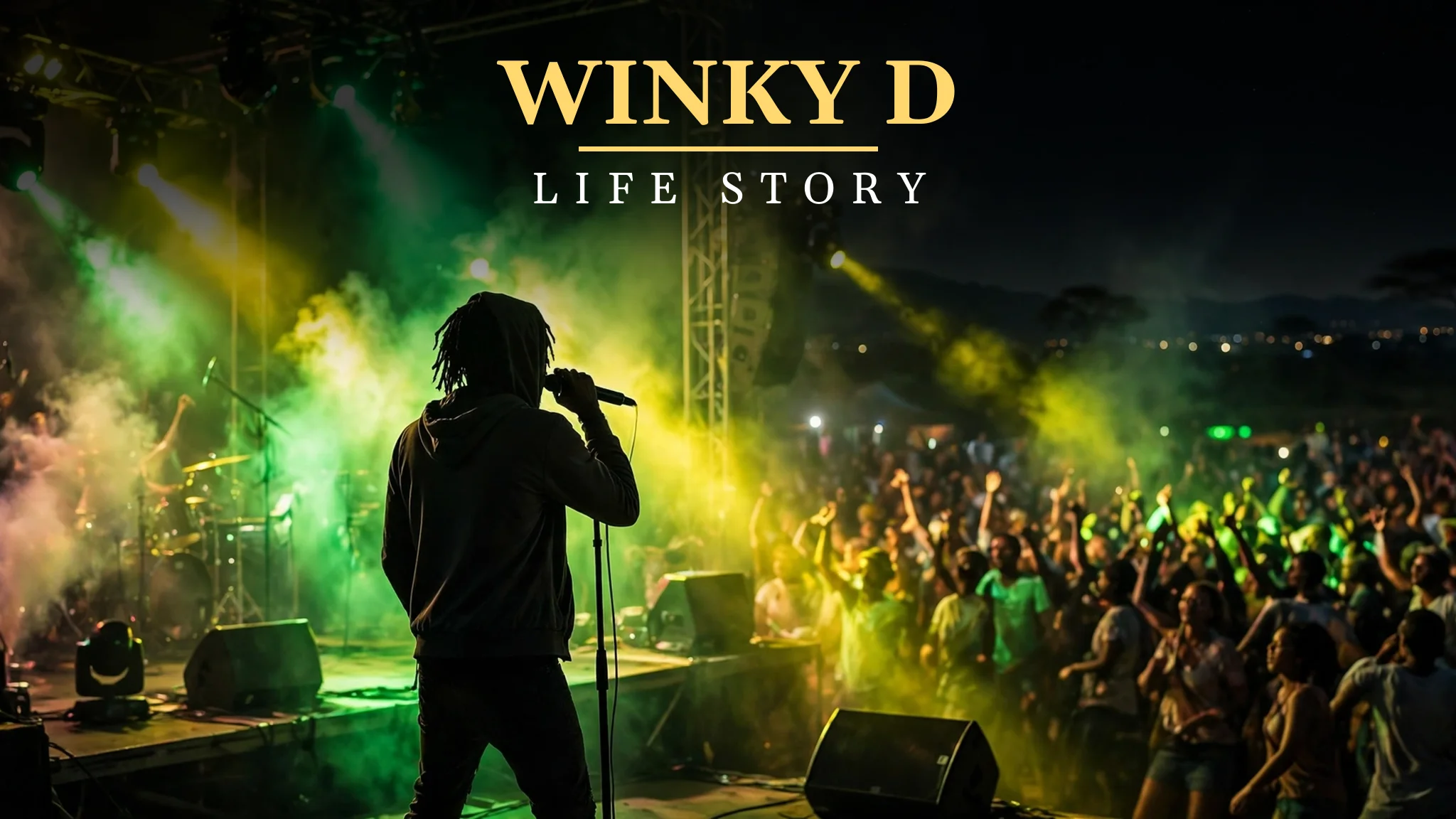
Winky D’s fans, who call themselves Gafa fans, are among the most loyal in Zimbabwean music, and their loyalty is a key part of his story. They attend his shows in large numbers, they sing every word of his songs, and they defend him in public. A Winky D concert is not a quiet event. It is a loud, joyful, and intense celebration, with the singer performing for hours and the crowd dancing and singing along. His shows at the Harare International Conference Centre and at festivals across Zimbabwe draw thousands of people, and they are known for their energy and their length. The relationship between Winky D and his fans is not a one-way street. He gives them music, and they give him loyalty, and that exchange has lasted for more than twenty years. A singer who is loved in that way is loved for more than his songs. He is loved for his loyalty to his fans, and Winky D’s loyalty to Kambuzuma and to the ghetto is the reason his fans stay with him, year after year.
The Sound of the Townships at Night
Winky D’s music is the sound of Harare’s townships at night, and it is worth describing what that sound is. It is fast, heavy, and full of energy, with a bass that shakes the walls and a voice that rides over it in Shona. It is played in clubs, in bars, and in the streets, and it is heard by young people who have little money but who have a great love for music. The sound is not polished in the way that studio pop is polished. It is raw, direct, and honest, and it carries the feeling of the township in every beat. A listener who hears it knows at once where it comes from, and that recognition is part of its power. Winky D’s music does not pretend to be from somewhere else. It is from Kambuzuma, from Harare, and from the townships, and it is proud of that. That pride is the reason his fans love him, and it is the reason his sound has lasted for more than twenty years.
The Voice That Speaks for the Streets
Winky D’s voice is the sound of the streets of Harare, and it is worth describing, because it is unlike any other voice in Zimbabwean music. It is fast, direct, and full of energy, and it rides over the dancehall beat with a confidence that makes the listener believe every word. He sings in Shona, in the language of the townships, and his words are the words of the street: direct, funny, and honest. A listener in Kambuzuma hears his own language in Winky D’s songs, and that recognition is part of their power. The voice does not hide behind fancy production. It speaks plainly, and it speaks for the people who live in the townships. That is why it is loved, and that is why it is trusted. A voice that speaks for the streets is a voice that cannot be ignored, and Winky D’s voice has not been ignored for more than twenty years.
Kambuzuma itself deserves a final word in Winky D’s story, because it is more than a place on a map. It is a community of families, of traders, of churches, and of young people with dreams, and it is the source of everything Winky D sings about. A township is often described by outsiders in terms of its problems, but Winky D describes it in terms of its life: its music, its humour, its resilience, and its joy. That is a different way of seeing a place, and it is one that his fans recognise as true. Kambuzuma made Winky D, and Winky D made Kambuzuma famous, and that exchange, between a place and its singer, is the heart of his story.
His voice also deserves a last word, because it is the instrument that carries his message. It is fast, direct, and full of energy, and it speaks in the language of the townships, in words that his listeners use every day. A voice that speaks in the language of its people is a voice that cannot be ignored, and Winky D’s voice has not been ignored for more than twenty years. It is the voice of Kambuzuma, the voice of Harare, and the voice of a generation, and it will be heard for many years to come.
My Take:
I have to be honest: Winky D’s music is not the kind of music I listen to quietly at home. It is loud, fast, and made for a crowd, and it is best heard in a room full of people who are dancing and singing along. That is its strength, and it is why I admire it. There are many kinds of music, and dancehall is one of the most honest kinds, because it does not pretend to be something it is not. It is music for the street, for the party, and for the people, and Winky D makes it better than anyone in Zimbabwe. I respect that, because it takes skill to make a whole crowd move as one, and Winky D has that skill.
What I like most about him is his loyalty to Kambuzuma. He was born there, he grew up there, and he still sings about it, even now that he is a star. That loyalty matters to me, because it is easy for a famous person to forget where he came from. It is harder to stay close to it, and to keep it at the centre of your work. Winky D did that, and his fans love him for it. They see him as one of their own, and they are right. He is one of their own, and he has never pretended to be anything else. That honesty is rare, and it is valuable.
Disappear is the song I keep coming back to, because it is a perfect dancehall song: a strong beat, a chorus that everyone can sing, and lyrics that speak about real life. I like that combination. A song that is only a party anthem can be fun, but it is soon forgotten. A song that is only a social commentary can be important, but it is not always fun to hear. Disappear is both, and that is why it lasted. It made people dance, and it made them think, and it did both at the same time. That is the hardest thing in popular music, and Winky D achieved it.
I also think about Ibotso, and about the controversy around it. A singer whose songs are kept off state radio is a singer who has said something that matters, and Winky D said something that mattered. I do not know all the details of the politics, and I do not need to. What I know is that his fans kept playing the songs, kept sharing them online, and kept singing them at concerts, and that is a sign that the music was stronger than the attempt to silence it. A song that lives online, in the streets, and in the hearts of fans cannot be banned. It can only be heard more. I respect Winky D for not backing down, and I respect his fans for standing with him.
I will be honest about something: I do not think every Winky D song is as strong as Disappear. Some of his records are good, but they do not have the same impact as the best ones. That is normal for a career that has lasted for more than twenty years. What matters is the whole body of work, and Winky D’s body of work is large, varied, and full of hits. He has made more great dancehall songs than any other Zimbabwean artist, and that is an achievement that should be recognised. A career is judged by its best work, and his best work is very good indeed.
What I learn from his life is that a voice from the ghetto can become the voice of a nation. Winky D came from Kambuzuma, a township that many people outside Zimbabwe have never heard of, and he became the biggest dancehall star in his country. That is a lesson for young people in townships everywhere: where you come from does not decide where you can go. What you do with your talent, and how hard you work, matters more. Winky D worked hard, he stayed loyal to his home, and he became a king. That is a story worth telling, and it is a story worth believing.
I also think about the Gafa Life, and about what it means to his fans. It is not only a phrase. It is a way of saying that a person from the ghetto can be proud, can be confident, and can be a Big Man in his own world. That pride matters, because it gives young people a sense of dignity in a world that often denies it to them. Winky D’s music gives that dignity, and it gives it in a form that is joyful and loud. I like that. Dignity does not have to be quiet. It can be loud, it can be danced to, and it can be sung by a whole crowd. Winky D proves that every time he performs.
In the end, I think Winky D’s story is a story about a township boy who became a king, and who stayed a township boy even as a king. He did not change who he was. He became more of who he was, and his music became more of what it had always been: the sound of Kambuzuma, the sound of the ghetto, and the sound of a generation that refuses to be ignored. I hope he keeps singing, because Zimbabwe still needs his voice, and because the ghetto still needs a king who speaks for it. That is the legacy of the Gafa, and it is a legacy to be proud of.
I also think about his fans, the Gafa fans, and about what their loyalty means. A fan base that stays with a singer for more than twenty years is a rare thing, and it is built on trust. Winky D’s fans trust him because he has never forgotten them, and because he keeps making music for them. He does not make music for critics, or for awards, or for foreign audiences. He makes it for Kambuzuma, for Harare, and for the townships, and his fans know it. That trust is the foundation of his career, and it is one that few artists achieve. I respect it, because it shows that a singer who serves his audience will be served by his audience in return.
Mugarden is another song I keep coming back to, because it shows a different side of his music. It is a song about the garden, about growing, and about the life of the township, and it is sung with a warmth that is different from the energy of Disappear. I like that he could write both kinds of song, a party anthem and a reflective song, and that both sounded true in his voice. That range is rare in dancehall, and it is the mark of a great artist. A singer who can only make you dance is a singer with one note. A singer who can make you dance and make you think is a singer with a full range, and Winky D has it.
I think about the younger Zimdancehall artists today, and about what Winky D means to them. They copy his style, they learn from his songs, and they try to match his energy. That is a sign of his influence, and it is one that will last as long as Zimdancehall lasts. He did not only make hit songs. He made a style, and he made it the sound of a generation. Young artists who want to succeed in Zimdancehall have to measure themselves against him, and that is a high standard. I hope they learn from him, not only his sound, but also his loyalty to his home and his discipline in his work. Those are the lessons that will make their careers last.
His privacy is another thing I respect. Winky D keeps his family out of the spotlight, and he lets his music speak for him. That is a choice, and it is one that many stars do not make. In a world where famous people share everything, a star who keeps his private life private is a star who understands that fame is about work, not about exposure. I like that. It tells me that he takes his music seriously, and that he does not need drama to stay relevant. His songs are enough, and his shows are enough, and that is a sign of confidence.
I also think about the economic difficulties in Zimbabwe, and about what it means to be a successful artist in a country where life is hard. Winky D’s success is not only a personal achievement. It is also a sign of hope for young people in the townships, who see in him proof that a boy from Kambuzuma can become a king. That hope matters, because it gives young people a reason to believe in their own talent. I hope that message reaches every young person in Harare’s townships, because it is one of the most important messages in music: where you come from does not decide where you can go.
In the end, I keep coming back to the same thought: Winky D’s story is about a township boy who became a king, and who stayed a township boy even as a king. He did not change who he was. He became more of who he was, and his music became more of what it had always been: the sound of Kambuzuma, the sound of the ghetto, and the sound of a generation that refuses to be ignored. I hope he keeps singing, because Zimbabwe still needs his voice, and because the ghetto still needs a king who speaks for it. That is the legacy of the Gafa, and it is a legacy to be proud of.
I also think about the sound of the townships at night, and about what it means to be the voice of that sound. Harare’s townships are loud, busy, and full of life, and Winky D’s music captures that life in a way that no other artist does. His songs are not about a distant world. They are about the streets outside his listeners’ doors, and that recognition makes them powerful. A young person in Kambuzuma who hears Winky D hears his own life in a song, and that is a gift. It tells him that his life matters, and that his home matters. I hope that message reaches every young person in Harare’s townships, because it is one of the most important messages in music.
There is one more thing I want to say about the future. Zimdancehall is still growing, and new artists are still emerging, but Winky D remains the standard against which they are measured. That is a high standard, and it is one that he set through decades of work. I hope the new artists learn from him, not only his sound, but also his loyalty and his discipline. A career that lasts for twenty years is built on more than talent. It is built on work, on loyalty, and on a refusal to give up. Winky D built his career on all three, and his name is still the biggest in Zimdancehall because of it.
I also think about the way his voice fills a stadium, and about how that sound is made. It is not made by technology alone. It is made by a man who learned to sing in the streets of Kambuzuma, who learned to DJ in small rooms, and who learned to hold a crowd by watching them. That learning is the foundation of his power, and it is one that no studio can teach. A singer who learns in the streets learns to read people, and Winky D reads his crowds better than anyone in Zimbabwean music. I respect that, because it shows that his talent is not only in his voice. It is also in his understanding of people, and that understanding is what makes his shows unforgettable.
Frequently Asked Questions
Where was Winky D born?
Winky D, whose real name is Wallace Chirimuko, was born on 1 February 1983 in Harare, Zimbabwe, and he grew up in Kambuzuma, a high-density township of the capital.
What is Zimdancehall?
Zimdancehall is the Zimbabwean version of Jamaican dancehall music. It uses fast beats and direct lyrics, sung in Shona and English, and it speaks about life in Harare’s townships.
Which song made Winky D famous?
Disappear, released in 2016, was one of his biggest breakthrough hits. It became a dancehall anthem across Zimbabwe and confirmed his place as the king of Zimdancehall.
Why is Winky D called the Gafa?
Gafa means Big Man, and it is a nickname given to him by his fans. It reflects his standing as the leading star of Zimbabwean dancehall and his confident, larger-than-life style.
What is Ibotso?
Ibotso is an album released by Winky D in 2021. Its title means boots in Shona, and its songs spoke directly about the lives of ordinary Zimbabweans. Some of its songs were reported to have been kept off state radio.
Where did Winky D grow up?
He grew up in Kambuzuma, a high-density township in Harare. The township gave him his sound, his identity, and the audience that has supported him throughout his career.
Is Winky D still performing today?
Yes, he remains the leading star of Zimdancehall, performing at major venues and festivals in Zimbabwe and releasing new music for his large and loyal fan base.


