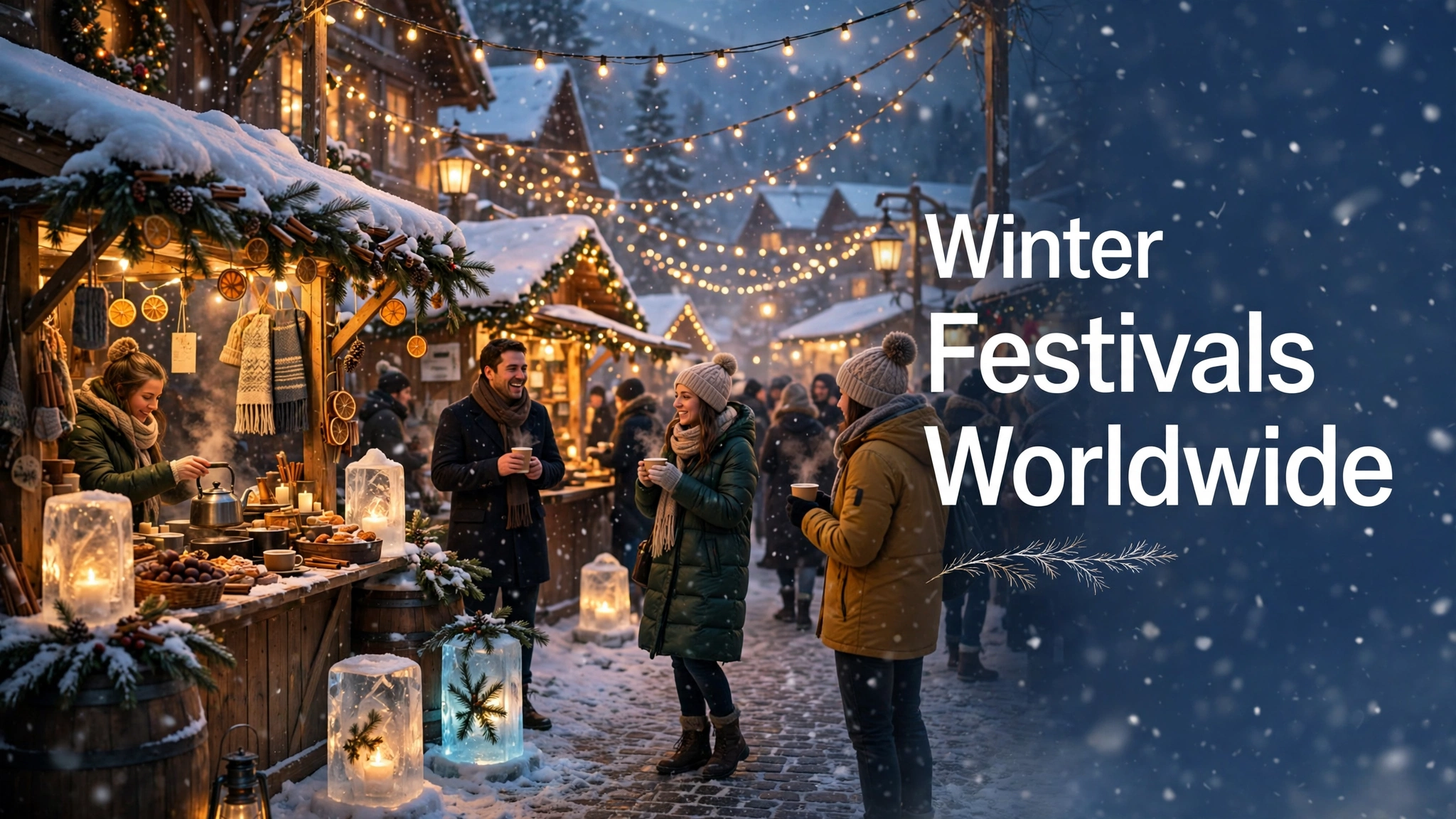
Winter Festivals Around the World 2026
In this post
- Harbin Ice and Snow Festival, China
- Sapporo Snow Festival, Japan
- Christmas Markets in Europe
- Hogmanay in Edinburgh, Scotland
- Winter Light Festivals: Amsterdam, Lyon and Beyond
- Carnival and Winter Celebrations in Warmer Places
- Food, Music and Local Traditions
- Planning Winter Festival Travel: Cold, Crowds and Costs
- Photography, Souvenirs and Remembering the Festival
- My Take:
Winter festivals turn the coldest season into a reason to travel, gather, and celebrate. Some festivals are built from ice and snow, others from light, music, food, and old traditions. What they share is a sense of place: a city or village using winter, rather than hiding from it, to create something visitors cannot see in summer. Choosing a festival means choosing a climate, a crowd level, and a type of experience, from quiet lantern walks to large street parties.
Dates matter more for winter festivals than for many other trips. Ice festivals depend on freezing temperatures, Christmas markets run for a limited season, and New Year festivals centre on one night. Check official festival dates close to travel, because dates shift year to year and weather can shorten an event. Book transport and accommodation early for famous festivals, dress for long outdoor hours, and leave room in the plan for a warm indoor break.
Harbin Ice and Snow Festival, China
Harbin, in northeast China, hosts one of the world’s largest ice festivals, with enormous ice buildings, sculptures, slides, and lanterns. Ice is cut from a nearby river, shaped into castles, palaces, and replicas of famous buildings, and lit from inside with coloured lights. At night, the ice city glows, and the scale is difficult to grasp until seen in person. Daytime visits show detail and craftsmanship, while night visits show colour and atmosphere.
The festival usually runs from early January into February, depending on weather, with opening events in early January. Temperatures in Harbin in January can be extremely cold, often well below freezing, so warm clothing is not optional. Layered clothing, insulated boots, gloves, a hat, and face protection help visitors stay comfortable for longer. Indoor warming areas, hot drinks, and nearby museums give breaks from the cold.
Harbin is best for travellers who enjoy scale and spectacle and who accept serious cold. Families can enjoy ice slides and snow play areas, but young children need frequent warming breaks. Book a hotel near the main festival sites, check transport in icy conditions, and allow extra days in case weather delays travel. The reward is a winter world that looks unreal, built entirely from frozen water and light.
Sapporo Snow Festival, Japan
Sapporo, on the island of Hokkaido, hosts a snow festival famous for large snow sculptures, ice carvings, and winter food. The main sites include Odori Park, where huge snow sculptures line a long park, Susukino, known for ice sculptures, and a family site with snow slides and play areas. Sculptures range from cartoon characters and animals to detailed buildings and cultural figures, made by teams from Japan and other countries.
The festival usually takes place in early February for about a week, though exact dates change yearly. Sapporo in February is cold and snowy, but generally less extreme than Harbin. Warm layers, waterproof boots, and gloves are still essential, because visitors walk outdoors for hours and snow can melt underfoot. Evening visits are popular, when sculptures are lit and the park feels festive, while daytime visits show finer detail.
Food is a major part of Sapporo’s festival. Street stalls and nearby restaurants offer ramen, grilled seafood, sweet potatoes, and hot drinks, which help visitors warm up between sites. The city is well organised for winter tourism, with public transport, indoor shopping arcades, and clear signage. Sapporo suits first-time winter festival travellers, families, and visitors who want a balance of art, food, and manageable cold.
Christmas Markets in Europe
European Christmas markets are among the most popular winter festivals, running from late November to late December in many cities. Stalls sell handmade gifts, ornaments, food, and hot drinks, often around a cathedral, town hall, or main square. The atmosphere comes from lights, music, wooden stalls, and the smell of roasted nuts, mulled wine, and baked goods. Each city adds its own character, from large markets in Vienna and Strasbourg to smaller markets in medieval towns.
Vienna offers elegant markets with music and imperial backdrops, while Strasbourg, often called a capital of Christmas, fills its old town with decorations and market streets. Nuremberg is famous for its traditional market, gingerbread, and crafts. Smaller markets in towns such as Colmar, Rothenburg, and Tallinn can feel more intimate, with fewer crowds and a stronger local feel. Choosing a smaller market can be better for families and travellers who dislike dense crowds.
Christmas markets reward slow travel. Visit in the late afternoon when lights come on, try local food, and buy crafts directly from makers where possible. Prices vary, and handmade items cost more than mass-produced souvenirs, but they carry a story and support local makers. Check market dates, because some markets close before Christmas Day, and others run into the New Year. A market trip that ends on Christmas Eve needs different planning from one that runs through December.
Hogmanay in Edinburgh, Scotland
Hogmanay is Scotland’s New Year celebration, and Edinburgh hosts one of the most famous versions, with concerts, street parties, fireworks over the castle, and traditional events. The celebration often spans several days, including a torchlight procession, a street party on 31 December, and a swim in cold water on New Year’s Day for brave participants. The atmosphere mixes music, history, and Scottish tradition, with crowds gathering in the old town and around Princes Street.
The street party on 31 December is ticketed and controlled, with entry points, security checks, and capacity limits. Tickets sell out early, and visitors should book as soon as sales open. Warm, waterproof clothing is essential, because Edinburgh in late December is cold, windy, and often wet. Standing for hours outdoors requires layers, a hat, gloves, and waterproof shoes. Plan a hotel within walking distance, because transport after midnight is busy and roads are closed.
Hogmanay suits travellers who enjoy music, crowds, and tradition, and who plan well ahead. It is less suited to very young children in the main street party, though family events earlier in the festival may suit them better. The torchlight procession, with thousands of people carrying torches through the old town, is a striking sight and a calmer alternative to the main party for some visitors. Hogmanay is a festival where the city itself, with its castle and old streets, is part of the show.
Winter Light Festivals: Amsterdam, Lyon and Beyond
Light festivals use darkness as a canvas. Amsterdam’s light festival, usually in winter, places light artworks along canals and streets, best seen on foot or by boat. Lyon’s Festival of Lights, in early December, fills the city with light installations, projections on buildings, and window displays, rooted in a tradition of placing candles in windows. These festivals turn a normal city walk into an art experience, without the extreme cold of ice festivals.
Light festivals suit travellers who prefer evening walks, photography, and a calmer pace. Routes are often marked, and maps help visitors find installations. Wear warm layers and comfortable shoes, because routes can be long. Evening visits are best for light effects, but popular installations draw crowds, so an early evening start helps. A boat tour in Amsterdam gives a different view, with reflections on water adding to the artworks.
Other light festivals include winter illuminations in Japan, such as Nabana no Sato, and light events in cities such as Berlin and Montreal. Each has its own dates and scale, so check official programmes. Light festivals are a good choice for travellers who want winter atmosphere without snow sports or extreme cold, and for families who enjoy walking and looking rather than standing in one crowded spot.
Carnival and Winter Celebrations in Warmer Places
Not every winter festival involves snow. Venice Carnival, usually in February, fills the city with masks, costumes, and balls, rooted in centuries of tradition. Masks range from simple to elaborate, and the old town becomes a stage for costumed visitors and performers. Venice in February is cool and often misty, which adds atmosphere, but crowds are large, especially on weekends. Book accommodation early and plan for walking, bridges, and narrow streets.
Rio Carnival, also usually in February, is a summer festival in the southern hemisphere, but it falls in the northern winter travel season. Samba schools parade in a large stadium, with costumes, music, and dance, while street parties fill the city. Rio Carnival is loud, colourful, and crowded, and it suits travellers who enjoy music and large celebrations. Safety, transport, and accommodation planning are essential, because the city is very busy during carnival.
Quebec Winter Carnival in Canada offers a different balance: snow sculptures, ice palaces, parades, and outdoor activities in a French-Canadian city. It is cold, but the festival is designed for winter, with warming areas, food, and family activities. Quebec suits travellers who want a North American winter festival with a European old-town feel. The choice between warm and cold winter festivals depends on what kind of celebration a traveller enjoys, not only on temperature.
Food, Music and Local Traditions
Winter festivals are often as much about food as about spectacle. Christmas markets offer local sausages, soups, baked goods, and hot drinks. Sapporo offers ramen and seafood. Quebec offers maple treats and hearty winter food. Trying local food is part of understanding a festival, because recipes often reflect climate, history, and available ingredients. Eat at stalls run by local makers where possible, and ask about ingredients if allergies are a concern.
Music also shapes winter festivals. Carol concerts in churches, street musicians at markets, samba in Rio, and live bands at Hogmanay all create atmosphere that photographs cannot capture. Check concert schedules, because some performances require tickets or early arrival. A festival that includes a concert, a market walk, and a meal gives a fuller day than a festival visited only for one display. Plan a mix of outdoor spectacle and indoor warmth.
Local traditions give festivals meaning beyond tourism. A torchlight procession, a candle tradition, a mask custom, or a New Year ritual connects visitors to history. Learn a little about the tradition before visiting, respect local customs, and follow guidance from organisers. Photograph respectfully, especially at religious or traditional events, and avoid blocking processions or performances. A respectful visitor enjoys a festival more, because locals are more welcoming when traditions are honoured.
Planning Winter Festival Travel: Cold, Crowds and Costs
Cold is the main practical challenge of winter festivals. Dress in layers: a warm base layer, an insulating middle layer, and a windproof, waterproof outer layer. Protect hands, feet, ears, and face, and bring extra socks and gloves if staying outdoors for hours. Take indoor breaks for hot drinks and warming, especially with children and older travellers. Frostbite and hypothermia are real risks in extreme cold, so listen to the body and go indoors when feeling numb or shivering uncontrollably.
Crowds need planning too. Arrive early for popular sites, use official maps and entry information, and agree meeting points in large crowds. Book tickets, accommodation, and transport early for famous festivals, because prices rise and options disappear. Consider visiting on weekdays rather than weekends, or visiting a smaller festival nearby, for a calmer experience. A less famous festival, visited comfortably, often gives better memories than a famous festival visited in stress.
Costs vary widely. Ice and snow festivals may have entry fees for main sites, while markets are often free to enter with food and shopping costs. New Year street parties may be ticketed, while light festivals may be free to walk. Set a total budget including transport, accommodation, food, tickets, and warm clothing if new gear is needed. A warm coat bought for one festival can be used for years, which makes it a better investment than a single expensive ticket that gives only a short view.
Photography, Souvenirs and Remembering the Festival
Photography at winter festivals needs a balance between capturing and experiencing. Ice sculptures, snow art, and light installations photograph beautifully, but cold drains phone batteries quickly. Keep a phone in an inside pocket to stay warm, carry a portable charger if possible, and take photographs in short bursts rather than holding a phone out for long periods. Night photography benefits from a steady hand or a small tripod where allowed, but flash often ruins ice and light effects, so use available light where possible.
Souvenirs should be chosen with the same care as festival choices. Handmade crafts, local food, and items made by festival artists carry a story and support makers. Mass-produced souvenirs, bought in bulk, often lose meaning quickly and add clutter. A single well-chosen item, such as a handmade ornament, a local craft, or a photograph printed and framed, can remind a traveller of a festival for years. Avoid buying souvenirs that are fragile, bulky, or difficult to transport in winter conditions.
Remembering a festival also means resting afterwards. Winter festival travel is tiring, with cold, walking, and early starts. Plan a rest day after returning home, unpack slowly, and share photographs and stories with family. A festival that is remembered and talked about gives more lasting value than a festival that is rushed through and forgotten. The best souvenir, in the end, is often a story told well, not an object bought quickly.
My Take:
I think winter festivals are the best proof that cold is not a reason to stay home. Too many people treat winter as a season to endure, waiting for spring. Festivals flip that idea. They use snow, ice, darkness, and long nights as materials for art, food, and celebration. A city that builds a palace from ice, or fills its streets with light, is saying that winter has value. I find that attitude inspiring, and I think travellers who embrace it come home with stronger memories than travellers who only visit in summer.
My strongest opinion is that smaller festivals often beat famous ones. Harbin and Sapporo are extraordinary, but they are also crowded, cold, and expensive to reach. A small Christmas market in a medieval town, a local light walk, or a community winter carnival can feel more personal. The food is local, the makers are present, and the crowd is manageable. Fame brings scale, but scale can remove intimacy. I would choose a festival where I can talk to a maker, taste local food, and walk without being pushed, over a festival where I only photograph a famous sculpture from far away.
I also believe preparation is part of enjoying winter. A traveller who dresses properly, books early, and plans warming breaks will enjoy an ice festival. A traveller who arrives in thin clothes, without a ticket, and without a hotel nearby will suffer, no matter how beautiful the ice is. Winter does not forgive poor planning the way summer does. That is not a reason to avoid winter festivals. It is a reason to respect them. Respect the cold, respect the crowd, and respect the festival’s rules, and the festival will reward you.
Food is another area where I think visitors should slow down. It is tempting to rush from sculpture to sculpture, taking photographs and moving on. The food stalls, however, are where a festival’s local character lives. A bowl of ramen in Sapporo, a hot drink in a Christmas market, or maple food in Quebec tells a story about place and season. Eating slowly, warming up, and talking to stallholders turns a sightseeing trip into a cultural visit. Photographs fade, but taste and conversation stay.
I think families should choose festivals by comfort, not by fame. A family with young children needs warming areas, toilets, seating, and an easy exit. A festival that provides those things, even if it is smaller, is better than a famous festival that leaves children cold and tired. Light festivals and markets often suit families better than extreme ice festivals, because they allow walking at a child’s pace, with frequent indoor breaks. A happy child at a small festival creates a better memory than a miserable child at a famous one.
Accessibility also matters to me. Winter festivals involve snow, ice, uneven ground, and long outdoor walks, which can be difficult for older and disabled travellers. Cities that provide clear routes, accessible viewing areas, and indoor alternatives deserve praise. Travellers should check accessibility information early, not assume it exists. A festival that welcomes everyone, with clear information and support, is a better festival, even if its sculptures are smaller. Inclusion should be part of how we judge these events.
Finally, I believe winter festivals teach a useful lesson about seasons. Every place has a season that is hard, and every culture finds a way to celebrate within it. Ice festivals celebrate freezing cold. Light festivals celebrate darkness. Carnival celebrates before Lent. Markets celebrate the darkest weeks before Christmas. These celebrations are not escapes from winter. They are answers to it. Travelling to a winter festival is a chance to learn that answer, and to bring a little of that spirit home. That is why I would choose a winter festival over another summer beach trip, at least once, for anyone who has never tried one.
I also think winter festivals should be judged by how they treat local people, not only visitors. A festival that displaces residents, raises prices sharply, or turns a neighbourhood into a tourist-only zone loses something important. A festival that involves local makers, schools, and traditions, and that leaves benefits for residents after visitors leave, is stronger. Travellers can support that kind of festival by buying from local makers, respecting residential areas, and visiting outside peak hours where possible.
Another point is about climate and sustainability. Ice festivals depend on freezing temperatures, and warming winters threaten some festivals. Travellers should be aware that a festival may change, shorten, or adapt as climates shift. Choosing festivals that use energy efficiently, manage waste, and protect local environments is a small way to support their future. A festival that celebrates winter should also help protect the winter it celebrates.
Finally, I would encourage anyone who has never visited a winter festival to try one, even a local one. It does not need to be Harbin or Sapporo. A nearby market, light walk, or community carnival can give a taste of winter celebration without a long journey. Once that taste is enjoyed, a larger festival becomes a goal, not a gamble. Winter, experienced through celebration, feels shorter, warmer, and more hopeful. That is a gift worth travelling for, even in the cold.
I also believe winter festivals are best enjoyed slowly, over several days, rather than rushed in one day. A festival visited slowly allows time for food, music, rest, and conversation, while a rushed visit only allows photographs. Slow travel may cost an extra hotel night, but it gives a fuller experience and less tiredness. If time is limited, choose fewer sites and enjoy them properly, rather than trying to see everything and enjoying nothing fully. Depth beats breadth in winter festivals, as in many kinds of travel.
One more thought: a winter festival trip should leave room for unplanned moments. A quiet café, a street musician, or a conversation with a local maker can become the best memory of a trip, even though it was not on any itinerary. Leave gaps in the plan for those moments, rather than filling every hour with scheduled sites. Unplanned joy is often the most genuine joy of travel.
Frequently Asked Questions
What is the best winter festival in the world? There is no single best festival: Harbin offers ice scale, Sapporo offers snow art and food, European markets offer atmosphere, and Hogmanay offers New Year tradition. Choose by cold tolerance, crowds, budget and interests.
When is the Harbin Ice Festival? It usually runs from early January into February, depending on weather, with opening events in early January. Check official dates before travel, because ice conditions and weather can affect the programme.
Is Sapporo Snow Festival good for families? Yes, Sapporo has a family site with snow slides and play areas, plus food stalls and city transport. Dress warmly, plan indoor breaks, and visit in daytime for detail or evening for lights.
Do European Christmas markets stay open on Christmas Day? Many markets close before or on Christmas Eve, while some run into the New Year. Check each market’s official dates, because closing dates vary widely by city.
What should I wear to a winter festival? Wear layers, an insulating middle layer, a windproof waterproof outer layer, warm boots, gloves, hat and face protection in extreme cold. Take indoor breaks and carry extra socks and gloves for long outdoor visits.
Are winter festivals expensive? Costs vary: markets and light walks are often free to enter, while ice sites and ticketed New Year parties charge entry. The largest costs are usually transport and accommodation, which rise for famous festival dates.