Winter Ice Skating: A Beginners Guide
In this post
Ice skating looks effortless when experienced skaters glide past, but every skater began with wobbly ankles, cautious steps, and a few falls. For beginners, the goal of a first session is not elegance. It is balance, confidence, and fun: learning to stand, move, stop, and fall safely, in that order. With the right skates, a suitable rink, and patient practice, most people can enjoy their first time on ice and improve quickly. This guide explains how to start, what to wear, what to practise first, and how to stay safe.
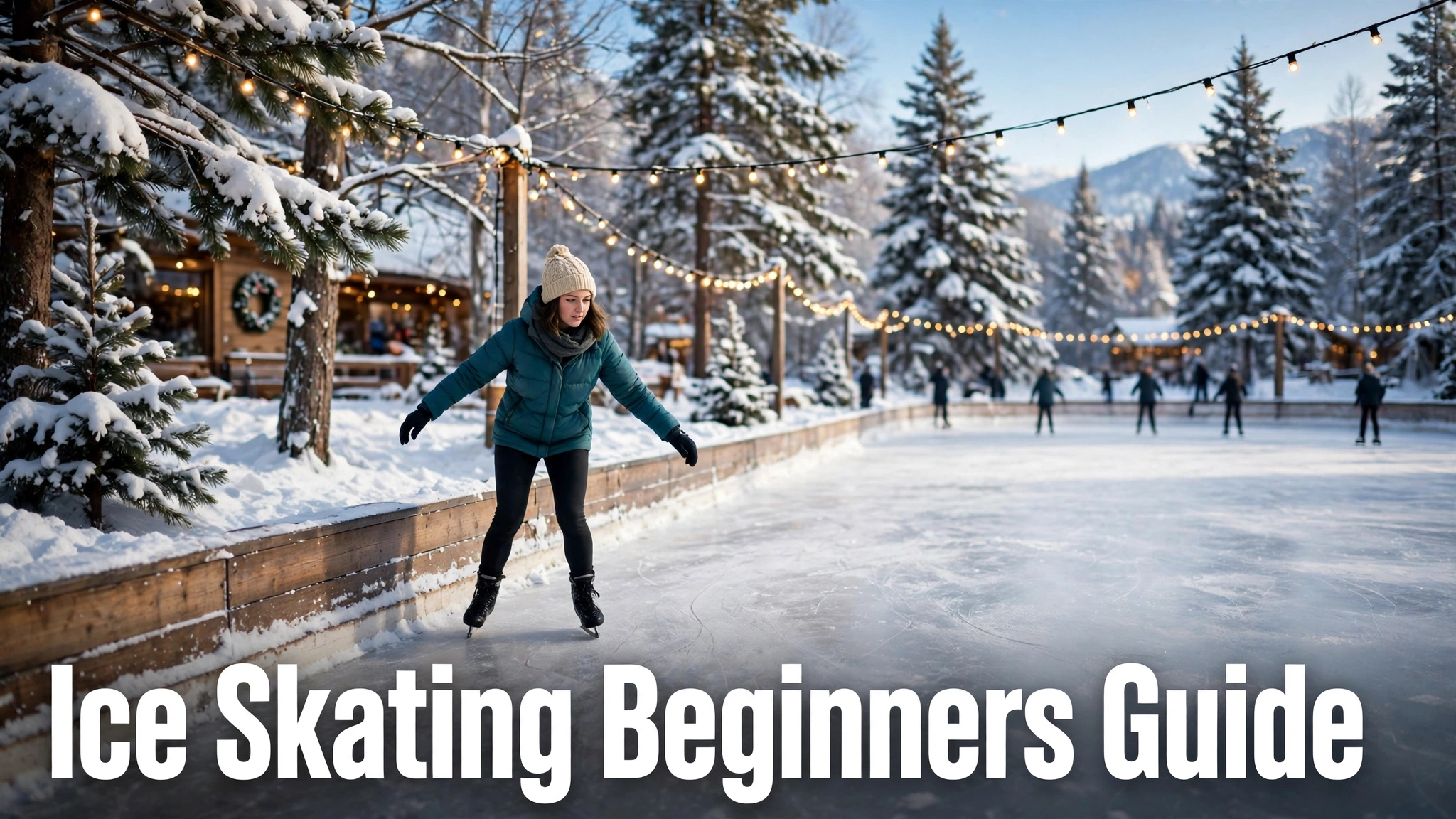
Choose your first rink wisely. An indoor rink with a smooth, well-maintained surface, a barrier to hold, and staff nearby is ideal for beginners. Outdoor rinks can be beautiful, especially in winter, but they may have rougher ice, colder wind, and fewer facilities. Avoid natural ice on lakes or ponds unless local authorities have confirmed it is safe and supervised; ice thickness, currents, and hidden hazards make natural ice dangerous for beginners and even for experienced skaters. A public skating session, rather than a busy hockey or figure session, gives space to learn at your own pace. Check session times, prices, and skate hire availability before going, so the first visit feels easy, not rushed.
Go with a friend if you can. A companion can hold your hand at first, laugh with you after a fall, and help you up, which makes learning far less intimidating. Many rinks offer beginner lessons, group classes, or skating aids for children and new skaters, and a short lesson can save hours of trial and error. A good instructor teaches balance and stopping early, corrects posture gently, and builds confidence step by step. If lessons are not available, the steps in this guide — standing, marching, gliding, and stopping — give a safe order to practise on your own. Patience matters more than talent on the ice.
Choosing Skates and What to Wear
Skate fit is the most important equipment decision for a beginner. Skates should fit snugly, with toes able to wiggle slightly but heels held firmly, and ankles supported without painful pressure. Hire skates at a rink are a good first choice, because you can try sizes, ask staff for help, and avoid buying before you know you enjoy the sport. Wear thin or medium socks, not thick, bulky ones, because thick socks can bunch and reduce control. Lace skates firmly, especially around the ankle, but not so tightly that circulation is cut off or feet go numb. If your feet hurt, feel numb, or slide inside the boot, ask staff to check the fit; a different size or lacing often fixes the problem.
Buying skates makes sense only after several sessions, when you know your size, preferred style, and commitment. Recreational figure skates, with a toe pick at the front, suit beginners who want to learn basic gliding and turns, while hockey skates suit those interested in speed and hockey. For a first purchase, comfort and fit matter more than brand or style. Try skates on in person, walk in them off ice if allowed, and check that ankles feel supported. Keep blades dry after skating, use blade guards off ice, and have blades sharpened by a professional when they feel dull or slippery; dull blades make learning harder and falls more likely.
Clothing should be warm, flexible, and protective. Wear layers you can move in: a warm top, a light jacket, gloves, and a hat if allowed. Gloves protect hands in a fall and keep fingers warm, and they are required at many rinks. Avoid long scarves, loose clothing, or dangling items that could catch or trip you. Trousers should allow knee bending and not drag on the ice. Beginners often wear light knee and elbow protection, and children should wear a helmet as rink guidance directs; adults learning for the first time may also choose a helmet for confidence and safety. Dress for movement and falls, not for a photograph, and you will enjoy the session far more.
First Steps: Balance, Marching and Gliding
Begin at the barrier. Hold it lightly, stand with feet shoulder-width apart, knees slightly bent, and weight centred over the middle of the foot. Avoid leaning back, which is the most common beginner mistake and the cause of many backward falls. Lean slightly forward, keep arms relaxed at your sides or slightly out for balance, and look ahead, not down at your feet. Looking down shifts weight forward and makes balance worse. Take a moment to feel the ice, the skates, and your balance before moving. Standing still, comfortably, is a real achievement on a first visit.
Next, practise marching in place, lifting feet alternately and placing them down flat, while holding the barrier. Then try small marching steps away from the barrier, with a friend or the barrier nearby. Keep steps small, knees bent, and arms out for balance. When marching feels steady, try gliding: push gently to one side with one foot, glide on the other, then switch. Think of a gentle, rhythmic motion, like walking on a slippery floor, rather than long, powerful strides. Speed will come later; control comes first. If you feel unsteady, bend knees more, slow down, and return to the barrier. There is no rush, and no one at a public session expects a beginner to skate fast.
Falling is part of learning, so learn to fall as safely as possible. Try to fall sideways or forward onto knees and hands with gloves on, rather than backward onto your head or wrists. Bend knees and crouch as you lose balance, which lowers the fall and reduces impact. After a fall, check for pain, move to the barrier if needed, and get up by kneeling, placing one foot flat on the ice, and pushing up with hands on the knee, rather than trying to stand straight from a flat position. If you hit your head, feel dizzy, or have persistent pain, seek rink staff and medical help promptly. Most falls are minor and funny in hindsight, but head injuries and wrist injuries deserve prompt attention. This is general information, not medical advice.
Learning to Stop, Turn and Skate With Others
Stopping is the skill beginners most want and most neglect. The simplest beginner stop is the snowplough stop: glide slowly, turn toes inward, push heels outward, and let the blades scrape gently to slow down. Practise it at very low speed first, in an open area away from others. Another beginner method is to glide to the barrier and stop by holding it, which is perfectly acceptable while learning. Do not skate fast until you can stop reliably, because speed without stopping is how collisions happen. A skater who can move slowly and stop safely is a safer, more confident skater than one who can go fast but cannot stop.
Turning comes naturally once gliding feels steady. To turn, lean gently in the direction you want to go, look where you want to turn, and let your body follow. Start with wide, gentle curves around the rink, following the flow of other skaters, rather than sharp turns. Keep to the direction of travel used at the rink — usually anticlockwise — and avoid skating against the flow, cutting across the middle suddenly, or stopping in the centre of the rink where others may collide with you. If you need to stop, move to the edge. Skating with others is a shared activity, and predictable movement — steady speed, clear direction, no sudden stops in the middle — keeps everyone safe.
As confidence grows, practise in short sessions rather than one exhausting marathon. Thirty to forty-five minutes of focused practice, with breaks to rest, drink water, and watch other skaters, teaches more than two tired hours of wobbling. During breaks, notice how experienced skaters bend knees, use arms, and glide smoothly. Try one new skill per session — for example, gliding on one foot for a few seconds, or a gentle backward step — and return to basics when tired. Progress in skating is rarely linear; a good day may be followed by a wobbly day, especially when trying something new. That is normal, and it does not mean you have lost skill.
Safety, Etiquette and Enjoying Winter Skating
Rink etiquette protects beginners and experienced skaters alike. Follow the rink’s direction, keep a safe distance, and be aware of faster skaters behind you. Do not carry food, drinks, phones, or cameras onto the ice while learning, because they distract you and become hazards in a fall. Keep children close and within your reach, and use skating aids only where the rink allows them. If the ice is crowded, skate near the edge where speeds are lower, and leave the centre to faster skaters. If you feel unwell, dizzy, or too cold, leave the ice, warm up, and drink water. No session is worth pushing through illness or exhaustion.
Cold and fatigue affect beginners quickly. Outdoor rinks in particular can be cold and windy, so take breaks indoors, warm hands and feet, and drink warm fluids if available. Check fingers and toes for numbness, and warm them gradually if cold. Children cool faster than adults and may not say they are cold until they are very cold, so check on them regularly and schedule breaks. If skating outdoors on a supervised rink, follow all rink rules about ice conditions, opening times, and capacity. Never skate on unsupervised natural ice, however inviting it looks, because ice that looks solid may be thin, cracked, or weakened by currents underneath.
Enjoyment is the point. Celebrate small wins: standing without the barrier, gliding for ten seconds, stopping without help, completing a lap. Take a photograph off the ice, share the experience with friends, and plan a return visit while the fun is fresh. Many people who skate once in winter return regularly, join a beginner class, or take up hockey or figure skating as a hobby. Others simply enjoy a few festive sessions each winter, and that is a perfect outcome too. Ice skating does not need to become a sport to be worthwhile. A winter afternoon on the ice, with laughter, fresh air, and a hot drink afterwards, is a complete joy in itself.
Progressing After Your First Sessions
After a few sessions, set small, specific goals rather than vague aims to “get better.” A useful next goal might be gliding on one foot for five seconds, completing a full lap without holding the barrier, stopping reliably with a snowplough stop, or turning smoothly in both directions. Practise one goal per session, and return to basics when a new skill feels shaky. Many rinks offer beginner and improver classes that teach crossovers, backward skating, and simple jumps in a safe order, and joining a class can prevent bad habits from becoming fixed. Skating with slightly better skaters, at a safe distance, also teaches rhythm and posture by example.
Equipment and fitness improve with regular skating. If you skate weekly, your own skates, fitted properly and sharpened regularly, will feel far better than hire skates. Off-ice exercises — balance on one leg, gentle squats, core strengthening, and stretching — support skating and reduce fall risk, though they do not replace time on ice. Keep sessions enjoyable: skate with friends, try a themed public session, or set a fun challenge, such as skating to music or completing a festive rink trail. Progress that is enjoyable lasts longer than progress driven by pressure, and a skater who enjoys weekly sessions will improve steadily without needing to chase advanced skills quickly.
Skating With Children and as a Family
Children learn skating differently from adults: they are lower to the ground, fall more softly, and often learn faster, but they also tire, cool, and lose focus sooner. Keep children’s sessions short, fun, and full of games — gliding to a target, following a leader, or collecting imaginary stars around the rink — rather than long technical drills. Use skating aids only where allowed, hold a child’s hand rather than pulling them, and celebrate effort over speed. A helmet, gloves, and warm, flexible clothing are essential, and a hot drink and rest break halfway through a session will keep a child happy far longer than pushing through tiredness.
Family skating works best when adults model patience and fun. Skate at the slowest person’s pace for part of the session, take photographs off the ice, and end with a shared treat, so the day is remembered as a family outing, not a lesson. If one family member is nervous, do not rush them; let them hold the barrier, watch, and join in when ready. Some family members may prefer to watch from the side with a hot drink, and that choice should be respected. A family skating day succeeds when everyone, skaters and watchers alike, leaves smiling and wanting to return, not when everyone skates at the same level.
My Take:
My honest view is that ice skating is one of the best winter activities for beginners precisely because it is humbling and joyful at the same time. Everyone falls, everyone wobbles, and that shared clumsiness makes it social in a way that many sports are not. I think the fear of looking foolish stops more people than the fear of falling, and that is a shame, because no one at a public rink is judging a beginner. They are remembering their own first session. If you can laugh at a fall, get up slowly, and try again, you already have the most important skating skill: resilience. Technique can be taught in an hour; willingness to look silly for a while is what actually gets you gliding.
I also believe lessons are worth it, even one short group lesson. A good instructor can spot in seconds what you cannot feel yourself — leaning back, stiff knees, arms held too high — and correct it with a simple cue that changes everything. Without that feedback, beginners often practise the same mistake for hours and conclude they are “bad at skating,” when in fact they just need one adjustment. A lesson is not a sign of weakness; it is the fastest, safest way to enjoy the ice. If lessons are not available, skating with a patient friend who can hold your hand and remind you to bend your knees is the next best thing. Learning together is also more fun.
Another point I feel strongly about is stopping before speed. I have seen beginners who could move quickly across the rink but could not stop, and they were a danger to themselves and everyone around them. The snowplough stop, practised slowly in an open area, may look unglamorous, but it is freedom: once you can stop, you can relax, look around, and enjoy skating instead of fearing the next barrier or person. I would advise every beginner to spend the first half of their first session on standing, marching, gliding slowly, and stopping, and only then to think about going faster or further. Control first, speed later, is a rule that applies to almost every sport, and it applies most clearly on ice.
I also think safety and etiquette are part of enjoyment, not separate from it. Wearing gloves, following the rink direction, not stopping in the middle, and leaving natural ice alone are not boring rules; they are what allow a crowded rink to feel safe and fun for everyone, including children and first-timers. A rink where everyone moves predictably is a rink where a beginner can relax and learn. And a beginner who relaxes learns faster. So I see etiquette as a kindness: by skating predictably, you give others, and yourself, the space to enjoy winter. That is a lesson worth carrying beyond the rink, too.
Finally, my view is that winter skating should be celebrated as a seasonal pleasure, not turned into a test. You do not need to become a figure skater, play hockey, or skate every week to enjoy it. A few sessions each winter, a hot drink afterwards, a photograph with friends, and the memory of gliding under winter lights are enough. If you love it and want more, classes and clubs are waiting. If you simply enjoy a festive afternoon on the ice once a year, that is also a complete success. Go with a friend, hire skates that fit, hold the barrier without shame, fall safely, laugh, and glide. Winter will feel a little more magical for it, and you will have a story to tell long after the ice has melted.
I also believe progression should be gentle and specific. Rather than aiming vaguely to get better, choose one small goal per session: glide on one foot for five seconds, complete a lap without the barrier, or stop reliably every time. That focus makes progress visible and satisfying, and it prevents the frustration of trying everything at once. Joining a beginner class, when available, can correct habits early and build skills in a safe order, from crossovers to backward skating. But even without a class, skating regularly with friends, watching better skaters, and practising one skill at a time will bring steady improvement. Enjoyment, not pressure, is what keeps people returning to the ice.
There is also a family point I want to end on. Children learn fastest when sessions are short, playful, and full of games, not long drills, and adults should skate at the slowest person’s pace for part of a family session. A nervous family member should be allowed to watch from the side with a hot drink, without pressure, because a family day succeeds when everyone leaves smiling, not when everyone skates at the same level. If you remember that, and you remember to bend your knees, look ahead, and stop before you speed up, you have everything you need for a wonderful first winter on the ice. Go, glide, fall safely, laugh, and come back for more.
One last thought: winter skating is a reminder that learning something new as an adult is joyful, even when it is clumsy. We spend so much of adult life doing things we already know how to do, and skating asks us to be beginners again — to wobble, to fall, to laugh, and to try again in front of other people. That vulnerability is not embarrassing; it is refreshing, and it is why a first skating session often feels more alive than a routine winter day. So take the risk, hire the skates, hold the barrier, and glide. You may discover a new winter hobby, or you may simply enjoy a magical afternoon. Either way, you will have done something brave and fun, and winter will feel a little brighter for it.
In summary, start at a supervised rink, wear skates that fit, dress warmly with gloves, and learn in order: stand, march, glide, stop, then turn. Keep sessions short, practise one skill at a time, follow rink etiquette, and never skate on unsupervised natural ice. Fall safely, get up slowly, laugh, and return for another session. Ice skating rewards patience and practice, and even a first wobbly session can be the start of a winter habit you love. The ice is waiting — go carefully, go joyfully, and enjoy every glide.
Frequently Asked Questions
Is ice skating hard for a complete beginner? It feels wobbly at first, but most beginners can stand, march, and glide slowly in their first session. Balance, bent knees, and small steps matter more than strength or talent, and a short lesson can speed progress greatly.
What skates should a beginner use? Hire skates at the rink for your first sessions, so staff can help with fit. Wear thin or medium socks, lace firmly around the ankle, and ask for a different size if feet hurt, go numb, or slide inside the boot.
How do I stop on ice skates as a beginner? Practise the snowplough stop at low speed: glide slowly, turn toes inward, push heels outward, and let blades scrape gently. Do not skate fast until you can stop reliably, and use the barrier to stop while learning.
Is it safe to skate on a frozen lake or pond? No, not unless local authorities have confirmed the ice is safe and supervised. Natural ice can be thin, cracked, or weakened by currents. Beginners should use indoor or supervised outdoor rinks with maintained ice and staff nearby.
What should I wear for first-time ice skating? Warm, flexible layers, gloves, and a hat if allowed. Avoid long scarves and loose clothing that could trip you. Children should wear a helmet as rink guidance directs, and beginners may choose one for confidence.
How long should a beginner skate in one session? Thirty to forty-five minutes of focused practice, with breaks, is ideal for a first session. Rest, drink water, and watch other skaters during breaks. Progress is rarely linear, and a wobbly day after a good day is normal.