Woodkid: The Life Story Behind France's Cinematic Music Maker
In this post
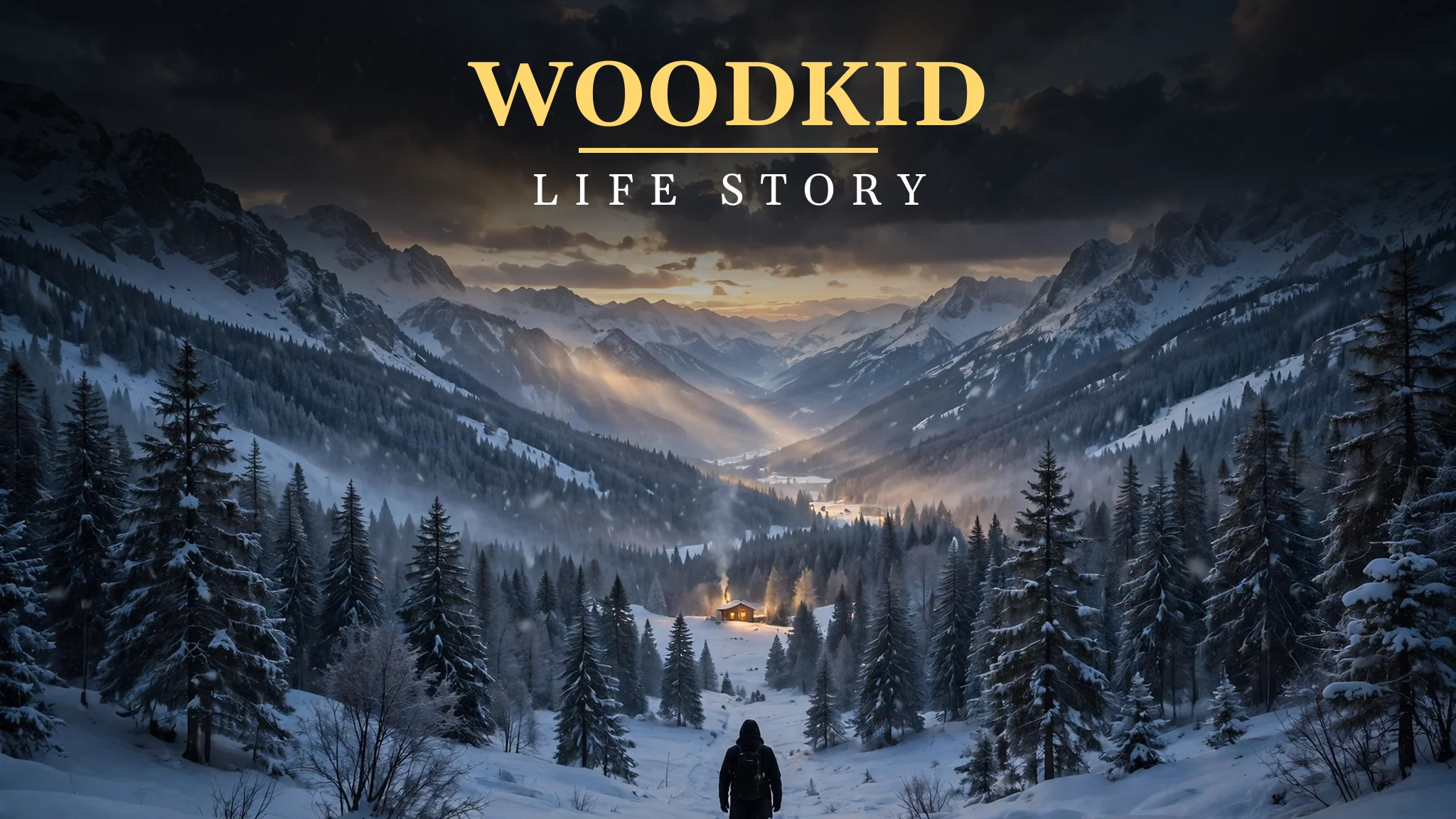
Some artists start in one art form and move to another, and the move makes their work richer. Woodkid is one of those artists. He began as a director of music videos, making some of the most famous videos of the last twenty years, and then he became a singer, with a voice that is deep, powerful, and full of drama. His songs sound like films: they are big, they are emotional, and they tell stories of journeys, of battles, and of growing up. When you listen to Woodkid, you do not just hear a song. You see a world, with mountains, with snow, with a lone figure walking toward the light.
His real name is Yoann Lemoine, and he was born in Lyon, in eastern France, in 1983. He grew up in a family that loved art, he studied, and he became a video director, working with stars like Katy Perry, Lana Del Rey, and Taylor Swift. Then, in 2011, he released his own song, “Iron”, and the world discovered that the man behind the camera also had a voice. His first album, “The Golden Age”, came in 2013, and it became a classic of modern French music.
This is the story of a visual artist who became a musical artist, and who brought the eye of a director to every song he wrote. It is a story about a childhood in Lyon, about a career behind the camera, about a voice that surprised everyone, and about an artist who has never stopped creating, in music, in film, and in art. It is also a story about the power of a single image, a single note, and a single story told well.
A Childhood in Lyon
Yoann Lemoine was born on 16 March 1983 in Lyon, a city in eastern France known for its art, its food, and its history. He grew up in a family that loved creativity, and he was encouraged to draw, to make things, and to tell stories from an early age. He was a quiet and thoughtful child, with a strong imagination, and he spent hours in the world of books, of films, and of images. That imagination would later become the foundation of his whole career.
As a boy, he loved music, and he loved cinema, and he was drawn to the places where the two meet. He watched films, he listened to records, and he tried to understand how a song and an image could work together to tell a story. He was not a child who dreamed of pop stardom in the usual sense. He dreamed of making art, of creating worlds, and of sharing those worlds with other people. That dream stayed with him through all the years of his career.
He studied art and design, and he began to work in the world of images, learning how to make a film, how to frame a shot, and how to tell a story without words. He was a student of the visual, and he learned that a single image can say more than a thousand words. That lesson became the foundation of his work as a director, and later as a singer, where every song is also a picture, a landscape, a journey.
Lyon gave him a grounded view of the world. It is a city with a strong artistic tradition, a city of cinema, of theatre, and of ideas, and it is far from the noise of Paris. Yoann grew up in a place where art was taken seriously, and where being different was not a problem. That freedom stayed with him when fame came, and it is part of the reason his work has always been so original and so brave.
Behind the Camera and the Videos That Defined a Decade
Before he was a singer, Yoann Lemoine was one of the most sought-after music video directors in the world. He directed videos for some of the biggest stars of the time, including Katy Perry’s “Teenage Dream”, Lana Del Rey’s “Born to Die”, and Taylor Swift’s “Back to December”. Those videos were watched hundreds of millions of times, and they defined the visual style of pop music in the early 2010s. They were beautiful, they were cinematic, and they told stories in a way that few videos had done before.
Working as a director taught him a great deal. He learned how to work with stars, how to build a world on screen, and how to tell a story in a few minutes. He learned to be precise, to be patient, and to pay attention to every detail, from the light to the costume to the movement of the camera. Those skills, learned behind the camera, would later shape his work as a singer, where every song is also a film, with a clear image, a clear story, and a clear emotion.
He also learned the value of collaboration during these years. He worked with musicians, with actors, with designers, and with producers, and he learned to listen, to share ideas, and to build something together that was bigger than any one person could make alone. Those lessons stayed with him when he later became a solo artist, and they are part of the reason his work has been so successful. He is an artist who knows how to work with others, and that generosity has made him a respected figure in the world of music and film.
But behind the camera, there was also a singer waiting to be heard. Yoann had always loved music, and he had always written songs, but he had kept them to himself, unsure whether the world would want to hear them. He was a director, and the world knew him as a director, and it took courage to step out from behind the camera and to stand in front of it. That courage is one of the most important parts of his story.
Iron, Run Boy Run, and a Voice Is Heard
In 2011, Yoann released his first song as Woodkid, “Iron”, and it became a hit. The song was powerful, with a deep voice, a driving beat, and a melody that sounded like a march, and it was used in films, in advertisements, and in video games, bringing it to millions of listeners around the world. People who heard the song wanted to know who the singer was, and they were surprised to learn that it was the man who had directed some of their favourite videos. The voice was as cinematic as the images he had made, and it was unmistakably his own.
He followed “Iron” with “Run Boy Run”, a song about a boy running, about growing up, and about the journey from childhood to adulthood. The song became another hit, and it was nominated for a Grammy Award for its music video, a recognition of the visual world that Woodkid had created around the song. The video was a work of art, with a young boy running through a dark and beautiful landscape, and it showed that Woodkid was not just a singer. He was a visual artist, and the song and the video were part of the same work.
In 2013, he released his first album, “The Golden Age”, and it became a classic of modern French music. The album included “Iron”, “Run Boy Run”, “I Love You”, and other songs that mixed orchestral music, pop, and folk, and it was full of images of journeys, of battles, and of growing up. The album was praised by critics around the world, and it won him awards and invitations to sing on the biggest stages in Europe. He was no longer only a director. He was a singer, and his place in music was secure.
He toured with the album, singing in concert halls and at festivals, and his live shows became famous for their scale, their drama, and their beauty. He performed with an orchestra, with a choir, and with visuals that turned the concert into a film, and audiences were moved by the power of the performance. He was a shy man, but on stage he found a confidence that surprised even him, and he discovered the joy of singing for people who had come to hear his stories.
The Golden Age and a Cinematic Sound
The album “The Golden Age” was a work of art, made with care and with a clear vision. The songs were big, with orchestras, with choirs, and with drums that sounded like a heartbeat, and they told stories of a young man growing up, of a journey through a dark and beautiful world. The album was not a collection of singles. It was a complete work, with a beginning, a middle, and an end, and it has stood the test of time. Many people still consider it one of the best French albums of the decade.
The album also showed a singer who was not afraid to be emotional. The songs were about love, about loss, about the pain of growing up, and about the hope of finding your way. They were sung with a deep voice, with a sincerity that touched many listeners, and with a power that made people feel the story in their bodies. It was music that was meant to be felt, not just heard, and that is why it has lasted.
He toured the world with the album, singing in Paris, in London, in New York, and in many other cities, and he discovered that his music crossed borders even when the words were in English. The sound was universal, the images were universal, and the feelings were universal. He had created a world, and people from many different countries wanted to live in it for a while. That is a rare achievement, and it is one that few artists ever reach.
The success of “The Golden Age” also brought new pressures. He was now expected to be a star, to release hit after hit, and to live up to the promise of his debut. He handled the pressure by taking his time, by working carefully, and by refusing to rush his second album. He did not let the industry decide who he should be. He decided for himself, and that independence has become one of the marks of his career.
S16, Goliath, and a Return After Silence
After “The Golden Age”, Woodkid took a long break from releasing albums, and he spent the years working on other projects, including film scores, collaborations, and visual art. He composed music for films, he worked with other artists, and he continued to direct videos and to create images. He did not disappear. He simply chose a different way of being an artist, a quieter way, and that choice deserves respect. In a world where artists are expected to release an album every year, he took his time, and he waited until he had something new to say.
In 2020, he returned with the album “S16”, a record that was darker, more electronic, and more personal than the first. The album included the song “Goliath”, a powerful track about facing a giant, about fear, and about the strength to keep going, and it became a hit. The album showed an artist who had grown, who had lived more, and who had new things to say. It was praised by critics, and it reminded the world that Woodkid was still one of the most original artists in modern music.
The album also showed a singer who was not afraid to change. The sound was different from “The Golden Age”, with more electronics, with more darkness, and with a new kind of energy. It was a brave choice, and it showed that Woodkid was not stuck in the past. He was growing, and his audience was growing with him. He toured with the album, singing in big halls and at festivals, and he proved that he was still one of the most powerful live performers in France.
He also continued to work on film scores, including music for the film “Desierto”, and he worked with other artists, lending his voice and his vision to their projects. He became a respected figure in the world of music and film, known for his originality, his craftsmanship, and his willingness to take risks. He was no longer a young director who had become a singer. He was a mature artist, with a long story behind him, and with many more chapters still to come.
His live shows also became famous for their scale, with orchestras, with choirs, and with visuals that turned the concert into a film. He performed in big halls and at festivals, and audiences were moved by the power of the performance, by the way the music and the images worked together to tell a story. Those shows were not just concerts. They were experiences, and people who saw them remembered them for years afterwards.
He also collaborated with other artists, lending his voice and his vision to their projects, and showing that he was not an artist who stayed in one place. He worked with musicians from many different countries, and he learned from each one, bringing new sounds and new ideas into his own work. That openness made his music richer, and it made him a respected figure in the world of music and film.
Film Scores, Art, and a Life Beyond Pop
Woodkid’s work has always gone beyond pop music, and that is one of the things that makes him special. He has composed music for films, he has directed videos, he has created visual art, and he has worked on projects that mix music, film, and theatre. He is not an artist who stays in one place. He is an artist who moves between worlds, and who brings the lessons of one world into the next. That movement is part of what makes his work so original.
His film scores, in particular, show a different side of his art. Without words, without a voice, he creates music that tells a story, that sets a mood, and that moves the audience. It is a harder kind of music to make, because there is no singer to carry the emotion, and the music must do all the work. He has done it beautifully, and his scores have been praised by critics and by audiences who may not even know his name. That is the mark of a true artist: the work speaks for itself, even when the artist is not in the spotlight.
He has also continued to direct videos and to create visual art, working with artists from many different countries, and showing that his eye is as strong as his voice. He is a rare artist, one who is equally at home behind the camera and in front of it, and that double talent has made his work unique. He sees the world in images, and he hears it in music, and he brings the two together in a way that few artists can.
Today, he continues to work on new projects, in music and in film, and his story is far from over. He is still young, still creating, and still finding new ways to tell stories. For anyone who dreams of a life in art, his story is a reminder that the best work comes from who you are, from your vision, and from the courage to follow it, even when the path is not clear.
He has also spoken about the importance of taking time, of not rushing art, and of waiting until a song is ready. That patience is rare in the music industry, where artists are expected to release new music constantly, and it is one of the reasons his albums are so strong. He does not release a song because the calendar says so. He releases it because it is ready, and that care shows in every note.
His work has also been used in films, in advertisements, and in video games, bringing his music to people who had never heard his name before. That reach, beyond the world of pop music, shows how universal his songs are, and how they speak to feelings that everyone shares, no matter where they come from or what kind of music they usually listen to.
His story is also a reminder that an artist can come from anywhere, from Lyon to Paris to the world, and that the journey itself is part of the art, giving every song a depth and a truth that cannot be faked, copied, or bought. That journey, with all its hard turns and quiet moments, is what makes his music feel so honest, so human, so brave, and so alive.
What Woodkid Means Today
Today, Woodkid is one of the most respected and original artists in French music, known for his songs, his videos, and his cinematic vision. He has won major awards, he has sold millions of records, he has filled concert halls around the world, and he has been recognised as one of the leading artists of a generation. His work is praised by critics, loved by fans, and studied by young artists who want to learn how to make music that is also art.
His influence can be seen in the young artists who followed, especially young singers who saw that it was possible to mix pop with orchestral music, to sing in English, and to build a visual world around a song. He showed that a singer can also be a director, and that a song can also be a film. That message has travelled far beyond music, and it has given hope to many young people who feel different from the world around them.
He continues to record and to perform, and his story is far from over. For anyone who dreams of a life in art, his story is a reminder that patience, honesty, and hard work can take you further than any shortcut, and that a true voice will always find its audience. It is also a reminder that art can be popular, and that popularity can be art, and that the two things do not have to be separate.
My Take:
When I think about Woodkid, the first thing that comes to me is a landscape. Not a city, not a stage, but a landscape: mountains, snow, a lone figure walking toward the light. That is the world of his songs, and it is a world that I love, because it is big, it is beautiful, and it is full of feeling. His music does not sound like pop music. It sounds like a film, like a journey, like a story that is being told in sound. I think that is a rare gift, and it is the reason his songs have stayed with people for so many years.
I admire his courage in stepping out from behind the camera. He was one of the most successful video directors in the world, working with Katy Perry, Lana Del Rey, and Taylor Swift, and he could have stayed there, comfortable and respected, for the rest of his career. Instead, he decided to sing, to stand in front of the camera, and to risk everything on a voice that no one had heard. That takes courage, because it is easier to stay where you are safe. He left safety behind, and he became a singer. I think that is one of the bravest things an artist can do.
What I love most about “Iron” is that it is a song that sounds like a march, like a heartbeat, like a journey. It is powerful, it is driving, and it makes you want to move, to act, to keep going. It was used in films, in advertisements, and in video games, and it brought his music to millions of people who had never heard his name. That is a remarkable thing for a first song, and it shows how strong the vision was from the start. He did not release a safe and simple pop song. He released a song that was big, bold, and cinematic, and the world listened.
I also think about his work as a director, and about what it taught him. He learned to see the world in images, to frame a shot, to tell a story without words, and he brought that eye to his music. Every song he writes is also a picture, a landscape, a journey, and that is why his music feels so visual. When I listen to “Run Boy Run”, I see a boy running through a dark forest, and I feel the fear and the hope in his heart. That is not just a song. It is a film, told in sound, and it is a beautiful thing.
There is something I find sad in his story, and it is the thought of the long silence between his albums. He released “The Golden Age” in 2013, and “S16” did not come until 2020, seven years later. I think about those years, and I wonder what he was feeling, whether he doubted himself, whether he worried that the world had forgotten him. Most artists are afraid of silence, because the industry punishes it, and the audience moves on. He chose silence anyway, and he waited until he had something new to say. I respect that choice, but I also feel the sadness of it, because the world missed his voice during those years, and we will never know what songs he could have made in that time.
I admire his album “S16”, too, because it shows an artist who was not afraid to change. The sound was darker, more electronic, and more personal than the first album, and it could have disappointed fans who wanted another “Golden Age”. Instead, it showed a man who had grown, who had lived more, and who had new things to say. That is a brave choice, and it is one that many artists are afraid to make. They repeat the same sound again and again, because it is safe. He did not repeat. He grew, and his audience grew with him. I think that is a sign of a real artist.
I think about his film scores, and I feel a deep respect for them. Writing music for a film is a harder kind of art than writing a pop song, because there is no singer to carry the emotion, and the music must do all the work. He has done it beautifully, and his scores have been praised by people who may not even know his name. That is the mark of a true artist: the work speaks for itself, even when the artist is not in the spotlight. I hope more people discover his film work, because it is as beautiful as his songs, and it shows a different side of his talent.
If I have a criticism, it is a small one, and it is really a wish. I wish he would release music more often, because the world needs his voice. I understand why he takes his time, and I respect his patience, but I also believe that an artist of his talent has a gift that should be shared. I hope that the years between albums become shorter, and that we hear more of his music in the future. I will be waiting, and so will millions of other people, because a voice like his is too rare to keep hidden.
I also think about the young artists who watch him and see a future for themselves. When a young person who loves both music and film sees Woodkid, they see someone who has done both, who has been a director and a singer, and who has succeeded in both worlds. That is not a small thing. For a long time, the world told young people to choose one art, one career, one path. Woodkid shows them that they do not have to choose. They can do both, and they can bring the lessons of one art into the other. That is a powerful message, and it is one that will inspire young artists for years to come.
I sometimes think about the future, and I feel hopeful for him. He is still creating, still writing, still directing, and still finding new ways to tell stories. His music has matured, his vision has deepened, and he has a life now that includes many different kinds of art. I want to hear the songs he will write in the next ten years, when he has lived more and learned more. I think they will be even better than the songs we know now, because he is an artist who grows with his life, and his life is still unfolding.
In the end, what I take from the story of Woodkid is a simple idea: follow your vision, even when it takes you to a new place. He started as a director, he became a singer, he became a composer, and he is still growing. He did not let one success define him, and he did not let the industry put him in a box. He kept moving, kept learning, and kept creating. That is a lesson for anyone who feels stuck, or who thinks that one chapter of their life is the whole story. It is not. There are always new chapters, and the best ones may still be ahead.
One last thought stays with me. When I hear his songs, I hear a man who loves art, who loves stories, and who wants to share a world with the listener. That is a simple thing, and it is a beautiful thing, and it is the reason his fans love him. He is not just a singer. He is a storyteller, and I think that is the best thing an artist can be.
I also think about the song “I Love You”, because it is a song about love that is simple and direct, and it shows a softer side of his music. It is not a big and dramatic song. It is a quiet song, sung with feeling, and it reminds us that even an artist who makes epic music can also make a small and tender one. That range is rare, and it is one of the reasons I admire him so much.
There is another thing I admire, and it is the way he has stayed true to his vision. He could have made simple pop songs, followed the trends, and become a commercial star. He did not. He made big, cinematic, orchestral music, and he trusted that the audience would follow. That trust was rewarded, because the audience did follow, and they loved the music for its ambition. I think that is a lesson for any artist: trust your vision, even when it is different, because the audience can feel the difference between a true vision and a copy.
I sometimes think about the young Yoann, drawing and dreaming in Lyon, wondering if anyone would ever see his art. I wonder if he imagined that one day he would direct videos for the biggest stars in the world, and then become a singer himself, with albums that would be loved around the globe. I think he dreamed of it, but I do not think he knew how far it would go. He just kept creating, kept learning, kept believing, and the dream came true, one project at a time. That is a beautiful story, and it is a reminder that dreams do not come true all at once. They come true slowly, through hard work, through patience, and through never giving up.
I also think about the future, and I feel hopeful for him. He is still creating, still writing, still directing, and still finding new ways to tell stories. His music has matured, his vision has deepened, and he has a life now that includes many different kinds of art. I want to hear the songs he will write in the next ten years, when he has lived more and learned more. I think they will be even better than the songs we know now, because he is an artist who grows with his life, and his life is still unfolding.
Another thing that stays with me is the image of the lone walker in the snow, the image that runs through his music and his videos. It is an image of a person on a journey, alone, moving toward the light, and it is a powerful metaphor for life. We are all on a journey, we are all walking through our own landscapes, and we are all trying to find our way. Woodkid captured that feeling in his music, and he made it beautiful. I think that is why his songs stay with people. They are not just songs. They are maps for the journey.
Finally, I want to say that his story gives me hope about the future of art. In a world where music is often fast, loud, and forgettable, Woodkid shows that a singer can make music that is slow, big, and lasting. That is a hopeful thought, and it is one that I will carry with me. If he can do it, then other artists can do it too, and the world will be better for it.
I also think about the song “Goliath”, because it is a song about facing a giant, and we all face giants in our lives: fear, doubt, loss, and the feeling that we are too small for the task ahead. He captured that feeling in a few powerful lines, and he sang it with a voice that made people feel stronger. I think that is why the song has lasted. It is not just a pop song. It is a true story, told in a few minutes, and it is a story that millions of people have lived.
I also think about the young people who watch his videos and see a future for themselves, a future where music and film come together, and where a single image can tell a whole story. That is a beautiful thing, and it is a gift that Woodkid gives to a whole generation.
Frequently Asked Questions
Who is Woodkid and what is his real name?
Woodkid is the stage name of Yoann Lemoine, born on 16 March 1983 in Lyon, France. He is a singer, songwriter, and music video director, known for his cinematic songs and his visual art.
What famous music videos did Woodkid direct?
Before becoming a singer, he directed videos for Katy Perry’s “Teenage Dream”, Lana Del Rey’s “Born to Die”, and Taylor Swift’s “Back to December”, among others. Those videos defined the visual style of pop music in the early 2010s.
What is Woodkid’s most famous song?
His most famous songs are “Iron” and “Run Boy Run”, both from his first album “The Golden Age” from 2013. “Iron” became a hit around the world, and “Run Boy Run” was nominated for a Grammy for its music video.
What albums has Woodkid released?
His albums include “The Golden Age” from 2013 and “S16” from 2020. “S16” includes the song “Goliath”, and it shows a darker and more electronic sound than his first album.
Has Woodkid composed music for films?
Yes, he has composed music for films, including the film “Desierto”, and he continues to work on film scores alongside his songs and his visual art.
Does Woodkid still perform today?
Yes, he continues to record new music, to perform in concert halls and at festivals, and to work on film and visual art projects. His story is still being written, with new chapters in music and in film.


