Yvonne Chaka Chaka: The Life Story Behind the Princess of Africa
In this post
- Dobsonville, Soweto and a Childhood of Song
- A Teenage Discovery and the First Record
- Umqombothi, I’m in Love With a DJ and the Songs of a Continent
- The Princess of Africa and a Career That Crossed Borders
- Humanitarian Work, Malaria and a Life of Service
- The Sound of Bubblegum Pop and the Joy in Her Voice
- Television, Film and a Career Beyond the Stage
- A Legacy That Still Sings Across Africa
- Awards, Honours and a Princess Who Is Still Working
- My Take:
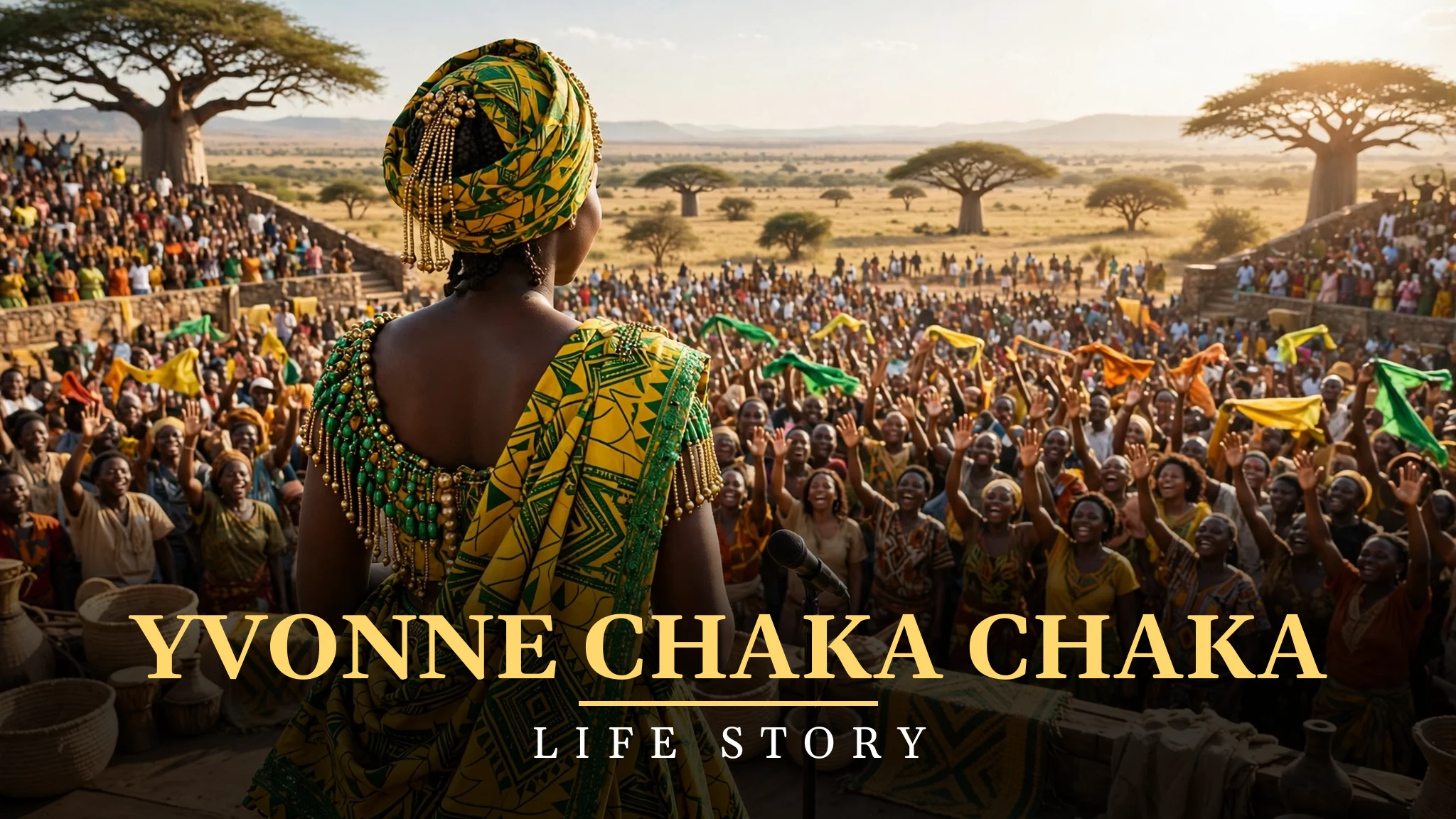
Yvonne Chaka Chaka is called the Princess of Africa, and the title fits her in a way that few titles fit a singer. She is not a princess because she was born into royalty. She is a princess because she sang her way from Soweto to the whole continent, because her songs were played in homes from South Africa to Nigeria to Kenya, and because she used her fame to help other people, especially in the fight against malaria and in support of children and women. Her voice is bright, it is joyful, and it carries a sense of celebration that has made her music a part of African life for more than forty years.
She was born on 18 March 1965 in Dobsonville, Soweto, in Johannesburg, and she grew up in a township where music, struggle and community were part of daily life. Soweto in the 1960s and 1970s was a place of hardship under apartheid, but it was also a place of great music, of churches, of schools, of people who knew how to sing, how to dance, how to celebrate even when life was hard. Growing up there gave Yvonne a sense of who she was, a sense of pride, and a voice that would soon be heard far beyond Soweto.
What makes her story worth telling is the way she became a star at a very young age and stayed a star for decades, not by chasing trends but by singing songs that people loved, by working hard, and by using her platform for good. This is the story of a girl from Dobsonville who became the Princess of Africa, of the songs that made her famous, of the humanitarian work that made her respected, and of a career that has lasted longer than most.
Dobsonville, Soweto and a Childhood of Song
Yvonne Chaka Chaka was born on 18 March 1965 in Dobsonville, a township in Soweto, Johannesburg. Soweto was built under apartheid as a place where Black South Africans were forced to live, far from the city centre, and it grew into a large, lively community with its own schools, churches, shebeens, and music. For a child growing up there in the 1960s and 1970s, life was shaped by family, by community, and by the daily reality of apartheid, which limited where you could live, where you could work, and where you could go. But it was also shaped by music, which was a way of surviving, of celebrating, of speaking when other forms of speech were not allowed.
Yvonne grew up in a home where music mattered. She sang as a child, first at home and then in church, where her voice was first heard by people outside her family. Church singing taught her something important: a song is not only about notes, it is about feeling, about faith, about hope. In church, people sing because they believe, because they need comfort, because they want to feel close to God and to each other. Yvonne learned that lesson early, and it stayed with her. Her voice has always sounded joyful, and that joy began in church.
She was the first child in her family to be born in a hospital, a small detail that her family has noted with pride, and she grew up with a sense of ambition, of wanting a better life, of believing that her voice could take her somewhere new. She went to school in Soweto, she did well, and she began to think about music as more than a hobby. She listened to singers who inspired her, she practised, she sang at school events, and she began to dream of a career in music, even though the road from Soweto to a recording studio was not a clear one for a young Black woman under apartheid.
Her family supported her interest in music, and they encouraged her to take it seriously. She was a talented young singer, and people in her community noticed. She sang at local events, she performed in talent shows, and she began to build a reputation as a girl with a beautiful voice. That reputation would soon bring her to the attention of people in the music industry, and it would change her life in a way she could not have imagined as a child singing in church in Dobsonville.
A Teenage Discovery and the First Record
Yvonne Chaka Chaka was discovered as a teenager, when she was still at school. She was singing at a talent show, and her voice caught the attention of people who worked in music. She was invited to record, and she began her career at a very young age, in the early 1980s, when South African music was changing and when a young singer with a bright voice could become a star quickly. She was only a teenager, but she had a voice that sounded mature, joyful and confident, and audiences loved it.
Her first songs were released in the early 1980s, and they began to get attention on radio. She was a young star, and she had to learn quickly how to handle fame, how to perform, how to record, and how to deal with the music industry. She was still a schoolgirl in some ways, but she was also a professional singer, and that balance was not easy. She had to grow up fast, and she did, with the support of her family and with a determination to make the most of her talent.
One of her early hits was I’m in Love With a DJ, a song that became a favourite across South Africa and beyond. The song was catchy, it was joyful, and it captured the energy of the disco and bubblegum pop sound that was popular in South Africa in the 1980s. It was a song that people danced to, that they sang along to, and that made Yvonne a household name. She was a teenager singing about love and music, and the country loved her for it.
She followed it with other hits, including Thank You Mr DJ, and she became one of the most popular young singers in South Africa. She performed at concerts, she appeared on television, and she built a fan base that loved her voice and her style. She was not a loud star. She was a bright, joyful, professional star, and that image suited her music. She dressed well, she performed with grace, and she carried herself with a dignity that made her stand out.
Umqombothi, I’m in Love With a DJ and the Songs of a Continent
In the years that followed, Yvonne Chaka Chaka released songs that became classics of South African and African music. Umqombothi, a song about traditional African beer, became one of her most famous tracks, with a catchy melody and lyrics that celebrated African culture. The song was played at parties, at celebrations, at weddings, and it became a part of everyday life in South Africa. It was a song that made people dance, that made them proud of their roots, and that showed Yvonne’s ability to sing about African life in a way that felt both traditional and modern.
I’m in Love With a DJ remained one of her signature songs, and it was played across Africa, in countries where people had never been to South Africa but knew her voice. Her music travelled because it was joyful, because it was danceable, and because it spoke about universal feelings: love, celebration, home. She became known as the Princess of Africa, a title that reflected the fact that her music was loved not only in South Africa but across the continent, from West Africa to East Africa to Southern Africa.
Her albums in the 1980s and 1990s included many hits, and she toured widely, performing in other African countries, in Europe, and in other parts of the world. She was a South African singer who could perform anywhere, and her music translated across borders because it was about joy, about love, about celebration. That universality is a rare gift, and it is why her concerts in other countries were so warmly received.
She also became a role model for young women, especially young Black women from townships, who saw in her a proof that a girl from Soweto could become a star, a businesswoman, and a respected artist. She showed that a woman could be successful without losing her dignity, that she could sing about love and about culture, and that she could build a career that lasted. That example mattered, and it still matters today.
The Princess of Africa and a Career That Crossed Borders
The title Princess of Africa was not given to Yvonne by a marketing team. It was given to her by her fans, by people across the continent who loved her music and who saw in her a symbol of African pride. She earned that title through years of touring, of performing, of making music that people loved, and of representing South Africa and Africa with grace and dignity. She was a singer who carried her country with her, wherever she went, and that made her a cultural ambassador in a way that few artists achieve.
She performed in many African countries, and her concerts were often huge events, with crowds that sang every word. She was welcomed as a star, as a sister, as a princess, and she responded with warmth and with a professionalism that made her shows a pleasure to attend. She was not a singer who only performed in South Africa. She was a singer who belonged to Africa, and her music belonged to Africa too.
She also worked with other artists, both in South Africa and abroad, and she used her fame to support other musicians, especially young ones. She understood that a scene grows when more people succeed, not when one person holds the top alone, and she tried to help others in the way that others had helped her when she was a teenager. That generosity is part of her story, and it is one of the reasons she is respected by other artists as much as she is loved by fans.
Her career also included television, film, and other ventures, and she became a businesswoman as well as a singer. She understood that a music career is also a business, and she worked to build a life that was not dependent on a single hit. She invested, she planned, and she built a career that could last, and that business sense is part of why she has remained a star for so many decades.
Humanitarian Work, Malaria and a Life of Service
Beyond music, Yvonne Chaka Chaka is known for her humanitarian work, especially in the fight against malaria. She became a Goodwill Ambassador for the United Nations, and she worked with organisations to raise awareness about malaria, a disease that kills many people in Africa, especially children. She travelled to communities affected by malaria, she spoke about prevention, about bed nets, about treatment, and she used her fame to draw attention to a health crisis that many people ignored.
Her work on malaria was not a publicity stunt. It was a serious commitment, and she spent years working on it, travelling, speaking, and raising money. She was recognised for that work by the United Nations and by other organisations, and she became a respected voice on health and on development in Africa. She showed that a singer can use her platform for good, and that fame can be a tool for helping others, not only for making money.
She has also worked on issues affecting children and women, on education, on health, and on the empowerment of African people. She has spoken about the importance of girls’ education, about the need to protect children, and about the power of music to bring people together. Her humanitarian work is a central part of her legacy, and it is one of the reasons she is called the Princess of Africa, not only for her music but for her service.
She has received honours for her work, including awards from the United Nations and from South African organisations, and she has been recognised as a leader in African culture and in African development. That recognition matters, because it shows that her impact goes beyond music. She has used her voice, literally and figuratively, to help people, and that is a legacy that will last long after her songs have faded from the charts.
The Sound of Bubblegum Pop and the Joy in Her Voice
Yvonne Chaka Chaka’s sound in the 1980s was part of a style that South Africans called bubblegum pop, a bright, danceable, joyful music that was played on radio, in clubs, at parties, and that made people smile. Bubblegum was not a serious, heavy sound. It was a light, catchy, melodic sound, with a strong beat, with a chorus that everyone could sing, and with a vocal that was clear and joyful. Yvonne was one of the queens of that sound, and her voice was perfect for it: bright, warm, and full of energy, with a clarity that made every word easy to hear.
Her songs were not complicated. They were about love, about dancing, about a DJ, about a traditional beer, about the simple joys of life, and that simplicity was their strength. A listener did not need to think hard to enjoy them. They could dance, they could sing along, they could feel happy, and that happiness was real. In a country where life under apartheid was hard, where many people lived with fear and with hardship, a joyful song was not a luxury. It was a necessity, a way of surviving, a way of celebrating life even when life was difficult. Yvonne understood that, and her songs gave people that joy.
She also had a gift for performance that matched her sound. She dressed in bright colours, she danced on stage, she smiled, she interacted with her audience, and she made a concert feel like a party. That performance style was part of her appeal, because it showed that she loved what she did, that she enjoyed singing, that she was happy to be on stage. An audience can tell when a singer is enjoying herself, and Yvonne always seemed to be enjoying herself, and that joy was infectious. It spread from the stage to the crowd, and the crowd danced, and sang, and celebrated with her.
Her voice, bright and joyful, became a symbol of a new South Africa in the 1980s, a South Africa where young Black artists could be stars, could be loved, could be heard, even under apartheid. That symbolism matters, because it shows that music can be a form of hope, even when the political situation is dark. Yvonne’s songs were not political in the usual sense, but they were hopeful, and hope is political in a country where hope is in short supply.
Television, Film and a Career Beyond the Stage
Beyond singing, Yvonne Chaka Chaka built a career in television and film, and she became a familiar face on South African screens in many different roles. She appeared in television dramas, she presented shows, she acted in films, and she used her fame as a singer to open doors in other parts of entertainment. That versatility is part of her story, because it shows that she was not only a voice. She was a performer, a presenter, a personality, and she could work in many different settings.
Her television work gave her a new audience, people who might not have bought her albums but who saw her on screen and loved her warmth, her humour, her professionalism. She was a natural on camera, with a smile that made viewers feel at home, with a voice that was clear and confident, and with a presence that made her stand out. She understood that television is a different skill from singing, that it requires a different kind of performance, and she learned it, as she had learned singing, by doing it, by practising, by being professional.
She also became a businesswoman, with ventures that used her name, her image, and her reputation to build a life beyond music. She understood that a singing career is uncertain, that hits come and go, and that a smart artist builds a business that can last. She invested, she planned, and she built a career that was not dependent on a single song. That business sense is part of why she has remained a star for so many decades, because she did not rely only on her voice. She relied also on her mind, on her planning, on her ability to adapt.
Her work in television and film also showed her range as an artist. She could sing, she could act, she could present, and she could do all of those things with the same warmth and professionalism. That range is rare, and it is one of the reasons she is respected by other artists as much as she is loved by fans. She is not a one-dimensional star. She is a complete entertainer, and that completeness is part of her legacy.
A Legacy That Still Sings Across Africa
Today Yvonne Chaka Chaka is recognised as one of the great singers of Africa, a voice that became a part of the continent’s musical life, a star who built a career that lasted for decades, and a humanitarian who used her fame to fight malaria and to help children and women. Her songs are still played, her albums are still listened to, and her concerts are still attended by fans who love her voice and her music.
Her legacy is also about pride. She showed that a girl from Soweto could become the Princess of Africa, that a South African singer could be loved across a whole continent, and that a woman could be both a star and a servant of her people. Young singers look to her as an example, not only of how to sing, but of how to live, how to use fame for good, and how to stay true to yourself through a long career.
She is a voice that still sings across Africa, and her story is still being written, and that is part of what makes it so powerful.
Awards, Honours and a Princess Who Is Still Working
Yvonne Chaka Chaka has received many honours in her long career, including awards for her music and for her humanitarian work, and those honours tell a story of a life that has been recognised in many different ways. She has been honoured by the South African government, by the United Nations, by music organisations, and by the people of Africa who gave her the title Princess of Africa. Those honours are not only about songs. They are about a life of service, about a singer who used her fame to help others, and about a woman who became a symbol of African pride.
She continues to work today, performing, recording, speaking about malaria, about health, about education, and about the future of Africa. She is not a star who retired after her hits. She is a working artist, a working humanitarian, a woman who still has energy, still has a voice, still has a message, and who uses all of those things every day. That continued work is part of why she is respected, because it shows that her career was not a moment. It was a life, and that life is still going, still growing, still giving.
Her honours also include recognition as one of the most influential African artists, and she has been invited to speak at conferences, to perform at events, to represent South Africa and Africa on the world stage. Those invitations show that her impact goes beyond music. She is a cultural leader, a health advocate, a voice for children and women, and that leadership is a legacy that will last long after her songs have faded from the charts, because it is a legacy of service, not only of fame.
My Take:
When I listen to Yvonne Chaka Chaka, the first thing I feel is joy. Her voice is bright, it is warm, and it makes me want to dance, to smile, to celebrate. That joy is her gift, and it is why her music has lasted for more than forty years. I have heard many singers who can sing a sad song beautifully, but fewer who can sing a joyful song and make it feel real, not forced. Yvonne can do that, and she does it again and again. Her songs feel like a celebration, and a celebration is something the world always needs.
What I admire most about her is the way she became a star at a very young age and stayed a star for decades. She was a teenager when she was discovered, she had hits in the 1980s, and she is still loved today. That is a rare kind of staying power, and it comes from a combination of talent, hard work, and a voice that people trust. She did not become famous by chasing a trend. She became famous by singing songs that people loved, and she kept singing them with the same joy and the same professionalism, year after year. That consistency is a form of strength.
I also admire the title Princess of Africa, because it was not given to her by a record label. It was given to her by her fans, by people across the continent who loved her music and who saw in her a symbol of African pride. That is a title that cannot be bought. It has to be earned, through years of touring, of performing, of making music that people love, and of representing Africa with grace. Yvonne earned it, and she has carried it with dignity. That dignity is part of why she is respected, not only as a singer but as a person.
Her song Umqombothi is the one I think about most, because it is a perfect example of how a song can celebrate culture. It is a song about traditional African beer, about a drink that is part of celebrations, of ceremonies, of community life. To make a hit song about that is to say that African culture matters, that it is worth celebrating, that it is not something to be hidden or ashamed of. Yvonne sang it with pride, and the country sang along. That pride is a powerful thing, and it is one that many young Africans need to hear.
I also think about her humanitarian work, because it shows another side of her. She could have used her fame only to make money, to perform, to live a comfortable life. She chose instead to work on malaria, to travel to communities affected by the disease, to speak about prevention and treatment, and to use her platform to help people who had no platform of their own. That work is not glamorous, it is not easy, and it does not make headlines in the same way a hit song does. But it saves lives, and it matters more than any award. I respect her deeply for that work, because it shows that she understands that fame is a responsibility, not only a privilege.
What I find most impressive about her is her longevity. She has been a star for more than forty years, and she is still performing, still singing, still loved. That is a remarkable achievement in a music world where many stars fade after a few years. Her longevity comes from her voice, from her songs, from her professionalism, and from her ability to adapt without losing herself. She has seen music change, she has seen South Africa change, and she has changed with it, while staying true to who she is. That is a rare skill, and it is one that young artists should learn from.
I also respect the way she has handled her career as a businesswoman. She understood that a music career is also a business, and she worked to build a life that was not dependent on a single hit. She invested, she planned, and she built a career that could last. That business sense is part of why she has remained a star for so long. Talent can make you famous, but business sense can keep you famous, and Yvonne has both. Young artists should learn from that. Do not only practise your voice. Learn about money, about contracts, about your rights, because those things will protect your career.
If I have to be honest about what I find less impressive, I would say that her music, while joyful and beloved, is sometimes seen as light, as pop, as not as serious as the music of some other artists. I do not agree with that view, because joy is serious, celebration is serious, and a song that makes people dance and feel proud of their culture is a serious work of art. But I understand why some critics might see her music as less deep than the work of a singer like Miriam Makeba or Thandiswa Mazwai. Yvonne’s strength is not in political complexity. It is in joy, in celebration, in bringing people together, and that strength is just as valuable.
I also wonder sometimes whether she could have become even bigger internationally if she had moved to another country or changed her sound. She stayed in South Africa, she stayed true to her bubblegum and Afro-pop sound, and she built a career that was loved across Africa. That choice limited her in some ways, but it also made her music more honest. She did not try to be something she was not. She was Yvonne Chaka Chaka, the Princess of Africa, and she let the world come to her. I think that was the right choice.
What I learn from Yvonne is that joy is a form of strength. She sings with joy, she performs with joy, and she brings joy to her audience, even in a country that has known a great deal of pain. That joy is not naive. It is a choice, a decision to celebrate life even when life is hard. That is a powerful lesson, and it is one that I think many people need to hear. Life is hard, but it is also worth celebrating, and music can help us remember that.
I also learn from her that fame can be used for good. She used her platform to fight malaria, to help children, to speak about health and education, and she did it with sincerity and with hard work. That is a model for any famous person. Fame is not only about being known. It is about what you do with being known, and Yvonne has done something good with it. Young stars should look at her and understand that a career is not only about songs. It is also about service, about giving back, about using your voice for people who have no voice.
In the end, I think Yvonne Chaka Chaka will be remembered as the Princess of Africa, a singer with a bright, joyful voice, a star who built a career that lasted for decades, and a humanitarian who used her fame to fight malaria and to help her people. Her songs will be played for many years, by people who need joy, who need celebration, who need to feel proud of being African. That is a legacy, and it is a beautiful one. I hope she keeps singing, I hope she keeps working, and I hope her voice continues to bring joy to the people who hear it.
I also think about the way Yvonne’s music fits into the lives of her listeners, because that is where it is most often heard. Her songs are not only for concerts. They are for a wedding in Soweto, for a party in Lagos, for a celebration in Nairobi, for a morning when a person needs to feel happy. That everyday use is a compliment, because it means her music has become a part of people’s lives, not only a part of their record collection. A song that is played at a wedding, that is danced to by a bride, that is sung by a family, has a different kind of success from a song that is only played on radio. It has become a habit, a comfort, a celebration, and Yvonne’s songs have that quality.
Another thing I notice is how her longevity comes from her ability to adapt without losing herself. She started in bubblegum pop in the 1980s, she moved into other styles, she worked in television, she worked in humanitarian causes, and she changed with the times, while staying true to her voice, to her joy, to her roots. That adaptability is a form of intelligence, because it shows that she understands that a career is not a single moment. It is a long journey, and a long journey requires change, requires learning, requires a willingness to try new things. Yvonne tried new things, and she succeeded, and that is why she is still loved today.
I also want to say something about the way she handles her title, Princess of Africa, because it is a title that could make a person arrogant, and Yvonne is not arrogant. She carries it with humility, with grace, with a sense that it is a responsibility, not only an honour. She uses it to help people, to fight malaria, to speak about children and women, and that use is what makes the title real. A princess who only wears a crown is a symbol. A princess who works for her people is a leader, and Yvonne is a leader in that sense. I respect her for that, because it shows that she understands that fame is not only about being known. It is about what you do with being known.
There is also a lesson in her story about starting young and staying young at heart. She was a teenager when she was discovered, she had hits when she was still at school, and she could have burned out, as many teenage stars do. She did not. She grew up, she learned, she built a career, and she kept her joy, her energy, her love of music. That is a rare thing, because fame at a young age can be damaging, can make a person lose themselves, can make them forget why they started. Yvonne did not forget. She kept singing, she kept dancing, she kept smiling, and that keeping is a form of strength.
In the end, I think Yvonne Chaka Chaka will be remembered as the Princess of Africa, a singer with a bright, joyful voice, a star who built a career that lasted for decades, and a humanitarian who used her fame to fight malaria and to help her people. Her songs will be played for many years, by people who need joy, who need celebration, who need to feel proud of being African. That is a legacy, and it is a beautiful one. I hope she keeps singing, I hope she keeps working, and I hope her voice continues to bring joy to the people who hear it.
I also think about the way Yvonne’s story connects to the wider story of Soweto, because her success is not only her own. When a singer from Dobsonville becomes the Princess of Africa, the whole township feels it, and young people there see a proof that their streets can produce something beautiful. That proof matters, because it changes how a young person sees their own future. They do not have to leave Soweto to be someone. They can be someone from Soweto, and that is enough. Yvonne gave that proof, and it will outlast any single song.
Another lesson I take from her is about the value of joy as a form of resistance. She sang joyful songs under apartheid, when life was hard, when many people lived with fear, and that joy was not naive. It was a choice, a decision to celebrate life even when life was difficult. That choice is a form of strength, and it is one that many people need to hear. Life is hard, but it is also worth celebrating, and music can help us remember that, even in the darkest times.
Finally, I think about how her voice will sound in ten years, when the charts have changed again and a new sound is popular. I think it will still sound bright, still sound joyful, still sound like a celebration, because a bright, joyful voice does not age the way a trendy sound does. A song that is true will still be true, and a voice that is steady will still be steady. That is why I believe Yvonne’s music will last, and why her story will still be told.
I will remember her for I’m in Love With a DJ, for Umqombothi, for the joy of her voice, and for the service of her humanitarian work. I will remember her as a singer from Soweto who became a princess without forgetting where she came from, and as a woman who showed that music can be both a celebration and a form of help. That is a story worth telling, and it is a story that will stay with me.
Frequently Asked Questions
Where was Yvonne Chaka Chaka born?
Yvonne Chaka Chaka was born on 18 March 1965 in Dobsonville, Soweto, Johannesburg, South Africa. She grew up in Soweto and began singing in church and at school before she was discovered as a teenager.
Why is Yvonne Chaka Chaka called the Princess of Africa?
She is called the Princess of Africa because her music became loved across the whole African continent, not only in South Africa. Fans gave her the title after years of touring and performing in many African countries.
What are Yvonne Chaka Chaka’s most famous songs?
Her most famous songs include I’m in Love With a DJ, Thank You Mr DJ, and Umqombothi. Umqombothi, a song about traditional African beer, became one of her signature hits.
What humanitarian work has Yvonne Chaka Chaka done?
Yvonne has worked as a Goodwill Ambassador for the United Nations, focusing on the fight against malaria in Africa. She has raised awareness about prevention and treatment, and she has also worked on issues affecting children and women.
When did Yvonne Chaka Chaka start her music career?
She started her music career as a teenager in the early 1980s, after she was discovered singing at a talent show. Her early hits made her one of the most popular young singers in South Africa.
Has Yvonne Chaka Chaka performed outside South Africa?
Yes, Yvonne has performed in many African countries and in other parts of the world. Her music travelled across the continent, and she became known as a singer who belonged to Africa as a whole.


