Ziad Rahbani: The Life Story Behind Lebanon's Musical Genius
In this post
- Born Into the House of Fairuz and Assi
- A Teenager Writes for His Mother
- Nazl El Srour and the First Plays
- Bennesbeh Labokra Chou and the War on Stage
- Film Ameriki Tawil, Shi Feshil, and the Later Plays
- Jazz, the Piano, and a Sound Nobody Else Had
- Politics, Exile From the Mainstream, and a Stubborn Voice
- Death in Beirut and What He Left Behind
- My Take:
Some artists are born into a famous family and spend their lives trying to escape its shadow. Ziad Rahbani did something harder. He was born into the most famous musical family in Lebanon, the son of the singer Fairuz and the composer Assi Rahbani, and he did not run away from that world. He entered it, learned it, and then changed it from the inside. He took the music he grew up with and mixed it with jazz, with theatre, with sharp jokes about politics, and with the pain of a country at war. The result was a sound that was entirely his own, and a body of work that many people in Lebanon consider some of the most important art their country has ever produced.
He was a composer, a pianist, a playwright, and a writer who spoke his mind. He wrote songs for his mother, he wrote plays that made audiences laugh and then made them think, and he wrote music that sounded like Beirut itself: beautiful, broken, funny, and sad, all at the same time. He was not an easy artist to love from a distance, because his work asked the listener to think. But for those who listened closely, he was a genius, and the word genius is used about him more often than about almost any other Lebanese artist of his time.
His life was also a story about Lebanon. He grew up in the golden years of Lebanese music, he came of age during the civil war, and he lived through the long, hard years that followed. His plays and songs are a record of those times, told with humour and with anger. He died in Beirut in July 2025, at the age of sixty-nine, and his death was mourned across Lebanon as the loss of one of the country’s great voices. This is the story of how the son of Fairuz became Ziad Rahbani, a name that stands on its own.
Born Into the House of Fairuz and Assi
Ziad Rahbani was born on 1 January 1956 in Lebanon, the son of Fairuz, the most loved singer in the Arab world, and Assi Rahbani, one of the two Rahbani brothers who wrote the songs and plays that made Fairuz famous. To be born into that family was to be born into music. Songs were not something that happened on a stage far away. They were part of the house, part of the day, part of the air. Ziad grew up hearing his mother’s voice, hearing his father and his uncle Mansour working on new songs, and hearing musicians come and go. Music was his first language, and he learned it before he learned almost anything else.
His childhood was not ordinary, and he knew it. Other children went to school and came home to quiet houses. Ziad came home to a house where some of the most famous artists in Lebanon were working. He watched them, he listened to them, and he learned how a song was built, note by note, word by word. He was a quiet child in many ways, and he spent a great deal of time listening. Listening is a skill, and he learned it early. A composer who does not listen cannot write, and Ziad was listening from the start.
He learned to play the piano as a boy, and the piano became his instrument for life. He did not only learn the classical music that other children learned. He listened to jazz, to American music, and to the sounds of the world beyond Lebanon. Jazz gave him something that Arabic music alone had not given him: a sense of freedom, of improvisation, of playing with a melody until it became something new. He loved that freedom, and he kept it with him for the rest of his life. When he later wrote his own music, the jazz was always there, under the surface, giving his work its swing and its surprise.
Being the son of Fairuz also brought a weight that he carried all his life. People expected him to be like his parents, or to be less than them, or to live in their shadow forever. He did not accept any of those choices. He respected his parents deeply, and he worked with his mother, but he also wanted to say things that his parents had not said. He wanted to talk about politics, about the war, about the poor, and about the absurdity of life in Lebanon. That desire to speak plainly was there from his youth, and it shaped everything he made.
A Teenager Writes for His Mother
Ziad was still a teenager when he wrote his first famous work for his mother. In 1973, when he was seventeen, he composed the song “Sa’alouni El Nas”, which Fairuz sang. The song was about people asking about a loved one who had gone away, and it was full of longing. It became one of Fairuz’s best-loved songs, and it showed the world that the son of the Rahbani family had real talent of his own. A seventeen-year-old writing a song for the greatest singer in the Arab world is a remarkable thing, and people noticed it at once.
The song mattered for another reason. It was written at a time when Assi Rahbani, Ziad’s father, was ill, and the family was going through a hard period. The song’s words about asking after someone who is absent carried a personal meaning for the family, and for Fairuz, who sang it with deep feeling. Audiences did not know all the private details, but they heard the feeling in the song, and they responded to it. That is how a great song works. It takes a personal pain and turns it into something that everyone can feel.
After that first success, Ziad began to work more closely with his mother. He wrote music for her, he arranged her songs, and he helped her find a new sound. Fairuz had been singing the Rahbani songs for many years, and her style was well known. Ziad brought something different to her music: a jazz piano, a new rhythm, a darker mood, and a sense of the modern world. Some listeners loved the change, and some were unsure about it, but nobody could deny that it was fresh. He was helping his mother grow as an artist, even as he was growing himself.
He also began to write his own songs and his own music, separate from his mother’s work. He made albums that mixed Arabic melody with jazz, with piano, and with the sounds of the city. His music was not easy listening. It asked the listener to pay attention, to follow a strange chord, to hear a joke in the music, and to feel a sadness that was not sweetened. He was building a world of his own, and it was a world that sounded like Beirut in the 1970s: modern, troubled, and full of life.
Nazl El Srour and the First Plays
In 1974, Ziad wrote his first play, “Nazl El Srour”, which was performed in Lebanon. A play was a new step for him. He had written songs, but a play needs a story, characters, dialogue, and a world that the audience can believe in. He was only eighteen, and he was already trying to do something that many older writers had never attempted. The play showed his talent for satire, for making fun of the powerful, and for showing ordinary people caught in absurd situations. It was the beginning of his life as a playwright.
His plays were different from the musical plays of his father and uncle. The Rahbani plays were romantic, they were about village life, and they were full of beautiful songs. Ziad’s plays were darker, funnier in a sharper way, and more political. He wrote about the divisions in Lebanese society, about the rich and the poor, about the people who ran the country, and about the ordinary people who suffered because of them. He made audiences laugh, but the laughter had a sting in it. When people left his plays, they were still thinking about what they had seen.
He wrote and directed his plays with a small group of actors and musicians, and he often performed in them himself, at the piano. The piano was always at the centre of his stage. He would sit at it, play, and watch the actors, and the music and the words would grow together. That way of working was new in Lebanon, and it gave his plays a feeling of being alive, of being made in front of the audience, rather than being a finished product that had been rehearsed a hundred times. People loved that feeling, and his plays became events that people talked about for weeks.
The civil war began in 1975, just after his first play, and the war changed everything in Lebanon. Theatres closed, people left, and life became dangerous. Ziad kept writing through the war, and his plays became even more important, because they spoke about the war itself. He wrote about the absurdity of neighbours fighting each other, about the checkpoints, about the fear, and about the way ordinary life went on even in the middle of war. His plays were a mirror held up to Lebanon, and the mirror was not flattering. But it was honest, and people needed honesty in those years.
Bennesbeh Labokra Chou and the War on Stage
In 1978, Ziad wrote one of his most famous plays, “Bennesbeh Labokra Chou”, which means “As for tomorrow, what?” The play was about a group of people in a bar, talking, drinking, and waiting for a future that never seemed to come. It was funny, it was sad, and it was full of the kind of talk that Lebanese people knew well: talk about politics, about money, about love, and about leaving the country. The play became a classic, and its songs are still known today. It captured the feeling of living in a country where nobody knew what tomorrow would bring.
The play’s title became a phrase that people used in everyday life. When someone in Lebanon did not know what would happen next, they would say “bennesbeh labokra chou”, and everyone would understand. That is what great art does. It gives people words for their own lives. Ziad had given Lebanon a phrase for its uncertainty, and the phrase stayed in the language long after the play closed. He had written something that belonged to the whole country, not only to the theatre.
His plays in those years were not only entertainment. They were a form of political commentary, and they were often critical of the traditional political establishment in Lebanon. He made fun of sectarian politics, of the leaders who divided the country, and of the foreign powers that interfered in its affairs. He did this with humour, which made it harder for his critics to attack him, but his points were sharp. He believed that a playwright should tell the truth, even when the truth was uncomfortable, and he lived by that belief.
He also wrote music for his plays that was unlike anything else in Lebanon. His songs mixed Arabic melody with jazz piano, with a bass line that swung, and with lyrics that sounded like real speech. The actors sang the way people talked, not the way singers usually sang, and that made the plays feel real. Audiences felt that they were watching their own lives on stage, with their own words, their own jokes, and their own pain. That feeling of recognition was the secret of his success as a playwright.
Film Ameriki Tawil, Shi Feshil, and the Later Plays
In the years that followed, Ziad wrote more plays, and each one added to his reputation as the sharpest voice in Lebanese theatre. “Film Ameriki Tawil”, which means “A Long American Film”, was one of his best-known works. It was a satire about Lebanon, about the way foreign powers treated the country like a film set, and about the way Lebanese people watched their own lives as if they were watching a movie. The play was funny, it was angry, and it was full of the kind of dialogue that people remembered and repeated. It showed that Ziad could take a big idea, about power and about history, and turn it into a story about ordinary people in a room.
Another important play was “Shi Feshil”, which means “Something Failed”. The title itself told the story of Lebanon in those years: something had gone wrong, and nobody knew how to fix it. The play was about people who had tried, who had hoped, and who had been let down. It was sadder than his earlier plays, but it was still full of humour, because Ziad believed that humour was the only way to talk about sadness without giving up. His characters laughed even when their lives were falling apart, and that laughter was both a defence and a form of hope.
His later plays continued in the same spirit, but they also showed a man who was growing older and who was looking back at his country with a mixture of love and disappointment. He wrote about the corruption, about the leaders who stayed in power for decades, about the young people who left Lebanon, and about the old people who stayed and waited. He did not offer easy answers. He offered a mirror, and he asked the audience to look into it. Some people did not like what they saw, but many more were grateful that someone had dared to show it.
He also kept making music through all these years. His albums, such as “Abu Ali” and “Houdou Nesbi”, mixed jazz, Arabic melody, and spoken word, and they were loved by a loyal audience. He recorded with his mother, he recorded on his own, and he played concerts where he sat at the piano and talked to the audience between songs. Those concerts were not like ordinary concerts. They were like evenings with a friend who happened to be a genius, a friend who played the piano, told jokes, and then played something so beautiful that the room fell silent. That combination of humour and beauty was his gift, and it was why people kept coming back to him.
Jazz, the Piano, and a Sound Nobody Else Had
Ziad’s music deserves to be understood on its own, apart from his plays. He was a pianist first, and the piano was the centre of his musical world. He played jazz with the skill of a musician who had listened to the great American jazz pianists, and he mixed that jazz with Arabic melody in a way that nobody else in Lebanon had done. His left hand kept the rhythm, his right hand played the melody, and the two hands talked to each other like two people in a conversation. That conversation was the sound of his music, and it was a sound that was new in the Arab world.
He did not write music to please the radio. His songs were often long, they changed direction suddenly, and they had lyrics that were more like poetry than like pop songs. He wrote about love, about Beirut, about politics, and about the small details of daily life. His song “Bennesbeh Labokra Chou” was not only a play. It was also a song that people sang, and its melody was as memorable as its words. He understood that a song needs both: a melody that stays in the ear and words that stay in the mind. His best songs had both, and that is why they are still remembered.
He also worked as a composer for his mother in her later years, and his arrangements gave her voice a new setting. Fairuz singing a Ziad Rahbani arrangement sounded different from Fairuz singing a Rahbani brothers arrangement. The piano was more present, the rhythm was looser, and the mood was more modern. Some older listeners missed the old sound, but younger listeners loved the new one. He had helped his mother stay relevant, and he had shown that a great singer can grow and change, even after decades of fame. That was a generous act, and it showed his respect for her as an artist, not only as his mother.
His influence on other musicians was large, even if it was not always visible. Young Lebanese musicians listened to his albums, they tried to play like him, and they learned from his example that Arabic music could be mixed with jazz, with theatre, and with satire. He had opened a door, and many younger artists walked through it. He did not become rich from his music in the way that pop stars become rich, and he did not seek that kind of success. He sought something else: the freedom to make the music he heard in his head, and to say the things he needed to say. He kept that freedom for his whole life.
Politics, Exile From the Mainstream, and a Stubborn Voice
Ziad Rahbani was also known for his political views, and he did not hide them. He was a man of the left, and he spoke openly about his belief in social justice, about the rights of the poor, and about his opposition to the sectarian system in Lebanon. He criticised the political leaders of his country, and he criticised the foreign powers that interfered in Lebanon’s affairs. He did this in his plays, in his songs, and in interviews, where he spoke plainly and without fear. His honesty won him many admirers, and it also made him enemies.
He was not a politician, and he did not want to be one. He was an artist who believed that art should speak about the world, and that an artist who stays silent about injustice is not doing his job. That belief made his work powerful, but it also made his life harder. He was not always welcome on mainstream television, and his plays were not always easy to stage. He worked with small theatres, with loyal audiences, and with a small circle of friends and collaborators. He did not need a big stage. He needed a piano, a room, and people who were willing to listen.
He also had a difficult personal life, and he did not hide that either. He was married and divorced, he had a son, and he lived a life that was often lonely. He was a private man in many ways, even though his work was public. He did not seek the kind of fame that his mother had, and he did not enjoy the attention that came with his family name. He preferred to work, to play the piano, and to write. That preference made him a difficult person to know, but it also made his work honest. He was not performing for the cameras. He was working for himself, and for the small audience that understood him.
In his later years, he became a kind of elder statesman of Lebanese culture, even though he had never wanted that role. Young people discovered his plays, his songs were played again, and his name was spoken with respect. He was still writing, still playing, and still speaking his mind, even as his health began to fail. He did not soften his views, and he did not make peace with the system he had criticised for decades. He stayed stubborn, and that stubbornness was part of who he was. He was a man who had decided, long ago, that he would rather be honest than be loved by everyone.
Death in Beirut and What He Left Behind
Ziad Rahbani died on 26 July 2025 in Beirut, at the age of sixty-nine. His death was announced, and the news spread quickly across Lebanon and the Arab world. People who had grown up with his plays, his songs, and his voice felt the loss at once. The tributes came from musicians, writers, actors, politicians, and ordinary people. They spoke of him as a genius, as a brave voice, and as one of the most important artists Lebanon had ever produced. His funeral was a moment of national mourning, and it showed how deeply he was loved, even by people who had disagreed with his politics.
He was buried in Lebanon, the country he had written about for his whole life. He had never left it for long, even when it would have been easier to live elsewhere. He had stayed through the war, through the hard years, and through the collapse of the economy. He had stayed because he believed that an artist belongs to his country, and that his work only makes sense in the place where it was made. His death in Beirut was the end of a life that had been lived in one city, for one country, and for one people.
What he left behind is large. He left songs that are still sung, plays that are still performed, and albums that are still listened to. He left a way of making art that was honest, funny, and brave. He left an example for young artists in Lebanon and across the Arab world: an example of a man who used his talent to tell the truth, who mixed music with theatre, who brought jazz into Arabic song, and who never gave up his freedom. That example will outlive him, because young artists will keep discovering his work and learning from it.
He also left a question, and it is the question in the title of his most famous play: as for tomorrow, what? Lebanon is still asking that question, and Ziad’s work is still the best answer that anyone has given. The answer is not a plan or a promise. It is a song, a joke, and a piano playing in a dark room. It is the sound of a man who loved his country enough to tell it the truth, and who kept playing even when the future was uncertain. That is his legacy, and it is a legacy that will not be forgotten.
My Take:
When I think about Ziad Rahbani, the first thing I feel is a kind of awe, because his talent was so large and so unusual. He was a composer, a pianist, a playwright, and a satirist, all in one person, and he was good at all of them. Most artists are lucky to be good at one thing. Ziad was good at four, and he mixed them together in a way that nobody else had done. I admire that, because it shows a mind that was not satisfied with doing what others had done. He wanted to make something new, and he did.
What I admire most is his courage. He wrote plays that made fun of the most powerful people in Lebanon, during a war, in a country where speaking plainly could be dangerous. He did not hide behind safe words. He said what he thought, and he said it with humour, which made it even sharper. I think that takes a special kind of bravery, because humour can hurt more than anger. When you make people laugh at a leader, you take away that leader’s power in a way that no speech can. Ziad understood that, and he used laughter as a weapon for his whole life.
I also think about his relationship with his mother, Fairuz, because it must have been both a gift and a burden. To have a mother who is loved by millions is a wonderful thing, but it is also a heavy thing, because people will always compare you to her. Ziad did not try to be Fairuz. He became himself, and he helped his mother become someone new as well. That is a generous act, and it shows a man who was secure in his own talent. He did not need to compete with his mother. He needed to work with her, and to learn from her, and to give her something she did not have. I respect that, because family can be the hardest place to be honest, and he was honest there.
His music is the part of his work that I keep returning to. I love the way he mixed jazz with Arabic melody, because it shows that music does not belong to one place. Jazz came from America, Arabic melody came from Lebanon, and Ziad put them together at a piano in Beirut. The result was not American, and it was not only Lebanese. It was something new, and it belonged to him. I think that is a lesson for any musician: you do not have to choose between your own tradition and the music of the world. You can take both, and you can make something that is yours.
I think about his plays, too, and about the way they spoke to ordinary people. He did not write for the rich, or for the powerful, or for the critics. He wrote for the people in the bar, for the people waiting at a checkpoint, for the people who did not know what tomorrow would bring. His characters spoke the way real people speak, they joked the way real people joke, and they suffered the way real people suffer. That is why his plays are still performed today. They are not about a distant past. They are about life in Lebanon, and life in Lebanon has not changed as much as people would like it to.
If I am honest, I also find his life sad. He was a genius, but he was often lonely, and he was often misunderstood. His politics made him enemies, his honesty made him unpopular with the powerful, and his refusal to make easy music made him less rich than he could have been. He could have written simple pop songs, he could have stayed quiet about politics, and he could have been a rich and comfortable artist. He chose not to, and I admire that choice, but I also feel sad that the choice cost him so much. A country should take better care of its geniuses, and Lebanon did not always take care of Ziad.
I think his death in 2025 was a moment when Lebanon lost a part of itself. When a great artist dies, a country does not only lose a person. It loses a voice that told it the truth about itself. Ziad was that voice for Lebanon. He told the country what it was, what it had become, and what it could be. Without him, that voice is silent, and the silence is loud. I hope young artists in Lebanon will pick up where he left off, but I know it will not be easy. There is only one Ziad Rahbani, and his place cannot be filled by someone else.
What I learn from his life is that art can be brave, and that bravery matters. He did not make art to decorate a room. He made art to change the way people thought, to make them laugh at power, and to make them feel the pain of their country. That is a high purpose for art, and it is a purpose that many artists forget. They make art to be liked, or to be rich, or to be famous. Ziad made art to tell the truth, and that is why his work will last. Truth does not go out of fashion, even when the people who tell it are gone.
I also learn from him that a person can love their country and criticise it at the same time. That is a hard thing to understand, because many people think that love means praise and criticism means hate. Ziad showed that the opposite is true. He criticised Lebanon because he loved it, and because he wanted it to be better. His satire was not the work of a man who hated his country. It was the work of a man who could not bear to see it fail. I think that is a lesson for all of us: to love something is to want it to be honest, and to be honest is to speak, even when speaking is hard.
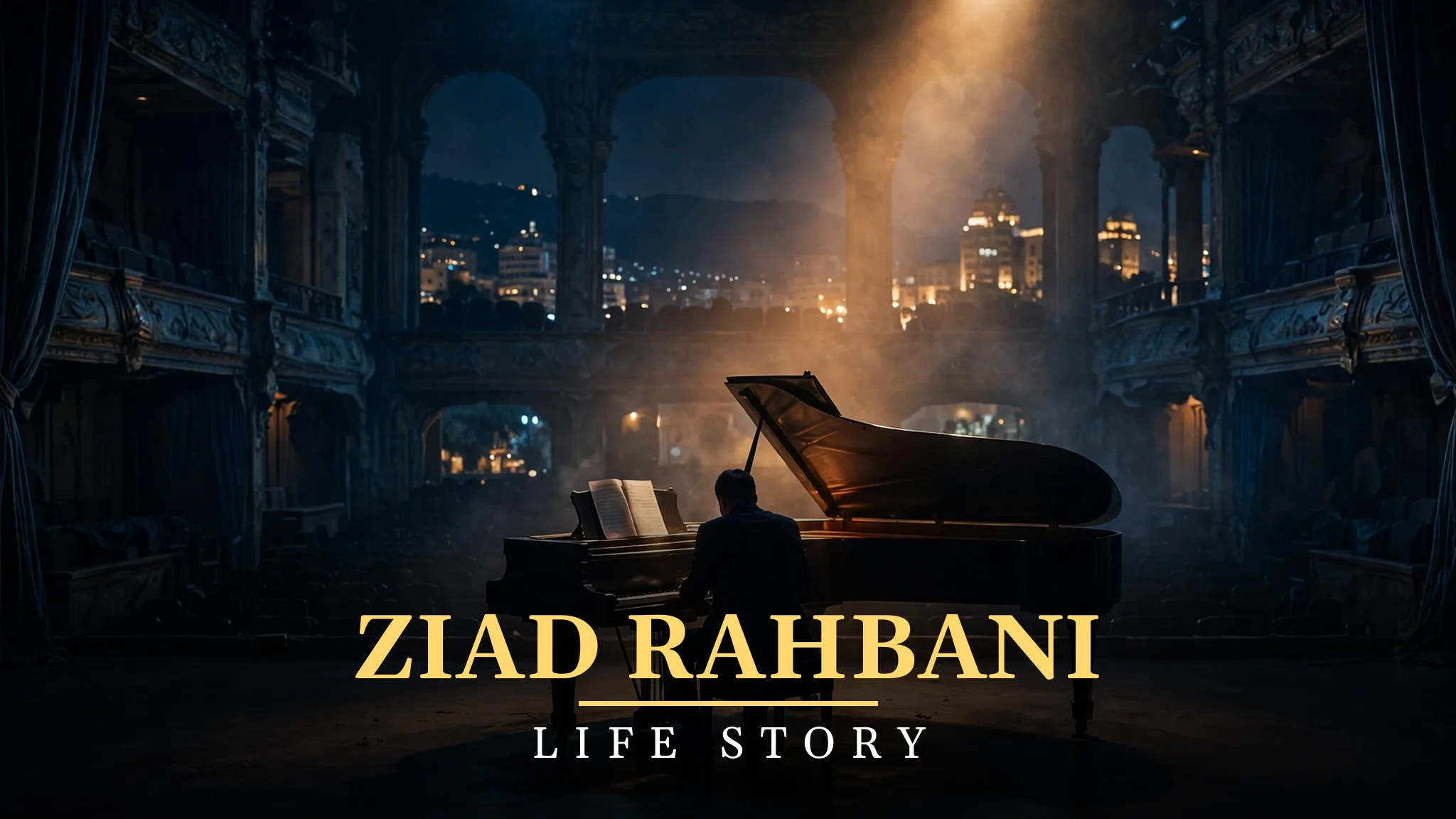
I think about the piano, too, and about how it was always at the centre of his life. He sat at the piano, he played, and the world came to him. The piano was his home, his office, and his stage. I like that image, because it shows a man who did not need much to make art. He needed a piano, a room, and an audience that was willing to listen. That is a simple life, and it is a life that many artists dream of. He lived it, and he made it work, even in a country at war. That is a kind of success that money cannot buy.
If I had to choose one of his works to show to someone who had never heard of him, I would choose “Bennesbeh Labokra Chou”, because it contains everything he was: the humour, the sadness, the music, and the question that Lebanon still asks. The play is about people waiting for tomorrow, and it is still true today. I think a person who watches that play will understand Lebanon better than a person who reads a hundred news reports. That is the power of his art. It does not give you facts. It gives you feeling, and feeling is what makes a country real.
I also think about his son, and about his family, and about the private pain that he carried. He was a public artist, but he was a private man, and he did not share everything with the world. I respect that privacy, and I do not want to guess about the details of his personal life. What I know is that he worked hard, he loved his mother, he loved his country, and he gave his life to his art. That is enough to know, and it is enough to admire. A man’s work can tell you who he was, even when his private life stays private.
In the end, I think Ziad Rahbani’s life is a reminder that a single person can change the culture of a country. He changed Lebanese music, he changed Lebanese theatre, and he changed the way Lebanese people talked about their own lives. He did it not with money or with power, but with a piano, a pen, and a willingness to tell the truth. That is a small set of tools, but in his hands, they were enough to build a legacy that will last for generations. I hope his plays are still performed in a hundred years, and his songs are still played. I think they will be, because a voice that tells the truth does not fade. It stays, and it waits for the next person who is brave enough to listen.
I also think about the young musicians who will discover Ziad Rahbani in the years to come, and I wonder what they will make of him. A young pianist in Beirut today can listen to his albums and hear a man who was not afraid to be strange, who was not afraid to mix styles, and who was not afraid to be serious. That example is worth more than a hundred lessons in a classroom, because it shows a young artist that the rules can be broken, and that breaking them can lead to something true. I hope those young musicians are listening, because Lebanon needs them, and it needs them to be as brave as Ziad was.
Another thing I admire is that he never tried to be a star in the ordinary sense. He did not chase the kind of fame that comes from television shows and magazine covers. He wanted a different kind of fame: the fame of a man whose work is remembered, whose plays are performed, and whose songs are sung by people who never met him. That kind of fame lasts longer than the other kind, because it is built on work, not on attention. Ziad understood that, and he built his life around his work, not around his image. I think that is a wise choice, and I wish more artists would make it.
I also feel a sadness when I think about how much of his work was made in a country that was falling apart. He wrote his best plays during a war, and he made his best music in a city that was being destroyed. That is a terrible price to pay for art, and I do not want to romanticise it. War is not good for artists, and it is not good for anyone. But I do think it is remarkable that he kept working through it, and that his work became a record of what Lebanon went through. His plays are now a history of the war, told by a man who lived through it, and that history is more honest than many official histories.
If I compare him with his parents, I see something interesting. His parents built a beautiful, romantic Lebanon in their songs and plays, a Lebanon of villages, of love, and of hope. Ziad showed the other side of Lebanon: the Lebanon of the city, of politics, of war, and of waiting. Both views were true, and both were needed. His parents gave Lebanon a dream, and Ziad gave it a mirror. A country needs both, because a dream without a mirror is a fantasy, and a mirror without a dream is only sadness. Together, the Rahbani family gave Lebanon a full picture of itself, and that is a rare gift for one family to give.
I think his humour deserves more attention than it usually gets, because it was not easy humour. It was not the kind of joke that makes you laugh and forget. It was the kind of joke that makes you laugh and then feel uncomfortable, because you realise that the joke is about you, or about your leaders, or about your country. That kind of humour is hard to write, and it is hard to perform, because it asks the audience to think while they are laughing. Ziad could do it, and he did it for decades. That is a skill that very few writers have, and it is one of the reasons his plays are still studied today.
Finally, I want to say that I hope his death does not mean the end of his influence. A great artist dies, but his work stays, and it waits for new audiences. I believe that in ten years, in twenty years, young people in Lebanon will still discover “Bennesbeh Labokra Chou”, they will still listen to his piano, and they will still ask the question he asked: as for tomorrow, what? That question will still be there, and his work will still be the best way to think about it. That is a legacy that no war, no crisis, and no time can take away.
I will remember him as a man who sat at a piano in Beirut and played the sound of his country: beautiful, broken, funny, and sad, all at once. That sound is still in my mind, and I think it will stay there for a long time. He was a genius, and he was a brave man, and Lebanon was lucky to have him, even if it did not always know it. His death was a loss, but his work is a gift, and the gift is still here, waiting for anyone who wants to hear it.
Frequently Asked Questions
When was Ziad Rahbani born and when did he die?
Ziad Rahbani was born on 1 January 1956 in Lebanon, the son of Fairuz and Assi Rahbani, and he died on 26 July 2025 in Beirut at the age of sixty-nine.
What was Ziad Rahbani’s first famous song for Fairuz?
At seventeen, in 1973, he composed “Sa’alouni El Nas” for his mother Fairuz, a song about people asking after a loved one who has gone away, and it became one of her best-loved songs.
What is Bennesbeh Labokra Chou about?
“Bennesbeh Labokra Chou” is a 1978 play about people in a bar talking, drinking, and waiting for a future that never seems to come, and its title became a common phrase in Lebanon for not knowing what tomorrow will bring.
How was Ziad Rahbani’s music different from his parents’ music?
He mixed Arabic melody with jazz piano, modern rhythms, and spoken-word lyrics, giving his songs and plays a darker, more modern sound than the romantic Rahbani brothers’ style.
What were Ziad Rahbani’s plays about?
His plays satirised Lebanese sectarian politics, the civil war, corruption, and everyday life, using humour and ordinary characters to tell the truth about his country.
Did Ziad Rahbani have political views?
Yes, he was a man of the left who spoke openly about social justice, the rights of the poor, and his opposition to Lebanon’s sectarian political system, in his plays, songs, and interviews.
What is Ziad Rahbani’s legacy in Lebanon?
He is remembered as one of the most influential artists in modern Lebanese history, a composer, pianist, and playwright whose songs and plays still shape how Lebanon talks about itself.


