Air Fryer Recipes for Beginners: 2027 Guide
In this post
An air fryer is a small, powerful appliance that has changed how many people cook, because it makes food crisp, and golden, with very little oil, and in much less time than an oven. It is not a fryer, in the traditional sense, and it is not a microwave. It is a small convection oven, that circulates hot air rapidly around the food, and that hot air is what makes chips crispy, chicken golden, and vegetables roasted, without the need for a deep pan of oil.
This guide is for beginners. It explains how an air fryer actually works, the first five recipes every beginner should try, how to get crispy results, what cooks well and what does not, and how to clean and look after your air fryer. It is practical, honest, and focused on the basics, so that you can start cooking with confidence, and avoid the mistakes that put many beginners off.
How an Air Fryer Actually Works
An air fryer works by circulating hot air, very fast, around the food, in a small, enclosed space. A heating element, at the top, heats the air, and a fan blows it down, and around the basket, so that the food is cooked from all sides, at once. That is why it is faster than an oven, and why it makes food crisp: the hot air removes moisture from the surface, and the surface becomes golden, and crunchy, while the inside stays moist. It is the same principle as a convection oven, but in a smaller space, with more powerful airflow, which is why it works so well.
The basket is designed to let air flow underneath the food, which is why it has holes, or a grill, and why it is important not to overcrowd it. If the basket is full, the air cannot circulate, and the food will steam, instead of crisping, and it will be soggy, and uneven. The size of an air fryer matters, too: a small one is fine for one or two people, but a family will need a larger one, or will need to cook in batches. Understanding how it works is the first step to using it well, because it explains the rules that follow: space the food out, shake the basket, and do not expect it to do what an oven, or a deep fryer, does. It is its own tool, and it is a good one, when it is used correctly.
Your First Five Easy Recipes
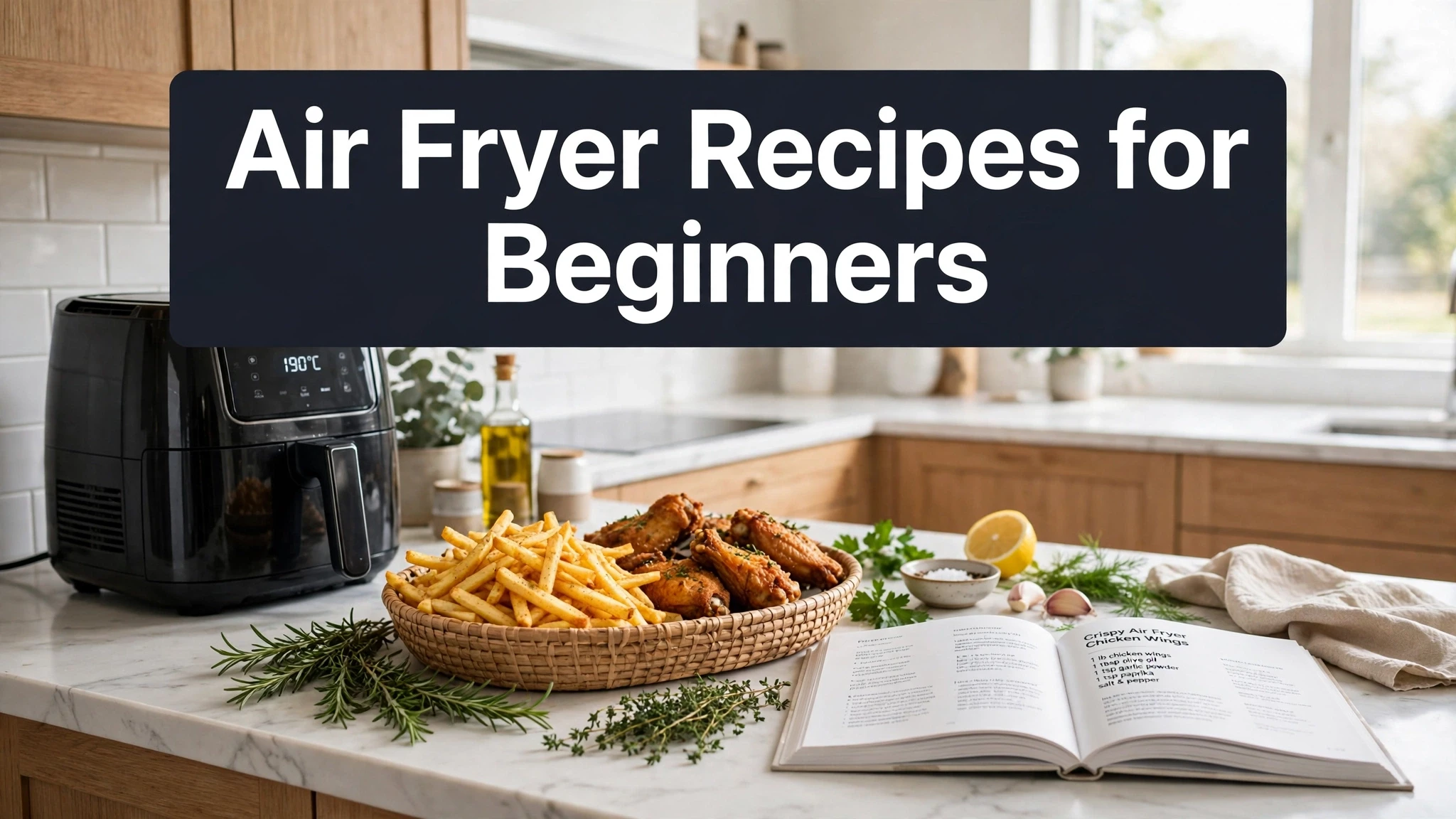
The best first recipes for an air fryer are the ones that are simple, forgiving, and that show you what the appliance can do. Start with potato wedges: cut potatoes into wedges, toss them in a little oil, and salt, and cook them at 190 degrees for twenty minutes, shaking halfway through. They will be crisp outside, fluffy inside, and far better than oven chips, and they will teach you how the air fryer handles a basic food. Next, try chicken wings, or chicken pieces, seasoned simply, cooked at the same temperature, for a similar time, until golden, and cooked through.
Third, try roasted vegetables, such as carrots, courgettes, and peppers, cut into even pieces, tossed in oil, and cooked for fifteen minutes. They will be caramelised, and sweet, and they will show you how well an air fryer roasts. Fourth, try fish fillets, coated in breadcrumbs, which become crisp, and golden, in about ten minutes. And fifth, try a simple snack, such as mozzarella sticks, or spring rolls, which cook quickly, and are a good test of timing. These five recipes will teach you the basics: temperature, time, spacing, and shaking, and once you know them, you can try almost anything.
Vegetables That Turn Out Crispy
Vegetables are one of the best things to cook in an air fryer, because the hot air caramelises their natural sugars, and makes them crisp, and sweet, in a way that boiling, or steaming, cannot. The key is to cut them into even pieces, so that they cook at the same rate, and to toss them in a little oil, so that they brown, rather than dry out. Root vegetables, such as potatoes, carrots, and parsnips, work particularly well, because they become crisp outside, and soft inside, and they can take a longer cooking time, without burning.
Softer vegetables, such as courgettes, peppers, and mushrooms, cook faster, and they need less time, and a slightly lower temperature, so that they do not become soggy. Broccoli, and cauliflower, are also excellent, because their florets become crisp, and slightly charred, at the edges, which is delicious. The trick is to not overcrowd the basket, and to shake it halfway through, so that all sides are exposed to the hot air. A single layer, with space between pieces, will always give better results than a full basket, and it is the single most important rule for vegetables, and for almost everything else, in an air fryer.
Chicken and Fish Without the Fuss
Chicken is one of the most popular foods to cook in an air fryer, because it becomes crisp, and golden, with very little oil, and because it cooks quickly, and evenly. The key is to pat the chicken dry, before cooking, because moisture prevents crisping, and to season it well, with salt, pepper, and any spices you like. Cook it in a single layer, at around 190 degrees, and turn it halfway through, so that both sides brown. Boneless pieces will take twelve to fifteen minutes, while bone-in pieces will take twenty to twenty-five, and the chicken is done when the thickest part reaches 75 degrees, and the juices run clear.
Fish is also excellent, especially fillets coated in breadcrumbs, or in a light batter, which become crisp, and golden, in about ten minutes. The key is to use a dry coating, such as breadcrumbs, rather than a wet batter, which will drip, and make a mess. Place the fish in a single layer, spray it lightly with oil, and cook it until it is golden, and flakes easily. Both chicken, and fish, benefit from resting for a few minutes after cooking, so that the juices redistribute, and the meat stays moist. An air fryer makes both easy, and it is a good way to cook protein, quickly, and healthily, on a busy evening.
Snacks and Sides in Minutes
An air fryer is at its best for snacks, and sides, because it cooks them quickly, and crisply, with very little effort. Frozen snacks, such as chips, spring rolls, samosas, and mozzarella sticks, cook in ten to fifteen minutes, and they come out crisp, and hot, without the need for a deep fryer, or a hot oven. Fresh snacks are also easy: potato wedges, sweet potato fries, and roasted chickpeas, seasoned with spices, are all quick, and delicious, and they are healthier than their deep-fried versions.
The key to snacks is timing, and spacing. Cook them in a single layer, shake the basket halfway through, and check them early, because they can go from crisp to burnt quickly, especially small items. It also helps to cook snacks in batches, rather than all at once, so that they all get enough hot air. And remember that an air fryer is not only for snacks. It can cook a whole side dish, such as roasted vegetables, or a grain, in the time it takes to cook the main course, which makes it a useful second oven, on a busy night. Snacks, and sides, are where an air fryer earns its place, and they are a good place to start, if you are new to it.
Cleaning and Looking After Your Air Fryer
Cleaning an air fryer is simple, if you do it after every use, and it is essential, because grease, and food, build up quickly, and they can cause smoke, and bad smells, and they can damage the non-stick coating. Let the air fryer cool, then remove the basket, and the tray, and wash them in warm, soapy water, or in the dishwasher, if the maker allows it. Wipe the inside of the unit with a damp cloth, and clean the heating element gently, with a soft brush, or a cloth, to remove any grease. Never soak the main unit in water, and never use abrasive cleaners, or metal utensils, which can damage the coating.
It also helps to line the basket with parchment paper, designed for air fryers, which catches drips, and makes cleaning easier, though it should not cover all the holes, or block the airflow. And check the air fryer regularly for wear, especially the non-stick coating, which can peel over time, and which should be replaced if it is damaged. A well-looked-after air fryer will last for years, and it will cook better, and more safely, than one that is neglected. Cleaning is not a chore. It is a part of cooking, and it is the habit that keeps your air fryer working well, meal after meal.
Mistakes Beginners Make Most
The most common mistake beginners make is overcrowding the basket, which prevents the air from circulating, and makes the food soggy, instead of crisp. The fix is simple: cook in batches, and leave space between pieces, so that the air can reach all sides. It takes a little longer, but the results are far better, and it is the single most important rule of air frying. A half-full basket will always give you better food than a full one.
Another common mistake is not preheating, or not shaking the basket. Many air fryers need a few minutes to reach temperature, and putting food into a cold air fryer will lead to uneven cooking. Preheat for three to five minutes, and shake the basket halfway through, so that the food cooks evenly. A third mistake is using too much oil, which makes food greasy, and can cause smoke. A light spray, or a teaspoon brushed over the food, is enough. And a fourth mistake is cooking at the wrong temperature, or for the wrong time. An air fryer cooks faster than an oven, so use a lower temperature, and a shorter time, and check your food early. Learn these rules, and your air fryer will become one of your most useful tools.
Air Fryer Mistakes Beginners Make, and How to Fix Them
Every beginner makes the same mistakes with an air fryer, and knowing them in advance will save you time, food, and frustration. The most common mistake is overcrowding the basket. An air fryer works by circulating hot air, and if the basket is full, the air cannot move, and the food will steam instead of crisping. It will be soggy, uneven, and disappointing. The fix is simple: cook in batches, and leave space between pieces, so that the air can reach all sides. It takes a little longer, but the results are far better, and it is the single most important rule of air frying. A half-full basket will always give you better food than a full one.
The second mistake is not preheating, or not shaking the basket. Many air fryers need a few minutes to reach temperature, and putting food into a cold air fryer will lead to uneven cooking. Preheat for three to five minutes, as you would an oven, and shake the basket halfway through cooking, so that the food cooks evenly. Shaking is especially important for small items, such as chips, vegetables, or chicken pieces, which can stick together, or cook unevenly. A quick shake, halfway through, will make a noticeable difference, and it is a habit worth developing. It takes ten seconds, and it improves the result every time.
The third mistake is using too much oil, or the wrong kind of oil. An air fryer needs very little oil, often just a light spray, or a teaspoon brushed over the food. Too much oil will make the food greasy, and it can cause smoke, because the oil drips and burns. Use an oil with a high smoke point, such as vegetable oil, and avoid olive oil in a spray, because it can damage the non-stick coating. A light spray, or a brush, is enough, and it will give you crisp, golden results, without the grease. If your food is dry, it may need a little more oil, but add it sparingly, and see the difference.
Another mistake is cooking at the wrong temperature, or for the wrong time. An air fryer cooks faster than an oven, and at a higher effective heat, so a recipe designed for an oven will need a lower temperature, and a shorter time, usually about twenty degrees lower, and twenty per cent less time. Check your food early, and adjust, rather than following a recipe blindly. It is also important to cut food into even pieces, so that it cooks evenly, and to avoid putting wet batter in an air fryer, because it will drip, and make a mess. A dry coating, such as breadcrumbs, works well. A wet batter does not, and it is better cooked in oil, or in an oven.
Finally, remember that an air fryer is a tool, and like any tool, it takes practice to use well. Your first few attempts may not be perfect, and that is normal. Learn from each one, adjust the temperature, the time, and the amount, and keep notes if it helps. Within a few weeks, you will know your air fryer, and you will be able to cook with confidence. The mistakes are part of learning, and they are not failures. They are lessons, and each one makes you a better cook. Be patient, be curious, and enjoy the process, because an air fryer, used well, can transform your cooking, and make everyday meals faster, healthier, and more delicious.
My Take:
The mistakes are what I would focus on, because they are the reason so many beginners give up on an air fryer, and conclude that it does not work, when in fact it works very well, if it is used correctly. Overcrowding, not preheating, too much oil, and the wrong temperature are all easy to fix, and fixing them will transform your results. I would urge any beginner to learn these rules first, before trying complicated recipes, because a simple recipe, cooked correctly, is better than a complicated recipe, cooked badly. Master the basics, and the rest will follow. That is true of cooking, and it is true of an air fryer.
I also think we should be honest about the fact that an air fryer is not magic, and that it will not make bad food good. It is a tool, and like any tool, it depends on the ingredients, and on the cook. Fresh, good-quality food, cooked with care, will be delicious in an air fryer. Poor ingredients, cooked carelessly, will not be saved by hot air. Do not expect the appliance to do the work for you. Expect it to help you, and to make good cooking faster, and easier, and you will not be disappointed. The air fryer is a helper, not a miracle, and understanding that will make you a better cook.
Another point I would make is about patience, because learning to use a new appliance takes time, and your first attempts may not be perfect. That is normal, and it is not a reason to give up. Each time you cook, you will learn something: a temperature that works, a time that is right, or a technique that improves the result. Keep notes, if it helps, and do not be afraid to experiment. The cooks who succeed with an air fryer are not the ones who never make a mistake. They are the ones who learn from their mistakes, and keep trying, until they get it right. That persistence is worth more than any recipe.
And the final thing I would say is to enjoy the process, and to let the air fryer make your life easier, not harder. It is meant to save time, to reduce oil, and to make cooking simpler, and when it is used well, it does all of those things. Do not overcomplicate it, do not try to cook everything in it, and do not feel that you must use it every day. Use it when it helps, use the oven or the hob when they are better, and let each tool do what it does best. That is good cooking, and it is the best way to enjoy an air fryer, as a useful, versatile tool, in a kitchen that is yours, and that works for you.
An air fryer can also save energy, and that is worth knowing, because it is one of its quiet advantages. A small air fryer uses less electricity than a large oven, and it heats up faster, and it does not heat the whole kitchen, which matters in summer, and which saves money over time. If you are cooking for one or two people, an air fryer will often be cheaper, and faster, than turning on a full-sized oven, and that saving adds up, week after week. It is not the main reason to buy one, but it is a real benefit, and it is one that many owners discover only after they have used it for a while.
Accessories can help, but they should be bought slowly, and only when you know you need them. A rack that lets you cook on two levels can double the space in a small basket, and a set of liners can make cleaning easier, though they should not block the airflow. A small baking dish, that fits inside the basket, lets you make gratins, and crumbles, and other dishes that would not work in a basket alone. But none of these are essential, and it is better to learn the basics first, and to add accessories one at a time, as you discover what you actually cook. An air fryer is a simple tool, and it works best when it is kept simple, and when the cook knows what it can do, and what it cannot.
Frequently Asked Questions
What are the best air fryer recipes for beginners?
Start with simple foods that crisp well: chicken pieces, potato wedges, roasted vegetables, and fish fillets. These are forgiving, cook quickly, and teach you how the air fryer behaves before you try anything complicated.
What should I cook first in an air fryer?
Cook potato wedges or chicken wings first. They are simple, they show you how crisp the air fryer can make food, and they are hard to ruin. Season lightly, cook in a single layer, and shake the basket halfway through.
How long do you cook chicken in an air fryer?
Boneless chicken pieces usually take 12 to 15 minutes at around 190 degrees Celsius, while bone-in pieces take 20 to 25 minutes. Always check that the thickest part reaches 75 degrees Celsius inside, and let the chicken rest for a few minutes before serving.
Do I need oil in an air fryer?
You need very little, often just a light spray or a teaspoon brushed over the food. Too much oil makes food greasy and can cause smoke. A light coating helps food crisp and brown, while the hot air does most of the work.
How do I clean an air fryer?
Let it cool, then wash the basket and tray in warm soapy water, or in the dishwasher if the maker allows it. Wipe the inside with a damp cloth, and clean the heating element gently. Never soak the main unit, and clean after every use to stop grease building up.