Alpha Blondy: The Life Story Behind Ivory Coast's Reggae Legend
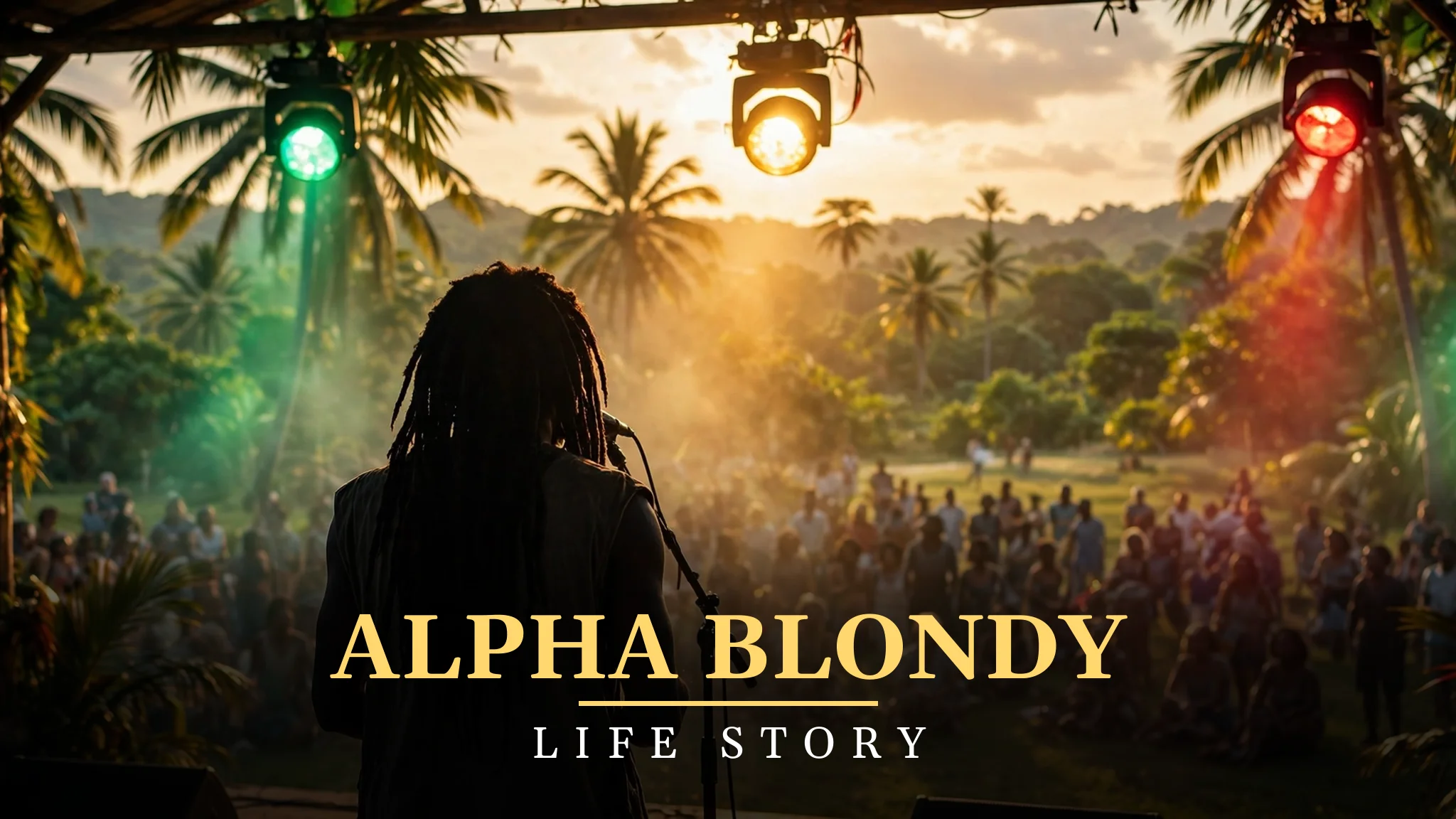
In this post
- A Boy Named Seydou Koné in Dimbokro
- Leaving Home: Liberia, America, and the Long Road Back
- Jah Glory, Cocody Rock, and the First Breakthrough
- Jerusalem, Jamaica, and a Voice Heard Around the World
- Singing for Peace in a Country at War
- The Later Albums and a Career That Refused to Stop
- The Band Behind the Voice: The Solar System
- My Take:
Reggae was born in Jamaica, but it found a second home in Ivory Coast, and the man who built that home was Alpha Blondy. His voice is rough, warm and unmistakable, and his songs move between French, Dioula, English, Arabic and Hebrew as easily as a traveller moves between countries. He did not copy Bob Marley. He took the spirit of Marley — the demand for justice, the call for peace, the belief that music can speak for people who have no power — and he gave it a West African voice, a West African rhythm, and West African problems to sing about.
He was born Seydou Koné on 1 January 1953 in Dimbokro, a town in the centre of Ivory Coast. Dimbokro was not a music capital. It was a quiet place, far from the studios of Abidjan and far from the reggae clubs of Kingston. Yet the boy who grew up there would become the most famous reggae singer in the French-speaking world, and one of the most respected African musicians of his generation. His road to that place was long, and it passed through Liberia, the United States, and Paris before it came back to Abidjan.
This is the story of that road, and of the music that came out of it. It is a story about a singer who refused to sing in only one language, who refused to stay silent about war and injustice, and who kept performing for decades after many of his peers had stopped. It is also a story about what reggae means when it leaves Jamaica and lands in Africa, where the questions it asks are not borrowed but lived.
A Boy Named Seydou Koné in Dimbokro
Seydou Koné was born on 1 January 1953 in Dimbokro, in what was then French West Africa. Ivory Coast was still a French colony, and the country was on the edge of great change. Independence would come in 1960, when Seydou was seven years old, and the new nation would grow fast, with Abidjan becoming one of the great cities of West Africa. A child in Dimbokro in those years grew up between two worlds: the world of his family and his community, with its own languages and customs, and the world of French schools, French books and French radio.
His family background gave him a strong sense of identity. He grew up in a Muslim family, and the values of that upbringing — prayer, community, and respect for elders — stayed with him even as his life took him far from home. He also grew up hearing the music of his region: the songs sung at gatherings, the rhythms of local drums, and the melodies that carried stories from one generation to the next. Those sounds were not reggae, but they taught him something reggae would later need: that a song can carry a message, and that a crowd will listen if the message is true.
School took him to Abidjan, the big city on the lagoon, where the world was wider and louder. Abidjan in the 1960s and 1970s was a city of music: highlife from Ghana, Congolese rumba, French pop, and the first reggae records arriving from Jamaica. A young man with a good ear could hear all of it in a single evening. Seydou listened, and he began to sing. He was not yet Alpha Blondy, and he was not yet a professional musician. He was a young man finding his voice, and the voice he found was deeper and rougher than the smooth singers around him.
He also learned English, a skill that would change his life. English opened the door to the lyrics of Bob Marley and the other Jamaican singers he admired, and it opened the door to travel. A young Ivorian who could speak English could study abroad, could work abroad, and could understand the reggae records that were changing music around the world. Seydou took that door seriously. He would soon leave Ivory Coast, and he would not come back the same person.
The name Alpha Blondy came later, and it marked a new identity. Seydou Koné was the boy from Dimbokro. Alpha Blondy was the singer he chose to become. The name itself was a statement: a man who had taken a new name for a new life, and who was ready to be heard far beyond his home town. That choice, to rename himself and to start again, is one that many great singers have made, and it is often the first sign that an artist knows who he wants to be.
Leaving Home: Liberia, America, and the Long Road Back
In the early 1970s, Alpha Blondy left Ivory Coast and went to Liberia, where he studied English. Liberia was a natural choice for a young Ivorian who wanted to learn the language: it was close, it was English-speaking, and it had its own music scene. He spent time there learning, listening, and singing, and the experience widened his view of the world. He was no longer only an Ivorian. He was becoming a West African who could move between the French-speaking and English-speaking worlds, and that ability would later become one of the marks of his music.
From Liberia, he travelled to the United States, where he lived in New York and studied. America in the 1970s was a hard place for a young African with little money, and Blondy has spoken about the difficulties of those years: working to survive, living far from home, and learning how a Black man was treated in a country that had its own long history of racism. Those experiences did not make him bitter in the usual sense. They made him more determined to sing about justice, and they gave his later songs a weight that came from lived experience rather than from books.
In New York, he was close to the reggae scene and to the wider world of Black music. He heard the records, he met the people, and he began to shape his own sound. He also began to understand that reggae was not only a Jamaican style. It was a language that could be spoken anywhere, by anyone who had something to say about freedom and dignity. He decided that he would speak that language in his own way, with his own languages and his own stories.
He also spent time in Paris, where many African musicians gathered in the 1970s and 1980s. Paris was the meeting place for the African diaspora in Europe, and its studios and clubs gave young artists a chance to record and to be heard. Blondy recorded and performed there, and he began to build a name among African listeners in Europe. It was a slow process, and it was not easy. An African reggae singer in Paris had to convince French audiences that reggae could be sung in French, and convince African audiences that a singer in Paris had not forgotten home. Blondy convinced both.
By the early 1980s, he was ready to return to Ivory Coast and to make the records that would define him. He had travelled, he had learned, and he had suffered. He had also formed his band, the Solar System, a group of musicians who would play with him for many years. The road back to Abidjan was not a retreat. It was the next step, and it was the step that would make him famous.
Jah Glory, Cocody Rock, and the First Breakthrough
Alpha Blondy’s first major album, Jah Glory, was released in 1982, and it announced a new voice in African music. The album was recorded with his band, the Solar System, and it mixed reggae rhythms with African sounds in a way that had not been heard before. The songs were sung in French, Dioula and English, and they spoke about faith, about Africa, and about the need for unity. The album did not become a hit overnight, but it found listeners, and those listeners told others. A singer who can build an audience by word of mouth has an audience that will stay.
Two years later came Cocody Rock, released in 1984, and this was the record that made him a star. Cocody is a wealthy district of Abidjan, and the title of the album was a joke and a challenge at the same time: reggae, the music of the poor in Jamaica, was now being played in the richest part of the Ivorian capital. The title track was a hit, and the album included Sebe Allah Y’e, a song in Dioula that became one of his best-known works. Sebe Allah Y’e showed that Blondy did not need to sing in French or English to reach people. He could sing in the language of his home, and the feeling of the song would carry it across borders.
The success of Cocody Rock changed his life. He was no longer a singer known only to a small circle. He was a star in Ivory Coast, and his name was spreading across French-speaking Africa. Radio stations played his songs, his concerts drew large crowds, and his face became familiar to people who had never been to a reggae concert. He had proved that reggae could be a West African music, and that a singer from Dimbokro could lead it.
He also proved that his music could be serious without being dull. His songs dealt with real questions: the place of Africa in the world, the rights of ordinary people, and the need for peace between neighbours. But they were also danceable, and they were full of hooks that stayed in the head. That combination — a serious message and a good tune — is the hardest thing in popular music, and Blondy achieved it again and again. His audience did not have to choose between thinking and dancing. They could do both at once.
The breakthrough years also brought him into contact with the wider reggae world. Jamaican musicians respected him, and he respected them. He was not an imitator. He was a fellow singer who had taken the same road from a different starting point. That respect mattered, because it meant his music was judged on its own terms, not as a copy of something else. Cocody Rock was the proof, and Jah Glory was the promise. Together, they made Alpha Blondy a name that could not be ignored.
Jerusalem, Jamaica, and a Voice Heard Around the World
In 1986, Alpha Blondy released Jerusalem, an album recorded in Jamaica with members of Bob Marley’s band, the Wailers. Recording in Jamaica was a pilgrimage for a reggae singer, and it was also a test. Could an Ivorian singer stand in the home of reggae and hold his own? The answer was yes. The album was a success, and its songs, including the title track and Jerusalem, showed that Blondy’s music belonged in the same conversation as the great Jamaican records. The Wailers’ musicians gave the album a deep, authentic reggae sound, and Blondy’s voice gave it something new.
The album’s title and its songs carried a message of peace between religions. Jerusalem is a holy city for Jews, Christians and Muslims, and Blondy, a Muslim singer from West Africa, used it as a symbol of what the world could be if people stopped fighting over faith. He sang in Arabic and Hebrew as well as in French and English, and the gesture was deliberate: a song that used the languages of all three faiths to call for peace. It was a bold idea, and it was one that only a singer with Blondy’s background could have carried off.
Jerusalem made him known far beyond Africa. European audiences, who had already heard Cocody Rock, now heard a record that sounded like it belonged on the world stage. He toured in Europe, and his concerts drew crowds who did not speak French or Dioula but who understood the feeling of the music. Reggae has always travelled well, because its message is simple and its rhythm is universal, and Blondy’s reggae travelled further than most. He became one of the few African reggae singers to be known by name in Europe and beyond.
The years after Jerusalem were years of touring, recording, and growing fame. He released albums that continued the same themes: peace, justice, Africa, and faith. Songs such as Apartheid Is Nazism, from an earlier period, had already shown his willingness to speak about South Africa and about racism. His later work continued that tradition, speaking about the problems of his own continent and of the world. He was not a singer who avoided politics. He was a singer who believed that politics was part of his job.
He also became a familiar face at festivals, where his live shows were known for their energy and their length. A Blondy concert was not a short, polite performance. It was a long, loud, joyful event, with the band playing hard and the singer moving across the stage, talking to the crowd, and singing songs that the audience knew by heart. That live reputation kept him working for decades, long after the first hits had faded from the charts. A singer who can fill a festival field will always have work.
Singing for Peace in a Country at War
Ivory Coast, the country Blondy loved and sang about, went through a painful period in the 2000s. After years of stability, the country fell into political crisis and then into civil war, with the north and the south divided and with violence that tore communities apart. For a singer whose whole message was peace and unity, this was a personal tragedy. He could not stay silent, and he did not. He used his voice to call for reconciliation, and he became a public voice for peace in a country that badly needed one.
He was given a role as a United Nations ambassador for peace in Ivory Coast, a recognition of the work he had already been doing through his music. The title was not only an honour. It was a responsibility, and Blondy took it seriously. He spoke at events, he performed at peace concerts, and he used his fame to bring people together across the divides of politics and religion. In a country where politicians had failed to keep the peace, a singer was asked to help, and he accepted the task.
His songs from this period carried the same message in a more urgent form. He sang about the need for Ivorians to live together, about the pain of war, and about the hope that the country could heal. These were not abstract songs. They were sung to people who had lost homes, family members, and friends, and who needed to hear that reconciliation was possible. Blondy’s voice, which had once sung about Jerusalem as a symbol of peace, was now singing about Abidjan and Bouaké as places that needed the same peace.
The war years also tested his own life. He faced health difficulties, and there were periods when he stepped back from performing. He has spoken openly about struggles with his health, and about the need to take care of himself in order to keep singing. Those periods were hard for his fans, who worried about him, but they also showed something important: even a singer who seems larger than life is a human being, and a human being needs rest and care. When he returned to the stage, his audiences welcomed him back with a warmth that showed how much he meant to them.
Through the war and its aftermath, Blondy remained a figure of unity in Ivory Coast. He was not identified with one political side, and his message was for all Ivorians. That is a difficult position to hold in a divided country, and it is one that requires courage. He held it, and he kept singing. His story during those years is not only a music story. It is a story about what a singer can do when his country is in pain, and about the limits of what music can achieve. Music cannot end a war on its own, but it can keep the idea of peace alive when everything else has failed.
The Later Albums and a Career That Refused to Stop
After the war years, Alpha Blondy continued to record and to tour, releasing albums that showed he had not lost his voice or his sense of purpose. His later work included albums such as Vision, released in 2011, and Mystic Power, released in 2013, which mixed his classic reggae sound with new production and new collaborators. These records did not try to repeat Cocody Rock. They showed a singer who was still thinking, still listening, and still willing to try new ideas while keeping the message that had always defined him.
He also continued to perform across Africa and Europe, and his concerts remained popular with audiences of all ages. Young listeners discovered him through their parents’ records and through online platforms, and they found that his songs still spoke to the world they lived in. The questions he had sung about in the 1980s — justice, peace, Africa’s place in the world — had not gone away. They had only changed their shape, and his songs still had something to say about them. That is the mark of a singer whose work is about real things rather than about fashion.
In 2015, he released an album titled Positive Energy, and in later years he continued to record and to appear at festivals. He also worked with younger artists, and his name became a bridge between the older generation of African reggae and the new generation. A young singer who works with Alpha Blondy gains something that no amount of promotion can buy: the respect that comes from standing beside a legend. Blondy gave that respect freely, and his willingness to share the stage showed that he was not only interested in his own career.
His personal life also remained a part of his public story. He has a large family, and he has spoken about the importance of family and faith in keeping him grounded. A life on the road, with its travel, its late nights, and its temptations, can pull a singer away from home. Blondy has always returned to his roots, and his songs have always carried the sound of Dimbokro and Abidjan with them. That grounding is one reason his music has stayed honest for so long.
Today, he is regarded as one of the great names of African reggae, and his influence is heard in the work of singers across the continent. He did not only make hit songs. He made a space for African reggae to exist, and he filled that space with music that was both African and universal. His career is a reminder that a singer from a small town can change the music of a whole region, if he has the voice, the patience, and the courage to keep singing.
The Band Behind the Voice: The Solar System
Alpha Blondy’s music was never the work of one man alone. Behind his voice stood the Solar System, the band he formed when he returned to Ivory Coast in the early 1980s, and the musicians of that band gave his songs their depth, their drive, and their warmth. A reggae band is a living thing: the bass holds the song together, the drums push it forward, the guitars add colour, and the horns lift it up. The Solar System understood that, and its members played together for many years, learning Blondy’s sound from the inside and making it their own. A singer who keeps the same band for decades is a singer who values loyalty, and Blondy’s loyalty to his band was returned in the quality of their playing.
The band’s name was a statement in itself. A solar system is a group of bodies held together by a central force, and the Solar System was held together by Blondy’s voice and by a shared belief in the music. The musicians were not hired hands who came and went. They were partners, and they travelled with Blondy across Africa and Europe, playing in festivals, in concert halls, and in stadiums. Their playing gave his concerts their energy, and their presence on stage gave the audience a sense that the music was made by a family, not by a single star. That feeling mattered, because reggae is communal music, and a band that feels like a family makes the audience feel like part of it.
My Take:
When I think about Alpha Blondy, the first thing that strikes me is how far he travelled to find his own voice. He was born in Dimbokro, he studied in Liberia, he lived in New York, he recorded in Paris, and he made his most famous album in Jamaica. Most singers stay in one place and sing about that place. Blondy went around the world and then came home, and his music carries all of those places inside it. I admire that journey, because it takes courage to leave home when you have little money and no guarantee that you will succeed. He left, he learned, and he came back with something to say.
What I like most about his music is the way he refuses to sing in only one language. He sings in French, in Dioula, in English, in Arabic and in Hebrew, and he does it because his message is for everyone. A singer who only sings in one language speaks to one group. A singer who sings in five languages speaks to the world. I think that choice is not a trick. It is a belief, and the belief is that peace cannot be built if people cannot hear each other. When he sings a line in Arabic and then a line in Hebrew, he is not showing off. He is saying that those two languages belong in the same song, and that the people who speak them belong in the same world. That is a brave thing to say, and it is a beautiful thing to hear.
Jerusalem is the song that stays with me the most. It is a simple idea, really: a city that is holy to three faiths should be a city of peace, not a city of war. But simple ideas are often the hardest to sing, because they can sound like slogans. Blondy does not make it sound like a slogan. He makes it sound like a prayer, and a prayer is different from a slogan because it comes from the heart. When I listen to Jerusalem, I do not think about politics. I think about the people who live in that city, and about the children who grow up there, and about what it would mean if they could live without fear. That is what a good song can do: it can take a big idea and make it human.
I also think about Cocody Rock, and about the joke in its title. Reggae was the music of the poor in Jamaica, and Blondy brought it to the richest district of Abidjan and made it a hit there. That is a funny idea, but it is also a serious one. It says that music does not belong to one class of people. It belongs to everyone who hears it and feels it. A rich man in Cocody and a poor man in a village can both hear the same song and both feel something true. I like that. I think music is one of the few things in the world that can cross the line between rich and poor without asking permission, and Blondy understood that.
His work for peace in Ivory Coast moves me in a different way. It is one thing to sing about peace when your country is at peace. It is another thing to sing about peace when your country is at war, and when the people listening to you have lost family members and homes. Blondy did that, and he did it as a United Nations ambassador for peace, which is a title that carries real responsibility. I respect him for accepting that responsibility. Many singers would have stayed out of politics, because politics is dangerous and because it can cost you fans. He stepped into it, because he believed that his country needed him. That is not a career move. That is a human choice.
I will be honest about something else: I do not think every Alpha Blondy album is as strong as his best work. The early records, Jah Glory and Cocody Rock, have a freshness that later albums do not always match. That is normal for a career that has lasted for more than forty years. No singer can be at his peak for forty years. What matters is that he kept going, and that he kept singing about the same things, even when the world changed around him. A singer who keeps his message for forty years is a singer who believes in it, and I respect that belief more than I respect any single album.
What I learn from his life is that a singer can be a bridge. Blondy built a bridge between Jamaica and Ivory Coast, between French and English, between Africa and Europe, and between the faiths that share Jerusalem. Bridges are not glamorous things. They are built slowly, they are walked on by other people, and they are often taken for granted. But without them, people cannot cross from one side to the other. Blondy spent his life building those bridges with his songs, and I think the world is better for it. Young singers who want to sing about peace should study him, because he shows that a song can be both a piece of music and a piece of work for the world.
I also think about his health struggles, and about the periods when he stepped back from the stage. It is easy to forget that a singer is a human being, with a body that gets tired and a mind that needs rest. Blondy has been open about those difficulties, and I respect that openness. It tells young artists that it is all right to stop and to take care of yourself, and that stopping does not mean the end. He came back, and his audiences welcomed him back, and that welcome was a sign of how much he meant to them. A singer who is loved will be waited for, and Blondy was waited for.
His band, the Solar System, deserves a mention too. A singer is only as good as the musicians behind him, and Blondy’s band gave his songs their depth and their drive. The Solar System was not a group of hired hands. It was a family of musicians who played together for years, and who understood Blondy’s sound from the inside. I think about how hard it is to keep a band together for decades, through travel, through money problems, and through the ups and downs of a career. The fact that the Solar System lasted is a sign of loyalty on both sides, and loyalty is a rare thing in music.
I think about the young people in Ivory Coast today, and about what Blondy means to them. A teenager in Abidjan who listens to his songs hears a man who sang about his country when it was at war, and who kept singing when it was at peace. That teenager learns that music is not only for dancing. It is also for thinking, for remembering, and for hoping. I hope that lesson stays with the next generation, because Ivory Coast will need singers like Blondy in the future, just as it needed him in the past. The problems he sang about have not gone away, and the need for voices that call for peace has not gone away either.
In the end, I think Alpha Blondy’s story is a story about a man who refused to be small. He was born in a small town, but he did not stay small. He learned languages, he travelled the world, and he sang to audiences on three continents. He did not do it by pretending to be someone else. He did it by being himself, a boy from Dimbokro who loved reggae and who believed that music could make the world a little better. I hope he keeps singing, because the world still needs voices that believe that, and that are willing to say it in five languages at once.
I also think about his family, and about the large family he has spoken of with pride. A singer who travels the world can easily lose touch with home, but Blondy has always returned to his roots, and his songs have always carried the sound of Dimbokro and Abidjan with them. That grounding is one reason his music has stayed honest for so long. He did not become a star who forgot his family. He became a star who carried his family with him, in his songs and in his life. I respect that, because fame can pull a person away from the people who knew him first, and it takes strength to stay close to them.
His work as a United Nations ambassador for peace is another part of his story that deserves more attention. It is one thing to sing about peace. It is another thing to be asked by the United Nations to help bring peace to your own country, and to accept that task. Blondy accepted it, and he used his fame to bring people together in a country that was divided. I think about the meetings, the concerts, and the conversations that went into that work, and about how difficult it must have been. A singer is not a politician, and he cannot end a war with a song. But he can keep the idea of peace alive, and he can give people a reason to believe in it. Blondy did that, and his country is better for it.
I think about the young reggae singers in Ivory Coast today, and about what Blondy means to them. They hear his songs, they learn his style, and they discover that reggae can be sung in French, in Dioula, and in their own languages. That discovery is important, because it tells them that they do not have to copy Jamaican singers to make reggae. They can make it their own, just as Blondy did. I hope those young singers learn from him, because his example shows that a singer can be both local and global, both African and universal, and that the two are not in conflict. They are the same thing, when the music is honest.
The languages in Jerusalem are another detail I keep returning to. He sang in Arabic and in Hebrew, in the same album, in the same songs, and he did it because he believed that those languages belonged together. That is a brave artistic choice, and it is one that few singers would dare to make. It could have been seen as a trick, or as a provocation, but it was neither. It was a prayer, and it was sung with sincerity. When I listen to those songs, I do not think about politics. I think about the people who speak those languages, and about the children who grow up hearing them, and about what it would mean if they could live in peace. That is what a good song can do, and Blondy did it.
I also want to say something about his health, and about the periods when he stepped back from the stage. It is easy to forget that a singer is a human being, with a body that gets tired and a mind that needs rest. Blondy has been open about his difficulties, and I respect that openness. It tells young artists that it is all right to stop, to take care of yourself, and to come back when you are ready. He came back, and his audiences welcomed him with a warmth that showed how much he meant to them. A singer who is loved will be waited for, and Blondy was waited for. That is a sign of a real connection between an artist and his audience, and it is one that cannot be bought.
In the end, I think Alpha Blondy’s story is a story about a man who refused to be small, and who built bridges with his songs. He built a bridge between Jamaica and Ivory Coast, between French and English, and between the faiths that share Jerusalem. Bridges are built slowly, they are walked on by other people, and they are often taken for granted. But without them, people cannot cross from one side to the other. Blondy spent his life building those bridges, and I think the world is better for it. I hope he keeps singing, because the world still needs voices that believe in peace, and that are willing to sing about it in five languages at once.
Frequently Asked Questions
What is Alpha Blondy’s real name?
His real name is Seydou Koné. He was born on 1 January 1953 in Dimbokro, Ivory Coast, and he took the stage name Alpha Blondy when he became a professional singer.
Which album made Alpha Blondy famous?
Cocody Rock, released in 1984, was the album that made him a star across French-speaking Africa. It included the title track and Sebe Allah Y’e, one of his best-known songs.
Why is the album Jerusalem so important?
Jerusalem, released in 1986, was recorded in Jamaica with members of Bob Marley’s band, the Wailers. Its songs call for peace between Jews, Christians and Muslims, and Blondy sings in Arabic and Hebrew as well as French and English.
How many languages does Alpha Blondy sing in?
He sings in French, Dioula, English, Arabic and Hebrew, among others. The mix of languages is a deliberate part of his message of unity and peace.
What is the Solar System?
The Solar System is Alpha Blondy’s backing band, formed when he returned to Ivory Coast in the early 1980s. The band has played with him for many years and helped shape his reggae sound.
What role did Alpha Blondy play during the war in Ivory Coast?
During the political crisis and civil war of the 2000s, he campaigned for peace and reconciliation and served as a United Nations ambassador for peace in Ivory Coast, using his music and his fame to call Ivorians together.
Is Alpha Blondy still performing?
Yes, he continues to record and to perform at festivals and concerts in Africa and Europe, and his later albums include Vision, Mystic Power and Positive Energy.


