Babymetal: The Life Story Behind Japan's Metal Idols
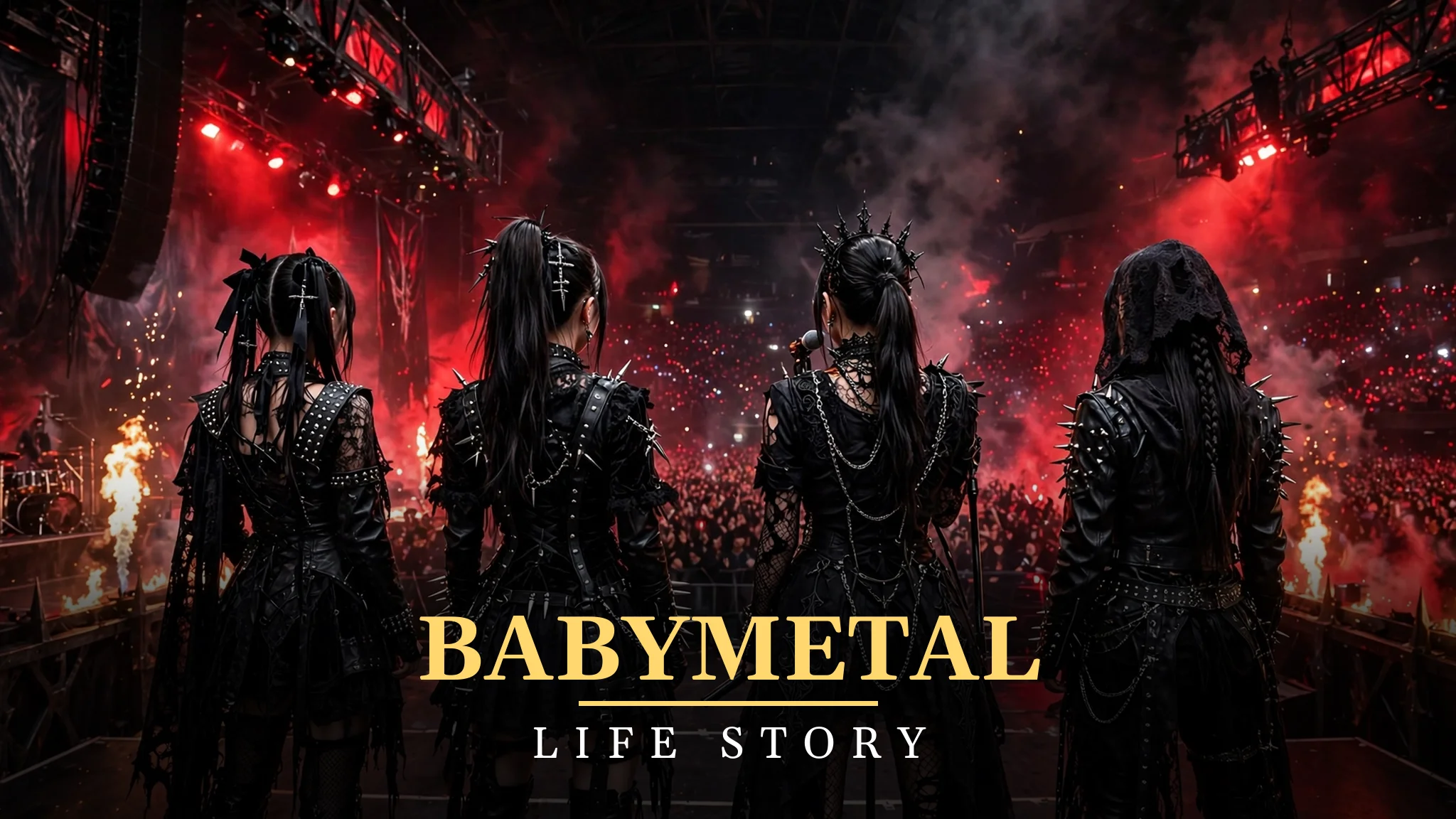
In this post
- A Small Idea Inside a School Idol Group
- Gimme Chocolate and the Video That Travelled the World
- Wembley, Tokyo Dome and Metal Resistance
- A Farewell, a New Chapter and the Road Ahead
- The Band Behind the Singers
- What Babymetal Changed for Japanese Music
- Metal Galaxy, The Other One and New Sounds
- Babymetal on Stage Around the World
- The Fox God, the Lore and the World Around Babymetal
- The Kami Band, the Costumes and the Sound on Stage
- My Take:
Babymetal should not have worked. That is the first thing most people say about them, and it is also the reason they became famous. They took two kinds of music that seemed to belong in different worlds, the bright, sweet pop of Japanese idols and the loud, fast roar of heavy metal, and they put them together in the same song. The result was strange, loud, joyful and completely new, and it made people stop and listen, even people who had never cared about either kind of music before.
The group began as a small idea inside a school idol group, and it grew into a band that played Wembley Arena in London, the Tokyo Dome in Japan, and festivals all over the world. At the centre of it were three young singers, Suzuka Nakamoto, known as Su-metal, Yui Mizuno, known as Yuimetal, and Moa Kikuchi, known as Moametal. They were children when they started, and they had to learn how to sing, dance and perform while the whole world watched them grow up. Their story is about an unlikely idea, a lot of hard work, and a group that refused to fit into one box.
What makes Babymetal worth telling is not only the music. It is the way they changed what people thought was possible. Metal fans who had laughed at the idea found themselves cheering at a Babymetal show. Pop fans who had never listened to metal found themselves headbanging to a song about chocolate. Babymetal did not ask permission to mix those worlds. They just did it, and the audience followed.
A Small Idea Inside a School Idol Group
Babymetal began in 2010, as a sub-unit of a Japanese idol group called Sakura Gakuin, which was a group for schoolgirls. The idea came from a producer at the agency Amuse, who wanted to try something different. The plan was to take three young members of Sakura Gakuin and put them in a group that mixed idol singing and dancing with heavy metal music. The name Babymetal was a play on words, a baby version of metal, and it was meant to be a joke as much as a name. Nobody expected the joke to last for years.
The three girls were Suzuka Nakamoto, Yui Mizuno and Moa Kikuchi. Nakamoto, as Su-metal, was the lead singer, with a strong, clear voice that could carry a metal song. Mizuno and Kikuchi, as Yuimetal and Moametal, sang and danced beside her, and their high voices and sharp dance moves gave the group its bright, pop feeling. The girls were still at school, and they had to balance lessons, homework and rehearsals with a growing number of performances. It was a strange life for a child, and it needed a lot of support from their families and from the agency.
In the early days Babymetal performed as part of Sakura Gakuin shows, and their songs were released on small labels. The first songs, including Doki Doki Morning, were simple and fun, with a metal backing track and a pop melody on top. The audience in Japan was curious, but the group was still a side project, not a main act. The girls were learning how to perform, and the producers were learning what the group could be. The early shows were small, the costumes were simple, and the whole thing felt like an experiment.
The experiment worked because the contrast was so strong. The metal band behind the girls played fast, heavy music, with loud guitars and drums, while the girls sang sweet melodies and danced in neat, synchronised routines. The audience did not know whether to laugh or cheer, and in the end they did both. The group began to gain fans in Japan, and then, through videos on the internet, fans in other countries began to find them too. A small idea inside a school group was starting to grow into something much bigger.
Gimme Chocolate and the Video That Travelled the World
The moment that changed everything came in 2014, with the song Gimme Chocolate. The video for the song was posted online, and it spread quickly around the world. People shared it because it was so unusual: three young singers in matching outfits, dancing in perfect time, while a metal band played a fast, heavy song about wanting chocolate. The video was funny, energetic and catchy, and it was shared by metal fans, pop fans and people who had never heard of either kind of music. Within a short time, Babymetal were no longer a small Japanese act. They were a global curiosity, and then a global act.
Gimme Chocolate was part of the group’s first album, Babymetal, which was also released in 2014. The album mixed metal, pop and dance music, and it showed that the group could do more than one joke song. There were fast songs, slow songs, and songs that mixed different styles in the same track. The album did well in Japan, and it also did well in other countries, reaching charts in places where Japanese idol groups rarely appeared. It was a sign that the audience for Babymetal was not limited to Japan, and that the group had a real future.
The success of the video also brought attention from the metal world. Some metal fans were angry at first, because they thought a group of young singers could not be real metal. Others were curious, and when they saw Babymetal live, they changed their minds. The live band, known as the Kami Band, played with skill and energy, and the three singers performed with confidence and precision. The show was not a trick. It was a real concert, with real musicians, and the audience could feel that. Over time, many metal fans became Babymetal fans, and the group began to play at metal festivals alongside much older bands.
The years after Gimme Chocolate were busy. Babymetal toured in Japan, Europe and the United States, and they played in larger and larger venues. They were still young, and they were still learning, but they were also becoming professionals. They learned how to handle long tours, how to perform in front of audiences who did not speak Japanese, and how to keep their energy up night after night. The group that had started as a school experiment was now a touring band, and the three girls were at the centre of it.
Wembley, Tokyo Dome and Metal Resistance
In 2016 Babymetal released their second album, Metal Resistance, and it took them to a new level. The album was darker and heavier than the first, and it showed that the group were growing up. The songs were more complex, the singing was stronger, and the band sounded more confident. Metal Resistance did well in Japan, and it also did well in Britain and the United States, where it reached chart positions that were unusual for a Japanese act. It was a clear sign that Babymetal were not a one-song wonder.
The same year, Babymetal played at Wembley Arena in London, one of the most famous venues in Britain. They were the first Japanese act to headline Wembley Arena, and the show was a major moment for the group and for their fans. The arena was full, the audience sang along in Japanese, and the band played with the kind of energy that filled the whole room. For three young women who had started in a school group, playing Wembley was a long way from where they had begun, and it showed how far their music had travelled.
Babymetal also performed at the Tokyo Dome in Japan, another venue that marks a high point for a Japanese act. The Tokyo Dome shows were large, dramatic and carefully staged, with the three singers at the centre of a huge stage, surrounded by lights, screens and a live band. The shows were a celebration of how far the group had come, and they were also a sign that Babymetal had become one of the biggest acts in Japan, not just a curiosity from the internet.
During this period the group also worked with other artists, and they appeared at festivals with some of the biggest names in rock and metal. They toured with bands they had admired, and they learned from watching those bands perform. The members were growing older, and their voices and stage presence were growing stronger. They were no longer children in a school group. They were young women leading a band that played in arenas around the world.
A Farewell, a New Chapter and the Road Ahead
In 2018 Babymetal faced a difficult change. Yui Mizuno, known as Yuimetal, left the group. She had been away from performing for health reasons, and in October 2018 it was announced that she would not return. The news was sad for fans, who had watched the three girls grow up together, and it was sad for the group, who had to continue as a duo. Su-metal and Moametal kept going, and they performed with support dancers and musicians, but the shape of the group had changed, and everyone could feel it.
The group did not stop. In 2019 they released the album Metal Galaxy, which mixed metal with music from around the world, including sounds from different countries and cultures. The album showed that Babymetal were still willing to try new ideas, and that they could keep going even after a major change. They toured the album in Japan, Europe and the United States, and they played in large venues, including arenas and festivals. The audience stayed with them, and new fans joined, drawn by the music and by the story of a group that had kept going through a hard time.
In the years that followed, Babymetal continued to tour and record, and they marked their history with anniversary shows and new releases. They also announced a new member, Momoko Okazaki, who joined as Momometal in 2023, after performing with the group as a support dancer. The addition of a third member gave the group a new shape, and it showed that Babymetal were looking forward, not just back. The group had changed, but the core idea remained the same: a mix of pop and metal, performed with energy and precision.
Babymetal have also released later albums, including The Other One in 2023, which was a more conceptual work, with a story about different worlds and different versions of the group. The album showed that the members and their team were still thinking about the group as a whole, not just as a collection of songs. They were building a world around Babymetal, with its own stories, images and ideas, and that world kept growing with each new release.
The Band Behind the Singers
A Babymetal show is not only about the three singers. The live band, known as the Kami Band, is a central part of the sound, and its members are skilled metal musicians who play the fast, heavy music that the group is known for. The band members have changed over the years, but the role has stayed the same: to give the singers a strong, loud foundation, and to show the audience that the metal side of Babymetal is real. The band plays with energy and skill, and they are a key reason why metal fans respect the group.
The costumes and the stage design are also important. Babymetal have worn many different outfits over the years, from matching gothic dresses to more modern, dark costumes, and the look has always been a mix of cute and dark. The stage shows use lights, screens and dramatic entrances, and the three singers often appear in a way that feels like a ceremony. The visual side of the group is carefully planned, and it helps the audience understand the mix of pop and metal that the music represents.
The dance is another key part. The routines are sharp, synchronised and full of energy, and they are designed to match the metal music, not to soften it. The dancers move in time with the drums and guitars, and the effect is powerful. The dance also helps the singers keep their energy up, and it gives the audience something to watch as well as to listen to. It is a physical performance, and it takes a lot of practice to get it right.
The production team behind Babymetal have also played a major role. The producers, songwriters and choreographers who work with the group have built a sound and a visual style that is consistent, even as the members have changed. They have kept the core idea, the mix of pop and metal, while trying new sounds and new images. That consistency is one of the reasons the group have lasted so long, and it is a sign of how much thought has gone into every part of the act.
What Babymetal Changed for Japanese Music
Babymetal changed the way people thought about Japanese pop and Japanese metal. Before them, idol groups and metal bands were seen as separate worlds, with separate audiences, separate venues and separate rules. Babymetal broke those rules, and they showed that the two worlds could be mixed. They opened a door for other groups to try unusual combinations, and they showed that a Japanese act could succeed abroad without changing its language or its identity.
They also changed the way the world saw Japanese music. Many people outside Japan had only heard of J-pop or anime songs, and Babymetal gave them a different picture: a loud, energetic, theatrical act that could fill arenas in London and Los Angeles. The group became a symbol of a new kind of Japanese music, one that was not afraid to be strange, and not afraid to be loud. They were talked about in newspapers, magazines and television shows around the world, and they became one of the best-known Japanese acts of their time.
For the members themselves, Babymetal has been a long education. They started as schoolgirls, they learned to perform in front of large audiences, they travelled the world, and they dealt with fame, change and loss. They have grown up in public, and they have done it with a level of professionalism that many older acts would admire. Their story is not only about music. It is about growing up, about working hard, and about keeping going when the shape of the group changes.
Today Babymetal are still performing and recording, and they are still finding new audiences. They have kept the mix of pop and metal that made them famous, and they have added new ideas, new members and new sounds. They have shown that an unlikely idea can become a long career, if the work is good and the audience can see that the performers believe in it. That is the legacy of Babymetal, and it is why their story is still worth telling.
Metal Galaxy, The Other One and New Sounds
Metal Galaxy, released in 2019, was a bold step for Babymetal, because it mixed heavy metal with music from around the world. The album included songs that used sounds from different countries, with different rhythms, different instruments, and different feelings, and it showed that the group were not afraid to try new ideas. The idea was that metal could travel, that it could take in sounds from anywhere, and that Babymetal could be the band to do it. The album was well received, and it proved that the group could keep growing, even after the departure of Yuimetal, and even after many years in the industry.
The tour for Metal Galaxy took Babymetal to Japan, to Europe, and to the United States, and it included large venues, festivals, and shows with other major acts. The band played with energy, and the audience responded with enthusiasm, singing along to songs in Japanese, and cheering for the Kami Band as well as for the singers. The tour was long and tiring, but it showed that Babymetal were still a major live act, and that their audience had stayed with them through a difficult change. The group had lost a member, but they had not lost their audience, and that was a sign of how much people cared about the music.
In 2023 Babymetal released The Other One, an album that was more conceptual than their earlier work, with a story about different worlds, about parallel versions of the group, and about the idea that there is more than one Babymetal. The album was quieter in places, more thoughtful, and more experimental, and it showed that the members and their team were still thinking about the group as a whole, not just as a collection of songs. The Other One was also the first album to feature Momoko Okazaki as Momometal, and it gave the group a new shape, with three members again, and with a new energy that came from that change.
Babymetal have also released Metal Forth in 2025, another album that continued their exploration of metal, pop and world music, with collaborations and with new sounds. The album showed that the group are still curious, still willing to try new ideas, and still able to make music that is both heavy and joyful. They have now been a group for fifteen years, which is a long time for an act that started as a school sub-unit, and they have done it by keeping their core idea, the mix of pop and metal, while also trying new things, and while also trusting their audience to follow them.
Babymetal on Stage Around the World
Babymetal’s live shows are a key part of their story, because it is on stage that the mix of pop and metal makes the most sense. A Babymetal concert is loud, bright, and full of energy, with the singers dancing in perfect time, with the Kami Band playing fast, heavy music, and with the audience singing, cheering, and headbanging, all at once. The shows are carefully staged, with dramatic entrances, with lights, with screens, and with a sense of ceremony, and they make the audience feel that they are part of something special, not just a concert.
The band have played at festivals around the world, including metal festivals where they were the only pop act, and pop festivals where they were the only metal act, and in both cases they won over the audience. At a metal festival, the audience might have been sceptical at first, but when they saw the Kami Band play, and when they saw the energy of the show, they changed their minds. At a pop festival, the audience might have been surprised by the loud guitars, but when they heard the catchy melodies, and when they saw the dancing, they joined in. That ability to win over two different audiences is rare, and it is one of Babymetal’s greatest strengths.
The group have also played in Japan, in large venues such as the Tokyo Dome, the Budokan, and other arenas, where their shows are a major event for their fans. Japanese fans know the songs, they know the dances, and they know the stories behind the group, and they come to the shows to celebrate that shared history. The concerts in Japan are often more emotional than the concerts abroad, because the audience have followed the group since they were children, and they have watched them grow up, change, and keep going. That shared history makes the live show feel like a reunion, every time.
The Fox God, the Lore and the World Around Babymetal
Babymetal have built a whole world around their music, with a story about a Fox God, a divine being who, according to the group’s lore, gave them their mission to spread metal around the world. The Fox God is a playful idea, a mix of Japanese folklore and pop mythology, and it gives the group a story to tell, beyond the songs themselves. Fans make fox hand signs at concerts, they wear fox masks, and they talk about the Fox God as if he were real, and that shared joke, shared belief, and shared ritual makes the audience feel part of something, not only a concert, but a community, with its own symbols, its own language, and its own history.
The lore also gives the group a way to explain changes, to introduce new members, and to tell new stories, without breaking the spell. When a member leaves, when a new member joins, when a new album comes out, the story can absorb it, can give it a meaning, and can make it part of the larger world. That is a clever way to run a pop group, because it turns a business decision into a story, and it lets the audience feel that they are following a journey, not only a career. The Fox God is not a serious religion, and the group do not pretend it is, but it is a serious piece of storytelling, and it works, because the audience enjoy it, and because it gives the music a deeper feeling.
The visual world of Babymetal is also part of this lore, with costumes that change from album to album, with stage designs that use fox imagery, with lights, with screens, and with a sense of ceremony that makes each concert feel like a ritual. The three singers often appear in a dramatic way, rising from below the stage, or walking through smoke, and the audience cheer, because they know what is coming, and because they have seen it before, and because it still feels exciting, every time. That repetition, of a ritual, is part of what makes a concert feel special, and Babymetal understand it, and use it well, night after night, in country after country.
The world around Babymetal has also grown through merchandise, through fan clubs, through social media, and through the stories that fans tell each other, about the first time they saw the group, about the first song they heard, and about the friends they made at a concert. That fan community is a key part of the group’s success, because it keeps the music alive, even when the group are not touring, and it brings new fans in, through recommendations, through videos, and through word of mouth. A band that has a community, not only an audience, is a band that will last, and Babymetal have built a community, around the Fox God, around the music, and around the shared feeling of being part of something strange, joyful, and real.
The Kami Band, the Costumes and the Sound on Stage
Behind the three singers stands a group of musicians called the Kami Band, and they are a large part of why Babymetal work on stage. The Kami Band play the guitars, the bass and the drums, and they play them hard, with the speed and the weight that heavy metal needs. The singers do not hold instruments. They dance and they sing while the band play behind them, and that split is the heart of the show. It looks unusual at first, because a metal concert usually has the singer holding a microphone and standing still, or moving with the band, and here the singers move like dancers in a pop group while the music crashes around them. After a few minutes the strangeness fades, because the playing is serious and the singing is strong, and the two halves fit together.
The musicians of the Kami Band have changed over the years, as session players have come and gone, but the idea has stayed the same. They wear dark clothes, they stand a little back from the singers, and they let the music speak for itself. Their playing gives the group its metal weight. Without them, the songs would be pop songs with loud guitars added on top. With them, the songs are real metal songs that happen to have bright melodies and young voices on top. That is an important difference, and it is why many metal fans who came to laugh stayed to listen. They heard real riffs, real drums, and real skill, and they respected it, even if the show around it was not what they expected.
The look of Babymetal is just as planned as the sound. The costumes are often red and black, with skirts, boots and bold shapes, and the singers make the fox sign with their hands, a small gesture that fans copy at concerts all over the world. The dancing is sharp and exact, learned through long practice, and it has to be, because the music is fast and the steps must land on the beat. There is a lot of work hidden inside a performance that looks joyful and easy. The singers trained as idols before they became metal singers, and that training shows in the way they move, the way they hold a pose, and the way they keep smiling through a hard, fast song. The result is a show that is both a pop show and a metal show, and it is that mix, more than any single song, that people remember when they leave a Babymetal concert.
In the studio the same care goes into the songs. The producer behind the group, known as Kobametal, has shaped the sound from the start, mixing heavy riffs with bright melodies, with electronic sounds, and with choruses that are easy to remember. Songs like Megitsune mix a festival sound with metal guitars, and Karate is built on a heavy, driving riff that would suit any metal band. The singing is mostly in Japanese, and the group have not changed that to please a foreign audience, which is a brave choice and a wise one, because the Japanese words are part of the sound. A listener does not need to understand every word to feel the energy of the song, and that is why the music travels so well, from Tokyo to London to Los Angeles, without losing what makes it Japanese.
My Take:
I will be honest: when I first heard about Babymetal, I thought it was a joke that would not last. A group of schoolgirls singing about chocolate over heavy metal guitars sounded like something made for one video, not for a ten-year career. I was wrong, and I am glad I was wrong, because Babymetal turned out to be one of the most interesting music stories of their time. They took an idea that should not have worked, and they made it work through sheer hard work and belief.
What changed my mind was watching a live performance. On a recording, the mix of pop and metal can sound strange, almost like two songs playing at once. Live, it makes sense. The band is loud and skilled, the singers are precise and full of energy, and the audience is caught up in the whole thing. I realised that Babymetal were not a trick. They were a real band, with real musicians, and the singers were working as hard as anyone else on that stage. That respect matters to me, because I have seen many acts that rely on a gimmick and then fall apart when the gimmick gets old. Babymetal did not fall apart, because the work underneath the gimmick was real.
I think about Su-metal a lot when I think about this group. She was the lead singer from the start, and her voice had to carry songs that were fast, heavy and demanding. She was a child when she started, and she had to learn how to sing like that while also dancing and while also growing up in public. That is a huge amount to ask of anyone, and I admire the way she has carried it. She does not show off, and she does not try to be the centre of attention in a loud way. She just sings, clearly and strongly, and lets the music do the rest. That quiet strength is, I think, the heart of Babymetal.
I also think about Yuimetal leaving, because that is the saddest part of the story. The three girls had grown up together, they had toured the world together, and then one of them had to step away for health reasons. I do not know the details of her health, and I do not want to guess, but I can imagine how hard that must have been for all three of them, and for the fans who had watched them as a trio. I respect the way the group handled it. They did not pretend it had not happened, and they did not rush to replace her. They took time, they kept going as a duo, and they let the audience grieve a little, too. That honesty matters.
When Momoko Okazaki joined as Momometal in 2023, I thought it was a brave choice. It would have been easy to keep the group as a duo, or to stop altogether, but adding a new member showed that Babymetal wanted to keep growing. I do not think a new member can replace the past, and I do not think she should try to. What she can do is bring new energy, and help the group find a new shape. I think that is a healthy way to think about a long career. You do not freeze the past. You build on it, and you let new people bring new ideas.
I am struck by how Babymetal changed the metal world. Metal fans can be protective of their music, and many of them were angry at first. They thought a pop group could not be metal, and they thought the whole thing was a joke at their expense. Over time, many of those fans changed their minds, because they saw the Kami Band play, they saw the energy of the live show, and they saw that the audience was having a good time. I think that is a useful lesson. People protect what they love, but they can also learn to love something new, if the new thing is made with care and respect. Babymetal showed respect for metal, even while they were changing it, and that is why they were accepted in the end.
There is also a lesson here about being young and being taken seriously. Babymetal started as children, and many people did not take them seriously because of their age. They were called cute, they were called a novelty, and they were dismissed. They answered that dismissal not by arguing, but by working. They toured, they recorded, they played bigger and bigger venues, and they kept getting better. I think that is the best answer to anyone who dismisses you because you are young. Do the work, do it well, and do it for a long time, and people will have to take you seriously in the end.
I do not love everything about Babymetal. Some of their songs feel too loud for their own good, and some of the later albums feel more complex than they need to be. I sometimes miss the simple fun of the early songs, when the whole idea was fresh and the music was just joyful. I also think the group can feel distant at times, because the members keep their private lives so private that the audience does not always know who they are as people. I understand why they do that, and I respect it, but it does mean that the connection with the audience is through the performance, not through the person. That is a choice, and it has a cost, even if it is a sensible choice.
Still, I come back to the main point: Babymetal did something that nobody else had done, and they did it well enough to last. They mixed two worlds, they took the mix around the world, they survived a painful change, and they are still going. I think that takes courage, because it would have been much easier to stay in one world, to be a normal idol group or a normal metal band. They chose the harder path, and they made it work. I admire that, and I think anyone who has ever tried to do something unusual will recognise the feeling.
If a young musician asked me what to learn from Babymetal, I would say this: do not be afraid of a strange idea, but do not rely on the strangeness alone. Practise until the strange idea sounds natural, find musicians who can play it well, and be ready to work for years before people take you seriously. And when things change, as they always do, do not pretend nothing has happened. Take the change seriously, grieve if you need to, and then find a way to keep going. That is what Babymetal did, and it is why their story still matters to me.
I also think about Metal Galaxy, and about the idea of mixing metal with music from around the world. That is a bold idea, because metal is often seen as a Western music, with a specific sound, and Babymetal took that sound and added rhythms and instruments from other countries, and made something new. I like that, because it suggests that music does not belong to one place, and that a Japanese band can take a Western sound, add their own ideas, and make it their own. That is a creative act, and it is one that Babymetal have done throughout their career, by mixing pop and metal, by mixing Japanese and English, and by mixing cute and dark. They are a band of mixtures, and the mixtures are what make them interesting.
I think about their live shows, too, and about what it must be like to be in an audience at a Babymetal concert, with thousands of people, with loud guitars, with bright lights, and with three singers dancing in perfect time. It must be an overwhelming feeling, a mix of joy, of energy, and of surprise, and I think that is why their fans are so loyal. A concert is not only about the music. It is about the feeling of being there, of being part of a crowd, of sharing an experience with strangers, and Babymetal give their audience that feeling, night after night, in country after country. That is a gift, and it is one that few bands can give so consistently.
I wonder what the future holds for Babymetal, and I hope they will keep going, because the world needs bands that are willing to be strange, to mix things that do not seem to go together, and to do it with skill and with joy. There are many bands that play it safe, that stay in one genre, that do what is expected, and Babymetal are not one of them. They are a band that took a risk, that kept taking risks, and that made those risks work, through hard work and through belief. I hope they keep taking risks, and I hope they keep finding new sounds, new members, and new audiences, because that is what has kept them alive for fifteen years.
I also think about the young fans who discover Babymetal now, who were not alive when the group started, and who find them through a video, through a festival, or through a friend. Those fans will have a different relationship with the group than the fans who watched them grow up, but they will still feel the same energy, the same joy, and the same surprise. That is a sign of a band that has lasted, that its music can speak to a new generation, even when the original members have changed, and even when the world has changed. I find that hopeful, because it means that good music does not have an expiry date, and that a strange idea, made well, can last for a long time.
In the end, I come back to the simple fact that Babymetal should not have worked, and they did. They took pop and metal, they took cute and dark, they took Japanese and English, they took children and adults, and they made a band that is loved around the world. That is a remarkable achievement, and it is one that I will remember, not only because the music is good, but because the story is a reminder that the best ideas are often the ones that seem impossible at first, and that the only way to know if they will work is to try them, with hard work, with courage, and with a willingness to fail. Babymetal tried, and they succeeded, and I am glad they did.
I also think about the Fox God, and about the lore that Babymetal have built around their music, and I find it charming, because it shows that the group do not take themselves too seriously, even when their music is serious. A Fox God who gives a pop group a mission to spread metal is a funny idea, and it is also a clever one, because it gives the fans a story to follow, a symbol to share, and a reason to feel part of a community. I like that, because it shows that Babymetal understand that music is not only about songs. It is also about belonging, about feeling part of something, and about having a shared joke, a shared sign, and a shared history, and the Fox God gives their fans all of that, in a playful, joyful way.
I think about the fan community, and about the people who make fox hand signs at concerts, who wear fox masks, who travel to see the group, and who make friends at shows, and I find that moving, because it shows that a band can bring people together, across countries, across languages, and across ages, through a shared love of music that is strange, loud, and joyful. That community is a real achievement, and it is one that Babymetal have built, not only through their songs, but through their story, their look, and their live shows, and it is a community that will last, even if the group changes, even if members leave, and even if the music changes, because the feeling of belonging is stronger than any single song.
I wonder what it must be like to be a young fan discovering Babymetal now, to see a video of Gimme Chocolate, to laugh, to be surprised, and then to discover Metal Resistance, Metal Galaxy, and The Other One, and to realise that there is a whole world behind that one video, a world of albums, of tours, of lore, and of a community that welcomes new fans. That discovery must be exciting, and I hope those new fans feel welcomed, because Babymetal’s world is a welcoming one, even if it looks strange from the outside, and even if the music is loud. Inside that world, there is joy, there is energy, and there is a sense that it is okay to be different, to like strange things, and to be yourself, and that is a valuable message for a young person, or for anyone.
I also think about the Kami Band, and about the musicians who play behind the singers, who are often not as famous, but who are essential to the sound, and who deserve more credit than they usually get. Those musicians play fast, heavy, complex music, night after night, with skill and with energy, and they do it without being the centre of attention, without being the stars, and that is a generous kind of musicianship, to serve the song, to serve the singers, and to serve the audience, without needing to be in the spotlight. I respect that, and I think the Kami Band are a key reason why Babymetal are respected by metal fans, because metal fans can hear that the band is real, that the playing is real, and that the music is not a trick.
In the end, I come back to the simple, strange fact that three schoolgirls, a metal band, and a Fox God, became one of the most interesting music stories of their time, and that they did it by being themselves, by working hard, and by trusting that an audience would follow them, even when the idea seemed impossible. That is a story about courage, about creativity, and about the power of a strange idea, made well, to change the world, even a little, and to bring people together, through music, through laughter, and through a shared love of something loud, joyful, and new. I am glad Babymetal tried, and I am glad they succeeded, and I will keep listening, to see what they do next.
I want to say something about the word gimmick, because Babymetal have heard it more than most bands. A gimmick is a trick that wears out quickly, and a trick cannot fill Wembley Arena, cannot fill the Tokyo Dome, and cannot keep people coming back for more than ten years. What Babymetal did was not a trick. It was a real idea, worked on with real skill, by singers who trained for years and musicians who could play at the highest level. I think people call something a gimmick when they do not understand it yet, and when they are too quick to judge. Babymetal asked those people to listen first, and many of them changed their minds, because the music was good enough to answer the doubt on its own.
I also think about the age of the singers when they started, because they were very young, and they were asked to do something very hard in front of the whole world. They had to sing fast songs, dance exact steps, travel far from home, and face audiences who were sometimes unkind. They did it without complaint, at least in public, and they grew up inside the group, learning their craft on stage. That is a lot to ask of a teenager, and I do not pretend it was easy. But I admire the way they carried it, and the way they kept the group going when a member left and the shape of the group changed. A group that survives a change like that has something stronger than a hit song. It has trust between its members, and it has a clear idea of what it is.
There is a lesson here for anyone with a strange idea. Most strange ideas fail, and that is true, and it would be dishonest to pretend otherwise. But Babymetal show that a strange idea can work when it is built with care, when the people behind it practise until they are excellent, and when they are willing to be laughed at at the start. I think of a young person with an idea that does not fit, an idea their friends think is silly, and I hope they hear this story and keep going, not because success is certain, but because the only way to find out is to try. Babymetal tried, in front of millions of people, and their trying gave courage to others. That, to me, is as valuable as any record they sold.
Frequently Asked Questions
Why is the group called Babymetal?
The name is a play on words, suggesting a baby version of heavy metal, and it was chosen when the group was formed as a sub-unit of the school idol group Sakura Gakuin in 2010. The name was meant to capture the mix of young idol singers and loud metal music. It started as a playful idea, but it became the group’s permanent identity.
Who were the original three members of Babymetal?
The original members were Suzuka Nakamoto, known as Su-metal, Yui Mizuno, known as Yuimetal, and Moa Kikuchi, known as Moametal. Su-metal was the lead singer, while Yuimetal and Moametal sang and danced beside her. They were all members of Sakura Gakuin when the sub-unit was formed.
What made Gimme Chocolate so popular around the world?
The video for Gimme Chocolate spread online in 2014 because it was so unusual, with three young singers dancing in perfect time to a fast metal song about chocolate. People shared it widely, and it introduced Babymetal to audiences far outside Japan. The song also appeared on their first album, released the same year.
Did Babymetal really play at Wembley Arena in London?
Yes, Babymetal headlined Wembley Arena in 2016, becoming the first Japanese act to headline that venue. The show was a major moment in their career and was widely reported at the time. They have also performed at the Tokyo Dome in Japan and at festivals in many countries.
Why did Yuimetal leave Babymetal?
Yui Mizuno, known as Yuimetal, had been away from performing for health reasons, and in October 2018 it was announced that she would leave the group. The group continued as a duo, with Su-metal and Moametal, before Momoko Okazaki later joined as Momometal in 2023. The group handled the change with care and continued to tour and record.
What is the Kami Band in Babymetal shows?
The Kami Band is the live backing band that plays the heavy metal music behind the singers in Babymetal concerts. Its members are skilled metal musicians, and the band is a key reason why metal fans respect the group. The line-up has changed over the years, but its role has stayed the same.


