Benefits of Meditation for Beginners 2027
In this post
Meditation has travelled a long way from monasteries and retreat centres to offices, schools, hospitals, and living rooms, and that journey has brought both benefits and confusion. On one side, meditation is presented as a proven tool for stress, focus, and wellbeing, supported by a growing body of research. On the other, it is marketed as a cure for almost everything, wrapped in expensive apps, courses, and jargon that can make a simple practice feel intimidating. For a beginner, the truth lies between those extremes: meditation is a simple, practical mental exercise with real, modest benefits, and it is far easier to start than its reputation suggests.
This guide explains meditation for complete beginners, in plain language. It covers what meditation actually is, what research does and does not show about its benefits, the main techniques in simple terms, how to start with five minutes a day, common difficulties and how to handle them, and when meditation is not enough on its own and professional support is needed. This article is general information only, not medical advice or therapy, and it does not replace professional help for mental health conditions.
What Meditation Actually Is
At its simplest, meditation is training attention. You choose something to focus on, such as your breath, a sound, a sensation, or a phrase, and when your mind wanders, as it inevitably will, you notice the wandering gently and return to the focus. That returning, repeated many times, is the exercise. It is not about emptying the mind, stopping thoughts, or achieving a special blissful state. A mind that wanders is not a failing mind; it is a normal mind, and noticing the wandering is the moment of training. Beginners often believe they are bad at meditation because their minds wander constantly. In fact, a session full of wandering and returning is a successful session, because each return strengthens the attention muscle.
Meditation comes in many forms, rooted in different traditions, but most beginner practices share the same core: a comfortable posture, a focus, and a non-judgmental attitude towards whatever arises. Mindfulness meditation, currently the most researched form in Western health settings, involves paying attention to the present moment, including breath, body sensations, sounds, and thoughts, with curiosity rather than judgment. Focused attention meditation narrows the focus to a single object, such as the breath. Open monitoring meditation observes whatever arises without fixing on one object. Loving-kindness meditation cultivates feelings of goodwill towards oneself and others through phrases of well-wishing. Body scan meditation moves attention slowly through the body, noticing sensations. These forms overlap, and beginners need not master their distinctions; they need only one simple practice, done regularly.
It helps to separate meditation from relaxation, though they often overlap. Relaxation aims to feel calm, and it usually succeeds by reducing stimulation. Meditation aims to train attention and awareness, and it can sometimes feel uncomfortable, as you notice restlessness, boredom, or difficult emotions that were previously ignored. Calm often follows, but it is a by-product, not the goal, and chasing calm as the goal can make meditation frustrating, because calm does not arrive on demand. A better goal for beginners is consistency: sit down, practise for the planned time, and notice what happens, without grading the session as good or bad. Over weeks, that consistency produces changes that a single session cannot.
What Research Shows About Benefits
Research on meditation has grown rapidly, and its findings are encouraging, though they require honest interpretation. The strongest evidence relates to stress reduction and to symptoms of anxiety and depression, where mindfulness-based programmes have shown modest but meaningful benefits in many studies, particularly when compared with no treatment or with waitlist controls. Benefits for attention and focus are also supported, with studies showing improvements in sustained attention and in the ability to notice distraction and return to a task. Some studies link meditation to better sleep, reduced pain perception, and improved emotional regulation, though effects vary by programme, population, and practice amount, and meditation is not a replacement for medical treatment for any condition.
It is important to understand the limits of this evidence. Many meditation studies are small, short-term, or rely on self-reported outcomes, which are vulnerable to expectation effects: people who believe meditation will help may report feeling better partly because they expect to. Long-term effects, optimal practice amounts, and differences between techniques are less well established than popular articles suggest. Meditation is also not universally beneficial. A minority of practitioners report unpleasant experiences, such as increased anxiety, restlessness, or the surfacing of difficult memories, particularly during long or intensive retreats, or when meditating alone with a trauma history. These risks are one reason beginners should start short, stay gentle, and seek guidance if meditation consistently worsens distress.
A balanced summary is this: meditation is a low-cost, low-risk practice for most healthy adults when practised briefly and gently, with plausible benefits for stress, focus, and emotional balance, supported by moderate evidence. It is not a miracle cure, not a substitute for therapy or medicine, and not a practice that works identically for everyone. If you try it for a few weeks and feel slightly calmer, clearer, or more able to pause before reacting, those are realistic, valuable outcomes. If you feel no difference, that does not mean you failed; it may mean meditation is not your preferred tool, or that you need guidance, a different technique, or support for an underlying issue that meditation alone cannot address.
Stress, Focus, Sleep, and Emotional Balance
Stress reduction is the benefit most beginners notice first, though it arrives subtly. Meditation trains the ability to observe a stressful thought without immediately reacting to it, creating a small gap between trigger and response. In daily life, that gap can mean pausing before replying to a harsh email, noticing tension in your shoulders before it becomes a headache, or recognising that a worry is a thought, not a fact. Over time, this pause reduces the cascade of stress reactions that keep the body on alert. Meditation does not remove stressors, deadlines, bills, or difficult people remain, but it changes your relationship to them, which is often the part you can actually control.
Focus improves through the same mechanism. Each time you notice distraction and return to your breath, you practise the exact skill needed to return to work after an interruption, to listen fully in a conversation, or to study without drifting. Beginners often report that they notice distraction sooner, both in meditation and in life, which feels initially like getting worse, because they are suddenly aware of how often their minds wander. In fact, noticing sooner is progress: you cannot return from a distraction you have not noticed. Over weeks, the return becomes quicker and less effortful, though it never becomes perfect, and expecting perfection will only frustrate you. Focus, like fitness, is maintained by regular practice, not achieved once and kept forever.
Sleep and emotional balance benefit indirectly. A short evening meditation, or a body scan before bed, can help transition from daytime busyness to rest, by slowing breathing, releasing physical tension, and giving worries a contained place to be noticed rather than ruminated on endlessly. This is not a sleeping pill, and meditation should not be used as a desperate attempt to force sleep, which increases frustration. Instead, view it as a wind-down ritual that supports sleep alongside other habits, such as regular sleep times and reduced evening screen use. Emotional balance follows a similar pattern: by practising non-judgmental awareness of emotions, you learn that feelings, even difficult ones, rise and pass, and that you need not act on every feeling immediately. That steadiness is valuable in relationships, work, and parenting, where reactive responses often cause the most regret.
Simple Techniques for Complete Beginners
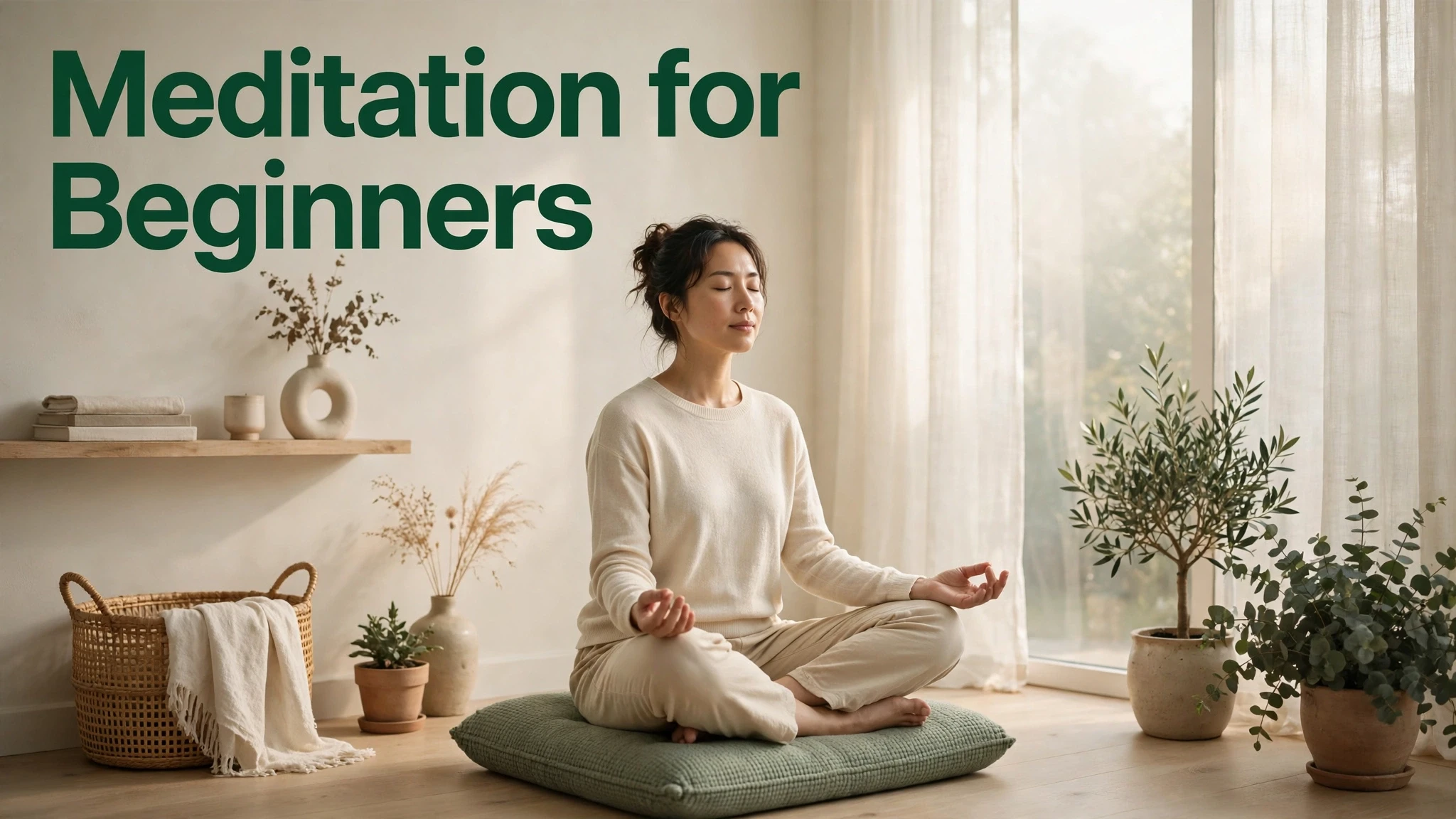
Breath awareness is the best starting technique for most beginners, because the breath is always available and requires no equipment. Sit comfortably, with your back straight but not rigid, feet on the floor if in a chair, or cross-legged on a cushion if that is comfortable. Close your eyes or soften your gaze towards the floor. Breathe naturally, without forcing deep breaths, and notice the sensation of breathing, perhaps the cool air at the nostrils, the rise and fall of the chest or belly, or the pause between breaths. When your mind wanders, and it will, notice gently, without criticism, and return to the breath. That is the entire practice. Start with five minutes, using a gentle timer, and increase gradually only if you wish.
Body scan meditation suits people who find breath focus too subtle or who carry physical tension. Lie down or sit comfortably, and move your attention slowly from your feet to the top of your head, spending 20 to 30 seconds on each area, noticing sensations such as warmth, tingling, tightness, or numbness, without trying to change them. If you find tension, breathe around it rather than forcing it away. A full body scan may take ten to twenty minutes, but a short version, feet, legs, torso, arms, head, takes five minutes and is a good beginner option. Body scans are particularly helpful in the evening, as they combine attention training with physical relaxation, and they teach body awareness that helps you notice stress earlier in daily life.
Loving-kindness meditation, sometimes called metta, suits people who are self-critical or who want to cultivate warmth. Silently repeat phrases of well-wishing, first towards yourself, then towards a benefactor, a neutral person, a difficult person, and finally all beings. Traditional phrases include: May I be safe, may I be healthy, may I be happy, may I live with ease, adapted to your own words and beliefs. If phrases towards yourself feel false or uncomfortable, start with a benefactor, someone who has been kind to you, and return to yourself later. Loving-kindness is not about forcing positive feelings; it is about practising the intention of goodwill, even when feelings do not immediately follow. Walking meditation, mindful eating, and mindful listening are further options that embed meditation in movement and daily life, useful for people who struggle to sit still.
How to Start: Five Minutes a Day, Without Special Equipment
Starting meditation requires almost nothing: a quiet-ish place, a comfortable seat, and five minutes. Choose a consistent time, such as after waking, during a lunch break, or before bed, and link it to an existing habit, for example after brushing your teeth, to help it stick. Sit in a chair, on a cushion, or on the floor, whatever allows you to be alert yet comfortable. You do not need special clothes, incense, or a perfect room. A noisy household is not a barrier; sounds simply become part of what you notice, and returning to the breath despite noise is good training. If sitting is painful, lie down, walk slowly, or use a chair with back support. Posture should support alertness, not punish the body.
Use a timer with a gentle sound, and start with five minutes daily for two weeks. Five minutes is short enough to fit into any day, yet long enough to experience wandering and returning several times. If five minutes feels too long, start with three, or even one minute of conscious breathing, and build up. The key is daily consistency, not session length. A person who meditates for five minutes every day for a month will benefit more than a person who meditates for an hour once and then stops. After two weeks, review honestly: did you manage most days, which time worked best, and which technique felt most natural? Adjust one variable, time, technique, or location, rather than overhauling everything, and continue for another two weeks.
Guided meditations, through apps, recordings, or classes, help many beginners, because a voice guides attention and normalises wandering. Choose a guide whose voice and pace you find calming, not irritating, and be cautious about apps that gamify meditation with streaks and achievements, which can turn a gentle practice into another performance pressure. A streak can motivate, but missing a day should not feel like failure. If you prefer unguided practice, a simple timer is enough. Classes, in person or online, provide community and the chance to ask questions, which helps when difficulties arise. There is no single correct route; the correct route is the one you will actually practise, gently, most days.
Common Difficulties and How to Handle Them
Every beginner faces the same difficulties, and knowing they are normal removes much of their power. The wandering mind is the first: you sit down intending to focus on breath, and within seconds you are planning dinner, replaying a conversation, or worrying about tomorrow. This is not failure; it is the practice. Each time you notice and return, you have completed one repetition of the exercise, just as each lift completes one repetition in strength training. Do not scold yourself for wandering. A gentle mental note, such as thinking, or wandering, followed by a return to breath, is enough. Over time, the intervals of focus lengthen, but wandering never disappears entirely, even for experienced meditators.
Restlessness, sleepiness, boredom, and doubt form the next group of difficulties. Restlessness, the urge to move, fidget, or stop early, often peaks in the first minutes and passes if you stay with it, noticing the sensations of restlessness without obeying them immediately. If restlessness is severe, walking meditation or a shorter session may suit you better. Sleepiness, especially in evening practice or after poor sleep, can be addressed by practising earlier, sitting upright, opening your eyes, or splashing water on your face beforehand, and by accepting that a sleepy session still counts as practice, though it is not a substitute for sleep. Boredom is information: it reveals how much the mind craves stimulation, and staying with boredom gently is itself valuable training. Doubt, the thought that meditation is pointless or that you are doing it wrong, is best handled by committing to a short trial, such as two weeks of daily five-minute practice, and judging by experience rather than by expectation.
Difficult emotions may surface during meditation, especially for people with anxiety, depression, or trauma histories. Noticing sadness, anger, or fear without judgment can be therapeutic, but it can also feel overwhelming if emotions are intense or if meditation is practised for long periods alone. If meditation consistently increases distress, triggers flashbacks or panic, or leaves you feeling worse over days, stop or shorten the practice and seek professional guidance. Meditation is not suitable as a sole treatment for severe mental health conditions, and it should not be used to avoid seeking help. A trauma-sensitive teacher or therapist can advise on adapted practices, shorter sessions, grounding techniques, and whether meditation is appropriate for you at this time. Safety and kindness towards yourself outrank any meditation streak.
My Take:
My opinion on meditation is that it is both simpler and harder than it looks, and both parts of that statement matter. It is simpler because the core practice, sit, breathe, notice wandering, return, can be explained in one sentence and needs no equipment, app, or special belief. It is harder because doing that simple thing, gently, every day, without grading yourself, requires a kind of patience our culture rarely teaches. We are trained to seek quick results, visible progress, and impressive achievements, and meditation offers none of those on demand. It offers something quieter: a slightly longer pause before reacting, a slightly earlier notice of stress, a slightly kinder response to yourself. I think those slight changes, accumulated over months, are worth more than dramatic transformations that fade in a week, but they are hard to market, which is why meditation is so often oversold and undersold at the same time.
I also think the meditation world needs to be more honest about who it serves and who it excludes. Much meditation content assumes a quiet room, free time, and a body that can sit comfortably, which excludes parents with young children, shift workers, people with chronic pain, and people living in noisy, crowded homes. I believe meditation should adapt to real lives, not demand ideal conditions. One minute of conscious breathing on a bus, a mindful walk to work, or a body scan in bed before sleep all count, and they count fully, not as lesser versions of real meditation. If your meditation practice fits your life, it is a good practice. If it requires a life you do not have, it is a bad prescription, however authentic it claims to be. Accessibility is not a compromise; it is the point, because a practice nobody can do helps nobody.
Another opinion I hold is about apps and streaks, which I view with mixed feelings. Apps have introduced millions of people to meditation, which is genuinely good, and guided sessions help beginners who would otherwise feel lost. But streaks, badges, and leaderboards can turn meditation into another achievement to anxiously maintain, which contradicts its purpose. I have seen people meditate while resentful, simply to preserve a streak, and then conclude that meditation does not work, when what did not work was the pressure around it. My advice is to use apps as tools, not as judges: use a guide when helpful, ignore the streak when it becomes stressful, and remember that missing a day is not failure, any more than missing a day of brushing your teeth undoes a lifetime of dental care. Return gently, without drama, and the practice will still be there.
Finally, I want to defend meditation against both its hype and its dismissal. It will not cure disease, fix a broken system, or make you permanently calm, and anyone promising that is selling something. Equally, it is not a waste of time, a placebo, or a fad, and dismissing it ignores real evidence and the experience of millions of practitioners. In my view, meditation earns its place as one tool among many, alongside exercise, sleep, social connection, and, where needed, professional help. Its unique contribution is attention: the ability to notice what is happening, in your mind and body, before reacting automatically. In a world designed to capture attention and provoke reaction, that ability is quietly radical. Start with five minutes, be kind to your wandering mind, and see what changes over a month. That modest experiment, honestly undertaken, is worth more than any promise about meditation I could make.
Meditation in daily chores is an option that suits people who cannot sit still, and it deserves more respect than it usually receives. Mindful dishwashing, noticing the warmth of water, the texture of plates, and the sound of rinsing, without rushing to finish, is a genuine meditation practice, because it trains the same attention and returning that sitting practice trains. The same applies to mindful walking, eating slowly and noticing taste and texture, or listening fully to another person without planning your reply. These practices do not replace sitting meditation for everyone, but they make meditation accessible to people whose lives leave no quiet half-hour, and they embed attention training in the day rather than confining it to a cushion. If sitting feels impossible, start here, and let the habit of noticing grow into longer practices only if you wish.
The relationship between meditation and other contemplative practices, such as prayer, deserves a respectful note, because beginners sometimes worry that meditation conflicts with their faith, or that it requires adopting beliefs they do not hold. Secular mindfulness meditation, as taught in most health settings, is an attention exercise that does not require any particular belief, and many people practise it alongside prayer, finding that each supports the other: prayer expresses devotion and petition, while meditation cultivates attention and stillness. Others prefer practices rooted in their own tradition, which is equally valid. The key is to choose a practice that fits your beliefs and comfort, rather than forcing yourself into a form that feels alien. Meditation is a tool for attention, not a doctrine, and it should adapt to the person practising it, not the other way around.
Meditation and physical exercise complement each other in ways that beginners often overlook, and combining them can strengthen both practices. Exercise, particularly rhythmic activity such as walking, running, or swimming, naturally trains attention to breath and body, releases tension, and improves mood, which makes sitting meditation afterwards feel easier and more focused. Conversely, meditation improves body awareness, patience, and the ability to notice discomfort without immediately stopping, which helps exercisers pace themselves and avoid injury. A practical combination might be a short walk followed by five minutes of sitting meditation, or a body scan after a workout, when the body is warm and sensations are vivid. Neither practice needs to be long or intense to help the other, and the combination addresses both body and mind, which is appropriate, because stress, focus, and wellbeing live in both. If you practise only one, adding a short version of the other is often the easiest way to deepen the benefits of both.
Meditation for children and teenagers is a growing area that deserves a brief, careful note, because young minds benefit from attention training yet need adapted, playful approaches rather than adult-style sitting. Short, guided practices, such as noticing sounds for one minute, slow breathing with a visual cue, or a brief body scan framed as a game, suit younger practitioners far better than long silent sessions, and they should always be offered as an invitation, never imposed as punishment or as a requirement for good behaviour. Schools that teach mindfulness report modest benefits for attention and emotional regulation in some studies, though effects vary and programmes differ widely in quality. Parents and teachers should choose age-appropriate, well-designed programmes, keep sessions short and enjoyable, and remember that children, like adults, benefit most when practice is gentle, regular, and free from performance pressure.
Frequently Asked Questions
How do I start meditating as a complete beginner?
Start with five minutes a day of breath awareness: sit comfortably, notice your natural breath, and gently return to it whenever your mind wanders. Use a gentle timer, choose a consistent time, and practise daily for two weeks before judging the results.
Do I need to empty my mind to meditate?
No. A wandering mind is normal, and noticing the wandering and returning to your focus is the actual exercise. A session full of wandering and returning is a successful session, not a failed one.
How long should I meditate each day?
Five minutes daily is a good start for beginners. Consistency matters more than length, so a short daily practice beats a long occasional one. Increase gradually only if you wish, and if five minutes feels too long, start with three or even one minute.
Can meditation help with anxiety and stress?
Research supports modest benefits for stress and symptoms of anxiety and depression, particularly through mindfulness-based programmes. Meditation is not a replacement for therapy or medicine, and persistent or severe symptoms should be discussed with a health professional.
What if meditation makes me feel worse?
Stop or shorten the practice if it consistently increases distress, triggers panic or flashbacks, or leaves you feeling worse over days. Seek professional guidance, especially if you have a trauma history or a mental health condition, as adapted practices or other support may be more appropriate.
Do I need an app or special equipment to meditate?
No. You need only a comfortable seat and a few minutes. Guided recordings or apps can help beginners, but a simple timer is enough. Avoid letting streaks or achievements turn meditation into another source of pressure.