Best Beaches in Europe for Summer 2027
In this post
Europe has some of the best beaches in the world, from the turquoise waters of Greece to the golden sands of Portugal and the lively coasts of Spain and Italy. Summer 2027 is a good time to plan a beach holiday, because travel is back to normal, new routes are available, and many destinations have invested in cleaner beaches and better facilities. Whether you want a family-friendly beach, a quiet cove, or a lively resort, Europe has an option, and this guide covers the best of them, with practical tips for planning a trip. Prices and conditions can change, so check official travel and local sources before booking.
The best beach is not always the most famous one. A famous beach can be crowded, expensive, and disappointing, while a smaller beach nearby can be quiet, clean, and beautiful. This article looks at beaches across Europe, in Greece, Spain, Portugal, Italy, France, and Croatia, and it explains what makes each one special, who it suits, and what to know before you go. It also covers safety, costs, and how to choose a beach that fits your style, rather than following the crowd.
Greece: The Clear Waters of the Aegean and Ionian
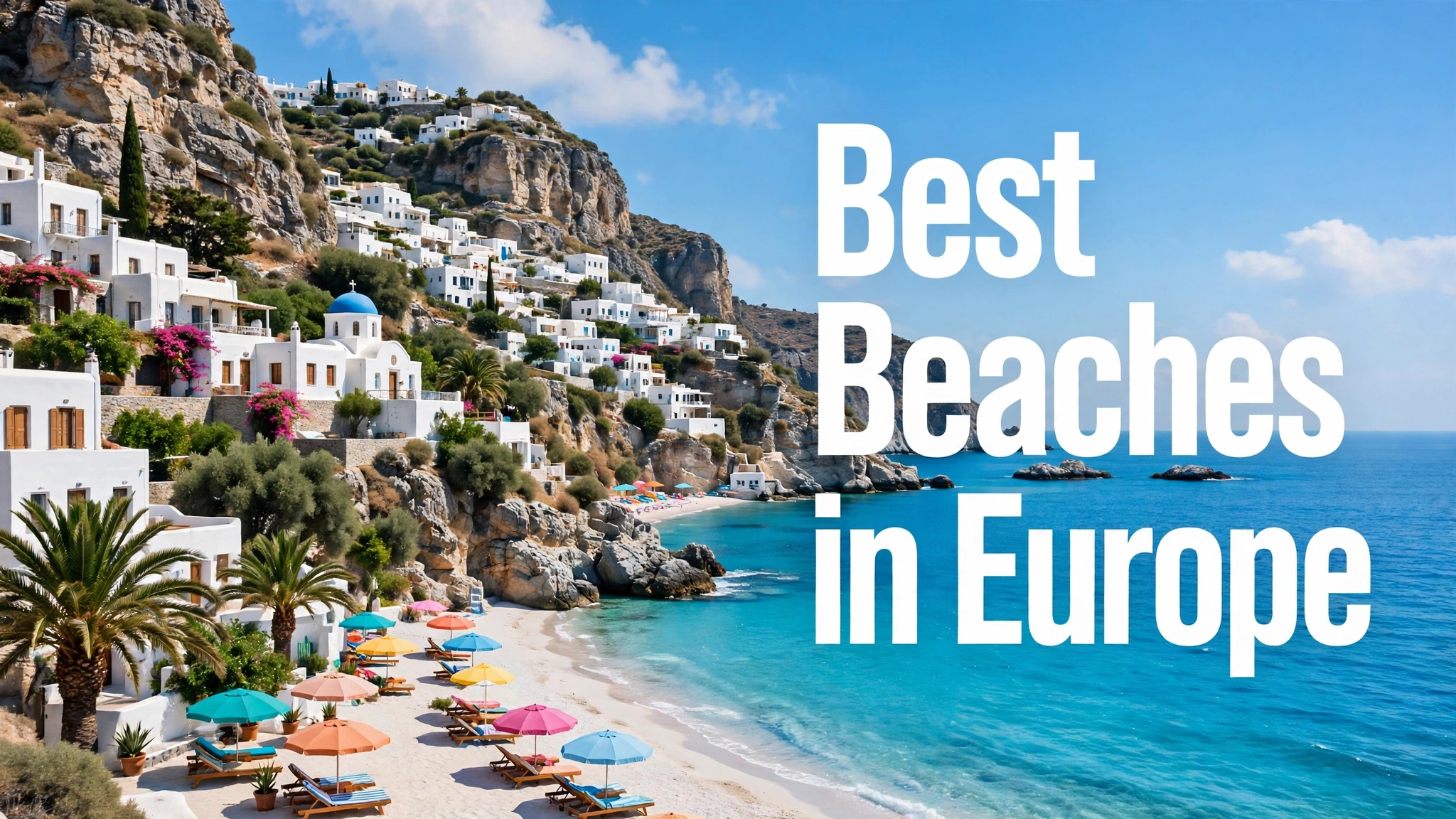
Greece is famous for its beaches, and for good reason: the water is clear, the sand is often white or golden, and the islands offer a huge variety. Navagio Beach on Zakynthos, with its shipwreck and cliffs, is one of the most photographed beaches in the world, although it can be crowded. Elafonissi in Crete offers pink sand and shallow water, ideal for families. Myrtos Beach in Kefalonia offers dramatic cliffs and turquoise water. The best time to visit is June or September, when the weather is warm but the crowds are smaller. Greek beaches are often free to access, with sunbeds available for hire, and local tavernas nearby offer fresh food at reasonable prices.
A single beautiful park is not enough if the land around it is destroyed, because nature does not respect boundaries drawn on a map. Protected areas, such as national parks and nature reserves, are essential, but they are not enough on their own. Animals move, rivers flow, and birds migrate, so a park that protects one place may not protect the whole journey. Connecting protected areas with corridors, protecting habitats outside parks, and reducing pollution and habitat loss everywhere are all part of conservation. That work is slow and often unglamorous, but it is the work that matters most.
When we visit wild places, we leave a mark, whether we intend to or not. Footprints, litter, noise, and disturbance all affect wildlife and habitats, and the effect grows as more people visit. Responsible visiting means staying on paths, keeping a distance from animals, leaving no trace, and supporting local people who protect the place. It is not about spoiling the fun; it is about making sure the fun is available for the next visitor, and for the wildlife that lives there. A wild place is a privilege to visit, not a right to consume, and treating it as a privilege keeps it wild.
Spain: From the Balearics to the Costa del Sol
Spain offers a huge variety of beaches, from the lively resorts of the Costa del Sol to the quiet coves of Mallorca and Menorca. Cala Macarella in Menorca is a small, turquoise cove surrounded by pine trees, ideal for swimming and snorkelling. Playa de Ses Illetes in Formentera, near Ibiza, offers white sand and shallow, clear water, and it is often ranked among the best beaches in Europe. The Costa Brava, near Barcelona, offers rocky coves and charming towns, while the Canary Islands offer warm weather year-round. Spanish beaches are well managed, with lifeguards, showers, and facilities, and they suit families, couples, and solo travellers alike.
A pigeon on a roof, a tree on a pavement, a weed in a crack: all of these are nature, adapting to human life. Noticing that urban nature, and valuing it, is a way to stay connected to the natural world even when you cannot travel to a famous place. Nature is everywhere, if you look for it, and looking for it is the first step to caring for it. Finally, it is worth saying that nature is not only out there, in parks and wilderness; it is also here, in cities, in gardens, and in the sky above a street.
Nature belongs to everyone, and everyone can contribute to understanding it. Local knowledge is often undervalued in science, but it is essential. A fisherman who knows where a species feeds, a farmer who knows when a bird arrives, a guide who knows which valley holds fog: all of these individuals know things that no textbook contains. Listening to that knowledge, and combining it with scientific research, gives a fuller picture than either one alone. Community science, where ordinary people record what they see, is also valuable, because it creates data over a large area and a long time that no single researcher could collect.
Portugal: The Algarve and Beyond
Portugal’s Algarve region is known for its dramatic cliffs, golden sand, and clear water, and beaches such as Praia da Marinha and Benagil, with its famous sea cave, are among the most beautiful in Europe. The Algarve offers a mix of lively resorts, such as Albufeira, and quieter beaches, such as Praia do Camilo near Lagos. Further north, the beaches near Lisbon, such as Cascais, offer a cooler climate and easy access from the city. Portuguese beaches are generally clean, safe, and affordable, with good seafood restaurants nearby. The best time to visit is May to September, although the Atlantic water can be cool, especially in the north.
That is a hopeful message, since it means the world still holds surprises, and that curiosity is still rewarded. It also means we should be humble about what we know, because the next discovery could change our understanding completely. The natural world is not a closed book; it is an open one, and every cautious observer can add a page to it. Exploration is not finished. Fresh species are still being discovered, fresh caves are still being mapped, and new behaviours are still being observed, even in places that seem well known.
Studying adaptation helps us understand resilience, and it helps us predict which species are most at risk. That knowledge is useful, since it tells us where to focus our protection efforts, and it reminds us that change is not invariably a disaster, but it can be. There is likewise a lesson in how animals adapt to changing conditions. A bird that changes its migration timing, a plant that flowers earlier, a fish that moves to cooler water: all of these are responses to a changing world. Some species adapt well, others do not, and the difference frequently decides whether they survive.
Italy and France: The Mediterranean Classics
Italy offers beaches from the Amalfi Coast to Sardinia and Sicily, with clear water and beautiful towns. Spiaggia dei Conigli in Lampedusa, Sicily, is often ranked among the world’s best, with white sand and turquoise water. Sardinia’s Costa Smeralda offers luxury resorts and stunning bays, while the beaches of Puglia offer a more relaxed, affordable option. France offers the French Riviera, with beaches in Nice, Cannes, and Saint-Tropez, as well as the Atlantic coast near Biarritz, which is popular for surfing. French and Italian beaches can be expensive, especially in peak season, so book early and consider visiting in June or September for better prices and fewer crowds.
A bird that arrives too early for the insects it feeds on, a flower that blooms before its pollinator appears, a coral reef that bleaches in warm water: all of these are signs of a system out of sync. Understanding those changes requires long records, careful observation, and honest reporting, since a single warm year proves little, but a trend over decades proves a great deal. The more we understand, the better we can protect the places and species we love. Climate change is not an abstract future problem; it is already changing where species live, when they breed, and how often extreme events happen.
A garden, a park, a school trip to a river: all of these are modest steps, but they matter, because they create memories and habits that last. If we want the next generation to protect nature, we need to give them a chance to love it first, and love begins with experience, not with a textbook. Children who grow up with nature, who play outside, who watch birds, and who get muddy, are more likely to care about it as adults. That connection is not automatic; it needs to be nurtured, by parents, by teachers, and by communities that make space for nature in everyday life.
Croatia and the Adriatic Coast
Croatia has become one of Europe’s most popular beach destinations, with a long Adriatic coast, clear water, and historic towns. Zlatni Rat on the island of Brač is a famous pebble beach that changes shape with the wind and currents. The beaches near Dubrovnik offer a mix of history and swimming, while the islands of Hvar and Korčula offer quieter coves and crystal-clear water. Croatian beaches are often pebble rather than sand, so water shoes can help, and many are free to access. The best time to visit is June to September, when the sea is warm and the weather is sunny, although July and August can be crowded.
Another angle is how human activity has changed nature in a extremely short time. In a few generations, we have changed the climate, cleared forests, and altered rivers, in ways that took nature millions of years to build. That speed is the problem: nature can adapt, but it needs time, and we are not giving it enough. Slowing down, protecting what remains, and restoring what has been damaged are all ways to give nature the time it needs. It is not about returning to the past; it is about giving the future a chance.
That is why protecting biodiversity matters, not only for the species themselves, but for the services they provide, such as pollination, clean water, and healthy soil. Losing a species is not just losing a name on a list; it is losing a piece of a system that supports us all. Each species, no matter how small or how ordinary, has a role in its ecosystem, and removing one can have effects that ripple far beyond what anyone expected. A bee that pollinates a flower, a wolf that controls deer, a tree that shelters birds: each one is part of a web, and the web is stronger when it is diverse.
How to Choose the Right Beach for You
Choosing the right beach depends on what you want. Families should look for shallow water, lifeguards, shade, and facilities such as toilets and cafes. Couples may prefer a quiet cove or a beach with a good restaurant nearby. Surfers should look for Atlantic beaches in Portugal, France, or Spain, while snorkellers should look for clear, calm water in Greece or Croatia. If you want to avoid crowds, visit in June or September, choose a beach away from the main resort, and go early in the morning. Check water quality, safety flags, and local advice before swimming, and respect the environment by not leaving litter and by using reef-safe sunscreen.
Recognising that connection, and acting on it, is the most important lesson nature can teach us, and it is a lesson we are still learning. There is a temptation to treat nature as a resource to be used, or as a backdrop for photographs, but it is more than that. It is a system we belong to, and our health depends on it. Clean air, clean water, fertile soil, and a stable climate are all provided by nature, and they are not free in the sense that they can be used without limit. When we damage nature, we damage ourselves, although the damage may not be visible immediately.
One more thing worth noting is how much of nature is invisible to the naked eye. Microbes in the soil, plankton in the ocean, and fungi underground all do work that is essential to life, yet we rarely see them. That invisibility makes them easy to ignore, but it does not make them unimportant. In fact, the smallest organisms frequently have the largest effect, because they are the foundation on which larger life depends. Paying attention to the invisible, through science and through curiosity, is a reminder that the world is far more complex than it looks.
Planning, Costs and Staying Safe
Planning a European beach holiday in 2027 requires early booking, especially for popular islands and resorts. Compare flights, accommodation, and transport, and consider travelling by train or ferry for a more relaxed trip. Budget for sunbeds, food, and activities, because costs add up, and check whether beaches charge for access. Stay safe by swimming where lifeguards are present, watching for currents and flags, drinking water, and using sunscreen regularly. Respect local rules, including no-smoking zones and protected areas, and leave the beach as you found it. A well-planned beach holiday is relaxing, affordable, and memorable, and Europe offers more choice than almost anywhere else in the world.
A guide that admits uncertainty, that says what is known and what is still unknown, is more trustworthy than one that pretends to have all the answers. Readers should be wary of any account that sounds too certain about a complex natural system, because nature is rarely simple. Science is often presented as a collection of facts, but in reality it is a process of asking questions, testing ideas, and changing your mind when the evidence changes. That process is slow, and it is sometimes frustrating, because a question that seemed settled can reopen when fresh evidence arrives. That is not a weakness of science; it is its strength.
Both kinds of knowledge matter, and the best naturalists combine them: they use technology to learn, and they use their senses to understand. Technology has changed how we study nature, and it has opened windows that were previously closed. Satellite tracking shows where animals migrate, underwater microphones record whale songs, and cameras in nests show behaviour that humans rarely see. That technology is exciting, but it does not replace the need to go outside, to look, and to listen. A satellite can tell you where a bird is, but it cannot tell you what it feels like to hear it sing at dawn.
My Take:
Europe’s beaches are a reminder that you do not need to fly halfway around the world to find clear water and beautiful sand, and I think that is part of their charm. A beach in Greece, Portugal, or Croatia can be as beautiful as any tropical destination, and it is often easier, cheaper, and more interesting, because the history, food, and culture are right there too. I believe the best beach holiday is not the one with the most famous name, but the one that fits you: the right water, the right crowd, and the right pace. That is worth choosing carefully, rather than following the crowd to the same crowded beach. Finally, my take is that the real gift of learning about nature is a changed way of looking. Once you know why a whale sings, how a bee dances, or how trees share resources, you cannot unsee it. The world becomes more alive, more connected, and more worth protecting. That change in seeing lasts longer than any single trip, and I hope readers carry it with them on their next walk, their next night under the sky, and their next conversation about a place they love. That is where knowledge turns into care.
I also think we should enjoy beaches responsibly. Clear water and clean sand are not guaranteed; they depend on how we treat them. Using reef-safe sunscreen, not leaving litter, and respecting protected areas are small actions that keep beaches beautiful for the next visitor. A beach is a shared place, and the way we treat it says something about how we travel. Enjoy the sun, swim safely, and leave the beach as clean as you found it, so that the next person can enjoy it as much as you did. I also believe that protecting nature is not only about saving rare species; it is about saving the ordinary places where we live. A local park, a river, a hedgerow: all of these matter, and they are often the places most at risk, because they are not famous enough to be protected. Caring for the ordinary is as important as caring for the spectacular, because the ordinary is where most life happens, and where most people meet nature. Start where you are, protect what is near, and the rest will follow.
Europe’s beaches are a reminder that you do not need to fly halfway around the world to find clear water and beautiful sand, and I think that is part of their charm. A beach in Greece, Portugal, or Croatia can be as beautiful as any tropical destination, and it is often easier, cheaper, and more interesting, because the history, food, and culture are right there too. I believe the best beach holiday is not the one with the most famous name, but the one that fits you: the right water, the right crowd, and the right pace. That is worth choosing carefully, rather than following the crowd to the same crowded beach. My view is that nature is most interesting when we stop treating it as a backdrop and start treating it as a system we belong to. A river, a cave, or a light in the sky is not just a beautiful sight; it is evidence of forces that have worked for far longer than we have been watching. That perspective is humbling, because it reminds me how small a human life is, and hopeful, because it shows how much there is still to learn. Admiration without care is not enough; the places we love need protection, not just attention.
I also think we should enjoy beaches responsibly. Clear water and clean sand are not guaranteed; they depend on how we treat them. Using reef-safe sunscreen, not leaving litter, and respecting protected areas are small actions that keep beaches beautiful for the next visitor. A beach is a shared place, and the way we treat it says something about how we travel. Enjoy the sun, swim safely, and leave the beach as clean as you found it, so that the next person can enjoy it as much as you did. I also believe curiosity is a skill that can be practised anywhere. You do not need an expensive trip to notice something worth understanding. A bird singing before dawn, a bee moving between flowers, a tree whose roots connect to its neighbours: all of these are within reach of an ordinary walk, if you slow down. We lose a great deal by rushing past the ordinary in search of the spectacular, because the ordinary is where understanding begins. The spectacular makes a good photograph, but the ordinary, understood properly, changes how you see everything.
Europe’s beaches are a reminder that you do not need to fly halfway around the world to find clear water and beautiful sand, and I think that is part of their charm. A beach in Greece, Portugal, or Croatia can be as beautiful as any tropical destination, and it is often easier, cheaper, and more interesting, because the history, food, and culture are right there too. I believe the best beach holiday is not the one with the most famous name, but the one that fits you: the right water, the right crowd, and the right pace. That is worth choosing carefully, rather than following the crowd to the same crowded beach. Another opinion I hold is that science writing should be honest about uncertainty. When researchers disagree, or when evidence is thin, saying so is respect for the reader, not weakness. Too much popular writing presents a single neat explanation as if the case were closed, and readers feel betrayed when the story changes. I would rather read an account that says what is known, what is guessed, and what is still unknown, because that account can be trusted when new evidence arrives. Nature is complicated, and a guide that admits that is more useful than one that pretends otherwise.
I also think we should enjoy beaches responsibly. Clear water and clean sand are not guaranteed; they depend on how we treat them. Using reef-safe sunscreen, not leaving litter, and respecting protected areas are small actions that keep beaches beautiful for the next visitor. A beach is a shared place, and the way we treat it says something about how we travel. Enjoy the sun, swim safely, and leave the beach as clean as you found it, so that the next person can enjoy it as much as you did. I also want to say something about responsibility. Visiting wild places and sharing photographs all have an effect, and the effect grows as more people do it. Keeping a distance, staying on paths, and leaving no trace are not rules for other people; they are the price of being allowed to visit at all. The best travellers are the quiet ones, who leave a place as they found it and who support the local people who protect it. Enjoyment and care are not opposites; care is what makes enjoyment possible for the next person.
Frequently Asked Questions
What are the best beaches in Europe for summer 2027?
Greece, Spain, Portugal, Italy, France, and Croatia offer some of the best, including Navagio, Ses Illetes, Praia da Marinha, and Zlatni Rat.
When is the best time to visit European beaches?
June and September offer warm weather with fewer crowds and better prices, while July and August are peak season and busiest.
Are European beaches free?
Many are free to access, although sunbeds, umbrellas, and facilities may be charged, and some private beach clubs charge for entry.
Which European beach is best for families?
Beaches with shallow water, lifeguards, shade, and facilities, such as Elafonissi in Crete or family beaches in the Algarve, are best for families.
Is the water warm in Portugal?
The Atlantic water in Portugal can be cool, especially in the north, although the Algarve in summer is warmer and suitable for swimming.
How do I stay safe at European beaches?
Swim where lifeguards are present, watch safety flags, drink water, use sunscreen, and check local advice about currents before swimming.