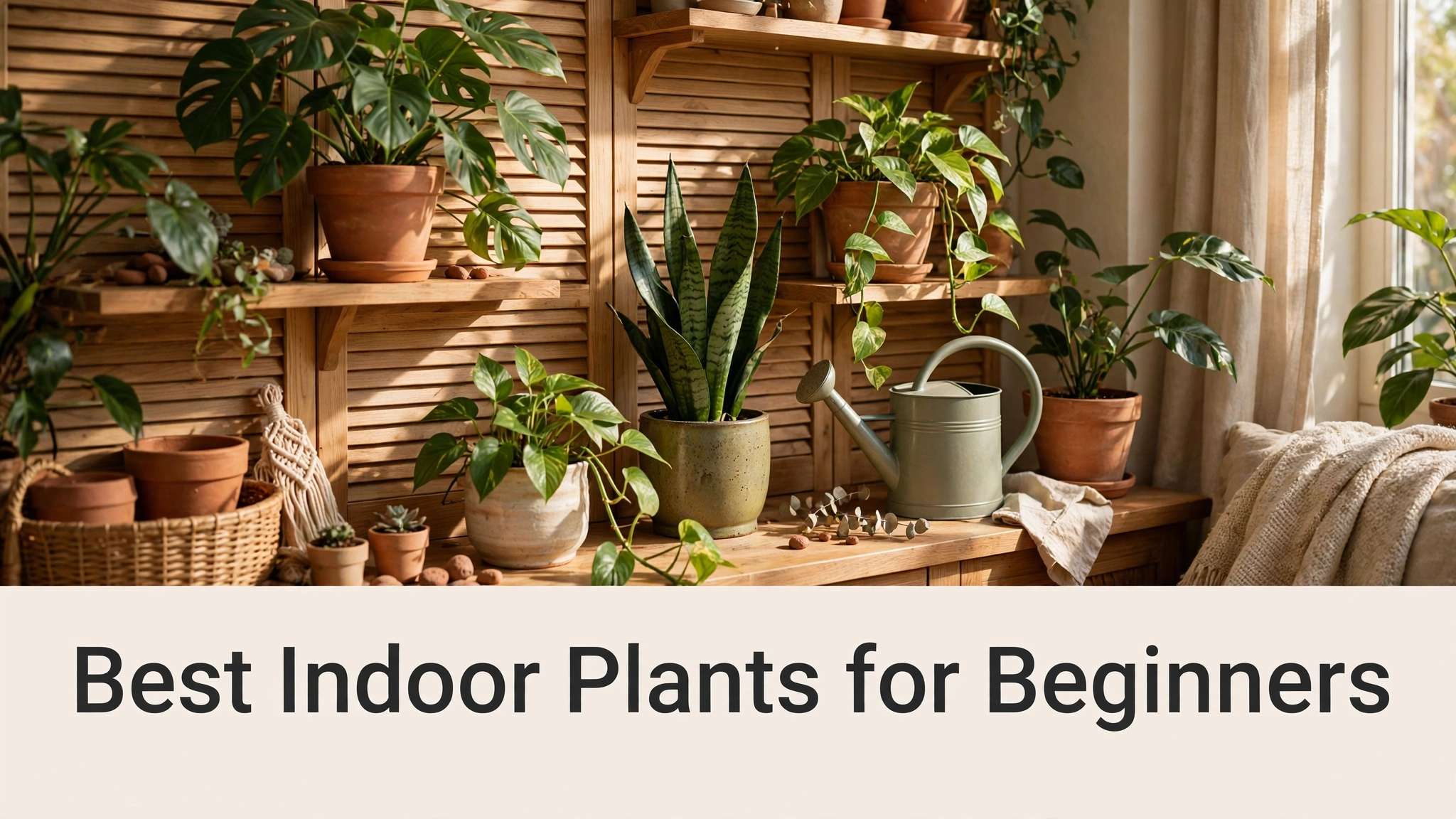
Best Indoor Plants for Beginners at Home
In this post
- Start With Light, Not With a Pretty Plant
- Snake Plant: The Forgiving Classic
- Pothos and Philodendron: Trailing Plants That Show You What They Need
- Spider Plant, ZZ Plant, and Peace Lily: Three Different Strengths
- Monstera, Rubber Plant, and Fiddle-Leaf: Bigger Statement Plants
- Watering, Soil, Pots, and Feeding Without Guesswork
- Pet-Safe Choices, Air Myths, and Common Problems
- Choosing Plants for Low Light, Bright Rooms, and Small Spaces
- Seasonal Care, Repotting, and Pest Checks
- Buying Plants Wisely: Shops, Labels, and First Two Weeks
- My Take:
Indoor plants make a home feel alive, but beginners often start with the wrong plant and blame themselves when it dies. The truth is simpler: most beginner failures come from too much water, too little light, or a plant that needs more attention than a new grower can give. The best indoor plants for beginners forgive mistakes. They survive a missed watering, tolerate ordinary room light, and show clear signs when they need help. They also reward care quickly, with new leaves, trailing stems, or fresh growth that builds confidence. This guide focuses on plants that are widely available, affordable, and genuinely easy, plus the care habits that keep them alive for years rather than weeks.
Start With Light, Not With a Pretty Plant
Before buying any plant, look at your light for a full day. A south-facing window in the northern hemisphere gives strong direct sun, an east window gives gentle morning sun, a west window gives stronger afternoon sun, and a north window gives soft indirect light. Most beginner plants prefer bright indirect light, which means near a window but not in harsh midday sun that scorches leaves. Hold your hand between the window and the plant spot: a sharp shadow suggests direct sun, a soft shadow suggests indirect light, and almost no shadow suggests low light. Choose plants for the light you actually have, not the light you wish you had.
Temperature and drafts matter too. Most houseplants prefer steady room temperatures, roughly between 15 and 26 degrees Celsius, and dislike cold drafts from doors, air-conditioning vents, or radiators that dry the air. Kitchens and bathrooms can be good spots because humidity is higher, but only if light is adequate. Avoid placing plants on top of radiators or directly beside heaters. If your only bright spot is a cold windowsill in winter, move plants slightly back from the glass at night or add a sheer curtain as a buffer. Understanding light and temperature first prevents the common beginner error of buying a sun-loving plant for a dark corner and then overwatering it to compensate.
Snake Plant: The Forgiving Classic
Snake plant, also called Sansevieria, is often the first plant experts recommend to beginners, and for good reason. It tolerates low light, survives missed watering, and grows slowly, so it rarely outgrows its pot quickly. Its upright, sword-shaped leaves suit modern homes, narrow corners, and bedrooms. It prefers to dry out fully between waterings, which means beginners who forget to water often succeed better than those who water daily. In bright indirect light it grows faster and colours stay stronger, but it will survive in a dim corner for months.
Care is simple: use a pot with drainage holes, use free-draining cactus or general potting mix with added perlite, and water only when the soil feels dry several centimetres down. In winter, watering once every three to four weeks may be enough, depending on pot size and room warmth. Avoid letting it sit in water, because roots rot in soggy soil. Wipe leaves occasionally with a damp cloth to remove dust so they can photosynthesise well. One caution: snake plant is considered toxic if eaten by pets or small children, so place it high or in a room pets do not enter. For a busy person who wants green without daily work, it is hard to beat.
Pothos and Philodendron: Trailing Plants That Show You What They Need
Pothos, often sold as devil’s ivy, is a trailing plant with heart-shaped leaves in green, golden, or variegated patterns. It grows fast, roots easily in water, and tells you clearly when it is thirsty: leaves droop slightly, then recover quickly after watering. That visible feedback teaches beginners the watering rhythm better than any chart. Pothos tolerates low to bright indirect light, though variegated types keep their patterns better in brighter light. It can trail from a shelf, climb a moss pole, or hang in a basket, making it useful for small homes where floor space is limited.
Heartleaf philodendron looks similar and is equally forgiving, with softer, darker green leaves. Both plants prefer soil that dries partly between waterings and pots with drainage. Cuttings root easily: cut below a node, place in water until roots appear, then plant in soil. This lets beginners multiply one plant into several gifts or fuller pots at no extra cost. Keep both away from pets that chew leaves, as they can irritate mouths if eaten. If leaves yellow, check watering first, then light. Yellow leaves with wet soil usually mean overwatering, while brown crispy edges often mean underwatering or very dry air. Learning to read these two signs covers most pothos problems.
Spider Plant, ZZ Plant, and Peace Lily: Three Different Strengths
Spider plant is a classic beginner plant because it produces baby plantlets on long stems, which beginners love to propagate. It prefers bright indirect light, tolerates some direct morning sun, and likes soil that dries slightly between waterings. Brown leaf tips are common and often linked to dry air, fluoride in tap water, or inconsistent watering. Using room-temperature water left out overnight and misting occasionally can help, but brown tips rarely mean the plant is dying. Hang it or place it on a high shelf so its arching leaves and plantlets can cascade freely.
ZZ plant is the choice for very low light and very forgetful watering. Its glossy, waxy leaves store water in thick rhizomes underground, so it survives weeks without water. It prefers to dry out completely and hates soggy soil more than drought. It grows slowly, needs repotting rarely, and looks tidy in offices and dark halls. Peace lily offers the opposite reward: elegant white flowers and a dramatic droop when thirsty, followed by quick recovery after watering. It prefers medium indirect light, consistently moist but not wet soil, and higher humidity. Its droop is a useful alarm, not a death signal. Note that peace lily is also toxic if eaten, so keep it away from curious pets and children.
Monstera, Rubber Plant, and Fiddle-Leaf: Bigger Statement Plants
Once a beginner succeeds with small plants, larger statement plants become tempting. Monstera deliciosa, with its split leaves, is more forgiving than its fashionable reputation suggests. It prefers bright indirect light, a pot with drainage, and a moss pole or support as it grows. Water when the top soil dries, wipe large leaves to keep them dust-free, and rotate the pot occasionally so growth stays even. New leaves unfurl slowly, and patience is part of the reward. Monstera can grow large, so check mature size and ceiling height before buying.
Rubber plant, or Ficus elastica, offers bold, glossy leaves in green, burgundy, or variegated forms. It prefers bright indirect light, tolerates some direct morning sun, and likes to dry partly between waterings. Wipe leaves regularly, prune the top to encourage branching, and support tall stems if they lean. Fiddle-leaf fig is the least beginner-friendly on this list and is included with a warning: it dislikes moves, drafts, and inconsistent watering, and it drops leaves when stressed. Buy it only if you have a bright, stable spot and can keep watering consistent. For most beginners, monstera or rubber plant gives a similar visual impact with far less drama.
Watering, Soil, Pots, and Feeding Without Guesswork
Watering causes more beginner losses than any other factor, and the rule is consistent: check soil before watering, water thoroughly, then let excess drain away. Push a finger two to three centimetres into the soil. If it feels dry, water until water runs from drainage holes, then empty the saucer after ten minutes. If it feels damp, wait. A wooden skewer or moisture meter can help beginners who are unsure. Always use pots with drainage holes; decorative pots without holes can hold an outer cachepot, but never let the inner pot sit in standing water. Most plants prefer watering in the morning so leaves dry during the day.
Soil should be light and free-draining, not dense garden soil that compacts indoors. A general houseplant mix with perlite or bark works for most plants, while cactus mix suits snake plant and ZZ plant. Repot only when roots fill the pot or growth slows sharply, usually every one to two years, and move up only one pot size. Feeding is seasonal: a balanced liquid houseplant feed at half strength once a month in spring and summer is enough for most plants, and feeding in winter or on dry soil can burn roots. Clean leaves monthly, check under leaves for pests, and isolate any plant with insects until treated. These small habits matter more than expensive products.
Pet-Safe Choices, Air Myths, and Common Problems
Pet owners should choose carefully, because many popular houseplants can irritate pets if chewed. Safer options often mentioned for homes with pets include spider plant, Boston fern, calathea, and some palms such as areca palm, though individual pets vary and any plant eaten in large amounts can upset a stomach. Always check a reliable pet-poison resource or veterinarian guidance for your specific animal before buying, and place even safer plants out of constant chewing reach. Keep toxic plants in hanging baskets, high shelves, or closed rooms, and teach children not to taste leaves.
On air quality, houseplants do improve mood, humidity, and the feeling of a room, but claims that one or two plants purify a whole home are overstated for normal living spaces. Ventilation, cleaning, and reducing indoor pollutants matter more for air quality than plant count. Buy plants for beauty, routine, and calm, not as a substitute for fresh air. Common problems have simple first checks: yellow leaves often mean overwatering, brown tips often mean dry air or inconsistent water, leggy growth often means low light, and small flies often mean soil staying wet too long. Fix light and water first, then consider pests or feeding. Quarantine new plants for two weeks, inspect them, and wash hands after handling soil.
Choosing Plants for Low Light, Bright Rooms, and Small Spaces
Not every home has a bright windowsill, and beginners should not feel excluded if their light is limited. For low-light rooms, snake plant, ZZ plant, pothos, and some philodendrons survive best, though growth will be slower and variegation may fade. Rotate low-light plants occasionally toward brighter spots if possible, but avoid sudden moves into harsh sun, which can scorch leaves that adapted to shade. In bright rooms, monstera, rubber plant, spider plant, and peace lily grow faster, but they still prefer indirect light or gentle morning sun rather than all-day direct sun through glass, which heats leaves quickly. Use sheer curtains to soften strong sun, and watch new leaves: pale or scorched patches suggest too much light, while stretched stems and small leaves suggest too little.
Small spaces need plants that fit the room rather than dominate it. Trailing pothos on a shelf, a spider plant in a hanging basket, and a compact snake plant in a narrow corner give green without taking floor space. Avoid buying a large monstera for a tiny flat unless you have a clear corner and a plan for its mature size. Vertical stands, wall planters, and window shelves multiply space, but check weight, drainage, and water damage to walls and floors. A saucer under every pot protects furniture, and a waterproof tray under a plant stand protects floors. Choosing for your actual room size prevents the common beginner cycle of buying large, struggling, and giving up.
Seasonal Care, Repotting, and Pest Checks
Plant care changes with seasons, even indoors. In spring and summer, growth speeds up, soil dries faster, and feeding helps. In autumn and winter, growth slows, heating dries air, and watering should reduce. Many beginners kill plants in winter by keeping summer watering schedules while light falls and soil stays wet longer. Adjust by checking soil more often and watering less, and avoid repotting in deep winter unless roots are severely crowded or a pot breaks. Spring is the best repotting season, when plants can recover quickly and use fresh soil for new growth.
Pests are normal and manageable if caught early. Check leaf undersides and stems monthly for tiny insects, webbing, or sticky residue. Isolate affected plants, wipe leaves with a damp cloth, and use gentle treatments appropriate to the pest before reaching for strong chemicals indoors. Mealybugs look like small cotton patches, spider mites create fine webs and speckled leaves, and fungus gnats hover over wet soil. Improving drainage, allowing soil to dry, and removing dead leaves often reduces pest pressure. Keep new plants separate for two weeks, wash tools between plants, and avoid overcrowding, because good airflow reduces disease. Seasonal attention, done calmly, keeps beginner collections healthy for years.
Buying Plants Wisely: Shops, Labels, and First Two Weeks
Buying wisely protects beginners from starting with a stressed plant. In a shop, check leaves for spots, pests, and damage, check soil moisture, and avoid plants with many yellow leaves, mushy stems, or roots circling heavily out of drainage holes. Read the label for light and water needs, and ask staff about the plant’s recent care if unsure. Avoid buying a plant only because it looks large or rare; a small, healthy plant that suits your light will grow better than a large, stressed plant that does not. Transport plants carefully in cold or hot weather, protecting leaves from wind and extreme temperatures during the journey home.
The first two weeks at home are an adjustment period, not a test of skill. Place the plant in its chosen spot, water only when soil needs it, and avoid repotting, feeding, or moving it repeatedly while it adapts. Some leaf drop or drooping in the first days is normal stress, not necessarily failure. Observe light, soil, and new growth, and only repot if the pot is cracked, soil is waterlogged, or roots are severely crowded. After two stable weeks, you can begin gentle feeding in growing season and consider propagation. A calm first fortnight builds a stronger plant and a more confident keeper than a week of constant changes made in anxiety.
My Take:
My first indoor plant died because I loved it too much. I watered it every day, moved it to follow the sun, and worried over every leaf. I thought care meant constant action, but plants taught me the opposite: care often means watching, waiting, and doing less. A snake plant survived my neglect while a fussy plant died from my attention, and that contrast changed how I approach not only plants but many parts of life. Doing the right small thing at the right time beats doing many things anxiously. Beginners should hear that early, because guilt after a dead plant stops many people from trying again.
I also learned that starting small builds skill faster than starting big. One pothos cutting in a jar of water taught me more than five expensive plants bought at once. I watched roots grow, learned what a node looks like, and felt proud when I potted it successfully. That small win made me curious instead of fearful. When a leaf yellowed, I did not panic; I checked soil, light, and recent watering, and I usually found the answer. Plants reward observation. They do not need perfect knowledge on day one, only a willingness to notice changes and adjust slowly. That is a kind teacher for anyone who feels they are not naturally good with living things.
Another lesson was about matching a plant to a real home, not an ideal home shown online. My home has limited direct sun, busy weekdays, and occasional travel, so plants that need daily misting or precise sun were never going to thrive, no matter how beautiful they looked in a shop. Choosing plants for my actual light and routine felt less exciting at first, but it produced living, growing plants instead of beautiful failures. I now advise friends to photograph their windows at morning, midday, and evening before shopping, and to buy one plant for their darkest corner and one for their brightest spot. That simple test reveals more than any plant label.
I want to be honest about the emotional side too. Plants make a room feel cared for, and caring for them gives a quiet daily ritual that is different from screens and chores. Watering on a Sunday morning, wiping a large leaf, or noticing a new unfurling leaf creates a pause. It is not therapy in a medical sense, and plants do not replace rest, medical care, or human connection, but they do add a gentle structure to a day. For people living alone, working from home, or feeling low, that structure can matter. A plant does not demand conversation, yet it responds visibly to care, and that visible response is satisfying in a way many modern tasks are not.
Cost is another reason I favour beginner plants. Pothos, spider plant, and snake plant are often affordable, and cuttings make them almost free over time. Expensive rare plants look impressive online, but they punish small mistakes and create stress. I would rather own three healthy common plants than one struggling rare plant that makes me afraid to touch it. Over time, healthy common plants grow large and beautiful, and friends ask for cuttings, which creates a small cycle of sharing. That sharing feels more valuable than owning something rare. Beginners should invest in good pots with drainage, decent soil, and a watering can, not in rarity.
Finally, I think beginner plant care teaches patience without preaching it. A monstera leaf takes weeks to unfurl, a ZZ plant grows slowly for months, and a peace lily recovers after a droop but does not flower on demand. Waiting for growth teaches you to trust processes you cannot rush. When a plant finally produces a new leaf after a quiet winter, the reward feels earned. My advice is simple: start with one forgiving plant, learn its soil and light, add a second only when the first is stable, and forgive yourself for mistakes. Every experienced plant keeper has killed plants. The difference is that they kept going, learned one lesson per plant, and eventually built a home full of green that suits their real life.
I also think about how plant advice online can mislead beginners. Social media shows perfect, large plants in bright studios, but rarely shows the failed cuttings, yellow leaves, or plants moved three times before finding the right spot. Comparing a first plant to a professional photograph creates unfair pressure. Real plant keeping includes imperfect leaves, slow winters, and occasional losses, and those experiences teach more than perfect pictures. When I stopped comparing and started observing my own plants in my own light, my collection improved. Beginners should follow growers who show problems and recovery, not only perfection, because recovery stories teach practical skill.
Another practical lesson is to keep a simple plant notebook, even a phone note, with plant name, purchase date, watering pattern, and light spot. Memory fails when a collection grows, and a short note prevents overwatering a plant that was watered yesterday by another family member. I note only what matters: last watered, new growth, problems, and repotting date. That note takes seconds and saves plants. It also helps when asking for advice, because you can describe soil, light, and watering accurately instead of guessing. Good plant care is mostly good record-keeping and patient observation, not expensive equipment or rare knowledge.
Finally, I encourage beginners to share plants rather than hoard them. A pothos cutting given to a friend, a spider plant baby potted for a neighbour, or a snake plant division shared with family spreads confidence and green at almost no cost. Sharing also creates a support network: friends compare notes, warn about pests, and celebrate new leaves together. That community makes plant keeping enjoyable rather than lonely. My home now has plants in almost every room, not because I bought many, but because a few forgiving plants grew, multiplied, and taught me to trust slow, steady care. Start with one, learn it well, and let growth, in plants and in skill, happen at its own pace.
Small, repeatable habits are the thread through all of this: do one thing well, repeat it until it feels ordinary, and let the results build quietly over weeks rather than demanding a perfect day. That patience makes the routine sustainable on tired days, which is when it matters most.
Frequently Asked Questions
What is the easiest indoor plant for a complete beginner?
Snake plant, pothos, and ZZ plant are among the easiest, because they tolerate missed watering and ordinary indoor light. Choose based on your light and whether pets can reach the plant.
How often should I water indoor plants?
There is no fixed schedule for all plants. Check soil with a finger first, water thoroughly only when the top soil is dry for that plant type, and always let excess water drain away.
Do indoor plants need direct sunlight?
Most beginner plants prefer bright indirect light, not harsh direct midday sun. A spot near a window with soft light suits pothos, philodendron, spider plant, and peace lily.
Which indoor plants are safer around pets?
Spider plant, Boston fern, calathea, and areca palm are often listed as safer options, but check current pet-safety guidance for your animal and keep all plants out of constant chewing reach.
Why are my indoor plant leaves turning yellow?
Yellow leaves most often point to overwatering or poor drainage. Check soil moisture, pot drainage, and light before changing feed or moving the plant repeatedly.
How do I know when to repot a houseplant?
Repot when roots fill the pot, water runs straight through, or growth slows sharply despite good light and feeding. Move up only one pot size with fresh free-draining mix.
Sources
- https://www.rhs.org.uk/plants/houseplants
- https://www.thespruce.com/best-indoor-plants-4157655
- https://www.goodhousekeeping.com/home/gardening/best-indoor-plants/
- https://www.aspca.org/pet-care/animal-poison-control/toxic-and-non-toxic-plants
- https://www.epa.gov/indoor-air-facts/indoor-air-pollution-introduction