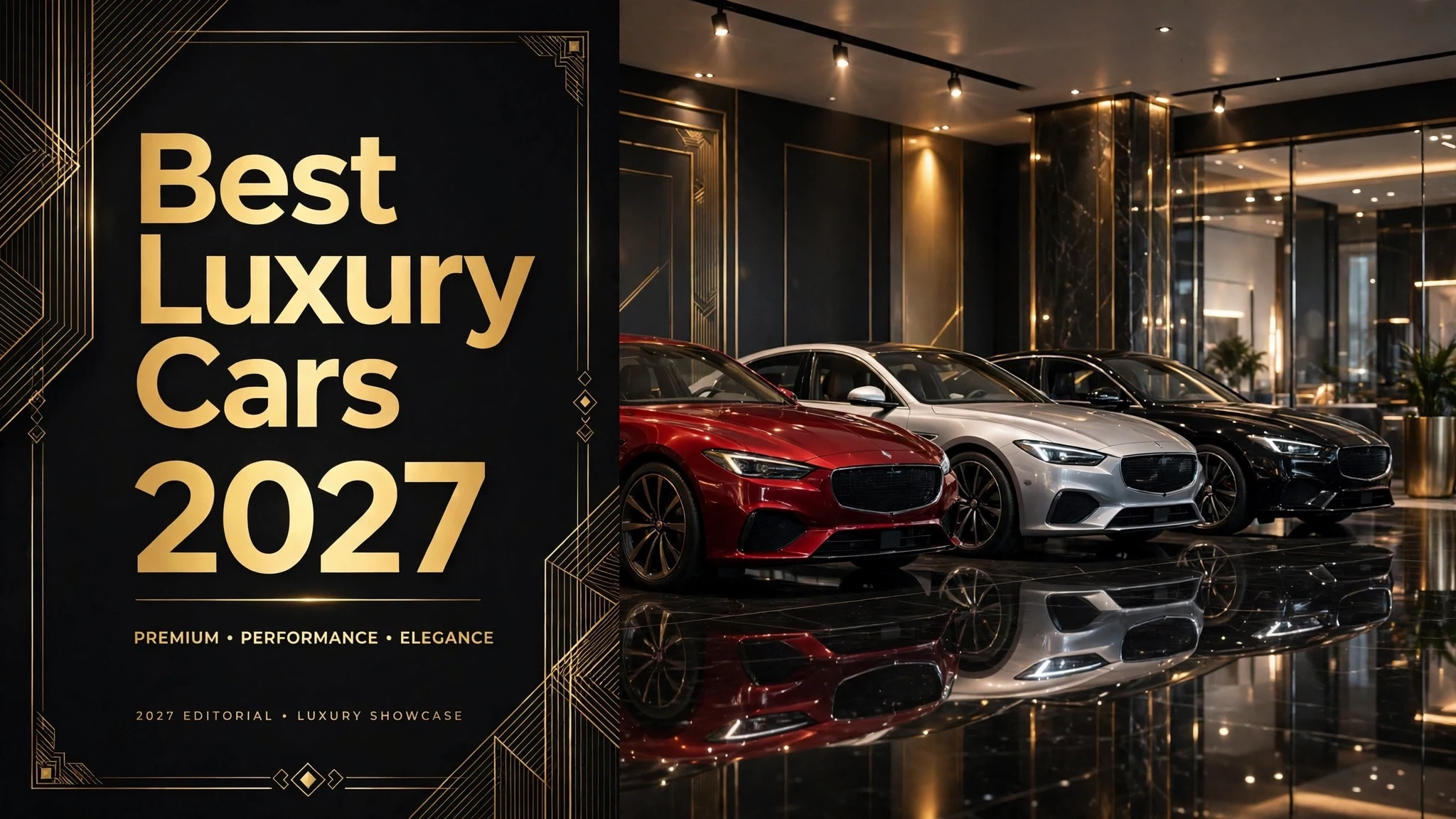
Best Luxury Cars of 2027 Ranked
In this post
- How This Ranking Was Judged
- The Executive Saloons: Comfort for Long Journeys
- The Luxury SUVs: Space, Presence, and Versatility
- The Electric Luxury Cars: Quiet, Fast, and Long-Range
- Value, Running Costs, and What to Check Before You Buy
- The Quiet Luxury: Sound, Smell, and Small Details
- How to Compare Luxury Cars on a Test Drive
- Safety: The Luxury You Cannot See
- My Take:
A luxury car in 2027 is no longer defined only by leather seats and a quiet engine. It is defined by how the car makes you feel on a long journey, how easily it helps you in traffic, how far it can travel on a charge or a tank, and how well it holds its value. The best luxury cars are the ones that combine comfort, technology, safety, and a sense of occasion, without asking the owner to compromise on the things that matter every day.
This ranking is not about the most expensive car, or the fastest car, or the car with the longest list of features. It is about the cars that do the luxury job best for real owners: the executive who drives long distances, the family who needs space and safety, the driver who wants a quiet cabin and a smooth ride, and the buyer who wants an electric car that does not cause anxiety about range. Prices vary by country, by specification, and by options, so this guide focuses on what each car does well, rather than on a single price that may not apply where you live.
The luxury market in 2027 is also changing faster than ever. Electric cars are now central to the luxury segment, with longer ranges, faster charging, and quieter cabins than petrol cars. At the same time, petrol and hybrid luxury cars remain important for buyers who travel long distances or who do not have easy access to charging. The ranking below includes both, and it explains why each car earns its place.
How This Ranking Was Judged
To rank luxury cars fairly, it helps to be clear about what is being judged. Comfort is first: the quality of the seats, the quietness of the cabin, the smoothness of the ride, and the space for passengers in the front and the back. A luxury car should make a three-hour journey feel shorter, not longer, and it should leave the driver and the passengers feeling rested, not tired.
Technology is second: the infotainment system, the driver assistance features, the quality of the sound system, and the ease of using the controls. A luxury car in 2027 should have a system that is fast, clear, and easy to use while driving, with Apple CarPlay and Android Auto, a good navigation system, and safety features such as adaptive cruise control, lane keeping, and automatic emergency braking. Technology should help the driver, not distract them.
Third is performance and efficiency: how the car accelerates, how it handles, how far it can travel, and how much it costs to run. An electric luxury car should offer a useful real-world range and fast charging. A petrol or hybrid luxury car should offer smooth power and reasonable fuel economy for its size. Fourth is quality and ownership: the materials used inside, the build quality, the warranty, and the way the car holds its value over time. A luxury car should feel special every time you open the door, not only on the day you buy it.
The Executive Saloons: Comfort for Long Journeys
Executive saloons remain the heart of the luxury market, because they offer the best balance of comfort, space, and driving pleasure. The Mercedes-Benz S-Class has long been the benchmark in this class, and in 2027 it remains a strong choice for buyers who want a quiet, spacious, and technologically advanced saloon. Its cabin is known for its comfort, its seats are among the best in the industry, and its driver assistance systems are among the most advanced. It is a car designed for long journeys, and it shows.
The BMW 7 Series is the S-Class’s closest rival, and it appeals to drivers who want a luxury saloon that is also enjoyable to drive. Its handling is sharper, its technology is bold, and its electric version, the i7, offers a quiet, powerful, and long-range alternative to the petrol models. The 7 Series is a good choice for a buyer who wants luxury without giving up the pleasure of driving.
The Audi A8 is a quieter, more understated choice, with a beautifully built cabin, a smooth ride, and a focus on comfort rather than drama. It may not have the same presence as the S-Class or the 7 Series, but for a buyer who values discretion and quality, it is a strong option. The Genesis G90, from Hyundai’s luxury brand, is a newer rival that offers a high level of equipment, a long warranty, and a price that is often lower than the German rivals, which makes it worth considering for value-conscious luxury buyers.
The Luxury SUVs: Space, Presence, and Versatility
Luxury SUVs have become the most popular luxury cars in many markets, because they offer space, a high driving position, and the ability to carry a family and their luggage in comfort. The Range Rover remains one of the most desirable luxury SUVs, with a cabin that feels like a lounge, a smooth ride, and a presence on the road that few other cars can match. Its electric and hybrid versions are expanding the range, and its off-road ability remains a part of its identity, even if most owners never use it.
The Mercedes-Benz GLS and the BMW X7 are the large luxury SUVs that compete most directly with the Range Rover, offering seven seats, a spacious cabin, and a long list of technology. The GLS is known for its comfort and its quietness, while the X7 is known for its driving dynamics and its bold design. Both are good choices for a family that needs space and wants luxury.
For a smaller luxury SUV, the Porsche Cayenne and the Audi Q7 offer a balance of performance and practicality, while the Volvo XC90 offers a focus on safety, comfort, and Scandinavian design. The electric luxury SUV segment is growing quickly, with models such as the BMW iX, the Mercedes-Benz EQS SUV, and the Audi Q8 e-tron offering quiet, spacious, and long-range electric motoring. For many buyers, an electric luxury SUV is now the most sensible choice, because it combines the space of an SUV with the running costs of an electric car.
The Electric Luxury Cars: Quiet, Fast, and Long-Range
Electric cars have changed what luxury means. An electric motor is quieter than a petrol engine, it delivers instant power, and it allows the cabin to be designed around space rather than around an engine. The best electric luxury cars in 2027 offer real-world ranges that make long journeys possible, and charging speeds that make a stop for coffee enough to add a useful amount of range.
The Mercedes-Benz EQS is the electric flagship of the brand, with a spacious cabin, a long range, and a focus on comfort and technology. The BMW i7, mentioned above, is its closest rival, and it offers a similar level of luxury with a more driver-focused character. The Lucid Air, from a newer American manufacturer, is known for its long range and its spacious interior, and it has attracted buyers who want an electric luxury saloon that is different from the German cars. The Tesla Model S remains a strong choice for buyers who value performance, technology, and access to a large charging network, though its interior is more minimalist than its rivals.
For electric luxury SUVs, the choice is wider than ever, and the best models offer a range of more than 300 miles in real-world driving, fast charging, and a cabin that is quiet and spacious. When choosing an electric luxury car, the most important questions are not only about range, but about charging: how fast does it charge, how easy is it to find a charger on your regular routes, and can you charge at home? A car with a long range but slow charging may be less useful than a car with a slightly shorter range and faster charging.
Value, Running Costs, and What to Check Before You Buy
Luxury cars are expensive to buy, and they can be expensive to run, so value matters. A luxury car that loses its value quickly, that is expensive to insure, or that needs costly servicing may not be a good choice, even if it feels special on a test drive. Before you buy, check the warranty, the servicing costs, the insurance group, and the expected resale value. Some luxury brands offer longer warranties and inclusive servicing, which can make a real difference over three or five years.
Running costs also vary by fuel type. An electric luxury car is usually cheaper to run than a petrol car, especially if you can charge at home, but it may cost more to buy. A hybrid luxury car offers a balance: lower fuel costs than a petrol car, without the need to charge. A petrol luxury car may be cheaper to buy, but it will cost more in fuel and, in some countries, in tax. The right choice depends on how far you drive, where you can charge, and how long you plan to keep the car.
Finally, always take a test drive that includes the kind of driving you do most often. A short drive around the block will not tell you whether the seats are comfortable after two hours, whether the cabin is quiet at motorway speed, or whether the infotainment system is easy to use while driving. Ask to drive the car on a motorway, in traffic, and on a road you know well, and take a passenger with you to check the space in the back. A luxury car should feel right for you, not only for the salesperson.
The Quiet Luxury: Sound, Smell, and Small Details
Luxury is not only about big features; it is also about small details that you notice every day. The sound a door makes when it closes, the smell of the leather, the feel of a switch, the way the ambient lighting changes at night — these are the things that make a luxury car feel special, and they are hard to describe in a specification list. The best luxury cars pay attention to those details, because they are the things an owner will experience thousands of times.
Sound is a good example. A luxury car should be quiet, but it should not be silent in a way that feels dead. The best cars use acoustic glass, extra insulation, and active noise cancellation to reduce road and wind noise, while still letting the driver hear the engine or the electric motor in a pleasant way. Smell matters too: a new luxury car has a distinctive scent, and manufacturers work hard to make the materials smell good without using harsh chemicals. Touch matters as well: a steering wheel that feels right, seats that support you, and controls that move smoothly are all part of the experience.
How to Compare Luxury Cars on a Test Drive
A test drive is your best tool for comparing luxury cars, but only if you use it well. Before the drive, make a list of what matters to you: seat comfort, cabin quietness, ease of using the infotainment system, visibility, and space in the back. During the drive, test each one. Drive on a motorway to check wind noise, drive in traffic to check the driver assistance systems, and drive on a rough road to check the ride. Sit in the back seat while someone else drives, and ask a passenger to sit behind you when the driver’s seat is in your position. A car that feels spacious from the front may feel cramped from the back, and that matters if you carry passengers regularly.
Safety: The Luxury You Cannot See
A luxury car should also be a safe car, and safety is one of the areas where the best luxury cars justify their price. Modern luxury cars come with a long list of safety features as standard: automatic emergency braking, blind-spot monitoring, lane-keeping assistance, adaptive cruise control, a 360-degree camera, and, in some models, a system that can help the car to steer, brake, and even change lanes on a motorway. Crash-test ratings from organisations such as Euro NCAP in Europe and the IIHS in the United States give an independent view of how a car protects its occupants, and they are worth checking before you buy. A car that is quiet, comfortable, and fast is not a luxury car if it does not protect the people inside it, and the best manufacturers understand that safety is not an extra; it is the foundation on which luxury is built. When you compare cars, ask about the safety rating, ask which features are standard and which are optional, and test the driver assistance systems on a test drive, so that you know how they feel and how they help you in real traffic.
My Take:
My honest view is that the best luxury car is not the most expensive one, and it is not the one with the longest list of features; it is the one that makes your life easier, every day, for years. A car that is comfortable on a long journey, that is quiet enough to think in, that helps you in traffic, and that does not cause you stress about fuel, charging, or repairs is a luxury car in the truest sense. I think too many buyers are distracted by a badge, a screen, or a single feature, and they forget to ask the simple question: will I still enjoy this car after a year of driving it? If the answer is not a clear yes, then the car is not the right luxury choice, no matter how impressive it looks in a showroom.
I also believe that electric luxury cars have changed the definition of luxury for the better. The quietness of an electric motor, the smoothness of the acceleration, and the space that comes from not needing a large engine are all genuinely luxurious, and they are hard to give up once you have experienced them. I am not saying that every buyer should choose electric, because charging, range, and price still matter, and a petrol or hybrid car may be the right choice for some people. But I am saying that the electric luxury cars of 2027 deserve to be taken seriously, not as a compromise, but as a new kind of luxury that is quieter, cleaner, and, for many drivers, more relaxing.
Another point I care about is value, because luxury should not mean waste. A car that costs a fortune to buy, a fortune to insure, and a fortune to service is not a smart luxury purchase, even if it is beautiful. I would rather see a buyer choose a car with a long warranty, with reasonable running costs, and with a strong resale value, than a car that impresses for a month and then becomes a burden. That is not a lack of ambition; it is a sign of good judgement, and it is the kind of judgement that luxury buyers should be proud of, not embarrassed by.
On the subject of technology, my view is that it should help the driver, not distract them. A screen that is large, bright, and full of menus is not a luxury if it takes your eyes off the road. A voice control system that works, a navigation system that is clear, and a driver assistance system that is smooth and predictable are luxuries, because they reduce stress. I would like to see manufacturers focus more on making technology simple and reliable, and less on making it impressive in a showroom. The best technology in a luxury car is the technology you forget about, because it is working so well that you do not need to think about it.
I also think that comfort is underrated in luxury car reviews, which often focus on speed and handling. For most luxury buyers, the car is not a racing car; it is a place to work, to rest, to talk, and to travel with family. The quality of the seats, the quietness of the cabin, and the smoothness of the ride matter more than a tenth of a second in acceleration. I would urge buyers to pay attention to those things on a test drive, to sit in the back seat, to listen to the car at motorway speed, and to ask themselves whether they would be happy to spend three hours in it. That is the real test of a luxury car, and it is the test that separates a good car from a great one.
Finally, I believe that a luxury car should be chosen for the life you actually live, not for the life you imagine. If you drive mostly in a city, a large SUV may be a burden, not a luxury. If you drive long distances, a car with a short range may cause stress, not pleasure. If you have a family, space and safety matter more than a sporty badge. The best luxury car is the one that fits your roads, your family, your budget, and your daily routine, and that still makes you smile when you open the door. That is a personal choice, and it is worth taking the time to get right. Safety is part of that choice, and it should not be an afterthought: a car that protects you and your family, that helps you to avoid a crash, and that has a strong crash-test rating is a luxury in the truest sense, because it gives you peace of mind every time you drive. When you test drive, ask about the safety features, test them if you can, and remember that the quietest, most comfortable car in the world is only a good luxury car if it is also a safe one.
I also want to add a word about the small details, because they are what you live with every day. A door that closes with a satisfying sound, a seat that supports your back on a long journey, a screen that responds quickly, and a cabin that stays quiet at speed — these are not luxuries in the showroom sense, but they are luxuries in the daily sense, and they are what make an owner happy after a year. When you test drive, pay attention to those details, not only to the headline features. Sit in the car, touch the controls, listen to the silence, and ask yourself whether this is a place you want to spend time in. That feeling is the real test.
One more thought is about the future of luxury, and how it is changing. In the past, luxury meant a large engine and a lot of chrome. Today, it increasingly means quietness, clean air, good software, and a cabin that feels like a calm room. That change is good, because it means luxury is becoming more about comfort and less about showing off. I hope manufacturers continue in that direction, making cars that are quiet, comfortable, and easy to live with, rather than cars that are loud, complicated, and impressive only for a moment. The luxury car of the future should be a place of calm in a busy world, and the cars that understand that will be the ones worth buying.
Frequently Asked Questions
What is the best luxury car of 2027?
There is no single best luxury car for everyone. The Mercedes-Benz S-Class is a benchmark for comfort, the BMW 7 Series is a strong choice for drivers, and the Range Rover is a leading luxury SUV. The best choice depends on whether you want a saloon, an SUV, or an electric car.
Are electric luxury cars better than petrol luxury cars?
Electric luxury cars are quieter, smoother, and cheaper to run, and many now offer long ranges. Petrol and hybrid luxury cars remain useful for long-distance driving and for buyers without easy access to charging. The right choice depends on your driving and charging situation.
What should I check before buying a luxury car?
Check the warranty, servicing costs, insurance, and resale value, and take a long test drive that includes motorway and city driving. Sit in the back seat, test the infotainment system, and check the space for passengers and luggage.
Is a luxury SUV better than a luxury saloon?
A luxury SUV offers more space, a higher driving position, and versatility, while a luxury saloon usually offers a quieter cabin, a smoother ride, and better efficiency. The best choice depends on your space needs and driving style.
How much does it cost to run a luxury car?
Running costs vary by model, fuel type, and country. Electric cars are usually cheaper to run, hybrids are in the middle, and large petrol cars are the most expensive. Check insurance, servicing, and fuel or charging costs before you buy.
Which luxury car holds its value best?
Resale value varies by brand, model, and market. Cars with a strong reputation, a long warranty, and a popular body style tend to hold their value better. Check used-car prices for the model you are considering before you buy.