How to Buy a New Car Without Overpaying in 2027
In this post
- Step One: Decide What You Really Need
- Step Two: Research the Real Price
- Step Three: Timing Can Save You Money
- Step Four: Negotiate the Total Price, Not the Monthly Payment
- Step Five: Finance, Extras, and the Final Checks
- The Paperwork: What to Read Before You Sign
- After You Buy: The First Month With Your New Car
- Buying Online: A New Way to Buy a New Car
- My Take:
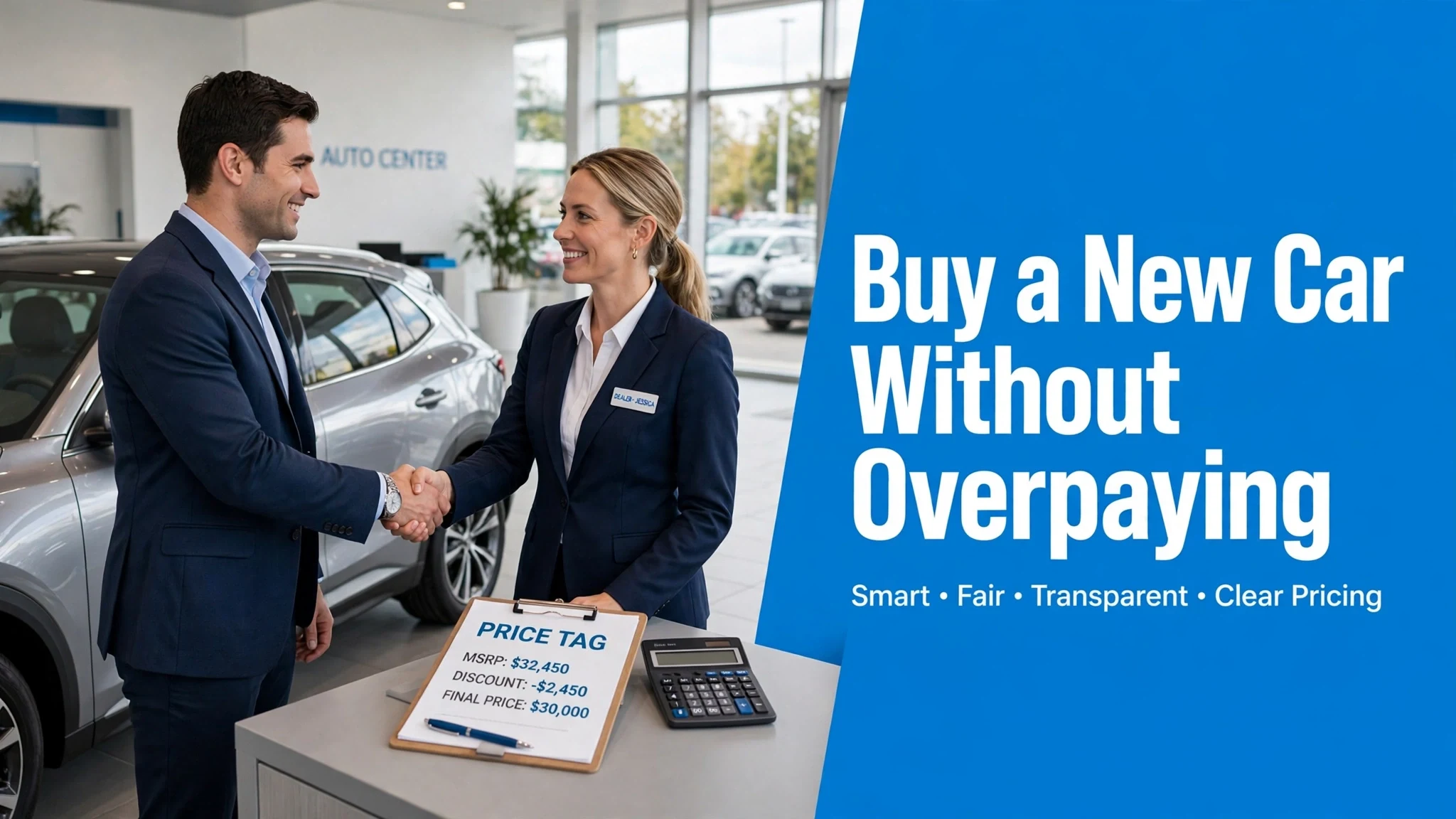
Buying a new car should be exciting. It is one of the largest purchases most people ever make, and the car you choose will be part of your daily life for years. Yet for many buyers, the experience is stressful, confusing, and expensive, because the process is designed to make you decide quickly, to focus on the monthly payment rather than the total price, and to agree to extras you do not need. The good news is that with a little preparation, you can buy a new car without overpaying, and you can enjoy the process instead of dreading it.
The key to not overpaying is to separate the decisions. First, decide what car you need, based on your budget, your driving, and your family. Second, research the price, so that you know what the car should cost before you walk into a showroom. Third, negotiate the total price, not the monthly payment. Fourth, check the finance, the trade-in, and the extras separately, because each one is a place where money can be lost. If you do those four things, you will be in a much stronger position than most buyers, and the dealer will know it.
This guide explains each step in simple words, with practical checks you can do at home, questions to ask the dealer, and traps to avoid. It is written for a first-time buyer and for anyone who has bought a car before and felt, afterwards, that they paid too much. The goal is not to make you suspicious of every dealer; many dealers are honest and helpful. The goal is to make you an informed buyer, so that you can recognise a fair deal and walk away from one that is not.
Step One: Decide What You Really Need
Before you look at any car, decide what you need, not what you want in a showroom. How many people will travel in the car regularly? How far do you drive each week, and is it mostly in a city, on a motorway, or on rough roads? Do you need a large boot for a family, for work, or for a wheelchair or a pram? Do you have a place to charge an electric car at home, or would a petrol or hybrid car be more practical? The answers to these questions will narrow the choice quickly, and they will stop you from buying a car that looks impressive but does not fit your life.
Set a budget that includes more than the price of the car. A new car also costs money for insurance, tax, fuel or charging, servicing, and tyres. A car that is cheap to buy but expensive to insure may cost more over three years than a slightly more expensive car that is cheap to run. Use an online calculator, or ask your insurer for a quote before you buy, so that you are not surprised by the running costs after you have signed.
Make a shortlist of two or three models that fit your needs and your budget, not a list of ten. Research those models properly: read reviews from owners, check reliability ratings, and look at the safety rating. A car that is reliable, safe, and cheap to run is a better buy than a car that is fashionable but expensive to repair. Once you have a shortlist, you can focus your energy on getting the best price for the right car, rather than on choosing between dozens of options.
Step Two: Research the Real Price
The price on the windscreen is not the price you have to pay. In most countries, the list price is a starting point, and the actual price depends on discounts, promotions, the time of year, and how much the dealer wants to sell that model. Before you visit a dealer, research the price online. Look at the manufacturer’s website, at car pricing websites, and at forums where buyers share the price they actually paid. That information will give you a realistic target, and it will stop you from accepting the first price you are offered.
Pay attention to the difference between the list price and the “on-the-road” price, which includes tax, registration, and delivery. Ask the dealer for a written breakdown of every charge, so that you can see what is included and what is extra. Delivery charges, administration fees, and paint protection are common areas where extra costs appear, and some of them can be negotiated or removed.
Also research the value of your current car, if you have one to trade in. Check its value online, and get a quote from a car-buying service, so that you know what it is worth before the dealer offers you a trade-in price. A dealer may offer a good price for the new car but a low price for your old car, and the total deal may still be poor. By knowing both prices separately, you can judge the deal fairly.
Step Three: Timing Can Save You Money
When you buy a car can make a real difference to the price. Dealers often have monthly or quarterly sales targets, and they may be more willing to offer a discount at the end of a month or a quarter, when they need to meet a target. The end of the year, when new models are about to arrive, can also be a good time to buy, because dealers want to clear the old model from stock.
New number plate changes, model updates, and the arrival of a new version can also affect the price of the current model. If you are happy to buy the outgoing model, you may get a larger discount, and the car will still be new, with a full warranty. The only cost is that the car may lose value a little faster when the new model arrives, but the discount you receive may more than make up for that.
Do not let timing rush you into a bad decision. A discount is only a saving if the car is the right car for you. If you need more time to research, to test drive, or to arrange finance, take it. A good deal will still be there tomorrow, and a dealer who pressures you to decide today is not doing you a favour; they are using urgency as a sales tactic.
Step Four: Negotiate the Total Price, Not the Monthly Payment
The most important negotiation rule is simple: negotiate the total price of the car, not the monthly payment. A dealer can make a monthly payment look low by extending the finance over a longer period, by asking for a larger deposit, or by adding a large final payment, and the total cost may still be high. Always ask for the total amount you will pay, including interest, fees, and any final payment, and compare that total across different offers.
Start by making an offer based on your research, not on the list price. Be polite, be clear, and be prepared to walk away if the dealer will not meet a fair price. Walking away is your strongest tool, because it shows the dealer that you are not desperate, and it gives you time to check other dealers. Get quotes from at least two or three dealers for the same car, with the same specification, so that you can compare them fairly. A dealer who knows you have other quotes is more likely to offer their best price.
Negotiate each part of the deal separately: the price of the new car, the value of your trade-in, and the finance. If the dealer offers a good price for the new car but a poor finance rate, the total deal may still be expensive. Ask for each part in writing, and take the written offer home to check it before you sign. A reputable dealer will not mind you taking time to think, and a dealer who insists you sign today should be treated with caution.
Step Five: Finance, Extras, and the Final Checks
Finance is where many buyers lose money without realising it. A low monthly payment may hide a high interest rate, a long term, or a large final payment. Before you accept dealer finance, check the rate with your bank or with an independent lender, and compare the total cost. In some cases, dealer finance is a good deal, especially when the manufacturer offers a low rate as a promotion, but in other cases it is more expensive than a bank loan. Always read the finance agreement, check for early repayment charges, and make sure you understand what happens at the end of the term.
Extras are another area where money is lost. Paint protection, fabric protection, gap insurance, extended warranties, and accessory packs can add thousands to the price, and they are often sold with high pressure. Some of these products are useful, but many can be bought more cheaply elsewhere, or are not needed at all. Ask for the price of each extra separately, ask whether it is optional, and take time to decide. You can always buy an extra later, but you cannot easily remove it from the contract once you have signed.
Before you sign, do a final check of the car itself. Check that the specification matches what you ordered: the colour, the trim, the options, and the registration. Check the car for damage, check the mileage, and check that all the keys, manuals, and documents are present. Take a test drive in the actual car you are buying, not only in a demonstration car, and make sure you are happy with it. Once you have signed, it is much harder to change your mind, so take your time at this stage.
The Paperwork: What to Read Before You Sign
The paperwork for a new car can feel overwhelming, but it is worth reading carefully. The main documents are the order form, which lists the car, the specification, and the price, the finance agreement, which lists the loan, the interest, and the total cost, and the warranty, which lists what is covered and for how long. Read each one, check that the numbers match what you were told, and ask the dealer to explain anything you do not understand. If a number is different from the quote you were given, ask why, and do not sign until you are satisfied.
Keep copies of everything you sign, and keep them in a safe place. If there is a problem later — a delay in delivery, a fault with the car, or a dispute about the price — those documents are your evidence. A dealer who is honest will not mind you reading the paperwork, and will not rush you. A dealer who rushes you is giving you a reason to slow down.
After You Buy: The First Month With Your New Car
The first month with a new car is when you learn whether you made the right choice. Use that month to check everything: the seats, the controls, the fuel or charging, the noise, and the space. If something is wrong — a rattle, a warning light, or a feature that does not work — contact the dealer promptly, and keep a record of the problem. Most new cars come with a warranty, and problems found early are easier to fix.
It is also a good time to learn the car’s features properly. Read the manual, watch the manufacturer’s videos, and try the driver assistance systems in a safe place. A car that you understand is a car you will enjoy more, and a car that you enjoy is a car that was worth buying.
Buying Online: A New Way to Buy a New Car
In 2027, more buyers are buying a new car online, either fully or partly, and the process is different from visiting a showroom. An online purchase usually starts with configuring the car on the manufacturer’s website, choosing the colour, the trim, and the options, and then seeing a clear price, including delivery. Some manufacturers offer a fixed price online, with no negotiation, while others allow you to request a quote from a local dealer. The advantage of buying online is transparency: the price is clear, the options are listed, and you can take your time without a salesperson standing beside you. The disadvantage is that you cannot test drive the car online, and you cannot ask a person a question as easily. A good approach is to use the internet for research and for comparing prices, to visit a dealer for a test drive, and then to decide whether to buy online or in person. Whichever route you choose, the same rules apply: know the total price, read the paperwork, and do not sign until you are satisfied.
My Take:
My honest view is that buying a new car without overpaying is less about being a tough negotiator and more about being a prepared buyer. The people who pay too much are rarely the people who are bad at haggling; they are the people who walk into a showroom without having done their research, without knowing the real price, and without a clear idea of what they need. Preparation is the best negotiation tool, because it gives you confidence, it gives you a target, and it gives you the ability to walk away. I think anyone buying a car should spend more time researching at home than they spend in the showroom, because the work you do before you meet the dealer is the work that saves you money.
I also believe that dealers should be treated fairly, and that a good dealer deserves to make a profit. A dealer provides a service: they order the car, they prepare it, they explain it, and they support you after the sale. That service has a value, and a buyer who expects a dealer to sell at a loss is being unrealistic. The goal is not to pay the lowest possible price at any cost; the goal is to pay a fair price for the right car, with finance and extras that you understand and that you actually need. A fair deal is one where both sides are happy, and where the buyer does not regret the purchase a month later.
Another point I care about is the monthly payment trap. I have seen too many buyers focus on whether they can afford the monthly payment, without asking how much they will pay in total, or how long they will be paying for. A low monthly payment over six years can cost far more than a slightly higher payment over four years, and it can leave the buyer owing more than the car is worth. I would urge every buyer to ask for the total cost in writing, to compare it with other offers, and to think about the total, not only the month. That single habit would save many people a lot of money, and it would make the car market fairer for everyone.
On the subject of extras, my view is blunt: most extras are sold, not bought. A buyer rarely walks into a showroom thinking “I need paint protection today”; they are told they need it, often at the last moment, when they are tired and eager to finish the deal. I think buyers should decide in advance which extras they want, if any, and should refuse to decide on the spot. If an extra is genuinely useful, it will still be useful tomorrow, and you can buy it after you have had time to check the price elsewhere. Pressure is a sign that the product needs pressure to sell, and that is a warning in itself.
I also think that timing and patience are underrated. A buyer who can wait a month, who can get quotes from three dealers, and who can walk away from a deal that is not right will almost always get a better price than a buyer who needs a car today. I understand that not everyone can wait, and that a car is sometimes an urgent need, but even a few days of research can make a difference. If you can, use that time. The car will still be there, the dealer will still want to sell it, and you will be in a stronger position because you took the time to prepare.
Finally, I believe that buying a car should be enjoyable, not stressful. It is a big purchase, but it is also a happy one: a new car means new journeys, new memories, and a fresh start. If the process makes you feel pressured, confused, or rushed, something is wrong, and you should slow down, ask questions, and, if necessary, walk away. A good dealer will respect that, and a good car will be worth waiting for. Buy the right car, at a fair price, with finance you understand, and you will enjoy the car for years, without the regret of knowing you overpaid. Buying online can help with that, because it gives you time to think, a clear price to compare, and no salesperson standing over you, but it should not replace a test drive, and it should not replace reading the paperwork. Use the internet as a tool, use the dealer as a source of advice and a test drive, and make the final decision in your own time, with a clear head.
I also want to add a word about the paperwork, because it is the part most buyers skip, and it is the part that matters most if something goes wrong. Read the order form, read the finance agreement, and read the warranty, and keep copies of everything. If a number does not match the quote, ask why. If a clause is unclear, ask for it to be explained. A few minutes of reading can save you months of argument later, and it is a habit that will serve you well in any large purchase, not only a car.
One more thought is about the first month after you buy. That month is your chance to learn the car, to check that everything works, and to report any problem early. Do not ignore a rattle, a warning light, or a feature that does not work, in the hope that it will go away. Contact the dealer, keep a record, and use the warranty that you paid for. A new car should work properly from the start, and a good dealer will want to fix any problem quickly. Enjoy the car, drive it, and remember why you chose it in the first place.
A final thought on confidence: the buyers who get the best deals are not the ones who argue hardest, but the ones who are most willing to walk away. A dealer can sense desperation, and a buyer who needs a car today will pay more than a buyer who can wait a week. If you can, give yourself that week. Get three quotes, compare the totals, sleep on the decision, and then buy with a clear head. That patience is worth more than any single negotiation trick, and it is the habit that will save you money on every large purchase you make, not only on a car.
Frequently Asked Questions
What is the best time to buy a new car?
The end of the month, the end of a quarter, and the end of the year are often good times, because dealers may offer discounts to meet sales targets. The arrival of a new model can also mean discounts on the outgoing model.
Should I negotiate the monthly payment or the total price?
Negotiate the total price, not the monthly payment. A low monthly payment can hide a long term, a high interest rate, or a large final payment. Always ask for the total amount you will pay.
Is dealer finance a good deal?
It can be, especially when the manufacturer offers a low rate, but it is not always the cheapest option. Compare the total cost with a bank loan or an independent lender before you accept dealer finance.
Should I trade in my old car at the dealer?
You can, but check its value online and get a quote from a car-buying service first, so you know what it is worth. Negotiate the trade-in value separately from the price of the new car.
Are car extras worth buying?
Some extras are useful, but many can be bought more cheaply elsewhere or are not needed. Ask for the price of each extra separately, and take time to decide. Do not agree to extras under pressure.
What should I check before signing for a new car?
Check that the specification, colour, and options match your order, check the car for damage and mileage, and read the finance agreement and the total cost. Take a test drive in the actual car you are buying.