Best Way to Store Food Longer in the Fridge
In this post
- Temperature, Zones, and Why Fridge Layout Matters
- Containers, Wrapping, and Air: The Freshness Basics
- Vegetables, Fruits, and Herbs: Moisture and Ripening Control
- Meat, Fish, Dairy, and Leftovers: Safety First
- Freezer as a Fridge Partner, Shopping, and Use-First Habits
- Cleaning, Odours, and Fridge Maintenance That Protect Food
- Common Mistakes, Smell Tests, and When to Throw Food Away
- Sauces, Baked Goods, Drinks, and Opened Foods
- Fridge Life for Different Households: Families, Singles, and Shared Fridges
- My Take:
Food waste often starts in the fridge, not at the shop. Leftovers hidden behind jars, vegetables wilting in a drawer, milk stored in a warm door, and raw meat dripping onto ready-to-eat food all shorten shelf life and risk illness. Storing food longer in the fridge is mostly about temperature, airflow, moisture, separation, and visibility. When each food lives in its best zone, in the right container, and where you can see it, it lasts longer, tastes better, and gets eaten before it spoils. This guide gives general food safety information, not medical advice, and local food safety guidance should be followed where it differs.
Temperature, Zones, and Why Fridge Layout Matters
A fridge works best when cold air can circulate and temperature stays steady. Most guidance recommends keeping a fridge at or below 4 degrees Celsius, with a thermometer as the reliable check rather than a dial setting. Avoid overpacking, because blocked vents and tightly packed shelves stop cold air reaching food evenly. Avoid leaving the door open while deciding what to eat, because warm air enters and temperature rises. Place a thermometer on a middle shelf for a day to learn your fridge’s real temperature, and adjust the dial if needed. If your fridge struggles in hot weather, keep it fuller but not packed, because cold food helps hold temperature, while empty space warms faster.
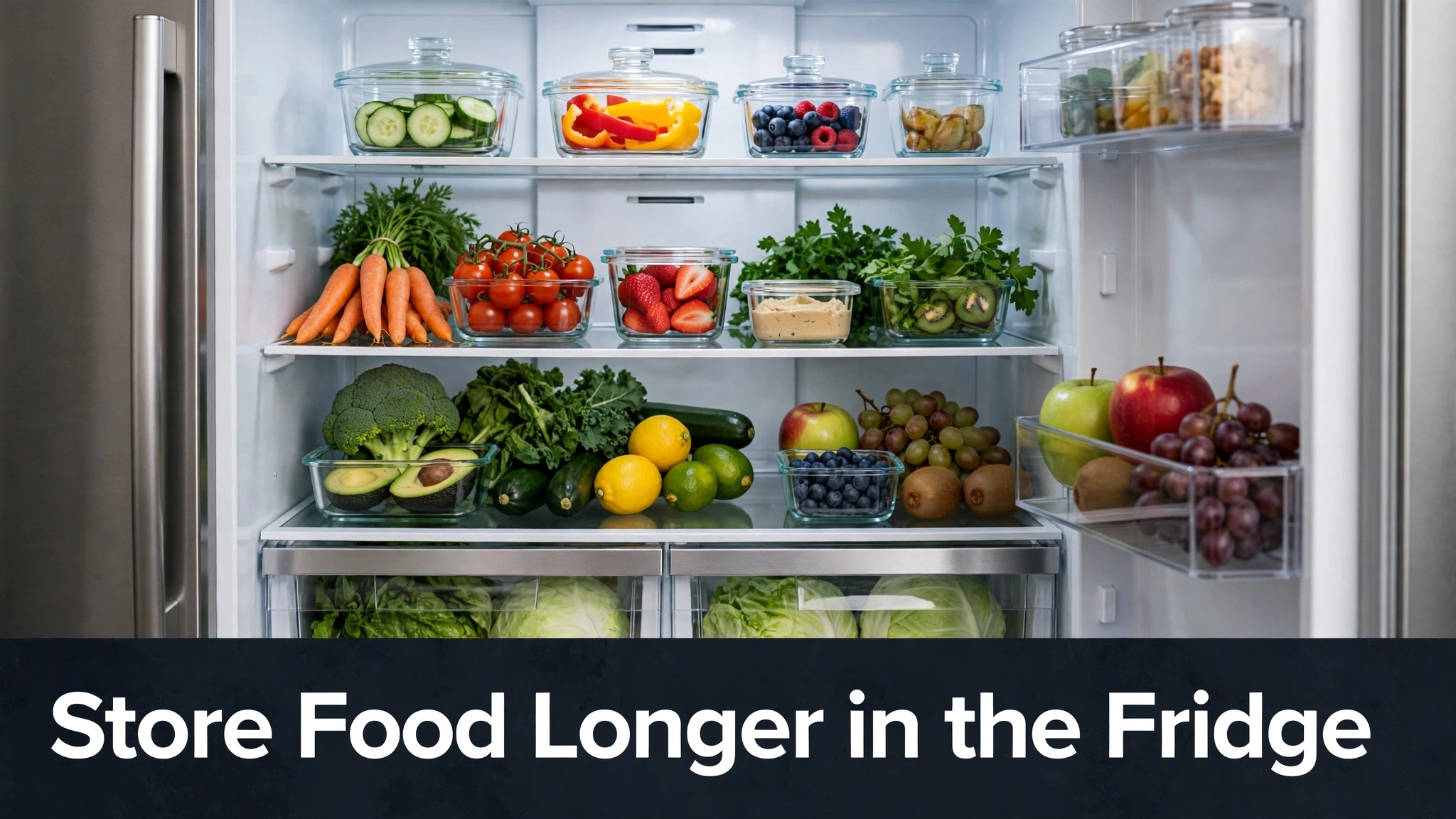
Zones follow temperature differences inside a fridge. Upper shelves are usually slightly warmer and suit ready-to-eat foods, leftovers, yoghurt, and drinks. Lower shelves are usually coldest and suit raw meat, poultry, and fish, sealed so juices cannot drip onto other food. The door is warmest because it moves and warms with room air, so it suits condiments, juices, and items that tolerate temperature swings, not milk or eggs that need steady cold. Crisper drawers control humidity for produce, with higher humidity for leafy greens and lower humidity for fruits that release ripening gas. Learning your own fridge zones matters more than memorising a diagram, because models differ, so check your manual for zone guidance.
Containers, Wrapping, and Air: The Freshness Basics
Air, moisture, and odours are the main enemies of stored food. Air dries food out and speeds spoilage, excess moisture encourages mould, and strong odours transfer between uncovered foods. Use clean, airtight containers for leftovers, cut fruit, cooked grains, and opened foods, and label them with contents and date. Glass containers let you see food, do not absorb odours, and stack well, while good-quality plastic containers are lighter and cheaper. Whichever you choose, use the smallest container that fits the food, because less trapped air means slower spoilage. Cool cooked food reasonably quickly before refrigerating, and do not leave perishable food at room temperature for long periods.
Wrapping matters for foods that do not fit containers. Wrap cheese in wax paper then a loose bag, wrap herbs in a slightly damp cloth or paper towel inside a bag, and wrap cut vegetables tightly to prevent drying. Keep bread out of the fridge unless you need to slow mould in hot, humid weather, because fridge air often dries bread and changes texture; freezing is usually better for long bread storage. Keep onions, potatoes, and garlic out of the fridge in a cool, dark, ventilated place, unless local guidance says otherwise, because fridge humidity can spoil them faster. For opened cans, transfer food to a container rather than storing it in the can. Small wrapping choices, repeated daily, add days to many foods.
Vegetables, Fruits, and Herbs: Moisture and Ripening Control
Vegetables and fruits spoil for different reasons, so they need different handling. Leafy greens last longer when washed gently, dried well, and stored with a dry paper towel in a container or bag to absorb moisture, with the towel changed when damp. Root vegetables prefer cool, slightly humid storage, while cucumbers and peppers suffer in very cold, dry air and do better in a crisper with moderate humidity. Tomatoes lose flavour in the fridge, so store ripe tomatoes at room temperature for short-term eating and refrigerate only when fully ripe and needed for a few extra days, allowing them to return to room temperature before eating where safe.
Fruits release ethylene gas as they ripen, which speeds ripening in nearby produce. Keep ethylene-sensitive vegetables, such as lettuce, broccoli, and cucumbers, away from high-ethylene fruits such as bananas, avocados, and ripe tomatoes where possible. Store berries unwashed until eating, remove any mouldy berries immediately, and keep them in a ventilated container lined with a paper towel. Herbs last longer when treated like flowers: trim stems, place soft herbs such as parsley and coriander in a jar of water covered loosely, and store woody herbs such as rosemary wrapped dry. Wash fruits and vegetables just before eating rather than days ahead, unless you dry them thoroughly after washing.
Meat, Fish, Dairy, and Leftovers: Safety First
Raw meat, poultry, and fish need the strictest separation. Store them sealed on the lowest shelf so juices cannot drip onto other foods, and use them within the time advised on packaging or by local food safety guidance. If you will not cook them soon, freeze them promptly rather than letting them age in the fridge. Thaw frozen meat in the fridge, not at room temperature, and place it in a container to catch juices. Cooked meat and leftovers should be stored in clean, sealed containers, labelled with dates, and eaten within a few days according to local guidance; when in doubt, discard rather than risk illness. Reheat leftovers thoroughly until steaming hot throughout, and reheat only once where guidance advises.
Dairy needs steady cold and clean handling. Store milk in the main body of the fridge, not the door, and keep it capped. Store butter in a covered dish away from strong foods, because butter absorbs odours easily. Hard cheese lasts longer wrapped properly and stored away from high moisture, while soft cheese needs airtight storage and quicker use. Eggs are best kept in their carton in the main fridge, not the door, because cartons protect them and steady temperature matters. Opened sauces and condiments should be capped, dated, and checked for changes in smell, colour, or texture. Food safety is not about fear; it is about consistent separation, dating, and discarding when unsure.
Freezer as a Fridge Partner, Shopping, and Use-First Habits
A freezer extends fridge storage by pausing spoilage, but it works best as a planned partner, not a forgotten drawer. Freeze bread, cooked grains, soups, sauces, and ripe fruit in portion-sized, labelled, airtight containers or bags, with air pressed out. Label with contents and date, and use oldest items first. Freeze meat promptly when plans change, and thaw safely in the fridge. Avoid refreezing thawed food unless it has been cooked thoroughly and local guidance allows it. A small freezer inventory list on the door prevents forgotten food and duplicate buying.
Shopping habits directly affect fridge life. Shop with a list based on what you already own, buy perishables in amounts you can eat before they spoil, and check fridge stock before shopping. Plan one use-first meal each week using vegetables, leftovers, and items near expiry. Place new shopping behind older items so older food gets used first, a simple first-in-first-out rule. Keep a small eat-first box on an eye-level shelf for leftovers, opened foods, and produce near expiry, and check it before cooking. These habits cut waste more than any single container, because visible food gets eaten and hidden food gets forgotten.
Cleaning, Odours, and Fridge Maintenance That Protect Food
A clean fridge keeps food safer and fresher. Wipe spills immediately, because spilled juice or milk can contaminate other foods and create odours. Clean shelves monthly with warm soapy water, rinse, and dry before returning food, and discard expired or doubtful items during cleaning. Check door seals by closing the door on a thin piece of paper; if it slides out easily, the seal may need cleaning or replacement. Clean the seal with warm soapy water and dry it, because dirt prevents a tight close and lets warm air in. Keep baking soda or a fridge deodoriser only as a supplement to cleaning, not a replacement, because odours often signal spoiled food that should be removed.
Maintenance also includes airflow and temperature checks. Do not block vents with large containers, keep the fridge away from ovens and direct sun where possible, and leave space around the unit for ventilation as advised in its manual. Defrost a fridge or freezer that builds ice according to its manual, because ice reduces efficiency and storage space. Check expiry dates weekly, not only during a big clean, and teach family members to return food to correct zones. A fridge that is cleaned, sealed, and organised protects food far better than a fridge that is merely cold, and it saves money by reducing waste and energy use.
Common Mistakes, Smell Tests, and When to Throw Food Away
Common mistakes shorten fridge life quickly. Storing hot food in a sealed container without cooling can raise fridge temperature and create condensation, while leaving food uncovered dries it and spreads odours. Overpacking blocks airflow, storing milk in the door exposes it to temperature swings, and keeping raw meat above ready-to-eat food risks drips. Washing berries days before eating, storing cut onions uncovered, and keeping leftovers without dates all lead to waste or risk. Avoid tasting doubtful food to check safety, because harmful bacteria often do not change taste or smell noticeably. When in doubt, follow local guidance and discard.
Smell, colour, and texture can signal spoilage, but they are not reliable safety tests on their own. Slimy meat, sour milk, mouldy soft foods, and swollen packaging are clear discard signals. Mould on hard cheese or hard vegetables can sometimes be cut away with a generous margin according to guidance, but mould on soft foods, bread, yoghurt, and cooked leftovers generally means discard. Keep a simple rule: if you are unsure about perishable food, especially meat, fish, dairy, or leftovers past advised times, discard it. The cost of wasted food is far lower than the cost of foodborne illness, and consistent dating and use-first habits reduce how often that decision is needed.
Sauces, Baked Goods, Drinks, and Opened Foods
Opened foods need different care from fresh ingredients. Once a sauce, soup, or jar is opened, transfer leftovers to a clean, sealed container, label with the opening date, and follow the guidance on the label for how long to keep it after opening. Keep sauces capped and upright, wipe jar rims before closing, and avoid dipping used spoons into jars, because that introduces bacteria and shortens life. Ketchup, mustard, and pickles tolerate fridge storage longer than dairy-based sauces, but all opened foods should be checked for smell, colour, and mould before use. When a sauce separates, smells sharp, or grows mould, discard it rather than stirring it back in.
Baked goods and drinks also benefit from zone thinking. Store cakes and pastries covered to prevent drying, but refrigerate only cream-filled or perishable baked goods, because fridge air dries plain bread and cake. Keep juices capped in the main fridge, not the door, and keep opened milk away from strong foods that transfer odour. Store cut lemons and opened cans in containers, not in original cans or uncovered. For herbs and salads bought in bags, transfer them to containers with a paper towel if the bag traps moisture, and check them daily. Small opened-food habits prevent the common fridge problem of half-used jars and sauces lingering until they must be thrown away.
Fridge Life for Different Households: Families, Singles, and Shared Fridges
Household type changes fridge strategy. Families need larger eat-first boxes, clear zones for children’s snacks, and a weekly leftover meal to prevent accumulation. Label children’s food and allergy-sensitive food clearly, and keep raw meat strictly separated from ready-to-eat snacks children grab themselves. Singles need smaller containers and portion-sized freezing, because a large pot of soup can spoil before one person finishes it. Freeze half immediately in portions, and cook in amounts that match appetite rather than recipe size. Shared fridges need the clearest system of all: one shelf or box per person where possible, labels with names and dates, and a shared rule that unlabelled, undated food past a few days is discarded.
Shared and family fridges also need regular shared cleaning. Agree on a weekly ten-minute fridge check where everyone removes their own expired food, wipes a shelf, and notes what needs using. That shared check prevents one person becoming the fridge police and keeps responsibility fair. For households with limited fridge space, prioritise perishable safety foods first, use the freezer for overflow, and shop more frequently in smaller amounts. A fridge system that fits household size, shopping frequency, and cooking habits lasts longer than a generic organisation chart copied from a photograph. Adapt zones to people, not people to zones.
My Take:
I used to treat my fridge as a cupboard that happened to be cold, stuffing food wherever space appeared and hoping cold air would forgive bad placement. It did not. Leftovers hid behind jars until they spoiled, vegetables wilted in the wrong drawer, and milk in the door went off faster than expected. The waste bothered me, not only because of money, but because food represents work, transport, and resources. Learning fridge zones felt surprisingly empowering: a few moves, such as raw meat low, milk in the body, and an eat-first box at eye level, cut waste noticeably within weeks. Organisation, in this case, was not tidiness for its own sake; it was respect for food.
The eat-first box changed my cooking most. Before it, I planned meals from recipes and shopping lists, ignoring what was already waiting. Now I open the fridge, check the eat-first box first, and build at least one meal a week around it. That meal is often the most creative, because it forces combinations I would not have chosen: leftover rice with vegetables, yoghurt with fruit near ripeness, cheese with bread before it dries. Cooking from what exists reduces shopping, saves money, and teaches flexibility. It also reduces guilt, because I no longer discover forgotten food during a big clean. The fridge became a tool for cooking, not a graveyard for good intentions.
I also learned that food safety advice should be followed calmly, not fearfully. Early on, I either kept everything too long, hoping it was still fine, or threw away good food at the first doubt. Dating containers gave me a middle path: a clear, honest record that lets me decide without guessing. I write contents and date in large letters, because small labels get ignored. I also learned to cool food promptly, seal it properly, and reheat only once, habits that protect family without making meals stressful. Food safety is not about perfection; it is about repeatable habits that become automatic, like washing hands before cooking.
Cost and environment matter here too, though I try not to lecture myself about them. Wasted food wastes money spent, energy used to grow and transport it, and fridge energy used to store it until it spoils. Reducing waste therefore saves money twice: less food bought unnecessarily and less food thrown away. I noticed my shopping bills fell not because I bought cheaper food, but because I bought less duplicate food and used more of what I owned. That saving feels honest, because it comes from attention rather than deprivation. I still buy treats and fresh food I enjoy; I simply buy amounts I can actually eat in time.
There is a family lesson as well. When fridge zones are clear and labelled, children and guests can help without asking where everything goes or risking raw meat drips. My family now knows the eat-first box, the raw meat shelf, and the rule that leftovers get dates. Those shared rules reduce arguments and make cooking together easier. They also teach children food awareness early: food has a place, a date, and a purpose, and wasting it has consequences. I hope that awareness lasts longer than any single tip, because it shapes shopping, cooking, and eating as a whole.
Finally, I think fridge organisation teaches a wider lesson about visibility. What we cannot see, we forget, whether it is food, bills, or tasks. Making food visible, through clear containers, eye-level placement, and weekly checks, is a simple form of honesty with ourselves. It prevents the comforting illusion that everything is fine behind a closed door. I now apply the same idea elsewhere: visible lists, visible dates, visible priorities. A fridge that shows its contents clearly helps a household eat well, waste less, and feel calmer when opening the door. That calm, repeated every day, is worth more than any single storage product, and it starts with a thermometer, a few containers, and the habit of looking before shopping.
I also think about how fridge habits connect to shopping psychology. Supermarkets encourage buying more with offers, large packs, and attractive displays, but a small fridge cannot hold a large shop without waste. I now shop with a fridge-first mindset: I check what exists, plan meals around it, and buy only what fits and will be eaten in time. That mindset resisted offers that once tempted me into buying three items I did not need to get one free, only to throw two away. Saving money in the fridge often starts at the shop door, with a list and a limit, rather than at the fridge shelf after waste has already happened.
Another lesson concerns children and food awareness. When my family started dating leftovers and using an eat-first box, children began to notice food as something with a life and a deadline, not an endless supply. They learned to take smaller portions, save leftovers properly, and ask before opening a new packet when an open one existed. Those habits, learned through a fridge system rather than lectures, feel durable. I hope they carry into adult shopping and cooking, because food waste is a habit formed early and broken slowly. A fridge that teaches visibility teaches responsibility without blame, and that is a valuable household lesson.
Finally, I want to stress calm over perfection in fridge care. A perfectly organised fridge photographed for social media may last a day, but a workable fridge with clear zones, dated containers, and a weekly check lasts for months. I no longer chase perfect rows or matching containers for everything; I chase visibility, safety, and use. Clear containers help, but labels and dates help more. If a week is busy and the fridge gets messy, a ten-minute reset restores order without guilt. Food storage, like most home skills, rewards steady attention over occasional perfection, and that steady attention saves money, reduces waste, and makes cooking calmer every day.
One more habit I now value is a monthly fridge deep-check that goes beyond daily tidying. Once a month I remove everything from one shelf, wipe it, check dates, and return only food that is still good and will be eaten soon. Rotating shelves monthly means the whole fridge gets a proper check every few months without a single exhausting overhaul. During that check I also look at door seals, temperature, and forgotten jars at the back, which are often the real source of odours. That monthly rhythm keeps the weekly system honest, because weekly checks can miss items hidden behind newer shopping. A fridge cared for monthly stays trustworthy, and trust in the fridge makes cooking faster and less wasteful.
Frequently Asked Questions
What is the best way to store food longer in the fridge?
Keep the fridge at or below 4 degrees Celsius, use airtight labelled containers, store raw meat sealed on the lowest shelf, keep milk in the main body, and use an eat-first box for leftovers and food near expiry.
Where should raw meat be stored in the fridge?
Store raw meat, poultry, and fish sealed on the lowest shelf so juices cannot drip onto ready-to-eat food, and freeze promptly if you will not cook them soon.
How long do leftovers last in the fridge?
Times vary by food and local guidance, so label leftovers with dates, store them sealed, eat them within a few days, and discard perishable leftovers when unsure rather than tasting to test safety.
Should milk be stored in the fridge door?
No. The door is warmest and temperature changes most there, so store milk capped in the main body of the fridge for steadier cold.
How can I keep vegetables fresh longer?
Store leafy greens dry with a paper towel in a container, keep ethylene-sensitive vegetables away from ripening fruits, store berries unwashed until eating, and use crisper drawers for humidity control.
Does freezing food help reduce fridge waste?
Yes. Freeze portion-sized bread, grains, soups, sauces, and meat promptly, label with contents and dates, and use oldest freezer items first to prevent forgotten food.
Sources
- https://www.foodsafety.gov/food-safety-charts/food-storage-charts
- https://www.fda.gov/food/buy-store-serve-safe-food/refrigerator-and-freezer-storage-chart
- https://www.nhs.uk/live-well/eat-well/how-to-store-food-and-leftovers/
- https://www.epa.gov/recycle/reducing-wasted-food-home
- https://www.goodhousekeeping.com/food-recipes/cooking/a39833/how-to-store-food/