Bouli Lanners: The Life Story Behind Belgium's Actor and Director
In this post
Bouli Lanners is a man of the open road. He is an actor with a big, warm presence, a director who loves wide landscapes and quiet moments, and a storyteller who believes that the best films are about ordinary people on a journey. He was born in the east of Belgium, near the German border, and he grew up with a love of the land, of the sea, and of the road. His films are full of those things: long roads, empty fields, small towns, and people who are looking for something they cannot name. He is one of the most original filmmakers in Belgian cinema.
He started as an actor, appearing in films by other directors, and he became known for his strong, gentle performances. Then he began to direct his own films, starting with Ultranova and Eldorado, and he showed that he had a vision of his own: films that are funny and sad at the same time, that move slowly and honestly, and that trust the audience to feel what the characters feel. His films have won prizes at festivals, and they have been praised by critics in many countries.
His story is a story of a man who found his voice late, and who used it to tell stories about Belgium, about friendship, and about the road. He is an actor, a director, and a traveller, and his life and his films are closely connected. This is the story of Bouli Lanners, and of how a boy from the Belgian east became one of the most respected filmmakers of his generation.
A Boy from the Belgian East
Philippe Lanners, known to everyone as Bouli Lanners, was born on 20 May 1965 in Moresnet, a village in the east of Belgium, near the borders with Germany and the Netherlands. He grew up in a region of fields, forests, and small towns, far from the big cities of Brussels and Paris, and that landscape stayed with him. He learned to love wide open spaces, quiet roads, and the feeling of being far from anywhere, and those feelings would later fill his films. He was not a city boy. He was a boy of the east, of the land, and of the road.
As a young man, he was drawn to art, to film, and to performance, but he did not follow a straight path. He tried different things, he worked in different jobs, and he learned about life by living it, not by studying it in a classroom. He was interested in people, in their stories, and in the way they live, and he began to think about how those stories could be told on film. He was not in a hurry. He was learning, watching, and waiting for the right moment to begin.
He moved to Brussels, where he became part of the world of Belgian cinema, and he began to act in small roles. He was a big man, with a warm face and a strong presence, and directors noticed him. He played working men, friends, fathers, and travellers, and he brought a naturalness to each role that made audiences believe him. He was not a polished actor from a drama school. He was a real person who had lived a real life, and that honesty showed on screen.
Those early years as an actor taught him how films are made, how directors work, and how a story is built from the inside. He watched, he learned, and he began to dream of making his own films, films that would look like the landscapes he loved and that would tell the stories he cared about. The boy from the east was becoming a filmmaker, and the road ahead was long, but he was ready to walk it.
Acting First, Directing Later
Bouli Lanners began his career as an actor, and he built a reputation as a reliable, warm, and powerful performer. He appeared in Belgian and French films, playing men who were strong on the outside and gentle on the inside, and he became a familiar face to audiences who loved his work. He was not a star in the usual sense. He was a character actor, someone who made every film better by being in it, and directors trusted him with roles that needed honesty and heart.
One of his most notable roles as an actor came in Rust and Bone, released in 2012 and directed by Jacques Audiard, in which he played a man who works with the main character, played by Matthias Schoenaerts. The film was a success, and it was praised at Cannes, and Lanners’s performance was part of its strength. He was also in The Giants, a Belgian film about two teenage boys on the run, and in many other films that showed his range and his talent. He was an actor who could be funny, sad, and strong, often all in the same scene.
Acting taught him a lot about directing, because he saw how directors worked from the actor’s side, and he learned what actors need from a director: trust, clarity, and freedom. He learned to listen, to watch, and to understand how a film is built, shot by shot, scene by scene. He was not just performing. He was studying, and he was preparing himself for the day when he would step behind the camera and make his own films.
By the early 2000s, he was ready. He had the experience, he had the ideas, and he had the courage to try. He began to write scripts, to plan films, and to look for the money and the people he needed to make them. It was not easy, because making a film in Belgium is hard, and finding funding takes time and patience. But Lanners was patient, and he was determined, and his first film as a director was about to show the world what he could do.
Ultranova and a Director Is Born
In 2005, Bouli Lanners directed his first feature film, Ultranova, a strange and beautiful story about a man who sells mobile homes and who meets a woman who changes his life. The film was set in the east of Belgium, in the landscapes Lanners loved, and it was full of wide shots, quiet moments, and a humour that was both gentle and odd. It was not a commercial film. It was a personal film, and it showed a director with a clear vision, a love of the land, and a gift for telling stories about ordinary people.
Ultranova was praised by critics, and it won prizes at film festivals, including in Berlin, where it was recognised as a promising first film. It showed that Lanners was not just an actor who wanted to direct. He was a filmmaker, with his own style, his own rhythm, and his own way of seeing the world. His films moved slowly, they trusted the audience, and they found beauty in places that other directors ignored. That style would become his trademark, and it would make his films stand out in Belgian and French cinema.
The film also showed his love of the road, of travelling, and of the people who live on the edges of society. His characters are often men who are looking for something, who drive long distances, who sleep in strange places, and who meet people who change them. That theme, the journey, is at the heart of his work, and it comes from his own life, from his love of the east of Belgium, and from his belief that a road can teach you more than a classroom.
Ultranova was a beginning, not an end, and it gave Lanners the confidence to keep directing. He had proved that he could make a film, and that his vision was worth following. The actor had become a director, and the director was about to make the film that would define him.
Eldorado and the Open Road
In 2008, Bouli Lanners directed Eldorado, the film that made his name as a director. It tells the story of Yvan, a car dealer who is visited one night by a young man who wants to rob him, and who ends up taking the young man on a journey across Belgium to return a car to its owner. The film is a road movie, a comedy, and a drama all at once, and it is full of the landscapes, the humour, and the warmth that are the marks of Lanners’s work. It was chosen for the Cannes Film Festival, in the Directors’ Fortnight section, and it was praised by critics around the world.
Eldorado was a success because it was honest, funny, and deeply human. Yvan is a man who is lonely, who has made mistakes, and who finds a strange kind of friendship with a young thief. The two men travel together, they argue, they laugh, and they slowly learn to understand each other. Lanners played Yvan himself, and his performance was at the heart of the film. He was big, warm, and sad, and he made the audience care about a man who could have been unlikeable in other hands. The film showed that Lanners could act and direct at the same time, and that he could do both brilliantly.
The film also showed his love of Belgium, of its roads, its small towns, and its people. Eldorado is not set in Paris or in a glamorous place. It is set in Belgium, in the real Belgium of car parks, fields, and roadside cafes, and Lanners films it with love. He shows that beauty can be found in ordinary places, and that a journey across a small country can be as epic as a journey across a continent. That vision is at the heart of his cinema, and it is why his films feel so true.
Eldorado won prizes, including at Cannes, and it established Lanners as one of the most important directors in Belgian cinema. He had made a film that was personal, funny, and universal, and he had done it on his own terms. The boy from the east had become a filmmaker, and his films were now known far beyond Belgium.
Rust and Bone and the Actor’s Life
While he was building his career as a director, Bouli Lanners continued to act, and his work as an actor remained an important part of his life. In 2012, he appeared in Rust and Bone, a film directed by Jacques Audiard, starring Marion Cotillard and Matthias Schoenaerts. The film tells the story of a man who falls in love with a woman who loses her legs in an accident, and it is a powerful, emotional drama that was praised at Cannes. Lanners played a supporting role, and his performance was part of the film’s strength, showing his ability to be present, honest, and moving even in a small part.
He also appeared in The Giants, a Belgian film directed by Bouli’s friend and colleague, about two teenage brothers who run away from home and live in the countryside. The film was a success, and it won prizes, and Lanners’s work in it showed his gift for playing men who are part of a community, who help others, and who are deeply human. He was an actor who made every film better, and directors wanted him in their films because they knew he would bring truth to any role.
Acting and directing fed each other in Lanners’s career. As an actor, he learned what it feels like to be directed, and as a director, he learned what actors need. That double experience made him a better filmmaker and a better actor, and it gave him a understanding of cinema that few people have. He was not just a man in front of the camera or behind it. He was both, and he used both experiences to make his work stronger.
His acting career also kept him connected to other directors, to other actors, and to the world of French and Belgian cinema. He was a familiar face, a trusted colleague, and a friend to many in the industry. He was not a star who lived apart from others. He was a working actor, part of a community, and that community supported him as he built his career as a director. That sense of community is at the heart of his work, and it is why his films feel so warm and so human.
Les Premiers les Derniers
In 2016, Bouli Lanners directed Les Premiers, les Derniers, known in English as The First, the Last, a film about two men who are hired to find a lost dog, and who travel across the Belgian countryside on a journey that becomes a search for meaning. The film stars Lanners himself, alongside Albert Dupontel, and it is full of the landscapes, the humour, and the sadness that mark his work. It was chosen for the Berlin Film Festival, and it won the prize for Best Film in the Panorama section, a major honour for a Belgian film.
The film is a road movie, like Eldorado, but it is also a film about faith, about friendship, and about the end of the world. The two men travel through a landscape that feels empty and strange, and they meet people who are lost, hopeful, and searching for something. Lanners directs the film with a slow, patient rhythm, trusting the audience to feel the journey, and his performance as one of the two men is at the heart of it. He is funny, sad, and deeply human, and he makes the audience care about a man who is looking for a dog and for a reason to live.
Les Premiers, les Derniers showed that Lanners’s vision had grown deeper and more ambitious. He was no longer just making small, personal films. He was making films about big questions: what is the meaning of life, what happens when the world ends, and how do people find hope in dark times? He asked those questions with humour and with warmth, and he did it without preaching. He simply showed two men on a road, and let the audience feel what they felt.
The film was praised by critics, and it confirmed Lanners’s place as one of the most original directors in European cinema. He had made three feature films, each one different, each one personal, and each one praised. He was no longer a promising director. He was a master, and his films were studied and loved by audiences who appreciated their honesty and their beauty.
Nobody Has to Know and Now
In 2021, Bouli Lanners directed Nobody Has to Know, a film about a man who loses his memory in an accident on a remote Scottish island, and who is cared for by a woman who falls in love with him. The film stars Lanners himself, alongside Michelle Fairley, and it is a quiet, tender, and beautiful story about love, memory, and identity. It was filmed in Scotland, in landscapes that are wild and empty, and it shows Lanners’s love of place, of the sea, and of the road, in a new setting far from Belgium.
The film was praised for its beauty, its patience, and its emotional depth. It is a film that moves slowly, that trusts the audience, and that finds power in small moments: a look, a touch, a walk along a beach. Lanners’s performance as a man who has lost his memory is at the heart of the film, and he plays it with a vulnerability that is deeply moving. He is a big man, but he plays a man who is lost and fragile, and that contrast makes the performance unforgettable.
Nobody Has to Know also showed that Lanners’s cinema could travel, that his stories were not limited to Belgium, and that his vision of the road, of love, and of loss could work in any landscape. He had made a film in Scotland, in English, and it was as personal and as honest as his films in Belgium. That ability to take his vision to new places is a sign of a great filmmaker, and it is why his work is respected in many countries.
Today, Bouli Lanners continues to act and to direct, and he remains one of the most respected figures in Belgian cinema. He is an actor, a director, and a traveller, and his films are a record of his journeys, both on the road and in life. He began as a boy from the east of Belgium, and he became a filmmaker whose work is known around the world. His journey is still going on, and his films continue to surprise, move, and inspire audiences who love honest cinema.
The Landscapes He Loves
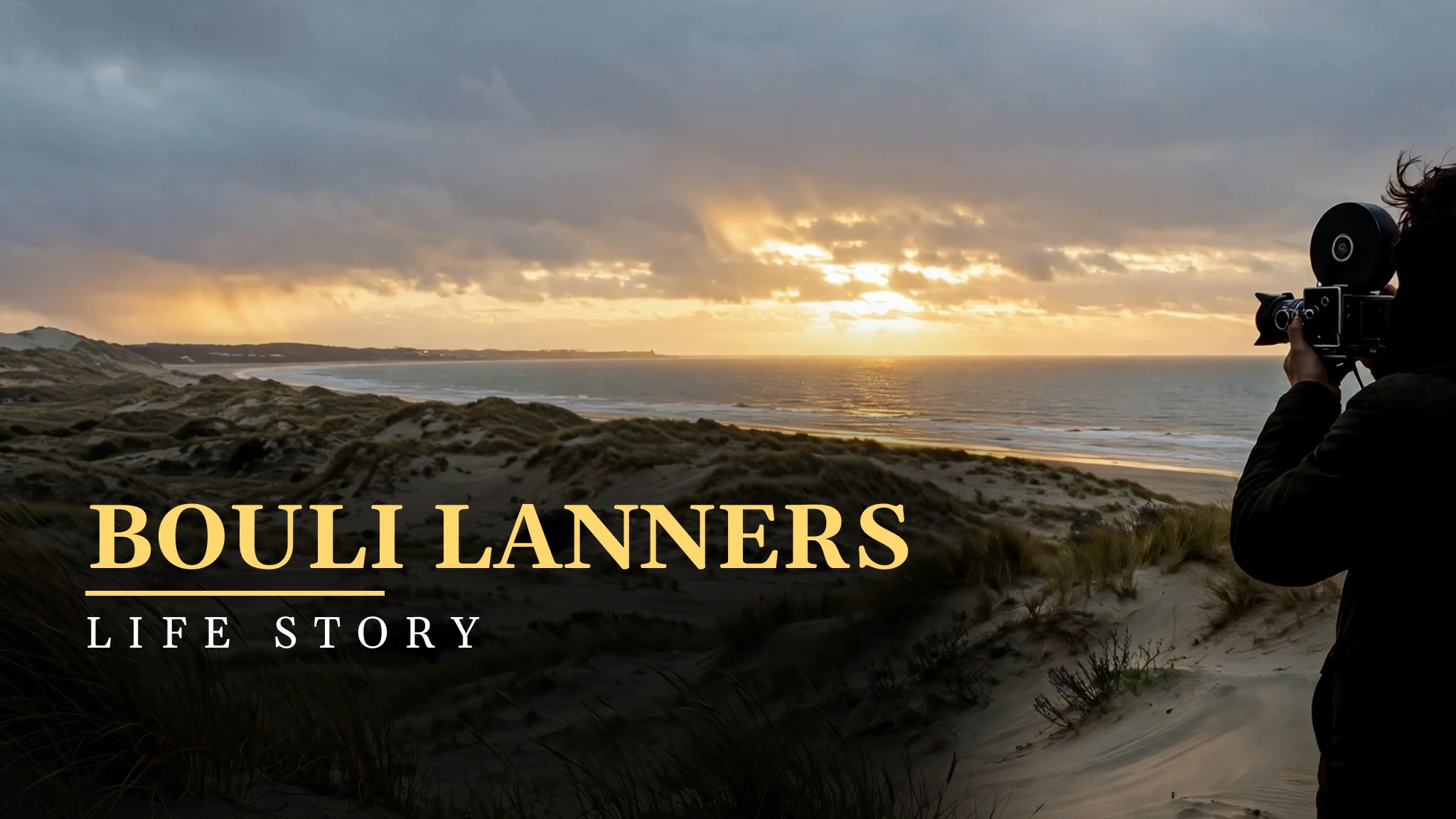
Bouli Lanners’s films are full of landscapes, and those landscapes are not just backgrounds. They are characters in themselves, and they shape the stories he tells. He films the east of Belgium, with its fields, forests, and small towns, the Belgian coast, with its dunes and its sea, and the wild landscapes of Scotland, with its empty moors and its cold light. He loves wide open spaces, quiet roads, and the feeling of being far from anywhere, and he films them with a patience and a love that makes the audience feel them too. His landscapes are not pretty postcards. They are real places, with real weather, real light, and real feeling.
He learned to love landscapes as a boy in Moresnet, in the east of Belgium, where he grew up among fields and forests, far from the big cities. That childhood gave him an eye for the land, for the way light falls on a field, for the way a road curves through a valley, and for the way a small town looks at dusk. He carries that eye with him in every film he makes, and it is one of the most recognisable parts of his cinema. When you watch a Lanners film, you know you are in his world, because the land itself feels like a character, quiet, patient, and full of stories.
His love of landscapes also reflects his love of travel, of the road, and of the journey. His characters are often on the road, driving long distances, sleeping in strange places, and meeting people who change them. The road is a place of freedom, of possibility, and of danger, and Lanners films it with respect. He does not rush the journey. He lets it unfold slowly, shot by shot, mile by mile, and he trusts the audience to feel the road as the characters feel it. That patience is rare in modern cinema, and it is a sign of a director who believes in his audience.
The landscapes in his films are also a reminder that Belgium is a beautiful country, with a varied and surprising geography. Lanners shows that beauty, not in tourist postcards, but in real places: car parks, fields, roadside cafes, and small towns. He finds beauty in ordinary places, and he makes the audience see it too. That vision, that ordinary places matter, is at the heart of his work, and it is why his films feel so true. He is a filmmaker who loves the land, and his love is visible in every frame.
My Take:
When I think about Bouli Lanners, the first thing that comes to mind is the road. His films are full of roads, of long drives, of empty fields, and of people travelling from one place to another, looking for something they cannot name. Eldorado is a road movie, Les Premiers les Derniers is a road movie, and even Nobody Has to Know is about a journey, a man who has lost his memory and must find his way back. That love of the road is not just a style. It is a way of seeing life, as a journey, not as a destination, and I find that vision beautiful. It reminds me that life is about the travelling, not just about arriving.
I admire how he found his voice late, and how he used it to tell stories about Belgium. He did not start directing until he was forty, and he did not become famous as a director until Eldorado, when he was forty-three. That is a long time to wait, and most people would have given up. He did not. He acted, he learned, he watched, and when he was ready, he made films that were personal, honest, and completely his own. That patience is a lesson for anyone who feels that life has passed them by. It has not. It is never too late to find your voice, and Bouli Lanners is living proof of that.
What I find most moving about his work is its warmth. His characters are often lonely, flawed, and lost, but Lanners treats them with love. He does not judge them. He shows them as they are, with their humour, their sadness, and their hope, and he makes the audience care about them. In Eldorado, Yvan is a car dealer who is lonely and who has made mistakes, but Lanners plays him with such warmth that you root for him. In Les Premiers les Derniers, the two men are searching for a dog and for meaning, and Lanners makes their search feel important, even when it seems silly. That warmth, that love for ordinary people, is the heart of his cinema, and it is why his films stay with you.
I also think about his work as an actor, and how it feeds his directing. He knows what it feels like to be directed, and he knows what actors need, because he is one himself. That double experience makes him a better director, and a better actor, and it gives his films a feeling of trust. His actors trust him, because they know he understands them, and that trust is visible on screen. His films feel like they were made by a community, by people who care about each other, and that is a rare and beautiful thing in cinema.
His film Nobody Has to Know is a favourite of mine, because it is so quiet and so tender. It is about a man who loses his memory, and a woman who cares for him, and it is filmed in Scotland, in wild and empty landscapes. The film moves slowly, it trusts the audience, and it finds power in small moments: a look, a touch, a walk on a beach. That patience is rare in modern cinema, where many films are loud and fast, and it is a sign of a director who believes in his audience. Lanners believes that we can feel, that we can wait, and that we can understand a story without being told everything. I respect that belief deeply.
If I have a criticism, it is only that his films are not as well known outside Belgium and France as they deserve to be. They are beautiful, honest, and original, but they are often in French, and they move slowly, and that can make them hard to sell to a wider audience. I wish more people knew his work, and I hope that the growing interest in European cinema will help more viewers discover him. He deserves a wider audience, and I believe he will get one, because good work always finds its way to people in the end.
For a young reader, I think the lesson is to be patient, to learn your craft, and to tell the stories that matter to you, even if they are small stories about ordinary people on a road. Lanners did not make films about superheroes or about glamorous people in Paris. He made films about car dealers, about men looking for a dog, about a man who loses his memory, and he made them beautiful. He teaches us that any story can be important, if it is told with honesty and love. Those are simple lessons, but they are powerful ones, and they are at the heart of his story.
In the end, I think Bouli Lanners is important because he reminds us that cinema can be quiet, slow, and honest, and still be powerful. He began as a boy from the east of Belgium, and he became an actor and a director whose films are loved around the world. His journey is still going on, and I am eager to see what he does next. I hope he keeps making films, keeps travelling, and keeps telling stories about the road, because the world needs more filmmakers like him.
I keep thinking about the road in his films, and how it is never just a road. In Eldorado, the road is a place where two men who have nothing in common learn to understand each other. In Les Premiers les Derniers, the road is a search for meaning, for a dog, and for a reason to live. In Nobody Has to Know, the road is a journey back to memory, to identity, and to love. Lanners uses the road as a metaphor for life itself: we are all travelling, we are all looking for something, and we are all changed by the people we meet along the way. That is a beautiful vision, and it is one that I think about often. Life is a road, and Lanners films it with love.
Another thing I notice is his warmth. His characters are often lonely, flawed, and lost, but Lanners treats them with love. He does not judge them. He shows them as they are, with their humour, their sadness, and their hope, and he makes the audience care about them. In Eldorado, Yvan is a car dealer who is lonely and who has made mistakes, but Lanners plays him with such warmth that you root for him. That warmth, that love for ordinary people, is the heart of his cinema, and it is why his films stay with you. He does not make films about heroes. He makes films about people, and that is much harder, and much more beautiful.
I also think about his work as an actor, and how it feeds his directing. He knows what it feels like to be directed, and he knows what actors need, because he is one himself. That double experience makes him a better director, and a better actor, and it gives his films a feeling of trust. His actors trust him, because they know he understands them, and that trust is visible on screen. His films feel like they were made by a community, by people who care about each other, and that is a rare and beautiful thing in cinema. He is not a director who stands apart from his actors. He is one of them, and that makes all the difference.
His film Nobody Has to Know is a favourite of mine, and I think about it often. It is about a man who loses his memory, and a woman who cares for him, and it is filmed in Scotland, in wild and empty landscapes. The film moves slowly, it trusts the audience, and it finds power in small moments: a look, a touch, a walk on a beach. That patience is rare in modern cinema, where many films are loud and fast, and it is a sign of a director who believes in his audience. Lanners believes that we can feel, that we can wait, and that we can understand a story without being told everything. I respect that belief deeply, because it shows a deep respect for the viewer.
I wonder what it feels like to start directing at forty, when many directors have already made several films. Lanners did not rush. He acted, he learned, he watched, and when he was ready, he made films that were personal, honest, and completely his own. That patience is a lesson for anyone who feels that life has passed them by. It has not. It is never too late to find your voice, and Bouli Lanners is living proof of that. He found his voice late, and he used it to tell stories about Belgium, about friendship, and about the road, and those stories are now known around the world.
I also think about his love of landscapes, and how his films show Belgium in a way that few other directors do. He films the east of Belgium, with its fields and forests, the coast, with its dunes and its sea, and the small towns that most films ignore. He finds beauty in ordinary places, and he makes the audience see it too. That vision is a gift to anyone who has ever felt that their home is not important enough to be in a film. Lanners shows that it is, and that a small town, a field, or a roadside cafe can be as beautiful as any famous landmark. That is a powerful message, and it is one that I carry with me.
If I could ask him one question, it would be about what the road means to him. His films are full of roads, of journeys, and of people travelling from one place to another. What does the road teach us? I think the answer would be about freedom, about the possibility of change, and about the people we meet along the way. The road is a place where strangers become friends, where enemies learn to understand each other, and where a man can find himself. That is a beautiful idea, and it is at the heart of Lanners’s cinema. He is a filmmaker of the road, and the road is a metaphor for life itself.
I also notice how his films balance humour and sadness. They are funny, but they are also sad, and the two feelings live together in the same scene. That balance is hard to achieve, and it is a sign of a great filmmaker. Lanners does not make comedies that are only funny, or dramas that are only sad. He makes films that are both, because life is both, and his films reflect that truth. That honesty is why his work feels so real, and why his audiences trust him. He does not lie to them. He shows them life as it is, funny and sad at the same time.
In the end, I think Bouli Lanners is important because he reminds us that cinema can be quiet, slow, and honest, and still be powerful. He began as a boy from the east of Belgium, and he became an actor and a director whose films are loved around the world. His journey is still going on, and I am eager to see what he does next. I hope he keeps making films, keeps travelling, and keeps telling stories about the road, because the world needs more filmmakers like him.
One last thought stays with me. When I watch Eldorado today, I see two men on a road in Belgium, arguing, laughing, and slowly learning to understand each other, and I think about how simple and how profound that story is. It is not about superheroes or about grand adventures. It is about two ordinary men, on an ordinary road, finding something extraordinary in each other. That is what great cinema does, and Lanners does it better than most. He is a filmmaker of the road, and I am glad I got to tell his story here.
Frequently Asked Questions
When was Bouli Lanners born and where is he from?
Bouli Lanners, whose real name is Philippe Lanners, was born on 20 May 1965 in Moresnet, a village in the east of Belgium, near the borders with Germany and the Netherlands. He grew up in that region and its landscapes have shaped his films.
What is Bouli Lanners’s most famous film as a director?
His most famous film as a director is Eldorado, released in 2008, a road movie about a car dealer and a young thief travelling across Belgium. It was chosen for the Cannes Film Festival and won prizes, establishing him as a major Belgian director.
What is the film Nobody Has to Know about?
Nobody Has to Know, released in 2021, is about a man who loses his memory in an accident on a remote Scottish island and is cared for by a woman who falls in love with him. Lanners directed the film and stars in it alongside Michelle Fairley.
Did Bouli Lanners act in Rust and Bone?
Yes, he appeared in Rust and Bone, released in 2012 and directed by Jacques Audiard, starring Marion Cotillard and Matthias Schoenaerts. He played a supporting role, and the film was praised at Cannes.
What is Les Premiers, les Derniers about?
Les Premiers, les Derniers, known in English as The First, the Last, is a 2016 film directed by Lanners about two men hired to find a lost dog, travelling across the Belgian countryside on a journey that becomes a search for meaning. It won a prize at the Berlin Film Festival.
Is Bouli Lanners still directing today?
Yes, he continues to act and direct in Belgium and France, and he remains one of the most respected filmmakers in Belgian cinema. His work is known for its road stories, wide landscapes, and warm, honest characters.


