Clairo: The Life Story Behind Bedroom Pop's Quiet Star
In this post
- A Childhood Between Atlanta and Massachusetts
- Pretty Girl and the Video That Changed Everything
- Immunity and Becoming a Real Album Artist
- Sling, Charm, and Growing Into Her Own Sound
- Living With Early Fame and Staying True
- The Quiet Star She Has Become
- Charm, Tours, and Life on the Road
- The Sound of Bedroom Pop and Why It Travelled
- My Take:
Clairo makes music that sounds like it was recorded in a bedroom, because much of it was. Her songs are soft, hazy, and honest, with a voice that feels close enough to whisper. She became famous as a teenager when a simple video of her singing in her room travelled around the internet. But behind that sudden fame was a young woman who had been writing songs for years, learning her craft in private, and figuring out who she was.
Her real name is Claire Cottrill, and she grew up between Atlanta and Massachusetts, in a family that loved music. She started posting songs online as a young teenager, and her sound, which people later called bedroom pop, grew out of those early recordings. Her first album, Immunity, showed she was more than a viral moment. Her later albums, Sling and Charm, showed a songwriter growing older, braver, and more sure of her own voice.
Her story is about a young artist who found fame early and then worked hard to be taken seriously. She did not want to be only the girl from one video. She wanted to be a real musician, and she spent the years after her breakthrough proving it, one careful album at a time.
Her songs have a hazy, dreamlike quality that is hard to describe and easy to feel. They sound like a summer afternoon, like a memory that is soft around the edges, like a feeling you cannot quite name. That mood is part of her gift. She does not write songs that shout their meaning. She writes songs that drift into your mind and stay there, and you find yourself humming them days later without knowing why. That quiet power is rare, and it is why her audience is so loyal.
She also belongs to a generation of artists who learned their craft in public. She posted songs online as a teenager, she let people watch her grow, and she turned that growth into her art. Her albums are like chapters in a diary, each one showing a different age, a different mood, and a different sound. When you listen to them in order, you can hear a young woman becoming herself, and that journey is part of what makes her music so compelling.
A Childhood Between Atlanta and Massachusetts
Claire Cottrill was born on 18 August 1998 in Atlanta, Georgia, and she grew up in Carlisle, Massachusetts, a small town outside Boston. Her father worked in marketing, and her mother was a designer, and the family home was full of music and art. She learned to play instruments when she was young, and she started writing songs while she was still in her early teens. The songs were simple at first, but they were hers, and she kept at them.
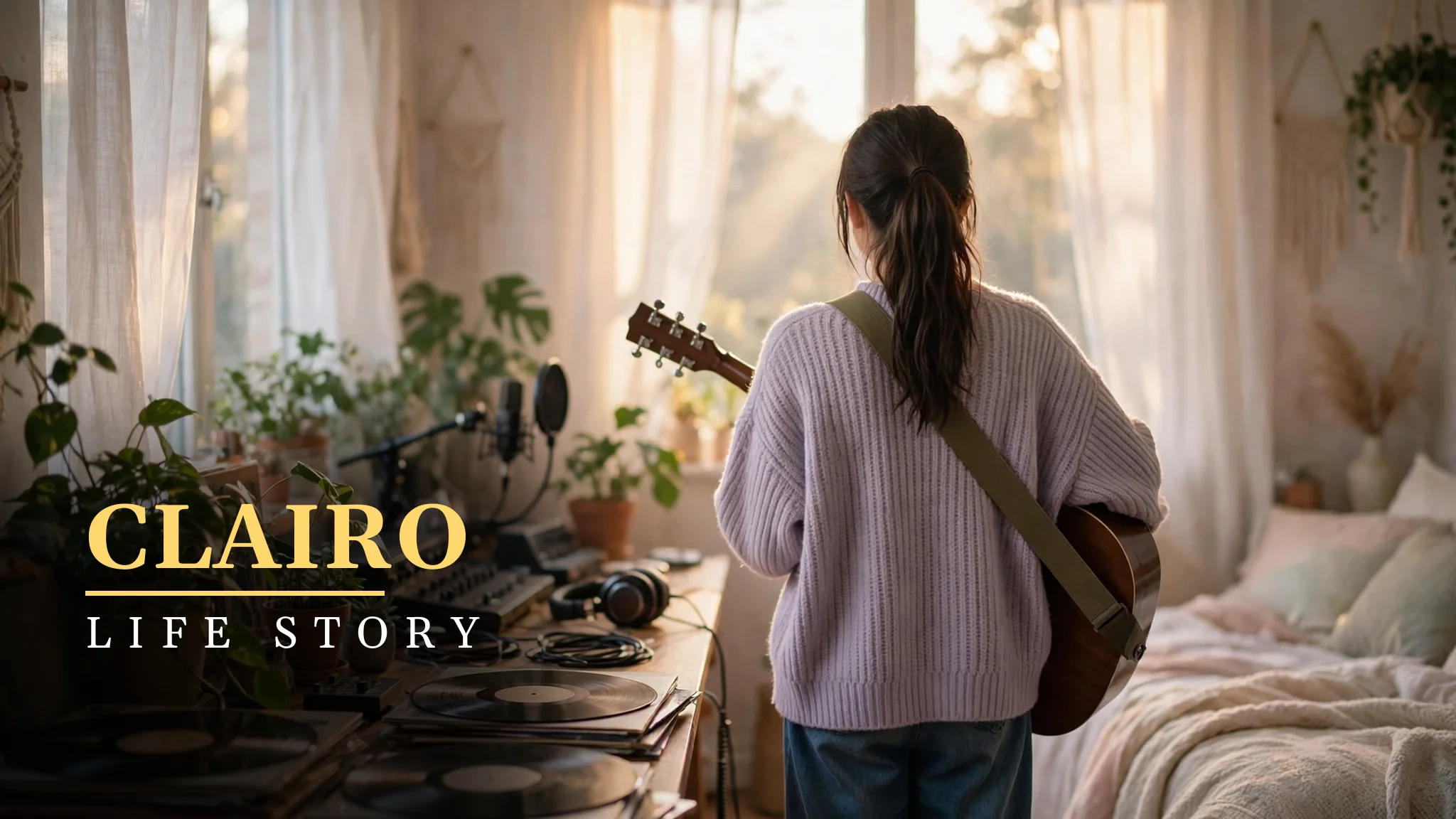
As a teenager, she began to record songs in her bedroom using simple equipment. She did not have a studio, and she did not need one. A laptop, a microphone, and a guitar were enough. She posted the songs on the internet, where a small group of listeners began to find them. The recordings had a rough, homemade feel, and that feel became part of her charm. They sounded like a real person singing in a real room, not like a polished product.
Her teenage years were also the years when she began to think about who she was. She wrote about crushes, friendship, loneliness, and the strange feeling of growing up. Those feelings were not new, but her way of writing about them felt fresh. She did not dress them up in big words. She said them plainly, and young listeners recognised themselves in her songs.
By the time she finished school, she had already built a small audience online. She had not planned to become famous. She had only wanted to share her songs. But the internet had other plans, and one simple video would soon change everything about her life.
Pretty Girl and the Video That Changed Everything
In 2017, Clairo posted a video of herself singing a song called Pretty Girl. The video was simple. She sat in her bedroom, sang into a microphone, and looked straight at the camera. There were no dancers, no bright lights, and no big budget. It was just a young woman and a song. The video spread quickly, and within a short time it had been watched millions of times.
Pretty Girl became the song that defined her early fame. Its soft melody and honest words about wanting to be liked connected with teenagers around the world. The video felt real in a way that polished pop videos did not, and people shared it because it felt like something a friend might have made. Clairo was nineteen, and suddenly she was known far beyond her small town.
The attention brought new chances. Record labels wanted to work with her, and she began to play shows for larger audiences. But it also brought questions. Some people wondered if she was only famous because of one video, or if she had real talent. Those questions were unfair, but they were real, and she would spend the next years answering them with her music.
Looking back, the video worked because it was honest. It did not try to be impressive. It tried to be true. A young woman singing a simple song in her room turned out to be enough. That is the heart of her breakthrough, and it is also the heart of the sound she would keep building on, soft, close, and real.
Immunity and Becoming a Real Album Artist
Her debut album, Immunity, was released in 2019, and it was the moment when Clairo showed the world that she was more than one video. The album was produced with care, and it kept her soft sound while adding richer instruments and deeper songs. It included the song Sofia, a joyful love song that became a fan favourite, and other tracks about growing up, mental health, and the pain of young love.
The album earned praise from critics, who noted that her songwriting had grown stronger and more confident. She was no longer only a bedroom singer. She was an album artist, someone who could build a full record with a clear mood and a clear voice. She toured the album, played festivals, and saw her audience grow beyond the teenagers who had found her first video.
Immunity also showed her willingness to be open about hard things. She wrote about anxiety and about the pressure of growing up in public, and she did so without hiding behind vague words. That openness helped her listeners, many of whom were dealing with the same feelings. Her songs became a safe place for young people who felt unsure or alone.
The album did not just follow a viral hit. It proved that the hit was the start of something real. Clairo had taken the attention she had been given and turned it into a body of work that stood on its own. That is a hard thing to do at twenty years old, and she did it with care.
Sling, Charm, and Growing Into Her Own Sound
Her second album, Sling, was released in 2021, and it showed a songwriter moving into new ground. The songs were warmer and more reflective, with strings, piano, and a slower, more thoughtful pace. She wrote about family, about the future, about wanting a quieter life. The album felt like a step away from the noise of fame and toward something more personal and lasting.
Sling was praised for its maturity. Critics noted that she was no longer writing only about teenage feelings. She was writing about adult life, about the choices that shape a person, and about the wish for peace. The album did not chase hits. It chased honesty, and it found it. Her fans followed her into that quieter place, and many of them call Sling their favourite of her records.
Her third album, Charm, was released in 2024, and it brought a new sound again. The songs had a warm, 1970s feel, with soft grooves and a gentle confidence. It showed that she could change her sound without losing herself. She was still the same honest writer, but she was now working with more colour, more rhythm, and more ease. The album earned strong reviews and showed that she was still growing as an artist.
Together, the three albums tell the story of a young woman becoming herself. Each one sounds different, but each one is clearly hers. That ability to change and stay true at the same time is rare, and it is why her career has lasted beyond the first viral moment.
Living With Early Fame and Staying True
Fame came to Clairo when she was still a teenager, and that is a hard age to become famous. She had to learn to live in public while she was still figuring out who she was in private. People watched her, judged her, and expected her to keep making the same kind of songs. She had to learn to protect her own space and to keep writing what she believed in, even when the world wanted something else.
She has spoken openly about living with health problems, including rheumatoid arthritis, a condition that causes pain in the joints. Living with a long-term illness while touring and recording is not easy, and she has been honest about the hard days. That honesty has helped her fans, many of whom live with their own health struggles, and it has made her music feel even more human. She does not pretend that life is easy. She writes about it as it is.
She has also used her voice for causes she cares about, including support for other young artists and for people dealing with illness. She does not make a show of it. She simply speaks plainly about what matters to her, and her fans respect that. Her public life is quiet, and that quietness is a choice. She lets the music do the talking.
Through it all, she has kept her sound close to its roots. Her songs are still soft, still honest, and still feel like they were made in a small room for one listener. That is not an accident. It is a decision she has made again and again, to stay true to the way she started, even as her stages have grown larger.
The Quiet Star She Has Become
Today, Clairo is one of the most respected young singer-songwriters in America. She has three acclaimed albums, a loyal audience around the world, and a reputation for honest writing that few of her peers can match. She has moved from bedroom recordings to festival stages without losing the feeling that made her first songs special. That is a rare achievement, and it deserves respect.
Her future is open. She may keep making soft, reflective albums, or she may move into new sounds and new stories. What matters is that she keeps writing with the same care and the same honesty. Her fans do not follow her for a single hit. They follow her for the feeling that she understands them, and that feeling will carry her wherever she goes next.
She has also become a quiet model for young musicians. She shows that you can start with simple tools, that you can build an audience by being honest, and that you can grow without losing yourself. Many young artists feel pressure to be loud and to chase trends. Clairo proves that a soft voice and a true song can travel just as far.
Her story is still young, and its best chapters may still be ahead. She has already gone from a bedroom in Massachusetts to the biggest stages in the world, and she has done it by staying true to her own sound. If she keeps that truth at the centre of her work, the years ahead are likely to bring more good songs, more loyal listeners, and a career that lasts long after the first viral video is forgotten.
Charm, Tours, and Life on the Road
Her third album, Charm, released in 2024, marked a new chapter in her sound. The songs had a warm, 1970s feel, with soft grooves, gentle rhythms, and a confidence that had not been there before. She worked with the producer Leon Michels, and together they built a record that sounded like a late summer evening, relaxed, golden, and full of feeling. Songs like Sexy to Someone and Juna showed a songwriter who was comfortable in her own skin, writing about desire and closeness with a lightness that felt new. Critics praised the album, and it earned her a Grammy nomination, a recognition that her quiet work had reached the highest level of the music world.
Charm also showed how far she had come as a performer. She toured the album to large audiences, playing festivals and concert halls around the world, and her shows had a new warmth to them. She moved on stage with more ease, she talked to the crowd with more confidence, and she let the band breathe around her songs. The bedroom singer had become a bandleader, and she did it without losing the softness that made her special. Her audiences loved the change, because it felt like growth, not like a performance.
Touring with Charm taught her new lessons about stamina and care. She has spoken openly about living with rheumatoid arthritis, a condition that causes pain and swelling in the joints, and touring with such a condition is not easy. Long days of travel, nights on stage, and little rest can make the pain worse, and she has had to learn to manage her health while doing the work she loves. She plans her days with care, she rests when she can, and she leans on her band and her team. That honesty about her health has helped her fans, many of whom live with their own long-term conditions, and it has made her music feel even more human. She does not pretend that life is easy. She writes and sings about it as it is.
Her tours also gave her a chance to meet the people who listen to her songs. Fans tell her how her music helped them through lonely times, how a song described a feeling they could not name, and how her honesty gave them courage. Those conversations matter to her, because they remind her why she writes. A song is not only a piece of music. It is a bridge between one person and another, and her tours are where she sees that bridge working in real life. She carries those stories with her, and they feed the songs she writes next.
The road also changed her writing. Travel gives a songwriter new images, new faces, and new feelings, and her later songs are full of the world beyond her bedroom. She writes about cities, about hotel rooms, about the strange feeling of being far from home and yet at home on stage. That wider view is part of her growth. She started by writing about her room, and now she writes about the world, and both are true to who she is.
The Sound of Bedroom Pop and Why It Travelled
Clairo’s early sound, which people later called bedroom pop, came from necessity as much as from choice. She recorded at home with simple equipment, and the roughness of those recordings became part of their charm. They sounded like a real person singing in a real room, not like a polished product made in a studio, and that realness is what made people stop and listen. In a time when pop music was becoming louder and more produced, a quiet song recorded in a bedroom felt like a breath of fresh air. It reminded listeners that music could be simple, honest, and close.
The bedroom pop movement grew around artists like her, young musicians who used laptops, cheap microphones, and their own bedrooms to make songs that travelled around the world. Clairo was one of its most important figures, because she showed that a homemade song could be as powerful as a studio record. She did not need a big budget. She needed a good melody, honest words, and the courage to share them. That lesson has inspired a generation of young musicians who now record at home, and her influence on that movement is lasting.
Her sound has changed with each album, and that change is part of her art. Immunity kept the softness of her bedroom recordings but added richer instruments and a fuller sound. Sling moved into warmer, more reflective territory, with strings and piano and a slower pace. Charm brought a 1970s groove, with soft rhythms and a confident ease. Each album sounds different, but each one is clearly hers, because her voice and her honesty run through all of them. That ability to change and stay true at the same time is rare, and it is why her career has lasted beyond the first viral moment.
She has also become a model for young artists who want to build a career online. She posted songs, she let people watch her grow, and she turned that growth into her art. She did not wait for a record label to discover her. She shared her work, she built an audience, and the label came to her. That path is now common, but she was one of the first to walk it, and she did it with a grace that many others have tried to copy. Her story shows that the internet can be a place for honest art, not only for noise.
Her songs have also found a home in films, in television shows, and in the playlists of millions of listeners. Sofia has become a joyful anthem, Bags has become a fan favourite, and her later songs have found new audiences through streaming. Her music travels because it is honest, and honest music finds its listeners wherever they are. She has built a career on that honesty, and it has carried her from a bedroom in Massachusetts to the biggest stages in the world.
Her influence on indie music is already clear. Many young songwriters cite her as a reason they started writing, and her style, soft voice, plain words, and hazy melodies, has become a model for a whole generation. She did not set out to be a model. She set out to write true songs, and other writers followed her example. That is the best kind of influence, the kind that comes from doing good work and letting others learn from it.
What makes her sound last is its feeling. Her songs do not try to impress you. They try to be with you, in a quiet moment, when you need a song that understands. That companionship is what her listeners love most, and it is why her music will be listened to for a long time. A song that sits with you in a lonely moment is a song that matters, and Clairo has written many of them.
My Take:
When I listen to Clairo, I feel like I am hearing someone think aloud. Her voice is soft, her words are plain, and her songs do not try to impress me. They try to be honest. I admire that, because honesty is the hardest thing to keep in pop music. Many singers hide behind big sounds and clever words. Clairo does the opposite. She sings quietly, and she trusts that the truth will be enough. Most of the time, it is.
I admire the way she started. She did not wait for a studio or a label. She recorded songs in her bedroom with simple tools and posted them online. That takes courage, because it means sharing work that is rough and unfinished. But it also means starting now instead of waiting for perfect conditions. I think that is a lesson for anyone who wants to make something. You do not need the best equipment. You need a song you believe in and the courage to share it. Clairo had both, and she started before she was ready, which is often the only way to start.
What moves me most is how young she was when fame arrived. She was nineteen when Pretty Girl spread around the world, and nineteen is a hard age to become famous. She was still figuring out who she was, and suddenly millions of people had opinions about her. I think she handled that with more grace than most adults would. She did not chase the fame or fight it. She went back to writing songs, and she let the work speak for her. That choice takes a quiet kind of strength, and I respect it.
I also think about the questions people asked her after the video. Was she only famous because of one clip? Was she a real musician? Those questions were unfair, but she answered them the best way possible, by making good albums. Immunity, Sling, and Charm are each real records, with real songs and a real voice. She did not answer with words or with anger. She answered with work. I think that is the best answer any artist can give.
I feel a real sadness in some of her songs, and I think that sadness is honest. She writes about anxiety, about loneliness, and about the pressure of growing up in public, and she does so without hiding. When I hear her sing about those feelings, I believe her. That belief matters, because a song about hard feelings only helps if the singer means it. Clairo means it, and that is why her songs help young listeners who feel the same way. They do not fix the feelings, but they make the listener feel less alone, and that is a kind thing for a song to do.
I also admire how she has spoken about her health. Living with a long-term illness while touring and recording is not easy, and she has been honest about the hard days without making her illness the whole story. That balance is hard to keep. She does not hide her pain, and she does not let it define her. She simply tells the truth about it, and her fans respect her for it. I think that honesty takes courage, and I think it has made her music feel more human.
There is something I keep returning to, and that is the way her sound has grown. Each album sounds different. Immunity is young and open. Sling is warm and reflective. Charm is confident and full of colour. Yet each one is clearly hers. That ability to change and stay true at the same time is rare. Many artists find one sound and repeat it until it grows tired. Clairo keeps moving, and she keeps bringing her listeners with her. I think that is the mark of a real artist.
If I have a criticism, it is only that I want her to keep taking risks. Her sound is beautiful, but it is also gentle, and gentleness can become a habit. I hope she tries louder songs, stranger songs, and songs that surprise even her. She has the writing skill to do it, and her audience is loyal enough to follow her. A great songwriter does not stay in one room forever. She opens new doors, and I hope Clairo keeps opening them.
I think about what her story teaches a young musician. The first lesson is to start with what you have. A laptop and a guitar were enough for her. The second lesson is to be honest about small feelings, because small feelings are the ones people recognise. The third lesson is to answer doubt with work. When people questioned her, she made albums. That is a lesson for anyone, not just musicians. When people doubt you, do not argue. Do the work, and let the work answer.
I also think her story says something hopeful about the internet. People often say that social media only rewards loud and shallow things. Pretty Girl is proof that it can reward a quiet, honest song too. The platform did not change her song. It only carried it to people who needed it. That gives me hope for other quiet artists who are recording songs in their bedrooms right now. A good song can still travel, even if it is soft.
When I imagine her future, I see a long career built on writing. She may make more albums, write for films, or work with other artists. She has the skill for all of it. What matters is that she keeps the honesty at the centre. If she does, her audience will grow with her, and her songs will keep finding the people who need them. I believe her best songs may still be ahead of her, and that is an exciting thing to say about someone who has already written so many good ones.
In the end, I think Clairo matters because she reminded the world that a song does not need to shout to be heard. It needs to be true. She recorded true songs in a small room, and the world leaned in to listen. I will keep listening, and I think many others will too, because a songwriter who tells the truth is not easy to forget.
I also think about the way her songs treat loneliness. She does not write about it as something shameful. She writes about it as something real, something that many people feel, and something that can be held gently rather than hidden. When I hear her sing about being alone in a room, I do not feel worse. I feel understood. That is a kind thing for a song to do, and it is why her music helps young listeners who feel isolated. She does not fix the loneliness, but she makes it feel less lonely, and that is often enough.
I also think about the questions people asked her after Pretty Girl. Was she only famous because of one video? Was she a real musician? Those questions were unfair, but she answered them the best way possible, by making good albums. She did not answer with words or with anger. She answered with work, and the work speaks for itself. I think that is a lesson for anyone who is doubted. You do not need to argue. You need to do the work, and let the work answer.
I also think about the way her songs treat young feelings with respect. She writes about being nineteen, twenty, twenty-one, the confusion, the hope, the mistakes, and she treats those feelings as serious. She does not laugh at young love or young pain. She takes it seriously, and young listeners can feel that respect. I think that is why they trust her. She does not pretend to have all the answers. She only promises to be honest, and she keeps that promise, album after album.
I worry a little about the pressure of growing up in public. Clairo became famous as a teenager, and she has had to figure out who she is while millions of people watched. That is a hard way to grow up, and I admire the way she has handled it. She has not let fame decide who she is. She has kept writing, kept growing, and kept her own counsel. I hope she continues to protect her private life, because a songwriter needs a quiet place to think, and the world does not always give her one.
One more thought stays with me, and it is about the quiet power of her voice. She does not sing loudly, and she does not need to. Her voice is soft, hazy, and close, and it invites the listener in rather than pushing at them. That invitation is a gift. In a loud world, a soft voice that tells the truth is a rare and valuable thing, and I think that is why her music has travelled so far. She did not shout to be heard. She whispered, and the world leaned in to listen. I will keep listening, and I think many others will too.
In the end, I think Clairo matters because she showed that a bedroom can be a studio, a phone can be a stage, and a quiet song can travel around the world. She started with almost nothing, and she built a career on honesty. That is a story worth telling, and a lesson worth remembering for any young person who wants to make something true.
I also think about the people who helped her along the way. She worked with the producer Rostam, who understood her soft sound and helped her shape Immunity without losing its bedroom feeling. Later she worked with Leon Michels on Charm, and together they found a warmer, groovier sound that still felt like her. Those partnerships matter, because a good producer does not change a songwriter. A good producer listens, finds what is already there, and helps it grow. Clairo chose her collaborators well, and each one helped her take a step forward without pulling her away from herself.
Her guitar playing deserves more praise than it usually gets. She plays with a gentle, fingerpicked style that gives her songs their hazy, drifting feeling. It is not flashy, and it is not meant to be. It is the sound of someone playing in her room, for herself, and that intimacy is the whole point. When she plays live, that same gentle style fills a concert hall, and the audience leans in to hear it. A guitarist who can hold a large room with soft playing has a rare gift, and she has it.
I think about the festivals she has played, and how strange it must feel to sing a quiet song to thousands of people outdoors. A festival crowd is loud, restless, and full of distractions, yet her audiences grow still when she sings. That stillness is a kind of magic. It shows that a soft song can hold a large crowd if it is true enough, and it shows that her listeners are not there for spectacle. They are there for the songs, and they give her their full attention. That respect between a singer and her audience is a beautiful thing.
There is also something hopeful about the way her music reaches people who feel out of place. She writes about being young, unsure, and a little lost, and those feelings are common, even if people rarely admit them. Her songs give those feelings a home, and they tell listeners that it is all right to feel that way. I think that is why her audience is so devoted. She does not tell them to be confident or to be happy. She tells them that their confusion is normal, and that normal is enough.
When I look at her three albums together, I see a person learning to trust herself more with each record. Immunity is the sound of someone finding her voice. Sling is the sound of someone looking inward and finding peace. Charm is the sound of someone who knows who she is and is enjoying it. That arc is not something a singer can fake. It has to be lived, and she lived it in public, album by album. I admire that kind of growth, because it takes patience and honesty to let people watch you change.
Frequently Asked Questions
What is Clairo’s real name and where is she from?
Clairo’s real name is Claire Cottrill. She was born in Atlanta, Georgia, and grew up in Carlisle, Massachusetts, where she started writing and recording songs in her bedroom.
How did Pretty Girl make Clairo famous?
She posted a simple video of herself singing Pretty Girl in her bedroom in 2017, and it spread quickly online, reaching millions of viewers and making her known around the world.
What are Clairo’s three main albums?
Her debut album Immunity came out in 2019, followed by Sling in 2021 and Charm in 2024. Each album has a different sound, from young and open to warm and confident.
Why is Clairo called a bedroom pop artist?
Because her early songs were recorded at home with simple equipment, and they kept a soft, homemade feel. That bedroom sound became the style people associate with her.
Has Clairo spoken about living with a health condition?
Yes, she has spoken openly about living with rheumatoid arthritis, a condition that causes joint pain, and about the hard days that come with touring and recording while managing it.
What song is Sofia and why do fans love it?
Sofia is a joyful love song from her debut album Immunity. Fans love it for its warm melody and its open, happy words about love, which stand out among her softer, sadder songs.


