Cut Family Medical Bills Down
In this post
The drawer would not close. Not because it was broken, but because it was full of folded reports, old prescriptions, half-torn bills, and one envelope nobody could name. Every time someone in the house fell ill, the same search began: where is last year’s report, which doctor said what, and did we already pay for this test once before? The drawer was not just messy. It was expensive.
Family medical bills rarely arrive as one giant shock. They arrive as a pile of small ones: a test here, a prescription there, a follow-up visit, a medicine refill. Each one feels manageable on its own. Together, they quietly become one of the biggest lines in a family’s monthly spending. The good news is that most of that pile can be managed with calm habits rather than clever tricks. This post is about those habits.
Why family medical bills grow so fast
A family medical bill is not one bill. It is several different costs wearing one name. There are doctor visits, laboratory tests, medicines, and sometimes hospital stays. There is also the hidden cost of repeated work: a test done twice because the first report was lost, a medicine bought twice because nobody checked the drawer, a visit that could have waited but was booked in a panic.
The second reason bills grow is that nobody plans for them. Rent has a date. School fees have a date. Health does not send a polite reminder before it arrives. So when it comes, the money comes from wherever it can be found, often borrowed at the worst moment. A family that treats health spending like any other monthly bill is already halfway to controlling it.
None of this is about avoiding care. Care comes first, always. The savings here come from organisation, questions, and timing — never from skipping treatment.
One file for the whole family
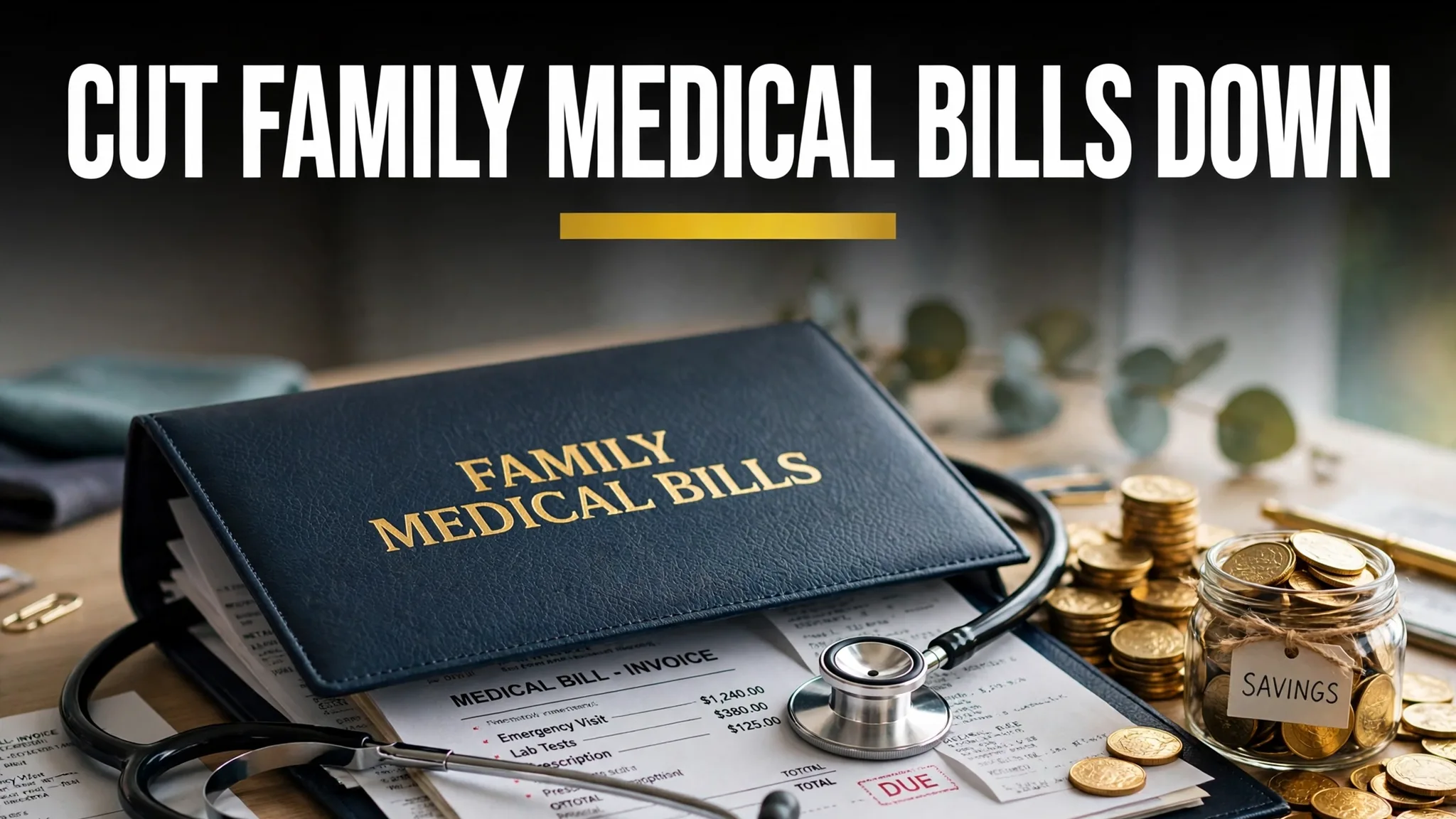
Start with one folder, one binder, or one section of a phone. Every family member gets a part of it: reports, prescriptions, vaccination records, and bills, all in date order. When a doctor asks what happened last year, the answer is in your hand, not in a drawer that will not close.
This single habit saves money in a very direct way. Doctors repeat tests when they cannot see earlier results. A blood report from three months ago, shown at the right moment, can stop a second test from being ordered. A prescription list prevents a medicine from being bought twice. A vaccination record stops a repeat injection that was never needed.
Keep the file simple. A plastic folder with dividers costs almost nothing. After every visit, the new papers go in the same day, while the visit is still fresh in memory. Once a month, spend ten minutes removing what is truly finished and keeping what still matters.
In my view, a family that can find its own health papers in five minutes is already richer than a family with a bigger income and a lost file.
Ask about the generic, calmly
Medicines are often the longest-running part of family medical bills, because they repeat every month. Here, one calm question does more work than any bargain hunt: ask the doctor or pharmacist whether a generic equivalent exists for a prescribed medicine.
A generic medicine carries the same active ingredient as the branded version and usually costs less. The doctor decides whether a generic suits a particular patient, and some medicines must stay exactly as prescribed. But for many everyday prescriptions, the doctor is perfectly happy with the generic, and the family simply never asked. The saving repeats every month for as long as the prescription lasts, which is why this one question matters more than most.
Ask it at the appointment, not in a hurry at the counter. Write the answer in the family file, so the next refill does not need the question again.
Compare prices before the test
The same test can cost different amounts at different laboratories and clinics. Rent, equipment, and location all change the price. For a one-time test, the difference may be small. For a family that needs regular tests, the difference grows into real money across a year.
When a test is planned rather than urgent, take one extra day to ask two or three places for their price for the same test. Write the numbers down. There is no disloyalty in this. Laboratories understand price comparison, and you are managing a household cost, not haggling over a luxury.
The same habit works for planned clinic visits. A written estimate before a planned treatment removes the worst surprise of all: the bill that arrives larger than the treatment felt. Ask for the estimate in writing, and keep it in the family file next to the final bill. If the two differ, you have something clear to ask about.
Checkups cost less than emergencies
Prevention is the least exciting part of health spending, and the most valuable. A regular checkup finds small problems while they are still small: a rising sugar level, a blood pressure reading that needs attention, a tooth that needs a filling rather than a root canal. Treating a small problem early almost always costs less than treating the emergency it becomes when ignored.
This does not mean rushing to a doctor every week. It means keeping the checkups that doctors recommend for your family’s age and condition, and keeping them on schedule instead of postponing them until something hurts. Put checkup dates in the family file like any other appointment, and treat them with the same respect as a school date or a work deadline.
For children and older parents, this habit matters twice as much. Their problems are often quieter, and they are less likely to complain early. A scheduled checkup speaks for them.
A monthly health amount, like rent
Here is the habit that holds all the others together: set aside a small health amount every month, even in months when nobody is ill. Treat it like rent. In healthy months, it waits. In difficult months, it is there, and the family does not need to borrow for a bill that arrived without warning.
The amount does not need to be large. What matters is that it is regular. A small monthly amount, kept separate from daily spending, turns health from a crisis into a budget line. When the amount survives a few healthy months, it can cover a test, a prescription, or a visit without touching the grocery money.
If a month brings a bill larger than the saved amount, the family file still helps: the file shows what was already spent, what is truly urgent, and what can be planned for next month instead of paid in a panic today.
What cheaper care cannot do
Honesty matters here. Some health costs cannot be reduced, and pretending otherwise would be cruel. A serious illness, a rare medicine, or an emergency surgery costs what it costs. In those months, the plan is not to save but to survive the bill with dignity: pay the urgent part first, ask the hospital or clinic plainly about payment in parts where that is offered, and keep every receipt in the file.
Health decisions belong to doctors. This post is about bills, never about treatment. Never delay urgent care to save money, never skip a prescribed medicine to save money, and never choose a cheaper option that a doctor has warned against. A bill can be managed later. Health cannot always be repaired later.
Also, beware of offers that sound too cheap to be real. Medicine or treatment sold far below every other price, without a proper clinic or pharmacy, is not a bargain. Real savings come from real doctors, real pharmacies, and real records.
More ways to save
Common questions
How do I start a family health file?
Take one folder or binder and give every family member a section. Put in recent reports, prescriptions, vaccination records, and bills, in date order. After every visit, add the new papers the same day. Once a month, spend ten minutes removing what is finished and keeping what still matters.
Can asking about generic medicine really save money?
Yes, for many everyday prescriptions. A generic carries the same active ingredient as the branded medicine and usually costs less, and the saving repeats every month. The doctor decides whether a generic suits a particular patient, so ask at the appointment rather than deciding alone.
Should I compare prices for medical tests?
For planned tests, yes. The same test can cost different amounts at different laboratories, and the difference grows across a year of regular tests. Ask two or three places for the price of the same test and write the numbers down before deciding.
How much should a family set aside for health each month?
There is no single right amount, because families and health needs differ. Start with a small amount you can truly keep aside every month, even in healthy months, and treat it like rent. A regular small amount beats a large amount promised but never saved.
What if a medical bill is too large to pay at once?
Pay the urgent part first and ask the clinic or hospital plainly whether payment in parts is possible. Keep every receipt in the family file, and never delay urgent care or skip prescribed medicine to save money. If the bill is overwhelming, ask the doctor what can safely be planned for later.