Cut Kids School Costs Smartly
In this post
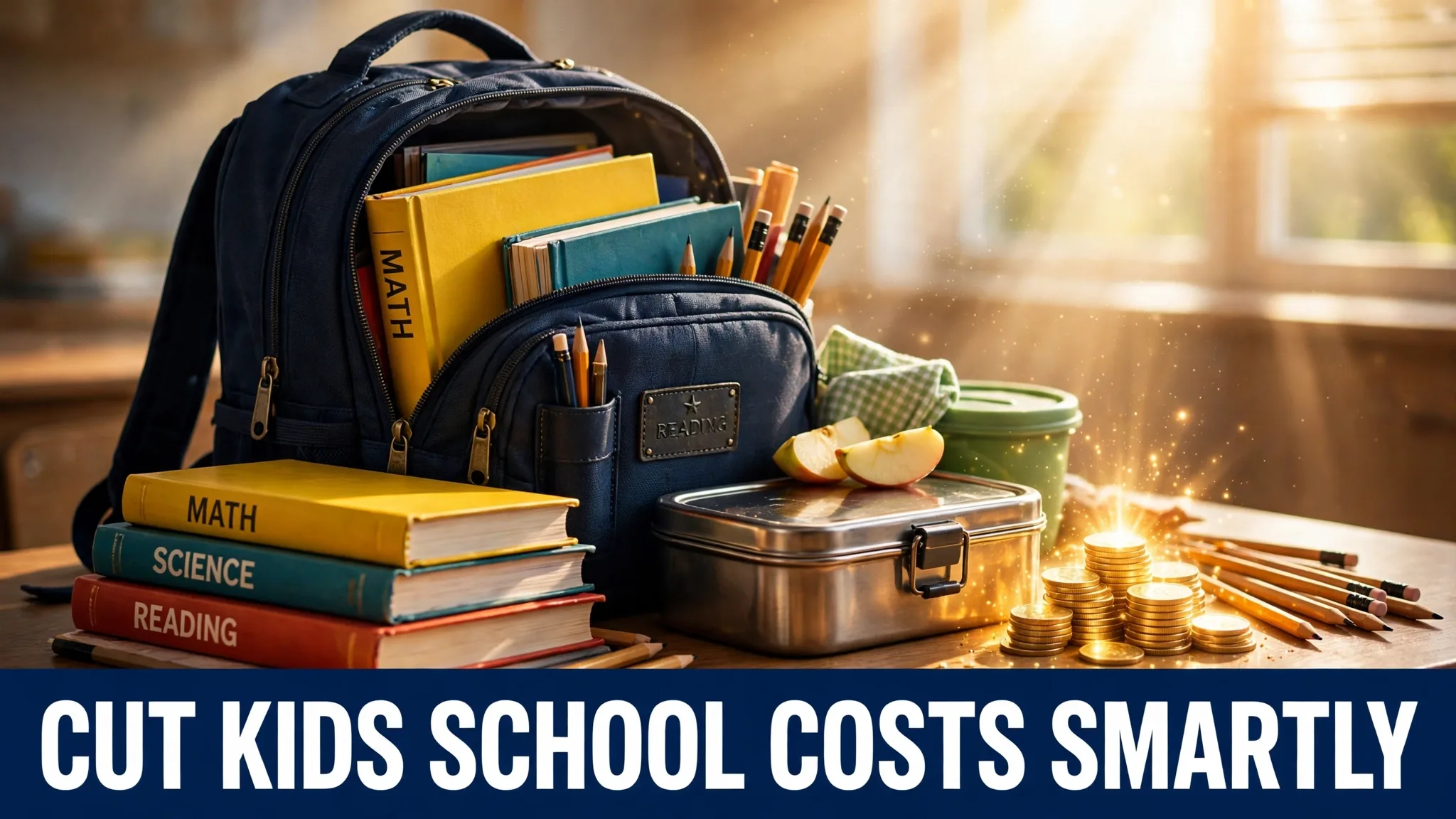
The night before the new term, I tipped my son’s school bag upside down on the kitchen table and watched the year fall out. Two pencils, one chewed at the end. A ruler with a corner missing. A lunchbox with a loose lid. A water bottle, scratched but watertight. A geometry set with the compass still sharp. And the bag itself — faded on one strap, dusty at the bottom, but with every zip still working and no tear anywhere.
My first instinct, the one the shops count on, was to throw the whole lot away and buy a fresh set. Everything new, everything shining, a proper fresh start. Then I picked up each item and asked the question the shops never ask: does this still work? The answer, item after item, was yes. The bag that looked tired on the outside carried books exactly as well as a new one. The year ahead did not need a new bag. It needed a wash, a wipe, and a parent willing to resist a display window.
School costs have a way of doubling quietly. It is rarely one big fee that breaks a family budget. It is the small purchases, repeated without thought: a new bottle because the old one was left on a bus, a fresh set of colours because last year’s set rolled under a bed, canteen money every day because mornings are rushed. Each one is small. Together, they are a second school fee that nobody agreed to.
The bag that survived
Start with what already exists. Before buying anything for the new term, empty the bag completely and lay everything out. Test each item the way a child would: does the zip close, does the bottle leak, does the pencil write, does the ruler still measure? Keep everything that passes. Wash the bag, wipe the bottle, sharpen the pencils, and the “old” kit becomes the new term’s kit without a single purchase.
Children, it turns out, care far less about this than parents fear. A child who is teased about a bag is rare; a child who is proud of a bag that survived a whole year is common. And when a child sees a parent reuse something with pride instead of shame, the child learns a lesson no shop can sell: that value is in use, not in newness.
In my view, a scratched bag carries the same books as a new one — and the money it saves buys something the new bag never could.
Replace only what is truly broken. A bag with a torn strap that cannot be mended is a real need. A bag that is merely last year’s colour is not. The difference between those two sentences is the difference between a controlled school budget and one that leaks every term.
Sales and shared packs
For the things that must be bought, timing and teamwork beat rushing. Stationery goes on sale at the start of term, when shops compete for the same parents. Buy then, and buy the year’s supply in one trip rather than in panicked single pieces through the year. A pack of pencils bought on sale costs less per pencil than one pencil bought alone at a corner shop in a hurry, and the spare pencils live in a drawer at home, not in a shop’s till.
Better still, share. Two or three parents buying a bulk pack of notebooks, colours or paper together, and splitting it at the school gate, all pay less than any of them would alone. The same works for craft supplies that each child needs only a small amount of. A word with other parents at pick-up time — “shall we split a pack?” — saves money for every family in the circle, and it costs nothing but the asking.
Keep a small home stock box: pencils, erasers, sharpeners, glue, paper. When a child needs a pencil on a school night, the box answers, and the corner shop does not get another emergency sale.
A name saves a second purchase
The quietest school expense is the lost item. A bottle left in the playground, a sweater left on a bus, a lunchbox abandoned after a trip — each one is bought twice, and the second purchase is pure waste. The cheapest cure ever invented is a name.
Label everything. Write the child’s name on the bottle, the lunchbox, the sweater tag, the geometry box, the bag’s inside pocket. A permanent marker costs almost nothing, and a labelled item that is found comes home. Teachers and lost-property boxes return named items every week; unnamed items sit in a pile until nobody claims them.
Teach the child the evening check as well: bag packed, bottle in, lunchbox in, sweater on the hook. Two minutes at night prevents a morning of panic and a replacement bought in a rush. Children who learn this check carry it into adult life, where the same habit saves keys, wallets and far more expensive things.
Lunch from home
Daily canteen money is the expense parents notice last and feel most. A small amount each day looks like nothing, and that is exactly why it grows. For example, a daily canteen amount of 100 across a school month of about 20 school days is 2,000 in a month — and across a school year, a sum that would surprise most families. The food is not the problem. The daily-ness is.
A packed lunch from home, most days, changes the maths completely. Leftovers from dinner, a sandwich, fruit, a bottle of water — food the family already bought, packed in ten minutes the night before. The lunchbox goes back into the bag, the bottle goes with it, and the day’s spending stays at zero.
Keep one treat day. A child who never gets canteen food feels punished, and a punished child hides spending instead of stopping it. One fixed day a week — Friday, perhaps — when the child chooses canteen food with a set amount, keeps the joy in the system and the budget intact. The rule is not “never”. The rule is “planned”.
Mornings are the enemy of packed lunches, so pack at night. The lunchbox, ready in the fridge, is a gift from last night’s self to this morning’s rush, and it works every single time.
Ask the school first
Before buying anything new, ask the school what already exists for free. Many schools lend library books instead of requiring purchases. Some run second-hand uniform sales, where a barely worn blazer costs a fraction of a new one. Some lend instruments for music lessons, run book exchanges between classes, or keep a stock of donated supplies for families who ask.
Parents rarely ask, partly from pride and partly because nobody tells them to. But these resources exist precisely to be used, and using them is not charity — it is good sense, the same good sense as borrowing a library book instead of buying one. A short, polite question to a teacher — “is there a second-hand sale, or books we can borrow?” — can save the price of several new items, and it often helps other families too, because schools expand the schemes parents actually use.
The same question works for activities. Some clubs and trips have fee help, sibling discounts or payment plans that are never advertised on the fee letter. Asking costs one conversation. Not asking costs the full fee.
What you cannot cut
Honesty closes this post, as it should. Some school costs are fixed by the school and cannot be cut: the term fee, the exam fee, the required textbook that only one shop stocks. No amount of clever labelling or packed lunches changes those, and a post that pretended otherwise would be lying to tired parents.
This post targets only the controllable part: the bag, the bottle, the stationery, the lunch, the lost-and-rebought items. That part is smaller than the fee, but it is the part that leaks without anyone noticing, and plugging a leak is real saving even when the river keeps flowing.
The bag from the kitchen table went back to school this term, washed and zipped and ready. It is not the newest bag in the classroom. It is, quietly, the cheapest bag in the classroom — because it cost nothing at all, and it still carries every book it is asked to carry.
Common questions
Should I buy everything new for the new term?
No. Start by emptying last year’s bag and testing every item. Keep everything that still works — bag, bottle, ruler, geometry set — and replace only what is truly broken. A fresh term does not require fresh supplies, only working ones.
How does labelling save money?
Because lost items are bought twice. A bottle, sweater or lunchbox with the child’s name on it is returned when found; an unnamed one sits in lost property until it is forgotten. A marker pen costs almost nothing and prevents a whole chain of replacement purchases.
Is a packed lunch really cheaper than canteen food?
Yes, over a month. A small daily canteen amount multiplied by about 20 school days becomes a large monthly sum, while a packed lunch uses food the family already bought. One fixed treat day a week keeps the joy in the system without breaking the budget.
What if the school requires expensive branded items?
Ask the school first whether alternatives, second-hand sales, borrowed books or fee help exist. Many schools run schemes parents never hear about because nobody asks. For genuinely fixed costs, like term fees, accept them and save on the controllable items around them.
How can parents buy stationery more cheaply?
Buy at term-start sales, buy in packs rather than single pieces, and share bulk packs with other parents, splitting them at the school gate. Keep a small home stock box so a school-night need is answered from a drawer, not from an emergency shop trip.