Easy Halloween Activities For Kids
In this post
Halloween at home does not need a party planner, a costume shop, or a single expensive decoration. It needs an afternoon, a kitchen table, and a few things most houses already own: paper, paint, old clothes, a torch, and a pumpkin or two. The best Halloween activities for children are the ones they make themselves, because the making is half the fun, and the result — a lopsided ghost, a cardboard robot, a pumpkin with googly eyes — is loved precisely because it is theirs.
A guide from Organics Best Shop lists fourteen Halloween activities for children, and its best ideas share one quality: they use what is already in the house. No-knife pumpkin decorating, costumes built from old clothes, scavenger hunts with picture clues, indoor trick-or-treating, and baking with fruit are all possible without a special shopping trip. This guide gathers those ideas into an afternoon that works for mixed ages, with the safety notes that keep it happy.
Decorate pumpkins without a knife
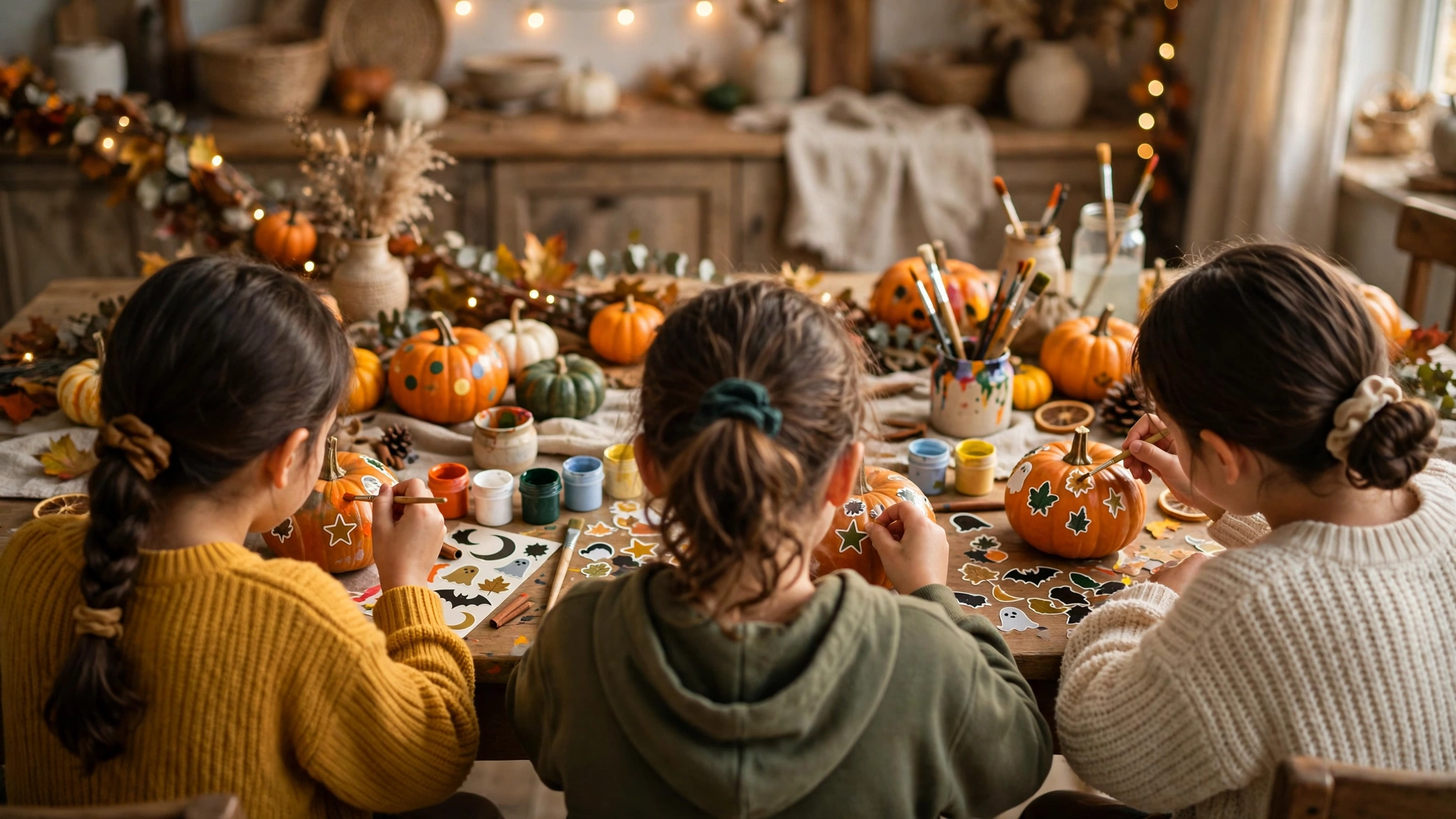
Carving a pumpkin is the classic Halloween activity, and it is also the one that needs an adult with a sharp knife and a small child kept at a safe distance. The no-knife alternative is better for young children and often more creative: decorate the pumpkin instead of cutting it. Paints, markers, stickers, and googly eyes turn a pumpkin into a character without a blade anywhere near the table.
Let each child choose a personality for their pumpkin: a happy pumpkin, a sleepy pumpkin, a pumpkin wearing glasses drawn in marker. Stick on felt shapes, yarn hair, or paper ears. A pumpkin decorated this way lasts longer than a carved one, because the skin is unbroken, and it can sit on the doorstep for days without collapsing. The Organics Best guide lists no-knife decorating first among its activities, and it is the right first choice for any house with children under eight.
Older children who want to carve should do it with an adult handling the knife, on a stable table, with the pumpkin held steady and hands kept clear of the blade’s path. Scooping the seeds is a job children love, and the seeds can be washed, salted, and roasted for a snack. But the decorating table and the carving table should be different tables, or at least different moments, so small hands and sharp tools are never sharing the same job.
Build costumes from what is already home
The best costumes are rarely bought. They are built from old T-shirts, cardboard, face paint, and imagination, and the building is a Halloween activity in itself. An old T-shirt becomes a superhero cape with a pair of scissors and a knot. A cardboard box becomes a robot with foil panels and bottle-cap buttons. Face paint turns a child into a cat, a skeleton, or a friendly ghost in ten minutes.
The Organics Best guide lists DIY costumes from home among its activities, and the principle is simple: start with what the child wants to be, look through the house for the pieces, and let the child direct the building. A sheet becomes a ghost. A black top and paper ears become a cat. A parent’s old hat and a drawn-on moustache become a detective. The costume that a child helped to build is worn with more pride than any shop costume, and it costs nothing.
Keep costumes safe as well as fun. Nothing should trail on the floor where it can trip the child, nothing should cover the eyes or the mouth, and nothing should have small pieces a younger sibling can pull off and swallow. Face paint should be skin-safe and tested on a small patch first. A costume that is comfortable gets worn all evening. A costume that itches gets abandoned in ten minutes.
The scavenger hunt, indoors or out
A Halloween scavenger hunt is the activity that fills the longest stretch of an afternoon, and it scales to every age. Hide small Halloween objects — paper bats, plastic spiders, mini pumpkins, wrapped sweets — around the house or the garden, and send the children hunting with a list. For toddlers, use picture clues: a drawing of the sofa means look behind the sofa. For older children, use riddles: “I keep the cold in and hum all night” means the fridge.
The Organics Best guide suggests adding torches or glow sticks for evening hunts, which turns a familiar house into an adventure. Give each child a bag or basket for the finds, and a small prize at the end — a sticker, a sweet, a paper crown — so every hunter finishes happy. For mixed ages, give the younger children easier hiding places and the older ones harder clues, so the hunt ends together rather than with one child finished and the others still searching.
An indoor version works in any weather and any size of home. Even a single room can hold a hunt if the hiding places are clever: inside shoes, behind curtains, under cushions, on top of books. The hunt is not about the house. It is about the searching, and searching is fun at any scale.
Indoor trick-or-treating, room by room
When the weather is bad, or the children are too small for the streets, bring trick-or-treating indoors. The Organics Best guide describes the idea simply: each room becomes a “house,” with someone stationed at its door holding a bowl, and the children knock, say the words, and collect a treat. The hallway becomes the street, the living room becomes the first house, and the whole home becomes a neighbourhood.
Set the scene with the lights low, battery candles lit, and a little music playing. Give each “house” a character: the kitchen witch, the bedroom ghost, the bathroom monster. The adults and older children play the householders, and the younger children do the visiting, in costume, with baskets. It is trick-or-treating with all of the ritual and none of the road safety worries, and it works beautifully for children too young to walk the streets after dark.
Keep the treats small and counted. A single wrapped sweet per house, or a sticker, or a small toy, keeps the sugar manageable and the game repeatable. After two rounds, the children usually invent their own version of the game, and the adults can sit down with a cup of tea while the house runs itself.
A monster dance party and flashlight stories
Every Halloween afternoon needs a moment of noise. A monster dance party is the simplest version: a playlist of spooky songs, a cleared living-room floor, and children dancing in costume. The Organics Best guide lists the dance party among its activities, and the only equipment needed is music and space. Add a game of freeze dance — music stops, everyone freezes like a statue — and the party runs itself for half an hour.
When the dancing ends, the lights go off and the flashlight stories begin. One torch, one storyteller, and an audience in blankets is the oldest entertainment in the world, and it works as well now as it ever did. Keep the stories spooky but safe: a friendly ghost, a pumpkin that wanted to be a lantern, a cat that guarded a haunted house. The storyteller holds the torch under their chin for the scary parts and drops it for the funny parts, and the children shriek in exactly the right places.
End the stories with a funny one, not a frightening one, so the evening settles gently. A story that ends with laughter sends children to bed happy. A story that ends with a monster sends them to bed checking under it.
Crafts for a spooky corner
A craft table gives the afternoon a centre, and the Organics Best guide lists a whole shelf of them: paper bats, ghost garlands, spider webs, and handprint ghosts. Paper bats are cut from black paper, folded in the middle, and hung from the ceiling with thread. Ghost garlands are white paper shapes threaded on string, each with a face drawn in marker. Handprint ghosts are a child’s handprint in white paint on dark paper, with eyes added once the paint dries.
Spider webs are made from paper plates with the centre cut out and the edges snipped into a web pattern, or from string woven across a paper plate ring. All of these need only paper, scissors, glue, and markers — the contents of any kitchen drawer — and all of them can be displayed in one corner of the house, which becomes the “spooky corner” the children show visitors with enormous pride.
Crafts work best with a long table, a wipeable cover, and no rush. Put on music, lay out the materials, and let the children choose their own projects. The adult’s job is to help with scissors and admire the results, not to direct the art. A spooky corner built by children looks gloriously chaotic, and that is exactly how it should look.
Baking: banana ghosts and pumpkin oranges
Halloween baking is an activity and a snack in one, and the Organics Best guide lists the sweetest versions: banana ghosts, pumpkin oranges, and apple monster mouths. Banana ghosts are half a banana standing upright, with chocolate-chip eyes and a mouth pressed into the fruit. Pumpkin oranges are peeled mandarins with a small piece of celery pushed into the top as a stalk. Apple monster mouths are apple slices with peanut butter between them, marshmallow teeth, and strawberry tongues.
All three need no oven and no sharp tools beyond a butter knife, so children of any age can make them with supervision. They are also healthier than the average Halloween sweet, which matters on a day when sugar arrives by the bucket. A plate of banana ghosts and pumpkin oranges looks like a Halloween feast, tastes like fruit, and gives children the pride of having made the party food themselves.
For older children, add real baking: biscuits cut into bat and pumpkin shapes, decorated with icing, or a simple cake with orange frosting. The decorating matters more than the recipe, and a batch of biscuits decorated by children will be eaten with more joy than any shop-bought cake.
Games, films, and the quiet ending
The afternoon still has room for games. Ghost bowling uses six to ten empty bottles decorated as ghosts, with a soft ball to knock them down. A monster toss uses a cardboard monster with a mouth hole, and bean bags or rolled-up socks to throw. A pumpkin washing station — a basin of water, a brush, and a muddy pumpkin — entertains toddlers for a surprisingly long time. A sensory bin filled with dried pasta, plastic spiders, and hidden treasures keeps small hands busy while older children hunt.
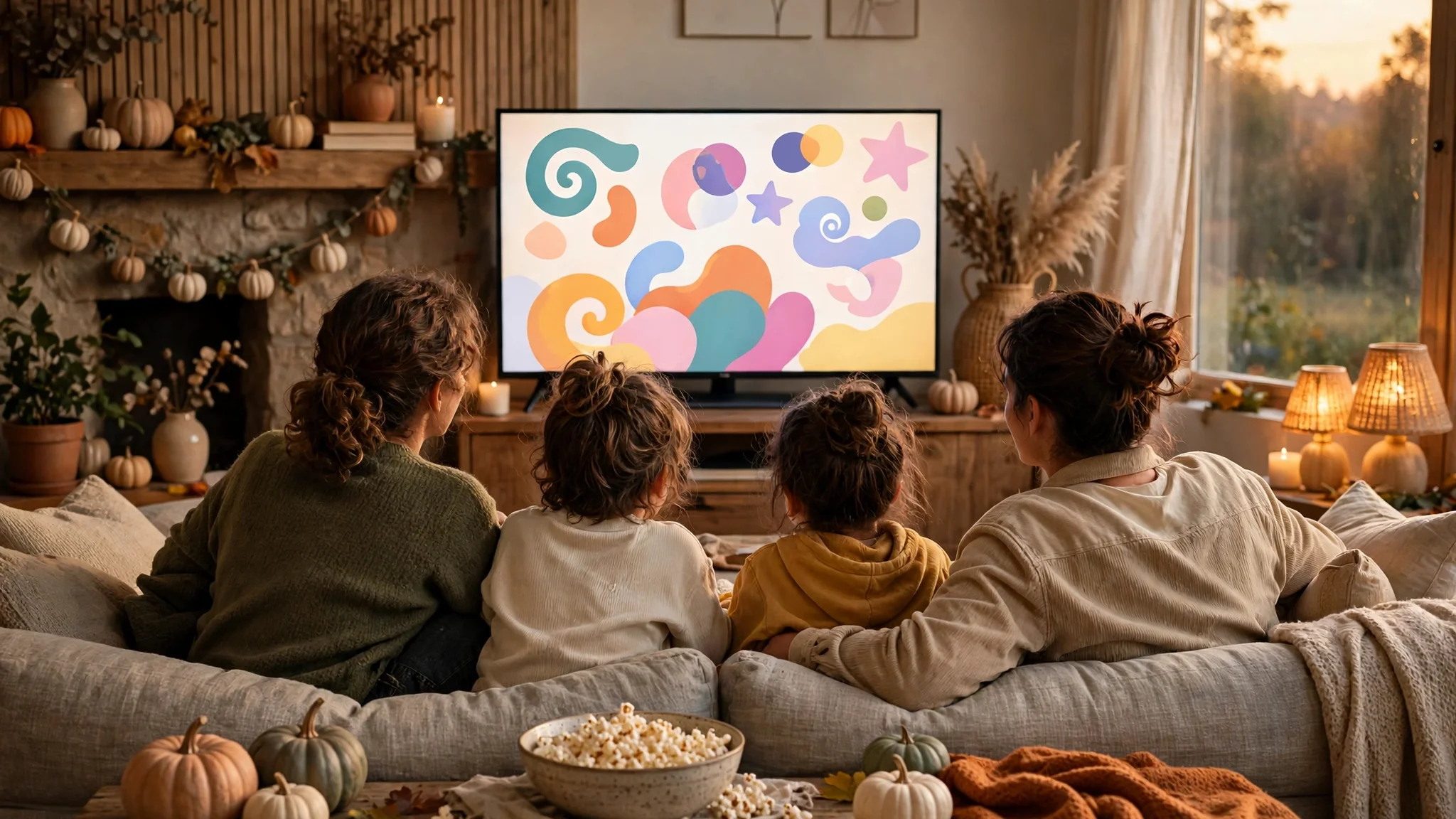
End the day with a film. The Organics Best guide suggests gentle titles for a family viewing: It’s the Great Pumpkin, Charlie Brown, Hotel Transylvania, Coco, the animated Addams Family, Casper, and Hocus Pocus. Choose for the youngest child watching, keep the lights low but not off, and keep the pause button close. A film is the calm landing after a noisy afternoon, and the evening that ends with a film ends with the family together on one sofa, which is the best Halloween of all.
Frequently Asked Questions
What are easy Halloween activities for kids at home?
The easiest activities use things already in the house: decorating pumpkins with paint, markers, and stickers instead of carving, building costumes from old clothes and cardboard, a scavenger hunt with picture clues or riddles, indoor trick-or-treating room by room, a monster dance party, flashlight stories, paper-bat crafts, and baking banana ghosts and pumpkin oranges. None of them needs special shopping, and all of them work for mixed ages.
How can kids decorate pumpkins without carving?
Decorate the pumpkin with paints, markers, stickers, googly eyes, felt shapes, and yarn hair, choosing a personality for each pumpkin, like a happy pumpkin or a pumpkin wearing drawn-on glasses. No-knife decorating is safer for children under eight, lasts longer because the skin is unbroken, and lets small children do the whole job themselves. Older children who want to carve should do it with an adult handling the knife.
What is indoor trick-or-treating?
Indoor trick-or-treating turns each room into a “house,” with someone stationed at its door holding a bowl, while children knock, say the words, and collect a treat. The hallway becomes the street, each room gets a character like the kitchen witch or the bedroom ghost, and the game has all the ritual of the streets with none of the road safety worries. Keep treats small and counted, with one sweet or sticker per house.
What Halloween games work for toddlers?
Toddlers enjoy a scavenger hunt with picture clues, a pumpkin washing station with a basin of water and a brush, a sensory bin with dried pasta and hidden treasures, and simple crafts like handprint ghosts in white paint on dark paper. Keep activities short, supervised, and free of small pieces that can be swallowed, and let toddlers finish first so the hunt ends happily for everyone.
What Halloween films are good for young children?
Gentle choices include It’s the Great Pumpkin, Charlie Brown at about 25 minutes, Hotel Transylvania, Coco, the animated Addams Family, Casper, and Hocus Pocus. Choose for the youngest child watching, keep the lights low but not off, and keep the pause button close. End the evening with something calm so children fall asleep remembering the fun rather than a frightening scene.
Sources
- Organics Best Shop — 14 Halloween Activities for Kids (fetched 2026-10-28)