Fake Pilot Flew Without Licence

In this post
Montpellier, in the south of France. September 1969.
A young American, twenty-one years old, steps out into the street — and straight into the hands of French police who have been waiting for him. No chase. No last-minute dash through an airport. Just a quiet arrest, a long way from home, of a man that more than one country had been hunting.
Before this page goes any further, one fact needs planting firmly, because the whole legend leans against it: Frank Abagnale never piloted an aeroplane. Never. Not once, not for a single minute, not even a small one. Every landing attached to his name was flown by somebody else while he sat close by in a borrowed uniform, watching. Hold on to that. We will need it before the end.
So how does a twenty-one-year-old get himself arrested on a French street? Answering that means walking his life in reverse. Cell by cell. Costume by costume. All the way back to a family quietly coming apart.
Counting Backwards: Three Countries, Three Prisons
Start with the last cell. It stood in a federal prison in Virginia, and Abagnale left it on parole in February 1974, having served about two years.
One step back: a conviction in 1971. One step before that: an arrest in Georgia in November 1970, when the forged Pan Am payroll cheques finally caught up with him.
Back again, across the ocean. France handed him to Sweden, where a court convicted him of fraud by forgery. He served the shorter sentence in a prison in Malmö, and in June 1970 he was deported to the United States.
Back once more: Perpignan, in the south of France — the prison that received him directly after the Montpellier arrest.
And hidden behind all of those is an earlier arrest, the one that set the European chapter in motion. In February 1969, police in Baton Rouge, Louisiana, picked him up after he had posed as a pilot for TWA — a rival airline to Pan Am — carrying falsified airline identification. After Baton Rouge, he ran for Europe. Europe is where the running stopped.
The Job He Invented for Himself After Parole
Prison was not the end of his working life. It was, oddly, the beginning of the respectable part.
In 1975, a year out on parole, he walked into a bank and offered the staff a bargain with no downside: let me teach your people exactly how a cheque forger thinks and works. If the lesson proves useless, you owe me nothing. If it helps, pay me a small fee — and tell other banks my name.
The bank accepted. Others followed. In 1976 he set up his own firm, Abagnale and Associates, advising banks, businesses and government offices on document security and fraud prevention. Lecturing about forgery, identity theft and scams became his trade for decades, alongside books meant to help ordinary people protect themselves. An FBI spokesperson has confirmed that he also lectured, from time to time, at the FBI Academy — the former forger standing before future agents, explaining the trick from the inside.
His grander version claims more than this: that he was released from prison early on condition that he help the FBI catch other forgers. That detail comes from his own account, and it has never been confirmed in the way the Academy lectures have. File the difference away. It matters later.
Stepping Back Again: A Doctor, A Lawyer, A Professor
Leave the prisons behind. Walk backwards past them now, into the years of borrowed professions — every one of these from his own telling.
In Georgia, he says, he presented himself at a hospital and was taken on as a doctor supervising young doctors. His survival method, by his account, was almost lazy: smile, nod, stay relaxed — and let the genuinely trained doctors around him perform every real piece of medicine.
In Louisiana, he says, he became a young lawyer. He claims he studied hard, sat the state bar examination, passed it, and went to work in the state attorney general’s office.
A third borrowed title surfaced later, in his lectures: a sociology professor, teaching at a university on the strength of forged qualifications.
Look at the shape these tales share. A confident entrance. Documents that appear to be in order. Clothing that lends a young face extra years. And an exit, always, before anybody thinks to check. Whether the tales happened as told is a question being saved for the end of this page — where it belongs.
The Uniform That Did the Lying
Further back still. The act that made his name: the pilot.
By his account, he prepared the way an actor prepares for a part. He studied how airline crews talked, dressed and carried themselves. He obtained a uniform. He forged two documents to complete the picture — a pilot’s licence, and a false employee identity card for Pan American World Airways. Pan Am, then, was one of the most admired airlines on the planet, and its uniform opened doors before a word was spoken.
Then he turned the system against itself. Airlines allow pilots to travel free when they must reach another airport to begin work — a practice called deadheading. A deadheading pilot frequently rides up front, in the spare fold-down seat behind the real crew: the jump seat. In uniform, papers in hand, nerve steady, Abagnale says he rode that way again and again. Hundreds of free flights. Free hotel stays. Meals along the way. And to keep cash in his pockets, he cashed forged Pan Am payroll cheques as he travelled.
Now the fact from the top of this page earns its keep. He never touched the controls. Trained pilots flew every mile. The teenager’s gift was not aviation. It was being believed.
I keep returning to that jump seat, if I am honest. It might be the loneliest seat in the entire story: close enough to the controls to reach out and touch them, welcomed by everyone in the cockpit, and belonging there not one bit.
The paperwork surrounding the cheques tells a plainer tale than the legend does. Abagnale has claimed that, all told, he passed around 2.5 million dollars in bad cheques across 26 countries. The case American prosecutors actually documented in 1970 was far smaller: ten forged Pan Am payroll cheques, cashed across five states, worth less than 1,500 dollars in total. Set the two figures side by side. The gap between them is where the Abagnale legend lives.
Seventeen, and Already in Trouble
Step back once more. Before any uniform existed, there were cheques.
In 1965, at seventeen, the FBI arrested him in California over a stolen car. The trip, investigators found, had been paid for using blank cheques stolen from a family business. A New York court sent him to Great Meadow prison.
So the forgery habit was not invented by the pilot act. It was already there, in a teenager, before the celebrated adventures of the book and film are even supposed to begin.
Where the Running Started
One last step back, and the rewind ends.
Frank William Abagnale Jr. was born on 27 April 1948 in New York, and he grew up in Bronxville, just outside the city. His parents separated when he was twelve. They divorced when he was fifteen. By his own account, the break-up struck him hard — and he ran.
In his autobiography, he describes those runaway years as survival by wits: small tricks, quick thinking, forged cheques. Everything this page has walked backwards through — the uniform, the borrowed professions, the cells in three countries — traces back to that broken home.
Now the Flat Part: What the Record Supports
Enough storytelling. From here on, the tone stays deliberately level, because this is where the paper record gets its turn to speak.
Most of the famous material comes from Abagnale’s 1980 autobiography, written with Stan Redding, and from the 2002 film Catch Me If You Can, directed by Steven Spielberg, with Leonardo DiCaprio in the lead role. Journalists began testing the claims as early as 1978.
The Louisiana bar association searched its records and found no sign that he ever took the bar exam. The state attorney general’s office found no trace of him on its payroll. The Georgia hospital told reporters that the supervising doctor’s post he described had never existed. Brigham Young University says it holds no record of him teaching there.
In 2020, author Alan C. Logan published an investigation built on prison records. Those records place Abagnale inside Great Meadow prison from July 1965 to December 1968 — a stretch covering much of the very period in which his most celebrated adventures were supposed to have unfolded.
Abagnale himself has conceded ground. A statement on his company’s website says that his co-writer over-dramatised and exaggerated parts of the book. He told a newspaper that he had impersonated a doctor for a few days, and a lawyer for a few days — not for the year the book suggests.
What survives the checking is a solid outline. A teenage runaway forged cheques and posed as other people. He was jailed in France, Sweden and the United States. Afterwards he built a real, decades-long career teaching fraud prevention. The precise jobs, the precise millions and the great escapes rest, in the main, on the word of a man who once earned his living by being believed.
Frequently Asked Questions
Did Frank Abagnale ever fly a plane himself? No. In his own account he never piloted an aircraft. Dressed as a Pan Am pilot, he travelled free as a deadheading crew member, riding in the cockpit’s spare seat while qualified pilots did the flying.
Which of his crimes is firmly documented? Cheque fraud. The best-known documented federal case concerns ten forged Pan Am payroll cheques, cashed across five American states and totalling under 1,500 dollars. As a teenager he also faced arrest over a stolen car and stolen blank cheques.
Which professions did he claim to have faked? An airline pilot, a hospital doctor supervising young doctors, a lawyer in the Louisiana attorney general’s office, and a university sociology professor. Journalists later found no records supporting the doctor, lawyer or professor claims as he described them.
Where was he arrested, and where did he serve time? His documented arrests include Baton Rouge in February 1969 and Montpellier, France, in September 1969. He served time at Perpignan in France, at Malmö in Sweden, and in a federal prison in Virginia, before parole in February 1974.
Did the FBI really give him work after prison? His second career is real: he founded Abagnale and Associates in 1976, and an FBI spokesperson confirmed he lectured at the FBI Academy from time to time. His stronger claim — early release in exchange for helping the FBI — comes from his own account and remains unverified.
How trustworthy is the film Catch Me If You Can? It follows his 1980 autobiography. Abagnale has said the book over-dramatised parts of his life, and the prison-records investigation published by Alan C. Logan in 2020 indicates that much of the famous story was invented or stretched.
Sources
- Wikipedia, “Frank Abagnale”: https://en.wikipedia.org/wiki/Frank_Abagnale
- Wikipedia, “Catch Me If You Can (book)”: https://en.wikipedia.org/wiki/Catch_Me_If_You_Can_(book)
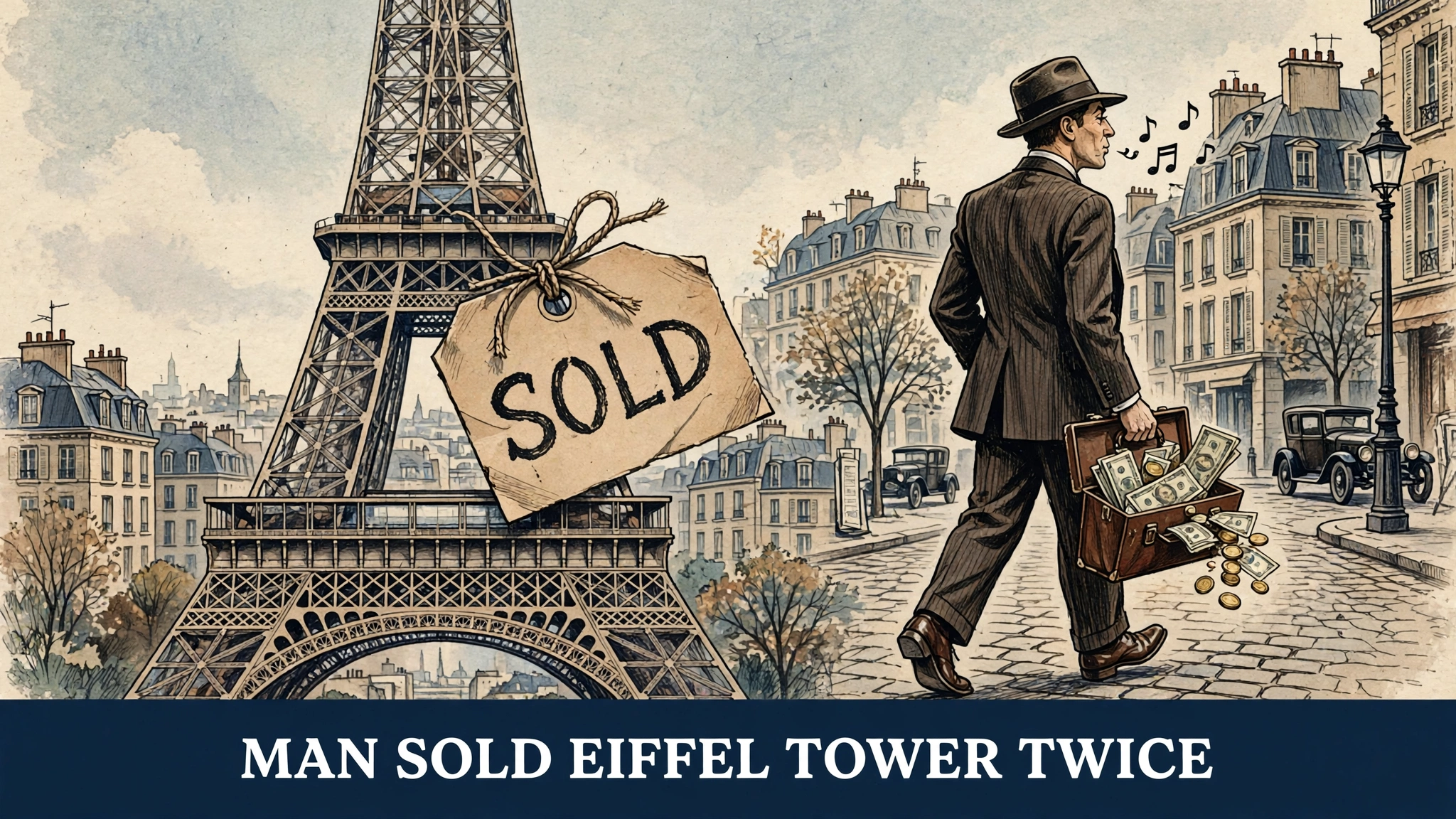
- The picture on this page is an original illustration made for Talha M Blog.