Fernando Villalona: The Life Story Behind the Dominican Merengue Star
In this post
There are singers whose voices sound like a party, and there are singers whose voices sound like a confession, and Fernando Villalona has always been the second kind, even when the band behind him was playing the fastest merengue in the room. They call him El Mayimbe, a word that in Dominican speech means a chief, a leader, the one everybody looks to, and he was the first artist to carry that name. He earned it not by shouting the loudest but by singing love songs as if he had lived every word of them, and by surviving a life that, at its worst, nearly destroyed him. His story is not a straight line from talent to triumph. It is a rise, a fall, and a slow return, and that is why Dominicans still listen to him the way they listen to a relative who has been through something and come out the other side.
Ramón Fernando Villalona Évora was born on 7 May 1955 in the north-west of the Dominican Republic, in Monte Cristi province, and he grew up in Loma de Cabrera, a town in the neighbouring province of Dajabón, close to the border with Haiti. Loma de Cabrera is a small, quiet place, far from the capital, and a boy growing up there in the 1960s would have had little reason to expect that his voice would one day fill stadiums. Villalona had the voice, though, and he had it early, and he also had a taste for the slow, romantic ballad, the bolero, the kind of song that asks a singer to hold a note and mean it. That taste set him apart from the start, because most young merengue singers wanted to be fast and loud. Villalona wanted to be felt.
Over more than fifty years he has recorded more than twenty albums, covering merengue, bachata, bolero, and Christian music, and his songs — “Tabaco y Ron”, “Celos”, “Te Amo Demasiado”, “La Hamaquita”, “Dominicano Soy”, “Sonámbulo”, “Carnaval”, “Cama y Mesa”, “Feliz Cumbe”, “Dominican York” — have become part of the Dominican songbook. He has spoken openly about his years of drug use, about the heartbreak that fed it, and about the faith that helped him recover, and he has done so in public, in interviews, without hiding behind a manager’s statement. This is the story of a singer who became a star before he was twenty, who lost his way in the middle of that stardom, and who found a way back that most people in his position never find.
A Ballad Voice from the Border Country
Loma de Cabrera sits near the border between the Dominican Republic and Haiti, in a region of hills, farms, and small towns where life moves at the pace of the seasons. Villalona’s parents were Virginia Arcadia Évora de Villalona and Ángel Ramón Villalona, and the family lived the kind of life that many Dominican families of the time lived, close together, with little money and a strong sense of who they were. Music was part of that life, but not in the way it was part of a professional musician’s household. It was the music of the radio, of the church, of gatherings where somebody sang because somebody always sang, and the young Fernando listened to all of it.
What made him unusual, even as a child, was the kind of song he loved. He was drawn to ballads and boleros, to slow songs about love and loss, and he sang them with a seriousness that surprised adults. A bolero is not a song you can rush. It asks the singer to hold a note, to let a phrase breathe, to let the words land one at a time, and a boy who can do that is a boy who understands something about feeling that most children do not. Villalona understood it, and he carried that understanding into merengue later, when he began to sing fast songs with a slow singer’s phrasing, stretching a line here, softening a note there, and giving a dance record the emotional weight of a ballad.
His father would later become, in Villalona’s own telling, his biggest saviour, the person he turned to when he needed guidance most. That detail matters, because it tells us that the family bond survived everything that came later, including the years when Villalona was at his lowest. A father who can be a saviour to a famous son is a father who stayed present through the fame, the money, and the trouble, and Villalona has spoken about his father with a gratitude that sounds genuine rather than rehearsed. In a story full of managers, promoters, and fellow musicians, the father is the steady figure, the one who was there at the beginning and was still there when the singer needed to be pulled back.
The border region also shaped him in a quieter way. A town near Haiti is a town where two cultures meet, where the music, the food, and the speech of two countries mix, and a singer who grows up in such a place learns early that identity is not a simple thing. Villalona would later record a song called “Dominicano Soy”, I Am Dominican, a declaration of identity that only makes sense if you understand that identity had to be claimed, not assumed. He claimed it loudly, in a song that became one of his best known, and the claim carried more weight because it came from a man who had grown up on the edge of the country, looking both ways.
Third Place at the Festival de la Voz
Villalona’s first real opening came in 1971, when he took part in a search for new talent organised by Amucaba, a local artists’ association. The event was called “El Festival de la Voz”, the Festival of the Voice, and Villalona, still a teenager, entered it as a ballad singer. He did not win. He finished in third place, and that third place turned out to be enough. It was enough for people in the Dominican music business to notice him, enough for him to be counted among the best performers at the event, and enough to change the direction of his life.
Third place is an interesting result, because it is not the result that makes headlines, and it is not the result that guarantees a career. A winner gets a contract and a photograph in the newspaper. A third-place finisher gets a polite mention and has to work for everything after that. Villalona worked for it. The festival gave him a name among musicians and a reason to believe that his voice, which he had only ever used at home and in small gatherings, could hold its own in front of judges and an audience. That belief, once planted, did not leave him.
The festival also put him in the path of Wilfrido Vargas, who was already building a reputation as a bandleader and who hired Villalona to sing with his group, Los Hijos del Rey, the Sons of the King. It was an odd match on paper: a ballad singer joining a merengue group, a young man who loved slow songs stepping into a band that played fast ones. Villalona himself has said that he wanted to bring ballad phrasing into merengue, to sing the fast music with the feeling of a slow song, and Vargas gave him the chance to try. That experiment, a romantic voice inside a dance band, became the foundation of Villalona’s whole style.
He was still a teenager, and he was suddenly singing professionally, travelling, recording, and being heard by audiences far beyond Loma de Cabrera. The speed of that change is hard to overstate. One year he was a boy from a border town entering a talent contest. The next he was a professional singer in one of the country’s rising merengue groups. Fame, when it arrives that fast and that young, does not come with instructions, and Villalona would spend much of the next two decades learning, painfully, what it cost.
Los Hijos del Rey and the Merengue Lesson
Los Hijos del Rey was Wilfrido Vargas’s group, and Villalona joined it as a singer, learning merengue from the inside. His first recording in the genre with the group was “Homenaje a Tatico Henríquez”, a tribute to the accordionist Tatico Henríquez, circulated after Henríquez’s death. A tribute record is a serious assignment for a young singer, because it asks him to honour a dead musician in front of an audience that loved that musician, and Villalona handled it well enough that his name began to circulate more widely. The group even made its debut on a bill shared with the Fania All-Stars, the great salsa supergroup, which meant that Villalona, still in his teens, was sharing a stage with some of the finest Latin musicians in the world.
But the partnership did not last. Villalona’s popularity grew quickly, and soon it grew larger than the group itself. Audiences came to hear him, not only the band, and the balance of the group shifted. Accounts of the split differ in tone, but they agree on the shape: Villalona left Los Hijos del Rey and formed his own orchestra, and Vargas, who had hired him, watched his former singer become a rival and then a star in his own right. It is a common story in music, the young singer who outgrows the band that gave him his start, and it is rarely a comfortable one for either side. In this case, both men survived it and both went on to long careers, which is more than can be said for most such splits.
Forming his own orchestra at the start of the 1980s was a gamble. A singer who leaves a successful group has to hire his own players, pay his own band, book his own dates, and prove that audiences will follow him rather than the name on the group’s banner. Villalona took that gamble, and he took it with a clear idea of what his orchestra should sound like. It would be a merengue orchestra, but it would be led by a singer who thought like a balladeer, who treated every song as a love story, and who believed that a dance record could also break a heart. That idea, which had seemed odd when he joined Los Hijos del Rey, now became his trademark.
The early 1980s were the years when that trademark took hold. He signed with the Kubaney label to make his first tropical records, even though his first love was still the bolero, and the label’s gamble paid off. His orchestra began to record the songs that would define him, and his name began to appear on radio playlists across the Dominican Republic and beyond. He was no longer Wilfrido Vargas’s singer. He was Fernando Villalona, El Mayimbe, and the name, which means a chief, fitted a man who had taken charge of his own career and was now leading his own band into the biggest decade merengue had ever known.
Tabaco y Ron and the Eighties Peak
The 1980s were Villalona’s great decade, and the songs from those years are the ones Dominicans still sing today. “Tabaco y Ron”, from 1982, is the most famous of them, a song about tobacco and rum, about the pleasures and the pains of a life lived hard, and it became one of his signature records. Around it came a run of titles that reads like a catalogue of Dominican feeling: “Celos”, jealousy; “Te Amo Demasiado”, I love you too much; “La Hamaquita”, the little hammock; “Dominicano Soy”, I am Dominican; “Sonámbulo”, sleepwalker; “Carnaval”, carnival. Each of these songs gave Villalona a different shade of romance to sing, and he sang them all with the same deep, warm voice, a voice that sounded as if it had lived the words it was singing.
Two other titles belong in any account of his peak. “Cama y Mesa”, bed and table, is a song about domestic love, about the small, daily life of a couple, and it showed that Villalona could sing about ordinary life as well as about grand passion. “Dominican York” spoke to the Dominican community in New York, the immigrants who had left the island for the United States and who carried its music with them, and it gave those listeners a song that named their double life, Dominican at home and New Yorker on the street. “Feliz Cumbe” and “Musica Latina” belong to the same period, records that kept his name on the radio and his band on the road, and together they built a catalogue that few merengue singers could match.
What made these records work was the combination of a fast band and a slow singer’s heart. The orchestra played merengue at dance speed, with brass and percussion driving the dancers forward, while Villalona sang over it with the phrasing of a bolero singer, holding a note, letting a line linger, and giving the dancers a reason to feel something as well as move. It was a combination that should not have worked, and it worked beautifully, because Villalona understood that a party is not only about movement. It is also about memory, about the person you danced with last year, about the love that ended and the love that might begin tonight. His songs gave dancers a story to carry onto the floor with them.
By the middle of the decade he was one of the defining voices of Dominican merengue, and his popularity had not declined since it first rose. He toured, he recorded, he appeared on television, and he lived the life of a star, with the money, the attention, and the freedom that stardom brings. That freedom, as it turned out, was also the beginning of his trouble, because a life without limits is a life in which a young man can lose his way very quickly, and Villalona, like many stars before him, lost his.
The Hard Years: Heartbreak, Drugs, and Isolation
Villalona has spoken openly about the period that followed his rise, and his honesty about it is one of the most striking things about him. After a painful break-up, he fell into drug use, and the drugs led to a period of isolation in which he withdrew from the people around him, even as he kept singing. It is a paradox that runs through his story: he never stopped recording, and some of his best music was made during the years when his personal life was at its worst. The voice that sounded so warm on record was, at the same time, the voice of a man who was hurting, and the hurt may be part of why the records sounded so convincing.
He has said that he began his recovery from drug addiction in 1995, a date that gives the story a shape. It means that the hard years ran through much of the 1980s and into the 1990s, a long stretch of a career spent in the shadow of addiction, and that the recovery, when it came, was not a sudden miracle but a decision, followed by years of work. He has incorporated that experience into his personal and religious testimony, speaking about it in interviews and in public appearances, not as a boast and not as an excuse, but as a fact of his life that he does not hide. That kind of openness is rare among Latin stars of his generation, and it has earned him a respect that goes beyond his music.
The isolation of those years is worth understanding, because it was not the isolation of a man who had been abandoned. He was famous, he was working, and he had a family who loved him. It was the isolation of a man who had built a wall around himself, who could stand in front of thousands of people and feel alone, and who could record a love song in the morning and feel empty in the evening. That is a common experience among addicts, and Villalona’s willingness to describe it, in his own words, has made his story useful to other people who have been through the same thing. He did not only survive his addiction. He turned it into a testimony, and the testimony has helped people who never bought one of his records.
His father, again, was central to the recovery. Villalona has stressed that his father was his biggest saviour at times when he needed guidance most, and that the family did not give up on him during the years when he was hardest to help. A family that stays present through addiction is a family that understands something important: that a person is not only his worst years, and that the singer who made “Tabaco y Ron” was still, underneath the trouble, the boy from Loma de Cabrera who loved ballads. The recovery took time, and it took faith, and it took the kind of support that cannot be bought, and Villalona has never pretended otherwise.
Penelope and the Long Climb Back
The musical sign that Villalona was coming back came in the early 1990s, when he returned to the charts with his own version of “Penelope”, a song by the Spanish singer-songwriter Joan Manuel Serrat. It was a fitting choice for a comeback, because “Penelope” is a song about waiting, about a woman who waits for a lover who may never return, and Villalona sang it as a man who had kept people waiting and was now asking to be heard again. The record worked, and it put him back on the radio at a time when many people had written him off. A comeback record is a difficult thing to make, because it has to sound like the singer people remember and also like a singer who has learned something, and “Penelope” managed both.
The 1990s were, for Villalona, a decade of rebuilding. He kept recording, kept touring, and kept proving that the voice had survived the hard years. He was no longer the young star of the early 1980s, and he did not pretend to be. He was an older singer, with a deeper voice and a harder story, and audiences responded to that honesty. The Dominican public is forgiving toward singers who are honest about their failures, and Villalona’s honesty, combined with the quality of his singing, gave him a second career that many of his contemporaries never achieved.
In 2010 he joined the collective recording of “Somos el Mundo”, a song recorded to aid Haiti after the earthquake that devastated the country that year. The gesture mattered, because Haiti is the country across the border from Loma de Cabrera, the country Villalona had grown up beside, and the earthquake was a disaster that Dominicans felt personally. His participation was not a career move. It was a neighbour helping a neighbour, and it fitted the man he had become, a singer who understood that his voice could be used for something other than his own fame.
A year later, in 2011, he celebrated forty years in the music business, a milestone that few singers reach, and he marked it by releasing “Mi Luz”, an album of Christian music, in October of that year. The album was a statement of faith, a record in which Villalona praised God, sang about his troubled past, and described how his life had changed. For a singer known for songs about tobacco, rum, and jealousy, a Christian album was a sharp turn, and it was a turn he made openly, without apology and without embarrassment. He had found faith, and he wanted his audience to know it, and the album gave him a way to say so in the language he knew best, the language of song.
Mi Luz, Fifty Years, and a Singer Who Will Not Retire
The years after “Mi Luz” showed a singer who had settled into a different kind of career, one built on legacy rather than on chasing the charts. He continued to perform, to record, and to appear at festivals and concerts, and his audiences now included people who had grown up with his songs, people who had danced to “Tabaco y Ron” at their weddings and who now brought their children to hear him sing it live. That kind of audience is a gift, because it does not demand novelty. It demands honesty, and Villalona, by then, had honesty in abundance.
In May 2022, the Dominican Senate recognised him for his fifty-year musical career, an honour that placed him among the most important cultural figures in the country. A Senate recognition is not a chart position. It is a statement by the state that a singer’s work belongs to the nation, and for a boy from Loma de Cabrera it was a long way from the Festival de la Voz in 1971. He accepted the honour as a working singer, not as a retired one, because he had no intention of retiring. He has told audiences that he will not retire from his career as a singer until the Lord tells him to, a statement that sounds like a joke until you realise he means it, and that he has built his later life around it.
He has also used his public standing for causes beyond music. He is reported to have marched to the parliament of the Dominican Republic to push for legislation protecting the needs of children with special needs, a cause that shows a different side of the man who once sang about tobacco and rum. A singer who marches to parliament for disabled children is a singer who understands that fame is a tool, and that it can be used for people who have no voice of their own. Whether or not every detail of that campaign is widely documented, the direction of it fits the Villalona of his later years, a man who had survived his own troubles and wanted to use what he had learned to help others.
In recent years he has had some health problems that have made performing a difficult task, and he has spoken about the feeling of the Holy Spirit coming through him when he sings, saying that he feels goosebumps and knows the audience feels the same. That image, of a singer in his late sixties feeling the music pass through him, is a good place to leave him. He began as a boy who loved ballads in a border town, he became a star, he lost his way, he found it again, and he is still singing, still testifying, still refusing to retire. The voice that once sang “Tabaco y Ron” now sings “Mi Luz”, and the distance between those two songs is the distance of a life, lived fully, with all its mistakes and all its recoveries intact.
My Take:
I think Fernando Villalona is the most human of the great merengue singers, and I mean that as the highest praise I can give. Most stars present a polished version of themselves, a version with the rough edges sanded off, and Villalona has never done that. He has told the public, in his own words, that he used drugs, that he was heartbroken, that he isolated himself, and that he found his way back through faith and through his family. That kind of honesty is rare in any business, and it is especially rare in Latin music, where a singer’s image is often guarded by managers and record labels. Villalona guards nothing. He tells you what happened, and he lets you decide what to think of it, and I think that honesty is why his audiences have stayed with him for fifty years.
What moves me most about his early life is that he was a ballad singer first. He did not start out wanting to be a merengue star. He wanted to sing slow songs about love, and he entered a talent contest as a ballad singer, and he finished third. Third place is not a triumph, and it is not a failure either. It is a beginning, and Villalona treated it as one. He took the third place and turned it into a career, first with Los Hijos del Rey, then with his own orchestra, and he did it by bringing the ballad into the merengue, by singing fast music with a slow heart. I think that is a beautiful idea, and I think it explains why his merengue sounds different from other people’s merengue. Other singers sing the dance. Villalona sings the feeling underneath the dance, and the dancers feel it, even if they cannot name it.
I keep thinking about the moment he left Los Hijos del Rey, because it is the kind of moment that defines a career. He was a young singer in somebody else’s band, and his popularity grew until it was bigger than the band, and he had to choose: stay safe inside a successful group, or leave and risk everything on his own name. He left, and he formed his own orchestra, and the gamble paid off, but it could easily have gone the other way. I admire the courage of that choice, and I also admire the fact that both men, Villalona and Wilfrido Vargas, survived it and went on to long careers. A lot of musical splits end in bitterness that lasts for decades. This one ended with two stars, and that says something good about both of them, even if the split itself was painful at the time.
His songs from the 1980s are the ones I return to most, and “Tabaco y Ron” is the one I think about hardest, because it is a song about pleasure and pain at the same time. Tobacco and rum are pleasures, and they are also poisons, and the song knows both things at once. It does not preach, and it does not celebrate blindly. It describes a life, and it lets the listener decide what to feel about it. I think that ambiguity is why the song has lasted. A song that only celebrates a pleasure becomes dated when the pleasure fades. A song that only condemns it becomes a sermon. “Tabaco y Ron” does neither, and so it still sounds true, forty years later, to people who have lived the life it describes and to people who have only watched it from a distance.
I also think about “Dominicano Soy”, because it is a song about identity, and identity is something Villalona had to think about more than most singers. He grew up in Loma de Cabrera, near the Haitian border, in a place where the Dominican Republic meets another country, and a singer from such a place cannot take his identity for granted. He has to claim it, and he claimed it in a song, loudly, in public, for everybody to hear. I respect that. A lot of people inherit an identity and never think about it. Villalona thought about his, and he sang about it, and the song became an anthem for Dominicans who had also had to claim who they were, whether they were living in Santo Domingo or in New York.
The hard years are the part of his story I find hardest to write about, because I do not want to be sentimental about addiction, and I do not want to be judgmental either. Villalona has said that he began his recovery in 1995, which means the trouble lasted for years, through the height of his fame, and that he kept singing through it. I think about what that must have been like, to stand on a stage in front of thousands of people who love you, and to feel alone, and to go back to a hotel room and feel emptier than before. That is a lonely way to live, and I am glad he survived it. I am also glad he talks about it, because his testimony has helped people who are going through the same thing, and a singer who can help a stranger in that way has done something more valuable than making a hit record.
His father’s role in the recovery stays with me, too. Villalona has called his father his biggest saviour, and I believe him, because a father who stays present through a son’s worst years is doing something that cannot be faked. It is easy to love a successful son. It is hard to love a son who is hurting himself, and to keep showing up, and to keep believing that the boy you raised is still inside the man who is struggling. That kind of love is the foundation of Villalona’s recovery, and I think it is also the foundation of his later faith, because faith, at its best, is the belief that a person can be saved even when he cannot save himself. Villalona believes that, because he lived it.
The comeback record, “Penelope”, is a detail I love, because it is such a clever choice. A song about waiting, about a woman who waits for a lover who may never come back, sung by a man who had kept his audience waiting and was now asking to be heard again: that is not an accident. It is a singer choosing a song that says what he cannot say in an interview, and saying it in the language he knows best. I think that is what great singers do. They do not explain themselves. They choose a song, and the song explains them, and the audience understands without needing a press release. “Penelope” explained Villalona, and the audience listened, and the comeback worked.
I find “Mi Luz”, the Christian album from 2011, genuinely moving, and not only because it is a religious record. It is moving because it is a public statement of change, made by a man who had every reason to keep his faith private. He could have recorded a Christian album quietly, or kept it as a personal project, but he released it openly, in the year he celebrated forty years in music, and he sang about his troubled past and how his life had changed. That takes courage, because it invites people to judge you, to say that you have changed too much, or that you are preaching, or that you are not the singer they remember. Villalona did it anyway, and I think that is the act of a man who has stopped performing for other people’s approval and started singing for himself and for God. That is a freedom most stars never achieve.
His statement that he will not retire until the Lord tells him to is one I have thought about a lot. On the surface it sounds like a joke, a singer’s way of saying he will keep going forever, but I think he means it literally, and I think it tells us something important about how he sees his voice. He does not see it as his property, to be used up and discarded. He sees it as a gift, given to him for a purpose, and he will keep using it until the giver tells him to stop. That is a humble way to think about talent, and it is the opposite of the way most stars think, which is that their talent belongs to them and they can retire whenever they like. Villalona’s way is older, and I think it is wiser, and it explains why he is still singing in his seventies, with health problems, in front of audiences who love him.
I also want to say something about the Senate recognition in 2022, because it is easy to dismiss such honours as politics, and in this case I do not think that is fair. Fifty years in music is a long time, and a Senate that recognises it is saying something true: that Villalona’s songs belong to the country, not only to the singer, and that the country is grateful. I think that gratitude is deserved. His songs have been played at weddings, at funerals, at parties, and at quiet moments when somebody needed to hear a voice that understood what they were feeling. A catalogue like that is a public good, and the Senate was right to say so.
If I could ask Villalona one question, it would be about the boy who sang ballads in Loma de Cabrera, and whether that boy would recognise the man he became. I think he would, and I think he would be surprised by how much of the boy survived: the love of a slow song, the seriousness about feeling, the willingness to sing about love as if it mattered more than anything else. The boy did not become a different person. He became a larger version of himself, with more money, more fame, more trouble, and more faith, but the core of him, the ballad singer, stayed the same. That is a rare thing, and it is why his story feels like a life rather than a career.
Finally, I think Villalona’s life teaches a lesson that is easy to state and hard to live: that a person can fall and rise again, and that the rising is not a return to the person he was before the fall, but the creation of a new person, one who carries the fall with him and is stronger for it. Villalona did not erase his hard years. He sang about them, he testified about them, and he built his later life around the knowledge they gave him. That is not a small achievement. It is the achievement of a man who refused to be defined by his worst years, and who insisted on being defined by his whole life, and I think that is a definition worth remembering.
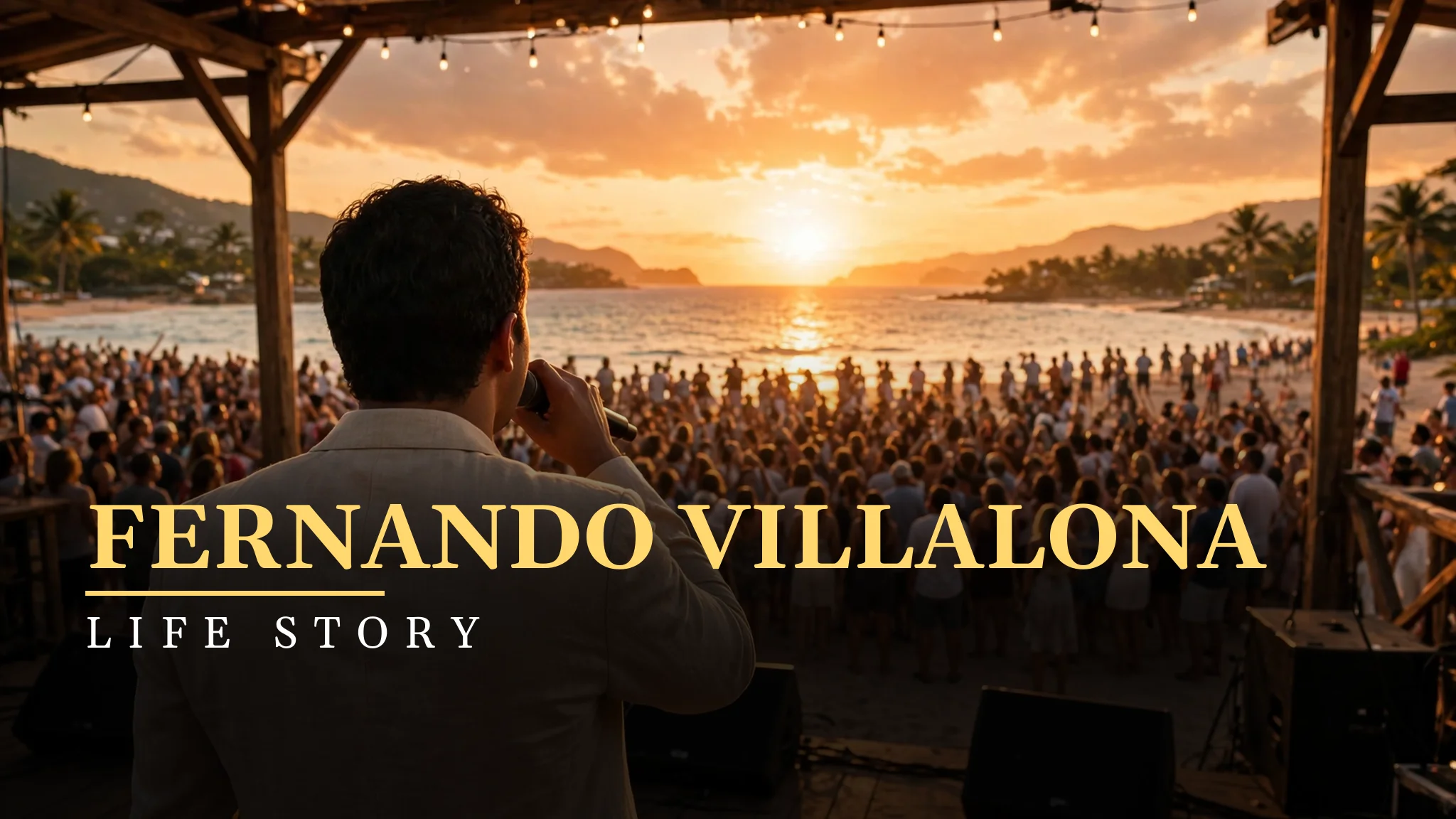
There is one last image I carry from his story, and it is of a man in his seventies, standing on a stage with a microphone, feeling the music move through him, and knowing that the audience feels it too. That is not a performance. It is a communion, and it is the reason Villalona’s audiences keep coming back. They do not come only to hear a song. They come to stand in the same room as a man who has lived, fallen, risen, and kept singing, and to feel, for an evening, that their own falls and risings are not the end of the story either. That feeling is worth more than any award, and it is the true legacy of El Mayimbe, and it will outlast every record he ever made, every stage he ever stood on, and every song he ever sang.
And I will end with the song that started this reflection, “Tabaco y Ron”. It is a song about pleasure and pain, about a life lived hard, and it is still played at Dominican parties today, more than forty years after it was recorded, because it tells the truth about a life that many people have lived. Villalona sang that truth, he lived it, he survived it, and he is still singing, and that is why his audiences will keep listening, for as long as he has a voice to sing with.
Frequently Asked Questions
Where was Fernando Villalona born? Fernando Villalona was born as Ramón Fernando Villalona Évora on 7 May 1955 in Monte Cristi province, in the Dominican Republic, and he grew up in Loma de Cabrera, in the province of Dajabón.
What is Fernando Villalona’s most famous song? His most famous songs include Tabaco y Ron, Cama y Mesa, Dominican York, and Feliz Cumbe. Tabaco y Ron is one of his signature songs, and it is still played at Dominican parties today.
Why is Fernando Villalona called El Mayimbe? He is called El Mayimbe because the name means a leader or a chief, and it fits his strong, confident presence on stage and his status as one of the greats of merengue.
Did Fernando Villalona struggle with addiction? Yes, Fernando Villalona has spoken openly about his struggles with drugs during his years of fame. He later turned to faith, became a Christian, and rebuilt his life.
What group did Fernando Villalona start with? He began his career singing with the group Los Hijos del Rey, which means the Sons of the King, before he became a solo star in the 1980s.
Is Fernando Villalona still performing? Yes, Fernando Villalona is still performing and recording in his seventies. He tours across Latin America and the United States, and his concerts are still full of fans who dance and sing along.


