François Cluzet: The Life Story Behind France's Quiet Powerhouse
In this post
- A Young Actor in Paris
- Round Midnight and the American Years
- Tell No One: The César and a Star Is Born
- Intouchables: Friendship, Laughter, and the World
- Médecin de campagne, Le Brio, and the Later Years
- L’Été meurtrier and the Early Promise
- Médecin de campagne: The Country Doctor
- Le Brio: The Professor and the Power of Words
- A Career Built on Trust
- My Take:
François Cluzet is a quiet powerhouse. He is not a loud star, he does not seek the spotlight, and he does not play heroes with big speeches. He plays ordinary men who are trying their best, men who are tired, men who are in pain, and men who find a way to keep going. He does it with a stillness, an honesty, and a depth that make audiences trust him completely. When he is on screen, you believe him, because he does not act as if he is acting. He simply is the man he plays.
He is best known for two films that changed his life: Ne le dis à personne, for which he won the César for Best Actor, and Intouchables, one of the biggest French films of all time, in which he played a wealthy man in a wheelchair who finds friendship with his carer. Those two films made him a star, but he had been working for more than thirty years before them, building a career film by film, with patience and with care.
His story is about patience, about hard work, and about a man who did not give up, even when life was hard. It is a story about an actor who learned to be still, to listen, and to let the truth come through. It is a quiet story, but it is a powerful one.
A Young Actor in Paris
François Cluzet was born on 21 September 1955 in Paris. He grew up in the French capital, in a family that was not in show business, and he discovered acting as a young man. He was drawn to the theatre, to the idea of becoming another person, and to the craft of performance. He studied acting, and he began to work in theatre and in small film roles, learning his trade step by step. He was not an overnight star. He was a young actor who was willing to work hard, to take small parts, and to learn from every job.
His early film roles came in the late 1970s and early 1980s, and he quickly showed that he had a talent for playing complex, troubled men. He appeared in Le Cheval d’orgueil in 1980, and in Coup de foudre in 1983, a film about two women who fall in love, in which he played a supporting role. He was a serious young actor, with a quiet intensity, and directors noticed him. He was not a handsome leading man in the usual sense. He was a character actor with a deep, thoughtful face, and that made him different.
In 1983, he also starred in L’Été meurtrier, a drama about a young woman seeking revenge, in which he played a man caught in a web of secrets. The film was a success, and it showed Cluzet’s ability to play men who are torn, who are in pain, and who are trying to understand the world around them. He was building a reputation as an actor who could be trusted with difficult roles, and who would give them his best.
He also worked in theatre, and he learned the discipline of the stage, the importance of voice, of movement, and of listening to the other actors. He was a student of his craft, and he took it seriously. He did not want to be famous. He wanted to be good, and that wish would guide his whole career. He was a young man with a quiet ambition, and he was ready to work for many years to achieve it.
Round Midnight and the American Years
In 1986, Cluzet appeared in Round Midnight, a film directed by Bertrand Tavernier, about an American jazz musician in Paris, played by Dexter Gordon. Cluzet played a small but important role, and the film was a critical success, winning awards and praise around the world. It was a film about music, about loneliness, and about the love of art, and Cluzet was part of a cast that included some of the best actors and musicians of the time. The film showed that he could work in an international production, and that he could hold his own with great artists.
Through the 1980s and 1990s, he continued to work in French films, taking on a wide range of roles. He played lovers, husbands, criminals, and ordinary men, and he brought the same quiet honesty to each one. He was a reliable actor, a man who directors could trust, and a man who audiences recognised, even if they did not always know his name. He was building a career, film by film, without fanfare, and without seeking the spotlight.
He also faced difficult years in his own life, and he has spoken openly about his struggles, including problems with alcohol. He did not hide his difficulties, and he did not pretend that his life was perfect. He faced them, he worked on them, and he came through them. That honesty, about his own life, is part of what makes his acting so truthful. He knows what pain feels like, and he brings that knowledge to his roles. He does not act pain. He remembers it, and he lets the audience see it.
By the early 2000s, Cluzet was a respected actor in France, with a long list of films behind him, and a reputation for quality. He was not yet a star in the sense of a household name, but he was a man whose work was admired by directors, by critics, and by other actors. He was waiting for the role that would make the wider public see what those who worked with him already knew: that he was one of the finest actors in France.
Tell No One: The César and a Star Is Born
That role came in 2006, when he starred in Ne le dis à personne, known in English as Tell No One, directed by Guillaume Canet. Cluzet played Alexandre Beck, a man whose wife was murdered years earlier, and who receives a message that suggests she may still be alive. The film was a thriller, full of twists, tension, and emotion, and Cluzet carried it with a quiet, desperate intensity. He played a man who is grieving, who is hopeful, and who is afraid, all at the same time, and the audience believed him completely.
The film was a huge success in France, and it won many awards. Cluzet won the César Award for Best Actor, the highest honour for an actor in France, and it was a moment of triumph after more than twenty-five years of work. He was fifty-one years old, and he had finally been recognised as a leading man. It was not a sudden success. It was the result of decades of hard work, of small roles, of learning, and of patience. He had earned it, and everyone in French cinema knew it.
Tell No One showed Cluzet’s talent for playing a man under pressure, a man who is trying to find the truth, and who will not give up. He played Beck with a stillness that made the tension even greater. He did not shout, he did not wave his arms, and he did not try to impress the audience. He simply was the man, and the audience felt his pain, his hope, and his fear. It was a performance that proved he was a great actor, and it opened the door to the biggest role of his life.
After Tell No One, Cluzet was in demand, and he took on roles that suited his new status as a leading man. He was no longer only a character actor. He was a star, and he was ready to use that stardom to tell stories that mattered to him. He had waited a long time, and he was not going to waste the chance.
Intouchables: Friendship, Laughter, and the World
In 2011, Cluzet starred in Intouchables, directed by Olivier Nakache and Éric Toledano, a film that became one of the biggest French films of all time. He played Philippe, a wealthy man who is paralysed from the neck down after a paragliding accident, and who hires Driss, a young man from the suburbs played by Omar Sy, as his carer. The film was about their unlikely friendship, about laughter, about dignity, and about two men from very different worlds who learn from each other. It was funny, moving, and full of heart, and it was seen by millions of people in France and around the world.
Cluzet played Philippe with a remarkable stillness. He could not move his body, so he had to act with his face, his voice, and his eyes. He showed Philippe’s pain, his humour, his intelligence, and his joy, all without moving. It was a performance of great discipline, and it was praised by critics and by audiences everywhere. He was nominated for the César for Best Actor, and the film became a phenomenon, one of the most successful French films ever made.
Intouchables was more than a film. It was a cultural moment in France, a film that brought people together, that made them laugh and cry, and that talked about disability, about class, and about friendship in a way that was honest and hopeful. Cluzet’s performance was at the heart of it. He played a man who had lost the use of his body, but who had not lost his mind, his humour, or his dignity. He showed that a person in a wheelchair is still a person, with desires, with jokes, and with a life to live. That message mattered, and it mattered to millions of people.
The film also made Cluzet a star around the world. He was known in America, in Germany, in Japan, and in many other countries, and he was praised for a performance that was both brave and beautiful. He had gone from a quiet character actor to a world star, and he had done it by playing a man who could not move, and who could still make the audience laugh and cry. It was a triumph, and it was a fitting reward for a lifetime of work.
Médecin de campagne, Le Brio, and the Later Years
After Intouchables, Cluzet continued to act in films that interested him, choosing roles that were serious, human, and real. He starred in Médecin de campagne in 2016, playing a country doctor who is ill himself, and who must find a replacement. The film was about rural France, about the life of a doctor, and about the difficulty of caring for others when you are sick yourself. Cluzet played the doctor with warmth, with weariness, and with a deep sense of duty, and the film was praised for its honesty.
He also starred in Le Brio in 2017, playing a law professor who helps a young woman from the suburbs learn to debate. The film was about education, about class, and about the power of words, and Cluzet played the professor with a sharp, funny, and ultimately kind intelligence. He was a man who could play a teacher, a doctor, a patient, and a friend, and who could make each role feel real.
He has continued to work in films and on television, taking on roles that suit his age and his experience. He plays fathers, grandfathers, and men of wisdom, and he brings the same quiet honesty to each one. He has not tried to stay young. He has let his career grow with him, and he has given strong, honest performances in each new stage of his life. He is a man who has seen French cinema change, who has helped to change it, and who has kept his integrity through it all.
His personal life has been kept mostly private, but he has spoken about his family, his children, and his love of a simple life away from Paris. He is not a star who lives for gossip. He is a working actor, a father, and a man who loves his craft. He has faced hard times, he has overcome them, and he has kept going. That steadiness is part of what makes him a great actor, and a great man.
L’Été meurtrier and the Early Promise
In 1983, Cluzet starred in L’Été meurtrier, a drama about a young woman seeking revenge for a crime committed years earlier. He played a man caught in a web of secrets, a man who is torn, who is in pain, and who is trying to understand the world around him. The film was a success, and it showed Cluzet’s ability to play complex, troubled men with honesty and with depth. He was a young actor, but he was already serious, already thoughtful, and already capable of great performances. The film was a sign of what was to come, and it showed that he was an actor to watch.
He also appeared in Coup de foudre in 1983, a film about two women who fall in love, in which he played a supporting role with quiet strength. He was not the star of the film, but he made his character feel real, and he showed that he could be generous on screen, making the other actors look better. That generosity, that willingness to support rather than to steal a scene, is a mark of a great actor, and Cluzet had it from the start. He was a team player, on screen and off it, and directors loved working with him for that reason.
His early films were about real people, real pain, and real choices, and Cluzet brought the same honesty to each one. He did not play heroes. He played men who were trying their best, who made mistakes, and who kept going. That honesty made his early work stand out, and it laid the foundation for the great performances that would come later. He was building a career, film by film, with patience and with care, and he was doing it without fanfare, without seeking the spotlight, and without giving up.
Médecin de campagne: The Country Doctor
In 2016, Cluzet starred in Médecin de campagne, playing a country doctor who is ill himself, and who must find a replacement to care for his patients. The film was about rural France, about the life of a doctor, and about the difficulty of caring for others when you are sick yourself. Cluzet played the doctor with warmth, with weariness, and with a deep sense of duty, and the film was praised for its honesty. He showed a man who has given his life to his patients, who knows every family in the village, and who cannot bear to leave them, even when his own health is failing.
The role was a perfect one for Cluzet, because it asked for stillness, for patience, and for a quiet kind of heroism. The doctor is not a hero in the usual sense. He is a man who drives from house to house, who listens to his patients, and who does his job with care. Cluzet played him with a dignity that made the audience respect him, and with a weariness that made them care about him. The film was a success, and it showed that Cluzet, in his sixties, was still at the top of his art, still giving performances that were honest, moving, and true.
Médecin de campagne also showed his love of rural France, and his understanding of the people who live there. He played a man who belongs to a village, who knows its people, and who is a part of its life. That is a role that Cluzet understands deeply, because he is an actor who belongs to France, who knows its people, and who tells their stories with respect. The film is a quiet one, but it is a powerful one, and Cluzet’s performance is at its heart.
Le Brio: The Professor and the Power of Words
In 2017, Cluzet starred in Le Brio, playing a law professor who helps a young woman from the suburbs learn to debate. The film was about education, about class, and about the power of words, and Cluzet played the professor with a sharp, funny, and ultimately kind intelligence. He was a man who is strict, who is demanding, and who believes in his student, even when she does not believe in herself. The film was a success, and it showed Cluzet’s talent for playing a teacher, a mentor, and a man who uses words to change a life.
Le Brio was a film about the importance of speaking well, of learning to argue, and of finding your voice. Cluzet’s character teaches his student not only how to debate, but how to believe in herself, and that lesson is at the heart of the film. He plays the professor with a warmth that grows as the film goes on, from a strict teacher to a kind mentor, and the audience watches that change with joy. It is a performance that shows his range, from a doctor to a professor, from a patient to a teacher, and it proves that he can play any man who cares about others.
The film also showed his love of language, and his understanding of how words can change a life. He is an actor who knows the power of a well-spoken line, and he brings that knowledge to his roles. Le Brio is a film about words, and Cluzet, a quiet actor, shows that words matter, and that they can open doors for people who have been shut out. That is a powerful message, and it is one that he delivers with honesty and with heart.
A Career Built on Trust
Cluzet has built his career on trust. Directors trust him to carry a film, actors trust him to be generous on screen, and audiences trust him to tell the truth. He has worked with the same directors again and again, including Guillaume Canet, Olivier Nakache, and Éric Toledano, and those long relationships are a sign of the trust he inspires. He arrives on time, he knows his lines, he listens, and he gives his best, film after film. That reliability is rare, and it is one of the reasons he has worked steadily for more than forty years.
He is also trusted by audiences, who know that a film with François Cluzet will be honest, well-made, and worth watching. He does not make films for fame. He makes films because he believes in them, and that belief shows in his work. He chooses his roles carefully, he prepares thoroughly, and he gives his best to each one. That is a career built on trust, and it is a career that has lasted, because trust, once earned, is not easily lost. Cluzet has earned it, and he has kept it, for more than forty years.
My Take:
When I think about François Cluzet, I think about stillness. He is an actor who does not need to move, to shout, or to make big gestures. He can sit in a wheelchair, unable to move his body, and still make the audience laugh and cry. That is a remarkable gift, and it is one that takes great discipline. I admire that stillness, because so much of life today is about noise, about movement, about being loud. Cluzet shows that quiet can be stronger than noise, and that a still face can say more than a long speech. When I think about Intouchables, I remember his face, not his body. I remember his smile, his eyes, and the way he listened to Driss. That is acting at its finest, and it is acting that comes from a deep understanding of people.
I admire his patience, because he worked for more than twenty-five years before he won the César for Best Actor. He took small roles, he played supporting parts, and he kept working, even when the world did not notice him. That is a long time to wait, and it takes a strong person to keep going without praise. I think about the people who work hard for years without recognition, and I see Cluzet as an example for them. He did not give up, he did not become bitter, and he did not stop trying to be good. He kept working, and when the right role came, he was ready. That readiness is not luck. It is the result of decades of work, and it is a lesson for anyone who feels that their time has not come yet. Keep working, and be ready when it comes.
What moves me most is Intouchables, because it is a film about friendship between two men who could not be more different. Philippe is rich, white, paralysed, and cultured. Driss is poor, Black, able-bodied, and from the suburbs. They should have nothing in common, and yet they become friends, and they change each other’s lives. Cluzet plays Philippe with a dignity and a humour that make the audience love him, and he lets Driss teach him how to laugh again. I think about the friendships in my own life, and about the people who are different from me, and I see that difference is not a barrier. It is a gift. Cluzet and Omar Sy show that friendship can cross any divide, if both people are willing to listen, to laugh, and to care. That is a powerful message, and it is one that the world needs today.
I think about his honesty about his own struggles, and I respect it deeply. He has spoken openly about difficult years in his life, about problems with alcohol, and about the work he did to overcome them. He did not hide it, and he did not pretend to be perfect. He faced it, and he talked about it, and that honesty makes his acting more truthful. When he plays a man in pain, we believe him, because we know that he knows what pain feels like. I think about the people who hide their struggles, who are afraid to admit that they need help. Cluzet shows that admitting it is not weakness. It is strength, and it is the first step to getting better. That is a lesson that goes far beyond acting.
There is something I respect about the way he plays ordinary men. He does not play superheroes, and he does not play kings. He plays doctors, teachers, fathers, and patients, men who are trying their best in a difficult world. That is a choice, and it is a good one. Ordinary men are the people we know, the people we love, and the people we are. Cluzet plays them with respect, and he shows that an ordinary life can be a great story. I think about the doctors, the teachers, and the fathers I know, and I see them in his performances. He honours them, and that honour matters.
I feel a quiet sadness when I think about the years he spent without recognition, because he deserved it earlier. He was a great actor for many years before the world noticed, and that is unfair. But I also feel hope, because the world did notice, in the end. Tell No One and Intouchables gave him the recognition he had earned, and they gave him a chance to show what he could do. That is a hopeful thought: that good work will be seen, even if it takes time. It may take twenty-five years, but if you keep working, and if you keep being good, the world will see you. Cluzet proves that, and it is a message I want to remember.
For a young reader, I think the lesson of Cluzet’s life is to be patient, to be honest, and to be still. Do not rush, do not pretend, and do not shout to be heard. Work hard, be honest about your struggles, and let your work speak for itself. Cluzet did that, and he became one of the finest actors in France, not by being loud, but by being true. That is a lesson for anyone who wants to do something well: be patient, be honest, and be still, and the truth will come through.
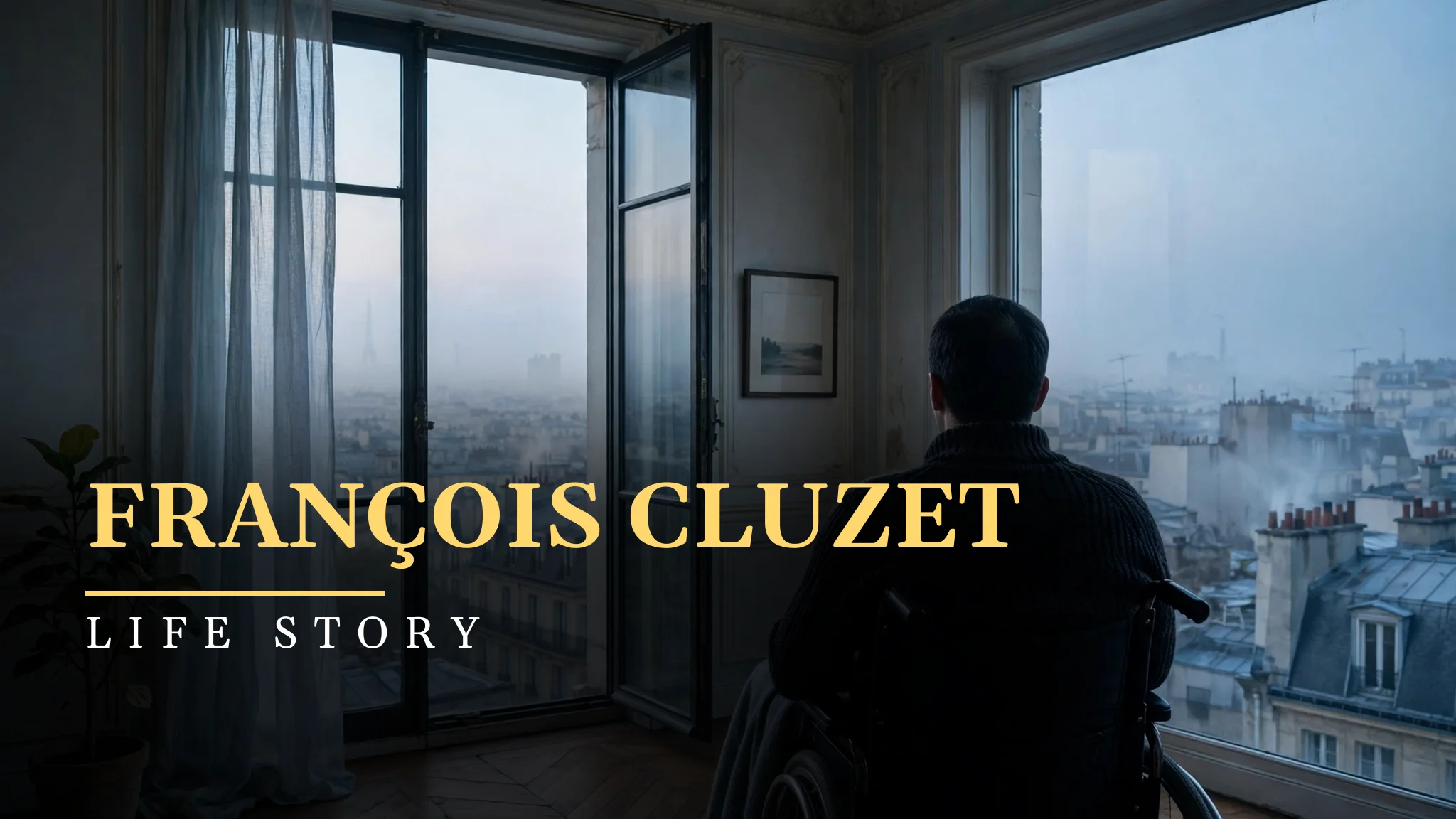
I keep thinking about the man in the wheelchair, looking out over Paris at dawn, the mist, the rooftops, and the quiet light. It is a picture of a man who cannot move, but who can still see, still think, and still feel. That is Cluzet for me: a man who sits still, who looks out, and who understands. He does not need to move to be powerful. He only needs to be present, and to let us see the world through his eyes. In the end, I think that is his gift: he shows us that stillness is not emptiness. It is full of life, full of thought, and full of love.
I also think about his early work, and about the patience it took to wait for recognition. He worked for more than twenty-five years before he won the César, taking small roles, playing supporting parts, and learning from every job. That is a long time to wait, and it takes a strong person to keep going without praise. I think about the people who work hard for years without recognition, and I see Cluzet as an example for them. He did not give up, he did not become bitter, and he did not stop trying to be good. He kept working, and when the right role came, he was ready. That readiness is not luck. It is the result of decades of work, and it is a lesson for anyone who feels that their time has not come yet.
I think about Tell No One, and about the man who receives a message that his murdered wife may still be alive. Cluzet plays Alexandre Beck with a quiet, desperate intensity, a man who is grieving, who is hopeful, and who is afraid, all at the same time. He does not shout, he does not wave his arms, and he does not try to impress the audience. He simply is the man, and the audience feels his pain, his hope, and his fear. That is a performance that proves he is a great actor, and it is one that I will never forget. It shows that stillness can be more powerful than noise, and that a quiet man can hold a film.
I also think about Médecin de campagne, and about the country doctor who is ill himself. It is a film about caring for others when you are sick, about duty, and about the love of a village. Cluzet plays the doctor with warmth and with weariness, and he makes the audience care about a man who spends his life caring for others. I think about the doctors, the nurses, and the carers who work hard every day, and who do not get the praise they deserve. Cluzet honours them in this film, and he shows that an ordinary life, lived with duty and with love, can be a great story. That is a message that matters, and it is one that Cluzet delivers with honesty.
There is something I respect about the way he plays ordinary men. He does not play superheroes, and he does not play kings. He plays doctors, teachers, fathers, and patients, men who are trying their best in a difficult world. That is a choice, and it is a good one. Ordinary men are the people we know, the people we love, and the people we are. Cluzet plays them with respect, and he shows that an ordinary life can be a great story. I think about the ordinary men in my own life, and I see them in his performances. He honours them, and that honour matters more than any award.
Finally, I think about the man in the wheelchair, looking out over Paris at dawn, the mist, the rooftops, and the quiet light. He does not need to move to be powerful. He shows us that stillness is not emptiness. It is full of life, full of thought, and full of love, and that is a gift that will last as long as people watch his films.
I also think about Le Brio, and about the professor who teaches a young woman to debate. It is a film about the power of words, about education, and about believing in yourself. Cluzet plays the professor with a sharp intelligence and a growing kindness, and he shows that a teacher can change a life. I think about the teachers who changed my life, who believed in me when I did not believe in myself, and I see them in his performance. A good teacher does not only teach a subject. A teacher teaches a student to believe, and that belief can open doors that seemed closed forever. Cluzet shows that in Le Brio, and he does it with honesty and with heart.
I think about his quietness, and about how it is often misunderstood. People think that quiet people have nothing to say, but Cluzet shows that quiet people have the most to say, if you listen. He acts with stillness, with a look, with a pause, and the audience listens, because they know that something true is coming. I think about the quiet people in my own life, and about how much they have taught me, simply by being present, by listening, and by speaking only when they have something true to say. Cluzet is one of them, and his quietness is a strength, not a weakness.
Finally, I think about the man in the wheelchair, looking out over Paris at dawn, the mist, the rooftops, and the quiet light. He does not need to move to be powerful. He shows us that stillness is not emptiness. It is full of life, full of thought, and full of love.
I also think about trust, and about how Cluzet has built his career on it. Directors trust him, actors trust him, and audiences trust him, because he is honest, reliable, and generous. He arrives on time, he knows his lines, and he gives his best, film after film. I think about the people I trust in my own life, and about how trust is earned slowly, and lost quickly. Cluzet has earned trust over forty years, and he has kept it, by working hard and by being true. That is a lesson for anyone who wants to build something lasting: be trustworthy, be reliable, and let your work speak for itself.
I also think about his generosity on screen, and about the way he makes other actors look better. He does not try to steal a scene. He listens, he reacts, and he lets his colleagues shine. That generosity is a mark of a great actor, and it is one that Cluzet has shown for forty years. I think about the people who make others better, who lift them up instead of pushing them down, and I see Cluzet among them. He is a quiet powerhouse, and his quietness makes room for others, and that is a beautiful way to act, and a beautiful way to live.
Frequently Asked Questions
When and where was François Cluzet born?
François Cluzet was born on 21 September 1955 in Paris, France. He grew up in the French capital and began acting as a young man, working in theatre and in small film roles before building a long career in French cinema.
What film won François Cluzet the César for Best Actor?
He won the César Award for Best Actor for Ne le dis à personne, known in English as Tell No One, released in 2006 and directed by Guillaume Canet. He played Alexandre Beck, a man whose murdered wife may still be alive, in a performance that made him a leading man at fifty-one.
What is Intouchables about, and who did François Cluzet play?
Intouchables, released in 2011, is a film about the friendship between Philippe, a wealthy man paralysed after a paragliding accident, played by Cluzet, and Driss, his carer from the suburbs, played by Omar Sy. The film became one of the biggest French box office hits of all time.
What other films is François Cluzet known for?
His other well-known films include L’Été meurtrier, Round Midnight, Médecin de campagne, and Le Brio. He has played doctors, teachers, fathers, and ordinary men, bringing the same quiet honesty to each role over a career of more than forty years.
Has François Cluzet spoken about difficult times in his life?
Yes, he has spoken openly about difficult years in his own life, including problems with alcohol, and about the work he did to overcome them. His honesty about his struggles is part of what makes his acting so truthful and trusted by audiences.
Is François Cluzet still working today?
Yes, he is still active in French film and television, taking on roles as fathers, grandfathers, and men of experience. He keeps his private life mostly out of the public eye, focusing on his work and his family.


