Free Fun Ideas For Families
In this post
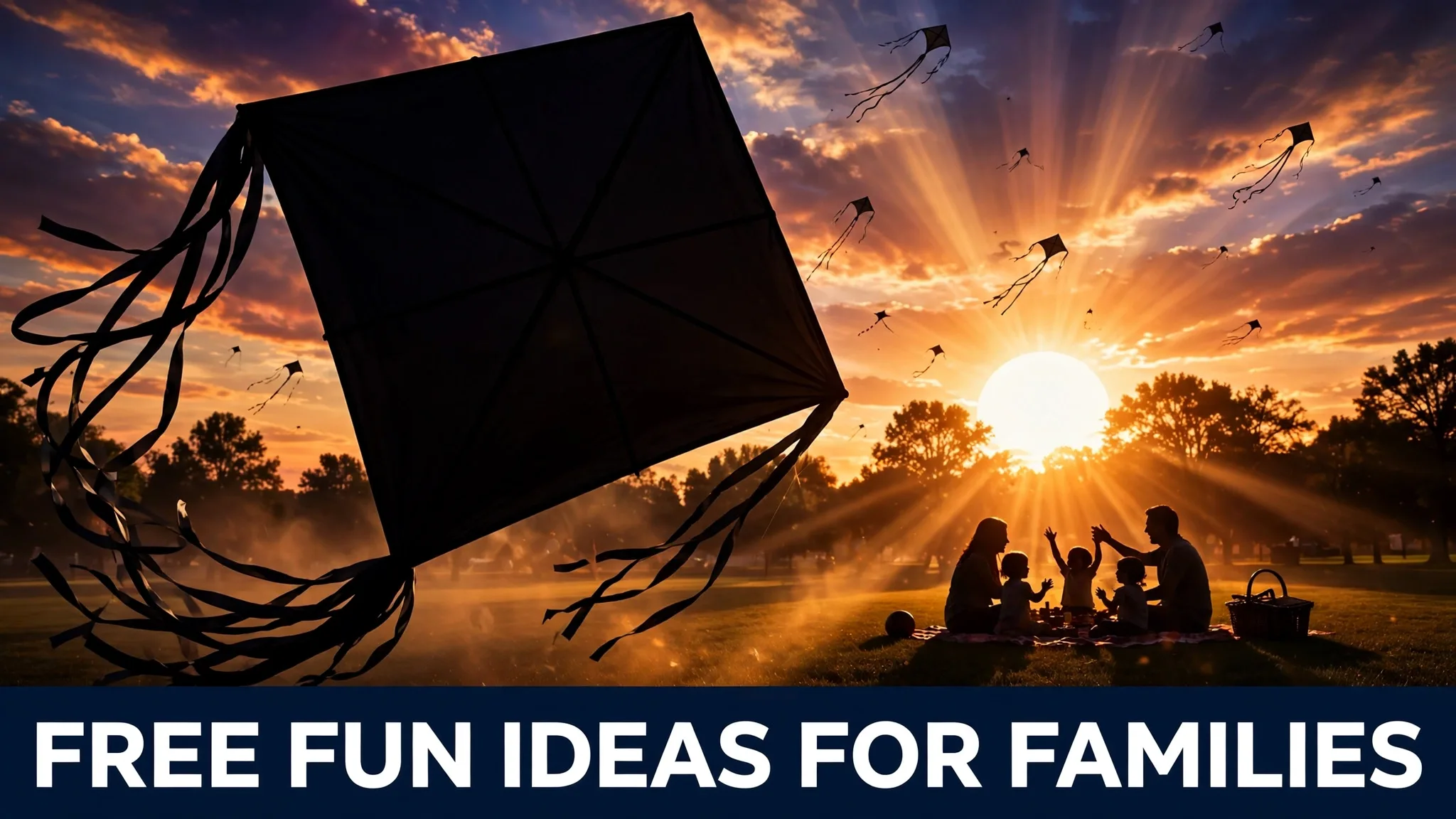
The bench was warm from the afternoon sun, and from it I could see the whole of Saturday happening at once. A father was teaching his daughter to fly a kite that kept diving like a drunk bird, and both of them laughed every time it fell. Two boys shared one cricket bat and argued, cheerfully, about every run. A grandmother unpacked a steel container of rice and handed it round, and nobody at that blanket looked like they were missing anything at all.
Nothing on that grass had cost a ticket. No gate had charged them. No ride had beeped for a token. And yet the children would remember this Saturday the way children remember birthdays — not because it was expensive, but because everyone was in it together.
Fun has a price tag only when we let someone else sell it to us. Most of the best family days are not bought. They are arranged, with a little food from home and a little time set aside, and they work because the family is the entertainment, not the audience.
A picnic costs almost nothing
The family on the blanket had the whole secret in one bag: food cooked at home, a bottle of water each, a ball, and a blanket. Rice, bread, fruit — the same food the family would have eaten at the kitchen table, eaten instead under a tree. The meal cost nothing extra. The setting made it feel like an occasion.
A picnic works because it changes the room, not the menu. Children who pick at dinner at home will eat happily on grass, because eating outside turns a normal meal into an event. Pack the food the night before if mornings are rushed. Bring one ball, one rope, or a pack of cards, and the afternoon fills itself. Choose a shady spot, carry the rubbish home, and the park stays clean for the next family.
If the weather turns, the same picnic moves indoors: a blanket on the living room floor, the same food, the same game. Children love a change of room almost as much as a change of scenery, and the cost stays at zero.
The library card
On the way home from the park, I passed the public library, and its door was open and its rooms were full. A library is one of the few places left that asks nothing of a family except quiet. A public library lends books and offers reading space, usually free, and many also run story sessions for children and study corners for students.
For a family watching its money, a library card is a small miracle. A child can borrow a new story every week without buying a single book. An older student can revise in a calm room with a table and light. A parent can read the newspaper, borrow a novel, or sit with a younger child in the children’s corner. The cost is the walk there and back.
Make it a weekly habit. Let each child choose their own books — choice is half the pleasure — and let the librarian recommend titles when the shelf feels overwhelming. A family that visits the library every Saturday soon owns a habit worth more than a shelf of bought books.
One screen, one family
Evenings at home can be the easiest trap for spending. One bored child, one glowing advertisement, and suddenly the family is paying for a film, a delivery and a game add-on before anyone has decided to spend anything. The cure is to decide the evening in advance.
Pick one film for the whole family, make snacks from the kitchen — popcorn from a pot, sliced fruit, a jug of something cold — and watch it together, phones away. A home movie night costs the price of the snacks, which the family would have eaten anyway, and it gives children something they rarely get from a cinema: the whole family laughing at the same scene.
Game nights work the same way. Board games, card games, drawing contests, storytelling rounds where each person adds a line — these cost nothing once the game is in the house, and they are remembered far longer than a bought evening out. The rule that makes it work is simple: everyone plays, including the adults. A game where the grown-ups watch from the sofa is not a family night. It is babysitting with cards.
The notice board habit
The park I sat in had a notice board near the gate, and it was covered in paper: a free health camp, a school fair, a community cricket match, a book sale, a drawing competition for children. None of it cost anything to attend. Most of it would have been missed by families who never stop to read the board.
Free days and community events exist in most towns, but they do not advertise the way paid attractions do. The habit that finds them costs nothing: glance at the notice boards at the park, the library, the school gate and the community centre. Ask teachers and neighbours what is happening at the weekend. Check the local mosque, church or community hall board. A family that looks for free events will find several every month, and each one is a day out that did not touch the budget.
School fairs deserve a special mention. They are often free to enter, full of games and stalls run by people you know, and children enjoy them more than grand outings because their friends are there. A few coins for a game or a snack are a choice, not an entry fee.
Walks, balls and open sky
The simplest fun of all is also the oldest: go outside and move. A walk together costs nothing and gives a family something rare — an hour of conversation without screens. Children talk more on walks than at tables, perhaps because walking side by side is easier than sitting face to face. Let the child choose the route sometimes, even if it leads past the puddles and the stray cats.
Open spaces give sports for free. Cricket with a borrowed bat, football with any ball, badminton in a street or courtyard, skipping ropes, hide and seek — these games need no club, no uniform and no fee. A group of neighbouring families can take turns bringing the ball, and the children gain friends as well as exercise.
On rainy days, the same energy moves indoors: build a fort from blankets and chairs, cook something simple together, or start a family project like a puzzle that lives on the table for a week. The point is never the activity itself. The point is the hour spent together, which is what children will actually remember.
When there is no park nearby
Fairness demands one honest note. Not every family has a park at the end of the street, a library in walking distance, or a safe open space. This post must not pretend otherwise. If the park is far, the picnic becomes a rooftop or courtyard meal. If there is no library, books can be borrowed from friends, schools and neighbours, and stories can be told aloud at home. If the street is not safe for play, the living room becomes the playground, with games and cooking filling the same hour.
Free fun is not a place. It is a decision: that the family’s time together is the treat, and that the treat does not need a ticket. Adapt the ideas to your own area, your own rooms and your own streets, and the Saturdays will still be remembered.
In my view, children remember the day, not the ticket price — and the days they describe years later are almost never the expensive ones.
The kite on the park grass dived again as the sun went down, and the little girl laughed harder than before. Her father wound the string in, patient as anything, and the grandmother folded the blanket with the slow care of someone who had done it a hundred times. They walked home together, carrying a bag that had cost nothing extra, through an evening that had cost nothing at all. That is the whole secret, and it fits in a bag you already own.
Common questions
What can a family do for free on a weekend?
A park picnic with home food, a library visit, a home movie or game night, a walk together, and free community events found on local notice boards. The best free days combine two or three small things — food from home, an outdoor game, and time together — rather than one grand plan.
Is the library really free?
In most places, yes. A public library lends books and offers reading space, usually free, and many run story sessions and study areas. Some services, like printing or late fines, may carry small charges, but borrowing books and sitting down to read costs nothing.
How do I find free events near me?
Look at notice boards at parks, libraries, schools and community centres, and ask teachers and neighbours what is happening. School fairs, community matches, book sales and free health camps are often advertised locally rather than online, so the habit of looking is what finds them.
What if there is no park or library near us?
Adapt the ideas to what you have. A rooftop or courtyard picnic, books borrowed from friends or school, living-room games, and cooking together all give the same thing: family time without a ticket. Free fun is a decision about time together, not a particular place.
Do children enjoy free activities as much as paid ones?
Very often, more. Children remember who was with them and what they did together, not what it cost. A kite that keeps falling, a game the whole family plays, a picnic under a tree — these are the days children describe years later, while expensive outings are often forgotten within weeks.