Han Ye-ri: The Life Story Behind Korea's Brave Star
In this post
- Growing Up in Seoul and the World of Dance
- Short Films, Independent Cinema, and the First Steps
- As One, Sea Fog, and the Breakthrough in Film
- Hello My Twenties, Worst Woman, and Television
- Minari and the World Stage
- Pachinko and the Years After Minari
- The Dancer’s Body and the Art of Moving on Screen
- My Take:
Han Ye-ri is one of the bravest actresses in Korea, and bravery, for her, does not mean playing heroes. It means playing real women in difficult stories, women who are poor, tired, angry, or far from home, and playing them without asking for pity. She began as a dancer, she moved into short films and independent cinema, and she built her career slowly, role by role, until the world noticed her in Minari, a small American film about a Korean family trying to build a farm in Arkansas. In that film she played a mother who is tired, loving, and afraid, and her performance was praised around the world. She had not chased fame. Fame had found her, because she had been honest for so long.
What makes her story special is the path she took. She did not start in big commercial dramas. She started in art films, in short films, and in stories about ordinary people, and she stayed loyal to those stories even when bigger offers came. She played a North Korean table tennis player, a woman on a fishing boat, a young woman in a coming-of-age film, and a Korean immigrant mother in America. Each role was different, and each one showed a new side of her: her physical skill as a dancer, her ear for language, and her gift for playing women who keep going when life is hard.
This is the story of a dancer who became an actress, an independent film star who became a global name, and a woman who proves that the quiet, brave path can lead to the widest stage of all.
Growing Up in Seoul and the World of Dance
Han Ye-ri was born on 23 December 1984 in Seoul, South Korea. She grew up in the capital, and as a young girl she fell in love with dance. Dance is a demanding art, and it teaches a person discipline, control, and the ability to express feeling without words. Han studied dance seriously, and she went on to study at the Korea National University of Arts, where she majored in dance. She learned how to move, how to breathe, and how to tell a story with her body, and those lessons would shape her acting for the rest of her life.
She was not a girl who dreamed of being a television star. She dreamed of movement, of performance, and of art, and she followed that dream with a seriousness that is rare. Dance taught her patience, because a dancer must practise the same movement hundreds of times before it looks easy. It taught her humility, because a dancer is part of a company, not a star alone. And it taught her how to listen to music, to rhythm, and to the silence between movements. All of those lessons would later show in her acting, in the way she moves on screen and in the way she pauses before she speaks.
As a student, she began to work in short films, small projects made by young directors who wanted to tell honest stories. She was not paid much, and she was not famous, but she was learning, and she was doing work she believed in. She played women who were not glamorous, women who were struggling, and she played them with a truth that came from her dance training: the truth of the body, of tiredness, of hunger, and of hope. That truth became her signature.
She also learned that art is not always easy, and that the path of an independent artist is a hard one. She could have chosen commercial television, and she could have earned more money, but she chose the harder path, because it was the honest one. That choice would define her career.
Short Films, Independent Cinema, and the First Steps
Han Ye-ri’s early acting career was built in short films and independent cinema, a world far from the bright lights of Korean television. She appeared in short films in the mid-2000s, playing young women in small, intimate stories, and directors noticed her. She had a natural presence, a way of being still and of listening, and she could carry a scene without dialogue. That is a rare gift, and it is one that comes from dance, where the body speaks first.
She took on roles in independent films, where the budgets are small and the hours are long, but where the stories are honest. She played women who work in factories, women who live in small towns, and women who are trying to find their place in a changing Korea. She did not care about the size of the role. She cared about whether the story was true, and whether the character felt real. That attitude kept her work fresh, and it meant that when a bigger role came, she was ready for it.
She also studied acting, and she learned how to use her voice, how to speak Korean in different dialects, and how to play characters from different backgrounds. She was building a craft, slowly and carefully, and she was doing it in the hardest school there is: independent film, where there is no money to hide behind, and where the actor must be good or the film fails. She became good, and directors began to call her back.
By the early 2010s, she was a respected name in independent cinema, but she was still not famous. She was a working actress, not a star, and she was proud of that. She took the work seriously, she arrived prepared, and she gave every role her full attention. That professionalism is worth more than it sounds, because in a fast industry, reliability is rare.
As One, Sea Fog, and the Breakthrough in Film
In 2012, Han Ye-ri starred in As One, a film based on the true story of the Korean table tennis team that played as a unified North and South Korean team at the World Championships in 1991. She played a North Korean player, and she had to learn table tennis, learn a North Korean dialect, and play a woman from a very different world. Her performance was praised for its physical skill and its emotional honesty, and the film introduced her to a wider audience. She had shown that she could carry a large, true story, and that she could play a character very different from herself.
In 2014 she starred in Sea Fog, a film produced by Bong Joon-ho, about a fishing boat that takes on illegal migrants, with terrible results. She played a young woman on the boat, a migrant who is trying to reach a better life, and her performance was raw and brave. The film was dark and violent, and it showed a side of Korea that many people do not see: the sea, the boats, and the people who risk everything to cross it. Han played her character with a quiet strength that made the film feel real, and critics praised her work.
Those films showed her range. She could play a sportswoman, a migrant, a student, and a mother, and each time she brought a different energy. She was not repeating herself. She was exploring, and the exploration made her filmography one of the most interesting of her generation. She was also showing that she was willing to take on difficult, physical roles, roles that asked her to use her body as well as her voice, and that willingness came from her dance training.
By the mid-2010s, she was one of Korea’s most respected film actresses, known for her honesty and her bravery. She had not become a television star, but she had become something rarer: an actress whose name promised quality, and whose presence in a film made it better.
Hello My Twenties, Worst Woman, and Television
In 2016, Han Ye-ri began to appear more on television, and she showed that she could do warm, funny, and everyday stories as well as dark films. She starred in Hello My Twenties, a drama about five young women sharing a house, and she played a woman who is cheerful, hardworking, and hiding a painful secret. The drama was a hit with young audiences, and her performance was praised for its warmth and its honesty. She showed that she could be light as well as serious, and that she could play a modern young woman with the same truth she brought to historical and independent films.
In the same year she starred in Worst Woman, a film about a young actress who meets a man and begins a relationship, and her performance was praised for its naturalness. She played a woman who is trying to be honest about love, and who makes mistakes, and the film felt like real life, not like a drama. It was a small film, but it was an important one, because it showed that Han could carry a romantic story without turning it into a fantasy.
She continued to move between film and television, taking on roles that interested her, and she did not care whether a project was big or small. She cared whether the story was true, and whether the character was worth playing. That attitude kept her career fresh, and it meant that audiences never knew what she would do next, only that she would do it well.
She also appeared in My Unfamiliar Family in 2020, a drama about a family that must face its secrets, and her performance was praised for its maturity. She was no longer the young woman of Hello My Twenties. She was a grown woman, playing a grown woman, and her acting carried the weight of that growth. She was becoming one of Korea’s most complete actresses, at home in film and in television, in comedy and in tragedy.
Minari and the World Stage
In 2020, Han Ye-ri starred in Minari, an American film directed by Lee Isaac Chung, about a Korean family that moves to rural Arkansas in the 1980s to start a farm. She played Monica, the wife and mother, a woman who is tired, who misses Korea, and who worries about her son’s health and her family’s future. The film was small, quiet, and deeply human, and it became a phenomenon. It won awards at the Sundance Film Festival, and it was nominated for six Academy Awards, winning one for Youn Yuh-jung, who played the grandmother.
Han’s performance was at the heart of the film. She played Monica as a woman who is strong and afraid at the same time, a woman who loves her husband but who disagrees with his dream, and who must decide whether to stay or to leave. She played that dilemma with great honesty, in Korean and in English, and audiences around the world recognised her. She was not playing a stereotype of a Korean mother. She was playing a real woman, and that realness made the film work.
Minari introduced Han Ye-ri to a global audience, and it showed that her quiet, honest style could carry an international film. She was invited to festivals, she was interviewed by the world press, and she was praised by critics who had never seen her work before. She handled that attention with the same calm she brings to her acting, and she did not let it change her. She remained, at heart, an independent film actress, loyal to the stories she believed in.
The film also showed the power of a small story. Minari is not about heroes or villains. It is about a family, a farm, and a grandmother who plants a Korean herb by a creek, and it is about the hope that something will grow. Han played that hope with a quiet strength that stayed with viewers long after the film ended.
Pachinko and the Years After Minari
After Minari, Han Ye-ri continued to choose work that mattered to her. In 2022 she starred in Pachinko, an Apple TV+ series based on the best-selling novel about a Korean family across four generations, from Japanese-occupied Korea to modern Japan and America. She played a young woman in the family’s story, and the series was praised for its scope, its beauty, and its acting. It introduced her to an even wider global audience, and it showed that she could work in a large, international production without losing her honesty.
She also continued to work in Korean film and television, taking on roles that interested her, and she remained loyal to independent cinema when she could. She did not chase Hollywood, and she did not try to become an American star. She chose work that felt true, whether it was in Korea or abroad, and that choice kept her career strong. She was not only a Korean actress. She was a global actress, but she was still herself.
Today, Han Ye-ri remains one of Korea’s most respected actresses, known for her bravery, her honesty, and her range. She is in her early forties, and she is doing some of the best work of her life. She has shown that a career can be built slowly, on honest stories, and that the quiet path can lead to the widest stage of all. She is still growing, and her best work may still be ahead of her.
The Dancer’s Body and the Art of Moving on Screen
One of the most distinctive things about Han Ye-ri is her background as a dancer, and that story deserves to be told in full, because it explains almost everything about the way she acts on screen. She studied dance at the Korea National University of Arts, and she learned to express feeling with her body, to be still and to move with purpose, and to tell a story without words. A dancer learns discipline, because the same movement must be practised hundreds of times before it looks easy. A dancer learns humility, because she is part of a company, not a star alone. And a dancer learns to listen to music, to rhythm, and to the silence between movements. Han carried all of those lessons into acting, and they make her performances different from those of actors who have only ever spoken lines.
Her physical skill shows most clearly in As One, where she played a North Korean table tennis player and had to learn the sport, the footwork, and the speed of the game. Table tennis is a fast, precise sport, and playing a champion requires a body that can move quickly and accurately, and a mind that can think in the same rhythm. Han learned that, and her performance was praised for its physical truth. She did not pretend to play table tennis. She learned to play it, and the camera could see the difference. That willingness to learn a new physical skill for a single role is a mark of a serious actress, and it is one that comes from her dance training, where the body is not an afterthought but the main instrument.
Her dance background also shows in the way she walks, stands, and sits on screen. When she plays Monica in Minari, she walks through a farmhouse with the tired, careful movements of a woman who has worked all day, who is worried about her son, and who is trying to hold her family together. When she plays a young woman in Hello My Twenties, she moves with a lighter, quicker energy, the energy of a student who is still discovering the world. In each role, her body tells you who she is before she speaks, and that physical honesty is rare. Most actors rely on their faces and their voices. Han relies on her whole body, and that makes her performances feel complete, as if the character exists from head to toe.
There is also a quiet side to her dance training that deserves attention. A dancer learns to be still, to hold a pose, and to let the audience look at her, and Han uses that stillness in her acting to powerful effect. In Sea Fog, she plays a woman on a boat who is afraid, and she is still for long stretches, watching, listening, and waiting, and that stillness makes the fear feel real. In Minari, she sits at a table, listens to her husband, and says almost nothing, and that silence is more powerful than any speech could be. She understands that stillness is not emptiness. It is fullness, held quietly, and it is one of the most difficult things an actor can do well.
Finally, it is worth saying that her dance training has given her a different relationship to time. A dancer lives in rhythm, in the beat of music, and in the slow build of a performance, and Han brings that sense of rhythm to her acting. Her scenes have a tempo, a pace, and a breathing that feels musical, even when there is no music. She pauses before she speaks, she lets a moment last, and she trusts the audience to stay with her. That trust is a form of respect, and it is one reason her performances feel so alive. She is not rushing to the next line. She is living in the moment, and she is inviting the audience to live there with her.
She has also become a voice for independent cinema in Korea, and that voice matters, because independent films are often overlooked in a country where large commercial films dominate the box office. Han has spoken about the importance of small films, about the need to protect them, and about the way they tell stories that big films cannot tell: stories about poor people, about migrants, about women, and about ordinary life. She does not shout about these things. She speaks about them calmly, and she supports them by working in them, even when the pay is small and the audience is small. That support is a form of leadership, and it is one reason independent filmmakers want to work with her. She is not only an actress in their films. She is a partner, and a believer in what they are trying to do.
Her work in Pachinko also deserves a closer look, because it shows how she can work in a large, international production without losing her honesty. The series tells the story of a Korean family across four generations, from Japanese-occupied Korea to modern Japan and America, and it is a story about identity, about home, and about what it means to belong nowhere and everywhere at once. Han plays a woman in that story with a quiet strength that fits the series perfectly, and she does it in Korean, in Japanese, and in English, moving between languages as easily as she moves between film and television. That ability to move between worlds is rare, and it is the result of years of learning, of listening, and of being willing to start again in a new place.
My Take:
I think Han Ye-ri is one of the bravest actresses in Korea, and I have thought about why that is while writing her story. She did not start in big commercial dramas. She started in short films and independent cinema, playing women who are poor, tired, and far from home, and she stayed loyal to those stories even when bigger offers came. I think that takes a special kind of courage, because it is easy to take the easy money and the easy fame, and it is hard to keep telling difficult stories when no one is watching closely. Han kept telling them, and in the end the world came to her, because her honesty could not be ignored. That is a lesson for anyone who feels that their quiet work does not matter. It matters, and it will be seen, if you keep doing it well.
What moves me most is her performance in Minari. I have thought about Monica a great deal, because she is a mother who is tired, who misses home, and who is afraid for her family, and she plays that tiredness without asking for pity. She does not cry loudly. She cooks, she works, she argues with her husband, and she keeps going, because that is what mothers do. I think many immigrant mothers will recognise themselves in her, and many children of immigrants will recognise their own mothers. That recognition is a powerful thing. It says that your family’s story matters, even if it is small, even if it is about a farm in Arkansas and not about a palace or a war. Han played that small story with great love, and the world loved it back.
I also admire her dance background, because I believe it is the reason her acting feels so physical and so true. A dancer learns to express feeling with the body, to be still and to move with purpose, and Han carries that into her acting. When I watch her, I see a woman who does not need many words to tell you how she feels. A look, a pause, a movement of her hands can say more than a long speech, and that is a gift. I wish more actors learned to use their bodies like that. Words are important, but the body tells the truth first, and Han knows that.
Her role in As One stayed with me, because it showed her willingness to do hard physical work for a role. She learned table tennis, she learned a dialect, and she played a North Korean woman with respect and with care. That is not easy. It would have been easy to play a stereotype, or to make the character into a symbol. Han played her as a person, a young woman who is strong, proud, and afraid, and who wants to win for her team and for herself. I respect that. It shows that she takes her work seriously, and that she is willing to learn a new skill, a new language, and a new world for a single role. That is dedication, and it is rare.
I think about Sea Fog a great deal, too, because it is a dark film about people who risk everything to cross the sea, and Han plays a migrant woman with a quiet strength that makes the film feel real. She does not play the character as a victim. She plays her as a person who has made a choice, who is afraid, and who keeps going. I think that is an important way to tell a story about migration, because migrants are not only victims. They are people with hopes, with courage, and with lives of their own. Han understood that, and her performance shows it. I believe that kind of honesty matters, especially in a world where migrants are often talked about as numbers rather than as people.
There is a lesson here about starting small, and I think it is an important one. Han started in short films, in projects with no money and no fame, and she built her career from there. She did not wait for a big break. She made small breaks, again and again, until the small breaks added up to a big one. I think that is how most good careers are built, not in a single moment, but in many small moments of good work. If you are starting small, if you are working on a project that no one sees, I want you to know that it matters. Han Ye-ri proves it.
If I could meet her, I would ask her what dance taught her about acting, and I suspect her answer would be simple and profound. She would probably say that dance taught her to listen to her body, to be patient, and to tell the truth without words. I think that answer would tell us a lot about why her acting feels so alive. She is not only speaking lines. She is living them, in her body and in her silence, and that is a deeper kind of acting.
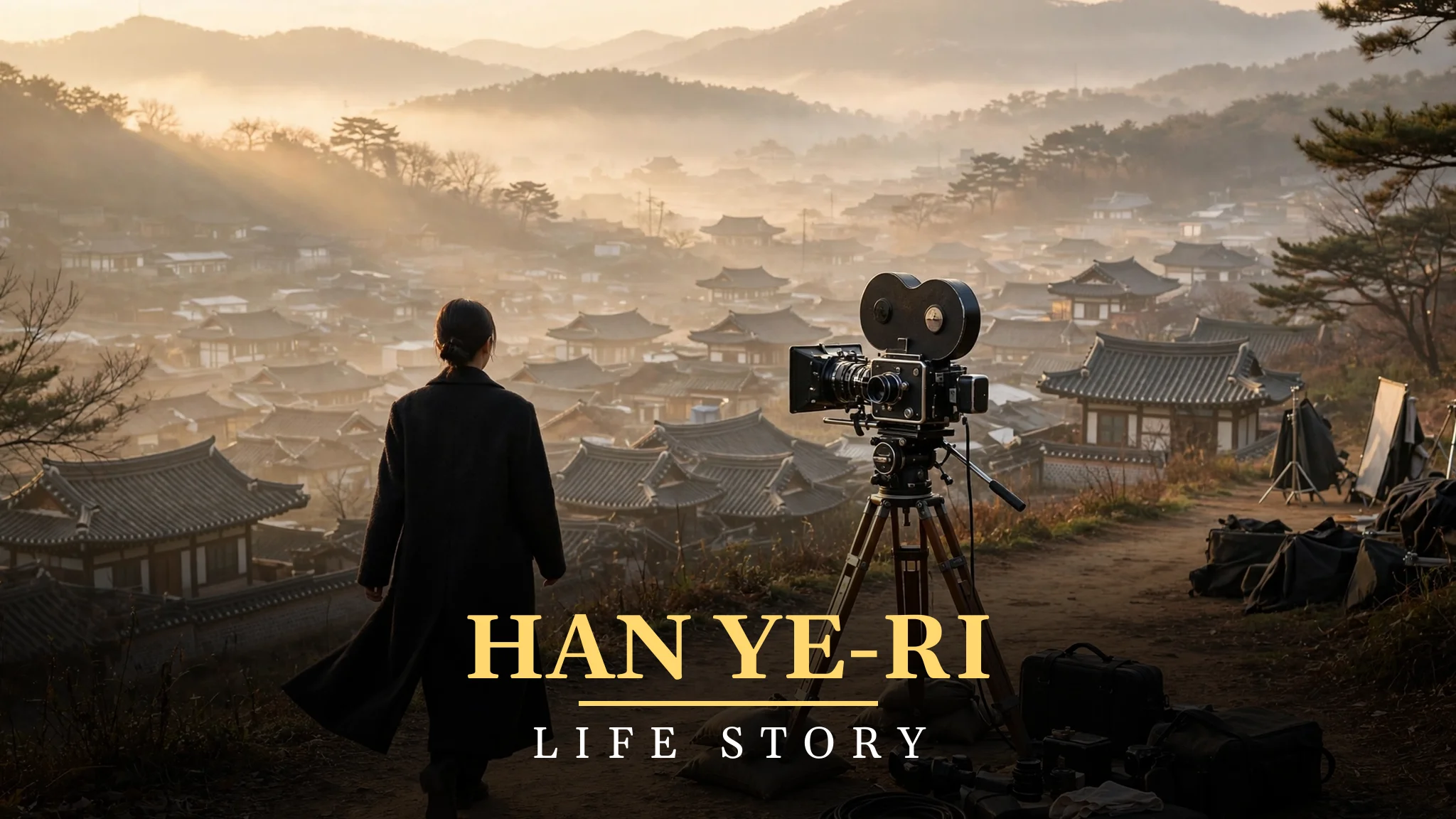
In the end, I come back to the image of her walking toward a film camera on a hill, overlooking a village at sunrise. That image fits her, because she has always seemed like a woman walking toward her work, not away from it, and toward a story that is worth telling. She is not in a hurry. She is walking steadily, in the morning light, toward a camera that is waiting for her. I hope she keeps walking, and I hope her next roles are as brave and as honest as the ones that came before. I think Korean cinema is better because she is in it, and I think anyone who has ever felt like an outsider will find a friend in her films.
One last thought stays with me. Han Ye-ri’s career shows that you do not need to be loud to be heard, and you do not need to be famous to matter. You need to be true, and you need to be brave, and you need to keep telling the stories that others are afraid to tell. If you do those things, the world will find you, as it found her in Minari, in a small farm in Arkansas, in a story about a family trying to grow. That is a beautiful lesson, and I hope it gives hope to every young artist who is starting small.
I also keep thinking about her dance training, because it is such a distinctive part of her story, and because it is one that I wish more people understood. A dancer learns to express feeling with the body, to be still and to move with purpose, and Han carries that into her acting in a way that makes her performances feel complete. When she walks, when she sits, when she is silent, her body tells you who she is, and that physical honesty is rare. I think that is a lesson for all of us. Words are important, but the body tells the truth first, and if you learn to listen to your body, and to trust it, you will be more honest in everything you do.
There is another thought that stays with me, about the way she plays mothers. In Minari, she plays a mother who is tired, who is afraid, and who loves her family with her whole heart, and she does it without making a show of that love. She cooks, she works, she argues, and she keeps going, because that is what mothers do. I think many children of immigrants will recognise their own mothers in her, and many mothers will recognise themselves. That recognition is a powerful thing. It says that your family’s story matters, even if it is small, even if it is about a farm in Arkansas and not about a palace or a war. Han played that small story with great love, and the world loved it back.
I also think about the young artists who start small, in short films and independent projects, and who feel that their work does not matter because no one sees it. Han started small, and she built her career from there, one honest role at a time, until the world found her in Minari. That is a hopeful message, and it is one that I am glad her life tells. Do good work, do it honestly, and do it for a long time, and the world will find you, even if it takes years. That is a simple lesson, and it is one that I will not forget.
If I could watch only one of her performances again, it would be Minari, because it is the film in which her honesty is clearest, and in which her quiet strength is deepest. I would watch it and be reminded that a small story, told with love, can change the world, and that a mother, played with truth, can be the heart of everything. That is a beautiful lesson, and I hope Han Ye-ri keeps teaching it for many years to come.
I also keep thinking about her voice for independent cinema, because it is a voice that is rarely heard, and because it says something important. Han has spoken calmly about the need to protect small films, about the stories they tell that big films cannot tell, and about the way they give a voice to poor people, to migrants, and to ordinary women. I think that is a brave thing to say, because the industry rewards big films and forgets small ones, and because it is easier to stay silent and to take the big money. Han did not stay silent. She worked in small films, she supported them, and she proved that they matter. I hope young filmmakers hear her voice, and I hope audiences hear it too, because small films are where the truest stories are often told.
There is another thought that stays with me, about the way she moves between languages and worlds. In Pachinko, she works in Korean, in Japanese, and in English, and she does it with an ease that comes from years of learning and listening. I think that is a beautiful thing, because it shows that a person can belong to many places at once, and that belonging to many places does not mean belonging to none. She belongs to Korea, to America, and to the world, and she belongs to all of them fully, because she brings herself to each one. That is a lesson for a world that is often divided, and it is one that I am glad her life tells.
I also think about the mothers in her films, and about what they teach us. In Minari, she plays a mother who is tired, who is afraid, and who loves her family with her whole heart, and she does it without making a show of that love. She cooks, she works, she argues, and she keeps going, because that is what mothers do. I think many children of immigrants will recognise their own mothers in her, and many mothers will recognise themselves. That recognition is a powerful thing. It says that your family’s story matters, even if it is small, and Han played that small story with great love.
If I could watch only one of her performances again, it would be Minari, because it is the film in which her honesty is clearest, and in which her quiet strength is deepest, and because it is the film that changed the way I think about family, about home, and about what it means to plant something in a new place and hope that it grows. That is a simple lesson, and it is one that I will not forget.
One more thought stays with me, and it is about hope. Han Ye-ri’s career shows that a small story, told with love, can reach the whole world, and that a quiet actress, working honestly for many years, can be found by audiences she never expected to meet. That is a hopeful message for every young artist who is starting small, and I hope it gives them the courage to keep going, even when no one seems to be watching.
Frequently Asked Questions
What is Han Ye-ri best known for?
She is best known for Minari from 2020, where she played Monica, a Korean immigrant mother trying to build a farm in Arkansas, and for Pachinko, the Apple TV+ series about a Korean family across generations. She is also known for As One, Sea Fog, and Hello My Twenties. Her brave, honest acting has made her one of Korea’s most respected actresses.
Did Han Ye-ri study dance?
Yes, she majored in dance at the Korea National University of Arts, and her dance training shaped her acting. She learned discipline, control, and how to express feeling through the body, and those skills show in her performances. She began acting in short films while she was a student.
What was Han Ye-ri’s role in Minari?
In Minari she played Monica, the wife and mother of a Korean family that moves to rural Arkansas in the 1980s. Her character is tired, loving, and afraid, and she must decide whether to stay with her husband’s dream or to protect her family. Her honest performance was praised around the world.
Has Han Ye-ri won major awards?
Yes, she has won many honours for her film work, including awards for her performances in independent films and in Minari. Critics have praised her for years, and she is regarded as one of Korea’s finest actresses, known for bravery and honesty rather than for commercial fame.
What kind of roles does Han Ye-ri usually play?
She often plays real, complex women, including migrants, mothers, athletes, and young women trying to find their place. She is known for playing characters who are strong and afraid at the same time, and for telling difficult, honest stories. Her range covers independent film, television, and international productions.
What is the best first Han Ye-ri film for someone who has never seen her work?
A new fan should start with Minari for her most famous performance, then watch As One for her physical, brave role as a table tennis player. Hello My Twenties shows her warm, modern side, and Pachinko shows her in a large global series. Together, they give a full picture of her range.


