Hans Zimmer: The Life Story Behind the Film Music Master
In this post
- Frankfurt 1957: A Boy, a Piano, and a Restless Mind
- London, the Buggles, and the Move Into Film
- Rain Man and the First Oscar Nomination
- The Lion King and the Oscar Win
- Gladiator, Pirates, and the Blockbuster Years
- Interstellar, Dunkirk, and the Nolan Years
- Dune, the Second Oscar, and the Later Years
- What Hans Zimmer Leaves Behind
- Hans Zimmer Live: The Music on Stage
- My Take:
Hans Zimmer is the composer whose music has made millions of people cry, cheer, and hold their breath in dark cinemas around the world. When a lion walks across the African savannah, when a gladiator steps into the arena, when a spaceship drifts towards a black hole, it is often Zimmer’s music that makes the moment feel huge. He has written the scores for more than 150 films, he has won two Academy Awards, and he has become one of the most famous film composers in history. Yet his story starts in a quiet, ordinary way: a boy in Frankfurt, Germany, sitting at a piano, learning to play the notes that would one day fill the largest screens in the world.
Zimmer was born in Frankfurt in 1957, and he grew up in a musical home. He learned the piano as a child, but he was not a disciplined student in the normal sense. He did not like formal lessons, and he preferred to experiment, to play what he felt, and to discover sounds on his own. That spirit of experimentation stayed with him for his whole career. He moved to London as a young man, he worked with pop bands, he learned how to use synthesisers, and he slowly found his way into film music. He did not go to a famous music school, and he did not follow the usual path for a composer. He made his own path, and it led him to Hollywood.
What makes his story special is the range of his work. He has written music for animated films, for war films, for science fiction, for historical epics, and for superhero stories, and each score sounds different. The Lion King is warm and joyful. Gladiator is powerful and sad. Inception is deep and mysterious. Interstellar is vast and lonely. Dune is strange and beautiful. This is the story of how a self-taught boy from Frankfurt became the most in-demand film composer in the world, and how he changed the sound of cinema.
Frankfurt 1957: A Boy, a Piano, and a Restless Mind
Hans Florian Zimmer was born on 12 September 1957 in Frankfurt am Main, in West Germany. Frankfurt was a busy, modern city, rebuilding after the Second World War, and Zimmer grew up in a home where music was part of everyday life. His mother was a musician, and his father was an engineer, and the house was full of sounds: piano, radio, and the noise of a city coming back to life. Zimmer learned the piano as a child, but he did not enjoy formal lessons. He found them boring, and he preferred to play by ear, to try new things, and to make up his own tunes.
As a teenager, he was drawn to rock music and to electronic sounds. He listened to bands that used synthesisers, and he was fascinated by the idea that a machine could make new sounds that no one had heard before. He also loved films, and he was drawn to the way music could change the feeling of a scene. A quiet scene with the right music could feel sad. A loud scene with the right music could feel thrilling. That idea, that music could tell a story without words, stayed with him and became the centre of his career.
He did not go to a conservatory or a famous music school. He learned by doing, by playing in bands, by working in studios, and by experimenting with new technology. That self-taught path gave him a freedom that many classically trained composers do not have. He was not bound by rules about how music should be written. He was free to try new sounds, to mix electronic music with orchestral music, and to break the rules when the film needed it. That freedom became his greatest strength.
When he was a young man, he moved to London, where the music scene was lively and full of opportunities. London gave him work, friends, and a chance to learn how the professional music world worked. It was in London that he met the people who would help him move from pop music into film music, and it was there that his career began to take shape.
London, the Buggles, and the Move Into Film
In London in the late 1970s and early 1980s, Zimmer worked as a keyboard player and composer for pop bands. He was a member of the band The Buggles, who had a worldwide hit with “Video Killed the Radio Star” in 1979, one of the most famous songs of the era. Working with the Buggles taught him about pop music, about recording studios, and about how to make a song that would reach millions of people. It also taught him about synthesisers, and about how electronic sounds could be used in new ways.
He also worked with the composer Stanley Myers, who was an established film composer in Britain. Myers became a mentor to Zimmer, and he taught him how film music worked: how to write for a scene, how to work with a director, and how to make music that served the story rather than showing off. Zimmer worked as Myers’ assistant, he played keyboards on film scores, and he slowly learned the craft of film composing. It was a practical education, learned in studios and on film sets, not in a classroom.
His first work as a film composer came in the 1980s, with small British films. He wrote music for “Moonlighting” in 1982, and for other films that gave him a chance to practise. He was learning how to write for an orchestra, how to use electronic sounds in a film, and how to work under pressure, with deadlines and directors who had strong ideas. Those early films were not famous, but they were important, because they gave him the experience he needed for the bigger work that was coming.
In the late 1980s, he moved to Hollywood, and his career changed completely. He was now in the centre of the film world, working with major studios and major directors. He had left London, left the pop world, and become a film composer, and he was ready for the opportunity that would make him famous.
Rain Man and the First Oscar Nomination
In 1988, Zimmer wrote the score for “Rain Man”, a film directed by Barry Levinson and starring Dustin Hoffman and Tom Cruise. The film was about two brothers, one of whom is autistic, and it was a sensitive, emotional story. Zimmer’s music was quiet, gentle, and full of feeling, and it matched the film perfectly. The score was nominated for an Academy Award, and it showed the film world that Zimmer was a composer to watch. He was no longer a pop musician trying film music. He was a film composer with a real gift.
The success of “Rain Man” brought him more work in Hollywood. He wrote the score for “Driving Miss Daisy” in 1989, for “Thelma & Louise” in 1991, and for “Crimson Tide” in 1995. Each score was different, and each showed a different side of his talent. He could write music that was soft and emotional, music that was tense and exciting, and music that was big and powerful. Directors liked working with him because he listened to them, he understood their films, and he gave them music that made their stories stronger.
He also began to build a team around him. In the 1990s, he founded Remote Control Productions, a studio in Santa Monica, California, where he worked with other composers and musicians. The studio became a place where young composers could learn, where new sounds could be tried, and where film music could be made in a collaborative way. Many composers who later became famous worked with Zimmer at Remote Control, and the studio became one of the most important places in film music.
By the early 1990s, Zimmer was one of the most in-demand composers in Hollywood, and he was working on some of the biggest films of the decade. He had come a long way from Frankfurt and London, and he was now at the centre of the film world.
The Lion King and the Oscar Win
In 1994, Zimmer wrote the score for “The Lion King”, the Disney animated film about a young lion named Simba. The film became one of the most successful animated films of all time, and Zimmer’s music was a huge part of its success. He worked with the South African singer Lebo M and with the composer Elton John, who wrote the songs, and together they created a sound that was African, joyful, and deeply emotional. The opening of the film, with the song “Circle of Life” and Zimmer’s powerful score, is one of the most famous moments in cinema history.
The score won the Academy Award for Best Original Score in 1995, Zimmer’s first Oscar, and it made him a star in the film world. The music was loved by children and adults alike, and it is still played in concerts and in the stage musical of “The Lion King”, which has been seen by millions of people around the world. The score showed that Zimmer could write music that was both popular and artistic, and that he could make a film for children feel as powerful as a film for adults.
After “The Lion King”, Zimmer’s career grew even bigger. He wrote the score for “The Thin Red Line” in 1998, a war film by Terrence Malick, and for “The Prince of Egypt” in 1998, another animated film. Each score was different, and each showed his range. He could write music for a war, for a cartoon, for a drama, and for an adventure, and he could make each one feel right. His ability to change his sound for each film became one of his greatest strengths.
The Oscar win also gave him more freedom. He could choose his projects, he could work with the directors he admired, and he could take risks. He used that freedom well, and the next decade would bring some of his most famous work, including scores for films that are now considered classics.
Gladiator, Pirates, and the Blockbuster Years
In 2000, Zimmer wrote the score for “Gladiator”, directed by Ridley Scott and starring Russell Crowe. The film was about a Roman general who becomes a gladiator, and Zimmer’s music was powerful, sad, and heroic. The score, which he wrote with the singer Lisa Gerrard, became one of the most loved film scores of all time, and it was nominated for an Academy Award. The music’s main theme, with Gerrard’s wordless singing, is still played in concerts and on the radio, and it is one of the most recognisable pieces of film music ever written.
In the 2000s, Zimmer also wrote the scores for the “Pirates of the Caribbean” films, starting with “The Curse of the Black Pearl” in 2003. The music was swashbuckling, fun, and full of energy, and it matched the films’ adventurous spirit. He also wrote the score for “The Last Samurai” in 2003, for “Batman Begins” in 2005, and for “The Dark Knight” in 2008, working with the composer James Newton Howard. The “Dark Knight” scores were dark, tense, and powerful, and they helped make Christopher Nolan’s Batman films feel serious and real.
During this period, Zimmer also worked with Nolan on “Inception” in 2010, a film about dreams within dreams. The score for “Inception” is one of his most famous works, built on a deep, slow sound that feels like time stretching out. The music’s main theme, with its low brass and its sense of mystery, became iconic, and it is still used in trailers and in concerts. The score was nominated for an Academy Award, and it showed that Zimmer could make music that was both intellectual and emotional.
The blockbuster years made Zimmer one of the most famous composers in the world. His music was heard by billions of people, his scores were released as albums, and he became a star in his own right, not just a person behind the scenes. He began to tour with his music, playing live concerts with an orchestra and a band, and those concerts sold out in arenas around the world.
Interstellar, Dunkirk, and the Nolan Years
Zimmer’s collaboration with Christopher Nolan continued with “Interstellar” in 2014, a film about astronauts travelling through a wormhole to save humanity. The score for “Interstellar” is one of Zimmer’s most loved works, built on a huge pipe organ, a ticking clock, and a sense of vast, lonely space. The music makes the film feel enormous, and it also makes it feel personal, because it is about a father leaving his daughter behind. The score was nominated for an Academy Award, and it is now considered one of the greatest film scores of all time.
He also wrote the score for “Dunkirk” in 2017, a war film by Nolan about the evacuation of British soldiers from France in 1940. The score for “Dunkirk” is built on a ticking sound, like a clock, and it creates a feeling of tension that never lets up. The music is not melodic in the normal sense. It is a sound that makes the audience feel the pressure of time running out, and it is one of the most innovative scores Zimmer ever wrote. It was nominated for an Academy Award, and it showed that he was still willing to try new ideas after many years at the top.
During this period, Zimmer also wrote scores for other films, including “12 Years a Slave” in 2013, “The Lone Ranger” in 2013, and “Blade Runner 2049” in 2017, which he wrote with Benjamin Wallfisch. Each score was different, and each showed his ability to adapt to a new director, a new story, and a new world. He was now working with the best directors in the world, and he was giving them music that made their films stronger.
The Nolan years were a high point in Zimmer’s career, because they brought together a director who loved big, complex stories and a composer who loved big, emotional music. Together, they made films that were both popular and artistic, and their collaboration is now one of the most famous director-composer partnerships in cinema history.
Dune, the Second Oscar, and the Later Years
In 2021, Zimmer wrote the score for “Dune”, directed by Denis Villeneuve, a film based on the famous science fiction novel by Frank Herbert. The score for “Dune” is strange, beautiful, and unlike anything Zimmer had written before. He used new instruments, new voices, and new sounds to create a world that felt alien and ancient at the same time. The score won the Academy Award for Best Original Score in 2022, Zimmer’s second Oscar, and it confirmed that he was still at the top of his art after more than thirty years in film music.
He also wrote the score for “Dune: Part Two” in 2024, which continued the story and the sound of the first film. The music was even bigger and more emotional, and it was praised by critics and audiences alike. The “Dune” scores showed that Zimmer could still surprise people, still try new sounds, and still make music that felt fresh, even after writing more than 150 film scores. That ability to keep growing is rare, and it is why he remains in demand.
In recent years, Zimmer has also become a live performer, touring the world with his “Hans Zimmer Live” concerts. The shows feature a large orchestra, a band, and singers, and they play his most famous scores in arenas filled with thousands of fans. The concerts are a celebration of his career, and they show how much his music means to people. Fans come to hear “The Lion King”, “Gladiator”, “Inception”, and “Interstellar” played live, and they leave feeling moved and inspired.
Zimmer continues to work on new films, and he continues to mentor young composers at Remote Control Productions. He is now a respected elder in the film music world, known not only for his scores but for his generosity and his willingness to help others. His story is still going on, and he shows no sign of slowing down.
What Hans Zimmer Leaves Behind
Today, Hans Zimmer is one of the most successful and most loved film composers in history, with two Academy Awards, many nominations, and a body of work that includes some of the most famous films ever made. His music has been heard by billions of people, his scores have been released as albums, and his concerts sell out around the world. Yet he is still, in many ways, the same person who started at the piano in Frankfurt: a musician who loves sound, who loves to experiment, and who believes that music can tell a story without words.
His legacy is not only in his scores. It is in the sound of modern cinema itself, which he helped change. Before Zimmer, film music was often traditional, orchestral, and polite. Zimmer brought electronic sounds, world music, and a more modern, powerful style to film scores, and he showed that a film score could be a pop album, a concert, and a work of art all at once. Many composers who came after him learned from that example, and the sound of film music today owes a great deal to his work.
For new listeners, the best place to start is simple: listen to “The Lion King” for joy, listen to “Gladiator” for power, listen to “Inception” for mystery, listen to “Interstellar” for vastness, and listen to “Dune” for strangeness. Then go and see him live, if you can, because that is where Zimmer truly lives. In a concert hall, with an orchestra playing his music and thousands of people listening together, Hans Zimmer is not a composer from the past. He is an artist who is still happening, still creating, and still making music that makes people feel alive, and that is a rare and wonderful thing.
Hans Zimmer Live: The Music on Stage
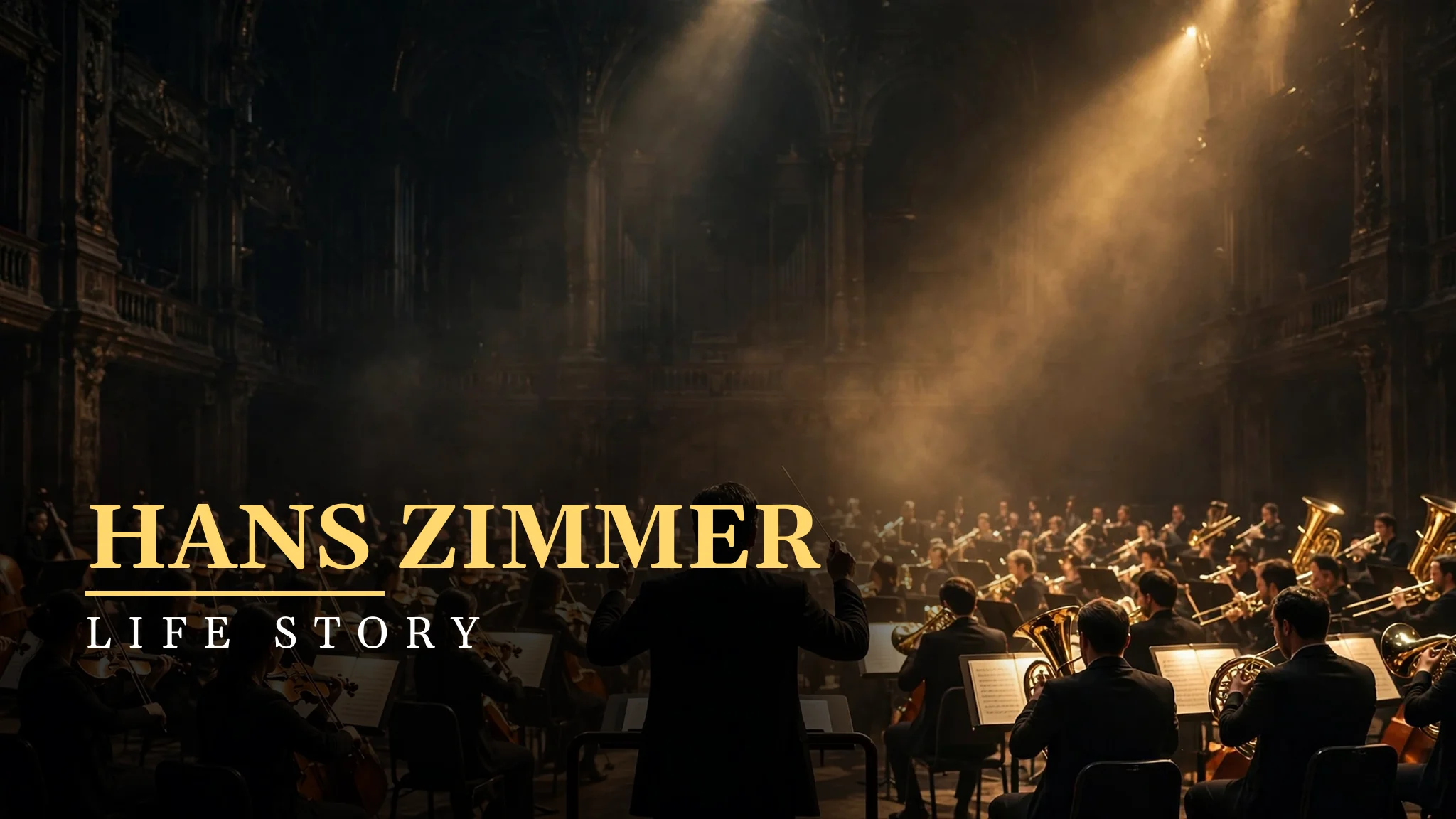
In recent years, Hans Zimmer has become a live performer, touring the world with his “Hans Zimmer Live” concerts, and those shows have become a major part of his story. The concerts feature a large orchestra, a band, and singers, and they play his most famous scores in arenas filled with thousands of fans. People come to hear “The Lion King”, “Gladiator”, “Inception”, “Interstellar”, and “Dune” played live, and they leave feeling moved and inspired. The shows are a celebration of his career, and they show how much his music means to people who may never have been to a classical concert before.
The live shows are also a new way of experiencing film music. In a cinema, the music is part of the film, and the audience watches the screen. In a concert hall, the music is the main event, and the audience watches the musicians. Zimmer stands on stage, he talks to the crowd, he introduces the pieces, and he makes the concert feel personal. He is not a distant composer. He is a host, a performer, and a friend to the audience, and that warmth is part of why the shows sell out.
His touring also brought his music to new audiences, including young people who had never listened to orchestral music before. Many fans first heard Zimmer’s music in a film, and then discovered his concerts, and then discovered other composers. In that way, his live shows have done something important: they have brought orchestral music to a new generation, and they have shown that a film score can be as powerful in a concert hall as it is in a cinema. That is a legacy that goes beyond his own work.
The concerts also show Zimmer’s generosity as a musician. He shares the stage with many other musicians, including the cellist Tina Guo, the singer Loire Cotler, and the guitarist Guthrie Govan, and he gives them room to shine. He does not make the show about himself alone. He makes it about the music, and about the team that creates it. That generosity is part of why his musicians love working with him, and why his concerts feel like a community, not just a performance.
For his fans, a Hans Zimmer Live concert is a memory they keep for years. They hear the music they love, played by a large orchestra, in a room full of people who love it too, and they feel part of something bigger than themselves. That feeling, repeated in arenas around the world, is part of why Zimmer has become more than a film composer. He has become a live artist, and his music lives on stage as well as on screen.
My Take:
When I think about Hans Zimmer, the first thing I feel is awe at the scale of his work. He has written music for more than 150 films, and his music has been heard by billions of people. That is an extraordinary achievement, and it is the result of decades of hard work, curiosity, and a love of sound. I admire him for that, because it shows what a person can do when they follow their passion and keep learning. He did not go to a famous music school, and he did not follow the usual path. He made his own path, and it led him to the top of his art. That is a story worth remembering for anyone who feels that they do not fit the normal mould.
I admire “The Lion King” most of all, because it is a score that has touched people of all ages, in all countries, for more than thirty years. When I hear the opening of the film, with the music rising and the sun coming up over the savannah, I feel a sense of wonder that is hard to describe. The music makes a cartoon feel real, and it makes a story about a lion feel like a story about all of us: about growing up, about loss, about finding your place in the world. That is the power of great film music, and Zimmer understood it perfectly. He did not just write a nice tune. He wrote music that gave the film its heart.
What I love about his music is its emotional honesty. A Zimmer score does not hide behind cleverness. It tells you how to feel, and it does so with a directness that is rare in modern music. When the music is sad, you feel sad. When it is joyful, you feel joyful. When it is tense, you feel tense. That may sound simple, but it is very hard to do well, because it requires the composer to understand the film, to understand the characters, and to understand the audience. Zimmer does that, film after film, and that is why directors trust him with their most important stories.
I also think about his work with Christopher Nolan, and I find it inspiring. Nolan makes films that are complex, ambitious, and sometimes difficult to understand, and Zimmer gives them music that makes them feel human. In “Interstellar”, the music is about a father and a daughter, not just about space. In “Inception”, the music is about time and memory, not just about dreams. In “Dunkirk”, the music is about the pressure of survival, not just about war. That ability to find the human feeling inside a big, complex film is a rare gift, and it is why the collaboration between Nolan and Zimmer is so special.
There is something else I admire, and it is his willingness to experiment. He uses synthesisers, world instruments, new voices, and new sounds, and he is not afraid to try something that has never been done before. The score for “Dune” is a perfect example. It sounds strange, alien, and beautiful, and it could only have been made by a composer who was willing to take risks. I think that is a lesson for any artist: do not repeat yourself, do not play it safe, and do not be afraid to fail. The best work comes from trying new things, and Zimmer has been trying new things for more than forty years.
If I have a criticism, it is a small one, and it is about how powerful his music can be. Sometimes, in his later scores, the music is so loud and so intense that it can overwhelm the film. A quiet scene with very loud music can feel less powerful than a quiet scene with soft music, and I think Zimmer occasionally forgets that. I do not think that is a serious flaw, because his best scores are perfectly balanced, and his fans love the power of his sound. But I do think a new listener should start with his earlier, more melodic work, like “The Lion King” and “Gladiator”, before moving to his louder scores, because that is where you hear the melody most clearly.
Another thing I notice is how generous Zimmer is with other musicians. He founded Remote Control Productions, he mentors young composers, and he shares his knowledge freely. That generosity is rare in a competitive industry, and it has helped many young artists find their way. I respect that, because success is more meaningful when you use it to help others, and Zimmer has done that for many years. His studio is not just a place to make music. It is a school, a community, and a home for composers who are learning their craft.
For a young reader, I think the lesson of Hans Zimmer is to follow your curiosity, learn by doing, and do not wait for permission. You do not need a famous school or a perfect path to become a great artist. You need a love of sound, a willingness to practise, and the courage to try new things. Zimmer did that, and he built a career that has lasted for decades and touched billions of people. That is a story worth remembering, and a lesson worth learning.
I think about the future of his career, and I hope he keeps making music for many more years. He has already given the world some of its most loved film scores, and he has shown that a self-taught boy from Frankfurt can become the most famous film composer in the world. When I listen to his music, I feel moved, I feel inspired, and I feel like I am part of something bigger than myself. That feeling is rare, and it is precious. I am glad this composer exists, and I am glad he trusted his ear, because without him, cinema would be quieter, less emotional, and less human.
One more thought stays with me. Zimmer’s story is a story about a piano in Frankfurt, about a boy who did not like formal lessons, and about a young man who believed that music could tell a story without words. That idea has carried him across the world, across many years, and across many films. It is a reminder that the basics matter: listen carefully, feel deeply, and work hard. I will keep listening to Hans Zimmer, and I will keep smiling when I hear “The Lion King”, because that music means the story is still alive, and the story is a good place to be.
I also think about the way Zimmer changed the sound of film music, and how important that change was. Before him, film scores were often traditional, orchestral, and polite. Zimmer brought electronic sounds, world music, and a more modern, powerful style to the cinema, and he showed that a film score could be a pop album, a concert, and a work of art all at once. That change opened doors for many other composers, and the sound of film music today owes a great deal to his work. I admire that kind of influence, because it is not just about one person’s success. It is about changing an art form for the better.
Another thing that stays with me is his work ethic. He has written more than 150 film scores, and each one required months of work, of listening to the director, of writing, of revising, and of recording. That is an extraordinary amount of work, and it shows a level of dedication that is rare. He did not become famous by making one great score. He became famous by making many great scores, year after year, for decades. That consistency is the foundation of his career, and it is a lesson for anyone who wants to build something lasting: show up, work hard, and keep going.
I think about the future, and I wonder what Zimmer will do next. He has already won two Oscars, made many beloved scores, and toured the world, but he does not seem tired. He seems curious, and he seems ready to keep making music for as long as directors want his help. I hope he does, because cinema needs him. It needs a composer who is emotional, experimental, and generous, all at the same time. It needs a composer who can fill a concert hall and still make a film feel personal. That is a rare combination, and I am glad it exists.
When I listen to his music now, I hear something different from what I heard at first. At first, I heard big, powerful themes. Now I hear years of experimentation, of learning synthesisers, of working with mentors, and of taking risks. That depth is what makes his later scores so moving, and it is what makes his story worth telling. A composer can be famous for a year, but to be loved for more than thirty years, you need something more than hits. You need trust, and this artist has earned it.
I also want to say something about his mentorship, which is sometimes overlooked. Through Remote Control Productions, he has helped many young composers find their way, sharing his knowledge, his studio, and his experience. A successful artist who helps the next generation is doing something more important than making hits. He is building a future for the art he loves, and that is a generous act. I admire that generosity, because it shows that success is more meaningful when it is shared, and Zimmer has shared his success for many years.
In the end, my feeling about this composer is simple: I am grateful. I am grateful for the scores, for the emotions, for the concerts, and for the example he set. He showed me that you do not need a traditional education to become a great artist, that experimentation matters, and that music can tell a story without words. Those are lessons that go beyond film, and they are lessons I will carry with me. When I hear “The Lion King” again, I will think of a boy in Frankfurt who did not like formal lessons, and of a composer who trusted his ear and changed cinema.
One last thought: the best composers do not just write notes. They create feelings, they create memories, and they create a place where people can belong, where they can cry together, cheer together, and feel less alone. Hans Zimmer creates such a place, in cinemas, in concert halls, and in the hearts of millions of listeners. That place is still open, still powerful, and still welcoming, and I hope it stays open for many more years. If you have never listened to his music outside a film, try it. You may find, as I did, that a composer from Frankfurt has something important to say to you, too.
I keep returning to the idea of sound itself, because Zimmer’s whole career is a study in listening. He hears sounds that other people miss: the low rumble of an organ, the cry of a voice, the ticking of a clock, the wind across a desert. He takes those sounds and turns them into music that makes a film feel real. That attention to sound is a gift, and it comes from years of experimenting, of playing with synthesisers, and of listening carefully to the world. I think there is a lesson in that for anyone who works with sound, or with any art: pay attention, listen closely, and trust what you hear. The best ideas often come from listening, not from talking.
I also think about the way his music has entered everyday life, far beyond the cinema. People play his scores while they work, while they drive, while they study, and while they think. His music has become a part of how people feel their own lives, and that is an extraordinary achievement for a film composer. A score written for a film about a lion, or a gladiator, or a spaceship, now helps a student concentrate, or a driver stay awake, or a listener feel brave. That is a sign that the music has a life of its own, beyond the films it was written for, and it is why Zimmer’s work will last long after the films themselves are forgotten by some viewers.
I also think about the silence between the notes, because Zimmer understands it as well as the notes themselves. His best scores know when to be quiet, when to let a scene breathe, and when to let the audience feel something without music telling them how. In “Interstellar”, the quiet moments between the organ chords are as powerful as the chords themselves, and in “The Lion King”, the gentle passages make the big moments feel bigger. That sense of space, of knowing when not to play, is the mark of a mature composer, and it is why his music never feels like noise, even when it is loud.
Frequently Asked Questions
When was Hans Zimmer born and where is he from?
Hans Zimmer was born on 12 September 1957 in Frankfurt am Main, West Germany. He grew up in a musical home, learned piano as a child, and later moved to London before settling in Hollywood.
What is Hans Zimmer’s most famous film score?
“The Lion King” from 1994 is his most famous score, winning the Academy Award for Best Original Score. “Gladiator”, “Inception”, “Interstellar”, and “Dune” are also among his best-known works.
How many Oscars has Hans Zimmer won?
Zimmer has won two Academy Awards for Best Original Score: for “The Lion King” in 1995 and for “Dune” in 2022. He has been nominated for the award many more times across his career.
Did Hans Zimmer play in a pop band?
Yes, Zimmer was a member of the band The Buggles in London, who had a worldwide hit with “Video Killed the Radio Star” in 1979. He also worked with the film composer Stanley Myers as a mentor.
What is Remote Control Productions?
Remote Control Productions is the film music studio Zimmer founded in Santa Monica, California. It is a place where he works with other composers and musicians, and where many young film composers have learned their craft.
What films did Hans Zimmer make with Christopher Nolan?
Zimmer worked with Christopher Nolan on “Batman Begins”, “The Dark Knight”, “Inception”, “Interstellar”, and “Dunkirk”. Their collaboration is one of the most famous director-composer partnerships in modern cinema.
Is Hans Zimmer still active today?
Yes, Zimmer is still active, writing film scores and touring the world with his “Hans Zimmer Live” concerts. His score for “Dune: Part Two” came out in 2024, and he continues to work on new films.


