Héroes del Silencio: The Life Story Behind Spain's Rock Legends
In this post
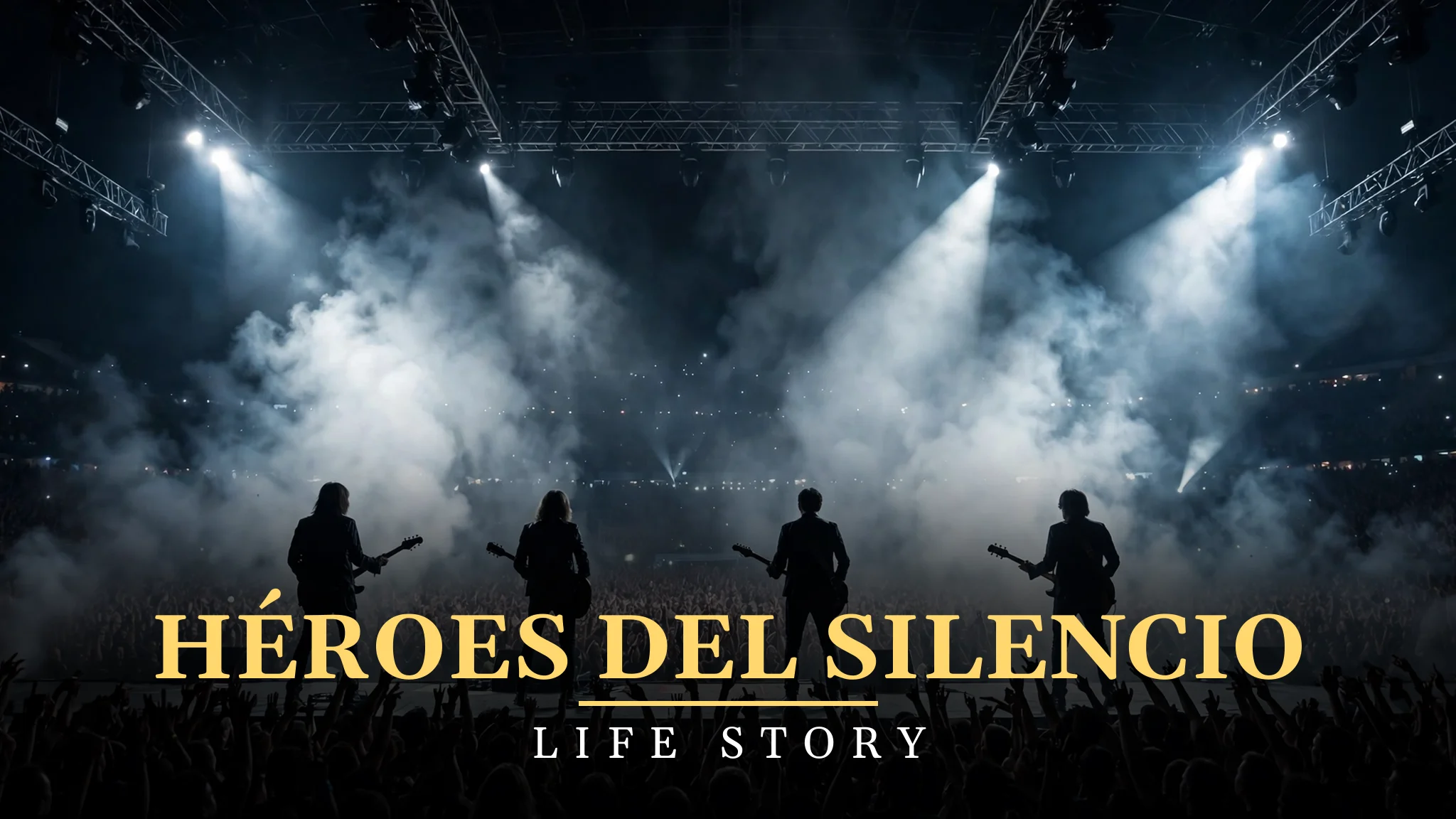
Héroes del Silencio were the loudest, darkest, and most powerful rock band Spain ever produced, and their songs still fill stadiums in the hearts of their fans. They came from Zaragoza, a city far from the music centres of Madrid and Barcelona, and they built a sound that was both Spanish and universal. Their music was full of guitars, poetry, and a sense of mystery, and it spoke to young people who wanted more than light pop songs. They wanted music that felt deep, that felt real, and that felt like it understood their anger and their dreams.
The band was led by Enrique Bunbury, a singer with a deep voice and a gift for writing words that sounded like poetry. Around him were Juan Valdivia on guitar, Joaquín Cardiel on bass, and Pedro Andreu on drums, and together they made a sound that was big, dark, and full of energy. Their songs, Entre dos tierras, Maldito duende, La chispa adecuada, and Avalancha, became anthems for a generation, and they are still sung at concerts and in bars across Spain and Latin America.
Their story is a story of a fast rise, of huge success in Spain and abroad, and of a split that came when the pressure became too much. They broke up in 1996, at the height of their fame, and they stayed apart for eleven years before a short reunion tour in 2007. Their music never faded, and their fans never forgot them. This is the story of how four young men from Zaragoza became legends of Spanish rock, and why their songs still matter today.
Zaragoza and the Birth of a Rock Band
Héroes del Silencio began in Zaragoza, a city in the north-east of Spain, in the mid-1980s. Zaragoza was not a centre of the music industry, and a young band from there had to work harder to be heard than a band from Madrid. But that distance gave them a freedom. They could develop their own sound, away from the trends of the capital, and they could build a loyal audience in their home city before they tried to reach the rest of Spain. That local support was the foundation of everything that followed.
The band came together in 1984, when Enrique Bunbury, Juan Valdivia, Joaquín Cardiel, and Pedro Andreu found each other through a shared love of rock music. They were young men who listened to bands from Britain and America, but they also wanted to make music in Spanish, with words that spoke to their own lives. Bunbury was the singer and the main writer, and he had a way with words that made their songs sound like poems set to loud guitars. Valdivia was the guitarist, and his playing gave the band its power and its edge.
In the early years they played in small venues in Zaragoza, building a following one concert at a time. They made demo tapes, they played at local festivals, and they learned how to perform as a band. That slow start was important, because it taught them how to work together, how to write songs, and how to connect with an audience. A band that learns on small stages is better prepared for big stages, and Héroes del Silencio were learning well.
By the late 1980s, their reputation had spread beyond Zaragoza. They signed with a record company, and they released their first work, an EP called Héroe de leyenda in 1987. The EP showed their sound clearly: dark guitars, a strong rhythm, and Bunbury’s deep voice singing words that were full of images of the sea, of the desert, and of the soul. It was not light pop music. It was rock music with a poetic heart, and it found an audience at once.
Zaragoza gave the band a freedom that a band from Madrid might not have had, because they were far from the music industry, far from the trends, and free to develop their own sound. They could play in small venues, they could try new songs, and they could build a loyal audience at home before they tried to reach the rest of Spain. That slow start was important, because it taught them how to work together, how to write songs, and how to connect with an audience. A band that learns on small stages is better prepared for big stages, and Héroes del Silencio were learning well, night after night, in their home city.
El mar no cesa and the First Album
In 1988, Héroes del Silencio released their first full album, El mar no cesa. The album was a success, and it gave them their first hits in Spain. Songs like Mar adentro and Flor venenosa showed their style, with loud guitars and lyrics that were more like poetry than like normal pop songs. The album was dark and romantic, and it spoke to young people who felt that life was more complex than a simple love song could express. It was a strong start, and it made the band one of the most talked-about new rock acts in Spain.
The album also showed the skill of the band as musicians. Valdivia’s guitar work was powerful and melodic, Cardiel’s bass gave the songs a deep foundation, and Andreu’s drums drove the music forward with energy. Bunbury’s voice tied it all together, with a sound that was both rough and tender. Together they made music that was loud enough for a rock concert and thoughtful enough for a quiet listen at home. That mix was rare, and it is what made them stand out.
After the first album, the band began to tour more widely in Spain, and their concerts became known for their energy. They played with passion, they played loud, and they gave the audience a show that felt real. Fans who saw them live became loyal, and they spread the word to their friends. The band was growing, but they were still a Spanish band, known mainly in their own country. The next album would change that, and it would take them to a much larger stage.
The years after El mar no cesa were a time of hard work. The band toured, they wrote new songs, and they worked on their sound. They knew that a first album is only a start, and that the second album is often the one that decides whether a band will last. They took their time, they worked carefully, and they prepared a record that would become one of the most important rock albums in Spanish history.
The first album, El mar no cesa, was a statement of intent, because it showed that the band were not interested in making light pop music. They wanted to make rock music that was dark, romantic, and full of poetry, and they did it in Spanish, with words that spoke to their own lives. The album was not an instant hit in the way a pop album might be, but it found an audience of young people who wanted more than a simple love song. Those fans stayed loyal, and they spread the word, and that loyalty became the foundation of the band’s success in the years that followed.
Senderos de traición and the Breakthrough
In 1990, Héroes del Silencio released Senderos de traición, and it changed everything. The album included Entre dos tierras, a song that became one of the most famous rock songs in the Spanish language. The song is about a person torn between two worlds, between love and freedom, and its driving guitar riff and Bunbury’s voice made it an instant anthem. It was played on the radio, in clubs, and at concerts, and it is still one of the most loved Spanish rock songs today.
The album also included Maldito duende, another classic, and it sold in very large numbers in Spain and in Latin America. It was produced with the help of Phil Manzanera, a musician known for his work with the band Roxy Music, and his experience helped the band to make a record that sounded big and clear without losing their dark and powerful style. The album was a breakthrough, and it made Héroes del Silencio the biggest rock band in Spain.
After Senderos de traición, the band toured in Spain, in Latin America, and in Europe, and they found that their music was loved far beyond their home country. In Mexico, in Argentina, and in other Spanish-speaking countries, their songs became anthems, and their concerts were filled with fans who knew every word. That success was a new thing for a Spanish rock band, and it showed that rock music in Spanish could travel the world.
The breakthrough also brought pressure. The band were now stars, and they were expected to keep making hits, to keep touring, and to keep growing. That pressure is hard for any band, and it is even harder for a band that writes deep and personal songs. They had to find a way to keep their music honest while living with fame, and that was not easy. But for a few years, they managed it, and they made more great music.
Entre dos tierras is a song that deserves to be thought about, because it is about a person torn between two worlds, and that feeling is one that many people know. It could be about love and freedom, about home and a new life, or about two parts of a person’s own heart that want different things. Bunbury wrote the words in a way that lets each listener find their own meaning, and the driving guitar riff gives the song a force that makes it feel urgent. That combination of open words and powerful music is why the song became an anthem, and why it is still sung today by people who were not even born when it was written.
El espíritu del vino and Avalancha
In 1993, the band released El espíritu del vino, an album that showed a more mature and complex sound. The album included songs like Sirena varada and La herida, and it was praised for its depth and its musical skill. It was not as simple as their earlier work, and it asked more of the listener, but it rewarded that attention with songs that were rich and full of feeling. The album was a success, and it confirmed that Héroes del Silencio were not a one-album band. They were a serious rock band with a long future.
In 1995, they released Avalancha, their last studio album before the split. The album was harder and louder than their earlier work, with a sound that was closer to hard rock. The title song, Avalancha, became another anthem, and songs like La chispa adecuada showed that Bunbury could still write words that felt like poetry, even in a louder setting. The album was made with the American producer Bob Ezrin, known for his work with major rock bands, and it gave the band a bigger and more powerful sound.
Avalancha was a success, and the band toured to support it, playing large concerts in Spain and abroad. But the tour was also a time of strain. The members were tired, they had been working together for more than ten years, and they had different ideas about where the band should go next. Bunbury wanted to explore new sounds, and the others had their own views. The pressure of fame, of touring, and of making music together for so long had become too much.
The years of El espíritu del vino and Avalancha showed the band at their best as musicians, but they also showed the cracks that would lead to the end. A band that makes great music can still fall apart, and Héroes del Silencio were about to prove that. The fans did not know it yet, but the end was close.
Avalancha was a harder and louder album than the band’s earlier work, and it showed that they were not afraid to change their sound. The title song is a powerful rock anthem, with a riff that hits hard and a vocal that is full of anger and energy, and it became one of their most loved songs. The album was made with Bob Ezrin, a producer known for his work with major rock bands, and his experience helped the band to make a record that sounded big without losing their dark and poetic style. It was a bold step, and it showed that Héroes del Silencio were still growing, still taking risks, and still willing to be loud.
The Split in 1996
In 1996, Héroes del Silencio announced that they were splitting up. The news was a shock to their fans, because the band were at the height of their fame, and they had just released a successful album. But the members knew that they could not go on together. They were tired, they had different ideas, and they needed time apart. The split was not a fight in public. It was a quiet decision by four people who had worked together for a long time and who needed to stop.
The split left a gap in Spanish rock. There was no other band that sounded like Héroes del Silencio, and no other band that had their mix of poetry and power. Fans kept listening to their albums, they kept singing their songs, and they kept hoping for a return. But the members went their separate ways, and each one began a new chapter. Bunbury started a solo career that would become one of the most successful in Spanish music, and the others worked on their own projects.
Bunbury’s solo work showed his range as a writer and as a singer. He made albums that mixed rock, Latin music, and other styles, and he became a star in his own right. Valdivia, Cardiel, and Andreu worked on other music, but they did not reach the same fame as Bunbury. That is often the case when a band splits. The singer is the most visible member, and the others have a harder path. But all four of them had been part of something special, and that could not be taken away.
The years after the split were a time when Spanish rock changed, with new bands and new sounds, but Héroes del Silencio did not fade. Their songs were still played, their albums were still bought, and new fans discovered them every year. A band that splits at the top often becomes a legend, and that is what happened to them. They were no longer a working band, but they were a memory that stayed alive.
The split was not a public fight, and that matters, because it shows that the members respected each other even when they could not work together. They did not argue in the press, they did not blame each other, and they went their separate ways with dignity. That is a rare thing for a famous band, and it is one of the reasons fans still respect them. A band can end without bitterness, and Héroes del Silencio ended with a quiet decision, not a loud break, and that dignity is part of their legacy, as much as their music is.
The 2007 Reunion Tour
In 2007, eleven years after the split, Héroes del Silencio came back for a reunion tour. The tour was a huge event in Spain and Latin America, and tickets sold out fast. Fans who had been teenagers in the 1990s were now adults, and they took their children to see the band they had loved. The concerts were emotional, with the band playing their greatest songs to crowds who sang every word. It was a celebration of a band that had never been forgotten.
The reunion tour included concerts in Zaragoza, Madrid, Barcelona, and other cities in Spain, as well as shows in Latin America. The band played Entre dos tierras, Maldito duende, La chispa adecuada, Avalancha, and many other songs, and the audience sang along with a passion that showed how much the music still meant. For the members, it was a chance to play together again, to feel the power of their music, and to say goodbye in a proper way.
The tour did not lead to a permanent reunion. After the concerts, the members went back to their solo work, and Bunbury continued his solo career. The reunion was a gift to the fans, not a new start for the band, and the fans understood that. They were grateful for the chance to see Héroes del Silencio live one more time, and they kept the memory of those concerts as a happy ending to the band’s story.
The 2007 tour also showed that the band’s music had crossed generations. Young people who had not been born when the band split were singing their songs, and they were discovering a sound that felt fresh even after many years. That is the mark of a great band. Their music does not belong only to one time. It belongs to anyone who hears it and feels something true in it.
The Legacy of Spain’s Rock Legends
Héroes del Silencio are still seen as the greatest Spanish rock band of all time, and their songs are still a part of Spanish culture. Entre dos tierras is still played on the radio, still sung at parties, and still taught to new guitar players who want to learn a classic riff. Maldito duende, La chispa adecuada, and Avalancha are still anthems, and they are still loved by fans in Spain and in Latin America. Their music has become a shared language for Spanish speakers who love rock.
Their legacy is not only in their songs. It is in the way they showed that rock music in Spanish could be poetic, deep, and powerful. Before them, many people thought that rock had to be in English to be serious. Héroes del Silencio proved that Spanish could carry the same power, and that a band from Zaragoza could make music that the whole world could feel. They opened a door for other Spanish rock bands, and they showed that a band could be both Spanish and universal.
Their story is also a story about the cost of fame and about the need for artists to follow their own path. Bunbury’s solo career, and the work of the other members, shows that a band is a chapter, not a whole life. The members needed to grow apart to grow as artists, and that is a sad but honest truth. The music they made together remains, and it is still the best proof of what they could do when they were together.
In the end, Héroes del Silencio are remembered as legends, not only because of their sales or their concerts, but because their songs still move people. A song that can make a crowd sing twenty years after it was written is a song that has done its job. Their songs do that, and they will keep doing it for a long time. The band is gone, but the music is still here, and it is still loud, still dark, and still full of life.
My Take:
When I think about Héroes del Silencio, I think about the power of a guitar riff to change a room, because Entre dos tierras does that every time I hear it. The riff starts, the drums come in, and suddenly the whole song feels like it is moving forward with a force that cannot be stopped. That is the sound of a band that knows what it is doing, and it is a sound that I admire deeply. I have heard many rock bands, but few have a riff that is so simple and so powerful at the same time, and that is why this band stands out for me.
I think Bunbury is the heart of the band, because his words give the music a depth that most rock bands never reach. He writes like a poet, with images of the sea, of the desert, of the soul, and of the night, and he sings them in a deep voice that makes the words feel heavy and true. I do not always understand every line, and I think that is part of the point. His lyrics are not meant to be simple. They are meant to be felt, and to be thought about, and to stay in the mind long after the song ends. That is a rare gift in rock music, and it is why their songs are still discussed and loved.
What I like most about the band is that they were not afraid to be dark. Many pop bands try to be light and happy all the time, because they think that is what the audience wants. Héroes del Silencio were willing to be sad, to be angry, and to be serious, and they trusted their audience to follow them. That trust is important, because it shows respect for the listener. They did not treat their fans as children who needed simple songs. They treated them as adults who could handle complex feelings, and their fans loved them for it.
There is something sad in their story too, and it is the split in 1996. They were at the top, they had just made a great album, and then they stopped. I understand why, because working together for more than ten years is hard, and people grow apart. But I still feel sad that they could not find a way to keep going, because the world would have been richer with more of their music. Their solo work is good, especially Bunbury’s, but it is not the same as the four of them together. That is a loss, and it is one that fans still feel.
I think about the reunion tour in 2007, and I feel happy that it happened. It must have been a wonderful thing for fans who had waited eleven years to see the band again, to hear those songs live, and to sing along with thousands of other people. I wish I could have been there, because a concert like that is not only about music. It is about memory, about a time in your life, and about sharing that memory with others. The reunion gave fans a chance to say goodbye properly, and that is a gift that few bands give.
What I find most impressive is the way their music has travelled. A band from Zaragoza, a city that many people outside Spain have never heard of, became famous in Mexico, in Argentina, in Chile, and in many other countries. That happened because their songs spoke about feelings that are the same everywhere, about love, about loss, about freedom, and about the search for meaning. Language was not a barrier, because the music and the feeling were clear. That is a lesson for any band, in any country. Make something true, and it will travel.
I also think about the other members, Valdivia, Cardiel, and Andreu, because they are sometimes forgotten when people talk about Bunbury. But a band is not only its singer. The guitar, the bass, and the drums are what give the songs their power, and without them, Bunbury’s words would have no body. Valdivia’s guitar is the sound that people remember, Cardiel’s bass is the depth that holds the song together, and Andreu’s drums are the drive that pushes it forward. I respect all four of them, because they made something together that none of them could have made alone.
If I have a criticism, it is only that I wish their albums were more widely known outside the Spanish-speaking world. They are legends in Spain and Latin America, but many rock fans in other countries have never heard them. That is not their fault. It is the fault of a music world that gives more attention to English-language rock than to rock in other languages. I think a listener who finds them will be glad they did, because their music is as good as any rock band of their time, and it deserves to be heard by more people.
I think young musicians can learn a lot from Héroes del Silencio. The lesson is to write words that matter, to play with power and with care, and to trust your audience. Do not write down to people. Write about what you feel, even if it is dark, even if it is complex, and let the music carry it. That is what they did, and it is why their songs are still sung today. A simple pop song can be forgotten in a year, but a song that says something true can last for decades.
In the end, I think Héroes del Silencio teaches us that rock music is not only about noise. It is about poetry, about feeling, and about the need to say something real. Their songs are loud, but they are also thoughtful, and that combination is rare. I am glad they made those songs, and I am glad that I can still hear them today. When I hear Entre dos tierras, I feel the power of a band that believed in its music, and I feel grateful that they shared it with the world.
One more thought stays with me, and it is about Zaragoza. A band from a city far from the centre became the biggest rock band in Spain, and that tells me that great music can come from anywhere. You do not need to be from Madrid or London or New York to make music that matters. You need talent, you need hard work, and you need the courage to make the sound that is yours. Héroes del Silencio did that, and they proved that a band from Zaragoza could become a legend. That is a hopeful message for any young musician, in any small city, in any country.
I also think about the way their music travelled to Latin America, because that is a remarkable achievement for a band from Zaragoza. In Mexico, in Argentina, and in other Spanish-speaking countries, their songs became anthems, and their concerts were filled with fans who knew every word. That happened because their songs spoke about feelings that are the same everywhere, about love, about loss, about freedom, and about the search for meaning. Language was not a barrier, because the music and the feeling were clear. That is a lesson for any band, in any country. Make something true, and it will travel. Another thing I admire is Bunbury’s way with words, because he writes like a poet, with images of the sea, of the desert, of the soul, and of the night. I do not always understand every line, and I think that is part of the point. His lyrics are not meant to be simple. They are meant to be felt, and to be thought about, and to stay in the mind long after the song ends. That is a rare gift in rock music, and it is why their songs are still discussed and loved. A simple pop song can be forgotten in a year, but a song that says something true can last for decades. I think about the other members, Valdivia, Cardiel, and Andreu, because they are sometimes forgotten when people talk about Bunbury. But a band is not only its singer. The guitar, the bass, and the drums are what give the songs their power, and without them, Bunbury’s words would have no body. Valdivia’s guitar is the sound that people remember, Cardiel’s bass is the depth that holds the song together, and Andreu’s drums are the drive that pushes it forward. I respect all four of them, because they made something together that none of them could have made alone. There is a lesson in their split in 1996, and it is the lesson that even a great band can fall apart when the pressure becomes too much. They were at the top, they had just made a great album, and then they stopped. I understand why, because working together for more than ten years is hard, and people grow apart. But I still feel sad that they could not find a way to keep going, because the world would have been richer with more of their music. Their solo work is good, especially Bunbury’s, but it is not the same as the four of them together, and that is a loss that fans still feel. I also think about the reunion tour in 2007, and I feel happy that it happened. It must have been a wonderful thing for fans who had waited eleven years to see the band again, to hear those songs live, and to sing along with thousands of other people. A concert like that is not only about music. It is about memory, about a time in your life, and about sharing that memory with others. The reunion gave fans a chance to say goodbye properly, and that is a gift that few bands give, and I am glad Héroes del Silencio gave it. I keep returning to the idea of Zaragoza, because a band from a city far from the centre became the biggest rock band in Spain, and that tells me that great music can come from anywhere. You do not need to be from Madrid or London or New York to make music that matters. You need talent, you need hard work, and you need the courage to make the sound that is yours. Héroes del Silencio did that, and they proved that a band from Zaragoza could become a legend. That is a hopeful message for any young musician, in any small city, in any country. One more thought stays with me, and it is about the darkness in their music. Many pop bands try to be light and happy all the time, because they think that is what the audience wants. Héroes del Silencio were willing to be sad, to be angry, and to be serious, and they trusted their audience to follow them. That trust is important, because it shows respect for the listener. They did not treat their fans as children who needed simple songs. They treated them as adults who could handle complex feelings, and their fans loved them for it. Finally, I think about what their music means today, more than thirty years after Senderos de traición. Their songs are still played on the radio, still sung at parties, and still taught to new guitar players who want to learn a classic riff. That is the mark of a great band. Their music does not belong only to one time. It belongs to anyone who hears it and feels something true in it, and that is why it will still be here in another thirty years.
I also think about the way their concerts felt, because a Héroes del Silencio concert was not only a show. It was a shared experience, with thousands of people singing every word, raising their hands, and feeling the power of the music together. That kind of concert is rare, and it is one that fans remember for the rest of their lives. I wish I could have been at one, because to hear Entre dos tierras live, with a whole crowd singing, must have been an unforgettable thing, and the reunion tour in 2007 gave fans one last chance to feel it. Finally, I want to say that their music is a gift to anyone who loves rock, in any language. It proves that rock does not need to be in English to be powerful, and that a band from a small city can make music that the whole world can feel. Their songs are still loud, still dark, and still full of life, and they will keep being sung for a long time. I am glad they made those songs, and I am glad that I can still hear them today, loud and clear.
Frequently Asked Questions
Who were the members of Héroes del Silencio?
The band were Enrique Bunbury on vocals, Juan Valdivia on guitar, Joaquín Cardiel on bass, and Pedro Andreu on drums. The four of them came from Zaragoza, and together they made one of the most famous rock bands in the Spanish language.
What is Héroes del Silencio’s most famous song?
Their most famous song is Entre dos tierras, from the 1990 album Senderos de traición. It is a driving rock anthem about being torn between two worlds, and it is still one of the most loved Spanish rock songs today.
When did Héroes del Silencio split up?
They split up in 1996, after releasing the album Avalancha in 1995. They had been together for more than ten years, and the members needed time apart to follow their own paths, with Bunbury going on to a successful solo career.
Did Héroes del Silencio ever reunite?
Yes, they reunited for a short tour in 2007, eleven years after the split. The tour included concerts in Spain and Latin America, and tickets sold out fast, but it did not lead to a permanent reunion.
What album made Héroes del Silencio famous?
Senderos de traición, released in 1990, made them famous. It included Entre dos tierras and Maldito duende, and it sold in very large numbers in Spain and Latin America, making them the biggest rock band in Spain.
Where did Héroes del Silencio come from?
They came from Zaragoza, a city in the north-east of Spain. They built a local following there before they became famous across Spain and Latin America, and their home city is still proud of them.
What kind of music did Héroes del Silencio play?
They played rock music with a dark and poetic style, mixing loud guitars with lyrics that sounded like poetry. Their sound was both powerful and thoughtful, which set them apart from many other rock bands of their time.


