Honor Blackman: The Life Story Behind the Bond Girl Star
In this post
- A Plaistow Girl and the Daughter of a Civil Servant
- The Guildhall, the Stage, and Early Film Work
- The Avengers and Cathy Gale
- Goldfinger and Pussy Galore
- Jason and the Argonauts, Films, and a Wide Range
- The Upper Hand, Later Television, and a Long Career
- A Private Life, Children, and a Lasting Legacy
- My Take:
Honor Blackman was one of the most glamorous and most independent women ever to appear on British television and film, a woman with a strong voice, a sharp wit, and a talent for playing heroines who could fight, who could love, and who could speak their minds without fear. She was the kind of performer who could wear a leather suit and fight villains in The Avengers, who could play Pussy Galore in Goldfinger and steal the film from James Bond himself, and who could play Hera in Jason and the Argonauts with a grace that made audiences believe in gods and heroes. Millions of people know her as Pussy Galore, the pilot who leads a team of women and who changes sides to help Bond, and millions more know her as Cathy Gale, the clever and brave anthropologist in The Avengers who became a symbol of the 1960s. Behind those famous roles lies a long career that began in Plaistow, in east London, moved through the Guildhall School of Music and Drama, and ended with a place among the most loved actors of her generation.
She was born in Plaistow, London, and she grew up as the daughter of a civil servant, in a family where money was not plentiful but where there was a love of books and a strong sense of independence. She did not come from a theatre family, and she did not have an easy path into acting, yet she found her way onto the stage through drama school, through hard work, and through a love of stories that she carried with her from childhood. She was a woman who refused to be treated as a pretty face, and who fought for serious roles throughout her life, even when the world wanted her to stay a Bond girl for ever.
What makes her story worth telling is the courage and the wit with which she lived it, and the way she moved from television fame to film, from Bond to the stage, and from a sex symbol to a respected actor who worked into her nineties. She was not a woman who chased fame, and she did not try to be liked by everyone. She chose good work, she spoke her mind, and she let her talent speak for itself. This is the story of how a girl from Plaistow became Honor Blackman, and how she did it by working hard, by being brave, and by staying true to herself.
A Plaistow Girl and the Daughter of a Civil Servant
Honor Blackman was born on 22 August 1925 in Plaistow, London, England. Her father, Frederick, was a civil servant, and her mother, Edith, was a housewife, so the family lived a modest life in east London where money was tight but where there was warmth and a love of learning. Young Honor went to school in London, and she showed an early love of books, of stories, and of acting, taking part in school plays and discovering that she loved the feeling of standing on a stage and telling a story to an audience.
She was a bright and confident girl, and she won a place at the Guildhall School of Music and Drama in London, one of the most respected drama schools in Britain. It was a remarkable achievement for a girl from Plaistow, and it showed that talent can come from anywhere. She left east London for the Guildhall as a young woman, and she took with her a London accent, a London humour, and a strong sense of who she was, and she never lost those things, even when she became famous.
At the Guildhall she trained alongside other young actors who would become famous, and she learned voice, movement, and the study of plays. The training was demanding, and it asked students to work hard, but Blackman took to it with a hunger that came from having found her place at last. She learned how to stand on a stage, how to speak so that every word could be heard, and how to build a character from the words on the page.
Those early years mattered because they gave her a strong sense of who she was and a deep understanding of ordinary London life. She knew what it felt like to grow up in Plaistow, to hear the sounds of the city, and to dream of a life beyond the town, and she brought that truth to every role she played. The girl from Plaistow who loved stories had found her calling, and she was ready to follow it, even if the road was long and hard.
The Guildhall, the Stage, and Early Film Work
After the Guildhall, Blackman began her professional career on the stage and in small film parts, and she soon became known as a thoughtful and talented actor. She appeared in the film Quartet in 1948, playing a small part, and she worked in the theatre, in television, and in film, taking on a wide range of parts and learning her craft night after night. She played in plays by Shakespeare, by Chekhov, and by modern writers, and she became known for her clear voice, her intelligence, and her ability to show the inner life of a character.
She was a tall and striking woman, and directors often cast her as a strong and independent character, but she never let her looks define her. She played queens, mothers, detectives, and villains, and each time she made the character feel like a real person, not just a type. She had a rich voice, a warm presence, and a talent for making an audience feel at ease, and those gifts made her a favourite with directors and with fellow actors.
Her early film work included a role in the film A Boy, a Girl and a Bike, in the film So Long at the Fair, and in many other British films that showed her range. She did not chase big Hollywood parts, and she was happy to play supporting roles that made a film better, because she understood that a good film needs good actors in every part, not just in the leading roles. That generosity made her a beloved figure in the film world.
The stage and early film years gave Blackman a strong base, and they taught her how to work with a company, how to listen to other actors, and how to make a performance feel alive every night. She was a serious and dedicated actor, and she prepared carefully for every role. She did not seek attention for herself, and she did not try to be a celebrity. She simply did the work, and she did it well, and that is why directors kept asking her back.
The Avengers and Cathy Gale
Blackman’s great breakthrough on television came in 1962, when she was cast as Cathy Gale in the series The Avengers, a stylish spy drama about two agents who fight villains in a world of fashion, wit, and danger. Cathy Gale is an anthropologist, a clever and brave woman who wears leather suits, who fights with martial arts, and who is the equal of her partner, John Steed, played by Patrick Macnee. Blackman played her with a wonderful mixture of humour, intelligence, and strength, and she became a symbol of the 1960s, a woman who was independent, brave, and not afraid to be herself.
She played Cathy Gale for two years, from 1962 to 1964, and her performance made the series a huge success in Britain. Audiences loved her because she was not a damsel in distress, and she did not need a man to save her. She saved herself, and she saved Steed, and she did it with a smile and a sharp line. She became a fashion icon, and her leather suits were copied by women around the world, but she was always more than a pretty face. She was a clever and funny actor who made Cathy Gale feel real.
The success of The Avengers changed her life, because it made her known to audiences around the world. She was offered film roles in Hollywood and in Britain, and she was recognised as one of the most famous women on television. She handled that fame with humour and with grace, but she also fought against being typecast as Cathy Gale for ever. She wanted to play serious roles, and she left the series after two years to take on new challenges, a brave decision that showed she cared more about her craft than about fame.
The Avengers remains one of the most loved television series ever made, and Blackman’s performance as Cathy Gale is a large part of why it has lasted. People still watch the series today, and they still talk about Cathy, the woman in the leather suit who could fight and who could laugh. It is a fitting tribute to an actor who could make a television heroine feel like a real person, and who could do it with a wit that made audiences love her.
Goldfinger and Pussy Galore
Blackman’s most famous film role came in 1964, when she was cast as Pussy Galore in Goldfinger, the James Bond film starring Sean Connery as Bond. Pussy Galore is a pilot who leads a team of women called Pussy Galore’s Flying Circus, and who works for the villain Goldfinger, until Bond persuades her to change sides and help him. Blackman played her with a wonderful mixture of strength, humour, and independence, and she became one of the most famous Bond girls in cinema history. She was thirty-eight years old when she played the part, older than most Bond girls, and she showed that a woman in her late thirties could be glamorous, strong, and unforgettable.
She played Pussy Galore as a woman who is not impressed by Bond, who is not afraid of him, and who makes her own choices. She flies a plane, she leads her team, and she fights for what she believes in, and audiences loved her for it. Her scenes with Sean Connery are among the most famous in the Bond series, because she matches him line for line, joke for joke, and she does it with a smile that makes Bond work hard to win her over. The film was a huge success around the world, and it made Blackman known to audiences in every country.
The success of Goldfinger changed her life, because it made her a global star, and because Pussy Galore became a name that people remembered for decades. She handled that fame with humour, and she often joked about the character’s name in interviews, saying that she was glad to have played a woman who was strong and independent. That honesty made people love her even more, because it showed that she was not embarrassed by the role. She was proud of it, and she knew that Pussy Galore was more than a pretty face.
Goldfinger remains one of the most loved Bond films ever made, and Blackman’s performance is a large part of why it has lasted. People still watch the film today, and they still talk about Pussy Galore, the pilot who could fly and who could fight. It is a fitting tribute to an actor who could make a Bond girl feel like a real person, and who could do it with a wit that made audiences love her.
Jason and the Argonauts, Films, and a Wide Range
After Goldfinger, Blackman took on a wide range of film roles, showing that she was far more than a Bond girl. She played Hera, the queen of the gods, in Jason and the Argonauts in 1963, a film about the Greek hero Jason and his quest for the Golden Fleece. Hera is a powerful and wise goddess, and Blackman played her with a grace and a dignity that made audiences believe in the world of the film. She worked with Ray Harryhausen, whose stop-motion creatures made the film a classic, and her performance became one of the most loved in the film.
She also appeared in the film The Upper Hand, in the film Shalako, in which she played opposite Sean Connery again, and in many other British and international films, often playing characters who were intelligent, funny, and a little bit dangerous. She could be a goddess, a mother, a detective, or a villain, and each time she made the character feel real, even when the story was strange or funny. She moved easily between big Hollywood films and small British films, and she brought the same care to each one.
Her film work in this period showed a different side of her talent, and it brought her to a wider audience around the world. She was no longer known only as Cathy Gale or Pussy Galore, but as a film actor who could play many different kinds of women. She did not change her style to fit Hollywood, and she did not try to hide her intelligence or her wit. She stayed herself, and that is why audiences loved her.
These film roles gave her a financial security that she had not known in her early years, yet she never lost her love of the theatre, and she kept returning to the stage when a part called to her. She understood that film fame can fade, but the craft of acting lasts, and she kept her craft sharp by working in both worlds, by choosing parts that interested her, and by staying true to herself.
The Upper Hand, Later Television, and a Long Career
In her later years Blackman took on a role that brought her to a new audience when she played Laura West in the television series The Upper Hand, a comedy about a former footballer who becomes a housekeeper for a wealthy widow. Laura is a kind and funny woman, and Blackman played her with a warmth that made audiences love her. The series ran for several years, from 1990 to 1996, and it became a favourite with viewers who loved a good comedy told with care.
She also appeared in the series The Avengers in a guest role, in the film Bridget Jones’s Diary, in which she played a small but memorable part, and in many other television shows and films that showed she was still able to surprise an audience. She did not stop learning, and she did not stop taking on parts that asked something new of her, even when she was in her seventies and eighties. She worked into her nineties, appearing in the film Cockneys vs Zombies in 2012, when she was eighty-six, and showing that age does not have to end a career.
She was known for her sharp wit, for her honesty, and for her refusal to suffer fools gladly, and those qualities made her a beloved figure among her fellow actors. She did not seek attention for her private life, and she did not court the press, but those who knew her spoke of a woman who was kind, funny, and deeply loyal to her friends and her family. She lived in London, and she enjoyed a quiet life away from the stage when she was not working, spending time with her family, with her books, and with her love of the theatre.
Through all the years of fame, Blackman kept a strong link to the theatre, and she kept returning to the stage when a part called to her. She understood that fame can fade, but the craft of acting lasts, and she kept her craft sharp by working in both worlds. She was a woman who loved her work, loved her family, and loved to tell the truth, and that is a good life by any measure.
A Private Life, Children, and a Lasting Legacy
Blackman’s private life was kept largely out of the public eye, and she preferred to let her work speak for itself. She was married twice, first to Bill Sankey, and later to Maurice Kaufmann, an actor, and she had two children, Lottie and Barnaby, whom she loved deeply and spoke about with pride. She lived in London, and she enjoyed a quiet life away from the film set when she was not working, spending time with her children, with her friends, and with her love of reading and of music.
She was known for her work for charity, for her support of animal welfare, and for her belief that actors should use their fame to help others. She spoke about the need for kindness to animals, and she worked with charities that helped them. She did not seek attention for her charity work, and she did not court the press, but those who knew her spoke of a woman who was generous, kind, and deeply committed to making the world a better place.
She died on 5 April 2020, at the age of ninety-four, after a period of ill health, and her death was mourned around the world. Tributes came from actors, directors, and from fans who had grown up watching her in The Avengers, in Goldfinger, and in Jason and the Argonauts. Theatres in London dimmed their lights in her honour, and newspapers around the world wrote about her life and her work, remembering her as one of the greatest actors Britain has ever produced.
Her legacy is not measured in one famous film or one hit television show, but in the many performances she gave, the many audiences she moved, and the many younger women who learned from her example. She was a leading light of British television and film, and she helped to show that a woman can be strong, funny, intelligent, and beautiful, all at the same time. Her work in The Avengers, in Goldfinger, and in Jason and the Argonauts will be watched and remembered for years to come.
Today Honor Blackman stands as one of the great actors of her time, a star of stage and screen, and a performer whose work touched audiences in theatres, cinemas, and living rooms around the world. Her story is one of talent, courage, and wit, and it shows that a long career built on real skill can be more lasting than a short burst of fame. She did the work, she did it well, and she kept doing it, and that is a legacy any actor would be proud to leave.
She is also remembered for her sharp tongue, for her warm laugh, and for her love of the theatre, and those memories will stay with the people who knew her and who saw her work. She was a woman who refused to be treated as a pretty face, and who fought for serious roles throughout her life. That is a life well lived, and a legacy that will last for generations to come.
My Take:
When I think about Honor Blackman, the first thing I feel is admiration for a woman who refused to be put in a box. I have seen many actors who are happy to play the same role for ever, because it is easy and because it pays well. Blackman did the opposite. She played Cathy Gale for two years, and then she left to take on new challenges, because she wanted to play serious roles. I admire that bravery, because it is not easy to walk away from fame. She walked away, and she built a career that was richer and more interesting because of it.
I think her performance as Pussy Galore is one of the most famous things ever seen in a Bond film, and I feel happy every time I watch Goldfinger. Pussy is a pilot who leads a team of women, who is not impressed by Bond, and who makes her own choices. Blackman plays her with a strength that makes audiences love her, and she shows that a Bond girl can be more than a pretty face. I watched that film and I felt as if I was seeing a new kind of heroine, a woman who could fly a plane and who could fight for what she believed in. That was a radical idea in the 1960s, and it is still an important idea today.
I admire the way she played Cathy Gale, because it would have been easy to make Cathy a simple action heroine. Blackman did not do that. She played her as an anthropologist, a clever woman who understands people, and who fights with martial arts when she needs to. I watched The Avengers and I felt as if I knew Cathy, and I trusted her. That is what a great actor does. She takes a character who could be a type, and she makes her feel like a real person who lives in a real world.
I also think about her role as Hera in Jason and the Argonauts, and I feel that it is one of the most beautiful performances of her career. She plays the queen of the gods with a grace and a dignity that makes audiences believe in the world of the film. I watched that film as a child, and I remember Hera’s kindness and her power, and I think that is a wonderful thing for an actor to do: to make a goddess feel human, and to make a myth feel real.
What moves me most in her story is her long career, and the way she kept working into her nineties. She appeared in Cockneys vs Zombies when she was eighty-six, and she showed that age does not have to end a career. I think that is a hopeful message for older people, because it shows that life does not end at sixty or seventy. It can get richer and more interesting, if you keep learning and keep working, and if you keep saying yes to new chances.
I also think about her work for animal welfare, and I admire her kindness. She spoke about the need to be kind to animals, and she worked with charities that helped them. I think that is a generous thing to do, because it shows that she cared about more than her own fame. She cared about creatures who cannot speak for themselves, and she used her voice to help them. That is a lesson for all of us: we should use what we have to help others, even when no one is watching.
I think about her children, Lottie and Barnaby, and how proud Blackman must have been of them. She spoke about them with love, and she tried to be a good mother even when her work took her away. I think that is a hard balance to keep, and I respect her for trying. She knew that fame is not the most important thing in life. Family is, and she kept her family close to her heart even when the world wanted her attention.
I also think about her age when she played Pussy Galore, and I admire that she was thirty-eight, older than most Bond girls, and still glamorous and strong. I think that is an important message for women who are told that they must be young to be beautiful. Blackman shows that a woman in her late thirties can be the most interesting person on screen, and that beauty does not fade with age. It changes, and it becomes deeper, and that is a wonderful thing to see.
I think her story teaches us about the value of speaking your mind, even when it is hard. Blackman was known for her sharp wit, and she was not afraid to say what she thought, even when it made people uncomfortable. I think we need more people like her, in life and in work, who will tell the truth as they see it. That is a brave thing to do, and it is one that I admire deeply.
I also feel that her life shows that a woman can be glamorous and intelligent at the same time. She was a fashion icon in The Avengers, and she was a serious actor on stage, and she was both without apology. I think that is an inspiring message for young women, who are often told that they must choose between being beautiful and being clever. Blackman chose both, and she did it with a grace that made audiences love her.
When I look at her later work, I see a performer who never stopped growing. She played in The Upper Hand in her sixties, she played in Bridget Jones’s Diary in her seventies, and she played in Cockneys vs Zombies in her eighties, and she was still able to surprise an audience. I think that is a hopeful message for older people, because it shows that life does not end at sixty. It can get richer, and it can be full of new chances, if you keep saying yes.
I think about her death in 2020, and I feel sad that we have lost such a great actor. She was ninety-four, and she had lived a long and full life, yet I still wish I could have seen more of her work. I also feel glad that she left so much behind for us to enjoy, and that new audiences will discover her for years to come. That is a good legacy, and it is one that few actors can match.
I also think about the young actors who worked with her, and how lucky they were. She was a mentor to many, and she taught them by example how to be a professional, how to be honest, and how to enjoy the work. I think that kind of teaching is more important than any award, because it passes the craft on to the next generation, and it keeps the theatre and the film world alive.
In the end, I think Honor Blackman’s story is about talent, courage, and wit. She did not chase fame, she did not chase money, and she did not chase the easy roles. She chased good work, and she found it, again and again, for more than seventy years. She played secret agents and pilots, goddesses and mothers, and she played them all with a power and a wit that made audiences love her. I admire her for that, and I think her life is a lesson for anyone who wants to do something well.
One more thought stays with me, and it is about the quiet power of her voice. I have heard many loud actors, and I have forgotten most of them. Blackman’s voice was strong and clear, and it stayed with you. It is the voice of a person who has read the words, understood them, and made them her own. I think that is the best kind of acting, and the best kind of life: not loud for the sake of being loud, but true.
I also think about how she made Pussy Galore feel like a real pilot to a whole generation of viewers. Many people who saw Goldfinger will never forget Pussy’s strength, her humour, and her independence, and that is a wonderful thing. She gave them a Bond girl who was strong and clever, and she made the Bond films feel like a place where women could be heroes. I think that is a gift that will last for a long time.
I also think about her love of the theatre, and how she kept returning to the stage even when film made her famous. She understood that the theatre is where an actor learns, and where an actor grows, and she never forgot that. I hope young actors look at her career and understand that the stage is not a stepping stone to film. It is a home, and it is a place where great work happens every night.
Finally, I think her story is a reminder that a long career built on real skill can be more lasting than a short burst of fame. She worked for more than seventy years, she played hundreds of roles, and she left a legacy that will be remembered for a long time. I am glad that I have had the chance to learn from her life, and I hope that other people will learn from it too, because it shows what happens when talent meets hard work, and when courage meets wit.
I also think about the girl from Plaistow who went to the Guildhall, and how far she travelled from that small beginning. She became Pussy Galore, she became Cathy Gale, and she became one of the most loved actors of her time, yet she never forgot where she came from. That is a good lesson for anyone who leaves home to follow a dream: you can go far, you can change, and you can still carry the best parts of home with you.
One last thought stays with me, and it is about the way she listened on stage. In every role I have read about, she listened to the other actors as if what they were saying truly mattered. That is a rare skill, and it is one that makes every scene better. I think we could all learn from it, in our own lives, to listen more and to speak less, and to give other people the same attention that Blackman gave to her fellow actors.
I also think about the many women who have been inspired by her, and how grateful they must be. She showed that a woman can be strong, can be funny, can be intelligent, and can be a leader, all at the same time. That is a powerful message, and it is one that still matters today, when many women still face prejudice for being strong. Blackman did not apologise for her strength, and I think we should all learn from that.
One more lesson I take from her is about not being afraid to leave. She left The Avengers after two years, she left a comfortable life to take on new roles, and each time she did it with courage. I think we should all be willing to leave when our hearts tell us to, even if it is scary, because leaving can lead to a better life and to new chances to grow.
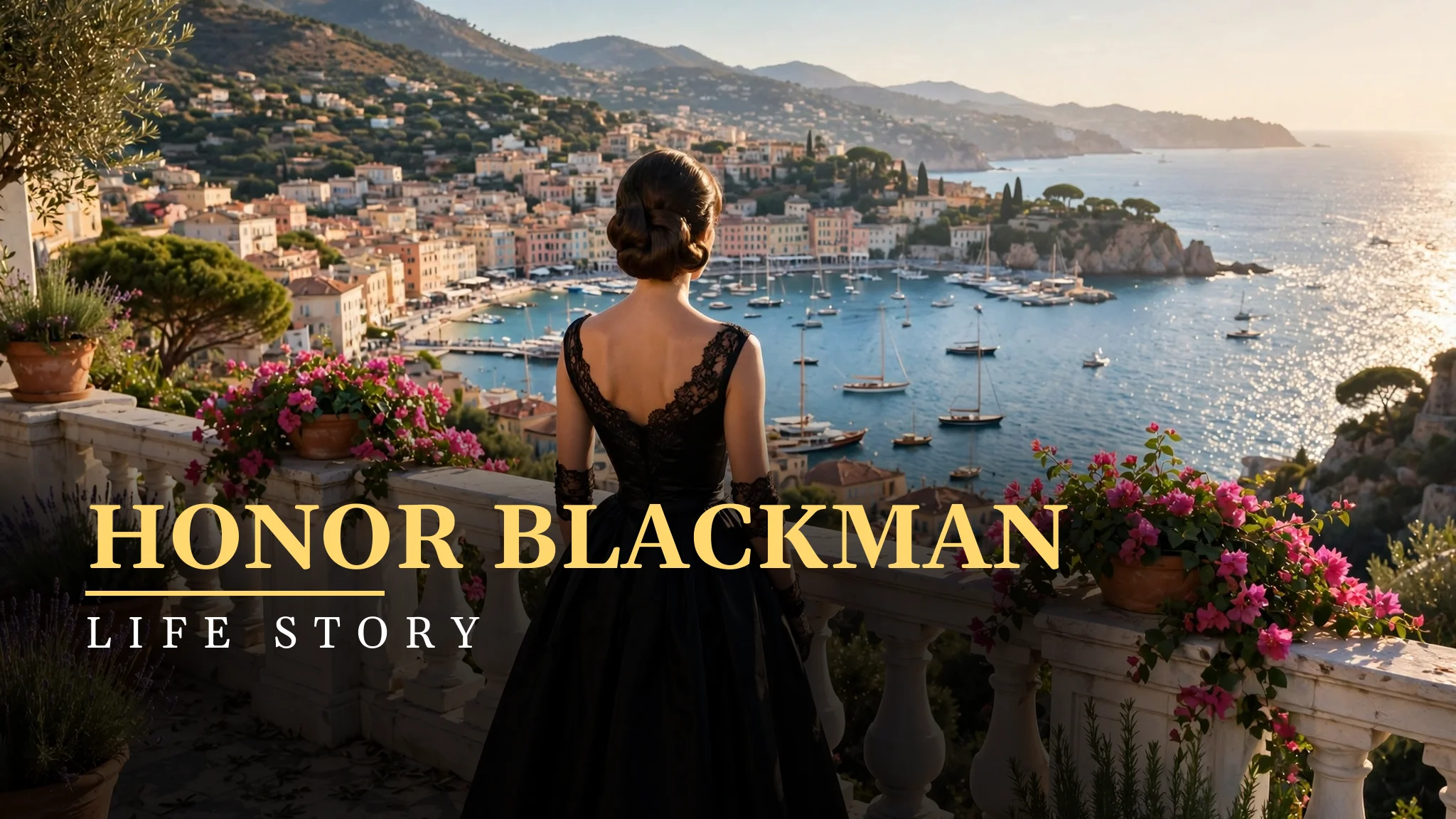
Finally, I think about the image of her standing on a terrace in a black evening gown, looking over a sunny harbour town and the sea. It is a fitting image for a woman who lived a glamorous life, who loved the Mediterranean, and who understood that a great life is full of beauty and of adventure. She knew that people are not simple, and that even a Bond girl can have a kind heart. That is a truth worth remembering, and it is one that Blackman’s life and work teach us well.
I also think about how she has shown that an actor can work for seventy years, and that is a remarkable achievement. Most careers last for twenty or thirty years, but Blackman worked from the 1940s to the 2010s, and she did it with a grace that made audiences love her. I hope that more actors will follow her example, and that more people will understand that a long career is built on patience, on hard work, and on a love of the craft itself.
Frequently Asked Questions
Why was Honor Blackman’s Pussy Galore so famous?
She played a pilot who leads a team of women in Goldfinger, a strong and independent Bond girl who changes sides to help Bond, at the age of thirty-eight.
What did Honor Blackman play in The Avengers?
She played Cathy Gale, a clever anthropologist who wears leather suits and fights with martial arts, from 1962 to 1964, becoming a symbol of the 1960s.
Was Honor Blackman in Jason and the Argonauts?
Yes, she played Hera, the queen of the gods, in the 1963 film about Jason and his quest for the Golden Fleece, with Ray Harryhausen’s creatures.
How long did Honor Blackman’s career last?
She worked from the late 1940s into her nineties, appearing in Cockneys vs Zombies in 2012 at eighty-six, a career of more than seventy years.
What was Honor Blackman’s role in The Upper Hand?
She played Laura West, a kind widow in the comedy series that ran from 1990 to 1996, winning a new audience in her sixties.
Where was Honor Blackman born?
She was born in Plaistow, London, on 22 August 1925, the daughter of a civil servant, and she trained at the Guildhall School of Music and Drama.
When did Honor Blackman die?
She died on 5 April 2020 at the age of ninety-four, and she was mourned by actors and Bond fans around the world.


