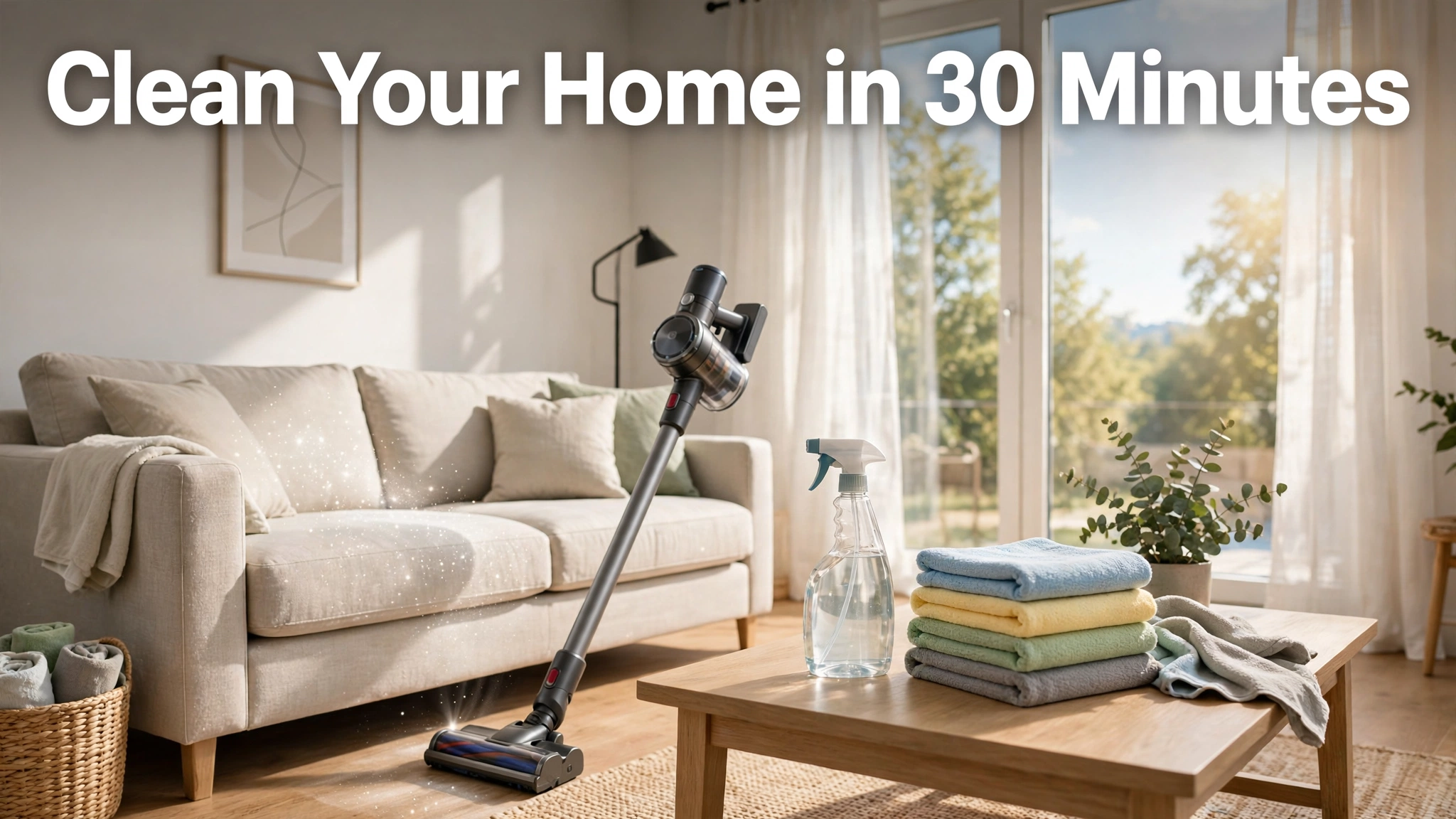
How to Clean Your Home Fast in 30 Minutes
In this post
- Start With a Plan, Not With a Room
- The Five-Minute Clutter Sweep
- Kitchen in Eight Minutes: Surfaces First, Sink Last
- Bathroom in Seven Minutes: Shine Where It Counts
- Dust, Floors, and Air in Ten Minutes
- Finishing Touches That Make It Look Done
- Cleaning With Pets, Children, and Limited Time
- Mistakes That Slow a Fast Clean Down
- Keep It Clean With a Daily Ten-Minute Habit
- My Take:
Cleaning a whole home in thirty minutes sounds impossible until you change how you define clean. A fast clean is not a deep clean. It is a visible clean: clear surfaces, fresh floors, clean bathrooms, an inviting smell, and no clutter in sight. When guests are coming, when you are tired after work, or when mess has piled up for days, this kind of clean restores order without exhausting you. The secret is sequence, not speed. You move in one direction, carry everything with you, and never clean the same spot twice. You also decide in advance what you will skip. Dusting behind furniture, washing windows, and scrubbing grout can wait. Today the goal is a home that looks, feels, and smells cared for.
Start With a Plan, Not With a Room
Most slow cleaning happens because people wander. They start in the kitchen, notice a toy in the hall, carry it to a bedroom, start folding clothes, and forget the kitchen entirely. A thirty-minute clean needs a written order and a timer. Set a timer for thirty minutes and divide it roughly: five minutes for clutter, ten minutes for kitchen and bathroom surfaces, ten minutes for floors and dusting, and five minutes for finishing touches. Keep the order fixed: top to bottom, back to front, dry before wet. Start in the farthest room and work toward the door so you never walk over a floor you just cleaned. If a task will take more than two minutes, skip it or note it for a deep-clean day. Speed cleaning rewards decisions, not perfection.
Carry a caddy or a basket. Put in it an all-purpose cleaner, a bathroom cleaner, microfibre cloths, a duster, paper towels, and a rubbish bag. Carry it from room to room. Every trip back to a cupboard costs minutes and breaks focus. Wear an apron with pockets if it helps. Put your phone on silent, play music if it motivates you, and tell others in the home you are on a timed clean so interruptions stay low. The plan itself is half the work.
The Five-Minute Clutter Sweep
Clutter makes a clean room look dirty even when surfaces are spotless. Begin with a laundry basket or a large bag and walk through every room once, collecting anything out of place: cups, papers, toys, shoes, chargers, mail, and clothes. Do not sort, fold, or organise during this sweep. Sorting is a different job and it eats time. Put each item in the basket, and when the basket is full, drop items quickly in the room where they belong without stopping to arrange them. If a room has a drawer or box for odds and ends, use it for now.
Next, make beds quickly. A made bed transforms a bedroom instantly. Pull the sheet straight, shake the duvet, place pillows upright, and move on. Straighten sofa cushions, fold throws roughly, and clear coffee tables to one or two items. Open curtains and blinds to let light in, because bright rooms look cleaner and reveal what still needs attention. Empty small bins if they are overflowing, and tie rubbish bags ready for the main bin. At the end of five minutes your home should already look calmer, even before any cleaner touches a surface. That visual progress keeps motivation high for the harder minutes ahead.
Kitchen in Eight Minutes: Surfaces First, Sink Last
The kitchen collects the most visible mess, so work it in a tight order. First, clear the counters. Put dirty dishes in the sink or dishwasher, return food to cupboards or the fridge, and wipe crumbs into your hand or a cloth. Spray counters, hob surrounds, and the outside of appliances with all-purpose cleaner, leave it for a minute to loosen grease, then wipe with a damp microfibre cloth. Clean the sink last, because you will use it while wiping cloths. Rinse the sink, wipe taps, and polish with a dry cloth for shine.
Do not wash every dish by hand during a fast clean. Load the dishwasher, soak stubborn pans, and stack the rest neatly. Wipe cabinet fronts only where fingerprints show, usually near handles. Shake out or wipe the table, and sweep crumbs from the floor into a pile for the floor stage. If the fridge smells, place a small open box of baking soda inside later, but do not deep-clean shelves now. A clean kitchen in eight minutes means clear counters, a clean sink, and no dirty dishes in sight. That standard is achievable and it changes how the whole home feels.
Bathroom in Seven Minutes: Shine Where It Counts
Bathrooms need hygiene and shine, not a full scrub. Spray the toilet, sink, taps, and shower screen with bathroom cleaner as soon as you enter, so it works while you do other tasks. While it sits, wipe the mirror with a dry microfibre cloth or glass cleaner, replace hand towels, empty the bin, and put toiletries back in a cupboard or tray. Then wipe the sink and taps, clean the toilet seat and outer bowl, and flush. For the shower, a quick wipe of visible soap marks is enough; full descaling waits for another day.
Pay attention to details guests notice: a clean mirror, fresh towels, a filled soap dispenser, and no hair on the floor. Sweep or pick up hair quickly with a damp paper towel. If the floor is wet, dry it with the towel you just used. Close the shower curtain neatly and straighten the bath mat. A bathroom that smells fresh and shows shining taps reads as clean even if tiles behind the door have not been scrubbed. Keep a small set of bathroom supplies under each sink so you never waste minutes searching for cleaner.
Dust, Floors, and Air in Ten Minutes
Dust from top to bottom, because dust falls downward. Use a damp microfibre cloth or a extendable duster for shelves, television screens, picture frames, and light switches. Do not move every object; dust around large items and lift only small ones quickly. Skip high ceilings and the tops of tall wardrobes in a fast clean unless dust there is visible from the door. Work room by room in the same direction you walked during the clutter sweep.
Floors come next. Vacuum main traffic areas, rugs, and under coffee tables rather than moving all furniture. In homes without a vacuum, sweep hard floors firmly toward one point, then mop only entryways, kitchen, and bathroom floors with a damp mop. Use a fresh mop head or a disposable pad so you are not spreading dirt. While floors dry, open windows for five minutes if weather allows. Fresh air removes cooking smells and stale air faster than any spray. If windows cannot open, a fan helps. Finish by fluffing cushions, straightening rugs, and checking the entrance: shoes in a row, coats hung, and a clear doormat set the first impression.
Finishing Touches That Make It Look Done
The last five minutes decide whether the clean looks finished or half-done. Walk through once as a guest would. Replace any cloths you used, take rubbish out, and return the caddy to its cupboard. Light a candle or use a room spray only after cleaning, not instead of it, because fragrance over dirt smells worse. Place a small plant or a bowl of fruit on a clear table if you have one; a single focal point draws the eye and signals care. Check lights: a burned-out bulb in a hall makes even a clean home feel neglected, so note it for replacement.
Do a final smell check in kitchen and bathroom. Empty the kitchen bin if food waste smells, run water in rarely used drains, and wipe bin lids. Put fresh hand towels in the bathroom and kitchen. Stand at the front door and look in. If the eye travels across clear surfaces, made beds glimpsed through doors, and clean floors, the job is done. Stop at thirty minutes. A fast clean that ends on time teaches you that cleaning is manageable, and that belief makes the next clean easier.
Cleaning With Pets, Children, and Limited Time
Homes with pets or small children need a slightly different fast clean, but the thirty-minute limit still works if you target what those homes actually produce. Pet hair collects on sofas, rugs, and dark clothing, so keep a lint roller or a damp rubber glove near the sofa and run it over cushions before vacuuming. That one step prevents hair from spreading during dusting. Food bowls should be wiped daily, litter areas swept, and pet beds shaken outside when possible. Do not try to remove every hair; remove the visible layer and the smell. Children produce toys, crumbs, and sticky hands, so a fast clean in a family home should focus on floors, table surfaces, and bathroom taps, where hygiene matters most. Give each child a small basket for their own items and make returning toys part of the routine, not a punishment.
Limited time also means choosing the right moment. Cleaning just before guests arrive is stressful, while cleaning after dinner, when dishes are already in hand, feels natural. If you work long hours, split the thirty minutes into two fifteen-minute sessions: clutter and kitchen in the morning, bathroom and floors in the evening. The total effect is similar, and the home never reaches a crisis point. People with limited mobility can adapt the route too: sit while dusting low surfaces, use a lightweight vacuum or a long-handled duster, and focus on one room per session. A fast clean is a flexible framework, not a rigid test, and adapting it honestly is better than abandoning it because the standard version does not fit your life.
Mistakes That Slow a Fast Clean Down
Several common mistakes turn thirty minutes into ninety. The first is starting with the hardest task, such as scrubbing an oven or organising a cupboard, and running out of time for visible rooms. Leave hard tasks for deep-clean days. The second is using too much water or cleaner, which leaves streaks and requires extra wiping. Spray lightly, wipe with a damp cloth, then buff dry where shine matters. The third is cleaning in circles: returning to the same room because you forgot a cloth or a product. The caddy prevents this. The fourth is chasing perfection on one spot while the rest of the home waits. If a stain does not lift in thirty seconds during a fast clean, leave it, note it, and treat it later with the right product and soaking time.
Another mistake is cleaning around clutter instead of removing it first. Spraying over papers and toys wastes cleaner and leaves dirty patches underneath. Similarly, vacuuming before dusting means dust settles on a clean floor. Order matters more than effort. Finally, many people clean only what they see at eye level and forget handles, switches, and taps, which carry germs and fingerprints. A quick wipe of these touch points takes seconds and improves hygiene far more than polishing a rarely touched shelf. Learning these mistakes once saves hours over a year, and it keeps fast cleaning fast.
Keep It Clean With a Daily Ten-Minute Habit
A thirty-minute clean works best when mess never grows large. A daily ten-minute habit prevents the weekend mountain. Each evening, do three things: clear the sink, wipe kitchen counters, and do a two-minute clutter sweep. Each morning, make beds and open curtains. Assign one small daily task per weekday if you share a home: Monday floors, Tuesday bathroom shine, Wednesday dusting, Thursday fridge check, Friday entrance tidy. Children can own one basket of toys or their own room sweep.
Store cleaning tools where you use them: kitchen cloths in the kitchen, bathroom spray under the sink, a vacuum near main rooms. Check supplies weekly so you never discover an empty spray bottle mid-clean, and replace worn cloths before they start smearing instead of lifting dirt. A small, reliable kit beats a cupboard full of half-used products, and it keeps the daily habit light enough to repeat even on tired evenings. When tools are far away, cleaning feels bigger than it is. Keep surfaces clear by giving every common item a home. A bowl for keys, a tray for mail, and hooks for bags remove daily decisions. If clutter returns fast, the problem is often too many items, not too little effort. Donate or store extras during a separate declutter session, not during a fast clean. Small daily habits protect your thirty-minute routine and save money, because you use less cleaner, replace tools less often, and avoid paying for emergency cleaning help.
My Take:
I used to believe a clean home required a free afternoon, and that belief kept me from starting at all. The mess would grow, I would feel guilty, and then I would spend hours in a bad mood trying to fix it. A thirty-minute clean changed that pattern for me, not because thirty minutes is magic, but because a deadline forces honesty. I learned to ask what actually matters to the eye and to comfort, and to let the rest wait without shame. A home does not need to pass a white-glove test to be a good home. It needs to be safe, calm, and welcoming, and those qualities come from clear surfaces, fresh air, and a little order, not from scrubbing every corner in one go.
What surprised me most was how much time I had been losing to wandering. I would start cleaning, find an old photo, sit down to look through a drawer, and lose an hour. The basket method felt strange at first, almost lazy, because I was not putting things away properly. Then I realised proper organisation is a separate project. Speed cleaning is triage. It stops the bleeding. Once the home looks calm, I can choose one drawer or one shelf to organise properly on another day, with energy and patience, instead of trying to organise everything while exhausted. That separation protects both my time and my mood.
I also learned to respect the order of work. Cleaning floors before dusting meant I vacuumed twice. Cleaning the sink first meant it got dirty again while I wiped counters. Small sequence mistakes cost real minutes, and in a thirty-minute window every minute counts. Now I follow the same route each time, and my body remembers it. I start at the back, move forward, dust before floors, and clean the sink last. Routine removes decisions, and fewer decisions mean less mental tiredness. On days when I feel low, routine carries me through tasks my motivation cannot.
Another lesson was about tools. I once owned many sprays, each for one surface, and I spent more time choosing a bottle than cleaning. Two good products, a few microfibre cloths, and a reliable vacuum do most of the work. Microfibre matters because it picks up dust without spreading it, and it can be washed and reused, which saves money over disposable wipes. I keep a caddy ready so starting takes one minute, not fifteen. If starting is hard, the system is wrong, not the person. Make starting easy and finishing becomes possible.
I want to be honest about limits too. A thirty-minute clean will not fix mould, deep grease, or a home that has not been cleaned for months. It will make that home better, safer, and more pleasant, but it is not a substitute for periodic deep cleaning. I schedule one deeper session each month for one area only, such as the bathroom grout or kitchen cupboards, so deep work never becomes a whole-house burden. That balance keeps standards realistic. People who live in a home, cook in it, and rest in it will create mess again. That is normal life, not failure.
For families, I think the kindest rule is shared ownership without blame. A fast clean works better when everyone does a five-minute part than when one person does thirty minutes alone while resenting others. Children can carry the basket, partners can handle floors, and everyone can make their own bed. The goal is a home we all enjoy, not a performance for guests. When guests do come, I no longer panic. I set the timer, follow the route, and trust the process. The home may not be perfect, but it is clean where it counts, fresh, and ready. That confidence is worth more than any spotless corner, and it is the reason I now clean little and often instead of rarely and exhaustingly.
I also changed how I think about guests. I used to apologise for my home before anyone sat down, pointing out mess they had not noticed. That habit made visitors uncomfortable and made me feel judged. Now I do the fast clean, open the curtains, offer water, and stop apologising. Most guests care about feeling welcome, not about whether a shelf was dusted. If a friend judges a home for a toy on the floor, that says more about expectations than about care. A lived-in home with clear surfaces and fresh air is a successful home, and I am learning to accept that without defensive explanations.
Money matters here too, and it is often ignored in cleaning advice. Buying one cleaner for every surface costs money and clutters cupboards. Reusable cloths, a concentrated all-purpose cleaner diluted correctly, and a vacuum with washable filters cost less over time than disposable wipes and single-use sprays. I also save by preventing damage: wiping spills quickly protects floors and counters, and regular light cleaning prevents grease and limescale from hardening into expensive problems. Fast cleaning is therefore not only a time habit but a saving habit. It protects the home you already pay for, and it reduces the urge to hire emergency help when mess becomes overwhelming.
Finally, I think speed cleaning teaches a wider lesson about work itself. Big tasks feel impossible when viewed as a whole, but they become possible when divided into small timed steps with a clear stopping point. I now use timers for paperwork, cooking, and study in the same way. Start, follow order, stop on time, and return tomorrow if needed. That approach respects energy instead of demanding perfection. A home cleaned in thirty minutes will not win a prize, but it will give you an evening in a calm room, a morning without searching for keys, and a mind less crowded by mess. For me, those small daily returns are worth far more than a rare perfect clean followed by weeks of avoidance. When I look back, the homes I remember fondly were never spotless; they were warm, uncluttered enough to relax in, and easy to move through. That is the standard I now aim for, and thirty focused minutes is usually enough to reach it.
Small, repeatable habits are the thread through all of this: do one thing well, repeat it until it feels ordinary, and let the results build quietly over weeks rather than demanding a perfect day. That patience makes the routine sustainable on tired days, which is when it matters most.
Frequently Asked Questions
How can I clean my home fast in 30 minutes?
Use a fixed route, a timer, and a caddy of supplies. Do a clutter sweep first, then kitchen and bathroom surfaces, then dust and floors, and finish with fresh air and final touches. Skip deep tasks for another day.
What should I clean first in a speed clean?
Clear clutter first, because surfaces cannot be cleaned until they are clear. Then work top to bottom and back to front so you never redo a cleaned area.
Do I need special products for fast cleaning?
No. An all-purpose cleaner, a bathroom cleaner, microfibre cloths, and a vacuum or broom cover most fast cleans. Fewer products save time and money.
How often should I do a 30-minute clean?
Many homes benefit from one fast clean every two to three days, plus a ten-minute daily tidy. Adjust to household size, pets, and how often you cook at home.
Can I clean a large home in 30 minutes?
A large home may need focus on main living areas, kitchen, and bathrooms in thirty minutes, with bedrooms done lightly. For full coverage, split the home across two timed sessions.
What is the biggest time-waster when cleaning?
Sorting and organising during cleaning wastes the most time. Collect items in a basket during a fast clean and organise them separately later.