How to Propose: Creative Ideas She Will Never Forget
In this post
A proposal is a question, and it is also a story, and it is a story you will tell for the rest of your life. People will ask how it happened, where you were, and what you said, and the answer will become part of your history as a couple. That is why a proposal matters, and why it is worth planning with care. Not with extravagance, and not with a performance for an audience, but with thought, and with attention to the person you are asking.
This guide is about how to propose in a way she will never forget, with creative ideas that feel personal, rather than copied from a film. It covers how to start with her, not with the idea, how to choose a setting, a ring, and the words, and what to do after she says yes. It is for anyone who wants a proposal that is honest, memorable, and true to the couple, rather than impressive to strangers.
What Makes a Proposal Truly Memorable
A proposal is memorable not because it is grand, but because it is personal. The proposals people remember, and retell, are the ones that could only have come from that couple, in that place, at that time. A man who proposes in the bookshop where they first met, or on the walk they take every Sunday, or with a reference to a joke only they understand, is giving his partner a proposal that is theirs, and no one else’s. That personal quality is what makes it unforgettable, and it cannot be bought, or copied from a film.
It also matters that the proposal is honest. A proposal that is sincere, that is spoken simply, and that comes from the heart, will be remembered, even if the setting is ordinary. A proposal that is elaborate, but impersonal, will be forgotten, however expensive it was. The question is not how much you spend, or how many people see it, but whether the person you are asking feels known, and loved, in that moment. If she does, the proposal will be memorable, whatever it looks like, and wherever it happens. Start with her, and with what she would love, and the rest will follow.
Quiet, Private Proposals
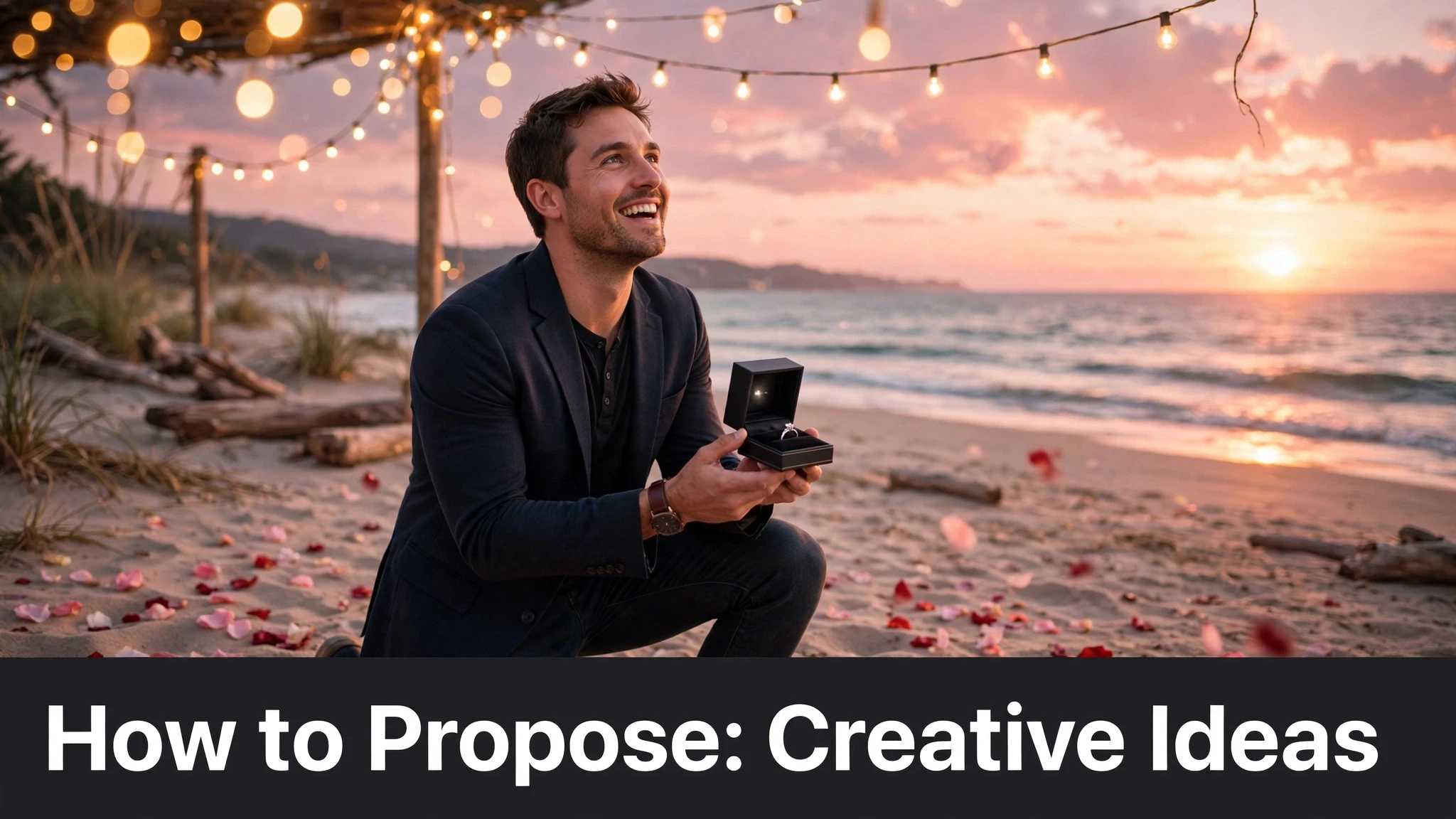
A quiet, private proposal is often the most romantic, because it is only about the two of you, without an audience, and without pressure. It might happen at home, on a walk, or in a place that means something to you both, and it is usually simple: a question, asked honestly, in a moment that feels right. That simplicity is its strength, because it lets the person being asked answer freely, without feeling watched, or judged, and it makes the moment feel intimate, rather than performed.
A private proposal also gives you room to be nervous, and to be imperfect, which is part of its charm. You do not need a perfect speech, and you do not need to kneel in a particular way. You need to be present, to look at the person you love, and to ask the question, in your own words. If you cry, or stumble, or laugh, that is fine. It is real, and real is more moving than perfect. Many couples say that their private proposal was the best moment of their lives, precisely because it was private, and because it belonged only to them. Consider it, before you plan anything more elaborate.
Proposals in a Place That Means Something
A place that means something to a couple makes a proposal more powerful, because the place itself carries memory. It could be where you first met, where you had your first date, where you said you loved each other, or simply a place you return to, again and again, because it feels like yours. Proposing there connects the question to your history, and it makes the answer part of that history, in a way that a beautiful but meaningless location cannot.
It helps to choose a place that is comfortable, and accessible, and that will not be too crowded, or too noisy, on the day. A quiet beach, a park, a garden, or a favourite restaurant are all good choices, if they mean something to you. And think about the practical details: is it easy to get there, is there somewhere to sit, and will the weather be kind? A meaningful place, chosen with care, and visited at the right time, will make the proposal feel inevitable, as if it could only have happened there, and that feeling is what makes it unforgettable.
Creative Ideas With a Personal Touch
Creative proposals work when they are built around the couple, not around a gimmick. A proposal that uses a shared hobby, a favourite book, a song, or a private joke will feel creative, because it is specific, and because it shows that the proposer has been paying attention. For example, a proposal hidden in a book she loves, or at the end of a walk that retraces your first date, or during a meal you cooked together, will be remembered, because it is personal, and because it took thought, not money.
The key is to keep it simple enough to work. An elaborate plan, with many moving parts, is more likely to fail, and a failure on the day can spoil the moment. Choose one creative idea, plan it carefully, and have a backup, in case something goes wrong. And remember that the creativity should serve the question, not distract from it. The most creative proposal is not the most complicated one. It is the one that makes the person being asked feel most loved, and most known, and that is a matter of attention, not of invention.
Proposals With Family and Friends
Some couples want family and friends to be part of the proposal, and that can be wonderful, if it is planned well, and if it suits the person being asked. A proposal at a family gathering, or with friends hidden nearby, can turn the moment into a celebration, and it can make the memory richer, because the people who matter were there. But it should only be done if you are certain that your partner would enjoy it, because a public proposal can feel like pressure, and it can make the answer harder to give honestly.
If you do involve others, keep it simple, and make sure everyone knows their role, and the timing, so that nothing goes wrong. Tell a trusted friend, or family member, in advance, and ask them to help, with the ring, the photographs, or the celebration afterwards. And consider a compromise: propose privately, and then celebrate with family and friends immediately afterwards, so that you have both the intimate moment, and the shared joy. That way, no one is excluded, and the proposal itself remains yours, and private, which is often the best of both worlds.
Choosing the Ring and the Words
The ring is a symbol, and its value is not in its price, but in what it means. A ring that is chosen with care, that suits the person who will wear it, and that is within your budget, is a good ring, whatever it costs. Do not go into debt for a ring, and do not let anyone make you feel that a cheaper ring is less loving. Pay attention to her taste: does she wear gold, or silver, does she like simple designs, or elaborate ones, and what size is her finger? If you are unsure, ask a friend, or a family member, who will know, and who will keep the secret.
The words matter as much as the ring, and they should be simple, honest, and personal. You do not need a long speech. A few sentences about why you love her, what your life together means, and the question itself, are enough. Practise them, so that you are not too nervous to speak, but do not memorise them so rigidly that they sound rehearsed. Speak from the heart, look at her, and ask the question, clearly, and directly. Those words, spoken in that moment, will be remembered for a lifetime, and they deserve to be chosen with care.
After She Says Yes
After she says yes, take a moment to enjoy it, before you tell anyone, or take a photograph, or make a plan. That moment, just the two of you, knowing that you are engaged, is precious, and it will pass quickly. Sit together, talk, laugh, and let it sink in. Then, when you are ready, share the news, with the people who matter most, in person, or by phone, rather than only on social media, because a personal call means more than a post, and it shows respect for the people you love.
It also helps to have a loose plan for what comes next, without rushing into wedding planning immediately. Celebrate first, enjoy being engaged, and then, when you are ready, start to talk about the wedding, in the same honest, practical way that you planned the proposal. And remember that an engagement is not only a preparation for a wedding. It is a time in itself, a period in which you are promised to each other, and in which you can enjoy that promise, before the planning begins. Take your time, enjoy it, and let the proposal be the beginning of a happy engagement, not just a step towards a wedding.
Proposals That Went Wrong, and What They Teach Us
Proposals that go wrong are often funny in hindsight, but they are instructive, because they show what can happen when a plan is too elaborate, too public, or too focused on the spectacle, rather than on the person. One common mistake is the proposal that is so public that it puts pressure on the other person to say yes, even if they are not ready. A proposal in front of a crowd, on a big screen, or in a restaurant full of strangers can feel like a performance, not a private moment, and it can make the person being proposed to feel trapped. The lesson is simple: a proposal should be about the two of you, not about an audience, and it should give the other person the freedom to answer honestly, without pressure.
Another common mistake is the proposal that goes wrong because of logistics: a ring that is lost, a plan that falls apart, or a surprise that is ruined. These stories are often told with laughter, after the event, but at the time they are stressful, and they can spoil the moment. The lesson is to keep the plan simple, to have a backup, and to focus on the essentials: the ring, the question, and the person. A simple proposal, well executed, is better than an elaborate one that fails, and the memory of a proposal that went smoothly is better than the memory of one that was chaotic, however funny it seems later. Simplicity is not a lack of effort. It is a sign of good planning.
A third mistake is the proposal that is too focused on the proposer’s idea of romance, and not on the partner’s preferences. A person who hates public attention should not be proposed to in public, a person who dislikes surprises should not be surprised, and a person who values privacy should not have their proposal shared on social media without their consent. The lesson is to know your partner, and to propose in a way that suits them, not in a way that suits you, or that will look good in a photograph. A proposal is a gift, and a gift should be chosen for the person receiving it, not for the person giving it. That is the most important lesson of all.
There is also the mistake of proposing at the wrong time, or in the wrong place, such as during a stressful period, at a family event, or in a place that has no meaning for the couple. Timing matters, and a proposal that is rushed, or that is made to coincide with a holiday, or a birthday, can feel like an afterthought, rather than a moment of its own. The lesson is to choose a time and a place that are meaningful, and to make the proposal its own event, not an addition to something else. A proposal deserves its own moment, and it should not have to compete with another celebration.
Finally, remember that a proposal that goes wrong is not a disaster, if the answer is yes, and if the couple can laugh about it later. Many couples have stories of proposals that did not go as planned, and those stories become part of their history, and they are told with affection. The proposal is the beginning, not the whole story, and what matters is not whether it was perfect, but whether it was honest, and whether it reflected the couple. Plan carefully, keep it simple, know your partner, and choose the right moment. And if something goes wrong, laugh, and carry on, because the marriage is more important than the proposal, and it is the marriage that will last.
My Take:
The mistakes are what teach us most, and that is the point I would leave you with, because a proposal that goes wrong is not a failure, but a lesson, and the lesson is usually the same: keep it simple, know your partner, and do not let the spectacle become more important than the moment. Too many proposals fail because they are designed for an audience, or for a photograph, rather than for the person being asked. I would urge anyone planning a proposal to forget the audience, and to focus on the two people who matter: you, and the person you love. That focus will make the proposal better, and it will make the memory better, because it will be honest, and personal, and true.
I also think we should be honest about the pressure to propose in a grand, elaborate way, and about where that pressure comes from. Social media, films, and the wedding industry all suggest that a proposal must be spectacular, and that a simple proposal is not enough. That is not true. A simple proposal, made with sincerity, in a place that means something to you both, is more romantic than any elaborate stunt, because it is real. Do not let the pressure to impress others spoil a moment that should be private, and personal. Your proposal is yours, and it does not need to be shared, or photographed, or performed. It needs to be honest, and that is enough.
Another point I would make is about the ring, and the pressure to spend a great deal on it. A ring is a symbol, and its value is not in its price, but in what it means. A ring that is chosen with care, that suits the person who will wear it, and that is within your budget, is a good ring, whatever it costs. Do not go into debt for a ring, and do not let anyone make you feel that a cheaper ring is less loving. Love is not measured in carats, and a marriage is not built on a diamond. It is built on trust, on respect, and on a shared life, and those things cannot be bought. Choose a ring you can afford, and be proud of it, because it is a symbol of your love, not of your wealth.
And the final thing I would say is to enjoy the moment, and to let it be what it is. A proposal is a once-in-a-lifetime event, and it will pass quickly, and the memory of it will stay with you. Do not rush it, do not over-plan it, and do not let nerves spoil it. Take a breath, look at the person you love, and ask the question, simply and honestly. That is the proposal, and it is enough. Whatever happens next, you will have been honest, and you will have been brave, and that is something to be proud of. Good luck, and may your proposal be as simple, and as happy, as the love it celebrates.
Proposals are often shown on social media as public performances, with crowds, and cameras, and that can create pressure to make your proposal bigger than it needs to be. But a proposal is a private question between two people, and the best ones are the ones that suit the couple, not the ones that would look good online. If your partner is shy, a quiet proposal will mean more than a public one. If they love a grand gesture, then a grand gesture is right. The question to ask is not what will impress strangers, but what will make your partner feel loved, and safe, and sure.
It is also worth thinking about what happens if the answer is not yes. That is rare, and it is painful, and it is worth being prepared for, with grace. A proposal that is refused is not a failure of the relationship, and it does not have to end it. It may mean the timing is wrong, or that your partner needs more time, and the kindest response is to listen, and to talk honestly about what comes next. And if the answer is yes, take a moment before you tell the world. Sit together, enjoy the news, and let it be yours for a little while, before you share it. That private moment is the real proposal, and it is the one you will remember.
Frequently Asked Questions
How do I propose creatively?
Make it personal: use a place, memory, or interest that matters to you both, rather than copying a grand gesture from a film. A proposal built around your own story feels creative because it could only come from you, and it will mean more than any expensive stunt.
What is the best way to propose to her?
The best way is the one that suits her: private if she dislikes attention, simple if she values sincerity, and in a place that means something to you both. Ask the question clearly, with the ring ready, and give her a moment to answer without pressure.
How do I choose a proposal location?
Choose a place with meaning, such as where you first met, your favourite walk, or a spot from a shared memory. It should be comfortable, not too crowded, and easy to reach, so the moment feels natural rather than staged.
Should I propose in public or private?
Propose in private unless you are certain she would love a public moment. A private proposal lets her answer honestly without an audience, while a public one can feel like pressure. If in doubt, choose private; you can celebrate publicly afterwards.
What should I say when I propose?
Say something short, honest, and personal: why you love her, what your life together means, and the question itself. You do not need a speech. A few sincere sentences, spoken calmly, are more moving than a long rehearsed performance.