Indila: The Life Story Behind France's Mysterious Hitmaker
In this post
Some stars shine brightly and constantly, appearing on every television show and every magazine cover. Others shine once, brilliantly, and then step back into the shadows, leaving the world to wonder about them. Indila belongs to the second kind. She is one of the most successful French singers of the last decade, and also one of the most private. Her song “Dernière danse” was played in every corner of the world, her album “Mini World” sold in huge numbers, and then she largely disappeared from public view, releasing music only rarely and giving almost no interviews. That mystery has become part of her story.
Her real name is Adila Sedraïa, and she was born in Paris in 1984, into a family with roots in Algeria and in South-East Asia. She grew up in the French capital, she loved music from childhood, and she began her career not as a solo star but as a voice behind other artists, singing on the records of French rappers and helping them to make their songs better. She learned her craft in the background, and when her own moment came, she was ready. Her voice is powerful, emotional, and unmistakable, and her songs are full of images of the night, of Paris, of love, and of loss.
This is the story of a singer who chose mystery over fame, and art over celebrity. It is a story about a voice that conquered the world in a single year, about an album that became a classic of modern French pop, and about a woman who decided that her private life was more important than the spotlight. It is also a story about the power of a single song to change a life, and about what happens after the world has heard that song.
A Childhood in Paris
Adila Sedraïa was born on 26 June 1984 in Paris, the city that would later become the heart of her music. Her mother was Algerian, and her father came from a family with roots in Cambodia and India, so she grew up in a home where many cultures met. She heard French songs, Algerian music, and the sounds of Asia, and she learned that the world is bigger than any one country. That mix of cultures gave her a wide view of life, and it later gave her music a richness that few French singers can match.
As a child, she loved to sing, and she sang wherever she could. She sang at home, she sang at school, and she sang along to the records her family played. Her voice was strong, and it had a natural power that made people listen. She also loved to write, and she began to write poems and songs as a teenager, filling notebooks with words about love, about the night, and about the city she lived in. Those early writings were the first steps toward the songs that would later make her famous.
She grew up in Paris, but she was not a child of the rich and famous parts of the city. She grew up in a normal family, in a normal neighbourhood, and she learned the value of hard work and of staying true to yourself. Her parents encouraged her love of music, but they also taught her to be careful, to protect her privacy, and to think for herself. Those lessons stayed with her, and they explain why she has always been so careful about what she shares with the public.
School gave her a normal education, but music was always the thing that pulled her most strongly. She listened to the great singers of the world, to French chanson, to soul, to the music of North Africa, and to the pop songs of her time, and she tried to understand what made a song move people. She learned that a great song is not about showing off. It is about telling a story, simply and honestly, and letting the listener feel it. That lesson became the foundation of her whole career.
The Voice Behind Other Artists
Before she was famous, Indila worked as a collaborator, singing on the records of other artists. She worked with French rappers, including Youssoupha, Rohff, and Soprano, lending her powerful voice to their songs and helping them to reach a wider audience. Her voice on those records was striking: it was emotional, it was strong, and it stood out from everything else on the track. People who heard those songs began to ask who the woman singing the chorus was, and her name began to spread in the French music world.
Working behind the scenes taught her a great deal. She learned how a recording studio works, how a song is built, and how to work with other artists without losing her own identity. She learned to be professional, to be reliable, and to bring her best to every session, even when the song was not her own. She also learned patience, because she was not yet the star. She was the voice in the background, and she had to wait for her turn. That patience would later become one of her greatest strengths.
She also began to write her own songs during these years, working with the producer and songwriter Skalpovich, who would become her most important collaborator. Together, they built a sound that was entirely hers: a mix of French pop, R and B, and world music, with lyrics full of images of the night, of Paris, and of love. They worked quietly, without a big record company behind them, and they waited until the songs were ready. That slow and careful work paid off when her moment finally came.
These years in the background were not wasted. They gave her the skills, the confidence, and the songs she needed to become a star. When she finally stepped forward as a solo artist, she was not a beginner. She was a professional who knew her craft, who knew her voice, and who knew exactly what kind of music she wanted to make. That preparation is one of the reasons her first album was so strong.
Dernière danse and a Song That Conquered the World
In late 2013, Indila released her first single as a solo artist, “Dernière danse”, and it became one of the biggest French hits of the decade. The song is about a woman walking alone through Paris at night, after a painful break-up, and it is full of images of rain, of empty streets, and of a heart that is trying to heal. The melody is beautiful and haunting, and Indila’s voice carries the whole song with a power that is hard to forget. It was played on radios across France, and then across Europe, and then around the world.
“Dernière danse” was not just a hit in France. It was a hit in Germany, in Belgium, in Switzerland, in Turkey, in Israel, and in many other countries, and its music video was watched hundreds of millions of times. People who did not speak French still felt the emotion of the song, because the feeling was in the voice and in the melody. The song became an anthem for anyone who has walked alone at night after losing someone they loved, and it is still one of the most streamed French songs in the world.
The song’s success was remarkable because it was not a typical pop song. It was slow, it was sad, and it was full of poetic images, and yet it became a hit on dance floors and on radios. That success showed that the audience was ready for something different, for a song with depth and feeling, and for a singer who was not afraid to be emotional. Indila had proved that a quiet and beautiful song could conquer the world, and she had done it on her own terms.
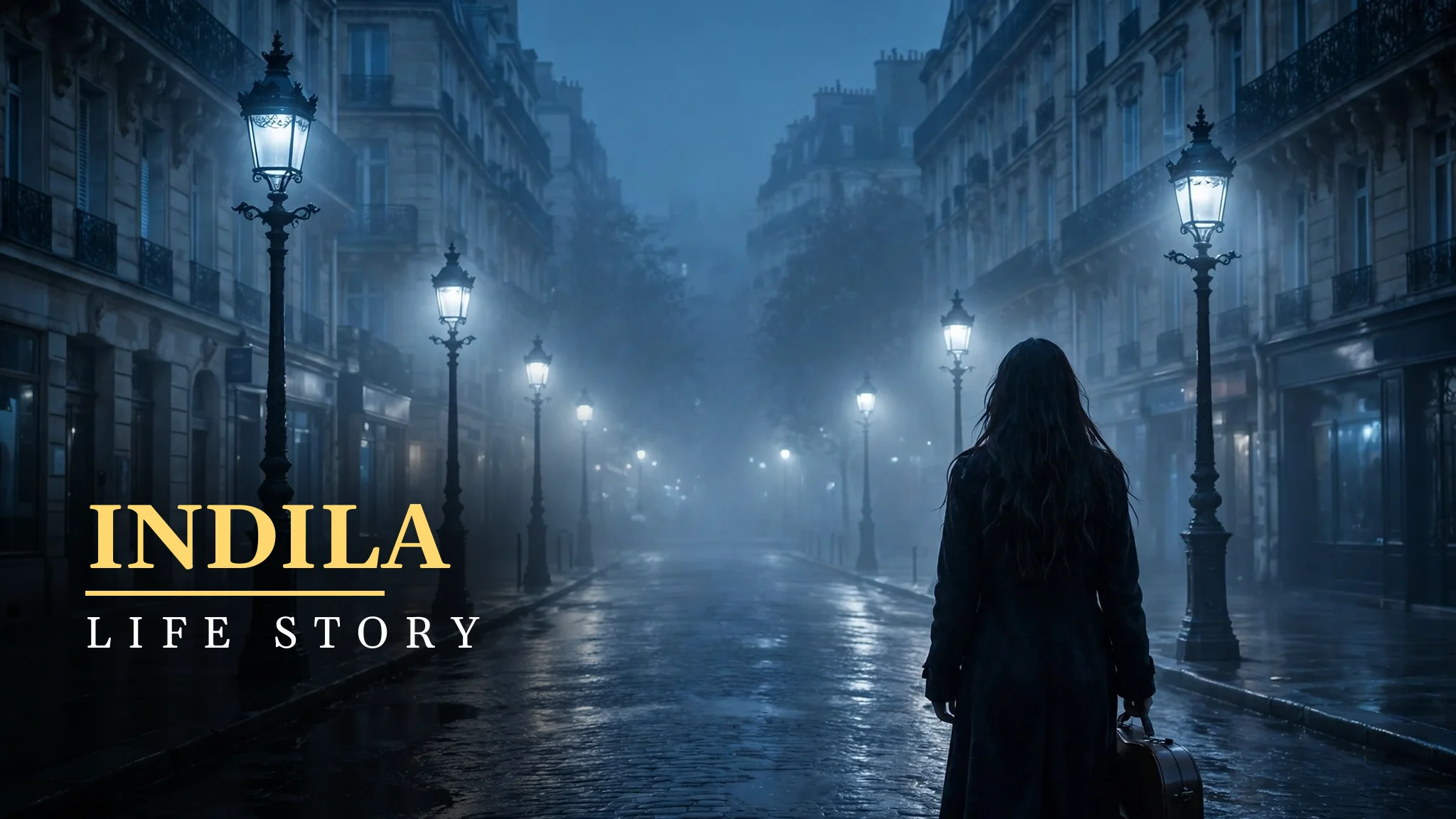
The single also introduced the world to her image: a woman in dark clothes, walking alone through Paris, mysterious and elegant, with a voice that seemed to come from another world. That image, combined with the song, created a legend, and people wanted to know more about the woman behind the voice. But Indila, true to her nature, gave them very little. She let the song speak for her, and the song spoke beautifully.
Mini World and a Classic Album
In February 2014, Indila released her first album, “Mini World”, and it became a huge success. The album included “Dernière danse”, “Tourner dans le vide”, “S.O.S”, and “Love Story”, and each song showed a different side of her art. The album mixed French pop, R and B, and world music, and it was full of images of the night, of Paris, of love, and of the world as seen through the eyes of a child. It was a complete and beautiful record, and it sold hundreds of thousands of copies in France and abroad.
“Tourner dans le vide” became another hit, a song about love and emptiness that showed the same emotional power as “Dernière danse”. “S.O.S” was a song about asking for help, about reaching out to someone when you are in pain, and it touched many listeners who had felt the same way. “Love Story” was a tender and romantic song that showed a softer side of her music. Together, the songs made an album that felt like a journey through a small world, a world of feelings, of images, and of music.
The album won her awards, including the Victoire de la Musique for Album of the Year, and it made her one of the most important new artists in France. Critics praised the album for its originality, its production, and its emotional depth, and fans loved it for the same reasons. It was not a collection of singles. It was a work of art, made with care and with a clear vision, and it has stood the test of time. Many people still consider it one of the best French albums of the decade.
She toured with the album, singing in concert halls and at festivals, and her live performances were as powerful as her recordings. She sang with her whole heart, she held the audience in silence, and she made a big hall feel like a small room. But even as her fame grew, she remained private, giving few interviews and rarely appearing in the media. She let the music speak, and the music spoke loudly enough.
Her songs also showed a love of language, and a gift for images that stay in the mind. She writes about the world as a small place, a “mini world” full of feelings, of colours, of night and rain, and she invites the listener into that world. Her lyrics are poetic without being complicated, and they use simple words to say deep things. That is a rare gift, and it is one of the reasons her album has lasted. People do not just remember the melodies. They remember the words, and they carry them with them long after the song has ended.
She also worked closely with the producer Skalpovich, who helped her to build the sound of the album, and their partnership was one of the most important in French pop of that time. He understood her voice, he understood her vision, and he helped her to create a record that was both modern and timeless. The album does not sound dated, even after more than a decade, because it was made with care, with a clear idea, and with a respect for the listener. That care is what makes a record a classic.
Her live performances during the “Mini World” tour also showed a different side of her, a performer who could hold a large hall in silence with the power of her voice alone. She did not need dancers or bright lights. She needed only a microphone, a band, and a song, and the audience listened as if they were in a small room. Those concerts became legendary among her fans, because they were rare, and because they showed an artist at the height of her powers, giving everything she had to the people in front of her.
The album’s cover and its visual world also became famous, with images of a small and dreamlike world, full of wonder and melancholy. That visual style, combined with the music, created a complete work of art, a world that fans could step into. It was not just a record. It was a place, and people wanted to live in it for a while. That is why the album is still loved today, and why it is still considered one of the most original French records of its time.
The Mystery and the Silence
After the success of “Mini World”, Indila did something unusual: she stepped back. She did not release a second album quickly, she did not tour endlessly, and she did not appear on every television show. She largely disappeared from public view, and the world began to wonder what had happened to her. Some people thought she had retired, others thought she was working on a new album, and others simply waited, hoping that she would return. The mystery only made her more fascinating.
She did release music occasionally, including the single “Parle à ta tête” in 2019, which showed that she was still writing and still singing. The song was well received, and it reminded her fans that she had not forgotten them. But she did not follow it with a full album, and she did not return to the spotlight in a big way. She continued to live a private life in Paris, away from the cameras, and she continued to protect her family and her personal world from the public eye.
Her silence has been interpreted in many ways. Some people see it as a sign of a perfectionist who will only release music when it is ready. Others see it as a choice to live a normal life, rather than a life of constant fame. Whatever the reason, her decision has made her a legend in French music, a singer who is loved not only for her songs but also for her mystery. She is a reminder that an artist does not have to be always visible to be important, and that a single great album can be enough to secure a place in history.
She has also continued to work behind the scenes, writing and collaborating, and her influence can be heard in the work of other artists. She has not disappeared completely. She has simply chosen a different way of being an artist, a quieter way, and that choice deserves respect. In a world where celebrities are expected to share everything, she has chosen to share only her music, and that is enough.
A Voice That Refuses to Fade
Even after years away from the spotlight, Indila’s music has not faded. “Dernière danse” is still streamed millions of times every year, and it has become a classic of French pop, a song that new generations discover and fall in love with. Her album “Mini World” is still listened to, still praised, and still considered one of the best French albums of its time. Her voice, once heard, is not easily forgotten, and her songs have a power that does not depend on fashion or on the charts.
Her influence can be seen in the young singers who followed her, especially young French women who saw that it was possible to make music that was emotional, poetic, and original, and still reach a wide audience. She showed that a singer does not need to follow the rules of pop music to be successful. She can write her own songs, sing them in her own way, and let the audience come to her. That lesson has travelled far, and it has inspired many young artists.
She has also become a symbol of a different kind of fame, a fame based on art rather than on celebrity. She is famous because of her songs, not because of her appearances on television or her posts on social media. That is a rare and precious kind of fame, and it is one that will last. Long after the stars who are famous for being famous have been forgotten, her songs will still be played, and her voice will still be heard.
Her story is still being written, and her fans still hope for new music. Whether she releases a second album or not, her place in French music is secure. She is the singer of “Dernière danse”, the maker of “Mini World”, and the voice that conquered the world and then chose silence. That is a story that will be told for a long time.
She has also inspired a new generation of French singers who write about the night, about Paris, and about love with the same poetic honesty. They do not copy her, but they have learned from her that a song can be beautiful and successful at the same time, and that a singer can be both popular and private. That influence is quiet, but it is real, and it can be heard in the music of young artists who came after her.
What Indila Means Today
Today, Indila stands as one of the most intriguing figures in French music. She is known for a single great album, for a song that became a world hit, and for a mystery that has lasted for more than a decade. She has won major French music awards, she has sold millions of records, and she has been streamed billions of times, and yet she remains a private person, living quietly in Paris, away from the spotlight.
Her influence is quiet but deep. She showed that French pop could be poetic, emotional, and original, and that a singer could reach the world without giving up her privacy. She showed that a single song, sung with feeling, could cross borders and languages, and that an album made with care could become a classic. For anyone who dreams of a life in music, her story is a reminder that quality matters more than quantity, and that a true voice will be heard, even if the singer herself chooses to stay silent.
My Take:
When I think about Indila, the first thing that comes to me is the night. Her songs are full of the night: the empty streets of Paris, the rain, the lamps, the feeling of walking alone after losing someone you loved. I love that, because most pop music is about the day, about parties, about sunshine, about being happy. Her music is about the night, about the quiet hours when we are alone with our feelings, and that is a braver and more honest place to write from. She sings about the parts of life that we usually keep hidden, and she does it beautifully.
I admire her voice more than almost anything else in French pop. It is a powerful voice, but it is not a loud voice. It is a voice that can be soft and strong at the same time, a voice that can carry a whole song on its own. When she sings “Dernière danse”, you can hear the pain in her voice, and you can also hear the strength in it, because the woman in the song is hurt, but she is still walking, still moving, still alive. That combination of pain and strength is rare, and it is why the song has touched so many people. She does not just sing the words. She lives them, and the listener feels it.
What I love most about “Dernière danse” is that it is a song about a break-up, but it is not a song about revenge or anger. It is a song about walking away, about accepting that something is over, and about finding the strength to keep going. That is a mature way to write about love, and it is one that many people understand, because they have lived it. When a relationship ends, the hardest part is not the anger. It is the quiet walk home, the empty streets, the feeling of being alone. She captured that feeling perfectly, and that is why the song has lasted. It is not just a pop song. It is a true story, told in a few minutes, and it is a story that millions of people have lived.
I also think about her choice to stay private, and I respect it deeply. In a world where celebrities are expected to share everything, to post every day, to show their homes, their families, and their feelings, she has chosen to share only her music. That takes courage, because the industry punishes artists who do not play the game. It calls them difficult, it calls them cold, and it tries to force them into the spotlight. She has refused, and she has paid the price in some ways, because her fame is smaller than it could have been. But she has also kept something precious: her freedom, her privacy, and her peace. I think that trade is worth it, and I admire her for making it.
There is something I find sad in her story, and it is the thought of all the music she has not shared. She is a gifted songwriter, a gifted singer, and a gifted artist, and the world has only heard one album from her. I wonder how many songs she has written that we will never hear, how many albums she could have made, and how many people she could have touched with her music. That is a real loss, and I feel it every time I listen to “Mini World” and wish there were more. But I also understand that an artist owes the world nothing except honesty, and if she is not ready to share her music, then we must wait. The waiting is hard, but the music we have is beautiful, and it is enough for now.
I admire the way she worked behind the scenes before she was famous, because it shows a humility that is rare in the music industry. She sang on the records of other artists, she helped them to make their songs better, and she did it without demanding the spotlight. That is a generous way to be an artist, and it is a sign of a person who loves music for its own sake, not for the fame it brings. She learned her craft in the background, and when her moment came, she was ready. I think that is a lesson for young artists: do not be afraid to work in the background. The background is where you learn, and the learning is what makes the success last.
I think about her heritage, too, and about the mix of cultures in her family. She is Algerian, she is Cambodian, she is Indian, she is French, and she is all of those things at once. That mix is in her music, in the rhythms, in the melodies, in the images. She does not sing like a person from one place. She sings like a person from many places, and that is a beautiful thing. In a world that often asks people to choose one identity, she carries many, and she carries them with grace. I think that is a lesson for all of us: we are not only one thing. We are many things, and all of them matter.
I also think about the young women who listen to her songs, and about what they learn from them. Her songs are about love, about loss, about the night, and about the strength to keep walking. They are not songs about being perfect, or about being pretty, or about pleasing a man. They are songs about being a person, with feelings, with pain, and with the courage to face the world alone. That is a powerful message for a young woman, and it is one that I think many of her fans have taken to heart. She sings about independence, not in a loud way, but in a quiet and determined way, and that quiet determination is more powerful than any shout.
If I have a criticism, it is a small one, and it is really a wish. I wish she would release more music, because the world needs her voice. I understand why she has stayed silent, and I respect her privacy, but I also believe that an artist of her talent has a gift that should be shared. I hope that one day she will feel ready to share it again, and that she will give us a second album as beautiful as the first. I will be waiting, and so will millions of other people, because a voice like hers is too rare to keep hidden.
I think about the future, too, and I wonder what will happen to her legend. Will she remain a mystery, a singer of one great album, or will she return and surprise us all? I do not know, and I think that is part of the beauty of her story. She has kept us guessing, and she has kept us listening. Whether she releases new music or not, her place in French music is secure, because “Dernière danse” will be played for generations, and “Mini World” will be remembered as a classic. That is a legacy that few artists achieve, and she achieved it with a single album.
Another thing that stays with me is the image of Paris in her songs. She sings about Paris as a city of the night, a city of rain and empty streets, a city that is beautiful and sad at the same time. That is a different Paris from the one in the postcards, and it is a truer one, because every city has a night side, and every person who has walked alone at night knows it. She captured that Paris in her music, and she made it universal. People in Tokyo, in Berlin, in Istanbul, people who have never been to Paris, still feel that city in her songs, because they have walked their own empty streets at night. That is the power of a great song: it makes a specific place feel like everywhere.
In the end, what I take from the story of Indila is a simple idea: quality matters more than quantity, and mystery can be a form of strength. She made one great album, she sang one great song, and she changed French pop forever. She did not need to release an album every year, or to appear on every television show, or to share her life on social media. She needed only her voice, her songs, and her honesty, and that was enough. That is a lesson for anyone who feels pressured to do more, to be more visible, to share more. Sometimes, less is more, and a single true song is worth more than a hundred forgettable ones.
One last thought stays with me. When I hear “Dernière danse”, I hear a woman walking alone through Paris at night, and I hear her deciding to keep walking, to keep living, to keep dancing, even though her heart is broken. That is a beautiful image, and it is a brave one. She reminds me that we can be sad and strong at the same time, that we can lose someone we love and still find the strength to move forward. That is a lesson that goes far beyond music, and it is one that I will carry with me for a long time.
I also think about the people who discovered her music years after it was released, and who fell in love with it as if it were new. That is the mark of a classic: it does not belong to one year, or to one generation. It belongs to anyone who hears it, whenever they hear it. A teenager today can hear “Dernière danse” for the first time and feel the same thing that a listener felt in 2013, because the feeling in the song does not change. That is a rare achievement, and it is one that few pop stars ever reach.
There is another thing I admire, and it is the way she has refused to let the music industry define her. The industry wants artists to be predictable, to release an album every year, to tour, to post, to promote, to be always visible. She has refused that rhythm, and she has paid a price for it, but she has also kept her freedom. I think that freedom is worth more than fame, and I think she knows it. She is not a product. She is a person, and she has chosen to live like one.
I sometimes think about what her songs mean to people who are going through a break-up right now. When a relationship ends, the world can feel empty, and the nights can feel very long. Her songs tell those people that they are not alone, that someone else has walked those same streets, and that it is possible to keep going. That is a gift that goes far beyond entertainment. It is a gift of comfort, and it is one that I think she would be proud to give.
Finally, I want to say that her story gives me hope about the future of music. In a world of fast songs and short attention spans, a slow and beautiful song like “Dernière danse” can still conquer the world. That tells me that people still want depth, still want feeling, and still want art that means something. As long as that is true, there will always be room for artists like Indila, and the world will be better for it.
I also think about the song “Tourner dans le vide”, because it is a song about emptiness, about the feeling of spinning in circles when love has gone. That is a feeling many people know, and she captured it with a melody that is both sad and beautiful. I think that is the mark of a great songwriter: the ability to take a painful feeling and turn it into something beautiful, without pretending that the pain is not real. She does that again and again, and it is why her music stays with people long after the last note has faded.
Frequently Asked Questions
Where was Indila born and what is her real name?
Indila was born Adila Sedraïa on 26 June 1984 in Paris, France. Her family has roots in Algeria and in South-East Asia, and she grew up in the French capital.
What is Indila’s most famous song?
Her most famous song is “Dernière danse”, released in 2013, a haunting song about walking alone through Paris at night after a break-up. It became a huge hit in France and around the world.
What is Indila’s album called?
Her first and only studio album is “Mini World”, released in 2014. It includes “Dernière danse”, “Tourner dans le vide”, “S.O.S”, and “Love Story”, and it won the Victoire de la Musique for Album of the Year.
Did Indila work with other artists before her solo career?
Yes, she sang on the records of French rappers including Youssoupha, Rohff, and Soprano before she became a solo star. Her powerful voice on those songs helped her name to spread in the French music world.
Why is Indila so private and mysterious?
She has always protected her private life, giving very few interviews and rarely appearing in the media. After the success of “Mini World”, she largely stepped back from the spotlight, releasing music only occasionally.
Has Indila released new music since Mini World?
She released the single “Parle à ta tête” in 2019, but she has not released a second studio album. Her fans continue to hope for new music, while her first album remains a classic of modern French pop.


