Jackson Yee: The Life Story Behind China's Young Superstar
In this post
Jackson Yee is the youngest superstar of his generation in China, and his story is about growing up faster than most people do. He was a child dancer, then a member of TFBoys, one of the most famous boy groups in Chinese history, then a solo singer, and then, almost without pause, a serious film actor. He was still a teenager when millions of fans knew his name. He was still a young man when he played a boy accused of a crime in Better Days, a film that made critics take him seriously. He was barely in his twenties when he starred in war epics and historical dramas that older actors would have been proud to lead. His life has moved fast, but his work has a calm at its centre, a stillness that makes people watch him closely.
He was born in Huaihua, Hunan, in 2000, and he grew up in Beijing, where his family moved so that he could train. As a small child, he learned folk dance, Latin dance, and street dance, and he performed on television before he was ten. He was a child who could dance, and dance taught him discipline, rhythm, and the ability to perform in front of a crowd without fear. When he joined TFBoys in 2013, at the age of twelve, he became the youngest member of a group that would become a phenomenon. The group sang, danced, and grew up in public, and Jackson Yee grew up with them, from a boy to a young man, in front of millions of fans.
What makes his story different from other idol stories is what happened next. Many idols stay idols. Jackson Yee became an actor, and not a light one. He chose hard roles, sad roles, roles that asked for more than a smile. Better Days, in 2019, was the turning point. He played a street boy who protects a bullied girl, and his performance was praised by critics who had once dismissed him as only a pop star. From there, he moved into films about war, about history, about ordinary people in hard times, and he became one of the most respected young actors in China. His story is still young, but it already feels like a long one, because he has lived so much in public, so early.
A Dancing Child in Beijing
Jackson Yee was born on 28 November 2000 in Huaihua, a city in the province of Hunan, in central China. His family later moved to Beijing, the capital, so that he could train and study. As a very young child, he showed a talent for dance, and his parents supported him, taking him to classes, to rehearsals, to performances. He learned folk dance, Latin dance, and later street dance, and he performed on television as a child, in shows that introduced him to a small audience before he became famous. Dance was not a hobby for him. It was a daily practice, a way of life, and it shaped his body and his mind.
A child who dances every day learns things that other children do not learn. He learns to listen to music, to count beats, to move his body in time, to repeat a step until it is perfect. He learns to perform in front of strangers, to smile when he is tired, to keep going when he makes a mistake. Jackson Yee learned all of that before he was ten, and it gave him a confidence that stayed with him when he became an idol. On stage, he did not freeze. He moved, he danced, he sang, and he looked as if he belonged there, because he had been performing since he was small.
His family played a central role in those early years. They moved to Beijing, they managed his schedule, they helped him to balance school and training. That balance is hard for any child performer, because school and work both demand time, and a child cannot do both without help. Jackson Yee’s family gave him that help, and they kept him grounded, reminding him that dance and school were both important. That grounding mattered later, when fame arrived and the pressure grew, because he had already learned to work hard and to stay humble.
By the time he was twelve, he was ready for a bigger stage. He had the dance skill, the stage presence, and the work ethic that a boy group needs. The next step would be TFBoys, and it would change his life in a way that no dance class could have prepared him for.
TFBoys and Fame at Thirteen
In 2013, Jackson Yee joined TFBoys, a boy group formed by the company TF Entertainment, along with Karry Wang and Roy Wang. He was the youngest member, at twelve years old, and he joined a group that would become one of the most popular in China. TFBoys sang cheerful pop songs, danced in bright videos, and appeared on television, in advertisements, and in concerts. Their fans were mostly young, and they loved the group with a passion that is hard to describe. The boys were not only singers. They were friends, brothers, and role models for millions of teenagers.
Fame at thirteen is a strange thing. It means that your face is known, your songs are sung in schools, your pictures are on walls, and your life is watched by strangers. Jackson Yee lived that life, and he lived it while still going to school, still growing, still learning who he was. The group worked hard, with long rehearsals, many performances, and little rest. They grew up together, and they grew up in public, which meant that every change in their voices, their heights, their faces, was noticed and discussed. That is a lot for a teenager to carry, but Jackson Yee carried it with a quiet calm that many people noticed.
TFBoys became a phenomenon, with hit songs, sold-out concerts, and a fan base that spanned China and beyond. Jackson Yee, as the youngest member, was often seen as the dancer of the group, the one with the sharpest moves and the coolest style. He also began to develop his own voice as a singer, and he started to think about what he wanted to do after the group years. Many boy group members struggle to find a solo career, but Jackson Yee had a plan. He wanted to act, and he wanted to act seriously, not only in light idol dramas, but in films that mattered.
The group did not break up in a sudden way. The members began to work on solo projects while still being part of TFBoys, and Jackson Yee’s solo work soon became the most talked-about. He released music, he appeared in dramas, and he began to study acting. The boy who had danced on stage at twelve was becoming a young man who wanted to tell stories on screen, and that change would soon become the centre of his life.
Studying Acting and the Turn to Film
Jackson Yee’s turn to acting was not an accident. He studied at the Central Academy of Drama in Beijing, one of the best acting schools in China, and he entered with high scores, which surprised some people who had only seen him as an idol. At school, he learned the craft seriously, studying voice, movement, and the art of building a character. He was not a star at school. He was a student, and he had to work like any other student, to take direction, to fail, and to try again. That time at school gave him a foundation that idol training had not given him, and it prepared him for the hard roles that were coming.
His first major film role came in Better Days, released in 2019, a drama about school bullying, about a girl who is bullied and a boy who protects her. Jackson Yee played Xiao Bei, a street boy with a troubled past, who becomes the girl’s protector and, in time, her love. The role was dark, sad, and demanding, and it asked the young actor to show anger, tenderness, and sacrifice. He played it with a maturity that shocked critics, who had expected a pop star performance and found instead a real actor. The film became a major success, and it was praised in China and abroad, earning attention at film festivals and awards.
Better Days mattered because it changed how people saw Jackson Yee. He was no longer only the youngest member of TFBoys. He was an actor who could carry a serious film, who could play a character with a past, with pain, and with a heart. The film’s success also showed that he had chosen his roles carefully. He had not taken a light, easy part. He had taken a hard one, and he had made it his own. That choice set the tone for the rest of his career, and it told the industry that he was serious about acting, not only about fame.
After Better Days, he continued to study and to work, and he took roles in films that were even bigger, even more demanding. He was still a young man, but he was already being talked about as one of the most promising actors of his generation, a title that carries both honour and pressure.
A Little Red Flower and the War Epics
In 2020, Jackson Yee starred in A Little Red Flower, a drama about two young people living with serious illness, about love, family, and the will to live. He played Wei Yihang, a young man with a brain tumour, who meets a girl with a similar illness and learns to face life with courage. The role was emotional and quiet, and it asked the actor to show a young man who is angry, scared, and hopeful at the same time. Jackson Yee played it with a restraint that made the film moving, and it became a success, showing that he could carry a personal, intimate story as well as a big social drama.
The following year, he took on a very different kind of film: The Battle at Lake Changjin, a large war epic about Chinese soldiers in the Korean War. He played Wu Wanli, a young soldier who joins his brother’s unit and learns what war means. The film was a huge commercial success, becoming one of the highest-grossing films in Chinese history, and it introduced Jackson Yee to an even wider audience. Playing a soldier in a war film is a test for any actor, because it asks for physical strength, for discipline, and for the ability to show fear and bravery in the same scene. He passed that test, and the film’s success made him a leading man in the eyes of the industry.
He continued with the sequel, and with other large films, including Full River Red in 2023, a historical mystery directed by Zhang Yimou, one of China’s most famous directors. In Full River Red, he played a soldier in the Song dynasty, in a story full of intrigue, humour, and tragedy. Working with Zhang Yimou is a major step for any young actor, because Zhang is known for his visual style and his demanding direction. Jackson Yee held his own in that film, and it became another major success, proving that he could work with the best directors in China and not be overshadowed.
These war and historical epics show a different side of Jackson Yee from the boy in TFBoys. He is no longer a dancer on a bright stage. He is a soldier in the snow, a young man in a hospital, a boy protecting a girl from bullies. Each role is serious, each role is demanding, and each role has added to his reputation as an actor who chooses hard work over easy fame. That reputation is rare for someone so young, and it is one reason why his career is watched so closely.
Music, Dance, and a Solo Voice
Even as his acting career grew, Jackson Yee did not leave music and dance behind. He continued to release songs, to perform, and to dance, and his solo work showed a different side of him from his TFBoys years. His music is more personal, more mature, and more reflective, and his dance remains one of his strongest skills. He is known for his street dance, for his control, for his ability to move with power and grace at the same time. That skill, learned as a child, has stayed with him, and it gives his performances, both on stage and on screen, a physical confidence that other actors do not always have.
His solo concerts and performances have been praised for their energy and their artistry, and they show that he is not only an actor who used to be an idol. He is still a performer, still a dancer, still a singer, and he brings those skills to his acting. A dancer knows how to use his body to tell a story, and Jackson Yee uses that knowledge in his films, in the way he walks, in the way he stands, in the way he fights. That physical storytelling is part of what makes his performances feel real, even when the story is historical or fantastical.
He has also become a public figure beyond entertainment, appearing in campaigns, in fashion, and in cultural events, and he is seen as a role model for young people in China. That role carries pressure, because a role model is expected to be perfect, to never make a mistake, to always say the right thing. Jackson Yee handles that pressure with a quiet calm, rarely making loud statements, rarely seeking controversy. He lets his work speak, and he lets his fans decide. That calm is part of his appeal, and it is part of why his career has lasted from childhood to adulthood without a major fall.
His music and his acting are now two parts of one career, and he moves between them with a ease that is rare. He can dance on a neon stage one night and play a soldier in the snow the next day, and both performances feel true. That range is the result of years of training, from childhood dance classes to drama school, and it is a range that will serve him well as he grows older and takes on even more complex roles.
The Pressure of Being Young and Famous
Jackson Yee has been famous since he was twelve, and that long fame has a cost. He has grown up in public, with every change in his face, his voice, and his work watched and discussed. He has had little privacy, and he has had to learn to live with attention that never stops. That is a hard life for a young person, and it is one that many child stars do not survive without damage. Jackson Yee has survived it, and he has survived it well, but the survival has required discipline, family support, and a clear sense of what matters.
There have been hard moments, including public debates about his work, about his education, and about his choices, and he has faced them with a quiet that some people read as coldness and others read as strength. He does not often explain himself in public, and he does not often answer criticism directly. That silence can be frustrating for fans who want to know more, but it is also a way of protecting his work, of letting the next film speak instead of the last argument. For a young actor, that is a wise choice, even if it is not always an easy one.
The pressure to keep succeeding is also intense. After Better Days, after Lake Changjin, after Full River Red, every new film is expected to be a success, and every new role is compared with the last. That expectation can be crushing, and it can lead a young actor to choose safe roles, to avoid risk, to play the same kind of hero again and again. Jackson Yee has, so far, avoided that trap, by choosing different kinds of roles, by working with different directors, and by taking on stories that are hard, not easy. That willingness to take risks is one of the most impressive parts of his young career.
He is still very young, and his story is still being written. He has already achieved more than most actors achieve in a lifetime, but he has also faced more pressure than most people face in a lifetime. How he handles the next decade, as he moves from young star to mature actor, will be one of the most interesting stories in Chinese cinema, and many people will be watching to see what he does next.
What His Early Success Means
Jackson Yee’s success at a young age means something larger than one career. It shows that a child idol can become a serious actor, that a boy group member can become a film star, and that fame at thirteen does not have to end in failure. Many people doubted that transition, and Jackson Yee proved them wrong, not by making a speech, but by working, by studying, by choosing hard roles, and by delivering performances that critics could not ignore. That proof matters, because it gives hope to other young performers who dream of a longer career.
His influence can also be seen in the way young actors are now viewed in China. Producers are more willing to give serious roles to young stars, and audiences are more willing to take them seriously, because Jackson Yee showed that youth does not mean a lack of depth. A young actor can play a soldier, a patient, a street boy, and make the audience believe him, if he has the training and the talent. That is a useful lesson, and it has opened doors for others.
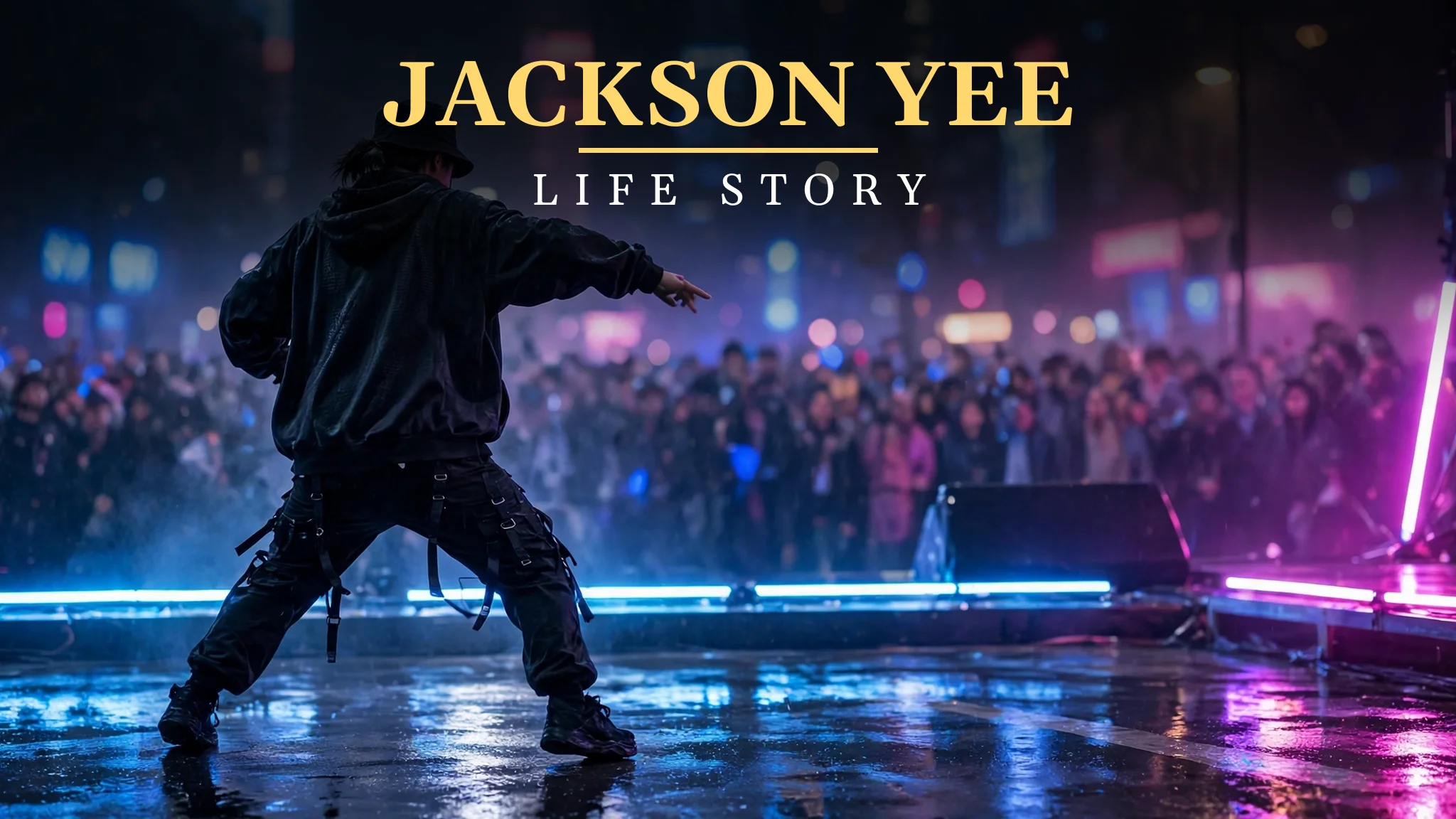
He is still growing, still learning, and still choosing. His recent films show a young man who is comfortable with large epics, with intimate dramas, and with historical mysteries. That range suggests that his best work may still be ahead of him, as he grows older, takes on more complex characters, and learns more about life. The boy who danced on a wet neon stage has become a man who can carry a war film, and that change, from dancer to actor, from idol to artist, is the heart of his story. He is still growing, still learning, and still choosing. His recent films show a young man who is comfortable with large epics, with intimate dramas, and with historical mysteries. That range suggests that his best work may still be ahead of him, as he grows older, takes on more complex characters, and learns more about life. The boy who danced on a wet neon stage has become a man who can carry a war film, and that change, from dancer to actor, from idol to artist, is the heart of his story. What is often missed is how much his dance training helps him in war films. A dancer knows how to fall without injury, how to move quickly, how to control his breathing when he is tired, how to keep his balance on a wet stage or a snowy mountain. Jackson Yee brings that dancer’s body to his soldier roles, and that body makes the soldier feel real, not only acted, but lived, in the way he runs, in the way he crouches, in the way he stands in the cold.
My Take:
I am struck by Jackson Yee, and I want to be clear about why. I am struck because he grew up in public and did not break. That is a rare thing. Most child stars either fade, or they rebel, or they lose themselves in fame. He did not. He studied, he worked, he chose hard roles, and he became a serious actor while still very young. That takes a kind of discipline that I admire deeply. It is not the discipline of a single performance. It is the discipline of a life, of waking up every day, of practising, of learning, of saying no to easy fame and yes to hard work. I think about the boy in TFBoys, dancing on a stage at thirteen, and I think about the young man in Better Days, playing a street boy with a troubled past, and I see the same person, but grown, and that growth is the most impressive part of his story.
Better Days is the film that changed my mind about him, and I think it changed many people’s minds. Before that film, I saw him as a pop star, a dancer, a member of a boy group. After that film, I saw him as an actor. Xiao Bei is not a simple character. He is angry, he is tender, he is protective, he is scared, and he is willing to sacrifice himself for a girl he loves. Jackson Yee played all of that without overacting, without shouting, without asking the audience to pity him. He played it with a stillness that made me lean in. That stillness is a gift, and it is a gift that comes from years of dance, from years of learning to control his body, and from years of learning to listen.
I also think about the pressure he has lived with. He has been famous since he was twelve. He has never had a normal teenage life. He could not go to school without being watched, could not walk in a street without being photographed, could not make a mistake without people talking about it. I feel sympathy for that life, because it is a lonely life, even when it looks glamorous. Fame at twelve is not a gift. It is a job, and it is a job that never ends. Jackson Yee has handled that job with a calm that I respect, but I also worry about what it costs him. I hope he has people around him who see him as a person, not only as a star, and who let him rest, laugh, and be young, even when the world wants him to be perfect.
What moves me most is his choice of roles. He did not choose easy, light, romantic parts. He chose a boy protecting a bullied girl, a young man with a brain tumour, a soldier in a war, a man in a historical mystery. Those are hard roles, and they ask for more than a smile. They ask for pain, for fear, for courage, for sacrifice. He chose them, and he played them well. That choice tells me that he cares about acting, not only about fame. A star who only cares about fame chooses safe roles. A star who cares about acting chooses hard roles. Jackson Yee chose hard, and I admire him for it.
I want to be honest about what I do not know, and about what I find hard. He is still very young, and his story is still early. I do not know how he will handle the next decade, when the roles change, when the audience changes, when the pressure grows. I do not know if he will keep choosing hard roles, or if he will one day choose a safe one. I hope he keeps choosing hard, but I also understand that a career is long, and a person needs rest, needs variety, needs time to live. I will not judge him for a single choice. I will watch the whole line of his choices, and I will judge him by that line, as I have judged him so far.
What can a reader learn from him? I think the first lesson is that early fame does not have to be the end. You can grow up in public and grow well, if you study, if you work, if you stay humble. The second lesson is that dance, music, and acting are not separate. They are all ways of telling a story with your body, your voice, and your heart, and a person who learns one art well can learn another. The third lesson is that choosing hard work is a form of respect, respect for yourself, respect for your audience, and respect for the art. Jackson Yee shows that respect in every film he makes.
I also think about young dancers and singers who watch him and dream. I would tell them to look at his training, not only his fame. Look at the childhood dance classes, the rehearsals, the drama school, the long days on set. If you want a career like his, you must be ready for the work, not only the stage. The stage is the last part. The first part is the practice room, the mirror, the teacher who corrects you, the muscles that ache. Jackson Yee knows that room well, and that is why he lasts.
In the end, I see Jackson Yee as a young man who danced as a child, sang as a teenager, and acted as a young adult, and who did all three with a seriousness that is rare at any age. He is still young, still learning, still choosing, and I think his best work is still ahead of him. I will keep watching, not because he is famous, but because he is growing, and growth is the most interesting thing a person can show us. He has already shown that a boy from Hunan can become a star, and that a star can become an actor. Now I want to see what kind of man, and what kind of artist, he becomes next.
I keep thinking about TFBoys, and about what it means to be twelve years old and famous, to sing on a stage while other children are playing in a schoolyard, to have your face on walls, your songs in classrooms, your life watched by strangers. That is a strange childhood, and it is also a lonely one, even when it looks glamorous. Jackson Yee lived that childhood, and he lived it with a calm that I find remarkable. He did not rebel loudly, he did not disappear, he did not burn out. He studied, he danced, he sang, he grew up, and he became an actor. That is a quiet victory, and I respect it, because many child stars do not survive fame, and he has survived it, and survived it well, with his talent intact and his character intact.
Better Days deserves more thought, because it is a film about bullying, about a girl who is hurt at school, about a boy who protects her, and about a system that fails them both. That is a serious subject, and Jackson Yee played it with a seriousness that made critics take notice. Xiao Bei is not a hero in the usual sense. He is a street boy, a person with a past, a person who has been hurt, and who chooses to protect someone else, even when it costs him everything. That choice, to protect, to sacrifice, to love without asking for thanks, is a powerful story, and Jackson Yee played it without overacting, without shouting, without asking the audience to pity him. He played it with a stillness that made me lean in, and that stillness is a gift that comes from years of dance, from years of learning to control his body, and from years of learning to listen.
A Little Red Flower is another film that stays with me, because it is about young people living with illness, about love, about family, about the will to live when life is hard. Wei Yihang is a young man with a brain tumour, who is angry, scared, and hopeful at the same time, and Jackson Yee played him with a restraint that made the film moving, without making it sentimental. That restraint is hard to achieve, especially for a young actor, and he achieved it, because he understands that sadness does not need to be loud to be real. A quiet sadness can be more moving than a loud cry, and Jackson Yee knows that, in his acting, in his dance, in his whole way of being on screen.
The Battle at Lake Changjin is a very different kind of film, a war epic, a story about soldiers in the snow, about brothers, about sacrifice, and Jackson Yee played Wu Wanli, a young soldier who joins his brother’s unit and learns what war means. That is a test for any actor, because war is not a game, it is a serious subject, and a young actor must play it with respect, with discipline, with an understanding that the story belongs to real people who suffered. He played it with that respect, and the film became one of the highest-grossing in Chinese history, a sign that the audience trusted him with a serious story, and that he did not disappoint them. I think that trust is the most valuable thing a young actor can earn, and he earned it, film by film, role by role.
One more thought, about his family. He moved to Beijing as a child so that he could train, and his family moved with him, supported him, helped him to balance school and work. That support matters, because a child performer without family support is lost, and a child performer with family support can grow up well, even in public. Jackson Yee had that support, and it shows in the man he has become, calm, disciplined, respectful, and hardworking. I hope he keeps that family close, as he grows older, as the pressure grows, because family is the one place where a star can be a person, not only a name, and that place is precious, especially for someone who has been famous since he was twelve. One more thought stays with me, about the way he handles being famous since he was twelve. That is a long time to be watched, to be photographed, to be judged, and Jackson Yee has lived it with a calm that I find remarkable. He did not rebel loudly, he did not disappear, he did not burn out. He studied at the Central Academy of Drama, he danced, he sang, he acted, he grew up, and he became a serious actor while still very young. That is a quiet victory, and I respect it, because many child stars do not survive fame, and he has survived it, and survived it well, with his talent intact and his character intact. I think about the boy in TFBoys, dancing on a stage at thirteen, and I think about the young man in Better Days, playing a street boy with a troubled past, and I see the same person, but grown, and that growth is the most impressive part of his story, more impressive than any single film, because it shows discipline, family support, and a clear sense of what matters.
There is also a lesson in the way he chose hard roles. He did not choose easy, light, romantic parts. He chose a boy protecting a bullied girl, a young man with a brain tumour, a soldier in a war, a man in a historical mystery. Those are hard roles, and they ask for pain, for fear, for courage, for sacrifice. He chose them, and he played them well. That choice tells me that he cares about acting, not only about fame. A star who only cares about fame chooses safe roles. A star who cares about acting chooses hard roles. Jackson Yee chose hard, and I admire him for it, because it is easy to be safe, and hard to be brave, especially when you are young, when the industry offers you easy fame, and you say no, you say, give me a hard role, give me a sad role, give me a role that will test me, and then you pass the test, film by film, role by role.
I want to talk about Better Days, because it is the film that proved Jackson Yee was a real actor, not only a famous singer. He played a boy who protects a girl who is bullied at school, a boy who is rough on the outside and gentle on the inside, and he played him opposite Zhou Dongyu, one of the best young actresses in China. The film was about bullying, about exams, about pressure, and about young people who feel alone, and it touched millions of viewers. Jackson Yee was still very young when he made it, and still he played the role with a quiet strength that made people forget he had started as a child idol. That is a rare thing, and it is the moment when his career changed from pop fame to serious film work.
Then came the war epics, and they showed a different side of him. In The Battle at Lake Changjin, he played a young soldier in a hard winter war, a boy who has to grow up fast, who carries heavy equipment, who marches through snow, and who learns what sacrifice means. The film was one of the biggest hits in Chinese cinema, and millions of people saw it. Playing a soldier is a physical job, and it is also an emotional job, because you have to show fear and courage at the same time. Jackson Yee did that, and he did it again in the follow-up film. I think those roles matter, because they showed that he was willing to do hard work, to train, to suffer a little for a role, instead of choosing easy romantic parts.
His decision to study acting is another part I admire. He took the entrance exam for the Central Academy of Drama, one of the best acting schools in China, and he did very well, and he went to study while he was already famous. Many young stars would skip school, because fame pays more than study, and because a classroom feels slow when you are already on stage. He did not skip it. He sat in class, he learned, he practised, and he treated acting as a craft to be learned, not as a gift he already had. That humility is rare in a person who became famous at thirteen, and it tells me that he thinks about the long road, not only about this year.
Dance is where it all started, and I think dance still lives in his acting. He learned street dance as a small child, he performed on stage before he could read well, and he learned discipline from dance, the discipline of practising the same move again and again until the body remembers it. You can see that discipline in the way he moves on screen, in the way he stands, in the way he fights, in the way he stays still when a scene needs stillness. A dancer learns to listen to music, to keep time, to work with a group, and those lessons stay in the body for life. Jackson Yee carries them into every role.
What stays with me most is that he grew up in public and did not break. He became famous at thirteen with TFBoys, and from then on, millions of people watched him grow, judged his voice, his height, his face, his choices. Most child stars either fade, or they rebel, or they lose themselves. He did not. He studied, he worked, he chose hard roles, and he became a serious young actor with a calm public image. His family moved with him to Beijing when he was small, and they supported him, and that support matters. A child performer with a steady family behind him can grow up well, even in public, and Jackson Yee is proof of that.
Frequently Asked Questions
When was Jackson Yee born and how did he start performing?
Jackson Yee was born on 28 November 2000 in Huaihua, Hunan, China. He began as a child dancer in Beijing, learning folk, Latin, and street dance before he joined TFBoys.
What is TFBoys and when did Jackson Yee join?
TFBoys is a Chinese boy group formed in 2013, with Karry Wang, Roy Wang, and Jackson Yee as members. Jackson Yee was the youngest member, joining at the age of twelve.
What film made Jackson Yee a serious actor?
Better Days, released in 2019, made him a serious actor. He played Xiao Bei, a street boy who protects a bullied schoolgirl, and critics praised his mature performance.
What war film did Jackson Yee star in?
He starred as Wu Wanli in The Battle at Lake Changjin in 2021, a large war epic about Chinese soldiers in the Korean War. The film became one of the highest-grossing Chinese films.
Did Jackson Yee study acting at school?
Yes, he studied at the Central Academy of Drama in Beijing, one of China’s best acting schools, entering with high scores and learning the craft seriously.
What is Full River Red?
Full River Red is a 2023 historical mystery film directed by Zhang Yimou, in which Jackson Yee plays a soldier in the Song dynasty. It became another major success for him.


