Kanayo O. Kanayo: The Life Story Behind Nollywood's Veteran Star
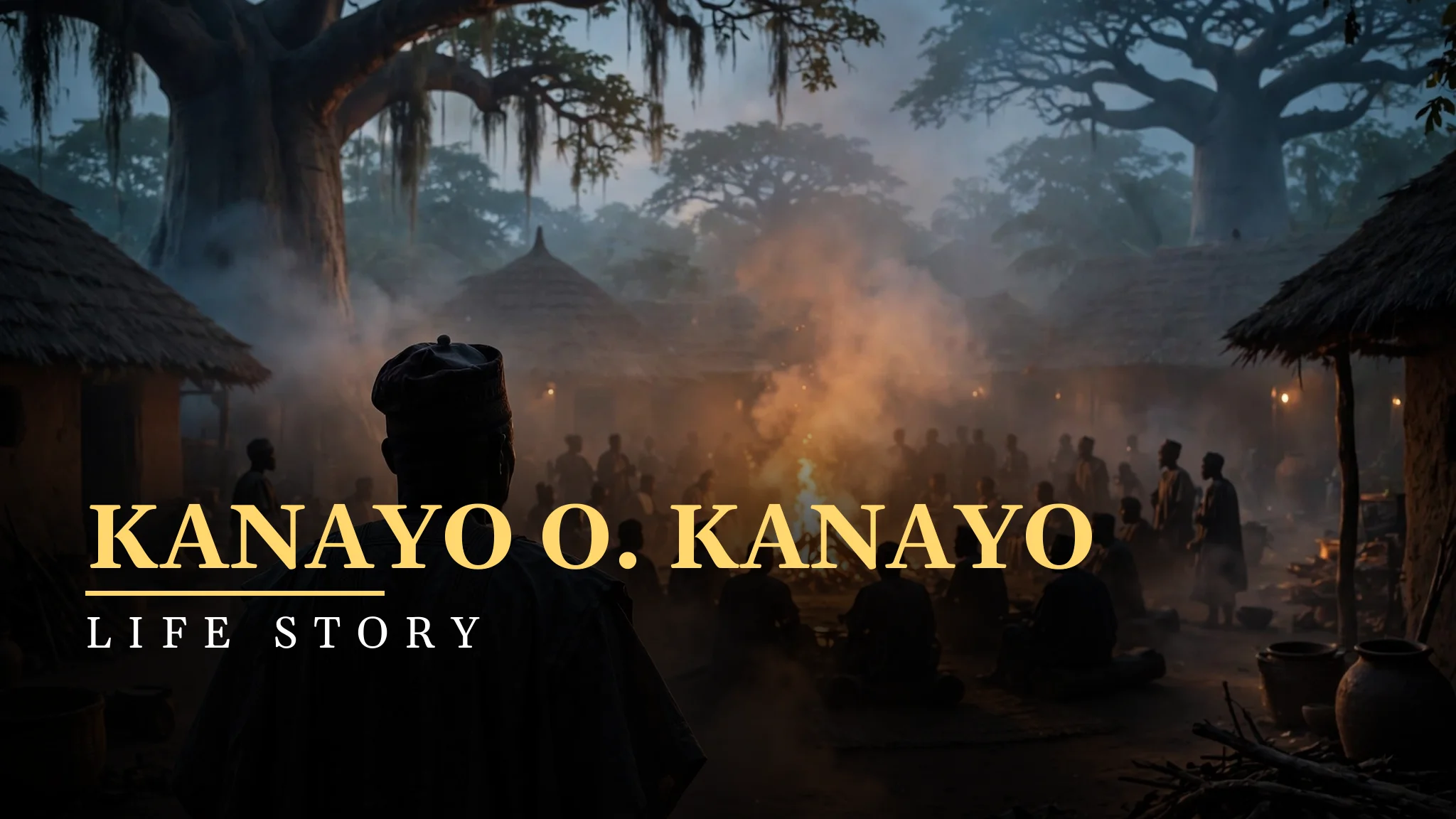
In this post
- A Boy From Mbaise in Imo State
- Early Acting and the Road to Living in Bondage
- The Ritual Films and a Name That Stuck
- A Veteran Who Kept Growing
- Law School, the Bar and a Second Career
- Honours, Family and a Public Voice
- What His Long Career Means Today
- The Chief, the King and the Igbo Tradition on Screen
- The Veteran on Set and the Young Actors Who Watch Him
- My Take:
Some actors are known for one role. Kanayo O. Kanayo is known for a whole world of roles, and for a career that helped build Nollywood itself. He was there at the beginning, in Living in Bondage in 1992, the film that many people call the start of modern Nigerian video film. He played a man who made a terrible bargain for wealth, and the performance stayed in the minds of audiences for decades. That one role could have defined him. Instead, he kept working, kept growing, and became one of the most respected veterans in African film.
His story is a story of longevity. He has acted for more than forty years, he has played kings and chiefs, villains and fathers, and he has done it with a presence that fills a screen. He is also a lawyer, a man who went back to school late in life and was called to the Bar, and a public figure who speaks his mind. He is not a quiet star. He is a loud, proud, unforgettable one, and Nollywood would not be the same without him.
This is the story of a boy from Mbaise who became a legend, and who is still working, still learning, and still commanding attention whenever he appears.
A Boy From Mbaise in Imo State
Kanayo O. Kanayo was born on 1 March 1962 in Mbaise, in Imo State, in the south-east of Nigeria. His full name is Anayo Modestus Onyekwere, and the name Kanayo, by which the world knows him, is a short form that stuck. Mbaise is a place of strong Igbo culture, of farming, of community, and of stories told in the evening. Growing up there gave him a deep sense of tradition, of family, and of the old ways that would later shape many of his most famous roles.
He was a bright child, and he was drawn to performance early. School plays, church drama, and the stories of his community gave him a first stage. He learned to speak well, to hold an audience, and to use his voice to make people listen. Those early lessons stayed with him. When he later played a chief or a king on screen, he was drawing on a real understanding of how authority looks and sounds in Igbo life, not on a guess.
His education took him through schools in Imo State and beyond, and he went on to study at the university level. He was a serious student, and he understood that learning mattered. That respect for learning would stay with him all his life, and it would lead him, decades later, back to a classroom to study law. The boy from Mbaise did not see education as something to finish and forget. He saw it as a lifelong work.
The culture of Mbaise also gave him his most famous gift: presence. Kanayo does not need to shout to be noticed. When he enters a scene, the scene changes. That presence comes from confidence, from knowing who he is, and from a deep root in his home. He is a man of Mbaise, and he carries Mbaise with him wherever he goes, in Lagos, in Abuja, and on screens around the world.
Early Acting and the Road to Living in Bondage
Kanayo began acting in the 1980s, in stage and in early Nigerian film and television work. Those were hard years for Nigerian actors. There was little money, few schools, and no clear path to fame. An actor had to be patient, had to take small roles, and had to learn the craft by doing it. Kanayo did that. He worked in theatre, he took roles in television, and he built his skill, scene by scene, in front of audiences who were quick to judge.
He was part of a generation of actors who believed in Nigerian stories. They did not want to copy Hollywood. They wanted to tell stories about Nigerian life, about family, about money, about tradition, and about the choices people make when life is hard. That belief gave their work a purpose. They were not only acting. They were building a new kind of cinema, one that spoke to Nigerians in their own language, about their own lives.
The turning point came in 1992, with Living in Bondage. The film, directed by Chris Obi Rapu, told the story of Andy Okeke, a man who, after losing his job and facing poverty, joins a secret cult and sacrifices his wife for wealth, only to be haunted by her spirit. Kanayo played Chief Omego, a key figure in that dark world, and his performance was chilling. He played power with a calm, smiling face, and that calm made the character more frightening than any shouting villain could have been.
Living in Bondage was a huge success. It sold in large numbers on video, it was talked about across Nigeria, and it is widely seen as the film that launched the Nollywood video boom. For Kanayo, it was the role that made him a star. Audiences remembered his face, his voice, and the way he could make a scene feel dangerous with only a look. He had arrived, and he would not leave.
The Ritual Films and a Name That Stuck
After Living in Bondage, Kanayo became closely linked with a certain kind of role: the wealthy chief, the powerful man, the figure who offers riches at a terrible price. Films in the 1990s and 2000s often cast him as a man of dark power, and he played those roles with a skill that made them unforgettable. He was not playing a cartoon villain. He was playing a man who understood power, who spoke softly, and who made terrible choices seem reasonable. That made the performances more powerful, and more disturbing.
That link brought him fame, but it also brought a problem. Many people began to see him only as that kind of character, and to forget that he could play other roles. Kanayo has spoken about that typecasting with humour and with honesty. He has said, in different ways, that an actor must take the roles he is given, and must make them as good as he can. He did that. Even in films that were simple in story, he brought a presence and a craft that lifted the whole film.
He appeared in a long list of films through the 1990s and 2000s, playing chiefs, fathers, businessmen, and men of tradition. He worked in English-language Nollywood and in Igbo-language films, and he became a familiar face in homes across Nigeria and in the diaspora. His name became a byword for a certain kind of power on screen, and his performances were quoted and copied by younger actors.
Through those years he also learned the business of film. He saw how producers worked, how films were sold, and how an actor could build a career that lasted. He did not depend on one hit. He worked steadily, year after year, and he built a film list that is one of the longest in Nollywood. That steadiness is the mark of a professional, and it is why he is still working today.
A Veteran Who Kept Growing
As Nollywood grew, Kanayo grew with it. He did not stay in the past. He took roles in new kinds of films, worked with younger directors, and appeared in projects that reached cinemas and streaming platforms. He played fathers, grandfathers, kings, and men of wisdom, and he brought to each role the weight of his long experience. A young actor can play a chief. Only an actor who has lived can play a chief with the full sense of what power costs.
One of his most notable later roles came in Anikulapo in 2022, a film directed by Kunle Afolayan, in which he played a powerful figure in a story of love, death and rebirth. The film was a success on streaming, and Kanayo’s performance was praised. It showed that he could still surprise audiences, still bring something new to a role, even after decades in the business. He was not resting on his name. He was still acting, still learning, still giving his best.
He has also appeared in other recent films and series, and he remains a sought-after actor for roles that need authority and presence. Directors call him when a scene needs a man who can command a room without raising his voice. That is a rare skill, and it is one that only comes with time. Kanayo has time in abundance, and he uses it well.
His longevity is also a lesson for younger actors. He has survived changes in technology, in taste, and in the industry itself, by adapting without losing himself. He did not chase every trend. He stayed true to his craft, and he let the industry come to him. That patience has given him a career that spans generations, and a name that is known to grandparents and grandchildren alike.
Law School, the Bar and a Second Career
One of the most remarkable parts of Kanayo’s story is his decision to study law late in life. He had already been a star for decades, and he did not need a new career. But he wanted to learn, and he wanted to prove that it is never too late to go back to school. He studied law, and in 2020 he was called to the Nigerian Bar, becoming a barrister. The pictures of him in his wig and gown, smiling with pride, were shared widely, and they inspired many Nigerians.
That achievement mattered for more than Kanayo himself. It told young people that learning does not end at a certain age, and it told older people that a dream delayed is not a dream denied. He had acted for forty years, and he still found time to study, to sit exams, and to pass them. That is discipline of a high order, and it is the same discipline that made his acting career last.
He has spoken about law with the same passion he brings to acting. He sees law as a way of serving people, of understanding justice, and of using words to make a difference. Acting and law are not so different, he has suggested. Both need a person who can speak well, who can understand human nature, and who can persuade. Kanayo can do all of those things, and he does them in both worlds.
His call to the Bar also changed how people saw him. He was no longer only the actor from Living in Bondage. He was also a lawyer, a learned man, a person who had earned a new title through hard work. That new title did not replace the old one. It added to it, and it showed a man who refuses to stop growing. At an age when many people slow down, Kanayo sped up, and took on a whole new profession.
Honours, Family and a Public Voice
Kanayo’s work has been recognised with honours, including the national honour of Member of the Order of the Federal Republic, MFR, which he received in 2006. That honour, given by the Nigerian government, marked his contribution to film and to the country. It was a public sign that his work mattered beyond entertainment, that he had helped build an industry that gave jobs, told stories, and carried Nigerian culture to the world.
He is a family man, married with children, and he has spoken about his family with pride. He has kept much of his private life out of the public eye, but he has shared his joy in his children and in their achievements. That balance, a public career and a private home, is one he has kept for decades, and it has protected him from the kind of scandal that has hurt other stars.
He is also a public voice, known for speaking his mind on social media and in interviews. He speaks about Nollywood, about Nigerian life, about the need for hard work and for respect, and about the value of tradition. His views are sometimes strong, and sometimes controversial, but they are always his own. He does not hide what he thinks, and that honesty has made him a figure people listen to, even when they disagree with him.
He has used his voice to advise younger actors, to warn them about the dangers of fame, and to encourage them to learn, to save, and to build a life beyond acting. That advice comes from experience. He has seen stars rise and fall, and he knows that fame without a plan is a short road. His own plan, acting and law, family and work, is a long road, and he has walked it with care.
What His Long Career Means Today
Kanayo O. Kanayo’s place in Nollywood is secure. He is one of the founding fathers of the video film era, a man who was there at the start and who is still there now. He helped make Living in Bondage, he helped make the ritual film a part of Nigerian popular culture, and he helped show that Nigerian actors could carry a story with presence and skill. That is a legacy that cannot be taken away.
For younger actors, his example is clear. Work hard. Learn your craft. Do not depend on one role. Keep learning, even when you are famous. And when the industry changes, change with it, but do not lose yourself. Kanayo has done all of that, and he has done it in public, for more than forty years.
For audiences, his legacy is the memory of a face and a voice that made them feel something. Whether he was playing a chief, a father, or a man of power, he made the scene real. He made people believe in the story, even when the story was strange. That is the work of a great actor, and it is work that lives on in the films he leaves behind.
Today Kanayo continues to act, to practice law, and to speak. His career is still going, and each new role adds another line to a story that already fills a long page. The boy from Mbaise became a legend, and he did it by working hard, by learning, and by refusing to stop. He is still here, still commanding the screen, and still reminding Nollywood of where it came from and what it can be.
The Chief, the King and the Igbo Tradition on Screen
Kanayo O. Kanayo’s most famous roles are chiefs and kings, and there is a reason he plays them so well. He understands Igbo tradition from the inside, not from a book. He grew up in Mbaise, in a place where chieftaincy, family, and community are real, daily things, and he learned how authority looks and sounds in real life. When he plays a chief on screen, he is not guessing. He is showing us a man he has known, in his family, in his town, in his life.
That understanding gives his performances a weight that other actors cannot copy. He knows how a chief sits, how he speaks, how he listens, and how he makes a decision that affects a whole community. He knows the proverbs, the pauses, and the silences that carry meaning in Igbo life. Audiences feel that truth, even if they cannot name it. They feel that this man is real, that he belongs to the world he is playing, and that his power comes from something deeper than a costume.
His roles in films such as Anikulapo show that understanding at its best. In that film, he played a powerful figure in a story of love, death, and rebirth, and he brought to it a sense of tradition, of fate, and of the old ways. He did not play the role as a villain. He played it as a man of his world, with its rules, its beliefs, and its costs. That fairness, that willingness to play a character as a person rather than as a symbol, is the mark of a great actor, and it is why his chiefs are remembered long after the film ends.
He has also helped keep Igbo culture alive on screen. In a time when many Nigerian films are made in English, Kanayo has worked in Igbo-language films and in English films that carry Igbo stories, and he has shown that those stories matter. Young Igbo actors look to him as an example, a man who carried his culture with him and made it a strength, not a limit. That is a legacy that goes beyond any single film.
The Veteran on Set and the Young Actors Who Watch Him
On a film set, Kanayo O. Kanayo is a presence that younger actors watch closely. He arrives prepared, he knows his lines, and he brings a calm authority that settles a scene. A young actor who shares a scene with him learns more in a day than in a month of classes. They learn how to stand, how to speak, how to pause, and how to let a look do the work of a speech. That teaching, done without a classroom, is one of the most important parts of his long career.
He is also known for speaking plainly to young actors about the realities of the industry. He tells them to learn, to save, to build a life beyond acting, and to not depend on fame alone. That advice comes from experience. He has seen stars rise and fall, and he knows that fame without a plan is a short road. His own plan, acting and law, family and work, is a long road, and he has walked it with care. Young actors who listen to him are more likely to build careers that last, and less likely to be hurt when the spotlight moves on.
Directors call him when a scene needs a man who can command a room without raising his voice. That is a rare skill, and it is one that only comes with time. Kanayo has time in abundance, and he uses it well. He does not rush a scene. He lets it build, line by line, until the audience feels the weight of what is happening. That patience is the mark of a veteran, and it is why he remains one of the most in-demand actors in Nollywood, even after more than forty years.
His work in recent years has also shown that he can still surprise audiences. In Anikulapo, he played a powerful figure in a story of love, death, and rebirth, and his performance was praised by critics and by fans. He could have rested on his name. He did not. He gave the role his full attention, and he showed that a veteran can still bring something new to a part, even after decades in the business. That is the mark of a real actor, not a star living on old fame, and it is why directors still call him when a scene needs authority.
He has also continued to practise law, and to speak about the value of learning, and that second career gives his acting a different kind of depth. A lawyer must understand people, must argue, must persuade, and must be believed. An actor must do the same. Kanayo brings both trainings to his work, and the result is a performance that feels intelligent, because it is. He understands every line he speaks, and he speaks it as if he means it.
My Take:
I think Kanayo O. Kanayo is one of the most important actors in Nollywood, not only because he is famous, but because he was there at the start. Living in Bondage in 1992 is widely seen as the film that launched the modern Nollywood video boom, and Kanayo was in it, playing Chief Omego with a calm that made the character terrifying. I keep thinking about that performance. He did not shout. He did not wave his arms. He spoke softly, he smiled, and he made power feel real. That is a harder kind of acting than playing a loud villain, because it asks the audience to feel danger in a quiet room. He did it, and audiences never forgot it.
What I admire first is his presence. When Kanayo enters a scene, the scene changes. That is not something you can learn from a book. It comes from confidence, from knowing who you are, and from a deep root in his home in Mbaise. He carries his Igbo culture with him, and when he plays a chief or a king, he is not guessing. He understands how authority looks and sounds in real life. I think that is why his performances feel so true. He is not acting a chief. He is showing us a chief he has known, in his family, in his town, in his life. That truth is the heart of his talent.
I also think about the typecasting that followed Living in Bondage. After that film, many people saw him only as the man of dark power, the chief who offers wealth at a terrible price. That could have been a trap. An actor who is only seen as one thing can be forgotten when tastes change. Kanayo did not let that happen. He kept working, he took many kinds of roles, and he played each one with the same care. He played fathers, businessmen, men of tradition, and men of wisdom. He did not complain about being typecast. He made the roles he was given as good as he could, and he waited for the industry to catch up with his range. That patience is a form of strength, and I respect it.
His decision to study law late in life is the part of his story that moves me most. He was already a star for decades. He did not need a law degree. But he went back to school, he studied, he sat exams, and in 2020 he was called to the Nigerian Bar. I think about what that must have taken. To sit in a classroom with students half your age, to learn new things, to be tested, to be judged, when you are already famous, takes humility and courage. Many famous people would not do it. They would say they are too busy, or too old, or too important. Kanayo did it anyway, and the pictures of him in his wig and gown, smiling with pride, tell a story that words cannot. It is never too late to learn. A dream delayed is not a dream denied. I hope young people hear that, and older people too.
I think law and acting are closer than people think, and Kanayo shows why. Both need a person who can speak well, who understands human nature, and who can persuade. A lawyer must tell a story to a judge. An actor must tell a story to an audience. Both must be believed. Kanayo can do both, and he does both with the same skill. That is a rare combination, and it shows a mind that is wider than one career. I admire people who refuse to be only one thing. Kanayo refuses, and his life is richer for it.
If I am honest, I think some of the films he made in the 1990s and 2000s were not great films. The stories were simple, the budgets were small, and the roles were often repeated. But even in those films, Kanayo brought something real. He brought presence, he brought craft, and he lifted the scene he was in. That is a professional habit, and it is rarer than talent. Talent is a gift. Care is a choice, made again and again, and Kanayo has made it for more than forty years. I think that is why he is still working today, while many of his co-stars from those years have faded. He never stopped caring about the work.
His later role in Anikulapo in 2022 is a good example of what I mean. He played a powerful figure in a story of love, death and rebirth, and he was praised for it. He could have rested on his name. He did not. He gave the role his full attention, and he showed that he could still surprise audiences. That is the mark of a real actor, not a star who is living on old fame. He is still learning, still acting, still giving his best, and that is why directors still call him when a scene needs a man who can command a room without raising his voice.
I also respect the way he speaks his mind. He is known for strong views on social media and in interviews, about Nollywood, about Nigerian life, about hard work and respect. Sometimes people disagree with him, and sometimes his views are controversial. But they are always his own, and he does not hide them. I think that honesty is valuable, even when it is uncomfortable. A public figure who says what he thinks, and who is willing to be argued with, is more useful than a public figure who says nothing. Kanayo says something, and he stands by it, and I respect that, even when I do not agree with every word.
There is a lesson in his story about longevity that I want to hold on to. He has survived changes in technology, in taste, and in the industry itself, by adapting without losing himself. He did not chase every trend. He stayed true to his craft, and he let the industry come to him. That patience has given him a career that spans generations. Grandparents know him. Parents know him. Young people know him. That is a rare kind of fame, and it comes from staying, not from arriving. I think young actors who want a long career should study him more than they study viral stars. A viral moment can give you a year. Staying can give you a life.
His national honour, Member of the Order of the Federal Republic, given in 2006, matters to me too, because it shows that his work was recognised beyond film. He helped build an industry that gave jobs, told stories, and carried Nigerian culture to the world. That is a public contribution, not only a private success. When a government honours an actor, it is saying that acting matters, that stories matter, and that the people who tell them matter. Kanayo earned that honour by working, year after year, and by helping to make Nollywood what it is today.
I also think about the national honour he received, Member of the Order of the Federal Republic in 2006, and what it means. When a government honours an actor, it is saying that acting matters, that stories matter, and that the people who tell them matter. Kanayo earned that honour by working, year after year, and by helping to make Nollywood what it is today. He was there at the start, in Living in Bondage, and he is still there now, in Anikulapo and in new films. That is a long road, and it is a road that helped build an industry that gives jobs, tells stories, and carries Nigerian culture to the world. I think that public contribution deserves to be remembered, not only his fame.
There is a thought I keep returning to, about learning late in life. He studied law and was called to the Bar in 2020, at an age when many people slow down. I think about what that must have taken, to sit in a classroom with students half your age, to learn new things, to be tested, and to pass. That takes humility, and it takes courage. Many famous people would not do it. They would say they are too busy, or too old, or too important. Kanayo did it anyway, and the pictures of him in his wig and gown tell a story that words cannot. It is never too late to learn. A dream delayed is not a dream denied. I hope young people hear that, and older people too, because it is a message that can change a life.
I also respect the way he speaks his mind. He is known for strong views on social media and in interviews, about Nollywood, about Nigerian life, about hard work and respect. Sometimes people disagree with him, and sometimes his views are controversial. But they are always his own, and he does not hide them. I think that honesty is valuable, even when it is uncomfortable. A public figure who says what he thinks, and who is willing to be argued with, is more useful than a public figure who says nothing. Kanayo says something, and he stands by it.
One more lesson stays with me, about presence. When Kanayo enters a scene, the scene changes. That presence comes from confidence, from knowing who he is, and from a deep root in Mbaise. He carries his home with him, and that home gives him a ground to stand on. Young actors who want presence should study him, not to copy his voice, but to learn that presence comes from knowing yourself, from knowing your culture, and from trusting that who you are is enough. That is a lesson that goes beyond acting, and it is one I hope people hear.
I also think about Mbaise, and how it shaped him. He was born there, in a place of strong Igbo culture, of farming, of community, and of stories told in the evening. That culture gave him his most famous gift: presence. When he plays a chief or a king, he is drawing on a real understanding of how authority looks and sounds in Igbo life, not on a guess. That truth is why his performances feel so real. He is not acting a chief. He is showing us a chief he has known, in his family, in his town, in his life. Young Igbo actors look to him as an example, a man who carried his culture with him and made it a strength, not a limit.
One more thought stays with me, about his voice as a public figure. He speaks his mind on social media and in interviews, about Nollywood, about Nigerian life, about hard work and respect. People do not always agree with him, and his views can stir argument. But he stands by what he says, and he does not hide it. I think that candour has value, even when it makes people uneasy. A public figure who states his views, and who accepts being challenged on them, serves the public better than one who stays silent on everything.
I also think about the young Igbo actors who look to him, and what they learn. They learn that a chief is not a costume, but a person, with a history, a family, and a way of speaking that comes from a real place. They learn that presence comes from knowing yourself, from knowing your culture, and from trusting that who you are is enough. That is a lesson that goes beyond acting, and it is one that Kanayo teaches by living it, film after film, year after year.
I also think about the way he carries himself at public events, and how that presence works off screen as well as on it. He arrives with calm, he greets people with warmth, and he speaks with a confidence that comes from knowing who he is. That presence is not an act. It is the result of a life lived with purpose, of a career built on work, and of a man who has never forgotten where he came from. Young actors who watch him at an event learn as much as young actors who watch him on a set.
In the end, I think Kanayo O. Kanayo’s story is about refusing to stop. He started in Mbaise, he became a star in Living in Bondage, he played chiefs and fathers for decades, he went back to school and became a lawyer, and he is still acting today. He did not let one role define him. He did not let age stop him. He did not let fame make him lazy. The boy from Mbaise became a legend, and he did it by working hard, by learning, and by staying true to who he is. I hope he keeps acting and speaking for many more years, because Nollywood still needs his presence, his experience, and his example, and so do the young people who watch him and learn what a long, honest career looks like.
Frequently Asked Questions
Where was Kanayo O. Kanayo born?
He was born on 1 March 1962 in Mbaise, Imo State, Nigeria. His full name is Anayo Modestus Onyekwere, and Kanayo is the short form by which he became known.
What film made Kanayo O. Kanayo a star?
He became a star with Living in Bondage in 1992, playing Chief Omego in a story about a man who sacrifices his wife for wealth. The film is widely seen as the start of the modern Nollywood video boom.
Why is Kanayo O. Kanayo linked with chief and ritual roles?
After Living in Bondage he was often cast as a wealthy chief or powerful man offering riches at a price, and he played those roles with a calm, commanding presence. He has since played many other kinds of roles, including fathers and men of wisdom.
Did Kanayo O. Kanayo really become a lawyer?
Yes, he studied law later in life and was called to the Nigerian Bar in 2020. He has spoken about law as a second career built on speaking well, understanding people, and serving others.
What national honour has Kanayo O. Kanayo received?
He received the national honour of Member of the Order of the Federal Republic, MFR, in 2006, in recognition of his contribution to Nigerian film and culture.
What later film showed Kanayo O. Kanayo still at his best?
He appeared in Anikulapo in 2022, directed by Kunle Afolayan, playing a powerful figure in a story of love, death and rebirth. The performance was praised and showed he could still surprise audiences after decades in film.


