LeAnn Rimes: The Life Story Behind Country's Teen Prodigy
In this post
- A Mississippi Girl With a Big Voice
- Blue and the Moment Everything Changed
- Growing Up in the Spotlight
- Twisted Angel and Finding Her Own Sound
- Love, Headlines, and Starting Over
- The Voice, New Music, and a Lasting Career
- A Voice That Grew Up With Its Singer
- The Stage, the Screen, and the Books
- Awards, Records, and the Country Charts
- My Take:
Some voices arrive fully formed, and LeAnn Rimes had one of them. She was still a child when country radio began playing her records, yet her voice sounded like it belonged to a woman who had lived through heartbreak, hard work, and long nights. People who heard her for the first time often asked the same question. How could someone so young sing with that much feeling? The answer was simple. She had been singing since she could talk, and she had grown up inside the music.
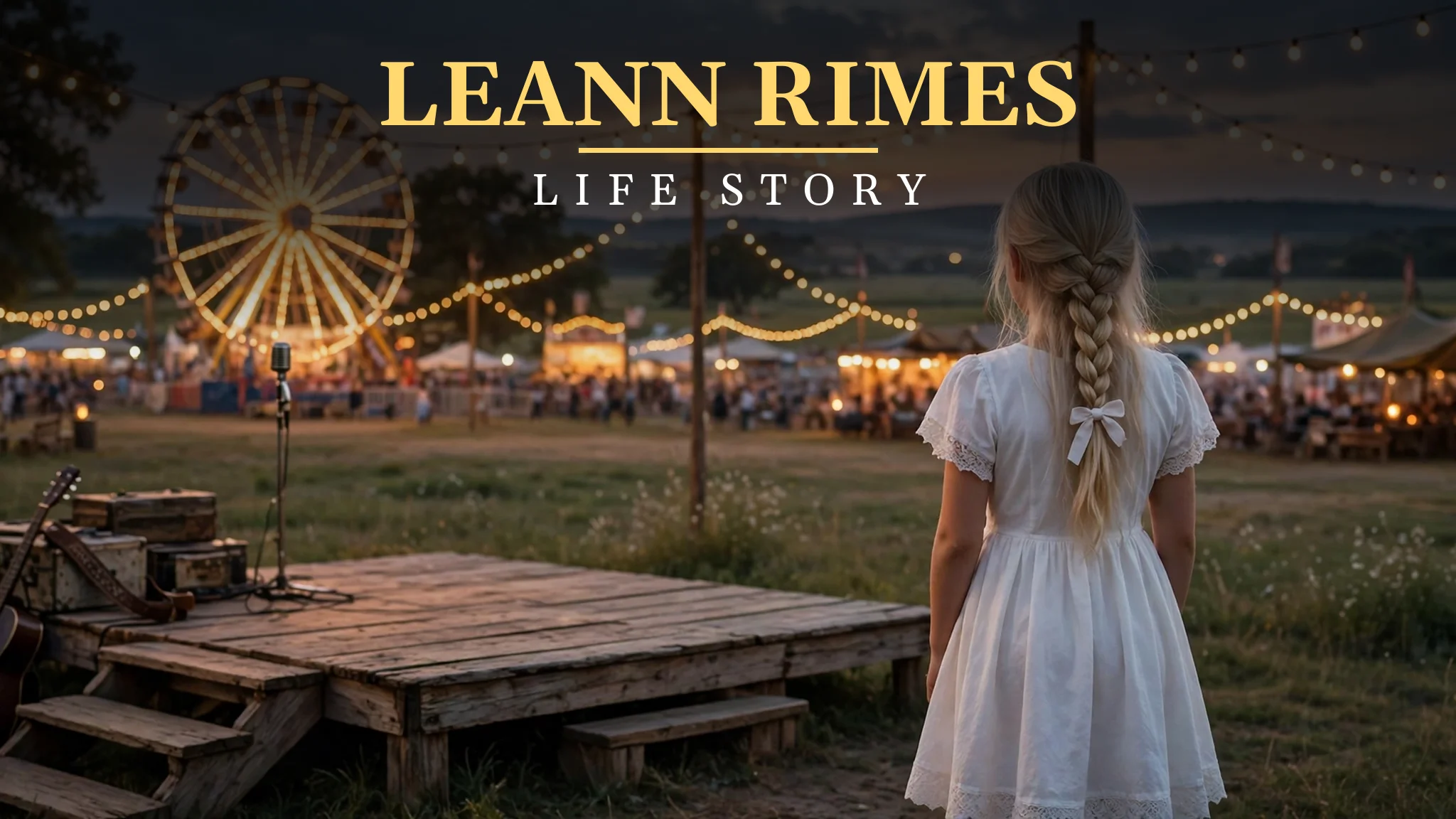
LeAnn was born in Mississippi and raised in Texas, and her childhood was shaped by talent shows, county fairs, and small stages where she learned to hold an audience. Her parents saw her gift early and built their family life around it. They moved, they drove long distances, and they made sure she had chances to sing in front of real crowds. By the time she was a teenager, she was no longer a local talent. She was a recording artist with a hit song that carried her name across the country.
Her story is not only about early fame. It is about what happens after the spotlight finds you too soon. She had to grow up in public, deal with legal fights, deal with a changing music world, and find a way to keep singing when the charts moved on. She did all of that, and she is still here, still recording, still performing, and still singing with the same power that made people stop and listen when she was thirteen years old.
A Mississippi Girl With a Big Voice
Margaret LeAnn Rimes was born on 28 August 1982 in Jackson, Mississippi. Her father, Wilbur Rimes, worked in the oil business, and her mother, Belinda, stayed close to home and to her daughter. LeAnn was an only child, and music filled the house from her earliest years. She began singing when she was very small, and her parents noticed that she could hold a tune and remember words in a way that other children her age could not. They encouraged her, and they took her singing seriously long before anyone else did.
When LeAnn was still a young child, the family moved to Garland, Texas, near Dallas. Texas had a strong country music culture, and it gave her the chance to sing in front of people who understood the music she loved. She sang at talent shows and local events, and she began to win contests. People in the audience would look at each other in surprise when this small girl opened her mouth and a deep, rich voice came out. It did not sound like a child’s voice at all. It sounded like the voice of a grown woman who had spent years in smoky clubs and dance halls.
Her parents made big choices for her career. Her father became her manager, and the family spent a great deal of time and money on her singing. She took lessons, she practised for hours, and she performed wherever she could. She sang the national anthem at sporting events, she sang at festivals, and she appeared on the television show Star Search, where young performers competed in front of a national audience. She did not win the whole contest, but the experience taught her how television worked and how to perform under pressure.
By the time she was eleven years old, LeAnn had recorded an independent album called All That, which was sold at her shows and in local shops. It was a small release, but it showed that she was ready for more. She had a voice, she had stage experience, and she had a family that believed in her completely. What she needed was the right song and the right record deal, and both of those things were closer than anyone knew.
Blue and the Moment Everything Changed
The song that changed LeAnn Rimes’s life was called “Blue”. It had been written years earlier by Bill Mack, a Texas disc jockey and songwriter, and it was a classic country ballad about sadness and longing. LeAnn recorded it, and the sound of her voice on that song was remarkable. She sang it with a yodel-like break in her voice that reminded older listeners of Patsy Cline, one of the greatest country singers of all time. The comparison was a compliment, but it was also a heavy weight for a thirteen-year-old girl to carry.
Her debut major-label album, also called Blue, was released in 1996, when LeAnn was thirteen. The album was a huge success. It reached the top of the country charts and sold millions of copies. The title song became a hit on country radio, and it crossed over to pop radio as well. Suddenly, a teenage girl from Texas was one of the most talked-about new singers in America. She appeared on television, she gave interviews, and she performed on big stages in front of thousands of people.
In 1997, LeAnn won two Grammy Awards, including Best New Artist. She was the youngest person ever to win in that category, and the record stood for many years. She also won Best Female Country Vocal Performance for “Blue”. The Grammy wins made her a star around the world, and they put her name in the history books. For a girl who had spent her childhood singing at fairs and talent shows, it was a dream come true, and it happened almost overnight.
The success of Blue also brought pressure. People wanted to know if she was a one-hit wonder, if she could sing anything besides old-style country ballads, and if she could handle fame at such a young age. Her family and her record company worked hard to keep her career moving, and she released more music quickly. She recorded an album of classic country songs called Unchained Melody: The Early Years, and she followed it with You Light Up My Life: Inspirational Songs in 1997, which showed that she could sing pop and inspirational music as well as country.
Growing Up in the Spotlight
The years after Blue were busy and sometimes difficult. LeAnn was a teenager, and she was trying to grow up while the whole world watched her. She went to school when she could, she toured, she recorded, and she tried to find her own voice as an artist. Her 1998 album Sittin’ on Top of the World moved further toward pop music, and it included songs that were aimed at a wider audience. Some country fans were unsure about the change, but LeAnn was clear that she wanted to sing many kinds of music, not just one.
In 1999, she released her self-titled album LeAnn Rimes, which returned to classic country songs, and she also began to act. She appeared in the television movie Holiday in Your Heart, which was based on a book she had written with Tom Carter. The film told the story of a young singer, and it gave LeAnn a chance to show a different side of herself. She enjoyed acting, and she would return to it again and again in the years that followed.
The year 2000 brought one of her biggest hits. She recorded “Can’t Fight the Moonlight” for the film Coyote Ugly, and the song became a worldwide hit. It reached the top of the charts in many countries, and it introduced her to a new generation of fans who had never heard “Blue”. The song was bright, poppy, and fun, and it showed that LeAnn could sing a modern pop song just as well as a country ballad. It remains one of her best-known songs, and it is still played on radio and at parties today.
Around the same time, she released the album I Need You, which mixed pop and country sounds. The album sold well, and it kept her on the charts. But the music world was changing. New young singers were arriving, country radio was changing its sound, and LeAnn had to work harder to stay visible. She also faced a long and painful legal fight with her father, who had been her manager, and with her record company. The fight was about money and control, and it was played out in public. It was a hard time for a young woman who had spent her whole life working with her family.
Twisted Angel and Finding Her Own Sound
In 2002, LeAnn released Twisted Angel, an album that moved even further into pop and dance music. The album included the song “Life Goes On”, which was a hit in many countries outside the United States. The record showed that she was willing to take risks and try new sounds, even if it meant losing some of her country audience. She was in her early twenties, and she was trying to find out who she was as an adult artist, not just as the girl who had sung “Blue”.
The same year, she married Dean Sheremet, a dancer she had met while working on a film. The marriage was a big part of her life for several years, and she spoke about it openly in interviews. She was young, she was famous, and she was trying to build a normal life while her career kept moving. It was not easy, and the pressures of fame and constant work made it harder.
In 2005, she released This Woman, an album that brought her back to country music in a strong way. The album included the hit “Nothin’ ‘Bout Love Makes Sense” and the song “Probably Wouldn’t Be This Way”, and it reminded country radio why she had mattered in the first place. The record was a success, and it showed that she could return to her roots without giving up the things she had learned from pop music. Her voice had grown deeper and richer, and she sang with more control than she had as a teenager.
Over the next few years, she released more albums, including Whatever We Wanna in 2006 and Family in 2007, which she wrote with her husband at the time. Family was a personal record, and it showed a more honest and grown-up side of her songwriting. She also began to appear on television more often, and she sang at charity events and special concerts. She was no longer the teenage prodigy. She was a working artist with a long career behind her and a clear idea of what she wanted to sing.
Love, Headlines, and Starting Over
In 2009, LeAnn’s personal life became the subject of intense public attention. She began a relationship with actor Eddie Cibrian, whom she had met while filming the television movie Northern Lights. Both of them were married to other people at the time, and the story was covered heavily in the press. The attention was painful, and it followed her for years. She and Dean Sheremet divorced in 2010, and she married Eddie Cibrian in 2011. She became a stepmother to his two sons, and she has spoken about how important that role is to her.
The headlines were hard, but she kept working. She released the album Lady & Gentlemen in 2011, on which she sang classic country songs that had originally been recorded by men, and she followed it with Spitfire in 2013, an album that was praised by critics for its honesty. Spitfire included songs about her life, her mistakes, and her hopes, and it showed that she was willing to be open in her music. Critics said it was one of the best records of her career, even if it did not sell as much as her early albums.
She also faced health challenges. She has spoken openly about living with psoriasis, a skin condition that can be painful and difficult to manage, and about dealing with anxiety and stress. In 2012, she sought help for anxiety and stress, and she has talked about the experience in interviews, saying that asking for help was one of the best decisions she ever made. Her honesty about mental health has helped other people feel less alone, and it has made her a more open and relatable public figure.
In the years that followed, she continued to record and tour. She released the album Remnants in 2016, which was praised for its strong singing and its mix of country, pop, and soul sounds. She also appeared in films and television shows, including the Netflix film Logan Lucky in 2017, where she sang, and she took part in the television series The Masked Singer, where she performed in disguise. She won the fourth season of the American version of the show in 2020, performing as the Sun, and it reminded a new audience just how good her voice was.
The Voice, New Music, and a Lasting Career
In recent years, LeAnn Rimes has found new audiences in new places. She became a coach on The Voice UK, the British version of the singing competition, and her work on the show introduced her to viewers who knew her songs but had never seen her as a mentor. She was warm, honest, and direct with the singers she coached, and she drew on her own experience of starting young and learning the business the hard way. She also appeared on the Australian version of the show, and she has continued to tour in the United States and abroad.
She has released new music as well, including the album God’s Work in 2022, which she described as a personal and spiritual record. The album mixed country, folk, and soul sounds, and it included songs about faith, healing, and hope. It was a long way from the teenage girl who sang “Blue”, but the voice was the same, and the feeling was the same. She sang like someone who had lived through a great deal and had come out the other side with something to say.
Her career now spans more than thirty years, which is a remarkable achievement for someone who started as a child. She has sold tens of millions of records, won Grammy Awards, and had hits in country, pop, and film music. She has also written books, acted in films and television, and used her platform to talk about health and mental well-being. She has been a child star, a pop star, a country star, and a television personality, and she has survived all of those chapters.
What makes her story last is the voice itself. It is a voice that can sing a sad ballad, a bright pop song, or a quiet hymn, and make each one sound true. LeAnn Rimes began as a prodigy, and she became a professional. She learned the hard lessons of fame early, and she kept going. Her music is still played, her early hits are still loved, and her later work shows an artist who is still growing. That is a rare thing, and it is why her story is worth telling.
A Voice That Grew Up With Its Singer
LeAnn Rimes’s legacy is the story of a voice that was famous before its owner was old enough to drive, and a career that lasted long after the novelty of that fame had faded. She is remembered first for “Blue”, and she should be, because that song was a rare moment when a young singer and a great song found each other at exactly the right time. But she is also remembered for “How Do I Live”, for “Can’t Fight the Moonlight”, and for a long list of records that show how wide her range was. She sang country, pop, dance, and inspirational music, and she sang all of it well.
Her legacy also includes the way she handled the hard parts of her life in public. She went through legal fights, a painful divorce, harsh headlines, and health struggles, and she kept working through all of it. She did not disappear, and she did not pretend that the hard parts had not happened. She talked about them, she sang about them, and she moved forward. That honesty has become a bigger part of her story as the years have passed, and it is one of the reasons her fans have stayed loyal.
Today, LeAnn Rimes is still performing, still recording, and still finding new audiences. She is a coach, a mentor, a stepmother, a writer, and an artist with more than three decades of work behind her. Her story began on small stages in Texas, and it has taken her around the world. The girl with the big voice grew up, and the voice grew with her. That is the heart of her story, and it is why people still listen.
The Stage, the Screen, and the Books
LeAnn Rimes has never been only a recording artist. From the time she was a teenager, she tried her hand at acting, and she found that she enjoyed telling a story on screen as well as in a song. She appeared in the television movie Holiday in Your Heart in 1997, a film based on a novel she had written with Tom Carter, and she played a young singer trying to make her way in Nashville. The story was close to her own life, and she brought a natural warmth to the role. It was not a perfect film, but it showed that she could act, and it gave her fans a new way to see her.
She returned to acting again and again in the years that followed. She appeared in the film Coyote Ugly in 2000, the same film that gave her the hit “Can’t Fight the Moonlight”, and she took roles in television movies that suited her voice and her image. She played a singer in Northern Lights in 2009, a film in which she met Eddie Cibrian, and she appeared in the comedy film Logan Lucky in 2017, where she performed as a singer at a beauty pageant. Each role was different, and each one showed a different side of her. She was not trying to be a movie star. She was trying new things, and she was having fun doing it.
She also appeared on reality television, and her appearance on The Masked Singer in 2020 was one of the most joyful moments of her later career. She performed in a Sun costume, singing in disguise, and the judges and the audience had no idea who she was. When she won the season and took off the mask, the surprise was genuine, and the applause was loud. It was a reminder that her voice alone, without her name or her face, was still enough to win a competition. That must have felt good after years of being judged for her personal life. The voice was always the point, and on that show, the voice was all that mattered.
Her work as a writer is less well known, but it is a real part of her story. She co-wrote the novel Holiday in Your Heart, and she has written about her life, her faith, and her experiences in books and in interviews. She has a thoughtful, reflective side, and she likes to put her feelings into words. Writing gave her a way to tell her story in her own voice, without a song or a camera in the way. It was a quieter kind of work, and it suited her. She is an artist who likes to try new things, and writing was one of them.
Awards, Records, and the Country Charts
LeAnn Rimes’s career is full of records and awards that tell the story of her success. She won two Grammy Awards in 1997, and she has been nominated for many more. She has won awards from the Academy of Country Music and the Country Music Association, and she has been honoured by the music business for her contributions. She was the youngest person to win the Grammy for Best New Artist, and that record stood for many years. It is a remarkable achievement for a singer who was only fourteen years old when she won.
Her records have sold tens of millions of copies around the world. Blue sold millions, You Light Up My Life sold millions, and her later albums have sold well in the United States and abroad. She has had hits on the country charts, on the pop charts, and on the charts in many other countries. “How Do I Live” spent a record-breaking sixty-nine weeks on the Billboard Hot 100 chart, a record that stood for many years. That is a rare achievement, and it shows how loved the song was. People did not just buy the record once. They kept listening to it, week after week, for more than a year.
She has also been a part of the country music community in Nashville, and she has been respected by other singers and songwriters. She has performed at the Grand Ole Opry, the most famous stage in country music, and she has been invited to sing at special events and tributes. She has sung with other stars, she has honoured the great singers who came before her, and she has helped younger singers who are just starting out. She is a part of the country music family, and she has been for more than thirty years.
Her place in the charts is also a story about change. When she started, country radio played traditional songs, and her voice fit that sound. As the years went on, country radio changed, and her sound changed with it. She moved toward pop, toward dance, and toward soul, and she kept finding audiences in new places. She did not stay in one box. She followed the music, and the music took her to new charts, new countries, and new fans. That is a rare thing, and it is why her career has lasted so long.
My Take:
When I think about LeAnn Rimes, the first thing I feel is wonder at how young she was when the world found her. Thirteen years old. I try to picture myself at thirteen, and I know I would not have been ready for that kind of attention. I would not have known how to handle interviews, or tours, or people telling me I was the next Patsy Cline. LeAnn did not get to choose the timing. The voice was there, the song was there, and the world came to her all at once. I admire the way she handled it, because most child stars do not survive that kind of early fame without serious damage. She did, and that says a great deal about her strength, even if the road was not smooth.
I love her voice, and I think it is one of the great country voices of the last thirty years. It is deep, it is warm, and it has a natural break in it that makes a sad song feel even sadder. When she sings “Blue”, I do not hear a child imitating an older singer. I hear a singer who understands the song, even if she had not lived the life in it yet. That is a strange and wonderful thing. Some singers need to live a hard life before they can sing a hard song. LeAnn seemed to understand the feeling from the start, and I think that is a gift that cannot be taught.
What I find most interesting about her career is how many times she changed direction. She started in traditional country, then moved toward pop, then toward dance music, then back to country, then toward soul and folk. Some people might call that unfocused, but I see it differently. I see a singer who refused to be trapped in one box. She was thirteen when she became famous, and she had her whole life ahead of her. Why should she sing only one kind of song for thirty years? I respect the risk-taking, even when the records did not sell as well as the early ones. It is better to try and grow than to repeat the same song forever.
I also think about the legal fight with her father, because that is a painful part of her story that many people forget. Her father was her manager, and he was also her parent. When a family relationship and a business relationship fall apart at the same time, the damage is deep. I do not know all the details, and I do not want to take sides, because family fights are complicated and the truth is usually in the middle. But I do know that it must have been hard for a young woman to go to court against her own father. I admire the fact that she got through it and kept working, and I hope that time has healed some of that pain.
The part of her story that makes me most uncomfortable is the public attention around her relationship with Eddie Cibrian. I do not want to judge her harshly, because I do not know what her marriage was like from the inside, and no one outside a marriage really knows. But I do think it is sad that a singer’s private life can become a bigger story than her music. For years, the headlines were about her personal life, not about her records. That is unfair, and it happens to women in the public eye far more often than it happens to men. I think she deserved better, and I am glad that she has been able to move past it and be judged on her work again.
I admire her honesty about mental health and about living with psoriasis. It is easy for a famous person to hide their struggles and pretend that everything is perfect. LeAnn chose to talk about her anxiety and about the stress that came with fame, and she chose to talk about a skin condition that many people feel embarrassed about. That kind of honesty helps ordinary people. When a famous singer says that she needed help, it makes it easier for someone else to ask for help too. I think that is one of the most useful things she has done with her fame, and it matters more than a hit single.
I also love the fact that she won The Masked Singer as the Sun. There is something joyful about a singer who has been famous for decades putting on a costume and singing for a new audience that does not know who she is. It showed that her voice alone, without her name or her face, was still enough to win. That must have felt good after years of being judged for her personal life. The voice was always the point, and on that show, the voice was all that mattered.
If I have a criticism, it is that the music industry did not always know what to do with her. She was too country for pop radio and too pop for country radio, and she was too young to be taken seriously as an adult artist for a long time. The industry likes simple labels, and LeAnn never fit a simple label. I think that cost her some success, because radio stations and record companies did not know where to place her. But I also think it is her strength. A singer who can sing many kinds of music is a better artist than a singer who can only sing one.
I think about her as a stepmother too, because that is a role that does not get enough attention in stories about famous people. She married Eddie Cibrian and became a stepmother to his two sons, and she has spoken about that role with warmth and care. It is not easy to join a family that already exists, and it takes patience and love. I respect the way she has talked about her stepsons, and I think it shows a side of her that the headlines missed. She is not just a singer. She is a person trying to build a family, and that matters.
Her later music, especially the album God’s Work, tells me that she is still searching and still growing. I like that. I do not want a singer to stop growing at thirty or forty. I want to hear what she thinks about faith, about healing, and about hope, because she has lived enough to have something real to say. The album is quieter and more personal than her early hits, and I think that suits her now. She does not need to prove that she can sing. Everyone knows that. She needs to say something worth hearing, and I think she is doing that.
When I compare her to other child stars, I think she did better than most. She did not burn out, she did not disappear, and she did not become bitter. She kept working, she kept singing, and she kept finding new ways to reach people. That takes discipline, and it takes a love of music that is stronger than a love of fame. I believe she loves music. I believe she would still sing even if no one was listening, because singing is what she has done since she was a small child. That is the mark of a real artist.
For a young reader, I think the lesson from LeAnn Rimes is that talent is only the beginning. She had one of the greatest voices of her generation, and it still was not enough on its own. She needed hard work, she needed the courage to change, she needed the honesty to ask for help, and she needed the strength to keep going when the headlines were cruel. Talent opens the door, but character keeps you in the room. I think she has shown that, and I think young singers should study her career not just for the voice, but for the survival.
I also think her story teaches something about the cost of early fame. When a child becomes famous, the child does not get to have a normal childhood. LeAnn spent her childhood on stages, in studios, and on tour buses. She gained a career, but she lost something too, and I think that loss shaped her. I do not think we should celebrate child fame without thinking about what it costs. I am glad she survived it, but I am also aware that many children do not. Her story is a success, but it is also a warning, and I think both parts are worth remembering.
In the end, I think LeAnn Rimes deserves to be remembered as a great singer, not just as a former child prodigy. The word prodigy is a trap, because it makes it sound as if the best part of her career happened when she was thirteen. It did not. Her best work is spread across thirty years, and some of it is still happening now. I want people to listen to her later records, to hear the depth in her voice now, and to understand that she is still an artist, not a memory. That is what I take from her story, and it is why I will keep listening.
I keep coming back to the song “How Do I Live”, because it is a record that stayed on the charts for sixty-nine weeks, and that tells me something about how people felt about it. A song does not stay on the charts for more than a year unless people keep asking for it, keep playing it, and keep finding something in it that they need. LeAnn sang that song when she was fourteen, and she sang it with a feeling that was far older than her years. I think that is a rare gift, and it is one that cannot be taught. You either feel a song, or you do not, and LeAnn felt it.
I also think about the way she handled the pressure of being compared to Patsy Cline. That is a heavy comparison for any singer, and it is an especially heavy one for a thirteen-year-old. Patsy Cline was one of the greatest country singers of all time, and to be compared to her at thirteen must have been both a compliment and a burden. I admire the way LeAnn handled it. She did not try to be Patsy Cline. She sang “Blue” in her own way, and she built her own career. She honoured the comparison without letting it trap her, and that takes a clear head.
There is something I find sad about the way child stars are treated, and LeAnn’s story makes me think about it. She spent her childhood on stages, in studios, and on tour buses, and she did not get to have a normal childhood. She gained a career, but she lost something too, and I think that loss shaped her. I do not think we should celebrate child fame without thinking about what it costs. I am glad she survived it, but I am also aware that many children do not. Her story is a success, but it is also a warning, and I think both parts are worth remembering.
I think about her as a coach on The Voice UK, because it shows a different side of her. She is not just a singer. She is a mentor, a teacher, and a person who can help young singers learn the craft. She has been through the hard parts of the business, and she can warn young singers about the mistakes she made. That is a valuable role, and I think she is good at it. She is warm, she is honest, and she is direct, and young singers need that. They need someone who has lived the life, not just someone who has read about it.
I also respect the way she has talked about her faith. She has spoken about her belief in God, about the role of prayer in her life, and about the way her faith has helped her through hard times. I do not share every detail of her belief, but I respect the honesty of it. In a world where famous people often hide their faith, LeAnn has been open about hers, and that openness has helped her fans feel closer to her. It is a part of who she is, and I think it matters.
When I listen to her album God’s Work, I hear a woman who is still searching and still growing. The album is quieter and more personal than her early hits, and I think that suits her now. She does not need to prove that she can sing. Everyone knows that. She needs to say something worth hearing, and I think she is doing that. The songs are about faith, about healing, and about hope, and they are sung with a lifetime of experience behind them. That is a beautiful thing, and it is a reason to keep listening.
I think about the legal fight with her father again, because it is a part of her story that still makes me sad. A family should be a place of love and support, and when it becomes a place of courtrooms and contracts, something has gone wrong. I do not know all the details, and I do not want to take sides, because family fights are complicated. But I do know that it must have been hard for a young woman to go to court against her own father, and I hope that time has healed some of that pain. Family is important, and I hope she has found peace with hers.
For a young singer reading this, I think the lesson is to protect yourself. Read your contracts, ask questions, and get a lawyer before you sign anything. LeAnn learned that lesson the hard way, and she paid a high price for it. You do not have to make the same mistake. Talent is important, but business sense is important too, and a young singer needs both. I think LeAnn would say the same thing, and I think her story is a warning as well as an inspiration.
I also think her story teaches something about the value of a long career. She did not have one big moment and then disappear. She had many moments, spread across thirty years, and she is still having them now. That is a rare thing, and it is a testament to her talent and her hard work. A long career is not built in a day. It is built in many small steps, repeated over many years, until they add up to something that matters. LeAnn has done that, and I admire her for it.
When I put her whole story together, what stays with me is the voice. It was there when she was a little girl in Texas, it was there when she was thirteen and the whole world was listening, and it is still there now, deeper and wiser than it was. I think that is the real test of a singer. Not the first hit, not the awards, but whether the voice is still worth hearing thirty years later. Hers is, and I will keep listening to it.
Frequently Asked Questions
How old was LeAnn Rimes when Blue became a hit?
LeAnn Rimes was thirteen years old when her album Blue was released in 1996 and the title song became a hit. She had been singing since she was a small child, and she had already recorded an independent album before she signed her major record deal.
What made LeAnn Rimes win a Grammy as a teenager?
She won two Grammy Awards in 1997, including Best New Artist and Best Female Country Vocal Performance for Blue. She was the youngest winner of the Best New Artist award at the time, and the wins came after the huge success of her debut album.
What is the story behind Can’t Fight the Moonlight?
Can’t Fight the Moonlight was recorded for the film Coyote Ugly in 2000, and it became a worldwide hit. The song was brighter and more pop than her early country work, and it introduced her to many new fans outside the United States.
Did LeAnn Rimes sing on The Masked Singer?
Yes, she took part in the American version of The Masked Singer and won the fourth season in 2020, performing in costume as the Sun. The show let audiences judge her voice without knowing who she was.
Who is LeAnn Rimes married to now?
LeAnn Rimes married actor Eddie Cibrian in 2011, after her divorce from Dean Sheremet in 2010. She is a stepmother to Cibrian’s two sons, and she has spoken openly about how important that part of her life is to her.
What health issues has LeAnn Rimes talked about?
She has spoken openly about living with psoriasis, a skin condition, and about dealing with anxiety and stress. In 2012, she sought professional help for anxiety, and she has said that asking for help was one of the best decisions she made.
Is LeAnn Rimes still making music?
Yes, she continues to record and perform, and she released the album God’s Work in 2022. She has also worked as a coach on The Voice UK and the Australian version of the show, helping new singers learn the craft.


