Lola Índigo: The Life Story Behind Spain's Dance Pop Star
In this post
- A Dancer From Madrid
- Operación Triunfo and an Early Exit
- Ya No Quiero Ná and a New Star
- Akelarre, La Niña, and El Dragón
- Dance, Power, and a Message for Women
- A Star Who Built Her Own Stage
- Collaborations and the Power of Working Together
- Fashion, Colour, and a Visual World
- The Stage as a Celebration
- My Take:
Lola Índigo is a dancer first and a singer second, and that order matters. Before she ever sang a hit song, she danced. She danced in studios, she danced on television, and she danced in Los Angeles, where she worked as a professional dancer. When she finally stepped forward as a singer, she brought the dancer’s body, the dancer’s energy, and the dancer’s sense of rhythm with her, and her music became something you feel in your feet as much as in your ears. Her concerts are not just concerts. They are dance shows, full of movement, colour, and power, and her fans dance along with her from the first song to the last.
Her path to fame was not a straight line. She entered “Operación Triunfo” in 2017, the same series that launched Aitana, but she left the show early, and many people thought her chance had gone. It had not. She went away, she worked, she trained, and she came back with a new name, a new sound, and a clear idea of who she wanted to be. Her first single, “Ya no quiero ná”, became a hit, and it proved that leaving a television show early does not mean the end. Sometimes it means the beginning of a different, better story.
She was born Miriam Doblas in Madrid, and she grew up with a love of dance that started when she was a small child. She studied dance seriously, she worked hard, and she built a career as a dancer before she ever thought of singing. This is the story of a woman who danced her way to the top, who turned an early exit into a new start, and who became one of the most exciting dance pop stars in Spain.
A Dancer From Madrid
Miriam Doblas Muñoz was born on 1 April 1992 in Madrid, the capital of Spain. Her family was supportive, and from a young age, she loved to move. She began to dance as a small child, and she showed a natural talent for it. Her parents saw that she had a gift, and they encouraged her to study dance seriously. She took lessons, she practised for hours, and she learned different styles, from modern dance to urban dance, and she became a strong and versatile dancer.
As a teenager, she continued to study dance, and she also began to think about a career in the performing arts. She was not only a dancer. She also loved music, and she sang, but dance was her first love, and it was the thing she did best. She worked hard, she entered competitions, and she performed in shows. Her life was full of rehearsals, classes, and performances, and she learned the discipline that a dancer needs: to practise every day, to take care of her body, and to keep going even when she was tired.
She also spent time in Los Angeles, in the United States, where she worked as a professional dancer. Los Angeles is one of the centres of the dance world, and working there taught her a great deal. She danced for other artists, she learned from American choreographers, and she saw how the music business worked at a high level. Those years gave her experience, confidence, and a wider view of what was possible. She was no longer just a girl from Madrid. She was a dancer who had worked in one of the biggest cities in the world.
When she returned to Spain, she was ready for a new challenge. She had danced for others, and now she wanted to perform for herself. She entered “Operación Triunfo” in 2017, hoping that the show would give her a chance to sing as well as to dance. It was a brave step, because she was known as a dancer, not as a singer, and she had to prove that she could do both.
Operación Triunfo and an Early Exit
In 2017, Miriam Doblas entered “Operación Triunfo” as a contestant, and she quickly became known for her dancing. She was one of the strongest dancers on the show, and her performances were full of energy and style. But the show was a singing competition, and her singing, while good, was not as strong as her dancing. She was eliminated early, in the first weeks of the show, and she left the house before many of the other contestants.
For many people, that would have been the end of the story. She had her chance on television, and it had not worked out. But Miriam did not see it that way. She left the show with a clear idea of what she wanted to do, and she used the experience to build something new. She knew that her strength was dance, and she knew that she could sing well enough to make records. She needed a name, a sound, and a plan, and she set out to create all three.
She chose the stage name Lola Índigo, a name that was bold, colourful, and memorable. The name suggested a woman who was not afraid to stand out, and it fitted the image she wanted to create. She worked on her music, she worked with producers, and she prepared her first single. She did not rush. She took her time, and she made sure that when she came back, she would come back with something strong.
Her early exit from the show became a part of her story, not a failure, but a turning point. She has spoken about it openly, saying that leaving the show gave her the freedom to build her own career, without the rules and the pressure of a television contest. She was free to be herself, and that freedom was worth more than a few more weeks on the show.
Ya No Quiero Ná and a New Star
In 2018, Lola Índigo released her first single, “Ya no quiero ná”, which means “I Don’t Want Anything Any More”. The song was a hit, and it became one of the most popular Spanish songs of the year. It was a dance pop song with a strong beat, a catchy chorus, and a message about a woman who decides to leave a bad relationship and to enjoy her own life. The video showed Lola dancing with power and confidence, and it made clear that she was not just a singer. She was a performer, and dance was at the centre of her art.
The song was played on the radio, in clubs, and at parties, and it introduced Lola Índigo to a wide audience. People who had seen her on “Operación Triunfo” were surprised by how strong her first single was, and people who had never heard of her became fans at once. She had proved that she could make a hit, and she had proved that her early exit from the show had not stopped her.
She followed the single with more songs, and she began to build a catalogue of dance pop hits. Her music was a mix of pop, reggaeton, and electronic sounds, and it was made for dancing. Her videos were stylish and colourful, and her live shows were full of choreography. She was not a singer who stood still and sang. She was a singer who danced, and her audience danced with her.
Her success was also a success for dance in Spanish pop. She showed that a dancer could become a star, and that movement could be as important as the voice. Her concerts became known for their energy, and her fans, many of whom were young women, loved the confidence and the power of her performances. She was a new kind of pop star in Spain, and her rise was fast.
Akelarre, La Niña, and El Dragón
Lola Índigo released her first album, “Akelarre”, in 2019. The title means “Witches’ Sabbath”, and the album was a celebration of female power, of dance, and of freedom. It included the hit “Ya no quiero ná” and other songs that became popular, and it went to the top of the charts in Spain. The album showed a singer who had a clear vision, and who was not afraid to be bold. Her image was strong, her sound was modern, and her message was clear: women can be powerful, free, and joyful.
In 2021, she released her second album, “La Niña”, which means “The Girl”. The album was more personal, and it showed a softer side of Lola, alongside the dance hits. It included collaborations with other artists, and it was a success in Spain and Latin America. She toured with the album, and her concerts grew bigger. She was no longer a new star. She was a leading figure in Spanish pop, and her name was known across the Spanish-speaking world.
In 2023, she released her third album, “El Dragón”, which means “The Dragon”. The album was a further step forward, with a bigger sound, more ambitious production, and songs that showed her growth as an artist. The album was a success, and it confirmed that her career was not a short-lived fashion. She had built a lasting place in Spanish music, and her fans were still with her, dancing to every new song.
Through these albums, she worked with many artists, recording duets and collaborations that introduced her to new audiences. She sang with Spanish stars, with Latin American artists, and with international pop singers, and each collaboration showed a different side of her voice. She was a versatile artist, and her willingness to work with others helped her to grow.
Dance, Power, and a Message for Women
Lola Índigo’s music and her performances carry a clear message about female power. Her songs are often about women who decide for themselves, who leave bad relationships, who enjoy their own lives, and who do not wait for permission. Her videos show women dancing together, supporting each other, and celebrating their freedom. Her concerts are full of young women who sing her songs with joy, and who feel stronger because of them.
Her dance background is central to this message. Dance is a way for a woman to use her body with power and confidence, and Lola’s choreography shows that power clearly. She does not dance to please others. She dances because she loves it, and because it makes her feel strong. Her fans see that, and they feel it too. Her shows are not just entertainment. They are a celebration of confidence, and that celebration matters to many young women.
She has also spoken about the importance of supporting other women in the music business. She has worked with female artists, she has praised their work, and she has tried to build a community of women who help each other. In a business that can be competitive and harsh, that spirit of support is important, and it has made her popular with her fellow artists as well as with her fans.
Her image is bold and colourful, and it has become one of the most recognisable in Spanish pop. She wears bright clothes, she uses strong colours in her videos, and she creates a world that is joyful and free. Her fans copy her style, they dance to her songs, and they share her videos on social media. She is a pop star for a new generation, and her message is one of freedom, joy, and power.
A Star Who Built Her Own Stage
Today, Lola Índigo is one of the most successful dance pop stars in Spain. She has released hit albums, she has performed in large venues, and she has built a loyal fan base that dances to her music across Spain and Latin America. Her concerts are known for their energy, and her songs are played on the radio, in clubs, and on streaming services. She has won awards, she has been nominated for Latin Grammys, and she has become a central figure in Spanish pop.
Her story is a reminder that an early exit does not mean the end. She left “Operación Triunfo” early, and many people thought her chance had gone. She proved them wrong, and she did it by being herself, by dancing, and by making music that was honest and joyful. She built her own stage, and she invited her fans to dance on it with her.
She continues to record new music, to perform, and to grow as an artist. Her voice has matured, her dancing has become even stronger, and her vision has become clearer. She is no longer the young dancer from Madrid who entered a television show. She is a star, and she earned her place by working hard, by taking risks, and by believing in herself when others did not.
Today, Lola Índigo is remembered as a dancer who became a singer, a woman who turned a setback into a new beginning, and a pop star who made dance the centre of her art. Her story shows that there is more than one way to become a star, and that sometimes the best way is to leave the show, go away, and come back as yourself.
Collaborations and the Power of Working Together
Lola Índigo has always understood that music is better when it is shared, and her collaborations show that clearly. She has recorded with artists from Spain, from Latin America, and from other countries, and each duet has added something new to her sound. She sang with the Spanish star Mala Rodríguez, with the Latin artist Rauw Alejandro, and with many other singers, and her voice, strong and rhythmic, fitted well alongside theirs. These collaborations were not just about reaching new audiences. They were about learning, about trying new styles, and about growing as an artist.
Her work with other artists also helped her to build a career in Latin America, where collaborations are a central part of popular music. In Mexico, in Colombia, and in Argentina, fans love to hear two voices together, and Lola’s duets gave them that pleasure. She sang with artists who were already stars in those countries, and their fans became her fans too. That is a smart way to build a career, but it is also a generous way, because it means sharing the stage, sharing the song, and sharing the success.
She has also worked with female artists in particular, building a community of women who support each other. She has praised their work, she has sung with them, and she has tried to create a space where women in Spanish pop can help each other, rather than compete. In a business that can be harsh, that spirit of support is important, and it has made her popular with her fellow artists as well as with her fans.
Her collaborations show her character. She is a singer who enjoys working with others, who is not jealous of the spotlight, and who is happy to share it. That generosity has made her stronger, not weaker, and it has helped her to build a career that is based on friendship as well as on talent. Music is a conversation, and Lola Índigo knows how to hold one.
Fashion, Colour, and a Visual World
Lola Índigo’s art is not only about music. It is also about what you see. Her videos, her stage shows, and her photos are full of colour, of bold clothes, and of striking images, and they create a world that is joyful, free, and powerful. She wears bright colours, she uses strong designs, and she creates a visual style that is instantly recognisable. Her fans copy her looks, they share her photos, and they feel part of the world she has built.
Her fashion is a part of her message. She dresses in a way that is bold and confident, and her clothes say, I am not afraid to stand out. That message matters to her fans, many of whom are young women who are learning to be confident in their own bodies. When they see Lola in a bright outfit, dancing with power, they feel braver themselves. Fashion, in her hands, is not just about looking good. It is about feeling strong.
Her stage shows are also visual spectacles, with dancers, lights, and choreography that turn a concert into a celebration. She does not stand still and sing. She moves, she dances, and she creates a show that is exciting to watch as well as to hear. Her concerts are known for their energy, and her fans leave them feeling happy, energised, and inspired. That is a real achievement, and it is one that few singers can match.
Her visual world is also a part of her identity as an artist. She is not just a voice. She is a performer, a dancer, and a creator of images, and her work is a complete package. That completeness is what makes her stand out in Spanish pop, and it is why her fans love her. She gives them music, dance, colour, and joy, all at once, and that is a generous gift.
The Stage as a Celebration
Lola Índigo’s concerts are not just concerts. They are celebrations, full of dance, colour, and joy, and her fans leave them feeling happy, energised, and inspired. She performs with a group of dancers, she moves across the stage, and she creates a show that is exciting to watch as well as to hear. Her concerts are known for their energy, and her fans, many of whom are young women, dance along with her from the first song to the last. That shared dancing is a powerful thing, because it creates a feeling of community, of being together, and of being free.
Her stage shows are carefully planned, with choreography, lights, and costumes that turn a concert into a spectacle. She rehearses for hours, she works with choreographers, and she takes care of every detail, because she knows that her audience deserves a great show. That professionalism is one of the reasons her concerts are so good. She does not rely on luck. She relies on preparation, on practice, and on a deep respect for her fans.
She has performed in large venues across Spain and Latin America, and her tours have grown bigger with each album. She began in small venues, singing to a handful of people, and she now fills arenas, but her approach has not changed. She still dances with the same energy, she still talks to her audience, and she still creates a feeling that the concert is a party, not just a show. That joy is the heart of her live work, and it is why her fans return again and again.
That celebration is also a message. Her concerts say that dance is joy, that a woman’s body is a source of strength, and that music is meant to be shared. When thousands of people dance together, they feel connected, and that connection is a real gift. Lola Índigo gives that gift at every concert, and her fans repay her with loyalty, with love, and with their own dancing. That is a fair trade, and it is one that she has earned.
My Take:
When I think about Lola Índigo, the first thing I admire is her courage in leaving a television show early and still believing in herself. Most people, when they are voted out of a contest, feel that they have failed, and they go home and give up. She did not. She left the show, she went away, and she came back with a new name, a new sound, and a clear idea of who she was. I think that takes a kind of strength that is easy to talk about and hard to practise. It is easy to say, I will try again. It is hard to actually do it, to work in silence while other people are still on television, and to come back stronger. She did that, and I respect her for it.
I also love that she is a dancer first. In pop music, the singer is usually the star, and the dancers are in the background, moving behind the singer. Lola turned that around. She put dance at the centre, and she made it clear that movement is not just decoration. It is art, and it is power. When I watch her perform, I see a woman who is completely in control of her body, who moves with confidence, and who makes the audience want to move too. That is a different kind of pop stardom, and I think it is a healthy one, because it celebrates the body as a source of strength, not as an object to be looked at.
Her song “Ya no quiero ná” is a good example of what she does best. It is a song about a woman who decides that she does not want anything more from a bad relationship, and who chooses her own freedom instead. The song is catchy, it is fun, and it is also a message. I think that message matters, especially for young women who hear the song and think, I can do that too. I can walk away, I can enjoy my own life, and I do not need to wait for someone else to make me happy. A pop song that gives a listener that feeling is doing real good, and I think Lola understands that.
I also think about the name she chose, Lola Índigo, and how smart it was. It is bold, it is colourful, and it is memorable. It tells you, before you even hear the music, that this is a woman who is not afraid to stand out. A name is a small thing, but it is also a statement, and hers was a good one. It said, I am not Miriam from the television show any more. I am Lola Índigo, and I am here to dance. That kind of reinvention takes imagination, and I admire it.
I have to be honest about one thing, and that is that her music is not for everyone. Some people find dance pop too simple, too loud, or too focused on the beat, and they prefer music with more words or more depth. I understand that, but I do not think it is a fair criticism to say that a song is bad because it makes you want to dance. Dancing is a real human need, and music that makes people dance is doing something valuable. Her songs are not trying to be poetry. They are trying to be joy, and joy is a serious thing. I would rather listen to a song that makes a room full of people smile and move than to a song that makes them feel clever for understanding it.
I also respect the way she supports other women. She works with female artists, she praises them, and she tries to build a community, not just a career. In a business that often pits women against each other, that spirit of support is important. It shows that she understands that success is not a small pie that gets smaller when you share it. Success grows when you share it, and her collaborations have made her stronger, not weaker. I think that is a lesson for anyone, in any job. Help others, and you will help yourself too.
What I learn from her story is that a setback can be a gift, if you use it well. Being voted out of a television show felt like a failure, but it gave her freedom. It gave her time to think, to plan, and to build something that was truly hers, without the rules of a contest. Many people are afraid of setbacks, because they feel like the end. Her story shows that a setback can be the beginning of something better, but only if you are willing to work, to wait, and to believe in yourself when no one else is watching. That is a hard lesson, and it is a hopeful one.
I also think about her time in Los Angeles, and how it shaped her. She went to another country, she worked as a dancer, and she learned from people who were the best in the world. That takes courage, too, because it means leaving home, living in a strange city, and starting again. She did it, and she came back stronger. I think that experience gave her a wider view of the world, and it helped her to see that a dancer from Madrid could compete with anyone. That confidence is clear in her performances, and I think it is one of the reasons her fans love her.
In the end, I think Lola Índigo matters because she made dance the heart of Spanish pop, and she did it on her own terms. She did not wait for permission, she did not follow the usual path, and she did not let an early exit define her. She danced, she sang, and she built a stage of her own. Her story teaches me that the best revenge against a setback is not anger. It is success, built quietly, with hard work, and with joy. I hope she keeps dancing, because the world needs more of that joy, and she has a lot of it to give.
I also think about her childhood in Madrid, and how dance shaped her from the very beginning. She began to dance as a small child, and she spent hours in studios, practising, learning, and growing. That kind of training teaches a person discipline, patience, and the value of hard work. A dancer cannot fake it. You either practise, or you do not improve. Lola practised, and she improved, and that discipline is still with her today. I think it is one of the reasons her career has lasted, because she knows how to work, and she knows that talent alone is not enough.
I think about her time in Los Angeles, and how brave it was to go there. Los Angeles is a long way from Madrid, and it is a city where thousands of dancers compete for a few jobs. To go there, to work, and to learn from the best choreographers in the world takes courage, and it takes a belief in yourself. She went, she worked, and she came back stronger. I think that experience gave her a wider view of the world, and it helped her to see that a dancer from Madrid could compete with anyone. That confidence is clear in her performances, and I think it is one of the reasons her fans love her.
I also think about the name she chose, Lola Índigo, and how smart it was. It is bold, it is colourful, and it is memorable. It tells you, before you even hear the music, that this is a woman who is not afraid to stand out. A name is a small thing, but it is also a statement, and hers was a good one. It said, I am not Miriam from the television show any more. I am Lola Índigo, and I am here to dance. That kind of reinvention takes imagination, and I admire it, because it shows that she understood the power of a fresh start.
I want to say something about her album “Akelarre”, and why its title matters. The word means a witches’ gathering, and it is a celebration of female power, of women coming together, and of freedom. That is a bold title for a first album, and it shows that Lola had a clear vision from the start. She was not making a safe pop album. She was making a statement about women, about power, and about joy. I think that vision is what made the album a success, because it gave her fans something to believe in, not just something to dance to.
I also think about her album “El Dragón”, and how it showed her growth. A dragon is a powerful creature, and the title suggests a woman who has grown stronger, who is no longer a girl, but a force. I think that is an accurate description of Lola’s journey. She started as a young dancer, she became a singer, and she grew into a star who is confident, powerful, and in control of her art. That growth is visible in her music, in her videos, and in her stage shows, and it is a pleasure to watch.
I think about her fans, and how they dance to her music. Her concerts are not just concerts. They are dance parties, where the audience moves with her, sings with her, and celebrates with her. That shared dancing is a powerful thing, because it creates a feeling of community, of being together, and of being free. I think that is one of the best things about her work. She does not just perform for her fans. She dances with them, and that makes them feel part of the show.
I also think about the message of her songs, and how it helps young women. Her songs are often about leaving a bad relationship, about choosing yourself, and about enjoying your own life. Those are important messages, especially for young women who are learning to stand up for themselves. When they hear Lola sing “Ya no quiero ná”, they hear a woman who has made a choice, and who is happy with it. That choice gives them courage, and that courage is a real gift. A pop song that gives a listener courage is doing important work.
I think about the future, and about what is next for her. She is in her thirties now, and she has already achieved a great deal, but she is not slowing down. She continues to record, to perform, and to grow as an artist. Her voice has matured, her dancing has become even stronger, and her vision has become clearer. I am excited to see what she does next, because I think her best work may still be ahead of her, and because she has shown that she is not afraid to change, to try new things, and to surprise her audience.
I also think about the lesson of her early exit from “Operación Triunfo”, and how it applies to life in general. We are often told that if we fail at something, we should give up, and that the door has closed. Lola’s story says the opposite. It says that a closed door can be the beginning of a better path, if you are willing to work, to wait, and to believe in yourself. She left the show, she went away, and she came back as herself, and that is a story that will inspire anyone who has ever been told no.
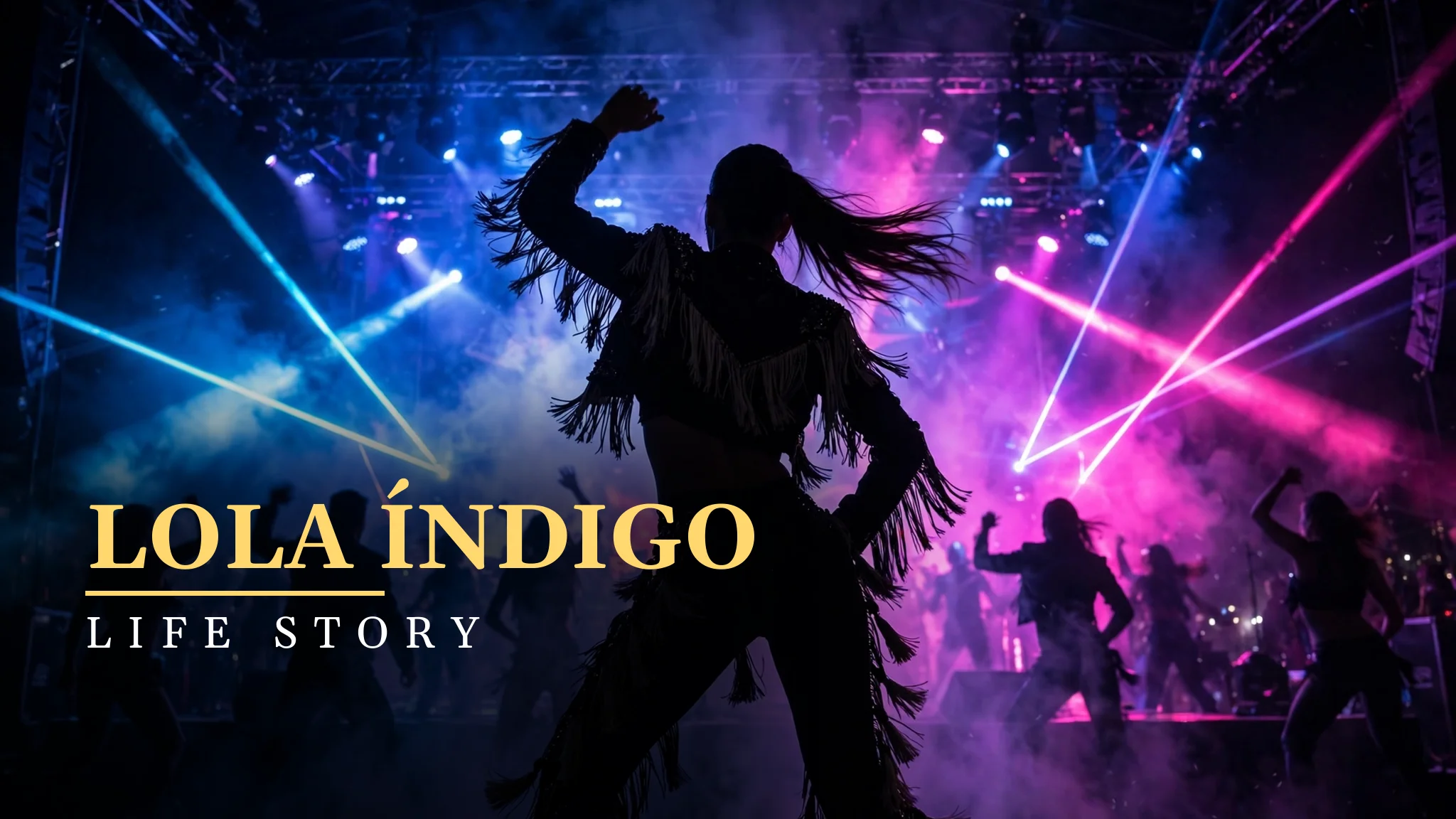
In the end, I come back to the image of her dancing, with her ponytail flying, under blue and pink lights, with her dancers around her. That image is the heart of her story, because it shows a woman who is free, who is powerful, and who is joyful. She dances because she loves it, and her love is catching. I hope she keeps dancing for many more years, because the world needs more of that joy, more of that freedom, and more of that fire.
I also think about the album “La Niña”, and how its title captures a feeling. The word means the girl, and it suggests a young woman who is growing up, learning, and finding her way. That is an honest title for a second album, because it says that the singer is still learning, still growing, and still becoming herself. I think that honesty is a large part of why her fans love her. She does not pretend to have all the answers. She is learning, just like them, and she shares that learning in her songs.
I think about the future, and about what is next for her. She is in her thirties, and she has already built a career that is based on dance, on joy, and on female power. But she is still learning, still growing, and still surprising her audience. I am looking forward to hearing what she does next, because I think her best work may still be ahead of her, and because she has shown that she is not afraid to change, to try new things, and to grow. A singer who keeps growing is a singer worth following, and Lola Índigo is one of them.
Frequently Asked Questions
What is Lola Índigo’s real name?
Her real name is Miriam Doblas Muñoz. She was born in Madrid on 1 April 1992, and she chose the stage name Lola Índigo when she began her solo singing career after leaving “Operación Triunfo”.
Was Lola Índigo on Operación Triunfo?
Yes, she entered “Operación Triunfo” in 2017, the same series as Aitana, but she was eliminated early. She later said that leaving the show gave her the freedom to build her own career on her own terms.
What is Lola Índigo’s most famous song?
Her most famous song is “Ya no quiero ná”, released in 2018. The song became a huge hit in Spain, and it is a dance pop anthem about a woman who leaves a bad relationship and chooses her own freedom.
What are Lola Índigo’s albums?
Her albums include “Akelarre” (2019), “La Niña” (2021), and “El Dragón” (2023). Each album went to the top of the charts in Spain and produced hit songs that are popular in clubs and on the radio.
Did Lola Índigo work as a dancer before singing?
Yes, she trained as a dancer from a young age and worked as a professional dancer, including time in Los Angeles. Dance remains central to her music, her videos, and her live shows.
What kind of music does Lola Índigo make?
She makes dance pop, mixing pop, reggaeton, and electronic sounds, with strong beats and choreography. Her songs are made for dancing, and her concerts are known for their energy, colour, and powerful dance routines.


