Los Bunkers: The Life Story Behind the Chilean Rock Band
In this post
Los Bunkers are one of the most loved rock bands in Chile, a group from Concepción whose songs mix the energy of rock with the melodies of Chilean folk music. Their music is warm, emotional, and full of feeling, with songs like “Bailando Solo”, “La Velocidad de la Luz”, and “Miño” that are known across the country. They are a band that grew up far from the capital, in a city in the south of Chile, and they carried the sound of that city to the biggest stages in the country, including the Estadio Nacional in Santiago.
The band was formed in Concepción, Chile, in 1999, by five young musicians: Álvaro López on vocals and guitar, Francisco Durán and Mauricio Durán on guitars, Gonzalo López on bass, and Mauricio Basualto on drums. They were friends who shared a love of rock, of The Beatles, and of Chilean folk music, and they wanted to make a sound that was both modern and rooted in their home. They rehearsed in small rooms, they played in local bars, and they slowly built a following in Concepción before anyone in Santiago knew who they were.
What makes their story remarkable is how they rose from a regional band to a national one, how they took a break for almost a decade, and how they returned in 2022 to fill the biggest stadiums in Chile. Their reunion was one of the great musical events in Chilean history, with concerts that drew tens of thousands of fans. This is the story of how five friends from Concepción became one of the most important rock bands in Chile.
There is a wider story here too, about Concepción itself, a city in the south of Chile with a rich musical tradition, and about what happens when a band from outside the capital takes its sound to the whole country. Los Bunkers are the clearest example of that journey, and their success proved that Chilean music does not only come from Santiago. Understanding the band means understanding that larger story, and this article tells it from the beginning, from five friends in Concepción to the band’s triumphant return to the Estadio Nacional in 2022.
Concepción and Five Friends
Concepción is a city in the south of Chile, in the Biobío region, known for its universities, its music scene, and its strong regional identity. It is far from Santiago, the capital, and its musicians often feel that they have to work harder to be heard. Los Bunkers grew up in that world, in a city where rock music was played in small bars, in university halls, and at local festivals, and where a band could build a loyal following without ever leaving home.
The five members met through friendship and through a shared love of music. Álvaro López, the singer, had a warm, melodic voice and a gift for writing songs that felt personal and honest. Francisco and Mauricio Durán, brothers, played guitars with a style that mixed rock with folk, and Gonzalo López and Mauricio Basualto completed the rhythm section with bass and drums. Together, they had a sound that was tight, melodic, and full of feeling, and they knew it from the first time they played together.
They began by playing covers of the bands they loved, including The Beatles, whose harmonies and melodies were a major influence on their sound. But they soon began to write their own songs, in Spanish, about their lives, their city, and their feelings. They were not trying to copy anyone. They were trying to find their own voice, and they found it in the mix of rock and folk that became their signature.
They rehearsed in Concepción, they played in local venues, and they built a following one show at a time. It was slow work, but it was honest work, and it gave them a foundation that would carry them when they moved to Santiago and when they became famous. They were a band from the south, and they were proud of it, and that pride is part of why their fans love them.
The Beatles deserve a special mention in this story, because they were one of the band’s greatest influences, and their harmonies can be heard in Los Bunkers’ music. The Beatles showed that a rock band could sing in harmony, could write melodies that everyone could sing, and could be both popular and artistic at the same time. Los Bunkers learned that lesson well, and their own harmonies, with two guitars and a warm lead vocal, carry the Beatles’ spirit into Chilean rock. That influence is not a copy. It is a conversation, a band from Concepción talking to a band from Liverpool across decades and oceans, and finding a shared language in melody and in friendship.
First Albums and the Move to Santiago
Los Bunkers released their first album, a self-titled record, in 2001, and it showed a band with a clear identity. The songs were melodic, with strong harmonies and guitars that mixed rock with folk, and Álvaro López’s voice carried them with warmth and feeling. The album was well received in Concepción, and it began to attract attention in Santiago, where critics and fans started to notice the band from the south.
Their second album, “La Culpa”, released in 2003, made them more famous. The album contained songs that became hits, including “Miño”, a song about a river in the south of Chile that became one of the band’s signature tracks. “La Culpa” showed a band that was growing, writing better songs, and developing a sound that was both modern and Chilean. It was an album that proved Los Bunkers were not a local curiosity. They were a serious band with a national future.
The band moved to Santiago to build its career, a move that many regional bands make, and it was a difficult one. Santiago is bigger, more competitive, and more expensive, and a band from Concepción has to prove itself all over again. Los Bunkers did that by playing constantly, by recording, and by winning over audiences with their live shows. Their concerts became known for their energy, their harmonies, and the way the audience sang along to every song.
By the mid-2000s, Los Bunkers were one of the most popular rock bands in Chile. They had a loyal following, they were played on the radio, and they were invited to play at major festivals. They had gone from a local band in Concepción to a national band, and they had done it without losing the sound that made them special. Their music still carried the south, the folk, and the warmth of their home.
The move to Santiago also deserves a closer look, because it is a journey that many Chilean musicians make, and it is never easy. Santiago is the centre of the music business, but it is also expensive, competitive, and far from home. A band that moves there must leave behind its local audience, its cheap rehearsal rooms, and its familiar streets, and it must prove itself to people who have never heard of Concepción. Los Bunkers made that move with courage, and they succeeded because their music was strong enough to win over a new audience. They did not abandon Concepción. They carried it with them, and their songs about the south became a way for Santiago audiences to hear a different Chile.
Vida de Perros, Barrio Estación, and Success
The band’s third album, “Vida de Perros”, released in 2005, was another step forward. The title means “A Dog’s Life”, and the album’s songs spoke about the hard life of ordinary people, with a mix of rock energy and folk feeling. The album was a success, and it confirmed that Los Bunkers were one of the leading bands in Chile. Its songs were played on the radio, and the band’s concerts drew larger and larger crowds.
Their next album, “Barrio Estación”, released in 2008, was a tribute to their roots. The title refers to a neighbourhood in Concepción, near the train station, and the album’s songs were about the life of that neighbourhood, its people, its streets, and its memories. The album showed a band that had not forgotten where it came from, even as it became famous, and it was loved by fans for its honesty and its feeling. It was a homecoming in the form of an album, and it proved that Los Bunkers were still the band from Concepción.
During these years, the band also toured widely, playing in Chile, in Argentina, in Mexico, and in other Latin American countries. Its live shows became legendary, with the band’s harmonies, its guitars, and Álvaro López’s voice creating a sound that was both powerful and warm. Fans loved the concerts because they felt like a gathering of friends, with the band and the audience singing together as if they were one.
The band’s success also brought it recognition, including awards and critical praise, and it became one of the most respected rock groups in Chile. It was not only popular. It was admired by other musicians, who recognised the quality of its songwriting and the care of its arrangements. Los Bunkers had become a band that other bands looked up to, and that is a rare achievement.
Barrio Estación deserves a closer look, because it is an album about a specific place, a neighbourhood near the train station in Concepción, and it shows how a band can turn a local place into universal music. The songs are about streets, about neighbours, about memories, and about a way of life that is specific to that neighbourhood, but they speak to anyone who has ever loved a place and missed it. That is the power of writing about home. A specific place, described honestly, becomes a place that everyone can recognise, because everyone has a home, a street, and a neighbourhood they remember. Los Bunkers understood that, and Barrio Estación is proof of it.
Música Libre and a Tribute to Silvio Rodríguez
In 2010, Los Bunkers released “Música Libre”, an album of songs by the Cuban singer-songwriter Silvio Rodríguez, reinterpreted in the band’s rock style. The album was a tribute to one of the great songwriters of Latin America, and it showed a different side of Los Bunkers, a band that could take another artist’s songs and make them its own. The album was well received, and it introduced Silvio Rodríguez’s music to young listeners who had never heard it before.
The choice to record a tribute album was bold, because it meant stepping away from original songs and into the work of a master. But Los Bunkers did it with respect and with skill, keeping the feeling of Silvio’s songs while adding their own guitars, harmonies, and energy. The album showed that the band was not only a group of songwriters. It was a group of musicians who understood the tradition they came from, and who wanted to honour it.
“Música Libre” also reflected the band’s political and cultural values. Silvio Rodríguez is a singer associated with the Cuban revolution and with the nueva trova movement, and Los Bunkers’ tribute to him was a statement about the kind of music they believed in, music that speaks about real life, about justice, and about the hopes of ordinary people. The album was not only a musical project. It was a declaration of identity, and it was loved by fans who shared those values.
The album’s success added to the band’s reputation, and it showed that Los Bunkers could do more than write hit songs. They could interpret, they could honour, and they could bring a classic songwriter to a new generation. That versatility is one of the reasons the band has lasted so long, and it is one of the things that makes its catalogue so rich.
Silvio Rodríguez is one of the great songwriters of the Spanish-speaking world, and Los Bunkers’ decision to record his songs was a statement about the kind of musicians they wanted to be. Silvio’s songs are poetic, political, and deeply personal, and they require a singer who can carry their meaning with respect. Los Bunkers did that, keeping the feeling of the originals while adding their own guitars and harmonies. The album introduced Silvio to young Chilean listeners who had never heard nueva trova, and it showed that Los Bunkers were not only a rock band. They were students of Latin American song, and they wanted to share that tradition with their fans.
La Velocidad de la Luz and the Peak
The band’s album “La Velocidad de la Luz”, released in 2013, contained one of its most famous songs, “Bailando Solo”, a track about dancing alone that became an anthem for a generation. The song’s title means “Dancing Alone”, and its lyrics speak about loneliness, about a person dancing by themselves in a crowd, and about the feeling of being apart even when surrounded by people. The song’s melody is catchy, its rhythm is driving, and Álvaro López’s voice carries it with a feeling that makes listeners want to sing along.
“La Velocidad de la Luz”, which means “The Speed of Light”, was the band’s peak in many ways. It was a commercial success, it was played on radio stations across Chile, and it confirmed Los Bunkers as one of the biggest rock bands in the country. The album’s songs were polished, emotional, and full of the band’s signature harmonies, and they showed a group at the height of its powers.
But the peak was also the end of an era. In 2014, after more than a decade together, Los Bunkers announced a break. The members were tired, they wanted to pursue other projects, and they needed time apart. The announcement was sad for their fans, who had grown up with the band’s songs, but it was also understandable. A band that has worked together for fifteen years needs rest, and Los Bunkers had given everything to their music. They went on hiatus, and it seemed that the band might never return.
During the break, the members worked on solo projects, with Álvaro López and others exploring new music. Those projects were respected, but they did not have the same impact as Los Bunkers, because the magic of the band was in the five of them together, in their harmonies, their friendship, and their shared history. Fans waited, hoping for a reunion, and in 2022 their hope was answered.
Bailando Solo deserves a closer look, because it is a song that captures a feeling that is hard to put into words. Dancing alone in a crowd is a lonely experience, but it is also a defiant one, a way of saying that you will dance even if no one dances with you. The song’s rhythm is driving, its melody is catchy, and Álvaro López’s voice carries the loneliness with a warmth that makes the listener feel understood. That combination is why the song became an anthem. It does not offer a solution to loneliness. It offers a companion, a song that dances with you, and that is enough to make a person feel less alone.
The Reunion and Estadio Nacional
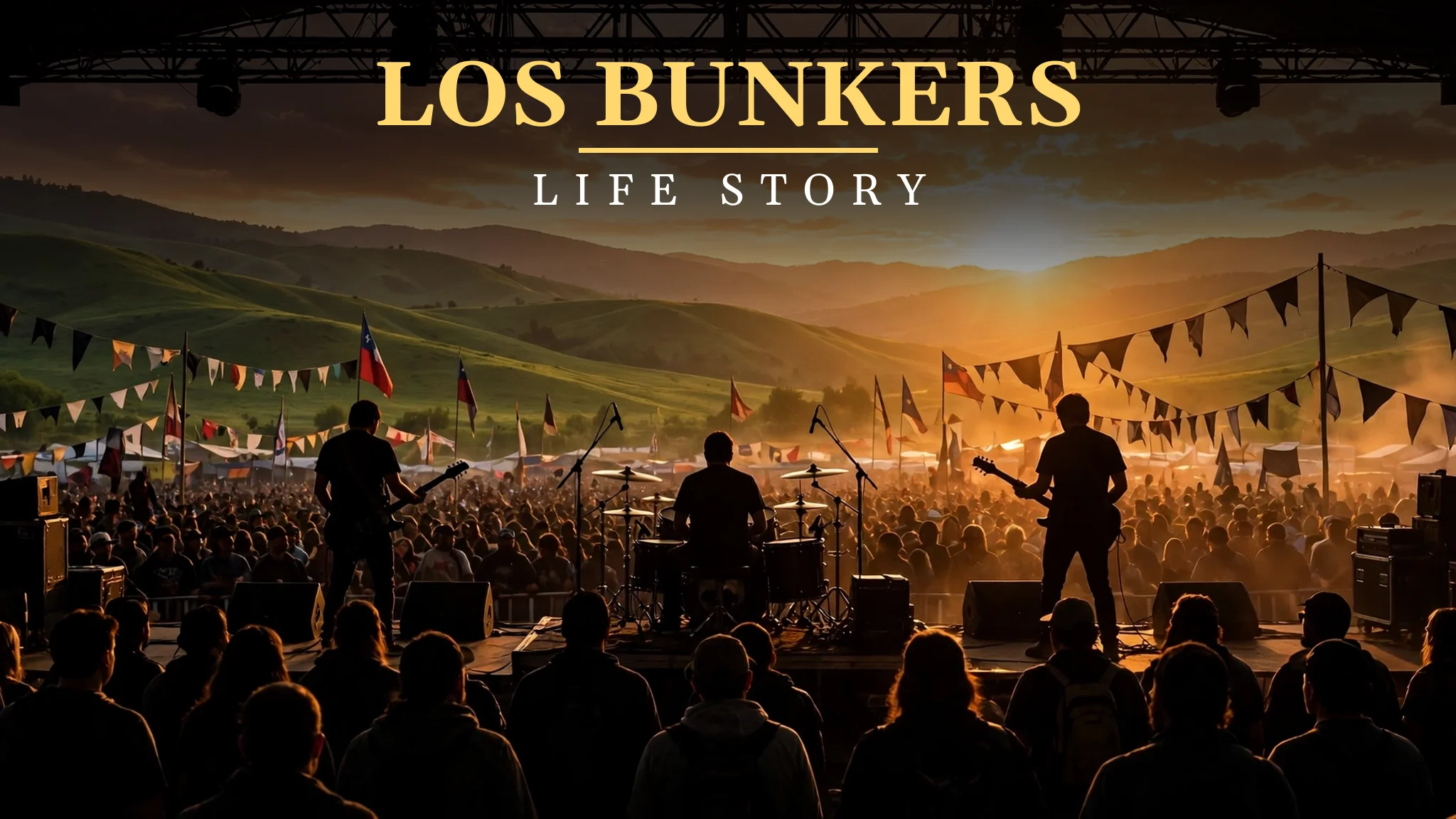
In 2022, Los Bunkers announced their reunion, and it became one of the great musical events in Chilean history. They performed concerts that drew tens of thousands of fans, including shows at the Estadio Nacional in Santiago, the biggest stadium in Chile. The concerts were celebrations, with audiences singing every song, crying, and dancing, and with the band playing with the same energy and warmth that had made them famous.
The reunion showed that the band’s music had not lost its power during the break. If anything, it had grown stronger, because the songs had become part of the lives of their fans, who had listened to them for years and who had waited for the chance to hear them live again. The concerts were not only performances. They were homecomings, for the band and for the audience, and they proved that Los Bunkers were still one of the most loved bands in Chile.
The band has continued to perform since the reunion, playing to large crowds and recording new music. Its return has also introduced its songs to a new generation of listeners, young people who were children when the band first became famous and who are now discovering its music for the first time. That new audience is a sign that the band’s legacy is secure, and that its songs will keep being heard for years to come.
The reunion also showed the importance of friendship in the band’s story. The five members had been friends since the beginning, and their friendship survived the break and brought them back together. That bond is audible in their music, in the harmonies that only friends who have sung together for years can create, and it is one of the reasons their concerts feel so warm and so personal.
The Estadio Nacional itself deserves a mention, because it is more than a stadium. It is a place with a painful history, used as a prison camp during the dictatorship, and it is also a place where Chile celebrates its greatest moments, in sport and in music. For Los Bunkers to fill the Estadio Nacional was not only a musical triumph. It was a symbolic one, a band from the south filling a stadium that holds the memory of Chile’s hardest years with songs of friendship, of home, and of hope. That symbolism was not lost on the audience, who sang every song as if they were reclaiming the stadium for joy, and that is one of the reasons the reunion concerts were so emotional.
Legacy: The Sound of Concepción
Today, Los Bunkers are remembered as one of the greatest rock bands in the history of Chile, and as the voice of Concepción, a city that gave the country one of its most loved groups. Their songs are played on the radio, sung at parties, and discovered by new listeners on streaming platforms. “Bailando Solo”, “Miño”, and “La Velocidad de la Luz” are classics of Chilean rock, and they are part of the shared memory of a generation.
Their legacy is also visible in the many Chilean rock bands that followed them. Young musicians in Concepción and across Chile learned from Los Bunkers, copying their harmonies, their mix of rock and folk, and their way of writing songs about real life. The band showed that a group from outside Santiago could become a national star, and that a regional identity could be a strength rather than a weakness. That lesson has inspired a new generation of musicians from the south of Chile.
Los Bunkers also helped to keep Chilean rock alive at a time when other genres were taking over the charts. Their songs reminded people that rock in Spanish could be melodic, emotional, and rooted in folk traditions, and they kept that tradition alive for a new generation. That is a kind of cultural service, and it goes beyond the band’s own records.
The story of Los Bunkers is, in the end, a story about five friends from Concepción who made music together, who became famous, who took a break, and who returned to fill the biggest stadium in Chile. It is a story of friendship, of talent, and of the power of songs to bring people together. As long as there are young people in Concepción who want to form a band, Los Bunkers will have a place, and their music will keep sounding.
My Take:
When I think about Los Bunkers, the first thing I feel is warmth. Their music is warm in a way that few rock bands achieve, with harmonies that feel like friends singing together, and with melodies that stay in the head long after the song ends. I find that warmth refreshing, because so much rock music is about anger and noise. Los Bunkers show that rock can also be gentle, melodic, and full of feeling, and that a band can be powerful without shouting. That is a rare gift, and it is one of the reasons I love their music.
I admire their roots in Concepción, because it takes courage to be a band from outside the capital. Santiago is where the record companies, the radio stations, and the big venues are, and a band from the south has to work harder to be heard. Los Bunkers did that work, and they did it without losing their identity. They stayed the band from Concepción, they sang about their city, and they carried its sound to the Estadio Nacional. That pride in home is something I respect deeply, because it shows that a band does not need to leave its roots behind to succeed. It can carry them with it, and they can make it stronger.
I also think about “Bailando Solo”, and about why that song means so much to so many people. It is about dancing alone, about being in a crowd and still feeling lonely, and that is a feeling that almost everyone has known. The song turns that loneliness into music, and it makes the listener feel less alone, because the singer is feeling it too. That is the power of a great song. It does not solve loneliness. It shares it, and in sharing it, it makes it easier to bear. I find that beautiful, and I think it is why “Bailando Solo” has become an anthem.
There is something else I admire, which is their harmonies. The band’s voices blend together in a way that only comes from years of singing together, and that blend is the heart of their sound. It is a sound that cannot be faked, because it comes from friendship, from trust, and from a shared history. When I hear Los Bunkers sing together, I hear five friends who have known each other for decades, and that friendship is audible in every note. That is a precious thing, and it is one of the reasons their reunion was so emotional for their fans.
I want to be honest about the break in their career as well. The band took a hiatus in 2014, and for almost a decade their fans waited, wondering if they would ever return. That waiting must have been hard for the fans, and the break must have been hard for the band members too, who had to decide whether to continue or to rest. I respect their decision to take a break, because a band that is tired cannot make good music, and rest is a form of respect for the art. I also respect their decision to return, because it showed that their friendship and their music were still alive, and that they still had something to give.
I think about their reunion concerts at the Estadio Nacional, and about what they meant. The Estadio Nacional is the biggest stadium in Chile, and filling it is a dream for any Chilean band. Los Bunkers filled it, not once but in concerts that drew tens of thousands of fans, and those concerts were celebrations of a band, a city, and a generation. I find that moving, because it shows that a band from Concepción can reach the biggest stage in the country, and that its songs can fill a stadium with people singing together. That is a triumph, and it deserves to be celebrated.
Another thing that stays with me is their tribute to Silvio Rodríguez, “Música Libre”. That album showed a band that understood its tradition, that honoured a great songwriter, and that wanted to bring his music to a new generation. It was not a commercial decision. It was a labour of love, and it showed that Los Bunkers care about music as an art, not only as a business. I respect that, and I think it is one of the most admirable things about the band. They did not only make hits. They made a tribute, and they did it beautifully.
I also reflect on what their story teaches about friendship. The band is made of friends, and its music is the sound of that friendship. When they took a break, the friendship survived, and when they returned, the music was still there, because the friendship was still there. That is a lesson for anyone who works with friends. A shared history, a shared trust, and a shared love of music can survive a break, and it can bring people back together stronger than before. Los Bunkers proved that, and their reunion is proof of it.
I do wonder about the future, and about whether Los Bunkers will keep recording and performing. They are still active, still playing to large crowds, and still making music, and I hope they continue for many years. The bands that last are the ones that keep their friendship, keep their curiosity, and keep their connection to their fans. Los Bunkers have all three, and I believe their best work may still be ahead of them, or at least that their music will keep finding new listeners who need it.
What I feel most strongly, after thinking about this band, is gratitude. Gratitude to five friends from Concepción who made beautiful, warm, honest rock music, who took a break when they needed it, and who returned to fill the Estadio Nacional with song. Their music is a gift to Chile, and it is one that I hope will be heard for many generations. Los Bunkers are not only a band. They are a reminder that friendship, home, and honest songs can carry a group from a small city in the south to the biggest stage in the country.
In the end, my take on Los Bunkers is a warm and hopeful one. They are a great band, a band of friends, and a band that proved that the south of Chile has a voice worth hearing. They made classic songs, they took a break, they returned in triumph, and they are still going. That is a story of talent, of friendship, and of the power of music to bring people together, and it is a story that I am glad to have told.
I also think about the Beatles, and about how their influence travelled from Liverpool to Concepción. Music travels in that way, across oceans and decades, and it finds new homes in new places. Los Bunkers took the Beatles’ harmonies and made them Chilean, mixing them with folk and with the sound of the south, and the result was something new. That is how music grows, not by copying but by conversation, by listening to a great band and answering it with your own voice. I find that beautiful, and I think it is one of the most hopeful things about music. A song made in Liverpool in the 1960s can inspire a band in Concepción in the 1990s, and that band can inspire another band today.
There is another quality I admire, which is their patience. Los Bunkers did not become famous overnight. They built their following slowly, in Concepción, then in Santiago, then across Chile, one show at a time. That patience is rare, and it is a sign of a band that cares more about the music than about fame. When they finally filled the Estadio Nacional, they had earned it, because they had done the work for more than twenty years. I respect that, and I think it is a lesson for any young band that wants success too quickly.
I also want to say something about the break, and about why it was the right decision. A band that is tired cannot make good music, and Los Bunkers were tired after fifteen years of constant work. They took a break, they rested, and they came back stronger, with a renewed love for the music and for each other. That is a wise choice, and it is one that more bands should make. Rest is not failure. It is a form of respect for the art, and for the audience, and Los Bunkers proved it by returning with concerts that were among the best of their career.
I think about the Estadio Nacional once more, and about what it meant to fill it. The stadium holds a painful history, and for a band to fill it with joy, with songs about home and friendship, is a form of healing. Music can do that, can take a place associated with sorrow and fill it with song, and Los Bunkers did that in 2022. I find that deeply moving, because it shows that a band’s music can be more than entertainment. It can be a way for a country to remember, to heal, and to celebrate together.
One final thought stays with me, about friendship. Los Bunkers are five friends, and their music is the sound of that friendship. When they sing together, you can hear the years they have spent together, the trust they have built, and the love they have for the music and for each other. That friendship is the band’s greatest strength, and it is why their reunion felt so joyful. They did not return for money. They returned because they missed playing together, and because their fans missed them. That is a beautiful reason to return, and it is why I believe their music will keep being heard for many years to come.
I also reflect on the mix of rock and folk in their music, and on why it works so well. Rock gives the band energy, guitars, and a driving rhythm, while folk gives it melody, warmth, and a connection to Chilean tradition. Together, they create a sound that is both modern and rooted, both exciting and comforting. That mix is hard to achieve, because it requires a band to understand two traditions and to blend them without losing either one. Los Bunkers did that, and their sound is the proof. It is a sound that could only come from Chile, from Concepción, and from five friends who loved both The Beatles and Chilean folk.
Another thing that stays with me is the way their songs are sung by their fans. At a Los Bunkers concert, the audience does not only listen. It sings, every word, every chorus, as if the songs belonged to them. That is because the songs do belong to them, in a way. They are about their lives, their city, and their feelings, and the audience recognises itself in them. A band that can make its audience sing is a band that has done something special, and Los Bunkers have done it for more than twenty years.
I think about the future, and about whether Los Bunkers will keep recording and performing. They are still active, still playing to large crowds, and still making music, and I hope they continue for many years. The bands that last are the ones that keep their friendship, keep their curiosity, and keep their connection to their fans. Los Bunkers have all three, and I believe their music will keep finding new listeners, young people in Concepción and across Chile who want to form a band and who look to Los Bunkers as proof that it is possible.
Finally, I come back to a simple feeling of thankfulness for five friends from Concepción who made warm, honest, beautiful rock music, who took a break when they needed it, and who returned to fill the biggest stadium in Chile with song. Their music is a gift to their country, and it is one that I hope will be heard for many generations. Los Bunkers are not only a band. They are a reminder that home, friendship, and honest songs can carry a group from a small city in the south to the biggest stage in the country.
Frequently Asked Questions
Who are Los Bunkers?
Los Bunkers are a Chilean rock band formed in Concepción in 1999 by Álvaro López, Francisco Durán, Mauricio Durán, Gonzalo López, and Mauricio Basualto. They are known for songs such as “Bailando Solo” and “Miño”.
What is Los Bunkers’ most famous song?
Their most famous songs include “Bailando Solo”, from the album “La Velocidad de la Luz”, and “Miño”, from “La Culpa”. “Bailando Solo” is about dancing alone and has become an anthem for a generation.
Where are Los Bunkers from?
Los Bunkers are from Concepción, Chile, a city in the Biobío region in the south of the country. They built their following there before moving to Santiago and becoming a national band.
When did Los Bunkers take a break?
Los Bunkers announced a break in 2014, after more than a decade together. They reunited in 2022, performing concerts at the Estadio Nacional in Santiago that drew tens of thousands of fans.
What is the album Música Libre by Los Bunkers?
“Música Libre” is Los Bunkers’ album from 2010, a tribute to the Cuban singer-songwriter Silvio Rodríguez. The band reinterpreted his songs in its own rock style, introducing them to a new generation.
What is the album Barrio Estación about?
“Barrio Estación” is Los Bunkers’ album from 2008, named after a neighbourhood in Concepción near the train station. Its songs are about the life, people, and memories of that neighbourhood.
Are Los Bunkers still performing today?
Yes, Los Bunkers are still performing today after their reunion in 2022. They continue to play large concerts in Chile and to record new music for their fans.


