Magnesium: Benefits, Signs of Low Levels and What to Do
In this post
Magnesium is one of the quietest nutrients in the human body, and also one of the busiest. It is involved in more than three hundred chemical reactions, from making energy to relaxing muscles, from keeping the heartbeat steady to building bones. Yet most people never think about it until something goes wrong: a muscle that keeps cramping, a sleep that never feels deep enough, or a blood test that comes back low. When that happens, magnesium suddenly becomes the most interesting mineral in the world.
The reason magnesium matters so much is that it is easy to run low on it without realising. Modern diets are often short on the foods that contain it, such as leafy greens, nuts, seeds and whole grains, and things like stress, heavy sweating, certain medicines and digestive problems can increase how much the body loses. The symptoms of low magnesium are vague and easy to blame on something else: tiredness, twitches, headaches, poor sleep. That vagueness is why so many articles about magnesium sound dramatic and why so many of them are also misleading.
This article explains what magnesium actually does, what the real signs of low levels look like, which foods are the best sources, when a supplement might help, which forms are worth knowing about, and when low magnesium is a medical problem that needs a doctor rather than a bottle from a health shop. It is general information, not medical advice, and it is written to help you understand the topic clearly, not to sell you a supplement.
This article is general information only. It is not individual medical advice. Talk to your doctor or pharmacist before starting a supplement, especially if you are pregnant, take medicine, or have a kidney, heart or other health condition.
What Magnesium Actually Does in Your Body
Magnesium is a mineral that acts like a helper for hundreds of processes in the body. It helps turn food into energy, it helps muscles contract and relax, it helps nerves send signals, and it helps keep blood pressure and blood sugar in a healthy range. It is also involved in making protein and DNA, and it works closely with calcium and vitamin D to keep bones strong. Without enough magnesium, these processes do not stop, but they do not work as well as they should, and over time that can show up in how a person feels.
One of magnesium’s most important jobs is in the muscles. Calcium helps muscles contract, and magnesium helps them relax, and the two work as a pair. When magnesium is low, muscles can become twitchy, crampy or tight, and this is why muscle cramps are one of the most commonly reported signs of low magnesium. The same relaxing effect applies to blood vessels and to the nervous system, which is why magnesium is often linked to blood pressure, headaches and sleep. It does not work like a drug that forces a result. It works by allowing the body’s normal processes to happen smoothly.
Magnesium is also important for the heart. It helps keep the heartbeat regular, and very low levels can lead to an irregular heartbeat, which is a medical problem that needs attention. It is involved in blood sugar control too, helping the body use insulin properly, and people with type 2 diabetes are more likely to have low magnesium levels, though the relationship works in both directions and is still being studied. The point is not that magnesium cures these problems. It is that the body needs enough of it for its systems to work properly, and a shortage can make many things worse at once.
Signs of Low Magnesium Worth Knowing
The early signs of low magnesium are often mild and easy to miss. Tiredness is one of the most common, and it is also one of the least specific, since tiredness has dozens of causes. Muscle twitches, especially around the eyes or in the calves, are another early sign, and so are cramps that appear without a clear reason. Some people notice tingling or numbness in their hands and feet, and others notice that they feel more anxious or irritable than usual. None of these signs proves low magnesium on their own, and that is important: they are clues, not a diagnosis.
As levels fall further, the symptoms can become more serious. Nausea, loss of appetite and vomiting can appear, and some people develop an irregular heartbeat or very low blood pressure. In severe cases, low magnesium can cause seizures, and it can also lower calcium and potassium levels, which creates further problems. These severe symptoms are uncommon and usually happen in people who are seriously ill, who have kidney or digestive problems, or who take medicines that affect magnesium. If someone has these symptoms, they need medical care, not a supplement.
It is also worth knowing who is most at risk. People with digestive conditions such as Crohn’s disease or coeliac disease absorb less magnesium from food. People with type 2 diabetes, people who drink a lot of alcohol, and older adults are also more likely to be low. Certain medicines, including some diuretics and proton pump inhibitors used for stomach acid, can lower magnesium over time. If you are in one of these groups and you have symptoms, a blood test is the sensible next step, and your doctor can decide whether treatment is needed.
The Best Food Sources of Magnesium
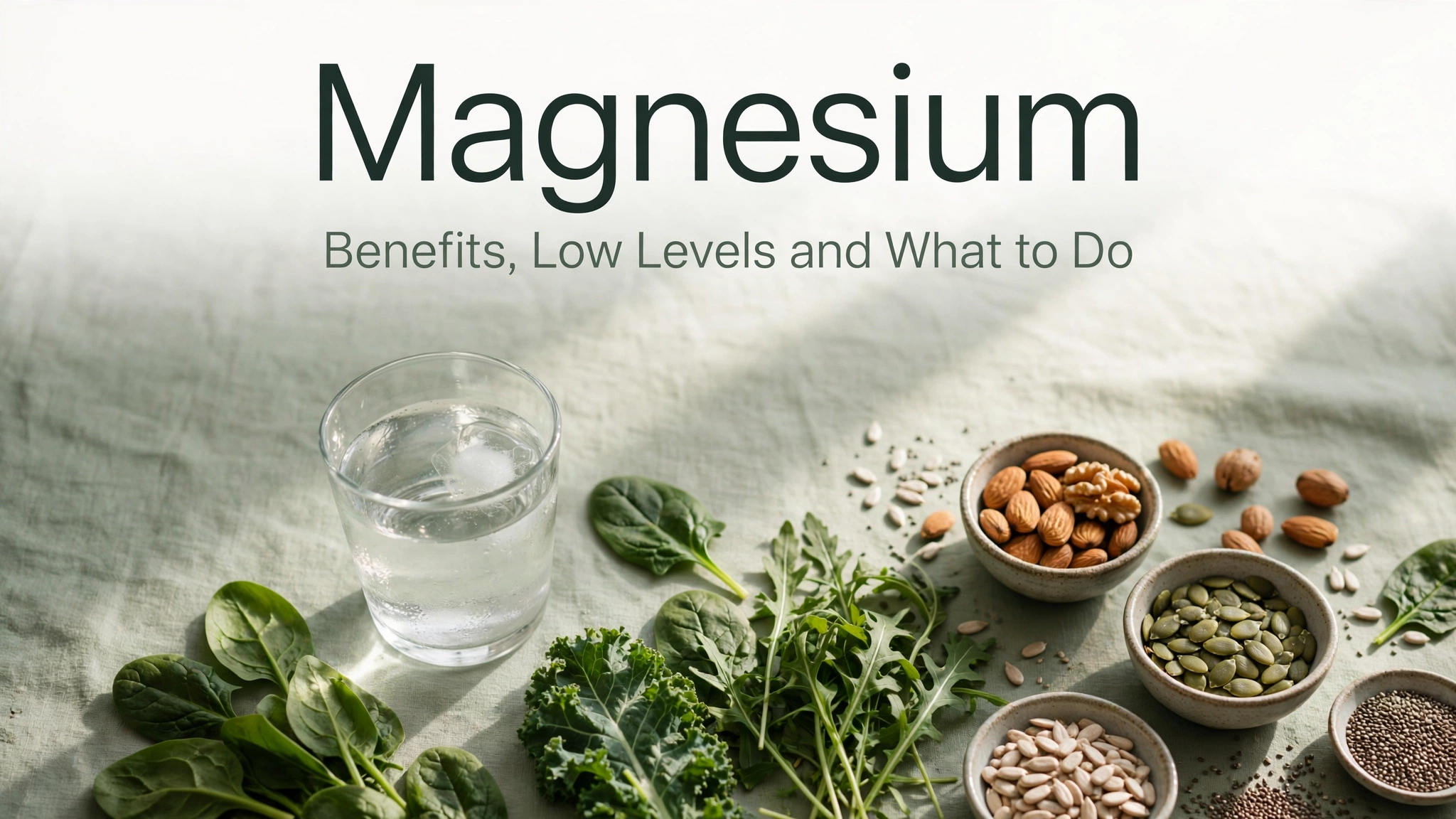
Food is the best way to get magnesium, and the good news is that many everyday foods contain it. Dark leafy greens such as spinach and Swiss chard are among the richest sources, and a single serving can provide a large share of the daily requirement. Nuts and seeds are also excellent: pumpkin seeds, almonds, cashews and peanuts are all rich in magnesium, and they make an easy snack. Legumes such as black beans, chickpeas and lentils provide magnesium along with fibre and protein, and whole grains such as brown rice, oats and whole wheat bread contribute a steady amount.
Other useful sources include dark chocolate, which contains a surprising amount of magnesium, avocados, bananas and fatty fish. The key point is variety: no single food needs to provide all your magnesium, and a diet that includes vegetables, nuts, seeds, beans and whole grains will usually provide enough. The daily requirement for adults is around 300 to 400 milligrams, with men needing slightly more than women, though exact recommendations vary by country and age. Most people who eat a varied diet with plenty of plant foods get close to this amount.
The problem is that many modern diets do not include enough of these foods. Processed foods, which make up a large part of many people’s diets, are often low in magnesium because refining grains and processing foods removes the mineral. People who eat mostly white bread, white rice, processed meat and sugary snacks may get far less magnesium than they need, even if they eat enough calories. The fix is not complicated, but it does require a change in what is on the plate: more greens, more beans, more nuts and more whole grains, and fewer heavily processed foods.
Magnesium and Sleep: What the Evidence Says
Magnesium is often sold as a sleep aid, and it is one of the most common reasons people buy a supplement. The idea behind it is sensible: magnesium helps relax muscles and calm the nervous system, and it is involved in regulating melatonin, the hormone that controls sleep. Some small studies have found that magnesium supplements can improve sleep quality in older adults and in people with low magnesium levels, and many people report that they sleep better when they take it.
The evidence, however, is not as strong as the marketing suggests. Most of the studies are small, short, or done in people who were already low in magnesium, and there is limited evidence that magnesium helps people who already have normal levels. That does not mean it does nothing. It means the benefit is most likely for people who are low, and that a person with normal levels and a sleep problem may need a different solution, such as better sleep habits, less caffeine or treatment for a sleep disorder. Magnesium is not a sleeping pill, and it should not be treated as one.
If you do try magnesium for sleep, the practical advice is simple: take it in the evening, start with a low dose, and give it a few weeks before deciding whether it helps. Keep a simple note of how you sleep, so you are judging the result honestly rather than by hope. And remember that sleep is affected by many things, including stress, screen time, alcohol and irregular hours, and no supplement can fix those. The best sleep aid is still a regular schedule, a dark and cool bedroom, and a wind-down routine that does not involve a phone.
Supplement Forms: Glycinate, Citrate, Oxide and More
Walk into a health shop and you will find many forms of magnesium, and the names can be confusing. Magnesium oxide is the cheapest and most common form, but it is poorly absorbed, and it is more likely to cause loose stools. Magnesium citrate is better absorbed and is often used for constipation as well as for general supplementation. Magnesium glycinate, which is magnesium bound to the amino acid glycine, is well absorbed and gentle on the stomach, and it is often recommended for people who want to take magnesium for sleep or relaxation.
Other forms include magnesium malate, which is sometimes marketed for energy and muscle pain, magnesium threonate, which is marketed for brain health, and magnesium chloride, which is available as a topical oil or spray. The evidence for the more expensive forms is limited, and for most people the difference between the common forms is smaller than the marketing suggests. What matters most is the dose, the absorption, and whether your stomach tolerates it. A form that gives you diarrhoea is not a good form for you, no matter what the label promises.
There is also the question of dose. Most supplements provide between 200 and 400 milligrams per day, which is close to the daily requirement. Taking much more than this can cause diarrhoea, nausea and stomach cramps, and very high doses can be dangerous, especially for people with kidney problems, because the kidneys are responsible for removing excess magnesium. The upper limit for magnesium from supplements is generally set at 350 milligrams per day for adults, though this does not include magnesium from food. If you have kidney disease, you should not take magnesium supplements without medical advice.
When Low Magnesium Needs a Doctor
Most cases of mildly low magnesium can be improved with food and, if needed, a supplement, but there are situations where a doctor should be involved. If you have symptoms such as an irregular heartbeat, severe muscle weakness, seizures or confusion, you need medical care promptly, because these can be signs of a serious deficiency or another medical problem. A blood test can measure magnesium levels, though it is worth knowing that most magnesium is stored in bones and cells, so a blood test does not always show the full picture.
Your doctor may also want to check for the cause of the deficiency, rather than just treating the number. Digestive problems, kidney problems, diabetes and certain medicines can all cause low magnesium, and treating the underlying cause is more important than taking a supplement. In hospital, severe deficiency is treated with magnesium given through a drip, because oral supplements work too slowly for an emergency. This is not something to try at home, and it is a reminder that magnesium, for all its quiet reputation, is a mineral the body takes seriously.
The bottom line is simple: eat magnesium-rich foods, be aware of the signs of low levels, and talk to your doctor if you have symptoms or if you are in a high-risk group. A supplement can help, but it is not a substitute for a good diet or for medical care when it is needed. Magnesium is important, but it is not magic, and the people who benefit most from it are the ones who were genuinely low in the first place.
Magnesium, Blood Pressure and Heart Health
Magnesium’s role in heart health is one of the most studied areas, and it is also one of the most misunderstood. The mineral helps blood vessels relax, and several studies have found that magnesium supplements can lower blood pressure slightly, especially in people who are low in magnesium or who have high blood pressure. The effect is modest, usually a few points, and it is not a replacement for blood pressure medicine or for lifestyle changes such as reducing salt, exercising and maintaining a healthy weight. But for a person who is low in magnesium, correcting the deficiency can be a useful part of looking after their heart.
The relationship with heart rhythm is more serious. Very low magnesium can cause an irregular heartbeat, and this is a medical emergency that needs hospital treatment. People who have heart disease, who take diuretics, or who have had heart surgery are often monitored for magnesium levels, because keeping them in the normal range is part of keeping the heart stable. This is one of the reasons magnesium is taken seriously in hospitals, even though it is often treated casually in health shops. The same mineral that is sold as a sleep aid is also given through a drip to treat dangerous heart rhythms, and that contrast says a lot about how important it really is.
There is also research linking higher magnesium intake from food with a lower risk of heart disease and stroke, though this kind of research cannot prove cause and effect, because people who eat magnesium-rich foods also tend to eat a healthier diet overall. The practical message is the same as it is for most nutrients: a diet rich in vegetables, nuts, beans and whole grains is good for the heart for many reasons, and magnesium is one of them. A supplement is not a substitute for that pattern, and anyone with heart disease should talk to their doctor before taking one.
My Take:
I think magnesium is a perfect example of how health information goes wrong online, because the real story is both more boring and more useful than the version that gets shared. The real story is that magnesium is essential, that many people do not eat enough of it, and that eating more leafy greens, nuts, beans and whole grains is a good idea for almost everyone. The version that gets shared is that magnesium cures insomnia, anxiety, cramps, headaches and a dozen other problems, and that you need a special, expensive form to get any benefit. The first version is true and helpful. The second version is mostly marketing, and I think it does people a disservice.
What I find most useful about magnesium is how much of it comes down to food, because food is where the real fix is. I have seen many people spend money on supplements while eating a diet that is almost entirely processed food, and that is backwards. A handful of pumpkin seeds, a bowl of spinach, a serving of black beans: these are cheap, simple foods, and they provide magnesium along with fibre, protein and a dozen other nutrients that a pill does not contain. I am not against supplements, and I think they have a place, but I think the first question should always be what is on the plate, not what is in the bottle.
I am also sceptical about the sleep claims, and I say that as someone who understands why they are appealing. Sleep problems are miserable, and the idea that a single mineral could fix them is comforting. But I have read the studies, and they are small and they are mostly in people who were already low. If you are low, magnesium may help you sleep better, and that is worth trying. If you are not low, and your sleep is bad because you drink coffee at 9 pm and scroll your phone in bed, magnesium will not fix that, and pretending it will only delays the real solution. I would rather be honest about that than sell a false promise.
The supplement industry is the part of this story that frustrates me most, because it takes a real nutrient and turns it into a confusing shelf of products with big claims and bigger prices. Glycinate, threonate, malate, orotate: the names sound scientific, and the prices suggest that the more expensive form must be better. For most people, the difference is small, and the most important thing is whether the form is absorbed and whether your stomach tolerates it. I think a simple, well-absorbed form at a sensible dose is enough for almost everyone, and I think the money saved is better spent on food.
I also think it is important to say plainly who should be careful, because magnesium is not safe for everyone at high doses. People with kidney disease can build up dangerous levels, and people who take certain medicines can have interactions. This is not a reason to be afraid of magnesium in food, which is safe for almost everyone, but it is a reason to talk to a doctor before taking high-dose supplements. The internet rarely mentions this, because warnings do not sell products, but I think it is the responsible thing to say, and it is the reason this article includes a disclaimer.
My honest opinion is that magnesium deserves its reputation as an important mineral, but it does not deserve its reputation as a miracle cure. It is a quiet, hard-working nutrient that does hundreds of jobs in the body, and the best way to get enough of it is to eat a varied diet with plenty of plant foods. If you are low, a supplement can help, and your doctor can confirm that with a test. If you are not low, the supplement will probably not change much, and that is fine. Health is rarely about one magic ingredient. It is about the pattern of what you eat, how you sleep and how you live, and magnesium is one small, useful part of that pattern.
Start with the plate, not the shelf, and the rest of the magnesium question gets simpler. A diet with leafy greens, nuts, seeds, beans, and whole grains on most days probably covers what you need, and the worry can stop there. A diet without those foods will not be fixed by a pill, because the pill adds one mineral while the foods add fibre, potassium, and a dozen other things the body uses together. Adding the foods helps in ways that go far beyond a single number on a label, and it helps every day, not just on the days you remember the capsule. That is not a dramatic message, and it will not sell many supplements, but it is the honest one, and honesty is more useful here than a miracle in a bottle.
I also think the heart health angle is worth taking seriously, because it shows that magnesium is not just about sleep and cramps. The fact that hospitals give magnesium through a drip to treat dangerous heart rhythms tells you how important this mineral is, and it is a reminder that the body does not treat nutrients as optional extras. I think people should know that, because it changes how they think about food. Eating magnesium-rich foods is not a wellness trend. It is a basic part of looking after your heart, and it is one of the simplest things you can do.
Blood tests for magnesium confuse people, because a single number looks like a final answer and it is not. Most of the mineral lives inside cells and bones, not in the blood, so a normal result does not always mean the stores are full, and a slightly low result does not always mean you need a high-dose supplement. The test is a clue, one piece of a picture that also includes what you eat, what medicines you take, and what symptoms you have. A doctor who knows that history is the person to read it, because a number without a history is just a number, and a number with a history can point to a real problem, or to nothing at all. Understanding that stops two mistakes at once, panicking over one result and ignoring a genuine one.
Eat well, know the signs, test when it makes sense, and treat supplements as helpers, not miracles. Magnesium matters, and the people who get the most from it are the ones who understand it properly, starting with food and using a pill only where food leaves a genuine gap.
Frequently Asked Questions
What are the first signs of low magnesium?
Early signs include tiredness, muscle twitches, cramps, tingling in the hands or feet, and feeling more anxious or irritable. These signs are not specific to magnesium, so a blood test is the only way to confirm low levels.
What foods are highest in magnesium?
Pumpkin seeds, dark leafy greens such as spinach, almonds, cashews, black beans, chickpeas, whole grains and dark chocolate are among the richest food sources of magnesium.
Does magnesium help you sleep?
It may help people who are low in magnesium, and some small studies show improved sleep quality in that group. There is limited evidence that it helps people who already have normal levels.
Which form of magnesium is best?
Magnesium glycinate and magnesium citrate are generally well absorbed and gentle on the stomach. Magnesium oxide is cheaper but poorly absorbed and more likely to cause loose stools.
Can you take too much magnesium?
Yes. High doses from supplements can cause diarrhoea, nausea and stomach cramps, and very high doses can be dangerous, especially for people with kidney disease. The upper limit for supplements is generally 350 mg per day for adults.
Who is most at risk of low magnesium?
People with digestive conditions, type 2 diabetes, heavy alcohol use, older adults, and people taking certain medicines such as diuretics or stomach acid medicines are more likely to have low magnesium.
Sources
- https://ods.od.nih.gov/factsheets/Magnesium-HealthProfessional/
- https://www.nhs.uk/conditions/vitamins-and-minerals/minerals/
- https://www.mayoclinic.org/drugs-supplements-magnesium/art-20365334
- https://medlineplus.gov/ency/article/002423.htm
- https://www.healthline.com/nutrition/10-foods-almost-pure-magnesium