Mei Nagano: The Life Story Behind Japan's Bright Star
In this post
- A Child Model in Tokyo
- Teenage Roles and Learning to Act
- Hanbun, Aoi and a Morning Drama That Made Her a Star
- Films, Television, and a Career That Keeps Growing
- A Bright Star With a Private Heart
- A Young Star Who Is Still Rising
- School, Work, and the Balance of a Teenage Life
- Fashion, Magazines, and a Young Woman’s Voice
- Six Months of Mornings: The Asadora Schedule
- My Take:
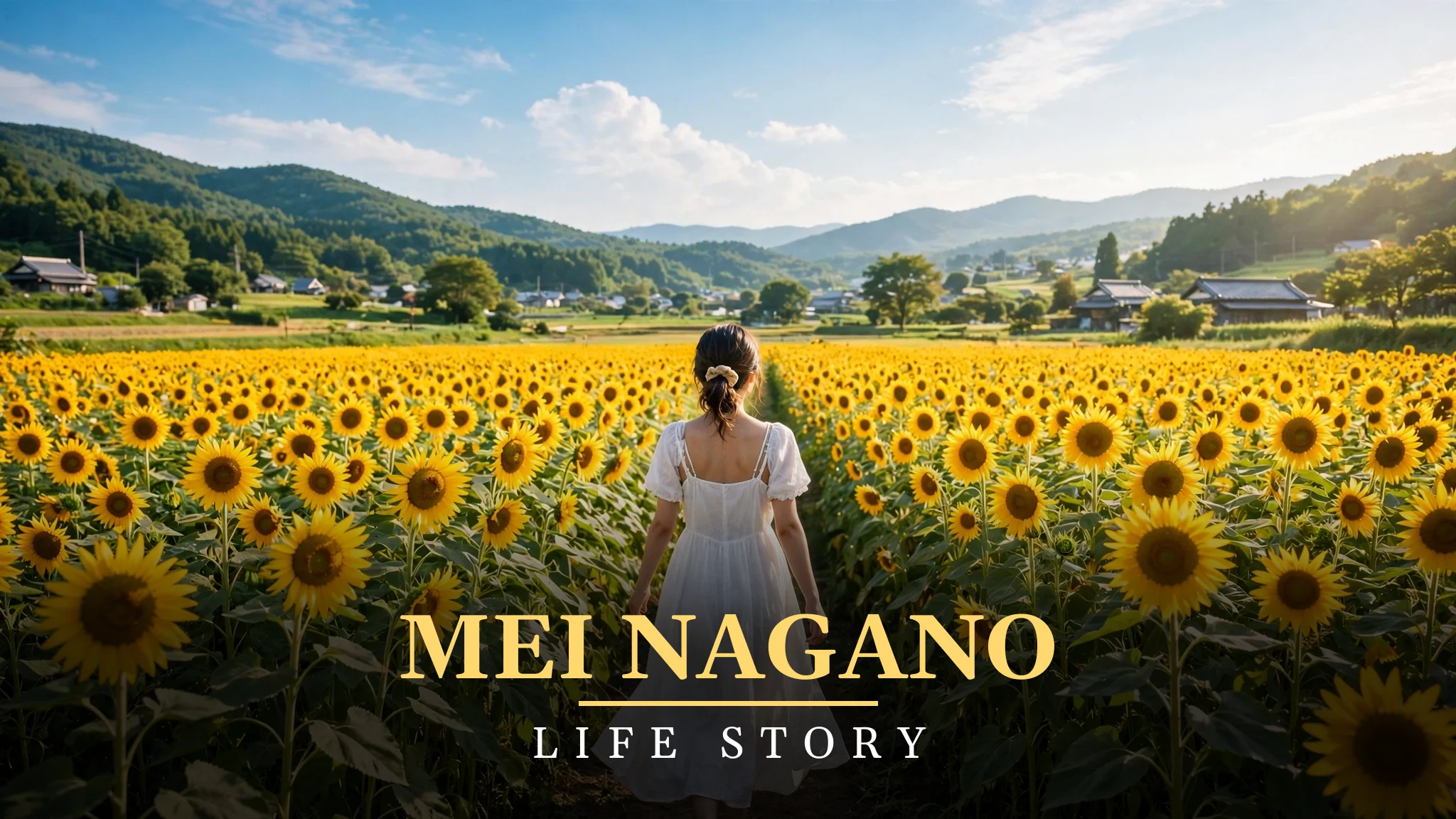
Mei Nagano is one of the brightest young stars in Japan, and her brightness is not the loud, flashy kind. It is a warm, steady brightness, like sunlight in a field, the kind that makes people feel hopeful just by being near it. She began as a child model, she became a teenage actress, and she became a leading lady in her early twenties, playing the heroine of a morning drama on NHK, the most watched kind of television in Japan. That journey, from a small girl in front of a camera to a young woman carrying a whole drama on her shoulders, is a story of hard work, of patience, and of a smile that has never quite left her face.
She was born in 1999 in Tokyo, and she grew up in the city, going to school, modelling, and acting, all at the same time. She was discovered as a child, and she learned to work in front of a camera before she had finished primary school. That early start gave her years of experience, but it also asked her to grow up fast, to be professional when other children were still playing, and to balance school with work in a way that most adults would find hard.
Her breakthrough came in 2018, when she played Suzume Nireno in Hanbun, Aoi, an NHK morning drama, known as an asadora, about a girl who loses her hearing in one ear as a child, and who grows up to become a manga artist. The drama was watched by millions of people every morning, and Nagano’s performance made her a household name in Japan. She has since worked in films, in television, and in modelling, and she has become one of the most popular young actresses in the country.
A Child Model in Tokyo
Mei Nagano was born on 24 September 1999 in Tokyo, Japan. She grew up in the capital, a city of crowds, trains, and bright lights, and she was discovered as a child model when she was still very young. She began appearing in magazines and in advertising, learning how to pose, how to smile, and how to work with a camera. That early work taught her a great deal about the entertainment world, and it gave her a confidence that most children never develop.
She went to school in Tokyo, and she balanced her studies with her modelling work, a balance that was not always easy. A child model must learn lines, must travel to shoots, and must work with adults who expect her to behave like a professional, even when she is tired, or when she would rather be playing with friends. Nagano learned those skills, and she learned them well, because she had a natural warmth, and a willingness to work hard, that made people want to work with her again.
Her modelling work also taught her how to handle attention. A child who is photographed, who appears in magazines, and who is recognised on the street, learns early that fame is a strange thing, that it can be exciting, and that it can also be tiring. Nagano handled that attention with a grace that impressed the adults around her, and she kept her focus on her work, and on her school, rather than on the fame itself. That focus has stayed with her throughout her career.
As she grew into a teenager, she began to move from modelling to acting, taking small roles in television dramas and in films. Those roles gave her a chance to learn the craft of acting, to work with experienced actors, and to understand how a story is told on screen. She was not a child star who faded when she grew up. She grew into an actress, step by step, and she built a foundation that would support her later success.
Teenage Roles and Learning to Act
Nagano’s teenage years were spent working in Japanese television and film, taking on roles that were suited to her age, and that gave her a chance to grow as an actress. She appeared in dramas about school life, about family, and about young people finding their way in the world. Those roles were not always large, but they were important, because they taught her how to play a character, how to listen to other actors, and how to give a performance that felt real.
She also continued to model, appearing in fashion magazines for teenagers, and becoming known as a young model with a bright, fresh style. Her face became familiar to young people in Japan, and she became a role model for girls her own age, who looked to her for ideas about fashion, about confidence, and about how to be yourself in a world that often tells young women to be someone else. That influence was a responsibility, and Nagano handled it with a care that showed a maturity beyond her years.
Her acting work during these years was steady, and it was respected, but it did not yet make her a star. She was a working young actress, taking on roles, learning, and growing, and she was building a reputation as a reliable, thoughtful performer who could be trusted with a difficult part. She worked with directors who valued her warmth, and her ability to play a character with honesty, and she began to be noticed for the way she could make an audience care about a young girl, even when the story was simple.
By the time she was eighteen, she was ready for a larger role, and she had the experience to carry it. She had spent years in front of a camera, she had learned to act, and she had learned to handle the pressure of being watched. That preparation would soon be tested, in a way that would change her life, and make her one of the most famous young actresses in Japan.
Hanbun, Aoi and a Morning Drama That Made Her a Star
In 2018, Nagano was cast as the heroine of Hanbun, Aoi, an NHK morning drama, or asadora, about a girl named Suzume Nireno. Suzume loses her hearing in one ear as a child, after an illness, and she grows up in a small town in Gifu prefecture, dreaming of becoming a manga artist. She moves to Tokyo, she struggles, she fails, and she keeps trying, and the drama follows her life from childhood to adulthood, through love, through work, and through the everyday joys and sorrows of growing up. It was a long drama, with many episodes, and it was watched by millions of people every morning in Japan.
Nagano played Suzume with a warmth, a humour, and a determination that made the character feel like a real person, not a television heroine. She showed Suzume’s sadness about her hearing, her frustration with her failures, and her joy when she succeeded, and she did it all with a smile that never felt forced. Audiences loved her, because they recognised themselves in Suzume, a girl who is not perfect, who makes mistakes, and who keeps going anyway. The drama was a success, and Nagano became a household name, known to people across Japan, from children to grandparents.
Playing the heroine of an asadora is one of the most important jobs for a young actress in Japan, because the drama is watched every morning, for six months, and the actress becomes a part of people’s daily lives. It is a huge responsibility, and it is also a huge opportunity, because it can make an actress famous overnight, and it can open doors to films, to other dramas, and to a long career. Nagano handled that responsibility with a grace that impressed everyone who worked with her, and she came out of the drama as one of the most popular young stars in the country.
The role also showed something important about Nagano’s style. She is not a dramatic actress who shouts or cries loudly. She is a warm actress, who plays her characters with a quiet strength, and who lets the audience see the hope underneath the sadness. That style suited Suzume perfectly, because Suzume is a girl who keeps smiling, even when life is hard, and Nagano played that smile as if it were real, not as if it were a performance.
Films, Television, and a Career That Keeps Growing
After Hanbun, Aoi, Nagano worked steadily in Japanese film and television, taking on leading roles that showed different sides of her talent. She appeared in films about young people, about love, and about the lives of ordinary families, and she played women who were strong, women who were funny, and women who were struggling to find their way. Each role was different, and each one asked her to find a new way of playing a character, and she did so with the same warmth she had brought to Suzume.
She also continued to work in television dramas, taking on roles in prime-time series that were watched by large audiences. Those roles kept her visible to the Japanese public, and they gave her a chance to play characters who were older, more complex, and more mature than Suzume. She played women in their twenties who were working, who were in love, and who were trying to build a life, and she brought a truth to those roles that came from her own experience of growing up in public, and of learning to be an adult while the world was watching.
In film, she took on roles that were more serious, including work in films that dealt with Japanese history, with family, and with the lives of people in small towns. Those films were not always commercial successes, but they were important to her, because they allowed her to work with respected directors, and to tell stories that mattered to her. She has shown a willingness to take on a challenge, even when the challenge is not easy, and even when the film might not be seen by many people.
She has also continued to model, appearing in fashion magazines and in advertising, and she has become known as a style icon for young women in Japan. Her fashion work is a part of who she is, and it gives her another way to express herself, beyond acting. That variety, film, television, and modelling, is a sign of a young actress who is not willing to be only one thing, and who wants to keep learning, and keep growing, throughout her career.
A Bright Star With a Private Heart
Nagano has kept her private life largely out of the press, and she rarely speaks about herself in interviews. She prefers to let her work speak for her, and she believes that an actress’s job is to play characters, not to sell her own life as a story. That privacy is unusual for a young star in Japan, where the press often follows young actresses closely, and it is a choice that has served her well, because it has allowed her to focus on her work, and to keep some part of her life for herself.
She is known for her bright, warm personality, and for her kindness to the people she works with. Directors and co-stars have praised her for her professionalism, for her willingness to work hard, and for her ability to make a set feel like a happy place, even when the work is long and tiring. That kindness is part of what makes her performances feel warm, because she brings a real warmth to her work, not a performed warmth, and audiences can feel the difference.
She has also become a role model for young girls in Japan, who look to her as an example of how to be confident, how to work hard, and how to stay true to yourself, even when you are famous. That influence is a responsibility, and Nagano has handled it with care, by being herself, by working hard, and by not trying to be perfect. She has shown young girls that it is okay to fail, to make mistakes, and to keep trying, and that message is more important than any single role she has played.
Her future is still open, and she is still young, with many years of work ahead of her. She has already achieved a great deal, from child model to asadora heroine, and she has done it with a grace that is rare for someone so young. She is likely to keep growing, to take on more complex roles, and to become one of the leading actresses of her generation in Japan.
A Young Star Who Is Still Rising
Today, Mei Nagano is regarded as one of the brightest young stars in Japan, and her story is often told as an example of what can happen when a child model grows up to become a serious actress. She started young, she worked hard, and she became a household name through Hanbun, Aoi, a drama that is still remembered by millions of people. She has since built a career that is wide, varied, and her own, and she has done so by choosing work that interests her, and by staying true to the warm, bright quality that made her stand out in the first place.
Her legacy is still being written, because she is still young, and she still has many years of work ahead of her. But what she has already achieved is significant. She has shown that a young actress can carry a morning drama, can play a girl with a disability with honesty and with hope, and can become a role model for a whole generation of young women. That is a real achievement, and it is one that will last, even as she takes on new roles, and new challenges, in the years to come.
She is a reminder that brightness is not only about being famous, or about being beautiful. It is about being warm, about being kind, and about bringing light to the people around you, whether that light comes from a smile, from a performance, or from a simple act of hard work. Nagano has that brightness, and she has shared it with audiences across Japan, and she will likely keep sharing it for many years to come.
School, Work, and the Balance of a Teenage Life
Nagano’s teenage years were a balancing act, between school, modelling, and acting, and that balance is one of the most interesting parts of her story. She went to school in Tokyo, she did her homework, she took exams, and she also travelled to photo shoots, to television studios, and to film sets, where adults expected her to behave like a professional. That double life, student by day and performer by evening, is hard for any young person, and it asks for a discipline that most adults would find difficult. Nagano learned that discipline, and she learned it well, because she had a natural warmth, and a willingness to work hard, that made people want to work with her again.
Her school friends knew her as a classmate, not as a star, and that normality was important to her. A child who is famous can easily lose touch with ordinary life, and can become isolated, surrounded only by adults who work in the entertainment world. Nagano kept her school life, her friends, and her everyday routines, and that grounding helped her to stay herself, even as her fame grew. She did her homework, she ate lunch with her friends, and she lived a life that was, in many ways, an ordinary teenage life, even though it was also an extraordinary one.
That balance also taught her time management, a skill that has served her well throughout her career. She learned to prioritise, to say no to work that would interfere with her studies, and to say yes to work that mattered to her, even when it was hard. Those choices, made as a teenager, show a maturity that is rare, and they are a sign of a young person who knows what she wants, and who is willing to work for it, without giving up the parts of her life that make her who she is.
Fashion, Magazines, and a Young Woman’s Voice
Nagano’s work in fashion magazines has been a central part of her career, from her early days as a child model to her current work as a style icon for young women in Japan. She has appeared in magazines that are read by teenagers, and by young women in their twenties, and she has become known for a style that is fresh, bright, and natural, a style that reflects who she is, rather than a style that is imposed on her by a magazine. Young readers look to her for ideas about clothes, about hair, and about how to be confident, and she has handled that influence with care, by being herself, and by not trying to be perfect.
Her fashion work is not only about clothes. It is about a voice, a way of speaking to young women, and of telling them that it is okay to be yourself, to be bright, to be warm, and to be hopeful, even when the world is hard. She shares photographs, thoughts, and moments from her life, and she does so with an honesty that makes her followers feel less alone. That sharing is a generous use of fame, because it tells young women that a famous life is not a perfect life, and that it is okay to be imperfect, and to be real.
In recent years, she has also become known for her work in advertising, for major brands, and for her presence at fashion events in Tokyo. Those events are a part of the fashion world, and they give her a platform to share her style with a wider audience, in Japan and abroad. She has used that platform well, by staying true to her own taste, and by not trying to follow every trend, but by choosing clothes, and styles, that feel right to her. That independence is a strength, and it is one of the reasons her fashion work remains interesting, year after year.
What Nagano achieved with Hanbun, Aoi is hard to measure in prizes, because the real measure was in living rooms across Japan, where families ate breakfast together while Suzume smiled at them from the screen, and where grandparents, parents, and children all knew her name. That kind of fame, the kind that belongs to a morning, to a routine, and to a shared daily habit, is different from the fame of a film premiere, and it lasts longer in people’s memories, because it is tied to their own lives, to their own mornings, and to the quiet start of their own days. She also learned, through that long drama, how to carry a story for months, how to keep a character fresh, and how to make an audience care, morning after morning, and those lessons have stayed with her in every role she has taken since.
Six Months of Mornings: The Asadora Schedule
Playing the heroine of a morning drama is not like making a film. A film is shot in a few weeks, and then it is finished. An asadora runs for about six months, with a new episode every morning, and the actress must be on set early, day after day, learning lines, filming scenes, and keeping the character alive for half a year. Nagano did that work when she was eighteen, and she did it with a smile that had to be fresh every morning, even on days when she was tired, or when the story was sad. That kind of work asks for a stamina that has nothing to do with talent, and everything to do with discipline, and Nagano showed that she had it.
The mornings themselves are part of the job, because millions of people watch an asadora while they eat breakfast and get ready for their day, and the heroine becomes a guest in their homes. A film actress can disappear after her film is finished. An asadora heroine is visited every day, and the audience begins to care about her as if she were a neighbour. Nagano understood that, and she played Suzume as a neighbour, a girl who could be living next door, who makes mistakes, who laughs, and who keeps going. That closeness is why the drama stayed in people’s memories long after the last episode, and why Nagano’s name became familiar in homes across Japan.
The drama was filmed in Gifu prefecture, in a small town where Suzume grows up, and Nagano spent months there, learning the town, meeting its people, and understanding the slow, green life of a place far from Tokyo. That time in Gifu mattered to her performance, because Suzume is a girl from a small town, and Nagano, who grew up in Tokyo, had to learn what that small-town life felt like, how people talk, how they greet each other, and how a girl can dream of Tokyo while still loving the place where she was raised. She learned it well, and the audience could feel it, in the way Suzume walked through her town, as if she belonged there, and as if she was already dreaming of somewhere else.
My Take:
I want to start with the morning, because that is when I first thought about Mei Nagano, and about what it means to be a part of someone’s morning. In Japan, an asadora is watched every morning, while people eat breakfast, while they get ready for work, while they start their day, and the heroine of that drama becomes a part of their daily life, like a friend who visits every morning. Nagano played Suzume in Hanbun, Aoi, and she became that friend for millions of people, and I think that is a beautiful and a heavy responsibility, to be the person who starts someone’s day with a smile, and to do it for six months, every single morning, without fail.
I think about Suzume, and about the girl she played, a girl who loses her hearing in one ear as a child, and who grows up to become a manga artist, and I wonder what it was like for Nagano to play a girl with a disability, and to do it with honesty, without making it a tragedy, and without making it a joke. She played Suzume as a girl who is sad about her hearing, but who does not let it define her, who keeps smiling, who keeps trying, and who finds joy in her work, even when the work is hard. I find that inspiring, because it shows a young woman who refuses to be a victim, and who chooses to live her life fully, even when life has given her a challenge.
What I admire most about Nagano is her warmth, because warmth is a quality that is easy to fake, and hard to make real. Many actresses can smile on camera, but few of them can make that smile feel like it comes from inside, like it is a part of who they are. Nagano’s smile feels real, and it makes her performances feel warm, even when the story is sad. I think that warmth comes from who she is, from a kind, hardworking young woman who loves her work, and who cares about the people she works with, and I admire her for bringing that warmth to every role she plays.
I also think about her beginning as a child model, and about what it must have been like to grow up in front of a camera, to be photographed, to be watched, and to be expected to behave like a professional when you are still a child. That must have been hard, and it must have taught her a great deal about the world, about work, and about herself. She survived that childhood, and she grew into an actress, and she did it without becoming bitter, or tired, or cynical, and that is a real achievement, because many child stars do not survive their childhoods in that way.
I reflect on the pressure of being a role model, because Nagano is a role model for young girls in Japan, and that is a heavy thing to carry when you are still young yourself. Young girls look to her for ideas about fashion, about confidence, and about how to be yourself, and she has handled that responsibility with a care that shows a maturity beyond her years. She has not tried to be perfect. She has tried to be honest, to work hard, and to stay true to herself, and I think that is the best kind of role model, one who shows that it is okay to fail, to make mistakes, and to keep trying.
There is a lesson here for me about brightness, and I keep turning it over. Brightness is not about being loud, or about being famous, or about being beautiful in a flashy way. It is about bringing light to the people around you, about making a room feel warmer, and about giving hope to someone who is having a hard day. Nagano has that kind of brightness, and she shares it through her work, through her smile, and through her performances, and I think that is a gift, and it is a gift that is worth more than fame, because fame fades, but kindness lasts.
I think about her future, and about what she will do next, and I hope she keeps growing, keeps taking on difficult roles, and keeps showing us that a young actress can be both bright and serious, both warm and strong. I hope she plays women who are older, more complex, and more challenging, and I hope she works with directors who respect her talent, and who give her the space to grow. She has already achieved a great deal, and I believe she will achieve more, because she has the talent, the warmth, and the work ethic to do so.
I also think about Tokyo, and about growing up in a big city, where everything moves fast, and where a young person can easily get lost. Nagano grew up in that city, and she learned to move fast, to work hard, and to keep her focus, even when the world around her was noisy and crowded. That focus is a strength, and it is one of the reasons her career has lasted, because she has not let the noise distract her, and she has kept her eyes on the work, and on the people she wants to become.
If I could say one thing to a young person reading this story, it would be to learn from Nagano’s example and to keep smiling, even when life is hard, and to keep trying, even when you fail. Suzume, the character she played, lost her hearing, failed as a manga artist, and kept trying, and Nagano played that trying with an honesty that made it feel real. That is a lesson for anyone who has failed, or who is afraid to fail, because failure is not the end. It is a part of the story, and the story goes on, if you are willing to keep going.
I also think about the manga in Hanbun, Aoi, and about what it means for a girl to dream of drawing stories, and to make those stories come alive on paper. Suzume, the character Nagano played, dreams of becoming a manga artist, and she works hard, she fails, and she keeps trying, and that dream is a beautiful one, because it shows a young person who wants to create, who wants to tell stories, and who wants to share those stories with the world. I think about the young people I know who dream of drawing, of writing, and of making art, and I think Nagano’s performance gives them hope, because it shows that a dream is worth pursuing, even when it is hard, and even when you fail along the way.
Another thought that stays with me is about hearing, and about what it means to lose hearing in one ear, as Suzume does, and to live with that loss, every day, for the rest of your life. Nagano played that loss with an honesty that made me think about disability in a new way, not as a tragedy, but as a part of a person’s life, a part that shapes them, but does not define them. Suzume is not only a girl who cannot hear well in one ear. She is a girl who is funny, who is determined, and who is full of life, and her hearing loss is only one part of who she is. That portrayal matters, because it tells audiences that a person with a disability is a whole person, not only a disability, and that is an important message.
I think about her work in fashion, and about how she uses her influence to speak to young women, not only about clothes, but about confidence, about kindness, and about being yourself. Young girls in Japan look at Nagano, and they see a young woman who is bright, warm, and successful, and they wonder whether they can be like her. I hope they understand that they do not have to be like her. They only have to be like themselves, and to work hard, and to stay true to who they are, and Nagano’s career shows them that, because she became a star by being herself, not by pretending to be someone else.
I also reflect on what it means to be young and famous in Japan, where the press follows young actresses closely, and where every step is watched, and judged. Nagano has handled that attention with a grace that is impressive, by keeping her private life private, by focusing on her work, and by staying true to herself, even when the world tried to tell her who she should be. I admire that grace, and I think it is a lesson for anyone who feels watched, or judged, or pressured to be someone else. You do not have to be who the world wants you to be. You only have to be who you are, and to do your work with care.
I wonder what she will do next, and I hope she takes on roles that are more complex, more challenging, and more adult, as she grows older, and as her talent deepens. I hope she plays women who are strong, women who are funny, and women who are struggling, because she plays those women with a truth that is hard to find elsewhere. She has already given us a remarkable career, from a child model to a morning drama heroine, and I believe she will give us more, because she is still curious, still bright, and still willing to learn, and because her smile, which has lit up so many mornings in Japan, is still shining.
I also think about the way her work is still discovered by new viewers, who watch Hanbun, Aoi for the first time, and who see Suzume, a girl who keeps smiling, even when life is hard, and who feel a hope that is hard to explain, a hope that comes from watching a young person refuse to give up. That discovery is a gift, because it means that Nagano’s work will keep finding new audiences, in new places, and in new times, and that her warm performance will keep speaking to people who are willing to watch, and to listen, and to feel the light in a smile.
I think about her future, and about the roles she will play as she grows older, roles that are more complex, more adult, and more challenging, and I hope she takes them on with the same warmth, and the same honesty, that she brought to Suzume. She has already shown that she can carry a morning drama, that she can play a girl with a disability with truth, and that she can make millions of people smile, and those are achievements that many actresses never reach, even after decades of work. She reached them when she was still young, and that is a remarkable thing.
I also think about the mornings in Japan, and about the millions of people who start their day with a drama, with a cup of tea, and with a heroine who smiles at them from a small screen, and I think about how important that small moment is, how it can make a hard day feel a little bit lighter, and how it can give a person hope, before they have even left their house. Nagano gave that hope to millions of people, every morning, for six months, and that is a gift that is hard to measure, and that will be remembered, long after the drama has ended.
I also think about the girls who watch her in fashion magazines, and about what they see, a young woman who is bright, warm, and confident, and who seems to have everything, and I hope they understand that her brightness did not come easily, that it came from years of hard work, from early mornings, from long days on set, and from a willingness to keep smiling, even when she was tired. That hard work is the part of her story that is easy to miss, because her smile makes it look easy, but it was not easy, and it is worth remembering.
I will remember Mei Nagano as a bright, warm young star, who started as a child model, who became the heroine of a morning drama, and who made millions of people smile every morning. I will remember Suzume’s smile, and the way Nagano played a girl who kept going, even when life was hard, and I will remember her as a young woman who is still rising, still growing, and still sharing her light with the world. She is not the loudest star in Japan, and she is not the most famous, but she is one of the brightest, and I think that is a better thing to be. A loud star is remembered for a moment. A bright star is remembered for a lifetime.
I want to say more about Suzume’s hearing, because it is the part of Hanbun, Aoi that I think about most, and it is the part that Nagano played with the most care. Suzume loses the hearing in one ear as a child, and that loss stays with her for the rest of her life, in every conversation, in every room, and in every moment when she has to ask someone to repeat themselves. Nagano did not play that loss as a tragedy, and she did not play it as a joke. She played it as a fact, a part of Suzume’s life that she carries quietly, the way real people carry a difficulty, without making it the whole story. That choice matters, because it tells audiences that a disability is not a person’s identity. It is one part of a life that is also full of jokes, of work, of love, and of dreams, and Nagano understood that, and played it with respect.
I also think about who was watching, because an asadora is watched by grandmothers and by schoolchildren, by people who have lived long lives and by people who have just started theirs, and they all watch the same girl, at the same time, every morning. Nagano had to play Suzume in a way that a child could love and a grandmother could believe, and that is a hard balance to keep. She kept it by being warm, by being honest, and by never talking down to the audience, and I admire that, because it is easy to play for one kind of viewer, and hard to play for all of them at once. The fact that millions of people, young and old, loved Suzume tells me that Nagano found a truth that belongs to everyone, not only to one age.
And I think about what that brightness costs, because a smile that looks easy on screen is often the result of hard work off screen. Nagano woke early, learned her lines, filmed for long hours, and then woke early again, for six months, and she did it while the whole country was watching. That is not a small thing. It is a kind of endurance, and it is a kind that young people rarely get credit for, because their work is expected to look light. I want to give her credit for it here, because the warmth we saw every morning was not an accident. It was built, day by day, by a young woman who took her work seriously, and who refused to let tiredness show in her performance.
One last thought stays with me, and it is about the manga that Suzume dreams of drawing. A manga artist works alone, at a desk, with a pen, building a whole world out of lines on paper, and nobody sees the work until it is finished. That is not so different from acting, where the audience sees the finished scene but never sees the early mornings, the repeated takes, and the long days of practice. Nagano played a girl who wanted to make something with her own hands, and she played her with a belief that making things matters, even when nobody is watching. I think that belief is worth carrying, because the world needs people who make things, quietly, patiently, and with love, and Nagano showed us one of those people, every morning, for six months.
Frequently Asked Questions
Who is Mei Nagano?
Mei Nagano is a Japanese actress born on 24 September 1999 in Tokyo. She began as a child model and became famous as the heroine of the NHK morning drama Hanbun, Aoi in 2018. She is one of the most popular young actresses in Japan.
What is Hanbun, Aoi about?
Hanbun, Aoi is a 2018 NHK morning drama, or asadora, in which Nagano plays Suzume Nireno, a girl who loses her hearing in one ear as a child and grows up to become a manga artist. The drama was watched by millions of people every morning in Japan and made Nagano a household name.
How did Mei Nagano start her career?
Nagano began her career as a child model in Tokyo, appearing in magazines and advertising when she was very young. She later moved into acting, taking small roles in television dramas and films as a teenager, before her breakthrough in Hanbun, Aoi.
Where was Mei Nagano born?
Mei Nagano was born on 24 September 1999 in Tokyo, Japan. She grew up in the capital, balancing school with modelling and acting work. Her early start gave her years of experience before she became a leading actress.
What other work has Nagano done?
After Hanbun, Aoi, Nagano has worked in Japanese films and television dramas, playing leading roles that show different sides of her talent. She has also continued to model, appearing in fashion magazines and advertising, and she is known as a style icon for young women.
Why is Nagano called a bright star?
Nagano is called bright because of her warm, hopeful screen presence, and her smile, which makes audiences feel hopeful. She plays characters who keep going even when life is hard, and her warmth is a central part of her appeal as an actress.
Does Nagano talk about her private life?
Nagano keeps her private life largely out of the press and rarely speaks about herself in interviews. She prefers to let her work speak for her, and she focuses on her acting and modelling rather than on public attention for her personal life.


