Netflix Cuts 1,000 Jobs in Its Biggest Layoff Since 2022: What Is Going Wrong at the Streaming King?
Netflix is cutting about 6 percent of its staff, roughly 1,000 jobs, in its biggest layoff round since 2022. Here is what happened, why it happened, and what it means for the people who watch and the people who worked there.
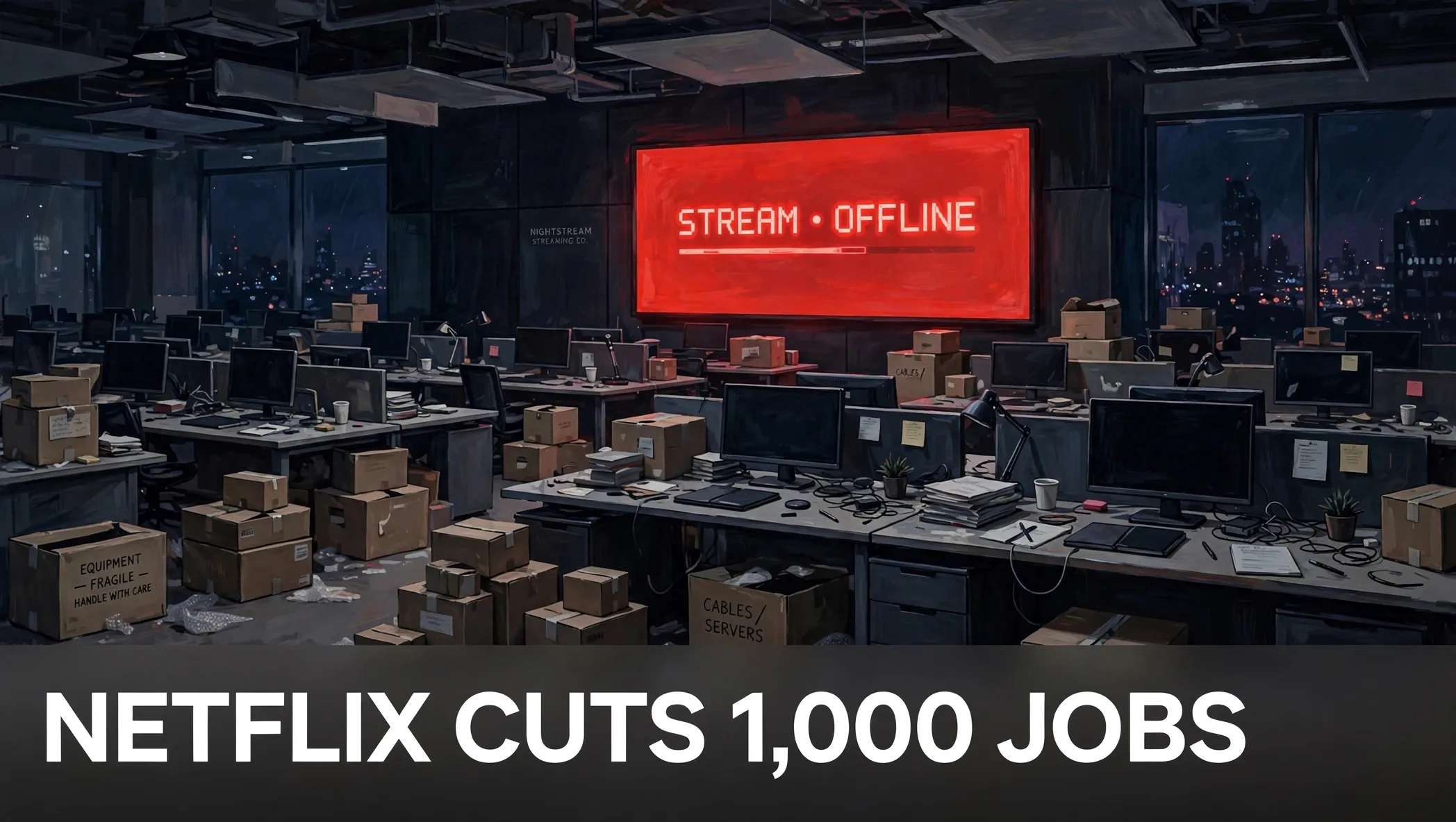
Almost every home on Earth knows the red glow of Netflix starting up on the TV. But this week, inside the company itself, the mood is very different. About one thousand people — writers, engineers, managers, staff who built the shows the world binges — are losing their jobs in the biggest round of cuts the company has made in four years.
The news did not come with a press conference. It came, as these things so often do now, in an email.
What exactly happened?
On Wednesday 14 October, the Wall Street Journal reported that Netflix is cutting about 6 percent of its workforce, which works out to roughly 1,000 jobs. The report, carried by Reuters, was based on an email sent to employees.
Netflix had about 16,000 full-time employees at the end of last year, making it one of the giants of the entertainment world. The company itself had not made a big public comment on the cuts at the time the news broke — days earlier, it had declined to comment on an earlier report by Puck News that a cut of about 5 percent was being planned.
For the workers involved, the numbers are not just numbers. A 6 percent cut means whole teams shrinking, projects paused, and a thousand families suddenly recalculating their lives.
Why is the streaming king cutting people?
This is the question everyone is asking, because from the outside Netflix looks unstoppable. The honest answer is that the streaming war has changed, and it has become much more expensive to win.
The rivals are bigger now. Netflix no longer competes only with other streaming apps. Old media companies have combined forces and built their own platforms, and they fight hard for every viewer.
YouTube is eating the television. More and more of the world’s watching time — and the advertising money that follows it — is going to YouTube, especially on living-room TV screens. Every hour a family spends there is an hour, and a rupee of advertising, that Netflix does not get.
Growth is harder than it was. In the early years, Netflix could add millions of new subscribers almost by standing still. Those days are over in most rich countries, where nearly every household that wants streaming already has it. When easy growth ends, big companies usually do the same thing: they tighten costs.
That is why Netflix has also been pushing into new directions — advertising plans, live programming and gaming — trying to earn money from more than subscriptions alone. Reshaping a company like that often means letting some teams go while building others.
The last time this happened
Older readers may remember 2022, the year the streaming dream cracked. Netflix lost subscribers for the first time in a decade, its share price fell hard, and the company cut hundreds of jobs in several painful rounds. Those cuts became a symbol of the moment the tech and media world realised the party could not grow forever.
Today’s round is being described as the biggest since then — which is exactly why it is making headlines. It does not mean Netflix is dying; the company remains the leader of streaming. But it does mean the leader is feeling the pressure, in public, at the very top of the industry. When the king starts cutting, everyone below him gets nervous.
What does this mean for viewers?
For the ordinary viewer, the short answer is: not much changes today. The app still opens, the shows still play, and no price announcement came with this news.
The longer answer is about what kind of shows get made. A company in cost-cutting mode usually becomes more careful: fewer risky, expensive experiments, more sequels and formats it knows will work, and a harder look at anything that does not pull a big audience quickly. Some beloved niche shows may find the road tougher. At the same time, the push into live events, sport-style programming and games — the things Netflix believes will keep families subscribed — is likely to grow.
One email, a thousand lives
Business news often reads like weather: percentages, quarters, markets. But step back, and this story is simpler and sadder. A thousand people opened an email and learned that their chapter at the world’s most famous streaming company was over — not because they failed, but because the war for your evening hours has become so fierce that even the winner is cutting back.
Netflix will survive this week easily. The question the layoffs really ask is about everyone else: if the king of streaming feels this much pressure, what does the future look like for the rest of the entertainment world?
Frequently Asked Questions
How many jobs is Netflix cutting? About 1,000 jobs, which is roughly 6 percent of its workforce, according to a Wall Street Journal report carried by Reuters on 14 October 2026.
Why is Netflix laying people off? Reports link the cuts to a tougher streaming market: stronger rival platforms, YouTube taking a growing share of viewing time and advertising, and slower subscriber growth in rich countries. Netflix is also reshaping itself around advertising, live programming and gaming.
Is this Netflix’s biggest layoff ever? It is described as the biggest round since 2022, when the company cut hundreds of jobs after losing subscribers for the first time in a decade.
How many people work at Netflix? The company had about 16,000 full-time employees at the end of last year.
Will Netflix prices or shows change for viewers? No price change was announced with this news. Over time, cost-cutting usually means fewer risky new shows and more focus on proven hits, live events and games.
Sources: Reuters and the Wall Street Journal, 14 October 2026; Reuters report on Puck News, 9 October 2026.