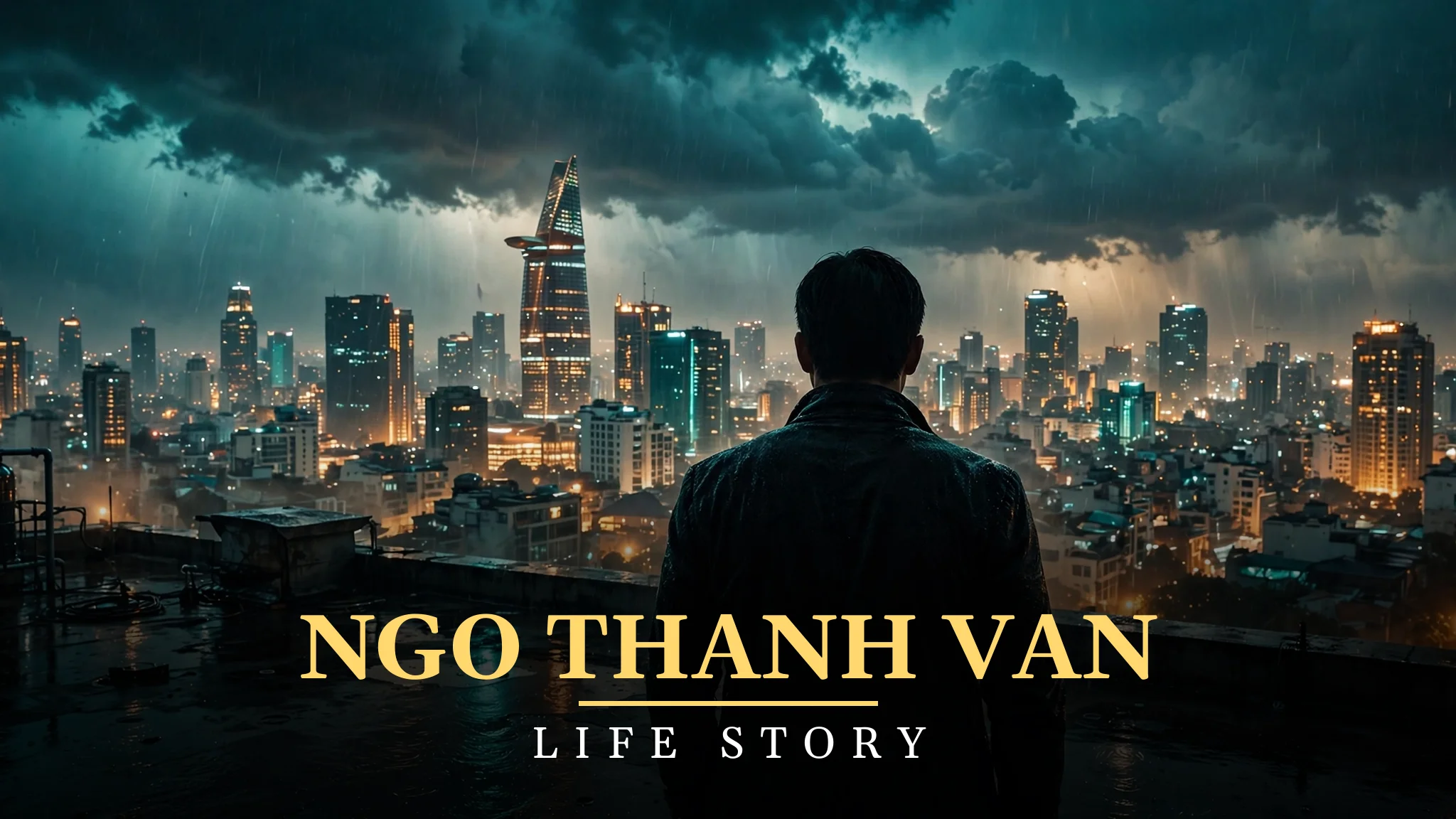
Ngo Thanh Van: The Life Story Behind Vietnam's Action Star
In this post
- A Girl From Tra Vinh Who Grew Up in Norway
- Modelling, Singing and the First Steps in Show Business
- The Rebel and the Breakthrough
- The Clash, Action Stardom and a Reputation for Toughness
- Hollywood: Crouching Tiger, Star Wars, Da 5 Bloods and The Old Guard
- Furie and Producing Vietnam’s Biggest Hit
- Marriage and Life Today
- Studio68 and Building Vietnamese Cinema
- My Take:
Veronica Ngo is the toughest woman in Vietnamese cinema, and one of the toughest in world cinema. She is the actress who fought her way through “The Rebel”, who produced and starred in “Furie”, the highest-grossing Vietnamese film of its time, and who went on to fight alongside Charlize Theron in “The Old Guard” and to appear in films by Spike Lee and in “Star Wars”. She is known in Vietnam as Ngo Thanh Van, and internationally as Veronica Ngo, and she is a symbol of what a Vietnamese woman can achieve when she refuses to accept limits.
She was born on 26 February 1979 in Tra Vinh, a province in the Mekong Delta of southern Vietnam, and her life began far from the film sets of Hollywood. When she was still a child, her family moved to Norway, where she grew up in a cold, quiet country very different from the warm, noisy Vietnam she had left. At the age of twenty, she returned to Vietnam, and she began a career that would take her from modelling to singing to acting to producing, and from Saigon to Hollywood. Her story is one of the most remarkable in Asian cinema, and it is still being written.
What makes her story special is not only her success, but the way she achieved it. She did not wait for Hollywood to discover her. She built her own career in Vietnam, she produced her own films, and she fought, literally and figuratively, for every role she won. She is an action star, a producer and a businesswoman, and she did it all on her own terms.
A Girl From Tra Vinh Who Grew Up in Norway
Tra Vinh is a province in the Mekong Delta, a land of rivers, rice fields and Khmer temples, far from the glamour of Ho Chi Minh City. Ngo Thanh Van was born there in 1979, in a Vietnam that was still recovering from war, and her childhood was shaped by the warmth and the simplicity of the Delta. But when she was ten years old, her family moved to Norway, and her life changed completely. Norway was cold, quiet and orderly, a world away from the heat and noise of Vietnam, and a young Vietnamese girl growing up there had to learn a new language, a new culture and a new way of life.
Growing up in Norway gave her a perspective that few Vietnamese stars have. She lived between two worlds, Vietnamese at home and Norwegian outside, and she learned to adapt, to be strong and to be independent. She went to school in Norway, she learned the language, and she dreamed of a life that was bigger than the small town she lived in. But she never forgot Vietnam. She remembered the warmth, the food, the family and the feeling of home, and as she grew older, she began to think about returning.
At the age of twenty, she made the decision that would change her life: she returned to Vietnam. It was a brave decision, because she was leaving the safety and comfort of Norway for a country she had left as a child, a country that had changed, and a career that was uncertain. She did not know if she would succeed. She knew only that she wanted to try, and that Vietnam was where she belonged. She arrived in Ho Chi Minh City as a young woman with a Norwegian upbringing, a Vietnamese heart and a determination to make something of herself.
Her return to Vietnam was not easy. She had to relearn the language, the culture and the ways of a country that was both familiar and strange to her. But she was strong, she was determined, and she was beautiful, and those qualities opened doors. She began to work as a model, and her modelling career became the first step in a journey that would take her to the top of Vietnamese entertainment and beyond.
Modelling, Singing and the First Steps in Show Business
When Ngo Thanh Van returned to Vietnam, she began her career as a model. She was tall, striking and confident, with a look that stood out in Vietnamese fashion, and she quickly became known in the modelling world. She appeared in fashion shows, in magazines and in advertisements, and she built a reputation as a professional, hardworking model who took her work seriously. Modelling taught her how to present herself, how to work with cameras and how to handle the attention of the public, skills that would help her throughout her career.
She also tried singing, releasing albums and performing as a pop singer in the early 2000s. Her music career was not as successful as her later film career, but it taught her about the entertainment business, about performing on stage and about connecting with an audience. She learned that show business is hard work, that it requires discipline and that it rewards those who are willing to learn and to adapt. She was willing, and she kept learning, even when things did not go perfectly.
Her early years in Vietnamese entertainment were a time of exploration. She tried different things, she learned different skills, and she searched for the career that suited her best. Modelling had given her a start, singing had given her experience, but neither felt like her true calling. She was looking for something more, something that would use her strength, her determination and her physical energy, and she found it in acting, and specifically in action films.
Acting came to her almost by chance, but once she tried it, she knew it was right. She had the presence, the discipline and the physical ability to play strong, complex characters, and directors began to notice her. She took acting seriously, she trained, and she prepared for roles with a dedication that impressed everyone she worked with. She was not a model who acted. She was becoming an actress, and a very good one.
The Rebel and the Breakthrough
In 2007, Ngo Thanh Van starred in “The Rebel”, known in Vietnamese as “Dòng Máu Anh Hùng”, a historical action film set in 1920s Vietnam, and the film changed her career completely. She played a fierce, skilled fighter, and her performance was powerful, physical and convincing. The film was a major success in Vietnam, and it established her as an action star, a woman who could fight on screen as well as any man, and who could carry a film with her presence and her skill.
“The Rebel” was not an easy film to make. It required intense physical training, long hours of fight choreography and a level of commitment that few actors are willing to give. Ngo Thanh Van gave it, and the result was a performance that Vietnamese audiences had never seen before from a Vietnamese actress. She was not a delicate heroine waiting to be rescued. She was a warrior, and she fought with a skill and a ferocity that made the audience cheer. The film’s success proved that Vietnamese cinema could make world-class action films, and that Ngo Thanh Van was a world-class action star.
The film also introduced her to Johnny Tri Nguyen, her co-star, and their on-screen chemistry became part of the film’s appeal. But it was Ngo Thanh Van herself who stole the show, with a performance that was both physical and emotional, showing a woman who was strong, brave and vulnerable at the same time. She had found her calling, and she knew it. Action was her genre, and she would build her career on it.
After “The Rebel”, she was in demand as an actress, and she took on more action roles, including “The Clash” in 2009, another film that showcased her fighting skills and her screen presence. She became known as Vietnam’s action queen, a title she earned through hard work, training and a willingness to do her own stunts and to push herself physically. She was not afraid of pain, of hard work or of danger, and that fearlessness became her trademark.
The Clash, Action Stardom and a Reputation for Toughness
In 2009, Ngo Thanh Van starred in “The Clash”, known in Vietnamese as “Bẫy Rồng”, an action film that further established her as Vietnam’s leading action actress. The film was stylish, fast-paced and full of fight scenes, and her performance was praised for its intensity and its physical skill. She had become a star who could open a film, draw audiences to cinemas and deliver the kind of action that Vietnamese viewers loved.
Her reputation for toughness grew with each film. She trained hard, she learned martial arts and fight choreography, and she performed many of her own stunts, a rarity for actresses in any country. Her dedication to the physical side of acting set her apart, and it earned her the respect of directors, co-stars and audiences. She was not a star who relied on doubles and camera tricks. She was a star who did the work herself, and the audience could see it in every fight scene.
She also became a producer, founding her own production company, Studio68, which allowed her to control her own projects and to support other Vietnamese filmmakers. Producing is a different skill from acting, and it showed a business sense that many people had not expected from an action star. She understood the film business, she knew how to raise money, how to manage a production and how to bring a film to audiences, and she used that knowledge to build a career that was not dependent on other people’s decisions.
Her work as a producer also showed her commitment to Vietnamese cinema. She did not only want to star in films. She wanted to make films, to tell Vietnamese stories and to help the industry grow. That commitment, combined with her talent as an actress, made her one of the most important figures in Vietnamese film, a star who was also a builder, and a performer who was also a leader.
Hollywood: Crouching Tiger, Star Wars, Da 5 Bloods and The Old Guard
Ngo Thanh Van’s success in Vietnam eventually took her to Hollywood, and her international career is one of the most impressive of any Vietnamese actor. In 2016, she appeared in “Crouching Tiger, Hidden Dragon: Sword of Destiny”, the Netflix sequel to the famous martial arts film, playing a warrior named Mantis. The role introduced her to a global audience, and it showed that her action skills could hold their own alongside international stars.
In 2017, she appeared in “Star Wars: The Last Jedi”, playing Paige Tico, the sister of Rose Tico, in a small but memorable role. Appearing in “Star Wars”, one of the biggest film franchises in the world, was a dream for many actors, and for a Vietnamese actress from Tra Vinh, it was an extraordinary achievement. Her role was brief, but it was a sign that Hollywood had noticed her, and that she belonged on the world stage.
In 2020, she appeared in two major films: “Da 5 Bloods”, directed by Spike Lee, in which she played Hanoi Hannah, a Vietnamese radio broadcaster during the war, and “The Old Guard”, a Netflix action film starring Charlize Theron, in which she played Quynh, an immortal warrior. Both roles were significant, and both showed her range as an actress. In “Da 5 Bloods”, she played a historical figure with depth and dignity. In “The Old Guard”, she played a fierce, immortal fighter, and her action scenes were among the film’s highlights.
Her Hollywood career proved that a Vietnamese actress could succeed internationally, not by playing stereotypes, but by playing strong, complex characters. She had not waited for Hollywood to come to her. She had built her career in Vietnam, she had proven herself, and Hollywood had come to her, because her talent was undeniable. She had become a global star, and she had done it on her own terms.
Furie and Producing Vietnam’s Biggest Hit
In 2019, Ngo Thanh Van produced and starred in “Furie”, known in Vietnamese as “Hai Phượng”, an action film about a mother who fights to rescue her kidnapped daughter. The film was a massive success, becoming the highest-grossing Vietnamese film of its time, and it was praised for its action, its emotion and its powerful central performance. Ngo Thanh Van played the mother, Hai Phuong, a former gang member who must use all her fighting skills to save her child, and her performance was fierce, moving and unforgettable.
“Furie” was a personal project for her, and it showed everything she had learned as an actress and as a producer. She had chosen the story, she had raised the money, she had trained for the role, and she had delivered a film that Vietnamese audiences loved and that international audiences discovered on Netflix. The film’s success proved that a Vietnamese action film, made by a Vietnamese woman, could compete with Hollywood, and it opened doors for Vietnamese cinema around the world.
The film’s theme, a mother’s love and a mother’s fight for her child, resonated with audiences everywhere, because it is a universal story. A mother who will do anything to save her daughter is a character that any audience can understand, and Ngo Thanh Van played it with a raw, honest emotion that made the action scenes even more powerful. The fights were not only fights. They were a mother’s love, expressed through her fists, and that made them unforgettable.
“Furie” also showed her skill as a producer. She had built a film from the ground up, she had managed a large production, and she had delivered a hit. That is a rare achievement for any actor, and it is especially rare for a woman in the action genre. She had proven that she could do it all: act, fight, produce and lead, and she had done it in a film that became a landmark in Vietnamese cinema.
Marriage and Life Today
In 2022, Ngo Thanh Van married Huy Tran, a Vietnamese chef and businessman, in a wedding that was celebrated in Vietnam and covered widely in the press. Their marriage brought together two successful people, and it was seen as a happy, loving union. Huy Tran, who had built his own career in food and business, understood the pressures of public life, and their partnership was based on mutual respect and support.
Marriage changed her life in a gentle way. She continued to act and to produce, but she also spoke about the importance of family, of partnership and of having a home to return to after the pressures of a film set. Her fans were happy for her, and they saw the marriage as a sign of a woman who had achieved professional success and personal happiness, and who had done both on her own terms.
Today, Ngo Thanh Van continues to act, to produce and to work in both Vietnam and Hollywood, and she remains one of the most respected and most admired stars in Vietnamese cinema. She is in her forties, at the height of her powers, and she shows no sign of slowing down. Her career, from Tra Vinh to Norway to Saigon to Hollywood, is one of the most remarkable journeys in Asian film, and it is still being written. Whatever she does next, the world will be watching, because she has proven, again and again, that she can do anything she sets her mind to.
Studio68 and Building Vietnamese Cinema
In 2017, Ngo Thanh Van founded her production company, Studio68, and it became one of the most important steps in her career. Studio68 was not only a company. It was a statement: that a Vietnamese woman could produce films, could lead a production, and could build an organisation that made world-class cinema. Through Studio68, she produced “Furie” and other projects, and she created opportunities for Vietnamese directors, writers and actors who might not otherwise have had a chance. She did not only build her own career. She built a platform for others, and that generosity is one of the most admirable parts of her story.
Running a production company is a different skill from acting, and it showed a business sense that many people had not expected from an action star. She learned how to raise money, how to manage a budget, how to hire a crew, how to market a film and how to bring it to audiences in Vietnam and abroad. Those are hard skills, and they require patience, discipline and a willingness to learn, and Ngo Thanh Van learned them, just as she had learned martial arts and acting. She is a person who learns what she needs to learn, and then she does the work.
Studio68 also reflected her commitment to Vietnamese stories. She did not want to make films that copied Hollywood. She wanted to make films that were Vietnamese, about Vietnamese people, in Vietnamese settings, with Vietnamese heart, and she believed that those films could succeed internationally if they were made well. “Furie” proved her right, becoming a hit in Vietnam and finding an audience on Netflix around the world. That success showed that Vietnamese cinema did not need to imitate anyone. It needed to be itself, and to be excellent, and Studio68 was built to make that happen.
She has also used Studio68 to mentor young Vietnamese filmmakers, giving them advice, support and opportunities to work on real productions. That mentoring is a generous act, and it shows that she understands that a film industry is not built by one person. It is built by a community, by people who help each other, who share knowledge and who create opportunities for the next generation. Ngo Thanh Van has done that, and her influence on Vietnamese cinema goes beyond her own films. It extends to the young filmmakers she has helped, and to the industry she has helped to build.
Her work as a producer has also given her independence. She does not have to wait for a director to offer her a role. She can create her own roles, choose her own stories and build her own films, and that independence is a form of freedom that few actors ever achieve. She earned it through hard work, through success and through a willingness to take risks, and she uses it to make films that matter to her and to her country. That is a powerful example for any artist, in any country: do not wait for permission. Build your own platform, and use it to tell the stories you believe in.
Her international career has also had an impact on how the world sees Vietnam. When audiences in America, in Europe and in other Asian countries watch Ngo Thanh Van in “The Old Guard” or in “Da 5 Bloods”, they see a Vietnamese woman who is strong, talented and complex, and that image challenges stereotypes about Vietnam and about Asian women. She is not a victim, not a stereotype, but a warrior, a mother and a leader, and that representation matters, because it shapes how the world understands a whole country. She has done more for Vietnam’s image abroad than many diplomats, simply by being excellent at her work.
My Take:
When I think about Ngo Thanh Van, the first word that comes to my mind is strength. Not only physical strength, although she has that in abundance, but strength of character, strength of will and strength of vision. She is a woman who was born in a small province in the Mekong Delta, who grew up in Norway, who returned to Vietnam at twenty with nothing but determination, and who built herself into an international action star and a successful producer. That journey, from Tra Vinh to Hollywood, is one of the most remarkable I have ever heard, and it was not achieved by luck. It was achieved by work, by courage and by an absolute refusal to accept limits.
What I admire most about her is that she did not wait for permission. She did not wait for Hollywood to discover her, or for a director to give her a chance, or for the industry to decide that a Vietnamese woman could be an action star. She made her own chances. She founded her own production company, she produced her own films, and she created the roles she wanted to play. That is a powerful lesson, not only for actors, but for anyone who feels that the world is not giving them a chance. You do not have to wait. You can build your own door, and you can walk through it, and Ngo Thanh Van did exactly that with “Furie”. She produced it, she starred in it, and it became the biggest Vietnamese film of its time. That is not luck. That is vision, and it is work.
I also think about her childhood in Norway, and about what it must have been like to grow up between two worlds. She was Vietnamese at home and Norwegian outside, and she had to learn to live in both cultures, to speak both languages and to be comfortable in both places. That experience, of being an outsider in two countries, could have made her feel lost. Instead, it made her strong. It taught her to adapt, to be independent and to rely on herself, and those lessons stayed with her throughout her career. When she returned to Vietnam at twenty, she was not afraid, because she had already learned how to start again in a new place. When she went to Hollywood, she was not afraid, because she had already learned how to be a stranger in a strange land and to make it her own. Her childhood, which could have been a disadvantage, became her greatest strength.
Her performances as an action star are something I want to talk about honestly, because they are extraordinary. She does her own stunts, she trains hard, and she fights on screen with a skill and a ferocity that few actors, male or female, can match. That is not easy, and it is not glamorous. It is painful, tiring and dangerous work, and she does it because she believes in the films and because she respects her audience. I think that dedication deserves more recognition than it usually receives. We praise actors for crying on screen, but we rarely praise them for the physical courage it takes to fight on screen, to fall, to be hit, to get up and to do it again. Ngo Thanh Van does that, film after film, and she does it without complaint. That is a form of bravery, and I admire it deeply.
“Furie” is a film that moves me, because it is about a mother’s love, and because it is a story that any parent can understand. A mother who will fight anyone, do anything, to save her child: that is a powerful idea, and Ngo Thanh Van played it with a raw, honest emotion that made the action scenes even more meaningful. The fights in “Furie” are not only fights. They are love, expressed through action, and that is why the film works. It is not only an action film. It is a film about family, about sacrifice and about the strength of a mother’s love, and that is why it became the biggest Vietnamese film of its time. I think that is a lesson for filmmakers: action without emotion is empty, but action with emotion is unforgettable, and Ngo Thanh Van understood that.
Her Hollywood career is another part of her story that I find inspiring. She appeared in “Star Wars”, in a Spike Lee film, in “The Old Guard” with Charlize Theron, and in “Crouching Tiger, Hidden Dragon: Sword of Destiny”, and in each one, she played a strong, complex character, not a stereotype. That matters, because Hollywood has a long history of giving Asian actors small, stereotyped roles, and Ngo Thanh Van refused to accept those roles. She played warriors, mothers and complex women, and she did it with dignity and skill. She showed Hollywood that a Vietnamese actress could be a leading action star, and she opened doors for other Asian actors who came after her. That is a legacy that goes beyond her own films, and it is one she should be proud of.
I think about her marriage to Huy Tran, and about what it means to find love after a life of hard work and independence. She spent years building her career, fighting for her place, and proving herself, and then she found a partner who respected her, supported her and built a life with her. That is a happy ending, and I am glad for her, because she deserves it. A woman who has fought so hard for her career deserves a home where she can rest, and a partner who understands her, and I hope she has found that.
If I could ask her one question, I would ask her what she would tell a young girl in Tra Vinh today, a girl who dreams of becoming an actress, or a fighter, or a producer, and who thinks that her dreams are too big for her small town. I imagine she would tell her that no dream is too big, that hard work matters more than where you come from, and that you should never wait for permission to be great. I imagine she would tell her to train, to learn, to be brave, and to build her own door if no one opens one for her. I do not know her answer, but I know what her life says, and her life says this: you can come from a small place, you can grow up in a strange country, you can return home, you can fight, you can produce, you can go to Hollywood, and you can do it all as a Vietnamese woman, on your own terms. That is Ngo Thanh Van, and that is why I admire her more than almost any other star in this whole series.
I also think about her role in “The Old Guard”, and about what it meant to fight alongside Charlize Theron, one of the biggest action stars in the world. In that film, Ngo Thanh Van played Quynh, an immortal warrior, and her action scenes were among the film’s highlights. She held her own alongside Theron, and she proved that a Vietnamese actress could be a global action star, not a supporting player, but an equal. That matters, because Hollywood has a long history of giving Asian actors small roles, and Ngo Thanh Van refused to accept a small role. She demanded, through her talent and her work, to be treated as an equal, and she was. That is a victory, not only for her, but for every Asian actor who has been underestimated by Hollywood.
I think about her role in “Da 5 Bloods”, and about what it meant to work with Spike Lee, one of the most important directors in American cinema. In that film, she played Hanoi Hannah, a Vietnamese radio broadcaster during the war, a real historical figure, and she played her with dignity and depth. That role was very different from her action roles, and it showed her range as an actress. She could play a historical figure, a real person, with the same skill she brought to a fictional warrior, and that versatility is the mark of a great actress. Spike Lee trusted her with that role, and she repaid that trust with a performance that was praised by critics around the world.
There is a lesson here about representation, and it is an important one. For decades, Vietnamese people in Hollywood films were played as stereotypes, as villains or as victims, and rarely as complex, strong characters. Ngo Thanh Van has changed that, by playing warriors, mothers and complex women, and by refusing to accept roles that demeaned her or her country. She has shown Hollywood that Vietnamese actors deserve better roles, and she has opened doors for other Vietnamese and Asian actors who came after her. That is a legacy that goes beyond her own films, and it is one she should be proud of, because it will benefit artists she will never meet.
I also reflect on her physical courage, because it is easy to overlook. She does her own stunts, she trains hard, and she fights on screen with a skill that few actors can match. That is painful, tiring and dangerous work, and she does it because she believes in the films and because she respects her audience. We praise actors for crying on screen, but we rarely praise them for the physical courage it takes to fight on screen, to fall, to be hit, to get up and to do it again. Ngo Thanh Van does that, film after film, and she does it without complaint. That is a form of bravery, and I admire it deeply, and I think it deserves more recognition than it usually receives.
I think about the future, and about what Ngo Thanh Van will do next. She is in her forties, at the height of her powers, and she shows no sign of slowing down. She may act in more Hollywood films, she may produce more Vietnamese films, she may mentor more young filmmakers, and whatever she does, the world will be watching, because she has proven, again and again, that she can do anything she sets her mind to. She has already achieved more than most actors achieve in a lifetime, and I believe her best work may still be ahead of her, because she keeps learning, keeps growing and keeps challenging herself, and that is the mark of a truly great artist.
I also want to say something about her childhood in Norway once more, because it is the foundation of everything she became. Growing up between two worlds, Vietnamese at home and Norwegian outside, taught her to adapt, to be strong and to rely on herself, and those lessons stayed with her throughout her career. When she returned to Vietnam at twenty, she was not afraid, because she had already learned how to start again in a new place. When she went to Hollywood, she was not afraid, because she had already learned how to be a stranger in a strange land and to make it her own. Her childhood, which could have been a disadvantage, became her greatest strength, and I think that is a hopeful message for any child who grows up between two cultures: you are not lost. You are strong, and your two worlds are a gift, not a burden.
I think about her marriage to Huy Tran, and about what it means to find love after a life of hard work and independence. She spent years building her career, fighting for her place, and proving herself, and then she found a partner who respected her, supported her and built a life with her. That is a happy ending, and I am glad for her, because she deserves it. A woman who has fought so hard for her career deserves a home where she can rest, and a partner who understands her, and I hope she has found that, because a life of fighting is only complete when there is also a life of love, and Ngo Thanh Van has earned both.
I also want to reflect on the film “Furie” once more, because it deserves a second mention. It is a film about a mother’s love, about a woman who will fight anyone to save her daughter, and it is a story that any parent can understand. Ngo Thanh Van produced it, starred in it, and made it the biggest Vietnamese film of its time, and that achievement, as both an actress and a producer, is one of the most impressive in Asian cinema. It proves that a woman can be an action star and a business leader, a fighter and a mother, all at the same time, and that is a powerful message for women everywhere.
Frequently Asked Questions
When was Ngo Thanh Van born?
Ngo Thanh Van, also known as Veronica Ngo, was born on 26 February 1979 in Tra Vinh province, in the Mekong Delta of southern Vietnam.
How did Ngo Thanh Van become famous?
She became famous as an action star after her breakthrough role in “The Rebel” in 2007, and she later produced and starred in “Furie”, the highest-grossing Vietnamese film of its time.
What Hollywood films has Ngo Thanh Van appeared in?
She has appeared in “Crouching Tiger, Hidden Dragon: Sword of Destiny”, “Star Wars: The Last Jedi”, “Da 5 Bloods” and “The Old Guard” with Charlize Theron.
What is Furie about?
“Furie”, known in Vietnamese as “Hai Phượng”, is a 2019 action film about a mother who fights to rescue her kidnapped daughter, and Ngo Thanh Van both produced it and starred in it.
Did Ngo Thanh Van grow up in Vietnam?
She was born in Vietnam but moved to Norway with her family when she was ten, grew up there, and returned to Vietnam at the age of twenty to start her career.
Who is Ngo Thanh Van married to?
She married chef and businessman Huy Tran in 2022, and they are one of Vietnam’s most admired celebrity couples.
Is Ngo Thanh Van still acting today?
Yes, she continues to act and produce films in both Vietnam and Hollywood, and she remains one of the most respected stars in Vietnamese cinema.


