Omah Lay: The Life Story Behind the Afrobeats New Wave Star
In this post
- A Childhood in Port Harcourt and a Family of Musicians
- From Producer to Singer and the First Songs
- Get Layd, Bad Influence, and the Breakthrough
- Boy Alone, Soso, and the World Stage
- Health, Honesty, and Speaking About Feelings
- Today, New Music, and What Comes Next
- Attention, Collaborations, and a Sound That Travels
- What Have We Done and the Second EP
- My Take:
Omah Lay is a singer who sounds like he is thinking out loud. His voice is soft, his songs are slow, and his words are about feelings that many young people carry but do not know how to say: loneliness, hope, love, confusion, and the wish to be understood. He does not sing like a pop star trying to impress a crowd. He sings like a young man talking to himself in a quiet room, and millions of people listen because they recognise their own thoughts in his words.
He began as a producer in Port Harcourt, a young man who made beats for other artists, who learned how music is built from the inside, and who only later decided to sing himself. That background as a producer gave him a different ear, a different understanding of sound, and a different way of writing songs. He did not start with fame. He started with work, with a computer, with a studio, and with a dream that seemed far away.
His breakthrough came in 2020, with an EP called Get Layd, and with songs like Bad Influence and You, and he became one of the leaders of a new wave in Afrobeats, a wave that was slower, sadder, and more honest than the party music that had come before. He is a star, but he is also a voice for a generation that feels a great deal and says very little. This is the story of Omah Lay, a quiet voice from Port Harcourt that became one of the most important sounds in African music.
A Childhood in Port Harcourt and a Family of Musicians
Stanley Omah Didia, known as Omah Lay, was born on 19 May 1997 in Port Harcourt, in Rivers State, in the south of Nigeria. Port Harcourt is a busy oil city, a place of traders, workers, and families who have come from many parts of Nigeria, and a child growing up there learns early how to be resourceful, how to work hard, and how to dream bigger than his surroundings. Omah Lay grew up in that world, and it gave him a sense of ambition and a sense of independence that has stayed with him.
His family was musical. His grandfather was a percussionist, playing drums in a local band, and his father was also a drummer, and music was part of home life, not something distant. He grew up hearing drums, hearing songs, and learning that music is not only entertainment. It is a part of life, a way of telling stories, and a way of connecting people. That early exposure to music gave him a natural sense of rhythm, a love for sound, and a deep understanding of how a song is built.
He attended schools in Port Harcourt, where he was a quiet student, a boy who liked to listen, to observe, and to think. He was not the loudest child in the class, and he was not the one who sought attention. He was a thinker, a boy who watched the world and tried to understand it, and that thoughtful nature later showed in his songs, which are full of reflection, of questions, and of feelings that are hard to put into words.
As a teenager, he began to make music, learning how to produce beats on a computer, how to mix sounds, and how to create a track from nothing. Producing is a different skill from singing, and it is a skill that takes patience, technical knowledge, and a good ear. Omah Lay learned it young, and he became good at it, working with local artists in Port Harcourt and learning how the music industry works from the inside.
His family supported him, even when the path was unclear, and they encouraged him to keep learning, to keep working, and to keep believing in his talent. That support mattered, because a young artist needs people who believe in him when the world does not, and Omah Lay had that kind of family. He kept producing, he kept learning, and he kept dreaming, even when fame seemed far away.
From Producer to Singer and the First Songs
Omah Lay did not start as a singer. He started as a producer, a young man who made beats for other artists in Port Harcourt, who learned how to use studio equipment, and who understood how a song is put together, layer by layer. That background gave him an advantage when he later became a singer, because he understood sound in a way that many singers do not. He knew how a beat should feel, how a vocal should sit on a track, and how a song should be built to make people feel something.
He produced music for local artists, and he learned the craft of making a hit, of choosing a sound, and of working with a singer to bring out the best in their voice. But he also had his own songs, his own ideas, and his own voice, and he began to think about singing himself. It was a risk, because a producer who becomes a singer must learn a new skill, must learn to perform, and must learn to be looked at, not only heard. Omah Lay took that risk, and it changed his life.
He began to record his own songs, singing in a soft, melodic voice, over beats that were slow, moody, and different from the loud Afrobeats that was popular at the time. His songs were about feelings, about love, about loneliness, and about the everyday struggles of young people, and they sounded like a conversation, not a performance. People who heard them felt that they were listening to a real person, not a star, and that honesty won him fans.
In 2019, he released his first songs as a singer, including Do Not Disturb and Hello Brother, songs that were noticed by a small but growing audience in Port Harcourt and beyond. Those songs were not huge hits, but they showed that he had a voice, a sound, and a way of writing that was different from other young singers. He was not trying to copy anyone. He was trying to be himself, and that was enough to make people listen.
He also began to work with KeyQaad, a record label that saw his talent and gave him a platform, a team, and a chance to reach a larger audience. The label helped him to record, to promote, and to build his career, and it gave him the support he needed to take the next step, from a local producer to a national star.
Get Layd, Bad Influence, and the Breakthrough
In 2020, Omah Lay released his debut EP, Get Layd, a short collection of songs that changed his life. The EP included Bad Influence, a song about a woman who is a bad influence, about love that is dangerous, and about the feeling of being drawn to someone who is not good for you. The song was soft, catchy, and honest, and it spread quickly across Nigeria, becoming a hit on radio, in clubs, and on social media.
Get Layd also included You, a song about love, about wanting someone, and about the feeling of being close to a person you adore, and Lo Lo, a song about the ups and downs of a relationship. Each song showed a different side of him, from romantic to sad to playful, and each one added to his growing reputation as a new voice in Afrobeats. He was not a one-song artist. He was a singer who could make a whole EP that people loved, and that consistency is rare.
The EP was released during the difficult year of the pandemic, when many people were at home, listening to music, and thinking about their lives, and Omah Lay’s songs, with their themes of loneliness, love, and hope, spoke to that moment. People who were alone, who were afraid, and who were looking for comfort found it in his music, and they shared it with others, making Get Layd one of the most talked-about EPs of the year.
The success of Get Layd opened doors for him. Radio stations played his songs, promoters wanted him for shows, and other artists wanted to work with him. He was no longer a producer from Port Harcourt. He was Omah Lay, a star, a voice of a new generation, and the whole country was watching to see what he would do next.
He followed Get Layd with another EP, What Have We Done, later in 2020, which included Godly, a song that became another huge hit, with a catchy chorus and a joyful sound that made people dance. Godly showed a different side of him, a happier, more confident side, and it proved that he could make a party song as well as a sad song. That range mattered, because it told the industry that he was not only a sad singer. He was a complete artist.
Boy Alone, Soso, and the World Stage
In 2022, Omah Lay released his debut album, Boy Alone, a record that built on the success of his EPs and showed that he could make a full album, not only a short project. The album included Soso, a song that became one of his biggest hits, with a soft, emotional sound and a chorus that people could sing along to after hearing it once. Soso was a song about pain, about feeling alone, and about the need for comfort, and it spread across Africa and the world, becoming a favourite for people who were going through hard times.
Boy Alone also included other songs that showed different sides of him, from love songs to songs about life, about hope, and about the pressure of growing up in public. He sang about the world he knew, in words that felt real rather than written by someone else. That honesty was one of the reasons the album connected with listeners. He was not pretending to be older or wiser than he was. He was singing as a young man, and that was exactly what made the album feel true.
The album was well received, and it kept his place among the leading young voices in Afrobeats. It also showed that he was thinking about his career in the long term. A first album is a test of whether an artist can last, and he passed it by making a record that sounded like growth rather than repetition. He was not copying his EPs. He was building on them, and that is what a real artist does.
During this period, he also began to perform at larger shows, to travel, and to meet fans in other countries who knew his songs by heart. He performed in Europe, in the United States, and in other parts of Africa, and he learned how to hold a large stage, how to connect with a crowd that might not know his language, and how to let the music do the talking. He was growing, not only as a singer, but as a performer.
He also worked with international artists, including Justin Bieber, on a remix of his song Attention, which brought his music to an even larger audience. That collaboration showed that his sound could travel, that a quiet, emotional song from Nigeria could be heard and loved in many countries, and that Omah Lay was now a global star, not only a Nigerian one.
Health, Honesty, and Speaking About Feelings
Omah Lay has spoken openly about his mental health, about feeling depressed, about needing time to rest, and about the pressure of fame, and that honesty has been important for many young people who look up to him. In a world where many stars pretend to be happy all the time, Omah Lay has said, in plain words, that he is not always happy, that fame can be hard, and that it is okay to feel sad, to need help, and to take time for yourself. That message matters, because many young people suffer in silence, afraid to talk about their feelings.
He has also spoken about the need for rest, about taking a break from social media, and about protecting his peace. Those are hard lessons for a young star, because the industry often rewards those who never stop, even when stopping is what keeps the work good. Omah Lay has learned to say no when he needs to, to take time for himself, and to come back to music when he is ready, not when the industry tells him to.
His songs also deal with mental health, with loneliness, with the feeling of being alone in a crowded room, and with the hope that things will get better. Soso is a song about pain, about needing someone to hold you, and about the comfort that comes from knowing you are not alone. That song has helped many people who were going through hard times, because it told them that their feelings were real, that they were not alone, and that it was okay to ask for help.
He has also faced challenges in his career, including a difficult experience in Uganda in 2020, when he was arrested after a concert during the pandemic, an event that was widely reported and that caused a great deal of stress. He handled it with calm, he spoke about it honestly, and he came back to music with a new sense of purpose. That experience taught him about the pressures of fame, about the need for care, and about the importance of staying true to himself.
His honesty about health, about feelings, and about the hard parts of fame has made him a voice for a generation that is learning to talk about mental health, to seek help, and to support each other. He is not only a singer. He is a person who is willing to be honest, and that honesty is a gift.
Today, New Music, and What Comes Next
Today, Omah Lay remains one of the most important young voices in Afrobeats, a singer whose songs are played across Africa and the world, whose concerts draw large crowds, and whose name is known to millions. He continues to record, to perform, and to work with other artists, and his quiet, emotional sound is still loved by fans who want music that speaks to the heart, not only to the feet.
He has released new music, including songs that show a more mature, more confident artist, and he continues to tour, to perform, and to build his career, even as the music industry changes around him. He is no longer a newcomer. He is a veteran, a man who has spent years at the top, and who knows the industry from the inside, as a producer, as a singer, and as a public figure.
His influence is not only in his songs. It is in the way he carries himself, in the way he speaks about feelings, and in the way he refuses to pretend to be happy when he is not. He has shown young artists that they can be honest, that they can be soft, and that they can be successful without hiding who they are. That message is powerful, and it is one that many young people need to hear.
His story is still being written, and he has many more songs in him. If he keeps writing honestly, keeps singing with feeling, and keeps his voice his own, he has the chance to become one of the defining voices of his generation, not only in Nigeria but in the world. He is Omah Lay, a quiet voice from Port Harcourt, and his voice is still being heard.
Attention, Collaborations, and a Sound That Travels
Omah Lay’s collaboration with Justin Bieber on a remix of Attention showed that his quiet, emotional sound could travel far beyond Nigeria. Attention was a song about love, about wanting someone’s focus, and about the feeling of being close to a person you adore, and Bieber’s voice, added to Omah Lay’s, brought the song to audiences in the United States, in Europe, and around the world. It was a sign that Afrobeats, even in its slowest, saddest form, could be heard and loved anywhere, and that Omah Lay was now a global star.
He has also worked with other international artists, and with stars from across Africa, learning from each collaboration, adapting to new sounds, and sharing his own sound with new audiences. Those collaborations taught him how to listen, how to share a song, and how to let another voice sit beside his own without losing himself. That generosity is a sign of a confident artist, one who does not fear sharing a stage, because he knows his own voice is strong enough to be heard.
His sound travels because it is honest. A song about loneliness, about love, or about hope does not need translation. It needs a feeling, a voice, and a beat that carries it across borders, and Omah Lay’s songs have all three. People in many countries listen to Soso, to Bad Influence, and to Godly, and they hear their own feelings in those songs, even when they do not speak the same language as Omah Lay. That is the power of a great song, and it is why his music will last.
What Have We Done and the Second EP
Omah Lay’s second EP, What Have We Done, released later in 2020, showed that Get Layd was not a one-time success. The EP included Godly, a song that became another huge hit, with a joyful, danceable sound that was different from the sad, slow songs on Get Layd, and it proved that he could make a party song as well as a sad song. Godly was about gratitude, about feeling blessed, and about the joy of being alive, and it spread across Nigeria and beyond, becoming a favourite at parties, at celebrations, and on radio.
What Have We Done also included other songs that showed different sides of him, from love songs to songs about life, about hope, and about the pressure of growing up in public. He sang about the world he knew, in words that felt real rather than written by someone else, and that honesty was one of the reasons the EP connected with listeners. He was not pretending to be older or wiser than he was. He was singing as a young man, and that was exactly what made the EP feel true.
The EP was well received, and it kept his place among the leading young voices in Afrobeats, even in a year when the world was in trouble. It showed that he was thinking about his career in the long term, and that he was not content to repeat his first EP again and again. He was building, song by song, EP by EP, towards a full album, and that building, done with care and with patience, is why his career has lasted.
My Take:
When I listen to Omah Lay, I think first about quiet. His voice is soft, his songs are slow, and his words are about feelings that many young people carry but do not know how to say. He sings about loneliness, about hope, about love, and about the wish to be understood, and he sings about them in a way that feels like a conversation, not a performance. I admire that quiet, because it takes courage to be quiet when everyone else is shouting, and to trust that a soft voice can be heard.
I think about his background as a producer, and what it gave him. He did not start as a singer. He started as a young man who made beats, who learned how music is built, layer by layer, and who understood sound in a way that many singers do not. That background shows in his songs, which are carefully made, with a beat that feels right, a vocal that sits well on the track, and a mood that is consistent from the first note to the last. He is not only a singer. He is a musician, a person who understands music from the inside, and that understanding makes his songs feel complete.
What moves me most is his honesty about mental health. He has spoken about feeling depressed, about needing time to rest, and about the pressure of fame, and he has done it in plain words, without shame. In a world where many stars pretend to be happy all the time, Omah Lay has said, I am not always happy, and that is okay. That message matters, because many young people suffer in silence, afraid to talk about their feelings, afraid to ask for help. When a star like Omah Lay says, I feel sad sometimes, and I need help, he gives other people permission to do the same. That is a real service, and it is more important than any song.
I think about Soso, and what it means to so many people. Soso is a song about pain, about feeling alone, and about needing someone to hold you, and it has become a favourite for people who are going through hard times. When I hear it, I do not think about charts or awards. I think about a young person, alone in a room, listening to a song that tells them they are not alone. That is the power of music, and Omah Lay understands it. He does not sing to impress. He sings to comfort, to connect, and to tell the truth about how it feels to be human.
His song Bad Influence is another example of what he does best. It is a song about a woman who is a bad influence, about love that is dangerous, and about the feeling of being drawn to someone who is not good for you. It is a feeling that many young people know, but few singers sing about it so plainly. Omah Lay sang it, and he sang it with an honesty that made people believe him. That honesty is a gift, and it is one that he has kept through his whole career, from Bad Influence to Godly to Soso.
I also think about his family, and what it gave him. His grandfather was a percussionist, his father was a drummer, and music was part of home life, not something distant. He grew up hearing drums, hearing songs, and learning that music is not only entertainment. It is a part of life, a way of telling stories, and a way of connecting people. That early exposure to music gave him a natural sense of rhythm, a love for sound, and a deep understanding of how a song is built. He did not learn music from a book. He learned it from home, and that is why his music feels so natural.
If I am honest, I sometimes wish his songs had a little more joy, a little more light. He is so good at singing about sadness, about loneliness, and about pain, that he can sometimes sound the same from one song to the next, as if he is stuck in a sad mood. I understand why he sings about those feelings, because they are real, and because many young people feel them, but I would like to hear him sing more about hope, about happiness, and about the good things in life. His song Godly showed a happier side, and I hope he continues in that direction, writing more about joy as well as about pain.
I think about his experience in Uganda, and how hard it must have been. He was arrested after a concert during the pandemic, an event that was widely reported, and that caused a great deal of stress. He handled it with calm, he spoke about it honestly, and he came back to music with a new sense of purpose. That experience taught him about the pressures of fame, about the need for care, and about the importance of staying true to himself. I respect that, because many stars would have let such an experience break them, or make them bitter. Omah Lay did not. He learned from it, and he kept going.
His story also reminds me that a new wave in music does not have to be loud. The new wave that Omah Lay helped to lead was slower, sadder, and more honest than the party music that had come before, and it showed that Afrobeats could be more than dance music. It could be music for thinking, for feeling, and for healing. That is an important change, and Omah Lay was at the front of it, with his soft voice, his honest words, and his willingness to be vulnerable.
In the end, I think Omah Lay’s story is about honesty. He is honest about his feelings, honest about his health, honest about his past as a producer, and honest about the hard parts of fame. He does not pretend to be happy when he is not, he does not pretend to be hard when he is soft, and he does not pretend to be someone else to please the crowd. He is himself, and that is enough. I hope he keeps singing, keeps writing, and keeps showing young people that it is okay to feel sad, okay to ask for help, and okay to be quiet in a loud world. That is a legacy worth remembering, and it is one that will last long after his songs are no longer on the charts.
I think about the young people who listen to his songs at night, alone in their rooms, feeling sad, feeling lonely, and feeling like no one understands them, and who find in Omah Lay a voice that does understand them. A singer who can speak to a lonely person, who can say, I feel what you feel, and you are not alone, has done important work. Omah Lay does that work, song after song, and he does it with an honesty few young stars show. He does not offer easy answers. He offers understanding, and sometimes understanding is enough.
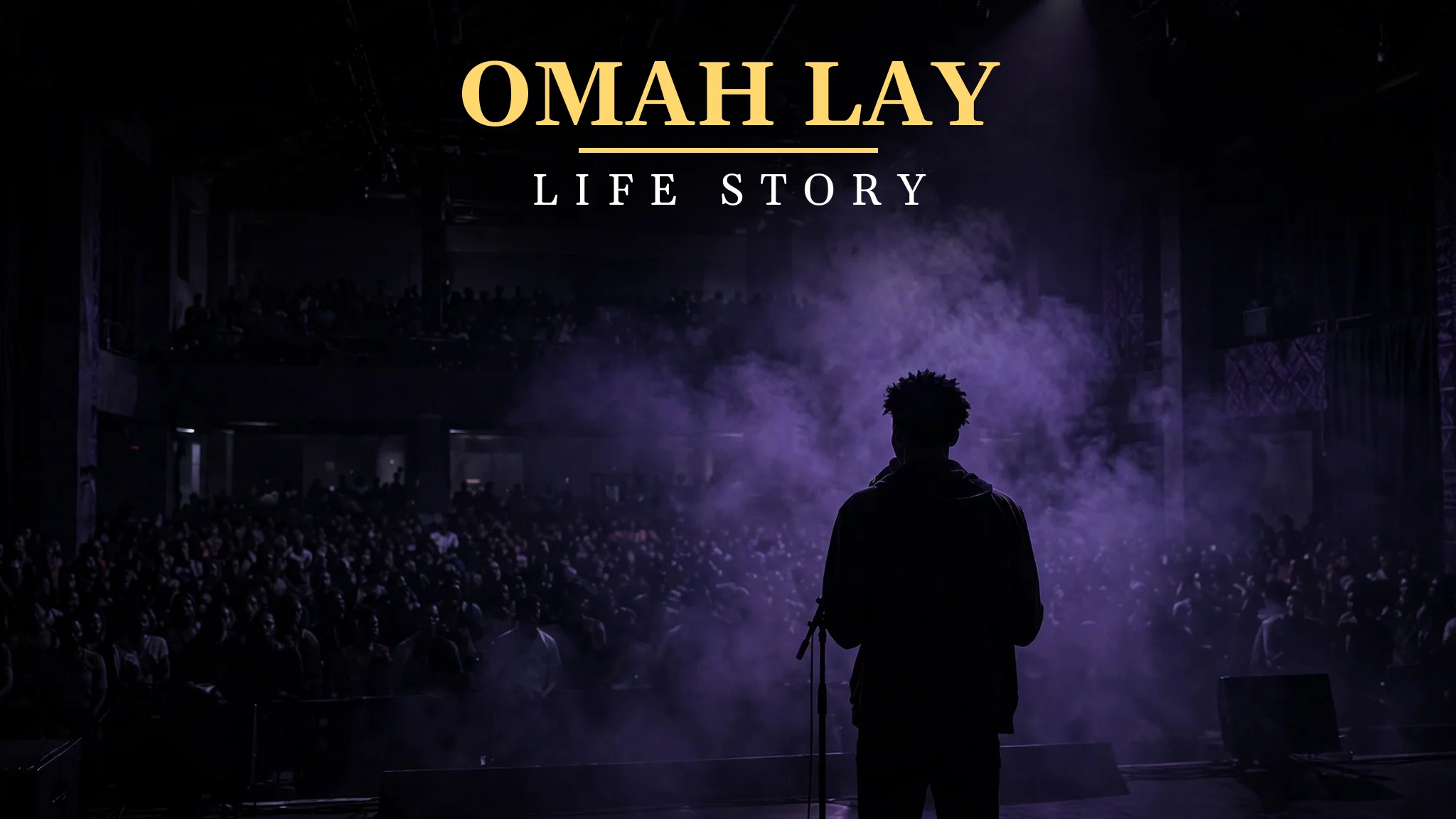
I also think about his live shows, and how different they feel from a typical Afrobeats concert. The lights are low, the stage is dark, and the crowd is quiet, listening, not shouting, because his songs ask for attention, not noise. He stands under a single purple light, sings softly, and lets the room feel the music, and that stillness is powerful. It tells the audience that a concert does not have to be loud to be moving, that a song can fill a hall with feeling, and that a singer who trusts his audience will be trusted in return.
I think about the way Omah Lay handles his health, and how he does it with an honesty that is rare for a young star. He has spoken about feeling depressed, about needing time to rest, and about the pressure of fame, and he has done it in plain words, without shame, and that honesty matters, because many young people suffer in silence, afraid to talk about their feelings, afraid to ask for help. When a star like Omah Lay says, I feel sad sometimes, and I need help, he gives other people permission to do the same, and that is a real service, more important than any song, because it can save a life, or at least make a hard day a little easier.
I also think about his work as a producer, and what it gave him. He did not start as a singer. He started as a young man who made beats, who learned how music is built, layer by layer, and who understood sound in a way that many singers do not. That background shows in his songs, which are carefully made, with a beat that feels right, a vocal that sits well on the track, and a mood that is consistent from the first note to the last. He is not only a singer. He is a musician, a person who understands music from the inside, and that understanding makes his songs feel complete, polished, and personal.
I think about the future of Afrobeats, and what Omah Lay’s new wave means for it. He helped to lead a wave that was slower, sadder, and more honest than the party music that had come before, and it showed that Afrobeats could be more than dance music. It could be music for thinking, for feeling, and for healing, and that is an important change, one that will last, because young people will always need music that speaks to their hearts, not only to their feet, and Omah Lay gave them that music, with his soft voice, his honest words, and his willingness to be vulnerable.
I think about the young producers in Port Harcourt who look up to him, who see a man from their city, a man who started by making beats in a small studio, and who became a world star. For those young producers, Omah Lay is proof that a boy from Port Harcourt can reach the world, that a quiet voice can be heard, and that a talent, if it is worked on, can become a life. That message is worth more than any hit, because it gives hope to people who need it most, and it tells them that where you start does not decide where you finish, if you keep working with care, with honesty, and with patience.
I also think about his fans, and how they support him, not only when he is happy, but when he is sad, when he takes a break, and when he needs time to rest. That support, from fans who understand that a singer is a person, not a machine, is a beautiful thing, and it shows that Omah Lay has built a community, not only an audience, a group of people who care about him, who listen to his music, and who want him to be well, not only to be famous. That community is a legacy worth remembering, and it will last long after his songs are no longer on the charts.
I think about the way Omah Lay handles criticism, and how he does it with a quiet dignity that is rare for a young star. He does not fight every critic, he does not answer every rumour, and he does not try to be the loudest voice in the room. He works, he goes home, and he lets his songs speak for him. That is a wise way to live in public, because a star who fights every critic will soon be tired, and a star who works well will be remembered. His songs are his voice, and they speak clearly, year after year, without noise.
I also think about the future of his career, and what it could become. He has shown that he can make an EP, an album, a hit, and a collaboration, and that he can do it with a soft voice, an honest word, and a quiet presence. If he keeps working, keeps writing, and keeps being honest, he has the chance to become one of the defining voices of his generation, not only in Nigeria, but in the world. That is a big hope, but it is one that his music has already earned, song by song, year by year.
Frequently Asked Questions
When was Omah Lay born?
Omah Lay, whose real name is Stanley Omah Didia, was born on 19 May 1997 in Port Harcourt, Rivers State, Nigeria.
How did Omah Lay start in music?
He started as a music producer in Port Harcourt, making beats for other artists, before deciding to sing himself and releasing his first songs in 2019.
What was Omah Lay’s breakthrough?
His debut EP Get Layd, released in 2020, was his breakthrough, with Bad Influence and You becoming huge hits across Nigeria.
What is Omah Lay’s most famous song?
Soso, from his debut album Boy Alone in 2022, is one of his most famous songs, along with Bad Influence and Godly.
Has Omah Lay spoken about mental health?
Yes, he has spoken openly about feeling depressed, needing rest, and the pressure of fame, encouraging young people to talk about their feelings and seek help.
What is Boy Alone?
Boy Alone is Omah Lay’s debut album, released in 2022, and it includes Soso and other songs about love, loneliness, and growing up.


