Protests Erupt Over Petrol Levy
In this post
The meter is climbing, and the young man on the motorbike is watching it the way people watch a hospital bill being written. Tick. Tick. Tick. The numbers spin faster than the petrol flows. He came in with a folded note in his pocket and a simple plan: fill the tank, ride to work, keep the day ordinary. But the tank is barely half full when the note in his pocket stops being enough.
He is not angry at the man holding the nozzle. He is not even sure who he is angry at. He just knows that petrol, the thing his whole day runs on, keeps getting heavier to buy.
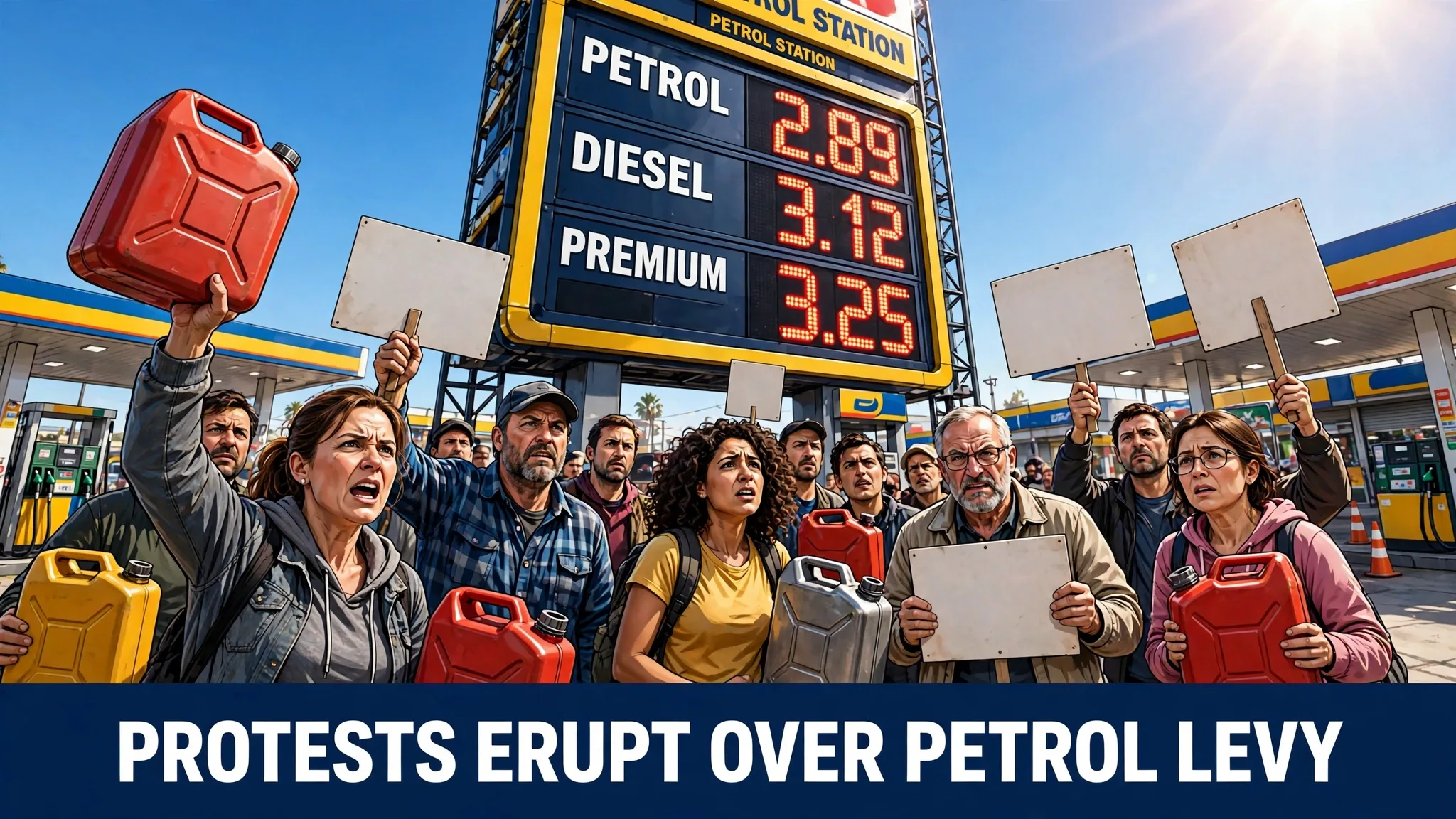
Scenes like this are playing out at pumps all over Pakistan. And in recent days, that quiet frustration at the pump has found a louder voice: a religious party in the country has announced fresh protests over the government’s petroleum levy, the tax charged on every single litre of fuel.
To understand why a tax can push people onto the streets, it helps to do something very simple. Take one litre of petrol. Just one. And break it into rupees.
One Litre, Two Bills
A litre of petrol looks like one thing. It smells like one thing. It burns like one thing. But when you pay for it, you are really paying two separate bills that have been quietly stapled together.
The first bill is the fuel itself. Petrol has to be bought, shipped, refined, stored and delivered to the pump before a single drop reaches your tank. That journey costs money, and part of what you pay covers it.
The second bill is the government’s share. On top of everything else, the government of Pakistan levies Rs114 per litre in taxes and duties on petrol. Read that again, slowly. For every litre that goes into a bike, a car, a rickshaw or a generator, Rs114 travels in the opposite direction — straight to the state.
So when the meter at the pump climbs, a good part of that climb is not petrol at all. It is tax, rising litre by litre, ride by ride, day by day.
This is the number at the heart of the protests. Not a rumour, not a guess — a reported figure of Rs114 on every litre of petrol, and, as we will see in a moment, Rs100 on every litre of diesel too.
Why Rs114 Feels Heavier Than It Sounds
One hundred and fourteen rupees may not sound like a fortune. But a litre is a small thing, and nobody buys just one.
A motorbike rider filling a small tank pays the levy many times over in a single stop. A family car pays it dozens of times. Fill up again and again through the month — for work, for school runs, for the thousand small journeys of ordinary life — and the tax quietly becomes one of the biggest bills a household pays, without ever receiving an invoice for it.
That is the strange thing about the petroleum levy. It is one of the largest taxes most Pakistanis pay, yet it never arrives in the post. There is no envelope, no due date, no signature. It hides inside a number everyone already hates — the price at the pump — and lets the pump take the blame.
And the burden lands hardest on the people with the least room to carry it. The rider at the start of this story does not ride for pleasure. His bike is his job, his school run, his whole geography. When the levy pushes the price up, he cannot simply choose a cheaper road. There is no cheaper road.
In my view, this is why the levy angers people more than many bigger taxes: it is paid daily, in small painful pieces, by people who can see the meter moving.
Diesel: The Tax That Reaches Every Kitchen
If petrol is the tax you can see, diesel is the tax that follows you home.
The government levies Rs100 per litre in taxes and duties on high-speed diesel. Diesel rarely makes the headlines that petrol does, because most people never buy it directly. But almost everything they buy has travelled on it.
Trucks run on diesel. Buses run on diesel. The vehicles that carry wheat, vegetables, milk, medicine and cement from farms and factories to city markets run on diesel. So when diesel becomes more expensive, the cost does not stop at the transport company. It walks quietly down the road and sits down at your table.
The bread costs more because the flour travelled further than it used to. The tomatoes cost more because the truck that brought them drank pricier fuel. The bus fare rises, the delivery charge rises, the price of building a small house rises. A person who has never owned a vehicle — who walks everywhere, who owns nothing with an engine — still pays the diesel levy every single day, folded invisibly into the price of food.
This is why fuel taxes are never just about fuel. They are about the price of nearly everything, which is why anger over them spreads so far beyond the people standing at the pump.
Why the Protests Keep Returning
The newly announced protests did not appear from nowhere. According to reporting by Arab News Pakistan, in recent months the heavy levy has already sparked protests across the country, amid multiple hikes in fuel prices. Each fresh increase lands on people who feel they have already absorbed several — and each one reopens the same argument.
That argument, at its simplest, is about fairness. Governments need revenue; nobody serious denies that roads, hospitals and schools must be paid for somehow. But critics of the levy ask why so much of that revenue should be collected from the one thing every poor and middle-class family must buy to move, to work and to eat.
A tax on luxury goods touches only those who can afford luxuries. A tax on petrol and diesel touches the rickshaw driver and the office worker, the farmer and the shopkeeper, the student on a borrowed bike and the family boiling milk that arrived on a diesel truck. When prices have already risen several times, one more push can feel less like a policy and more like a provocation.
So the cycle repeats. Prices rise. The levy is blamed. Protests are announced. And at pumps across the country, riders watch the meter climb and do the same silent maths: how much of this litre is fuel, and how much of it is tax?
The answer — Rs114 out of every litre of petrol, Rs100 out of every litre of diesel — is now the number around which the whole argument turns.
What Happens Next
Fresh protests have been announced, and their size and shape will become clear in the days ahead. What is already clear is the pressure behind them. As long as fuel prices keep rising and the levy stays this heavy, the petrol pump will remain one of the most political places in Pakistan — a place where national policy is not debated in words, but counted out, litre by litre, in front of ordinary people.
The young man on the motorbike eventually rides away with his half-full tank. He will be back in a few days, because the bike does not care about budgets. And when the meter starts climbing again, he will watch it the same way as before — tick, tick, tick — wondering how a litre of anything came to carry so much weight.
Frequently Asked Questions
How much tax does the government charge on one litre of petrol?
The government levies Rs114 per litre in taxes and duties on petrol, according to reporting by Arab News Pakistan. This amount is included inside the price you pay at the pump.
How much is the levy on diesel?
The levy on high-speed diesel is Rs100 per litre in taxes and duties. Because trucks and buses run on diesel, this cost is passed on into the prices of food and everyday goods.
Why are protests being held over the petroleum levy?
A Pakistani religious party has announced fresh protests over the levy. In recent months, the heavy levy has already sparked protests across the country amid multiple hikes in fuel prices, and many people feel the tax places an unfair burden on ordinary households.
Why do fuel taxes affect people who do not own a vehicle?
Almost everything people buy — food, medicine, building materials — travels by road on diesel-powered vehicles. When diesel becomes more expensive, transport costs rise and those costs are added to shop prices, so everyone pays, vehicle owner or not.
Is the petroleum levy the only reason petrol is expensive?
No. The pump price also includes the cost of the fuel itself — buying it, shipping it, refining it and delivering it. The levy is the government’s tax portion on top of those costs, and at Rs114 per litre on petrol it is a large share of what people are protesting about.
Sources
- Arab News Pakistan — report on protests over the petroleum levy (22 October 2026): https://www.arabnews.pk/tag/pakistan