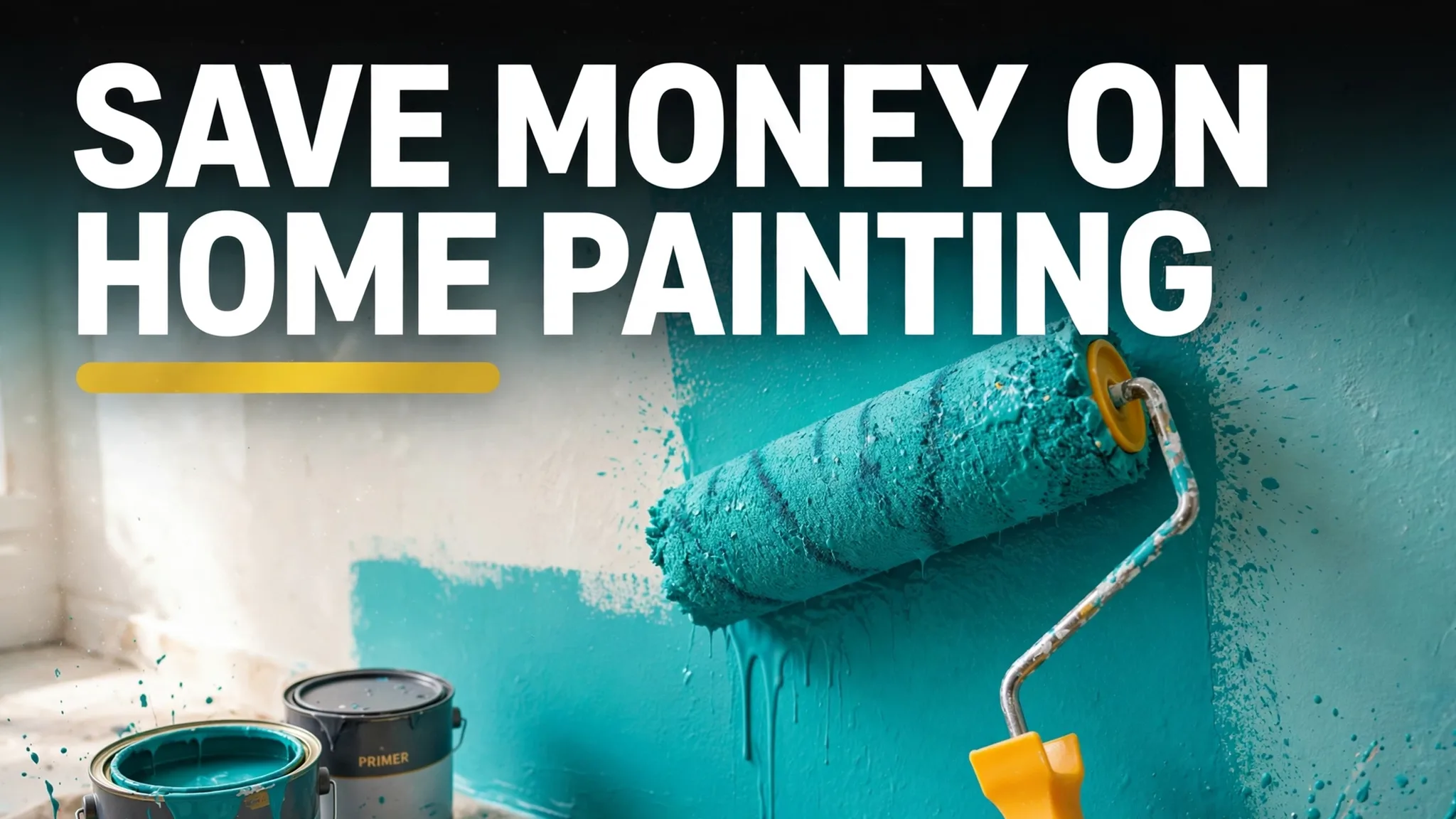
Save Money On Home Painting
In this post
The hallway wall had been staring at us for two years. Sunlight had faded one patch near the window to a tired yellow, while the rest of the wall kept its old cream colour, and every guest who walked in saw the difference before they saw anything else. When a painter finally gave us a quote for the whole house, the number was so large that we put the brushes away for another year. That is the trap of house painting: people price the whole job, panic, and then live with tired walls for years. The truth is smaller and kinder. Painted one room at a time, with a little patience, a fresh house costs far less than that first frightening quote.
Why a paint job costs more than the paint
A tin of paint is only one part of the bill. The rest is labour, primer, brushes, rollers, masking tape, drop cloths, and the paint that gets wasted when someone buys too much or paints over a wall that was never prepared. The most expensive paint job is the one that has to be done twice — paint peeling off a dirty wall six months later, or a colour that looked lovely on a tiny card and turned gloomy across a whole room.
House painting means applying paint to walls for protection and appearance, and both jobs matter. Paint protects plaster from damp and wear, and it changes how a room feels. Understanding that helps you spend where it counts: on preparation and on paint that lasts, not on rushing.
Paint one room, not the whole house
The single biggest saving is also the simplest. Paint one room at a time. A whole house in one go means a huge bill, days of chaos, and furniture piled everywhere. One room means one weekend, one budget, and one finished space you can enjoy while you plan the next.
Start with the smallest room, or the room that bothers you most. A small room teaches you everything — how the roller feels, how long a coat takes to dry, how much paint a wall really drinks — without punishing your mistakes on a large scale. By the second room you will work faster and waste less, and that learning is free. Families who paint room by room often finish the whole house within a year, spending a little each month instead of a fortune in one week.
Preparation decides whether paint survives
Here is the unglamorous secret painters know and beginners skip: the wall matters more than the paint. A wall covered in dust, grease, or old flaking paint will reject even expensive paint. The new coat looks fine for a month, then bubbles and peels, and all the money is gone.
Preparation is simple, just not exciting. Wash the walls with a damp cloth and let them dry. Fill cracks and small holes with filler, let it harden, and sand it smooth. Sand any rough or glossy patches so the new paint has something to hold. Tape the edges along ceilings, switches, and door frames so your lines stay clean. In my view, preparation is the boring half of painting that quietly decides whether the pretty half survives a full year.
This step costs almost nothing — a cloth, a small tub of filler, sandpaper — but it is the difference between paint that lasts three years and paint that lasts eight. Skipping it is the most expensive shortcut in the whole job.
Buy paint by measurement, not by guess
Paint bought by guess is paint wasted. Before shopping, measure the room. Multiply the length of each wall by its height to get the wall area, and roughly subtract the area of doors and windows. The paint tin usually states how much area one litre covers, so divide your wall area by that number and you have the litres you need for one coat. For example, if your walls total 40 square metres and the tin covers 10 square metres per litre, you need about 4 litres per coat, and two coats means about 8 litres.
Spend wisely within that number. Use good quality paint for high-traffic rooms — the hallway, the children’s room, the kitchen — where walls get touched, splashed, and scrubbed. Use basic paint for low-use rooms like a store room or a rarely used guest room. Buy primer for walls that have never been painted or that are stained; primer helps the top coat cover evenly and can save you an entire extra coat.
Your own hands for simple rooms
Roller painting a simple room is a skill most adults can learn in an afternoon. Use a roller for the large flat areas and a brush for the edges and corners. Two thin coats always beat one thick coat, which drips, dries unevenly, and shows roller marks. Let the first coat dry fully before the second — patience here is free and it shows in the finish.
Hire help only for the tricky work: high ceilings, stairwells, exterior walls, or anything that needs a ladder you do not trust. Paying a professional for one dangerous wall while you paint the other five rooms yourself is smart budgeting, not defeat. Ventilate the room while you paint by opening windows, and keep children away from wet paint and paint tins.
The honest limits of saving on paint
Paint cannot fix a damp wall. If water is leaking through, fix the leak first, or the new paint will bubble no matter how good it is. Very old houses may have old lead-based paint underneath, and sanding that is not a beginner’s job — ask a professional for advice before touching it. And be honest about time: painting saves money but costs weekends. If your free time is worth more than the saving on one room, hiring help for that room is a reasonable choice, not a failure.
Test the colour before you commit
A colour card lies. The tiny square in the shop looks one way under bright shop lights and completely different on your wall in the evening. Before buying the full quantity, buy a small tester pot and paint a patch about the size of a dinner plate on the wall. Look at it in the morning, in the afternoon, and at night under your room’s lights. Colours shift with light — a grey that looks elegant at noon can turn cold and blue at night, and a warm cream can turn yellow under a warm bulb.
Live with the patch for two or three days before deciding. It is far cheaper to change your mind over a tester pot than over a whole room painted in the wrong shade. If two colours are close, paint both patches side by side and let the family vote. The wall will wear the winner for years, so a few days of testing is time well spent.
More ways to save
Common questions
How much paint do I need for one room?
Measure each wall’s length times its height, add the walls together, and roughly subtract doors and windows. Check the coverage stated on the paint tin, usually in square metres per litre, and divide your wall area by that number for one coat. Most rooms need two coats, so double the result, and keep a little extra for touch-ups later.
Should I use primer before painting?
Yes, for walls that have never been painted, walls with stains, or walls where you are changing from a dark colour to a light one. Primer helps the top coat cover evenly and grip the wall, and it can save you an entire extra coat of expensive paint. On a clean wall already painted in a similar colour, primer is often unnecessary.
Is cheap paint ever a good choice?
For low-use rooms, yes. A store room or a rarely used guest room does not need scrub-resistant premium paint. For hallways, kitchens, and children’s rooms, better paint lasts longer and survives cleaning, so it costs less over time even though the tin costs more on the day.
Can a beginner really paint a room well?
Yes, for simple flat rooms. The keys are preparation, two thin coats instead of one thick coat, and letting the first coat dry fully. Start with a small room to learn, and leave high ceilings, stairwells, and exterior walls to professionals with the right ladders and equipment.
How long should a good paint job last?
On a well-prepared indoor wall, a good paint job commonly lasts several years, often five or more, depending on sunlight, damp, and how much the wall gets touched. Peeling within months usually means the wall was dirty, damp, or unprepared — not that the paint itself was bad.