Save Money On Summer Clothes
In this post
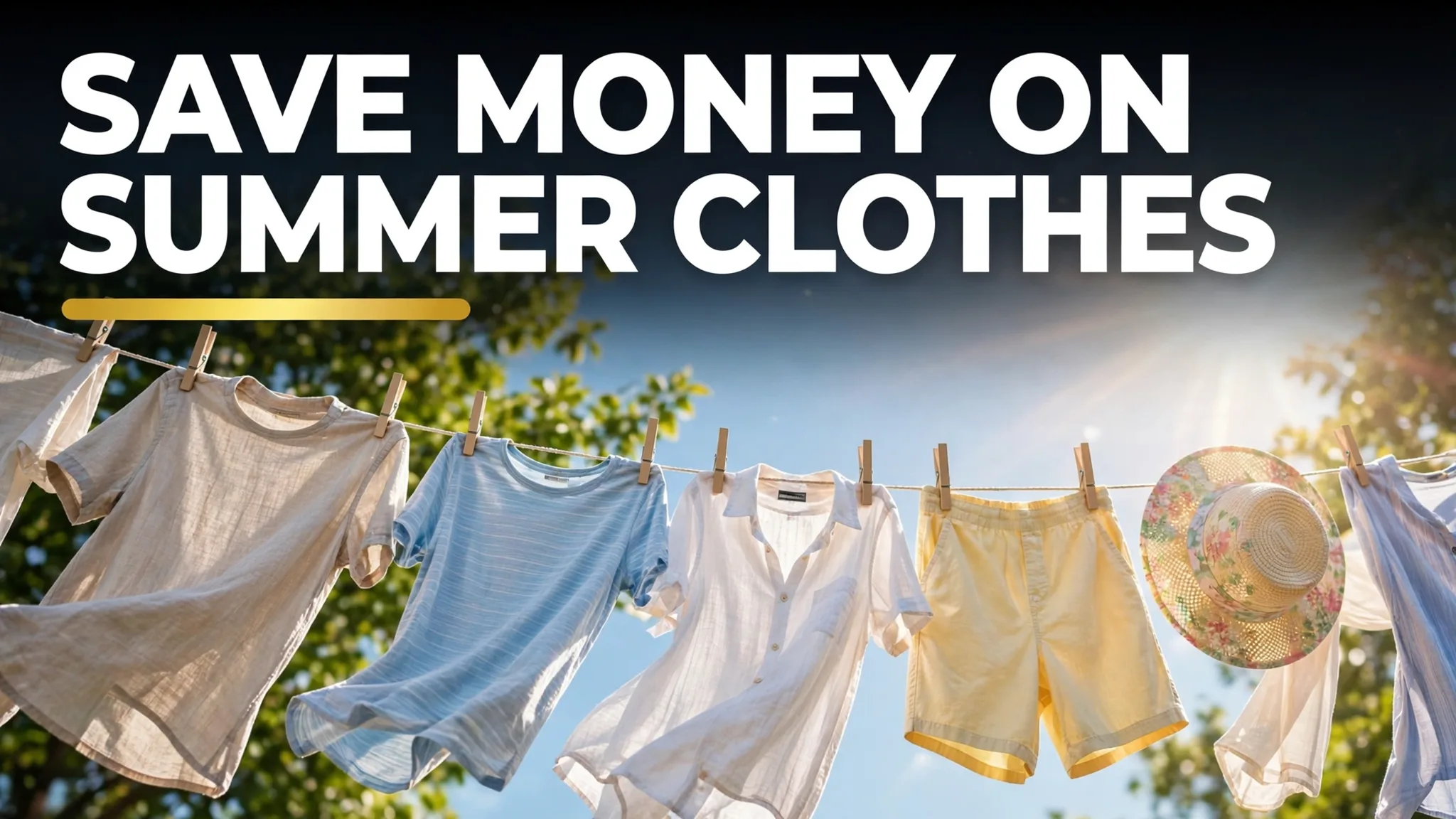
There is a particular sound to a summer clothesline in the breeze — light fabric moving, pegs tapping, the smell of sun on cotton. It is the sound of a wardrobe that costs very little and works very hard. Summer clothes should be the cheapest clothes a family owns. The fabric is lighter, the layers are fewer, and nothing needs to survive snow. Yet families still overspend on summer, because summer shopping happens in the heat, in a hurry, and in front of displays designed to make a third bright shirt feel necessary. This post is about keeping summer dressing simple, cool, and cheap.
Light cotton costs less and feels cooler
The first rule of summer dressing is also the cheapest: light cotton clothes cost less and feel cooler than branded synthetics. Comfort is the real luxury in summer, and cotton gives it for free. Cotton breathes. It lets air move across the skin and soaks up sweat instead of trapping it. A plain cotton shirt on a hot day feels better than an expensive synthetic one, and it usually costs less too.
This is worth saying because summer advertising pushes the opposite: special fabrics, special cooling technology, special prices. Most of it is packaging. For everyday summer life — work, school, errands, evenings outside — a few well-chosen cotton pieces beat a wardrobe of gimmicks. Choose light colours, which reflect heat instead of absorbing it, and loose fits, which let air move. A white or pale cotton shirt and a pair of comfortable trousers will carry you through more summer days than any single fashionable item.
In my view, the best summer outfit is the one you forget you are wearing, and cotton is how you forget — cool, light, and cheap enough to own several.
Buy summer clothes when summer ends
The second saving is timing, the same trick that works for winter. Buy summer clothes at end-of-summer sales for next year. Shops clear summer stock as autumn arrives, and the same shirt costs far less in September than it did in May. The shirt has not changed. Only the season has.
For children, buy one size up, because they will grow into it by next summer. For adults, sizes stay steady, so buying ahead is even easier. Store the clothes clean and dry, and when the first hot week arrives, the wardrobe is already waiting. No panicked shopping in the heat, no full-price impulse buys, no third bright shirt that matches nothing.
Keep a small list before the sales: how many shirts, how many trousers, what the children actually need. Sale season is the most dangerous time for a budget, because everything looks like a bargain. A list turns a sale from a trap into a tool.
Protect clothes from sun-fading
The third saving is care, and in summer it means one thing above all: sun-fading. Strong sun bleaches colour out of clothes left hanging in direct light all day. A bright shirt dried in harsh sun for hours comes back paler, and a pale shirt is a shirt nobody wants to wear — which means buying a replacement.
Dry clothes in shade where possible, or bring them in once they are dry instead of leaving them out all afternoon. Turn dark clothes inside out before hanging them, so the fading hits the inside rather than the visible side. These are tiny habits, but they keep colours alive for an extra season or two, and every extra season is money not spent.
Washing matters too. Wash summer clothes in cool water where the label allows, because hot water fades colour and shrinks cotton. And wash only when clothes are actually dirty — a shirt worn for one cool evening does not need a full wash. Less washing means less fading, less wear, and lower laundry costs as well.
Repair instead of replacing
The fourth habit is the smallest and the most satisfying: repair loose buttons and seams instead of replacing whole garments. A shirt with a loose button is not a ruined shirt. It is a two-minute job with a needle and thread. A seam coming undone at the hem is a ten-minute fix. Yet how many shirts are thrown away, or left unworn at the back of a drawer, for a fault a grandmother would have fixed before breakfast?
Keep a tiny sewing kit in the house: needles, a few common thread colours, spare buttons, and a pair of scissors. Teach children to sew a button as a normal life skill, not a chore. A family that repairs keeps its clothes twice as long, and every extra month of wear is a purchase postponed.
The same rule applies to small stains and marks. Treat a stain promptly, before it sets, and many summer marks that look permanent wash out. A garment saved from the bin is the cheapest garment you will ever own.
A small set that mixes and matches
The last idea ties everything together: keep a small summer set that mixes and matches. Fewer pieces, more outfits. Three shirts that go with two trousers make six outfits. Three shirts that each match only one thing make three. The difference is not money. It is planning.
Choose plain colours and simple patterns that combine easily. One light shirt, one white shirt, one checked or striped shirt. Two comfortable trousers in neutral colours. A pair of sandals that go with everything. That is a summer wardrobe, and it costs a fraction of a drawer full of single-use fashion.
This works for children too, though their clothes also need room to grow and fabric tough enough for play. Buy their summer sets in colours that hide dust and in cuts that allow movement, and let them choose one favourite piece themselves — a child who chose a shirt will wear it happily all summer, while a shirt chosen for them may never leave the drawer.
Pack a summer bag once
One last habit saves impulse spending all summer: pack a summer bag once, and keep it ready. A water bottle, a cap, a spare shirt, sunscreen if the family uses it, and a small towel live in one bag by the door. On any outing, the bag goes along, and the family never buys overpriced drinks, caps, or towels at the destination. The bag costs nothing to assemble from things already in the house, and it turns every unplanned trip into a planned one. Children can own the job of checking the bag, which teaches them the same lesson this whole post teaches: preparation is cheaper than panic.
There are honest limits. In very hot climates, good summer clothing is a health matter, not a fashion choice — light, loose, covering clothes protect against sun, and nobody should go without them to save money. The goal here is not to own too little. It is to own cotton over gimmicks, buy at the right season, dry in shade, repair quickly, and keep a set that mixes — so summer stays cool and the budget stays standing.
More ways to save
Common questions
Is cotton really better than synthetic fabric in summer?
For everyday summer life, yes. Cotton breathes, lets air move across the skin, and soaks up sweat instead of trapping it. Light-coloured, loose cotton feels cooler than most branded synthetics and usually costs less, making comfort — the real summer luxury — also the cheapest option.
When should I buy summer clothes to save money?
At end-of-summer sales, when shops clear stock for autumn. The same shirt costs far less in September than in May. For children, buy one size up so they grow into the clothes by next summer, and store them clean and dry until the heat returns.
How do I stop summer clothes from fading?
Dry clothes in shade where possible, and bring them in once dry instead of leaving them in harsh sun all afternoon. Turn dark clothes inside out before hanging so fading hits the inside. Wash in cool water where the label allows, since hot water fades colour and shrinks cotton.
Is it worth repairing summer clothes?
Yes. A loose button is a two-minute job, and a seam coming undone takes about ten minutes with a needle and thread. A family that repairs keeps clothes twice as long, and every extra month of wear is a purchase postponed. Keep a tiny sewing kit with needles, common thread colours, and spare buttons.
How many summer outfits do I actually need?
Fewer than most people buy. Three shirts that match two trousers make six outfits, while three shirts that each match only one thing make three. Choose plain colours and simple patterns that combine easily, and let children pick one favourite piece themselves so it actually gets worn.