Save Money On Winter Heating
In this post
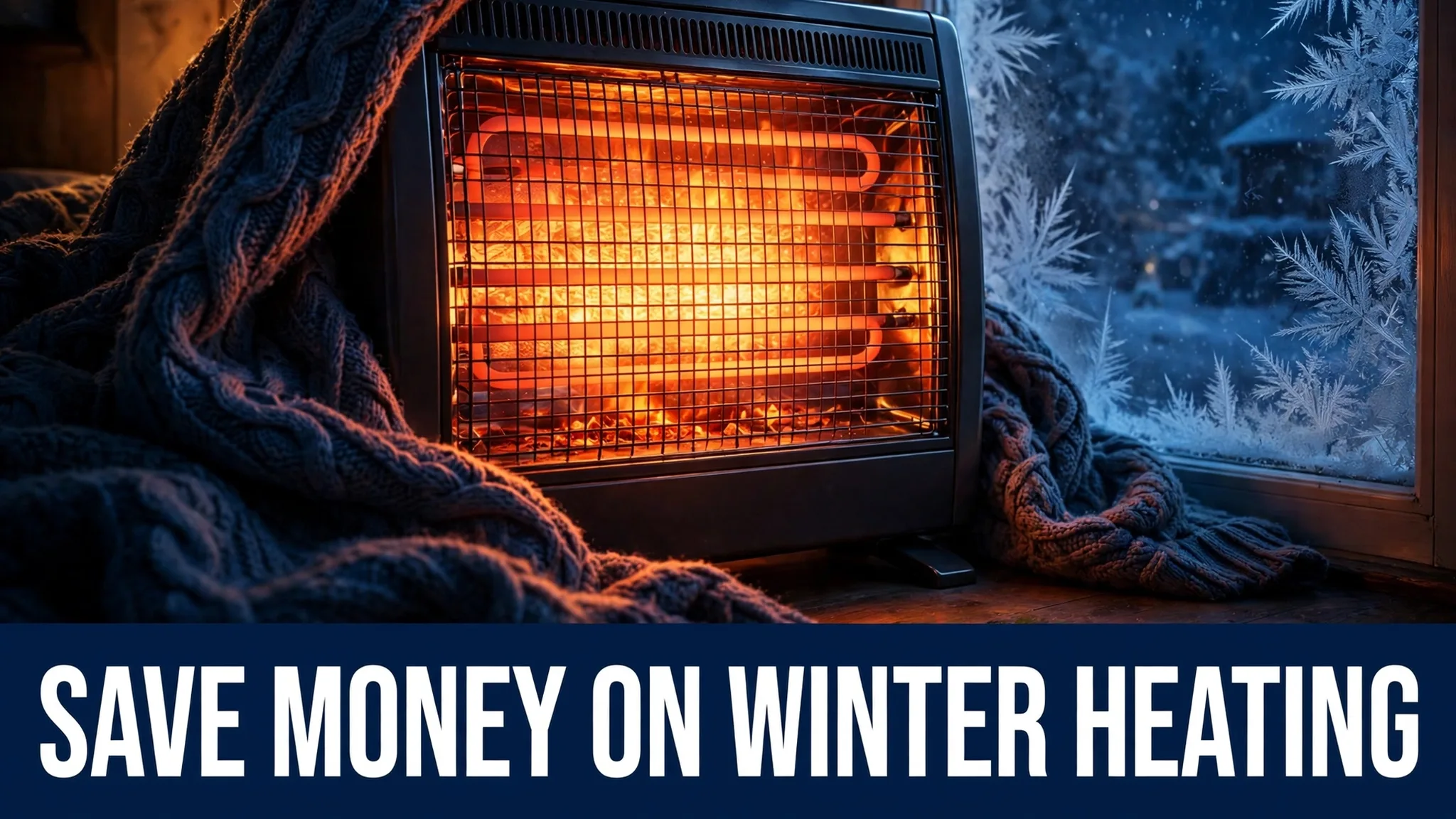
Monday night. The first real cold week of the year. The heater clicked on in the living room, the window showed its first frost at the corners, and my blanket — the old heavy one, dragged out of the cupboard that morning — settled over my knees like it had never been away.
Heating means warming indoor spaces, usually with heaters or central systems. It is also, in winter, one of the largest lines on the household bill. This is the log of one cold week in one room, and what the heater learned about its manners.
Tuesday: the cracks go first
The first lesson was not about the heater at all. It was about the cracks.
Warm air escapes through gaps around doors and windows before it ever warms a person. On Tuesday I ran a hand along the window frame and felt it — a thin, cold thread of air, patient and constant. A strip of draught seal on the frame, a rolled cloth at the bottom of the door, and the thread stopped. The room did not suddenly become a furnace. It simply stopped losing what the heater had already worked to make.
Sealing gaps is the cheapest heating improvement in most homes, and it is almost invisible. No new appliance. No technician. Just attention paid to the edges of the room, where the warm air has been quietly leaving all winter.
Check the doors and windows once, at the start of the cold season. Your hand will find the gaps faster than any gadget.
Wednesday: the curtains learn their job
On Wednesday, the curtains got their instructions.
Curtains are the cheapest heater in the house — in my view, nothing else in the room does so much for so little. The rule is simple and it follows the sun. At night, close them fully: thick curtains over the window trap a layer of still air between the fabric and the glass, and still air is a fine insulator. The heater’s work stays in the room instead of pressing itself against cold glass all night.
In the morning, open them wide on the sunny side. Winter sun is weak, but it is free, and it falls on the floor and furniture for hours, warming the room without a single unit of fuel. Close them again before sunset, before the glass turns cold.
A curtain moved twice a day costs nothing and saves steadily. Most people already own the curtains. They only need the habit.
Thursday: the sweater before the dial
Thursday was the coldest morning, and the old temptation arrived with it: turn the dial up one more notch, then another. Instead, I put on the sweater first.
Warm layers indoors before turning the heater higher is the oldest saving in this post, and it still works. A sweater is cheaper than a degree. Socks, a shawl, a warm layer under the shirt — the body warms faster than the room ever will, and the heater stays at the setting that warms the room without racing.
This is not about sitting cold and proud. It is about order: dress for the season indoors first, then let the heater do the rest. A house at a moderate temperature with warmly dressed people feels comfortable. A house at a high temperature with everyone in thin clothes feels wasteful, because it is.
Friday: heat the room you are in
Friday taught the simplest lesson of the week. The heater had been warming three rooms. I was sitting in one.
Heat only the rooms in use, and close the doors to unused rooms. An open door is an invitation for warm air to wander into a room nobody is sitting in, and the heater must then warm that room too, forever, for nobody. Close the door, and the warm air stays where the people are.
In houses with central heating, the same idea applies to vents and radiators in unused rooms, turned down where the system allows. In houses with room heaters, it is even simpler: the heater follows the family, not the floor plan.
A warm living room and a cool spare room is not hardship. It is sense.
Saturday: the heater gets its check-up
On Saturday, before the deep cold arrived, the heater got serviced.
A heater that has not been cleaned or checked works harder for the same warmth — dust in the vents, a tired filter, a burner that has not been looked at since last winter. A service before winter lets it run efficiently, and an efficient heater uses less fuel for the same room. It also catches problems early, when they are cheap, instead of in the coldest week, when they are not.
Never use an unsafe or damaged heater. A heater with a frayed cord, a cracked body, or a smell that was not there before is not a saving — it is a danger, and it should be repaired or replaced before use.
And for fuel heaters, one more rule, plainly: never block ventilation for a fuel heater. Fresh air is part of how a fuel heater burns safely. Blocking vents to “keep the heat in” traps dangerous gases indoors. Warmth must never come at the cost of safe air.
Sunday: what the week did not fix
Sunday closed the log with honesty. In very cold places, heating is a need, not a luxury. No curtain, sweater, or sealed crack removes the need for real heat when the temperature falls hard. This post saves on waste — the air escaping through cracks, the empty rooms being warmed, the heater racing past comfort — never on basic warmth.
There is one more small habit worth writing into the log: the evening round. Before bed, walk the rooms once. Curtains closed, doors to unused rooms shut, heater set to its night setting rather than its daytime one. The house sleeps at a lower temperature than it lives at, and nobody notices the difference under a blanket. That nightly round takes two minutes and protects everything the week built — the sealed gaps, the curtain habit, the heater’s good manners — from quietly undoing itself overnight.
A family that follows this week will still pay a winter heating bill. It will simply be the bill for the warmth they actually used, not for the warmth they lost.
The blanket is back in the cupboard now, folded, waiting. The heater clicks on in the evening, the curtains close at sunset, and the room holds its warmth the way a room should — quietly, without drama, without waste. Winter will come again next year. The house will be ready a little earlier, and the bill a little smaller.
Common questions
What is the cheapest way to reduce winter heating costs?
Seal gaps around doors and windows first. Warm air escapes through cracks constantly, and a simple strip or rolled cloth stops that loss for almost nothing. After sealing, use curtains wisely and heat only the rooms in use.
Do curtains really help keep a house warm?
Yes. Closed thick curtains at night trap a layer of still air against the window glass, which insulates the room. Opened on sunny days, they let free winter sunlight warm the floor and furniture. Moving curtains twice a day costs nothing and saves steadily.
Should I wear warm clothes indoors instead of turning up the heat?
Warm layers first, then the heater. A sweater, socks, and a shawl warm the body faster than heating the whole room, and the heater can stay at a moderate setting. This is about order — dress for the season, then let the heater do the rest.
Is it safe to close all vents when using a fuel heater?
No. Never block ventilation for a fuel heater. Fresh air is part of how a fuel heater burns safely, and blocking vents can trap dangerous gases indoors. Warmth must never come at the cost of safe air.
Should I get my heater serviced before winter?
Yes. A heater that has not been cleaned or checked works harder for the same warmth, and a pre-winter service helps it run efficiently. It also catches problems early, when they are cheap. Never use an unsafe or damaged heater — repair or replace it first.