Stefan Ruzowitzky: The Life Story Behind the Oscar-Winning Director
In this post
Stefan Ruzowitzky is an Austrian film director who won the Academy Award for Best Foreign Language Film for The Counterfeiters in 2007, a film about a Jewish forger who is forced to make fake money for the Nazis in a concentration camp. He was born in Vienna, he studied history and theatre, he worked in television, and he built a career that includes horror films, comedies, dramas, and television series in Austria, Germany, and America. He is a director who likes to tell stories that are exciting, that are honest, and that make audiences think about history, about morality, and about what people do when they are in impossible situations.
His story is a story about a man who started in Austrian television, who made a horror film that became a hit, who went to Hollywood, and who then made a film about the Holocaust that won an Oscar. He is a director who has worked in many genres, who has not been afraid to try new things, and who has kept working in film and television for more than thirty years. He is a man who loves stories, who loves history, and who believes that film can entertain and also teach.
This is the story of a boy from Vienna who became an Oscar-winning director, who made Anatomy, All the Queen’s Men, Deadfall, and The Counterfeiters, and who continues to work in film and television today. It is a story about talent, about hard work, about history, and about a director who never stopped learning.
A Student of History in Vienna
Stefan Ruzowitzky was born on 25 December 1961 in Vienna, Austria, and he grew up in a city that is full of history, music, and film. Vienna was a city where the past is always present, where old buildings, old stories, and old memories are part of daily life, and young Stefan grew up with that sense of history. He was a boy who liked to read, who liked to watch films, and who was curious about the past. He was interested in how people lived, how they made choices, and how history shaped their lives. That curiosity would later become the heart of his work as a director, especially in The Counterfeiters, a film about history at its darkest.
As a young man, he studied history and theatre at the University of Vienna. He was a student who wanted to understand the world, who wanted to learn about the past, and who wanted to find a way to tell stories about it. He studied, he read, he watched plays, and he began to think about film as a way to tell historical stories. He was not a young man who wanted quick fame. He wanted to learn, to think, and to find his own voice as a storyteller. He was a thoughtful student, and that thoughtfulness stayed with him throughout his career.
After his studies, he worked in Austrian television, directing music videos, commercials, and television programmes. Television was a good school for him, because it taught him how to work with a camera, how to tell a story in a short time, and how to work with actors and crew. He learned the practical side of film making, and he began to build a reputation as a talented young director. He was a man who had studied history, who had learned theatre, and who was now learning film, and that combination gave him a strong base. He was ready to make his first feature films, and he was ready to tell stories that mattered.
The most important thing about those early years is that Ruzowitzky did not rush. He studied, he worked in television, and he learned his craft step by step. He was a director who had a deep interest in history, and that interest would guide his work for the rest of his career. The boy from Vienna who loved history had become a man who could tell historical stories on screen, and that gift would one day win him an Oscar.
Tempo, Anatomy, and a Horror Hit
Stefan Ruzowitzky made his first feature films in the 1990s, and he quickly showed that he could work in different genres. His early film Tempo, made in 1996, was a comedy about young people in Vienna, and it showed his sense of humour and his ability to tell a light and entertaining story. He was a director who did not want to be put in a single box. He wanted to try comedy, horror, drama, and history, and he did. That willingness to try new things made him a versatile director, and it helped him to build a career that was varied and interesting.
His breakthrough came with Anatomy, made in 2000, a horror film about a medical student who discovers a secret society at her university that uses bodies for experiments. The film starred Franka Potente, and it became a huge hit in Germany, one of the most successful German horror films of its time. It was a film that was scary, exciting, and well made, and it showed that Ruzowitzky could make a popular film that audiences loved. He followed it with Anatomy 2 in 2003, and he became known as a director who could make genre films that were both entertaining and smart. Anatomy was a turning point, because it proved that he could make a hit, and that he could work in a genre that many serious directors avoid.
The success of Anatomy gave him the freedom to try other kinds of films. He made All the Queen’s Men in 2001, a comedy about British soldiers who dress as women to infiltrate a German factory during the Second World War, starring Matt LeBlanc and Eddie Izzard. The film was a fun and light-hearted take on the war, and it showed that Ruzowitzky could work in English, with international stars, and make a film that was entertaining. He was a director who was not afraid to be funny, to be scary, or to be serious, and that range made him valuable in the film world.
During those years, he also worked in television, and he continued to build his reputation. He was a director who had made a horror hit, a comedy, and a drama, and who was ready for a bigger challenge. He was a man who had learned his craft in television, who had proven himself in film, and who was now looking for a story that would test him as a storyteller. That story would come with The Counterfeiters, a film about the Holocaust, about forgery, and about survival, and it would change his life.
The Counterfeiters and the Oscar
In 2007, Stefan Ruzowitzky made The Counterfeiters, a film based on the true story of Salomon Sorowitsch, a Jewish forger who was imprisoned in a Nazi concentration camp and forced to make counterfeit money for the Germans. The film tells the story of Sorowitsch, played by Karl Markovics, and of the men in the camp who had to choose between survival and resistance. It is a film about morality, about impossible choices, and about what people do when they are faced with evil. Ruzowitzky directed it with care, with honesty, and with a deep respect for the true story, and the film was praised by critics around the world.
The Counterfeiters won the Academy Award for Best Foreign Language Film in 2008, and it was Austria’s first Oscar win in that category in many years. It was a huge moment for Ruzowitzky, for Austrian cinema, and for the actors, especially Karl Markovics, who gave a powerful performance as Sorowitsch. The film was shown in many countries, it was discussed in schools and in film courses, and it became one of the most important films about the Holocaust to be made in recent years. It was a film that entertained, that moved, and that taught, and it showed that Ruzowitzky could make a serious and important film.
The Oscar changed his career. He was now an Oscar-winning director, he was in demand, and he was offered work in America and in Europe. He made Deadfall in 2012, a crime film starring Eric Bana and Olivia Wilde, and he worked in Hollywood. He also returned to Austria and Germany, and he continued to make films and television. He was a director who had won the highest honour in film, and he used that honour to keep making films that mattered to him. He did not let the Oscar trap him. He used it as a freedom to choose, and that choice shaped the rest of his career.
The Counterfeiters remains his most famous film, and it is still shown today as an example of how to tell a historical story with honesty and with power. Ruzowitzky’s direction is quiet, it is careful, and it trusts the actors and the story. He did not use tricks or effects to make the film dramatic. He let the story speak for itself, and that is why it is so moving. It is a film about a man who had to make fake money to survive, and about the moral cost of that survival, and it is a film that asks the audience to think about what they would do in the same situation. That is a great achievement, and it is why the Oscar was deserved.
Hollywood, Deadfall, and Work in America
After winning the Oscar, Stefan Ruzowitzky worked in Hollywood, and he made Deadfall, a crime thriller released in 2012. The film tells the story of a brother and sister who rob a casino, and who are chased by police and by criminals in a snowy landscape in America. It starred Eric Bana, Olivia Wilde, and Charlie Hunnam, and it was a film that showed Ruzowitzky could work in America, in English, and with Hollywood stars. It was a different kind of film from The Counterfeiters, a thriller, a crime story, and it showed his range as a director. He was not only a director of historical dramas. He could also make a tense and exciting thriller.
He also worked on other projects in America and in Europe, and he continued to build his career as a director who could work in many genres. He was a man who had won an Oscar, who had made a horror hit, a comedy, and a historical drama, and who was now working in Hollywood. He was a versatile director, and that versatility made him valuable. He was not afraid to try new things, and he was not afraid to work in a new country, with new actors, and in a new language. He was a director who loved stories, and who wanted to tell them wherever he could.
His work in America also taught him about the Hollywood system, about big budgets, about stars, and about the pressure to make a commercial success. He learned from that experience, and he brought that learning back to Europe, where he continued to make films and television. He was a director who had seen both worlds, the European art film world and the Hollywood commercial world, and who could work in both. That is a rare gift, and it is one that has helped him to have a long and varied career.
During those years, he also worked in television in Germany and Austria, directing series and films that were watched by millions of people. He was a director who was comfortable in both film and television, and who saw no difference between the two, except for the story. He believed that a good story is a good story, whether it is told in a cinema or on a television screen, and he told good stories in both. His Hollywood years were important, but they were only one part of a long career that has spanned many countries and many genres.
Television, Teaching, and a Director Who Keeps Working
In recent years, Stefan Ruzowitzky has worked a great deal in television, directing series in Austria and Germany that have been praised for their quality. He has directed episodes of popular series, he has worked with German and Austrian actors, and he has continued to tell stories that matter. Television has become an important part of his work, because it allows him to tell longer stories, to develop characters over many episodes, and to reach a wide audience. He is a director who has adapted to the changing world of film and television, and who has found new ways to work.
He has also worked as a teacher and as a mentor, sharing his knowledge with young directors and with students. He is a man who believes that film making is a craft that must be learned, practised, and passed on, and he has done that with generosity. He has spoken about his work, about The Counterfeiters, about Anatomy, and about the challenges of directing, and he has helped young film makers to find their way. He is not only a director. He is a teacher, and a man who cares about the future of Austrian and German cinema.
He lives in Austria, he works, and he continues to make films and television. He is a director who is still at the peak of his career, still working, still learning, and still telling stories. He has won an Oscar, he has made a horror hit, he has worked in Hollywood, and he has returned to Europe to work in television. He is a man who has done a great deal, and who still has more to give. His story is still going on, and his work is still being made.
His long career is a testament to his talent, his versatility, and his love of stories. He began as a student of history in Vienna, he worked in television, he made a horror film, he made a comedy, he made a historical drama that won an Oscar, and he worked in Hollywood. He has done it all, and he has done it with integrity. He is a director who has never stopped learning, never stopped working, and never stopped believing in the power of a good story.
A Legacy of Versatility and an Oscar
Stefan Ruzowitzky’s legacy is a legacy of versatility and of an Oscar. He is a director who has worked in many genres, who has made films that are scary, funny, serious, and historical, and who has won the highest honour in film for a story about the Holocaust. He showed that an Austrian director can make a horror hit, can work in Hollywood, and can make a film that wins an Oscar, and that is a legacy that matters. He is a director who has opened doors for other Austrian film makers, and who has shown that Austrian cinema can be both popular and serious.
His legacy is also in The Counterfeiters, a film that is still shown, still discussed, and still taught as an example of how to tell a historical story with honesty. The film is a reminder of the Holocaust, of the people who suffered, and of the moral choices they faced, and it is a film that will be remembered for many years. Ruzowitzky’s direction made that film possible, and his Oscar is a recognition of that work. He is a director who has made a difference, not only in Austrian cinema, but in world cinema, and that is a legacy worth celebrating.
He is remembered in Austria as an Oscar winner, as a director of Anatomy and The Counterfeiters, and as a man who has worked in film and television for more than thirty years. His name is associated with quality, with versatility, and with a love of stories. He is a son of Vienna who became a world-famous director, and he did it with hard work, with talent, and with a deep interest in history. That is a legacy that will last.
A Director Who Learns From Every Genre
Stefan Ruzowitzky’s career is a lesson in versatility. He made a comedy, Tempo, a horror film, Anatomy, a war comedy, All the Queen’s Men, a historical drama, The Counterfeiters, and a crime thriller, Deadfall, and he did each one well. That range is rare, and it shows a director who is not afraid to try new things, who is curious, and who loves stories in all their forms. Many directors find one genre and stay with it, because it is safe, but Ruzowitzky did the opposite. He tried new genres, he learned from each one, and he became a better director because of it. That willingness to learn is a part of his legacy, and it is a lesson for young film makers: do not be afraid to try, to fail, and to learn.
His work in television has also shown that versatility. He has directed series in Austria and Germany, he has worked with different actors, and he has told stories that are long, complex, and character-driven. Television allows a director to develop a story over many episodes, to build characters slowly, and to reach a wide audience, and Ruzowitzky has used that opportunity well. He is a director who has adapted to the changing world of film and television, and who has found new ways to work. He is not stuck in the past. He is a director who is still learning, still growing, and still telling stories in new ways.
His interest in history is also a key part of his work. He studied history at university, and that love of history gave him a deep understanding of the past, of the Holocaust, and of the moral choices people face. The Counterfeiters is a film about history, but it is also a film about the present, about what we would do in an impossible situation. That connection between past and present is what makes his film so powerful, and it is a reminder that history is not just about the past. It is about us, about our choices, and about our lives today. Ruzowitzky understood that, and his film shows it.
The Teacher Behind the Camera
Stefan Ruzowitzky is also known as a teacher and mentor, a director who shares what he has learned with young film makers in Austria and Germany. He has spoken at film schools, he has worked with students, and he has talked openly about the challenges of directing, about working with actors, and about telling a historical story with honesty. He believes that film making is a craft that must be learned, practised, and passed on, and he has done that with generosity. He is not a director who keeps his knowledge to himself. He shares it, and he helps young directors to find their own voice, just as he found his. That generosity is a part of his legacy, and it will live on in the films made by the people he taught.
My Take:
When I think about Stefan Ruzowitzky, I think about a man who loves stories, and who is not afraid to tell them in many different ways. He made a horror film, he made a comedy, he made a historical drama, he made a thriller in Hollywood, and he made television series, and he did each one well. That versatility is rare, and it is a gift. Many directors find one style and stay with it, because it is safe. Ruzowitzky did the opposite. He tried new genres, he tried new countries, and he tried new stories, and he learned from each one. I admire that courage, because it takes a brave director to leave a successful genre and try something new. He did it again and again, and his career is richer for it.
I think about Anatomy, and I smile, because it is a horror film that is also smart. It is about a medical student, about a secret society, and about bodies, and it is scary, but it is also well made. It became a hit in Germany, and it showed that Ruzowitzky could make a popular film that audiences loved. I think that is important, because a director should be able to entertain as well as to teach. Anatomy entertained, and it also showed his skill as a storyteller. I respect him for not being afraid of genre films, for not thinking that horror is beneath a serious director. He made a horror film, and he made it well, and that is a lesson: a good story is a good story, no matter what genre it is in.
What moves me most is The Counterfeiters. It is a film about a Jewish forger in a concentration camp, about a man who has to make fake money for the Nazis in order to survive, and about the moral choices he faces. It is a film that asks a hard question: what would you do if you had to choose between survival and resistance? Ruzowitzky directed it with care, with honesty, and with a deep respect for the true story, and the film won an Oscar. I think that is a great achievement, because it is a film about the Holocaust, about a dark time in history, and it tells that story in a way that is both moving and thought-provoking. He did not use tricks or effects. He let the story speak, and he trusted the actors, especially Karl Markovics, to carry it. That trust is a sign of a great director.
I also think about his background, about studying history in Vienna, and I understand why The Counterfeiters is so strong. He was a student of history, he loved the past, and he wanted to understand it. That love of history gave him a deep understanding of the Holocaust, of the people who lived through it, and of the choices they faced. He did not make a film about history from a distance. He made a film about history from the inside, about a man in a camp, about his daily life, and about his moral struggle. That is a powerful way to tell a historical story, and it is a lesson for anyone who wants to tell a story about the past: learn the history, understand the people, and tell it with honesty. Ruzowitzky did that, and his film is proof.
There is something else I keep thinking about, and it is the way he worked in Hollywood and then came back to Europe. He made Deadfall in America, he worked with Hollywood stars, and he learned about the Hollywood system, but he did not stay there. He came back to Austria and Germany, to television, and to stories that mattered to him. That is a sign of a man who knows who he is, who knows where he belongs, and who is not seduced by fame or by money. I admire that, because it is easy to be seduced by Hollywood, by big budgets, and by stars. Ruzowitzky was not seduced. He used Hollywood, he learned from it, and he came home. That is integrity, and it is a lesson I want to remember.
I think about his versatility again, and I think it is a lesson for young film makers. Do not be afraid to try new genres, to make a horror film, a comedy, a drama, and a historical film. Each genre will teach you something new, and each one will make you a better director. Ruzowitzky tried many genres, and he became a better director because of it. He is a director who is not trapped by one style, and that freedom is a gift. I think young directors should learn from him: be versatile, be curious, and be willing to try.
For a young reader, I think the lesson is to study, to learn, and to love stories. Ruzowitzky studied history, he worked in television, he learned his craft step by step, and he became an Oscar-winning director. He did not rush, he did not try to be famous quickly, and he did not copy others. He learned, he worked, and he waited until he was ready. Then he made films that were his own, films that were varied, honest, and powerful, and the world recognised their value. That tells me that good work takes time, and that it is worth waiting for. If you love stories, if you study them, and if you work hard, you can make films that matter, just as Ruzowitzky did.
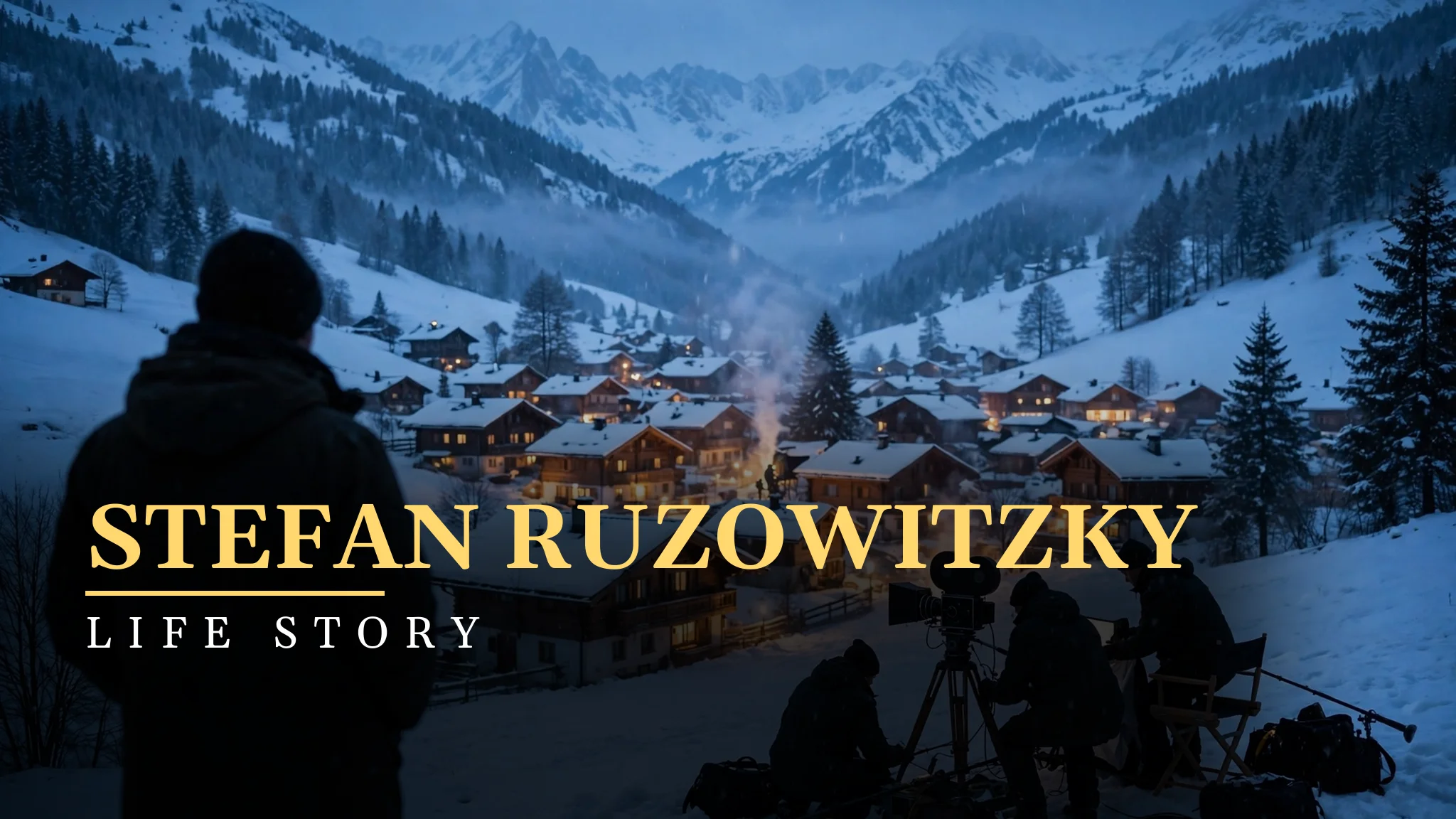
I keep thinking about the image of a film crew in the snow above an Alpine village, working in the cold, with a camera and a director watching, and I think it fits Ruzowitzky. He is a director who works in difficult places, who tells difficult stories, and who does it with patience and with care. He is a man who is not afraid of hard work, of cold, of difficult subjects, and that courage is part of his story. I wish him well, I wish him more films, and I wish him a life where he can continue to tell stories, to teach, and to make films that matter. He is a director who has won an Oscar, and he deserves to be celebrated for that, but also for his long and varied career.
In the end, I think Stefan Ruzowitzky teaches us that a good story can be told in many ways, that history matters, and that a director who is versatile, honest, and patient can make films that last. He was a boy from Vienna who studied history, who worked in television, who made a horror hit, who made a film about the Holocaust that won an Oscar, and who worked in Hollywood and in Europe. He did not have a short or simple career. He had a long, rich, and varied career, and he is still living it. That is a legacy I respect, and a life I want to honour.
One more thought stays with me, and it is about the moral question at the heart of The Counterfeiters. What would you do if you had to make fake money for the Nazis to survive? Would you do it, or would you resist and die? There is no easy answer, and Ruzowitzky does not give one. He shows the man, his choices, and the cost of those choices, and he leaves the audience to think. That is a powerful way to make a film, and it is a way that respects the audience. I think we need more films like that, films that ask hard questions and do not give easy answers, and Ruzowitzky gave us one of the best. I am grateful for it, and for the director who made it.
I think about Ruzowitzky’s versatility, and I realise how much it matters. He made a horror film, a comedy, a historical drama, and a thriller, and he did each one well. That is not easy, and it takes a director who is curious, who is brave, and who is willing to try new things. Many directors stay in one genre because it is safe, but Ruzowitzky did not. He tried, he learned, and he became better because of it. I think that is a lesson for anyone who wants a long career: be versatile, be curious, and do not be afraid to try something new. Each new genre will teach you something, and each one will make you better.
I also think about The Counterfeiters, and about the moral question at its heart. What would you do if you had to make fake money for the Nazis to survive? Would you do it, or would you resist and die? There is no easy answer, and Ruzowitzky does not give one. He shows the man, his choices, and the cost of those choices, and he leaves the audience to think. That is a powerful way to make a film, and it is a way that respects the audience. I think we need more films like that, films that ask hard questions and do not give easy answers, and Ruzowitzky gave us one of the best. I am grateful for it.
There is a patience in his career that I admire, a patience that comes from studying history, working in television, and learning his craft step by step. He did not rush to make a big film. He learned, he worked, and he waited until he was ready. Then he made The Counterfeiters, and it won an Oscar. That tells me that good work takes time, and that it is worth waiting for. If you rush, you may make something quick, but you will not make something lasting. Ruzowitzky made something lasting, because he waited, because he learned, and because he cared about the story.
I think about Anatomy, and I smile, because it is a horror film that is also smart. It is about a medical student, about a secret society, and about bodies, and it is scary, but it is also well made. It became a hit in Germany, and it showed that Ruzowitzky could make a popular film that audiences loved. I think that is important, because a director should be able to entertain as well as to teach. Anatomy entertained, and it also showed his skill as a storyteller. He was not afraid of genre films, and he made a horror film well. That is a lesson: a good story is a good story, no matter what genre it is in.
Another thought stays with me, and it is about his work in Hollywood and his return to Europe. He made Deadfall in America, he worked with Hollywood stars, and he learned about the Hollywood system, but he did not stay there. He came back to Austria and Germany, to television, and to stories that mattered to him. That is a sign of a man who knows who he is, who knows where he belongs, and who is not seduced by fame or money. I admire that integrity, and I think it is a lesson worth remembering: use Hollywood, learn from it, and come home to the work that matters to you.
I keep thinking about the image of a film crew in the snow above an Alpine village, working in the cold, with a camera and a director watching, and I think it fits Ruzowitzky. He is a director who works in difficult places, who tells difficult stories, and who does it with patience and care. He is a man who is not afraid of hard work, of cold, of difficult subjects, and that courage is part of his story. I wish him well, and I hope he continues to tell stories, to teach, and to make films that matter for many more years.
I think about Ruzowitzky as a teacher, and I respect him for sharing what he knows. Many successful directors keep their methods to themselves, but he has spoken openly about his work, about The Counterfeiters, about Anatomy, and about the difficulties of directing. That openness helps young film makers, because it shows them that even an Oscar winner faces doubts, makes mistakes, and learns as he goes. I think that is a generous way to live, and it is a lesson: share what you know, help others, and your work will live on in their work as well as in your own.
I also think about how his films are used in schools, in discussions about the Holocaust, and in conversations about morality. The Counterfeiters is shown to students, it is discussed, and it asks them what they would do in an impossible situation. That is a powerful use of film, because it turns a movie into a lesson, a conversation, and a way to remember history. Ruzowitzky made a film that is not only entertainment, but also education, and that is a rare achievement. I am grateful for a director who makes films that teach, as well as films that entertain, and who trusts young people to think about hard questions.
Frequently Asked Questions
When was Stefan Ruzowitzky born?
Stefan Ruzowitzky was born on 25 December 1961 in Vienna, Austria, and he studied history and theatre at the University of Vienna before working in Austrian television.
What film won Stefan Ruzowitzky an Oscar?
He won the Academy Award for Best Foreign Language Film for The Counterfeiters in 2007, a film about a Jewish forger forced to make counterfeit money for the Nazis in a concentration camp.
What is Anatomy about?
Anatomy, made in 2000, is a horror film about a medical student who discovers a secret society at her university that uses bodies for experiments. It starred Franka Potente and became a huge hit in Germany.
Did Stefan Ruzowitzky work in Hollywood?
Yes, he made Deadfall in 2012, a crime thriller starring Eric Bana and Olivia Wilde, and he has worked on other projects in America as well as in Austria and Germany.
What is All the Queen’s Men about?
All the Queen’s Men, made in 2001, is a comedy about British soldiers who dress as women to infiltrate a German factory during the Second World War, starring Matt LeBlanc and Eddie Izzard.
What did Stefan Ruzowitzky study at university?
He studied history and theatre at the University of Vienna, and his interest in history later shaped his work, especially in The Counterfeiters, a film about the Holocaust.
Is Stefan Ruzowitzky still directing today?
Yes, he continues to direct films and television series in Austria and Germany, and he also works as a teacher and mentor for young film makers.


